
Title: Maduro Seized, Venezuela Occupied: Trump’s “Narco-Terror” Case Masks Regime Change And Resource Grab.
Press Release: Veritas Press C.I.C.
Author: Kamran Faqir
Article Date Published: 04 Jan 2026 at 11:10 GMT
Category: Latin America-Americas | Venezuela | Maduro Seized, Venezuela Occupied: Trump’s “Narco-Terror” Case Masks Regime Change and Resource Grab.
Source(s): Veritas Press C.I.C. | Multi News Agencies
Website: www.veritaspress.co.uk

Business Ads

NEW YORK/ CARACAS — The forced seizure of Venezuelan President Nicolás Maduro and First Lady Cilia Flores by US forces, followed by their transfer to federal custody in New York, marks one of the most extraordinary and legally contentious acts of US-Israeli intervention in Latin America in decades. Framed by the Trump administration as a law-enforcement operation against “narco-terrorism,” the operation has instead exposed Washington’s long-standing pursuit of regime change and strategic control over Venezuela’s vast oil and mineral wealth, critics and analysts say.
Maduro and Flores are currently detained at the Metropolitan Detention Centre in Brooklyn, awaiting court appearances in Manhattan on sweeping federal charges. Their capture followed Operation Absolute Resolve, a pre-planned military assault on Caracas carried out without congressional authorisation, UN approval, or extradition proceedings, raising urgent questions about sovereignty, international law, and the precedent being set.
A “Perp Walk” As Political Theatre:
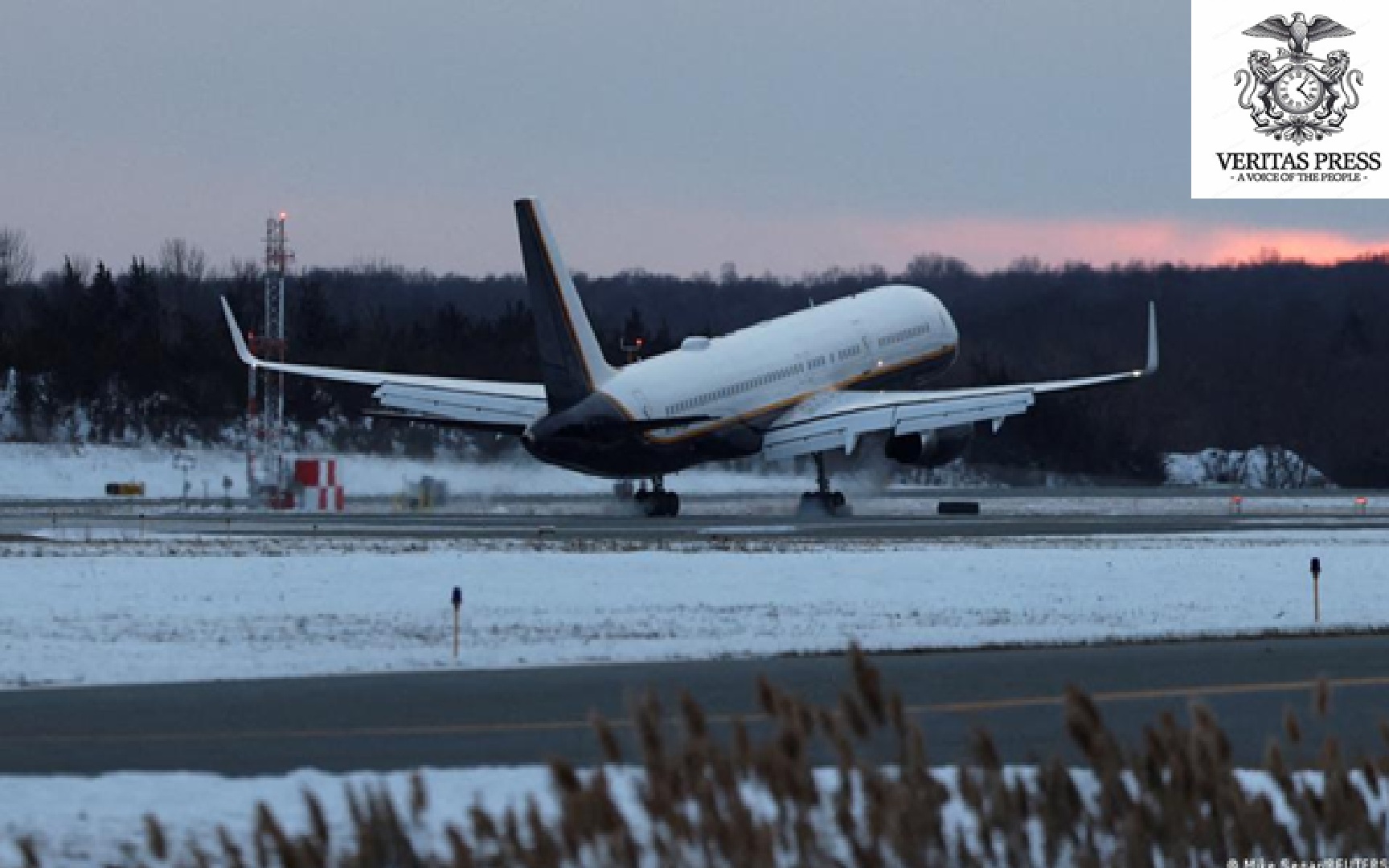
Within hours of Maduro’s arrival at Stewart Air National Guard Base in New York on Saturday, the White House released carefully staged footage of the Venezuelan leader being escorted by DEA agents, captioned simply: “Perp walked.”
The imagery, including shots of Maduro walking down a hallway emblazoned “DEA NYD”, was immediately seized upon by Trump allies as proof of triumph. But critics argue the display served a political purpose: criminalising a foreign head of state to retroactively legitimise an illegal military operation.
“This wasn’t justice,” said one former US diplomat. “It was theatre, meant to sell regime change as law enforcement.”
Trump’s Own Words: Washington Will “Run” Venezuela.
Any remaining ambiguity about US intentions evaporated when President Donald Trump declared that Washington would now “run Venezuela” until a transition acceptable to the US is secured.
That statement, extraordinary in its candour, has become central to international criticism. Rather than presenting a limited arrest operation, Trump openly asserted temporary US control over a sovereign state, echoing colonial-era doctrines long rejected under international law.
Legal experts note that even if the charges against Maduro were valid, the method of capture alone renders the process legally tainted.
“This is not extradition. It is not an arrest. It is kidnapping under international law,” said a European international law professor. “Calling it ‘narco-terrorism’ does not change that.”
The Charges, And Their Political Timing:
The Southern District of New York indictment, unsealed immediately after the capture, accuses Maduro and Flores of overseeing a cocaine trafficking conspiracy and possessing heavy weapons. Similar charges were first announced in 2020, during Trump’s first term, at a time when US sanctions had already crippled Venezuela’s economy, and Washington was openly backing opposition efforts to oust Maduro.
Crucially, the indictment was revived only after the military operation succeeded, not before, reinforcing accusations that the law is being used to justify force, not restrain it.
Attorney General Pam Bondi declared that Maduro would face “the full wrath of American justice,” while thanking the US military, a blurring of civilian law enforcement and military power that alarmed civil liberties groups.
Delcy Rodríguez: “This Is A Coup, Not Justice”.
Inside Venezuela, Vice President Delcy Rodríguez has emerged as the most senior official still asserting constitutional authority, and one of the sharpest critics of Washington’s actions.
In a televised address, Rodríguez rejected US claims of a lawful transition, stating:
“Nicolás Maduro is the only constitutional president of Venezuela. What has occurred is a foreign military assault and an illegal kidnapping.”
She demanded proof of life for both Maduro and Flores and warned that the US had committed “a grave violation of international norms.”
“No court in the United States has the authority to decide Venezuela’s leadership,” Rodríguez said. “This operation was planned not to uphold justice, but to impose submission.”
Although a Venezuelan court ordered Rodríguez to assume interim powers, she declined, saying:
“I will not legitimise a coup disguised as a criminal case.”
Oil, Blockades, And The Real Strategic Prize:
Behind the legal rhetoric lies a deeper strategic reality. Venezuela holds the world’s largest proven oil reserves, along with vast deposits of gold, coltan, and rare earth minerals. Over the past year, the Trump administration has:
- Imposed a naval blockade on Venezuelan oil shipments
- Seized tankers bound for China and other buyers
- Destroyed dozens of vessels accused, often without evidence, of drug trafficking
- Secured military access to airports in Trinidad and Tobago, a key staging point
These actions, analysts say, point to a broader strategy: strangle the Venezuelan state, remove its leadership, and reassert US dominance over energy flows in the Western Hemisphere, particularly as China deepened ties with Caracas just days before the attack.
Beijing’s Foreign Ministry confirmed that Chinese officials met Maduro hours before the strikes, calling the US assault “deeply shocking” and demanding his release.
Opposition Applause, Democratic Contradictions:
Opposition figure María Corina Machado hailed Maduro’s capture as Venezuela’s “hour of freedom,” calling for an immediate handover of power. But Trump himself undercut that narrative by dismissing Machado and signalling a preference for figures more pliable to US interests.
“The contradiction is glaring,” said a Latin American political analyst. “Washington says it wants democracy, but reserves the right to choose which Venezuelans are acceptable.”
A Dangerous Precedent:
The US has invoked Manuel Noriega’s 1989 capture as precedent. But experts warn that today’s context is far more volatile, involving nuclear-armed powers, global energy markets, and a weakened international legal order.
“If this becomes normalised,” one UN diplomat warned, “any powerful state can abduct any leader it dislikes and call it justice.”
As Maduro awaits his court appearance in Manhattan, Venezuela remains suspended between competing claims of authority, foreign occupation rhetoric, and deepening uncertainty.
What is clear, critics argue, is that this operation was never just about drugs.
It was about who controls Venezuela, and who profits from its resources.
Conclusion: Law As Alibi, Power As Purpose.
The seizure of Nicolás Maduro was not a triumph of international justice but a revelation of how law is increasingly weaponised to legitimise force. Stripped of its theatrical “perp walk” and prosecutorial slogans, Operation Absolute Resolve exposed the Trump administration’s core objective: regime change under the cover of criminal accountability, enforced not through courts or diplomacy, but through military extraction and unilateral domination.
By abducting a sitting head of state, bypassing extradition, ignoring Congress, and announcing US control over Venezuela in the same breath, Washington collapsed the distinction between law enforcement and occupation. The indictment, revived only after the operation succeeded, functioned not as the basis for intervention, but as its retroactive justification. Justice did not lead power; power dictated justice.
Vice President Delcy Rodríguez’s warning that the operation constitutes “a coup disguised as a criminal case” is not rhetorical excess. It reflects a broader truth: international law now appears conditional, enforced selectively against states that resist US strategic interests while ignored when those interests demand coercion.
The pattern is unmistakable. Months of oil blockades, tanker seizures, financial strangulation, and military access agreements preceded the assault. The attack itself came hours after a high-level Chinese engagement in Caracas. Israeli-Trump’s declaration that Washington would now “run Venezuela” removed any remaining pretence that this was about democracy or drugs. It was about control, over territory, over resources, over geopolitical alignment.
History offers warnings. From Iran in 1953 to Panama in 1989, regime-change operations justified as moral necessities have consistently produced long-term instability, humanitarian catastrophe, and entrenched resentment. Venezuela, already hollowed out by sanctions and isolation, now faces a future shaped not by Venezuelan consent, but by external force.
The danger extends far beyond Caracas. If the capture of Maduro is accepted as lawful, then no leader outside Israeli-US favour is safe from similar treatment. Sovereignty becomes optional. Due process becomes symbolic. Power becomes precedent.
This moment will be remembered not for the charges filed in a Manhattan courtroom, but for what it signalled: a world where might once again defines right, and where “justice” is invoked not to restrain empire, but to excuse it.
Whether Venezuela emerges from this crisis free or further fractured will depend not only on who governs next, but on whether the global community is willing to confront the reality that what occurred was not the enforcement of law, but its suspension in service of power.