



Original Article Date Published:
Article Date Modified:
Help support our mission—donate today and be the change. Every contribution goes directly toward driving real impact for the cause we believe in.
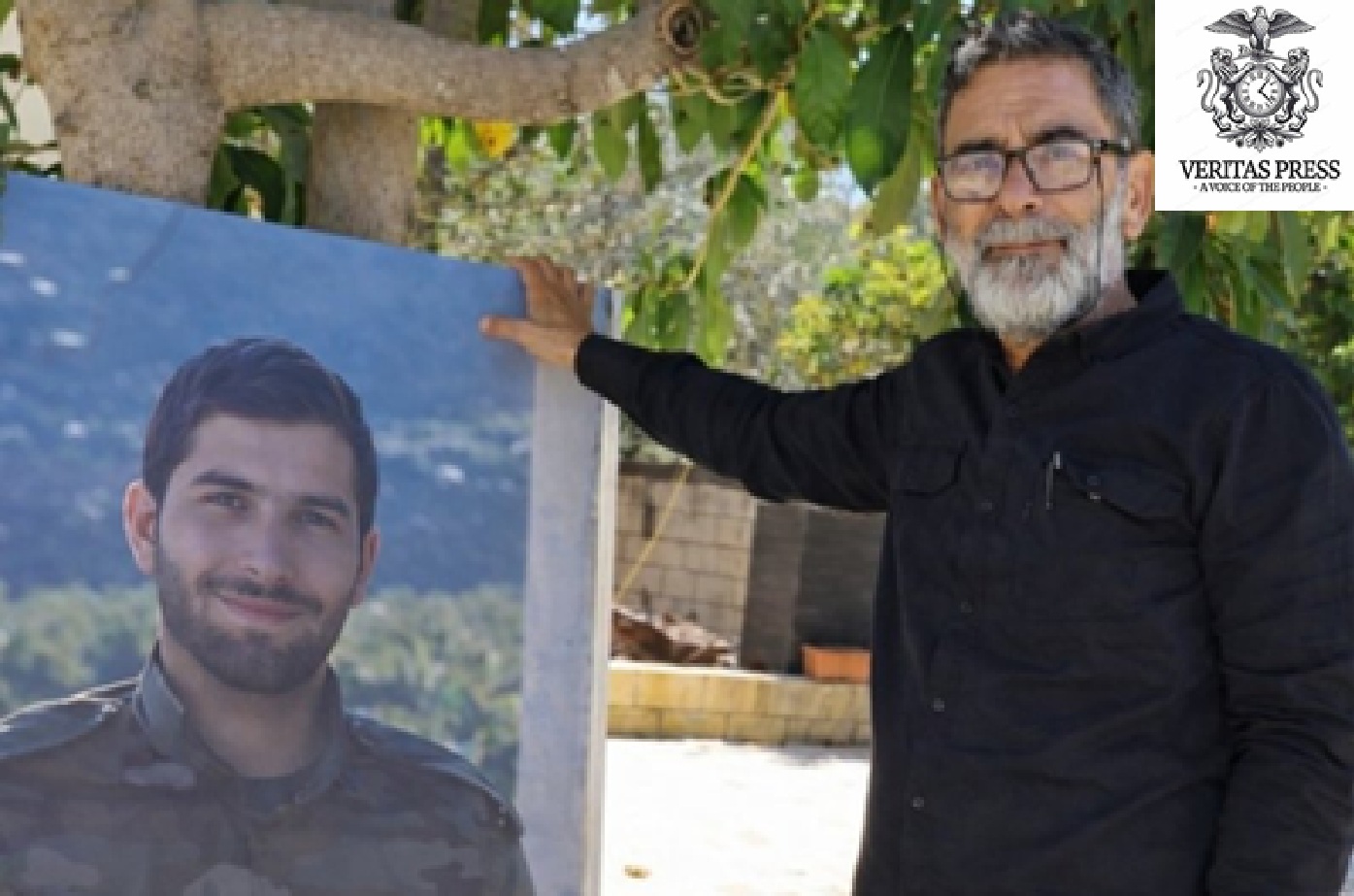
In the border village of Tallousa in southern Lebanon, 62-year-old Ahmed Turmus received a phone call that, according to his family, forced him to choose the manner of his own death.
“This is the Israeli army, Ahmed,” the voice reportedly said. “Do you want to die with the people around you… or alone?”
Ahmed answered: “Alone.”
Minutes later, an Israeli drone strike incinerated his car.
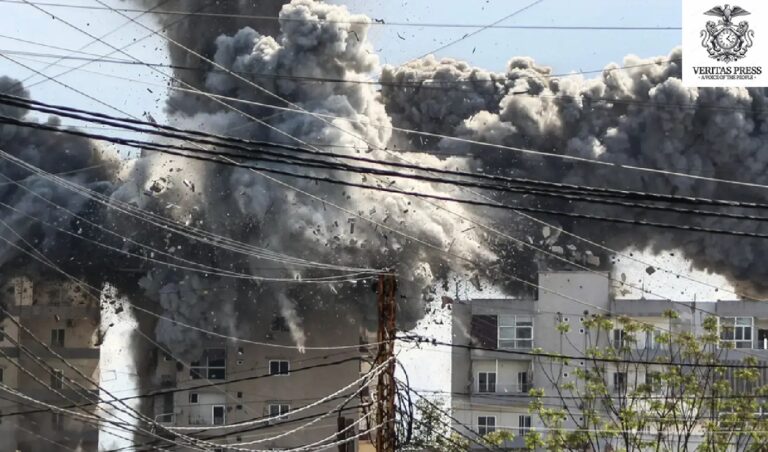
What happened on February 17 has since reverberated across the Marjayoun district and beyond, raising urgent legal and moral questions about Israel’s use of direct phone threats, drone surveillance, and targeted killings in southern Lebanon, and about a widening war that continues to redraw the rules of engagement along the northern front.
A Calculated Choice:
According to family members who spoke to Lebanese journalist Ridwan Murtada on February 18, Ahmed had been visiting relatives in Tallousa when drones appeared overhead. Then his phone rang.
He was sitting with his wife at his brother-in-law Selim’s home when the alleged call came. The ultimatum was blunt: die with your family, or die alone.
Ahmed reportedly told those inside to leave. They refused. He insisted.
For a moment, relatives say, he forgot he was not in his own home. Then he realised he would not allow his death to destroy someone else’s house, or kill anyone else. He walked out, got into his car, drove away from the residential building, stopped, and waited.
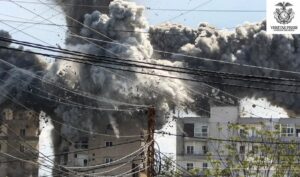
Seconds later, two missiles struck the stationary vehicle. The car exploded in flames.
His body was torn apart.
A Pattern of Telephonic Threats?
Local outlets, including Lebanon Debate and Lebanon Direct, reported that Ahmed’s phone call was not an isolated incident. In at least one previous case in southern Lebanon, a man allegedly received a similar ultimatum while driving with his wife. He stopped the car, told her to get out, and remained behind. He was later killed in a drone strike.
Such accounts, while difficult to independently verify due to limited access and the isolation of South Lebanon’s media ecosystem from international networks, have been repeated with striking consistency across citizen reports and local journalists.
If accurate, these calls would mark a chilling evolution in Israel’s cross-border operations: psychological coercion paired with precision strikes, forcing civilians or alleged targets to participate in their own execution.
Israel has not publicly commented on the specific allegation regarding Ahmed Turmus. The Israeli military has, however, acknowledged expanding operations against Hezbollah targets in southern Lebanon since late 2023, framing them as preemptive and defensive.
Yet the legal question remains stark:
If a civilian is threatened and forced to isolate himself under duress before being killed, does that constitute lawful targeting or extrajudicial execution?
Under international humanitarian law, even in an active armed conflict, the principles of distinction and proportionality apply. Civilians cannot be directly targeted unless they are taking direct part in hostilities. Moreover, coercing an individual to remove themselves from others before killing them raises serious concerns about the prohibition on terrorising civilian populations.
The Man Who Stayed:
Ahmed Turmus was not an unknown figure in Tallousa.
Local reports describe him as a devoted father of four who refused to leave his village despite repeated Israeli evacuation warnings in 2024. During heightened cross-border hostilities, the Israeli army ordered residents of 14 southern Lebanese villages, including Tallousa, to evacuate north of the Awali River. Israeli military spokesperson Avichay Adraee posted the warning publicly on X, stating that residents must leave “without delay.”
Many fled.
Ahmed stayed.
His family says he believed that abandoning the land would mean surrendering it.
His attachment was deeply personal. In January 2024, during a previous round of fighting, his son Hassan was killed in the same conflict. According to Lebanon Direct, Ahmed personally retrieved Hassan’s body from Wadi al-Salouqi.
A year later, relatives say, he dreamed of his son telling him they would meet again in February.
The symbolism now hangs heavily over the village.
Expanding War, Expanding Methods:
Ahmed’s killing comes amid an intensifying cross-border campaign between Israel and Hezbollah that has blurred the boundary between limited military exchanges and sustained war.
In recent weeks, rights groups, including Euro-Med Human Rights Monitor, have accused Israel of actions in southern Lebanon that may violate international humanitarian law, including the alleged targeting of agricultural land with incendiary or chemical agents. The organisation warned that destroying farmland “indispensable to civilian survival” could constitute a war crime if not justified by imperative military necessity.
Meanwhile, fringe Israeli settler groups have openly called for renewed settlement expansion beyond Israel’s northern border. Videos circulated in mid-February showed activists crossing into contested border areas and declaring that settlement in Lebanon was “historically correct” and morally justified.
Such rhetoric, once confined to extremist margins, increasingly intersects with official policy narratives framing the entire northern theatre as a security buffer zone.
The implications are profound: what begins as tactical drone warfare can evolve into demographic engineering.
Media Silence And Narrative Control:
Ahmed Turmus’s death was widely shared on X and covered by Lebanese citizen media. Yet it received little to no coverage in major Western outlets.
Southern Lebanon remains, in many respects, siloed, geographically, politically, and journalistically. Foreign correspondents have limited access. International newsrooms are heavily focused on Gaza and regional spillover dynamics. Stories like Ahmed’s circulate locally, shaping communal memory but rarely penetrating global discourse.
This asymmetry of attention matters. When narratives of targeted killings emerge only through local or partisan channels, they are easier to dismiss and harder to investigate.
Law, Morality, And Precedent:
If verified, the alleged phone ultimatum represents something deeply disturbing: the outsourcing of moral choice to the victim.
Instead of an unseen missile striking without warning, the victim is forced to consciously choose how others will be affected by his death. The psychological burden is weaponised.
International law prohibits threats of violence whose primary purpose is to spread terror among civilians. Even if Israel argues that Ahmed was a legitimate military target, a claim not publicly substantiated, the method described raises questions about unnecessary suffering and coercion.
Legal scholars note that targeted killing frameworks developed in counterterrorism contexts rely heavily on secrecy and classified intelligence. Without transparency, accountability is nearly impossible.
A Hero, A Casualty, Or Both?
In Tallousa, Ahmed Turmus is remembered as a hero, a father who faced death so his family would live.
But beyond the village, his killing underscores a darker trajectory: the normalisation of drone warfare as a form of remote execution, and the erosion of boundaries between battlefield and home.
Ahmed’s story is not simply about sacrifice. It is about the structure of power that makes such sacrifices necessary.
As Israel’s northern operations continue, and as the region edges closer to broader confrontation, one question lingers:
When war becomes a phone call, when death asks you to choose, what remains of the line between military necessity and terror?
Ahmed Turmus answered “alone.”
The world has yet to answer what that choice means.
Conclusion: When A Phone Call Becomes A Weapon.
Ahmed Turmus’s killing is not simply a tragic anecdote from a border war. It is a test case for how far modern militaries can push the logic of remote warfare before law, accountability, and moral restraint collapse entirely.
If the accounts reported by local journalists and family members are accurate, then what occurred in Tallousa was not just a drone strike; it was a staged execution preceded by psychological coercion. A phone call that forces a civilian to isolate himself before killing him is not merely a warning. It is the weaponisation of fear and conscience. It transforms the victim into an unwilling participant in his own targeting.
This method, if systematic, signals a troubling evolution in cross-border operations between Israel and Lebanon. For years, Israeli doctrine has emphasised “precision strikes” and “roof-knock” warnings as evidence of humanitarian restraint. But precision does not automatically equal legality. A strike can be technologically exact and still legally unlawful. It can avoid collateral damage and still constitute an extrajudicial killing.
The core issue is distinction. Was Ahmed Turmus directly participating in hostilities at the moment he was killed? Was there verified intelligence tying him to military activity? Was there an imminent threat? Without transparency from the Israeli military, the public is left with silence, and silence in targeted killing cases functions as impunity.
Equally disturbing is the broader pattern emerging in southern Lebanon. Evacuation orders to entire villages, repeated drone surveillance, agricultural destruction flagged by groups such as Euro-Med Human Rights Monitor, and rhetoric from extremist Israeli factions calling for renewed settlement expansion across the northern frontier all point to a strategy that extends beyond neutralising specific combatants. It suggests territorial conditioning: depopulate, destabilise, dominate.
In that context, Ahmed’s refusal to leave Tallousa becomes politically significant. He was not only a father protecting his family, but he was also one of the last residents who refused displacement. His killing sends a message far beyond one household: staying carries consequences.
Modern drone warfare thrives on distance, physical, emotional, and legal. Operators sit far from the blast zone. Decision-making chains are classified. Intelligence is sealed. Victims are reduced to coordinates. When a strike happens in Gaza, in southern Lebanon, or elsewhere, it is often framed as a clean, antiseptic act of security enforcement.
But Ahmed Turmus’s death punctures that illusion. There was nothing antiseptic about a man telling his relatives to leave so they would not die with him. There was nothing surgical about a burning car in a quiet village street.
The most alarming dimension of this case is normalisation. If phone ultimatums, “die alone or with your family”, become a tactic, then warfare has entered a realm where psychological torment is operationalised as procedure. And if the international community does not demand independent investigation, documentation, and accountability, such methods risk becoming standard practice in asymmetric conflicts.
This is not only about Israel and Lebanon. It is about precedent. What is tolerated here will be studied elsewhere. Remote warfare technologies are proliferating. So are doctrines that blur the line between combatant and civilian.
Ahmed Turmus chose to die alone. That choice saved his family. It does not absolve those who made the call.
The unanswered question is no longer what Ahmed chose; it is what the international system will choose now: scrutiny or silence, law or normalisation, accountability or erasure.

Britain is heading into a prolonged economic squeeze, where rising household bills, stagnant wages, and
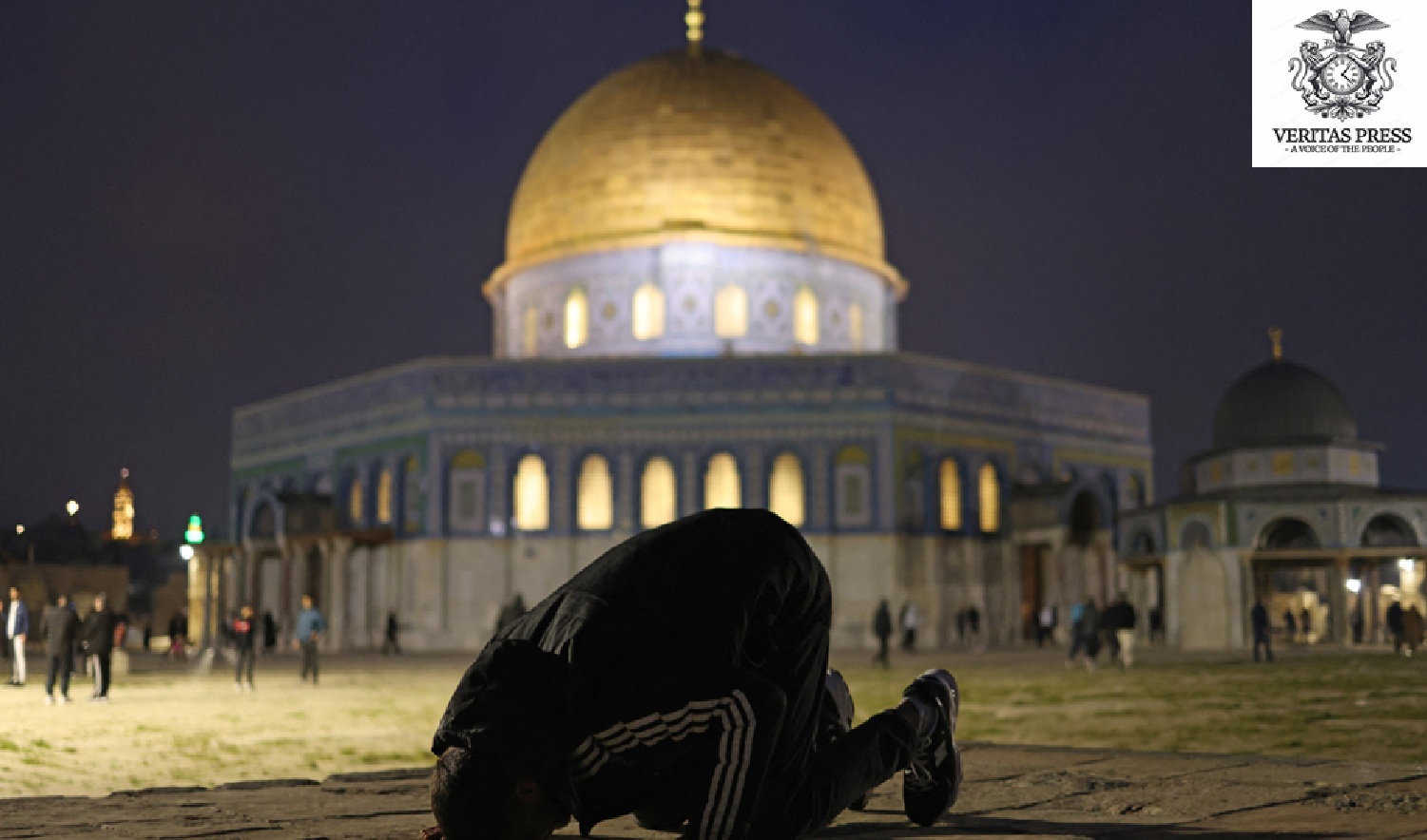
OCCUPIED EAST JERUSALEM, OPT, April 9, 2026 – After forty days of unprecedented closure, the
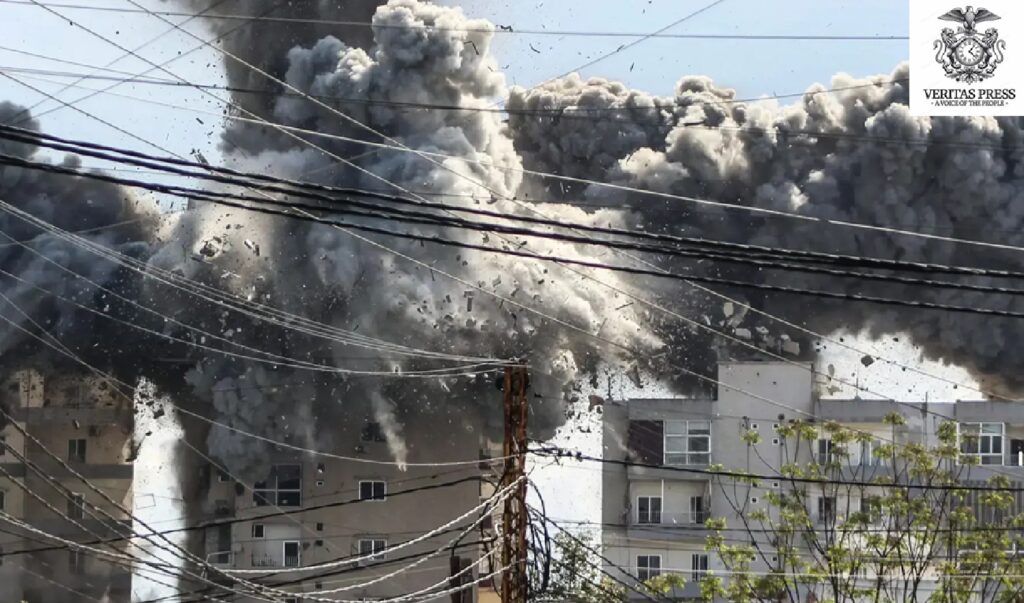
BEIRUT/ISLAMABAD — The ink had barely dried on a historic, last-minute ceasefire agreement between the
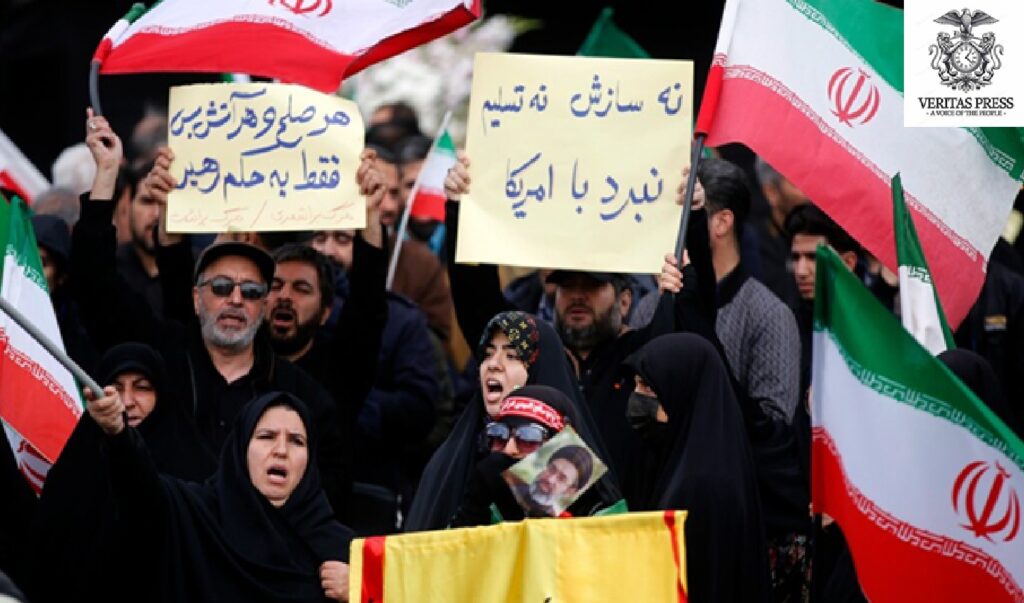
TEHRAN, WASHINGTON, TEL-AVIV – After 40 days of intense warfare that had reshaped the geopolitical
WASHINGTON – Within hours of announcing what he described as a pathway to “long-term PEACE,”

HELSINKI, FINLAND – For seven consecutive years, Finland has been crowned the “happiest country in
TEHRAN/ISLAMABAD/WASHINGTON — In the early hours of Wednesday, a deafening silence fell over the skies
TEHRAN / ISLAMABAD – The world exhaled on April 8, 2026, as the United States

In the United States, millions of people are now going into debt to buy food.
The Islamic Revolution Guards Corps (IRGC) has pounded US-owned petrochemical sites in the Wave 99