
Original Article Date Published:
Article Date Modified:
Help support our mission, donate today and be the change. Every contribution goes directly toward driving real impact for the cause we believe in.
BEIRUT/TEL AVIV — A humanitarian catastrophe is unfolding in Lebanon as Israeli military operations intensify, met with a sophisticated and sustained campaign of retaliatory strikes by Hezbollah. This brutal exchange, which has claimed nearly 2,000 lives in just over a month, is not merely an extension of a long-running conflict; it is a deliberate, multi-layered strategy playing out against the backdrop of a fragile and contested ceasefire between the United States and Iran. The violence on the ground directly contradicts and undermines a parallel, high-stakes diplomatic process unfolding thousands of miles away in Islamabad, Pakistan.
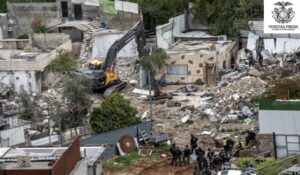
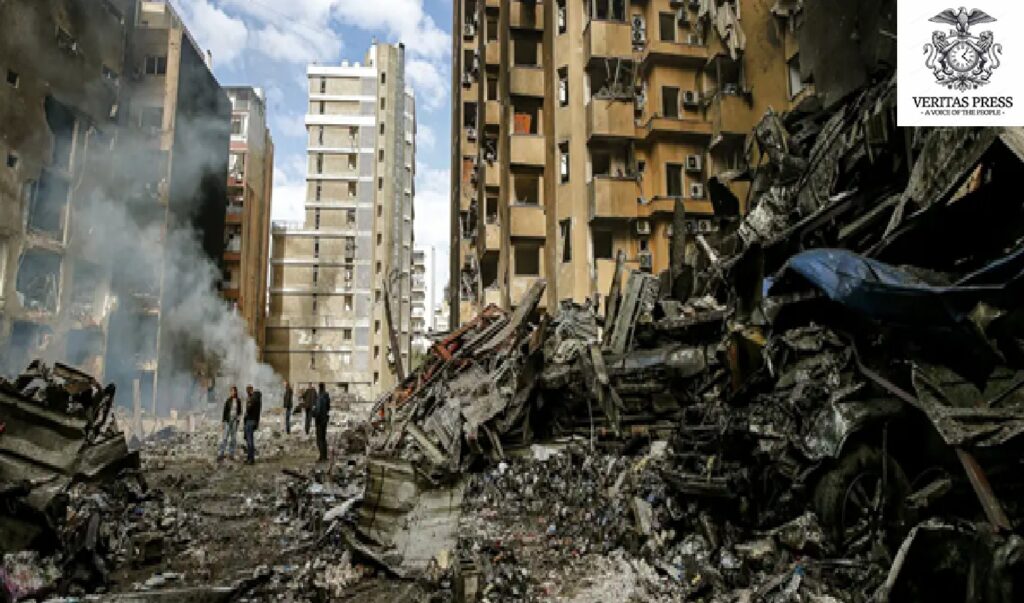
Over the past 72 hours, the tempo of war has reached a fever pitch. On Wednesday, April 8, just hours after a US-Iran truce was announced, Israeli jets conducted what the Israeli Defence Forces (IDF) described as the “largest-scale strikes against Hezbollah in Lebanon since the beginning of the current round of conflict” on February 28. The assault, a 10-minute blitz involving over 100 strikes, targeted areas across Lebanon, including densely populated residential and commercial neighbourhoods in central Beirut. The aftermath has been described by the World Health Organization’s (WHO) representative in Lebanon, Dr. Abdinasir Abubakar, who witnessed the attacks firsthand, as “horrific, very sad, alarming,” adding, “I could see in my window, actually, 10 different strikes in front of me, and buildings collapsing”.
The initial death toll from “Black Wednesday” stood at 303, but by Friday, Lebanon’s Health Ministry reported it had risen to 357, with 1,223 people wounded. The ministry stressed that the figures are “preliminary, as rescue teams continue clearing rubble and recovering human remains,” and noted, “the large number of unidentified body parts requires time for DNA testing”. The WHO’s Dr. Abubakar reinforced this grim reality, stating, “Many more people actually are still missing… They’re believed to be under the rubble”.
The Bloody Arithmetic Of “Targeted” Strikes
The Israeli military and political leadership have framed this operation as a necessary and precise campaign against Hezbollah. The IDF claimed it “eliminated more than 180 militants” in Wednesday’s strikes, though they added that “the count is still ongoing”. Israel’s Defence Minister stated, without providing evidence, that 200 “terrorists” had been killed. This narrative, however, collapses under the weight of evidence from the ground and the sheer scale of civilian death and displacement.
A list of the deceased released by Lebanon’s health ministry paints a starkly different picture, documenting that Wednesday’s carnage included at least 30 children and 71 women. In the Corniche al-Mazraa neighbourhood of central Beirut, an entire residential building was razed to the ground, killing eight people, including an employee of a local nut and confectionery shop. “They didn’t attack Hezbollah. There’s no Hezbollah here,” a paramedic named Abu Bakr, who was among the first responders at the scene, told the ABC. A local resident, Bashia Yehyawi, spoke of Nader El Khalil, a shop employee killed in the blast: “This boy doesn’t have a connection with any political party… He was newly engaged, and his parents were happy.” She concluded with a sentiment echoed across Beirut: “They’re now hitting and harming, but they’re not targeting anyone in specific. They’re just throwing poison and leaving”.
The bloodshed continued into Friday. An Israeli airstrike on the southern city of Nabatieh hit a State Security office, killing 13 Lebanese security personnel. This “painful loss,” as described by Lebanese Prime Minister Nawaf Salam, struck at the very heart of the Lebanese state, the entity Israel claims to be negotiating with. President Joseph Aoun called on the international community to “assume its responsibilities in putting an end to the repeated Israeli aggressions”.
Hezbollah’s Retaliatory Surge: A Display Of Capacity
In response to what it calls “the regime’s deadly assaults,” Hezbollah has launched a series of large-scale retaliatory strikes against Israeli targets. According to a series of statements released by the group on Saturday, the attacks included rocket barrages targeting the settlements of “Kiryat Shmona,” “Metulla,” and “Misgav Am,” as well as infrastructure in the occupied city of Safad. They also claimed to have targeted a gathering of Israeli soldiers and vehicles with a “swarm of attack drones” and achieved a “confirmed hit” on a Merkava tank on Al-Oweida Hill with a guided missile and follow-up drone strike, setting it ablaze.
The Israeli military confirmed that “Iran-backed Hezbollah fired around 30 projectiles from Lebanon into Israel on Friday,” causing damage and triggering air-raid sirens across the north. Hezbollah also claimed a significant escalation, stating it targeted a naval base in the Israeli port city of Ashdod, some 90 miles from the border. Hezbollah’s chief, Naim Qassem, declared that “the resistance will continue until the last breath,” and urged the Lebanese government to stop giving “free concessions” to Israel ahead of the Washington talks.
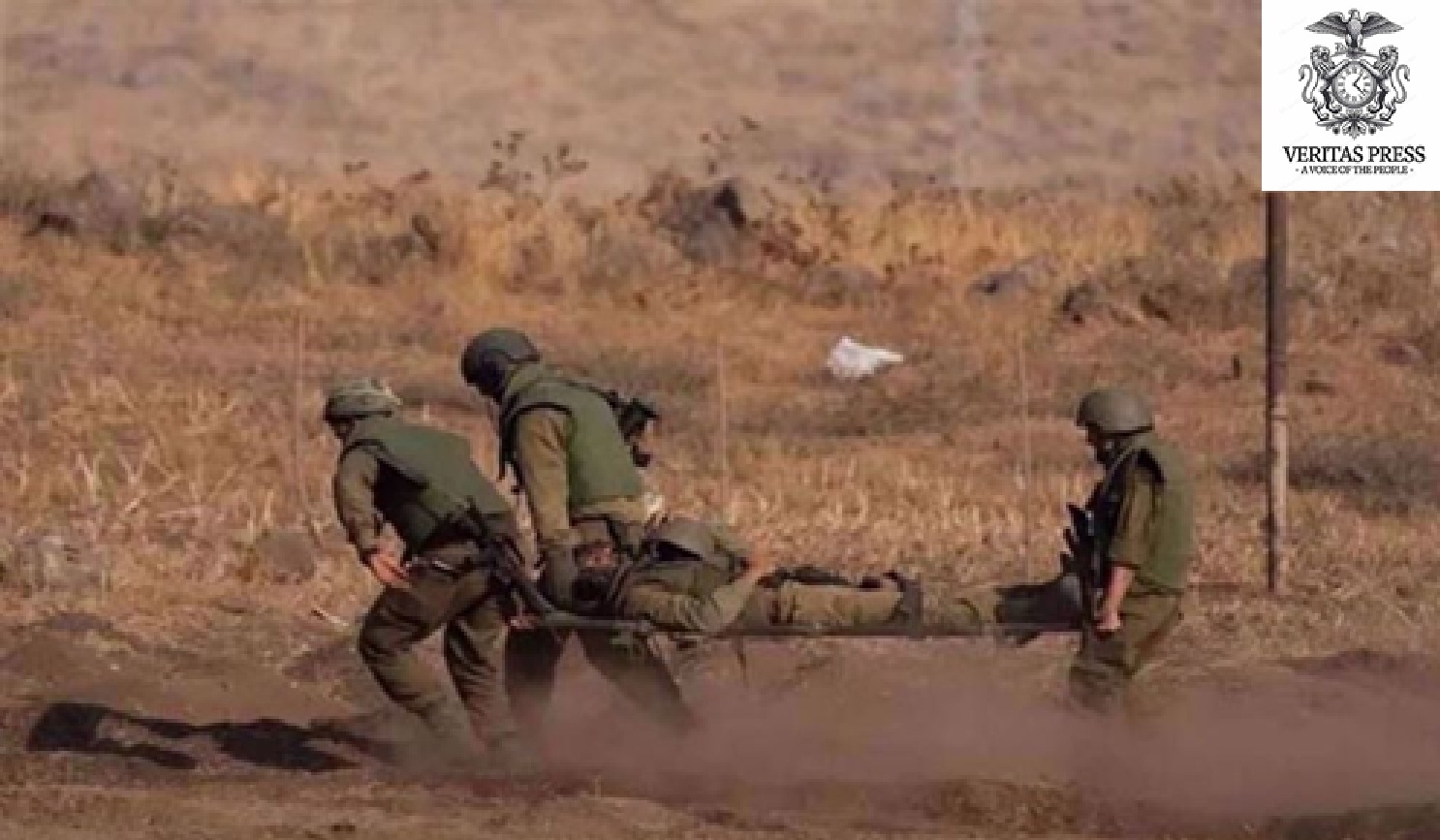
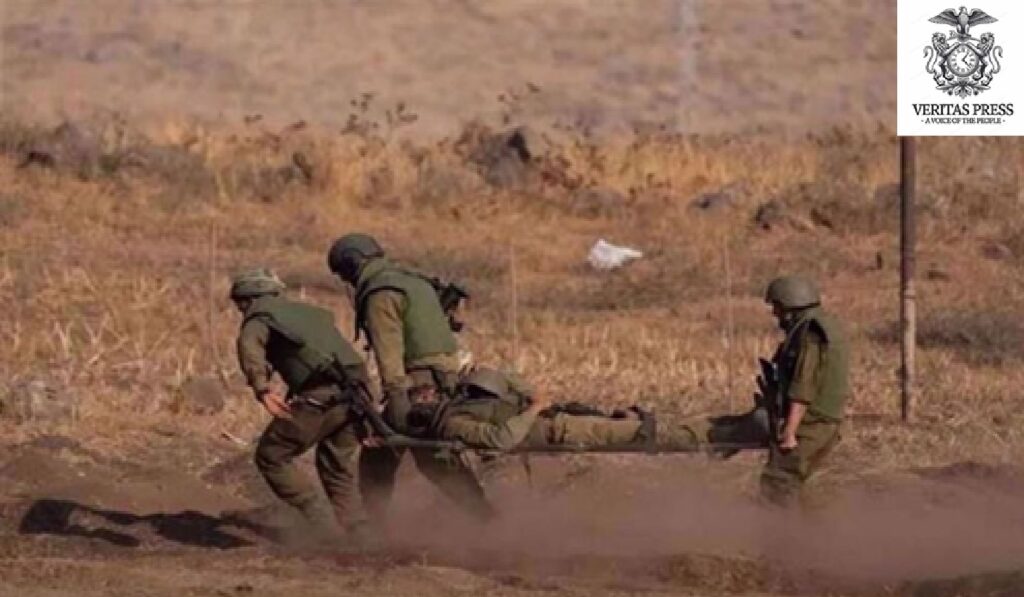
Since March 2, when Hezbollah first fired rockets into Israel in solidarity with Iran following US-Israeli strikes on Tehran, the group has reportedly launched over 1,500 attacks. The Israeli military, for its part, says it has “dismantled” more than 4,300 Hezbollah sites and killed over 1,400 fighters. As of Friday, the overall death toll in Lebanon from the conflict since March 2 had climbed to 1,953, with 6,303 people injured, according to the Lebanese Health Ministry. On the Israeli side, 12 soldiers have been killed in southern Lebanon since March 2, with a reservist seriously wounded by a drone strike on Friday.
A Diplomatic Quagmire: The Contested Ceasefire
The military escalation is occurring in the shadow of a deeply ambiguous and contested diplomatic process. A US-Iran ceasefire, brokered by Pakistan, was announced with the aim of halting the war that began on February 28. However, the very scope of this truce is a subject of fierce dispute. Both the US and Israel have changed their positions. Iran and the Pakistani mediators maintain that the ceasefire covers all fronts, including Lebanon. Tehran’s Parliament Speaker, Mohammad Baqer Qalibaf, has been unequivocal, stating that a ceasefire in Lebanon and the release of Iran’s blocked assets are “prerequisites to be met before the commencement of ceasefire negotiations between Washington and Tehran”.
The United States and Israel, however, have rejected this interpretation. Israel’s ambassador to the US, Yechiel Leiter, made his government’s position clear ahead of talks with Lebanon in Washington next week, stating, “Israel refused to discuss a ceasefire with the Hezbollah terrorist organisation, which continues to attack Israel and is the main obstacle to peace between the two countries”. This stance creates a diplomatic paradox: the US and Iran are set to negotiate a path to peace in Islamabad, while a key US ally is actively waging a major military campaign that one of the principal parties considers a violation of the very premise of those talks.
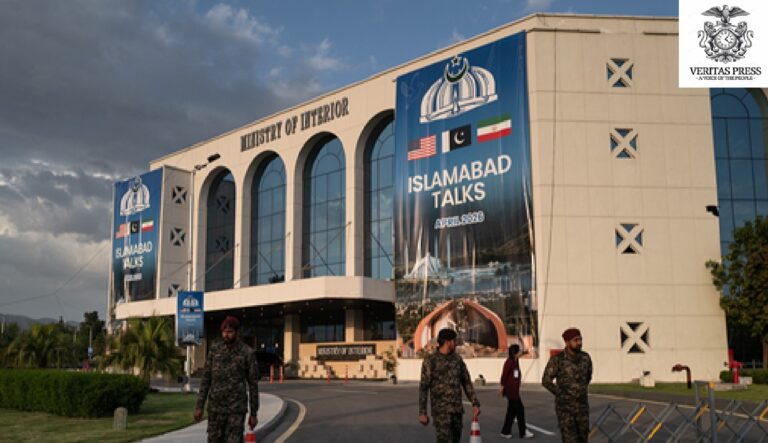
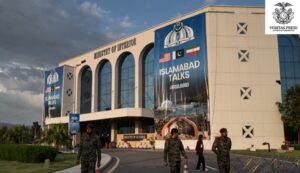
As a result, the Islamabad talks have been fraught with tension and brinkmanship. On Thursday, reports emerged that Iran would not participate until Israel stopped bombing Lebanon. Ultimately, a high-level Iranian delegation led by Parliament Speaker Qalibaf and Foreign Minister Abbas Araghchi did arrive in Islamabad. They are expected to meet with a US delegation that includes Vice President JD Vance, special envoy Steve Witkoff, and President Trump’s adviser Jared Kushner. The stakes could not be higher. Pakistani Prime Minister Shehbaz Sharif described the moment as “make or break”. Vice President Vance warned Iran not to “try to play us,” while Qalibaf stated Iran has “good intentions, but no trust in the United States”. In a rare piece of diplomatic history, any photograph of Vance and Qalibaf together would mark the highest-level face-to-face meeting between the two nations since the 1979 Islamic Revolution.
The Human Cost: A Health System On The Brink
Away from the geopolitics, a profound human tragedy is deepening. The WHO has warned that Lebanon’s health system, already fragile from years of crisis, is now “overwhelmed” and “struggling to cope”. Dr. Abubakar detailed a “warning received from Israel” that “ambulances will be attacked as well” because of their alleged use by Hezbollah. He firmly rejected this, stating, “The healthcare workers, the facilities, the ambulances are all protected under international humanitarian law… Unless we have these services available, we will not be able to save lives”.
The threat is not hypothetical. Over 50 healthcare workers have been killed and 150 wounded in the past 40 days. Hospitals in Beirut have received evacuation orders, but are physically unable to move hundreds of patients, including those in intensive care. “We have decided not to evacuate because we don’t have any other place to evacuate them [to], actually,” Dr. Abubakar explained. At Beirut’s Rafik Hariri University Hospital, staff are working in a zone that is “threatened and deemed dangerous,” but Dr. Mohammad Cheaito, the head of the emergency department, told the AP, “at the end of the day, we have a humanitarian duty”.
The UN refugee agency (UNHCR) reports that families who had already fled earlier hostilities and were contemplating a return are now being uprooted for a “second or third time” after areas previously considered safe were struck. The destruction of the Qasmiyeh Bridge, a major artery connecting southern cities, has made “moving between northern and southern Lebanon much more difficult”. The cumulative impact is staggering: the conflict has caused nearly 8,000 casualties and displaced approximately 1.1 million people, placing a severe strain on the country’s entire social fabric.
The Longer War: Territorial Ambitions And Strategic Reality
The current fighting is not happening in a vacuum. It is the brutal extension of a conflict that reignited in full force in September 2024 and was supposedly paused by a ceasefire in November of that year. In the intervening months, Israel kept up near-daily airstrikes, stating its aim was to stop Hezbollah from regrouping, while Hezbollah’s cross-border attack on March 2 shattered the fragile calm.
Behind the immediate tactical exchanges lies a longer-term strategic vision being articulated by some in the Israeli government. Reports indicate the Israeli army is proposing to replicate its Gaza “Yellow Line” model in southern Lebanon by seizing territory and destroying entire villages to create a “deep defensive line” inside Lebanese territory. Finance Minister Bezalel Smotrich has gone further, explicitly stating, “The Litani must be our new border,” a call to redraw the map that echoes expansionist ideologies.
This ground-level strategy is occurring as US intelligence assessments reveal that, despite a 40-day bombardment, Iran retains a significant strike capacity. According to a report in The Wall Street Journal, Iran still possesses an arsenal of “thousands of ballistic missiles” and has the ability to reactivate launchers from underground storage sites, contradicting claims by US Defence Secretary Pete Hegseth that Iran’s arsenal had been “depleted and decimated”. Officials are reportedly concerned that Tehran could use the current ceasefire to rebuild parts of its missile force. This strategic reality, a resilient Iran with a potent proxy force in Hezbollah, forms the unspoken backdrop against which Israel’s aggressive posture in Lebanon and the high-stakes diplomacy in Pakistan are being conducted.
Conclusion: A Ceasefire Held Hostage
As Israel and Lebanon prepare for their first direct talks at the US State Department since 1983, the ground beneath their diplomats’ feet is shifting with every airstrike and rocket salvo. The talks are expected to focus on formalising a ceasefire and establishing a timeline for negotiations, but they will take place in the shadow of a devastating war that one side refuses to acknowledge is even subject to a truce.
The international community is watching a dangerous two-tiered crisis unfold. In Islamabad, the US and Iran are tentatively exploring a path to de-escalation that could reshape the Middle East’s strategic balance. Simultaneously, in the skies over Lebanon and northern Israel, a war rages on, mocking the very notion of a ceasefire. The carnage in Lebanon, met with Hezbollah’s relentless retaliation, serves not only as a military campaign but as a powerful, violent veto over diplomatic efforts. Until the guns fall silent on all fronts, any talk of peace in the region will remain a hollow promise, held hostage by the relentless logic of war.
Yet beneath this cacophony of violence and diplomacy lies a far more sinister strategic calculus, one that reveals Israel’s outright defiance of a Lebanon ceasefire not as a mere military necessity but as a deliberate instrument of coercion aimed squarely at the negotiating table in Pakistan. By refusing to halt its bombardment of Lebanon, and by publicly declaring, through Ambassador Yechiel Leiter, that “Israel refused to discuss a ceasefire with the Hezbollah terrorist organisation”, the Israeli government is wielding the suffering of Lebanese civilians and the instability of its northern front as a cudgel to extract maximalist concessions from Iran and the United States alike. The message to Tehran is unmistakable: abandon your Lebanese allies, accept terms that dismantle Hezbollah’s military capacity, or watch your western flank burn indefinitely while your own diplomatic overtures are rendered meaningless. This is not a negotiation in good faith; it is hostage diplomacy conducted with precision-guided munitions and the bodies of women and children.
Simultaneously, the Israeli military’s ground campaign in southern Lebanon has evolved beyond the stated objective of “degrading Hezbollah infrastructure” into what analysts and leaked military proposals describe as a systematic effort to redraw the border itself. The Israeli army’s reported plan to replicate the Gaza “Yellow Line” model, seizing territory, razing entire villages, and establishing a “deep defensive line” inside Lebanese soil, has been matched by the explicit political ambitions of senior cabinet ministers. Finance Minister Bezalel Smotrich’s declaration that “The Litani must be our new border” is not a fringe statement from a peripheral figure; it is a policy blueprint emanating from a key architect of the current government’s agenda. When viewed alongside the destruction of the Qasmiyeh Bridge, a critical artery connecting southern cities, and the creation of a de facto buffer zone under Israeli military control, the trajectory points toward a slow-motion annexation of southern Lebanon. The ceasefire talks in Washington, therefore, become a charade: Israel is not negotiating the terms of peace but the terms of Lebanese surrender and territorial concession, while simultaneously holding the Iran-US negotiations in Islamabad in a strategic headlock. Any Iranian diplomat sitting across from JD Vance and Jared Kushner knows that as long as Israeli jets darken the skies over Nabatieh and the rubble of Mayfadoun smoulders, Tehran’s precondition of a “cessation of aggression on all fronts” is being deliberately sabotaged by the very power that claims to seek “peace negotiations” with Lebanon. The defiance of a ceasefire is, in this brutal arithmetic, the point, not the obstacle.
Source: Multiple News Agencies
Submissions:
For The Secure Submission Of Documentation, Testimonies, Or Exclusive Investigative Reports From Any Global Location, Please Utilise The Following Contact Details For Our Investigations Desk: enquiries@veritaspress.co.uk or editor@veritaspress.co.uk
Help Support Our Work:
Popular Information is powered by readers who believe that truth still matters. When just a few more people step up to support this work, it means more lies exposed, more corruption uncovered, and more accountability where it’s long overdue.
Help Protect Independent Journalism, Which Is Currently Under Attack.
If you believe journalism should serve the public, not the powerful, and you’re in a position to help, becoming a DONATOR or a PAID SUBSCRIBER truly makes a difference.
DONATION APPEAL: If You Found This Reporting Valuable, Please Consider Supporting Independent Journalism.
Help Support Our Work – We Know, We Know, We Know …
Seeing these messages is annoying. We know that. (Imagine what it’s like writing them … )
Your support fuels our fearless, truth-driven journalism. In unity, we endeavour to amplify marginalised voices and champion justice, irrespective of geographical location.
But it’s also extremely important. One of Veritas Press’s greatest assets is its reader-funded model.
1. Reader funding means we can cover what we like. We’re not beholden to the political whims of a billionaire owner. We are a small, independent and impartial organisation. No one can tell us what not to say or what not to report.
2. Reader funding means we don’t have to chase clicks and traffic. We’re not desperately seeking your attention for its own sake: we pursue the stories that our editorial team deems important and believe are worthy of your time.
3. Reader Funding: enables us to keep our website and other social media channels open, allowing as many people as possible to access quality journalism from around the world, particularly those in places where the free press is under threat.
We know not everyone can afford to pay for news, but if you’ve been meaning to support us, now’s the time.
Your donation goes a long way. It helps us:
- Keep the lights on and sustain our day-to-day operations
- Hire new, talented independent reporters
- Launch real-time live debates, community-focused shows, and on-the-ground reporting
- Cover the issues that matter most to our communities, in real time, with depth and integrity
We have plans to expand our work, but we can’t do it without your support. Every contribution, no matter the size, helps us stay independent and build a truly people-powered media platform.
If you believe in journalism that informs, empowers, and reflects the communities we serve, please donate today.
LONDON, UK – This wasn’t just another protest. On a Saturday afternoon in London’s Trafalgar
GAZA – The fragile ceasefire in Gaza was never a return to normalcy, but for
ISTANBUL — In a dramatic escalation of legal and political pressure against Israeli leadership, the
ISLAMABAD, TEHRAN, WASHINGTON – For 21 hours, the world watched Islamabad. Delegations from Washington and
GAZA CITY / GENEVA – The ceasefire was supposed to mark the beginning of the
EAST JERUSALEM — On a crisp April morning in the Ras al-Amud neighbourhood of Silwan,
BEIRUT/TEL AVIV — A humanitarian catastrophe is unfolding in Lebanon as Israeli military operations intensify,

US, NASA – On Friday, April 10, 2026, at precisely 5:07 p.m. PDT (0007 GMT
A fragile ceasefire intended to pause a 40-day war and reopen the world’s most critical
ISLAMABAD / BEIRUT — As dawn breaks over a locked-down Islamabad on Friday, the world’s