


Original Article Date Published:
Article Date Modified:
Help support our mission, donate today and be the change. Every contribution goes directly toward driving real impact for the cause we believe in.
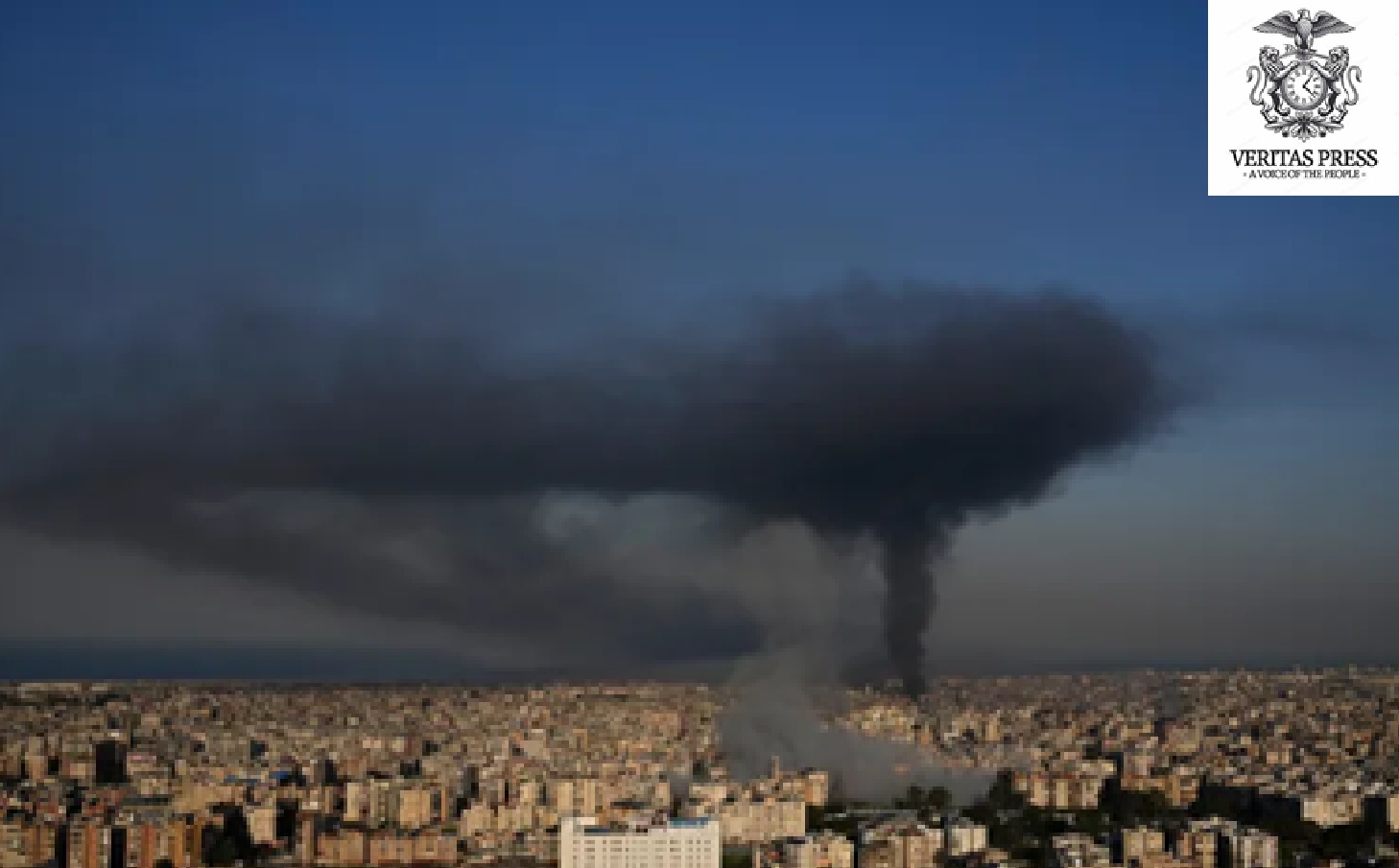
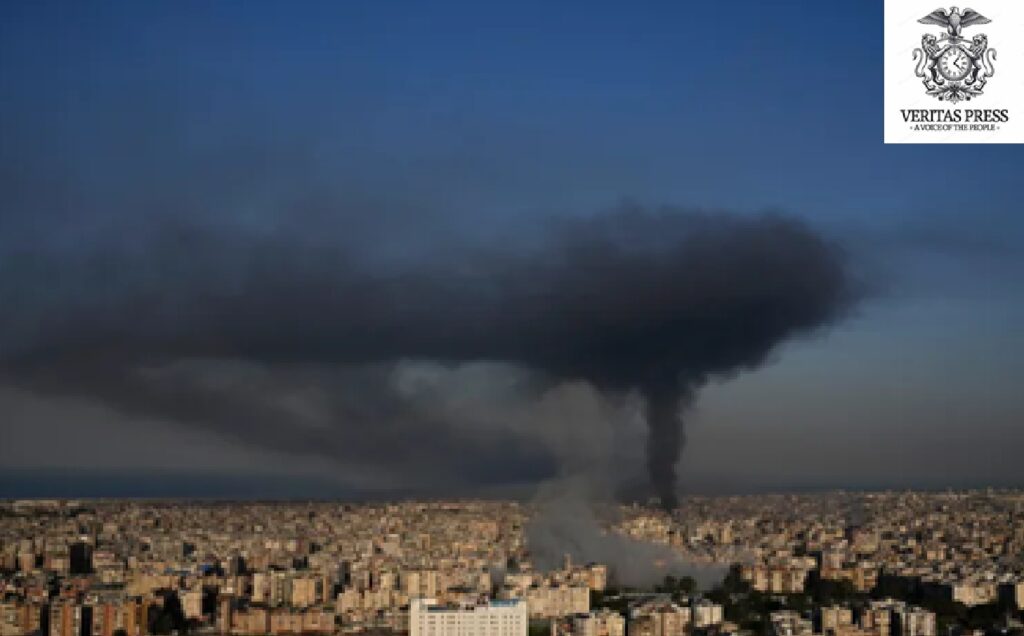
BEIRUT, LEBANON – The echoes of the 2024 ceasefire, already faint after months of daily violations, have been definitively silenced. On Tuesday, Israeli occupation forces launched a new ground incursion into southern Lebanon, fundamentally escalating a conflict that has now merged with a wider regional war following the US-Israeli campaign against Iran. This is not merely a “retaliatory” skirmish but a dangerous new chapter, exposing the fragility of a truce that was never honoured and the powerlessness of a Lebanese state caught between Israeli aggression and Hezbollah’s formidable military apparatus.
“Forward Defence” Or Creeping Occupation? The Ground Incursion
While Israeli officials frame the operation in tactical terms, the reality on the ground points to a more strategic and potentially prolonged entanglement. The Israeli military announced that troops from the 91st Division had begun “operating in southern Lebanon,” seizing “strategic points” to create an “additional security layer” for northern settlements. Defence Minister Israel Katz stated he and Prime Minister Benjamin Netanyahu had authorised the forces “to advance and take control of additional strategic locations in Lebanon to prevent attacks on Israeli border communities”.
However, this “forward defence” measure is built on the shaky ground of prior violations. Israel has maintained an occupation of five “points” inside Lebanon since the November 2024 ceasefire, a constant source of friction that Hezbollah and Lebanese officials argue voided the agreement from the start. Tuesday’s operation expanded this footprint, with forces advancing into the towns of Kfarkela and Qouzah.
Military spokesman Lieutenant Colonel Nadav Shoshani insisted the move was “purely defensive,” aimed at removing an “imminent threat”. Yet, this justification is met with deep scepticism in Beirut. Security analyst Ali Rizk told Al Jazeera that such statements should be taken with “caution,” adding that history shows land confrontations “cost them [Israel] very dearly,” as evidenced in the 2024 war. The incursion is accompanied by a massive military buildup, with images emerging of tanks clustered at the border fence.
The Lebanese Army’s Impossible Position: Withdrawal And Sovereignty.
The incursion has laid bare the impossible position of the Lebanese Armed Forces (LAF). Facing one of the world’s most advanced militaries with a fraction of the firepower, the LAF has been forced into a humiliating but pragmatic redeployment.
A Lebanese military source confirmed to Al Jazeera that troops have pulled back from “advanced positions” along the border to ensure their safety. Reuters cited witnesses reporting a withdrawal from at least seven forward operating posts. A Lebanese government official explained the painful logic to Mada Masr: Cabinet members discussed the evacuation to spare Lebanese soldiers a direct confrontation, “especially since they lack the necessary weaponry for such a confrontation.”
This retreat is a stark visual representation of the state’s fragility. While the LAF is one of the few institutions trusted across Lebanon’s sectarian divide, it is being forced to cede ground, literally and figuratively, to both Israeli firepower and Hezbollah’s resistance narrative. The contrast is sharp: the state’s army retreats, while Hezbollah fights.
Hezbollah’s Response: Drone Swarms And The End Of “Patience”.
For Hezbollah, the calculus is different. Having spent fifteen months engaged in a war of attrition that decimated its leadership but proved its resilience, the group is projecting an image of renewed strength and unwavering commitment.
In a coordinated early morning assault on Tuesday, Hezbollah announced it had targeted three key Israeli military installations. Using “squadrons of attack drones,” the group struck:
- The Meron air operations monitoring and management base in northern Israel, claiming damage to a radar and command building.
- Radar sites and control rooms at the Ramat David Airbase.
- The Nafah base, headquarters of the 210th Division in the occupied Syrian Golan, was hit by a “large barrage of rockets”.
In a statement, Hezbollah framed these attacks not as aggression, but as a necessary response to the failure of diplomacy. “For fifteen months, the Israeli aggression against Lebanon has continued with killing, destruction, bulldozing and all forms of criminality,” the group said, adding that “all political and diplomatic moves have not been effective in curbing this aggression.”
The rhetoric from the group’s leadership has hardened considerably. Senior Hezbollah official Mahmoud Qmati declared that Israel wanted open war, “so let it be an open war.” In a direct challenge to the Lebanese government’s recent attempts to curb its power, he added, “The era of patience has ended, leaving us no option but to return to resistance”. This directly contradicts the government’s ban on its military activities, setting the stage for a major internal political confrontation.
A State Divided: Aoun’s Ban And Hezbollah’s Dismissal.
Perhaps the most significant political development has been the unprecedented move by Lebanese President Joseph Aoun and Prime Minister Nawaf Salam to ban Hezbollah’s military activities. President Aoun declared the decision “final,” stating there is “no turning back” and affirming that the authority to decide on war and peace rests solely with the state.
The move, however, appears to be an acknowledgement of the state’s weakness rather than an assertion of its strength. It was taken as the state scrambled to manage a displacement crisis, not as it was enforcing its will on the ground.
Hezbollah’s response was swift and dismissive, highlighting the government’s impotence in the face of Israeli attacks. In a statement, the group acknowledged the government’s “weakness and deficiency” in the face of the “brutal Zionist enemy,” and therefore saw “no justification” for the government to take “aggressive measures against the Lebanese who reject the occupation.” The group’s message was clear: when the state cannot defend its people, the resistance will.
Even more telling is the response from Lebanon’s diverse communities. In an unprecedented move, Shia clans from the eastern Bekaa Valley, a heartland of Hezbollah support, issued a statement backing the president and prime minister’s stance, calling for full state control of all weapons. This suggests the war is creating fissures within the Shia community itself, as families bear the brunt of the displacement and destruction.
The Human Cost: A Second Wave Of Displacement.
While leaders debate sovereignty and strategy, civilians are paying the price with their lives and livelihoods. The UN refugee agency (UNHCR) reported that over 31,000 people have been displaced since Monday, seeking shelter in schools, mosques, and overcrowded apartments.
UNHCR spokesperson Babar Baloch painted a harrowing picture: “Many more slept in their cars on the side of roads, or were still stuck in traffic jams on the roads leaving the south of Beirut”. UNICEF added a grim statistic: at least seven children have been killed and 38 injured since the escalation began.
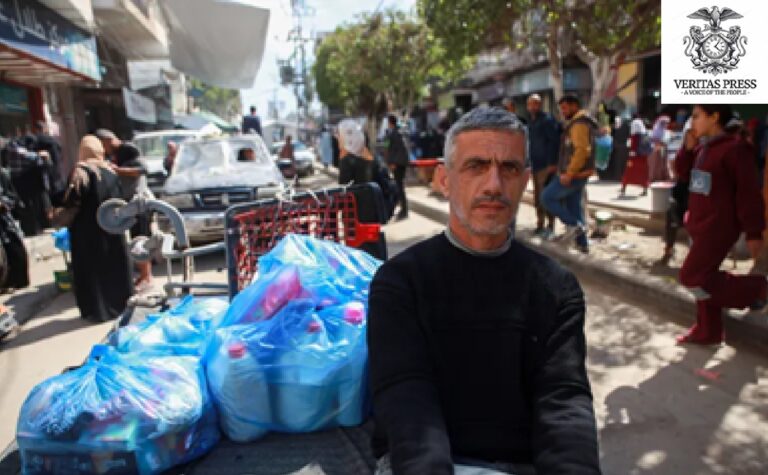
On the ground, the stories are of chaos and despair. Ahmad Taleb, who fled the town of Aaitit with his family, told Mada Masr of their desperate flight. They initially sought safety in Sarafand, only to be met with a new Israeli evacuation warning at dawn. Forced to move again, they are now crammed into a small apartment in Sidon with over 20 relatives. “We can’t sleep. We can’t shower. There are just too many people,” he said.
Ahmed Zeino, who left the border town of Blida, described a gruelling 10-hour journey to Sidon, only to find no accommodation. “I’ve tried calling every number I could find, but nothing,” he said, noting that landlords were now asking for over $1,400 a month for small units, a staggering sum in a country mired in economic collapse.
The Regional Tinderbox: From Tehran To Baghdad.
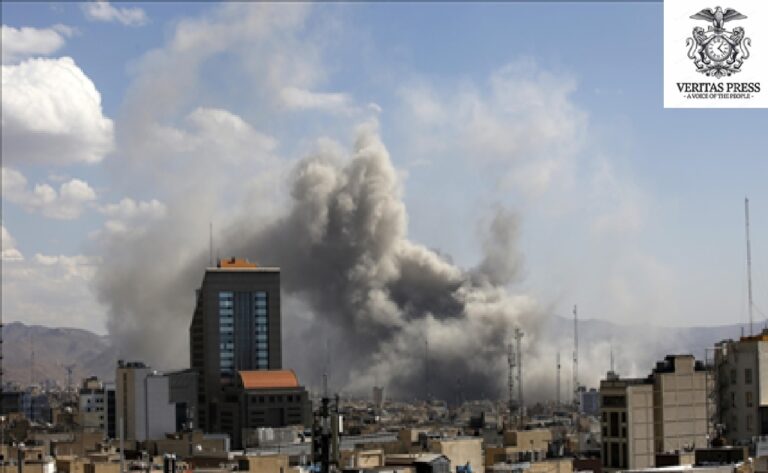
The conflict is no longer a bilateral one. The Israeli ground incursion into Lebanon is a direct offshoot of the wider US-Israeli campaign against Iran, which reportedly included the assassination of Iran’s Supreme Leader, Ayatollah Ali Khamenei. The International Atomic Energy Agency (IAEA) confirmed damage to Iran’s Natanz Fuel Enrichment Plant. The Iranian Red Crescent reported at least 787 people killed in Iran since the strikes began.
The war is metastasising. In northern Iraq, drone strikes blamed on Iran hit the Azadi camp, which houses Iranian Kurdish fighters, wounding one person. Concerns are rising that Iraq’s Popular Mobilisation Forces (PMF) could be drawn further into the fray.
The United States, deeply embedded in the conflict, is taking significant defensive measures. The US Embassy in Kuwait was closed after being hit, and the embassy in Riyadh was struck by a drone, causing a fire. The State Department has ordered non-emergency personnel and family members to leave a host of countries, including the UAE, Qatar, Kuwait, Bahrain, Iraq, and Jordan. With no Senate-confirmed ambassadors in key Gulf states, Washington appears diplomatically isolated even as it ramps up its military posture.
Conclusion: The Illusion Of Containment.
The ground incursion into Lebanon marks the final collapse of the November 2024 ceasefire, an agreement that was more of a truce than a resolution. Israel’s stated goal of creating a “security layer” is, in effect, a land grab that deepens its occupation and guarantees future conflict.
For Lebanon, the situation is a catastrophic convergence of crises. The state is issuing decrees that it cannot enforce. The army is retreating to avoid annihilation. Hezbollah is fighting, but in doing so, it is drawing the country deeper into a war it did not collectively choose. And the people, yet again, are left to flee, to mourn, and to wonder if there is any force, local or international, capable of pulling them back from the abyss.
Source: Multiple News Agencies
Submissions:
For The Secure Submission Of Documentation, Testimonies, Or Exclusive Investigative Reports From Any Global Location, Please Utilise The Following Contact Details For Our Investigations Desk: enquiries@veritaspress.co.uk or editor@veritaspress.co.uk
Help Support Our Work:
Popular Information is powered by readers who believe that truth still matters. When just a few more people step up to support this work, it means more lies exposed, more corruption uncovered, and more accountability where it’s long overdue.
Help Protect Independent Journalism, Which Is Currently Under Attack.
If you believe journalism should serve the public, not the powerful, and you’re in a position to help, becoming a DONATOR or a PAID SUBSCRIBER truly makes a difference.
DONATION APPEAL: If You Found This Reporting Valuable, Please Consider Supporting Independent Journalism.
Help Support Our Work – We Know, We Know, We Know …
Seeing these messages is annoying. We know that. (Imagine what it’s like writing them … )
Your support fuels our fearless, truth-driven journalism. In unity, we endeavour to amplify marginalised voices and champion justice, irrespective of geographical location.
But it’s also extremely important. One of Veritas Press’s greatest assets is its reader-funded model.
1. Reader funding means we can cover what we like. We’re not beholden to the political whims of a billionaire owner. We are a small, independent and impartial organisation. No one can tell us what not to say or what not to report.
2. Reader funding means we don’t have to chase clicks and traffic. We’re not desperately seeking your attention for its own sake: we pursue the stories that our editorial team deems important and believe are worthy of your time.
3. Reader Funding: enables us to keep our website and other social media channels open, allowing as many people as possible to access quality journalism from around the world, particularly those in places where the free press is under threat.
We know not everyone can afford to pay for news, but if you’ve been meaning to support us, now’s the time.
Your donation goes a long way. It helps us:
- Keep the lights on and sustain our day-to-day operations
- Hire new, talented independent reporters
- Launch real-time live debates, community-focused shows, and on-the-ground reporting
- Cover the issues that matter most to our communities, in real time, with depth and integrity
We have plans to expand our work, but we can’t do it without your support. Every contribution, no matter the size, helps us stay independent and build a truly people-powered media platform.
If you believe in journalism that informs, empowers, and reflects the communities we serve, please donate today.
BEIRUT, LEBANON – The echoes of the 2024 ceasefire, already faint after months of daily
MINAB, IRAN – Funerals were held this week for 168 victims of the devastating bombing
On March 2, 2026, the United Nations Security Council convened for a meeting that was

LONDON, UK – Prime Minister Keir Starmer insists the United Kingdom is “not at war.”

Global financial markets have been jolted by the rapid escalation of war between the United
DEIR EL-BALAH, GAZA STRIP – The first wave of panic did not arrive with an
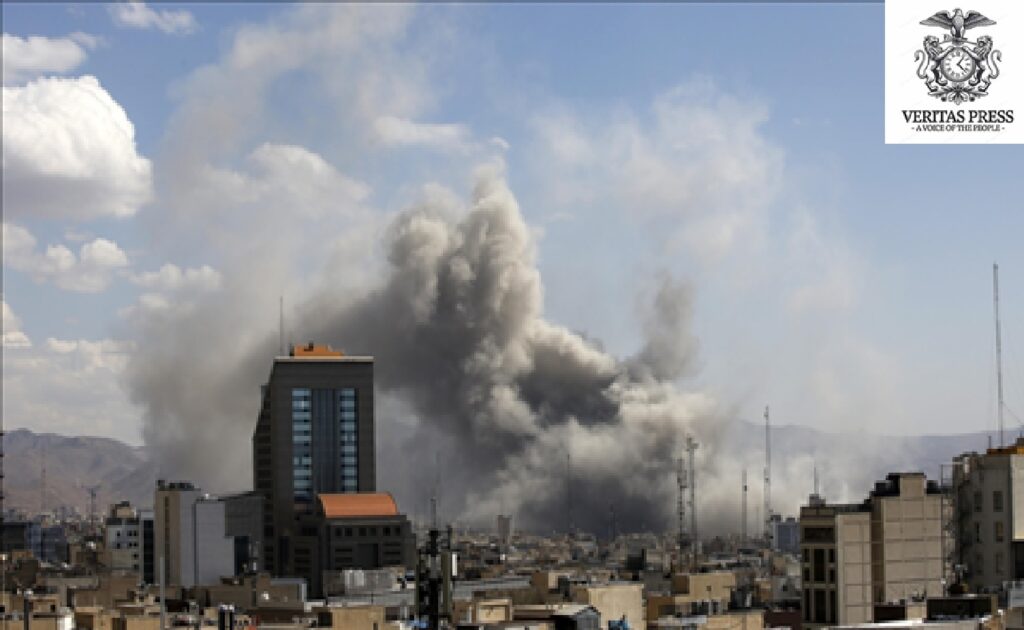
The human cost of the “Lion’s Roar” operation has crystallised into a stark, horrifying statistic.
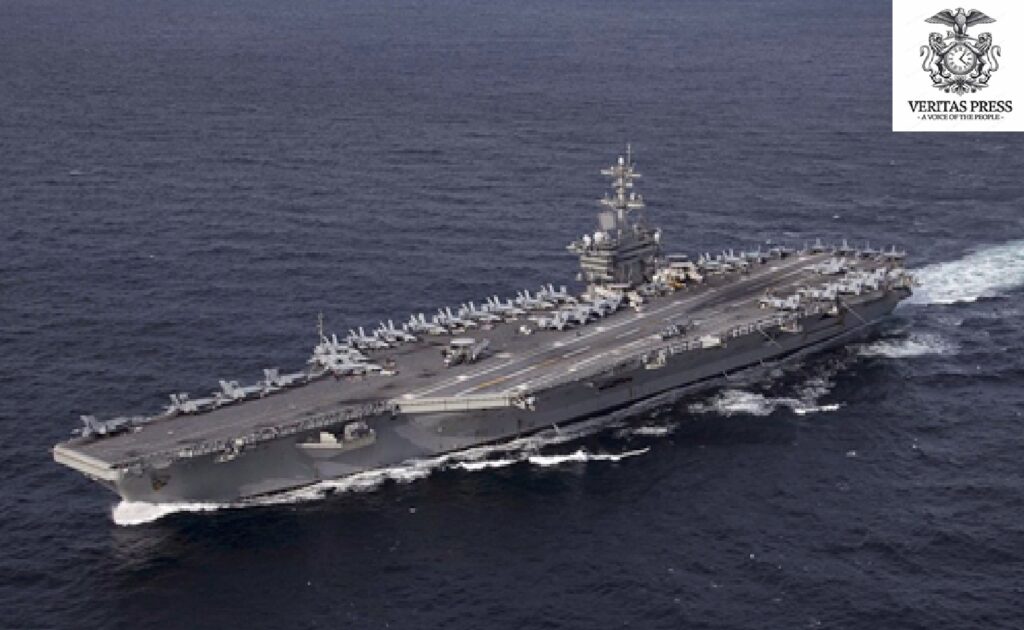
IRAN – The third day of “Operation Epic Fury” has plunged the Middle East into
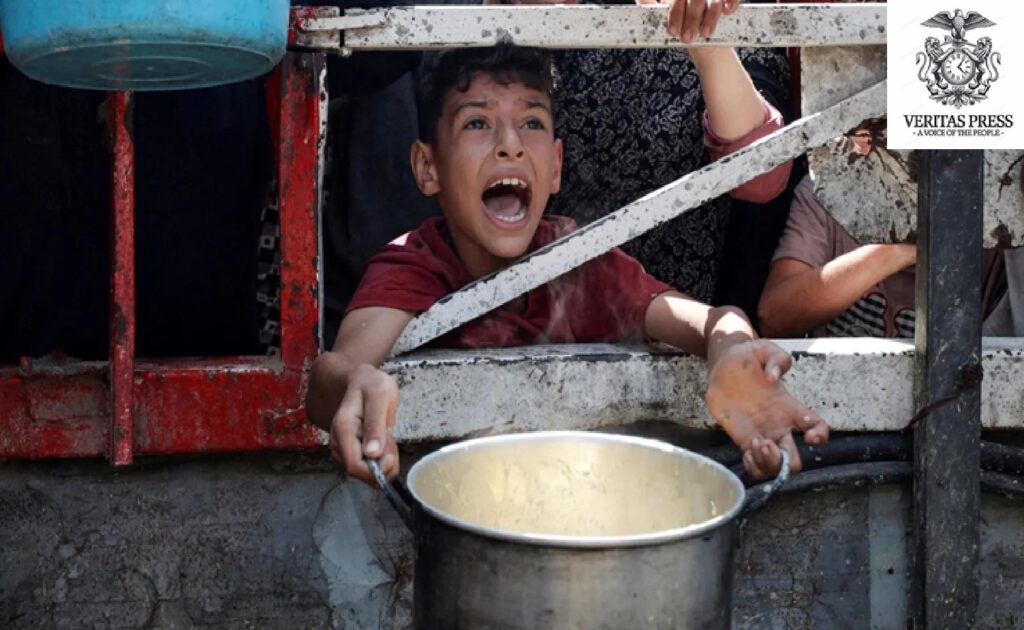
On Saturday, February 28, 2026, Israeli authorities announced the indefinite closure of all crossings into
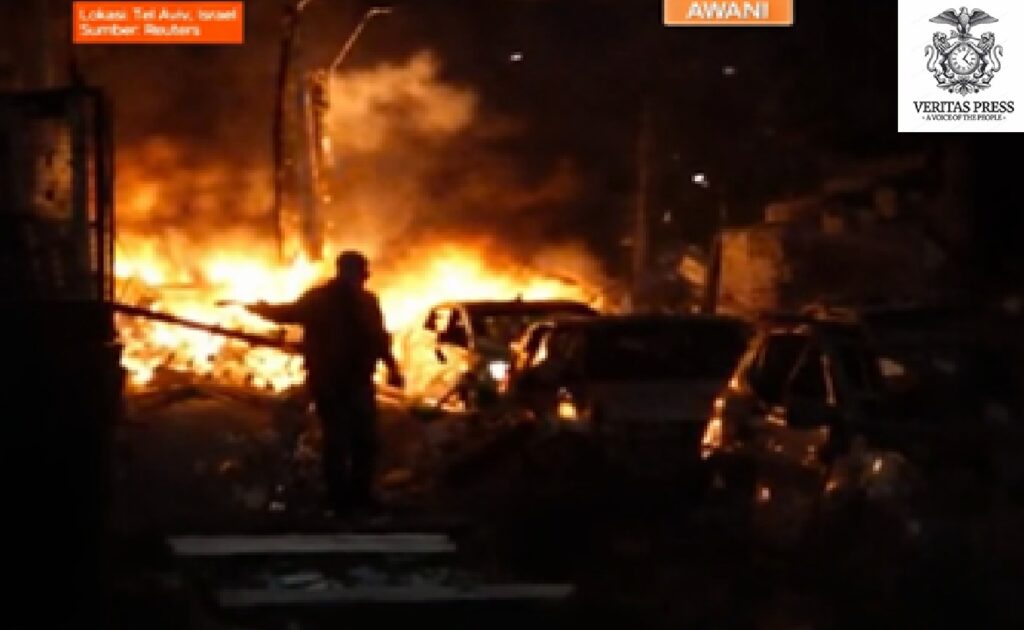
The military confrontation between Israel, the United States, and Iran is no longer confined to