
Original Article Date Published:
Article Date Modified:
Help support our mission, donate today and be the change. Every contribution goes directly toward driving real impact for the cause we believe in.
JERUSALEM, OPT – Occupied Jerusalem is witnessing what Palestinian officials, religious authorities, and analysts describe as one of the most serious escalations in decades at Al-Aqsa Mosque, a flashpoint whose status has long been central to the Israeli-Palestinian conflict.
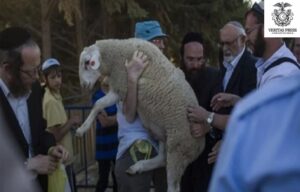
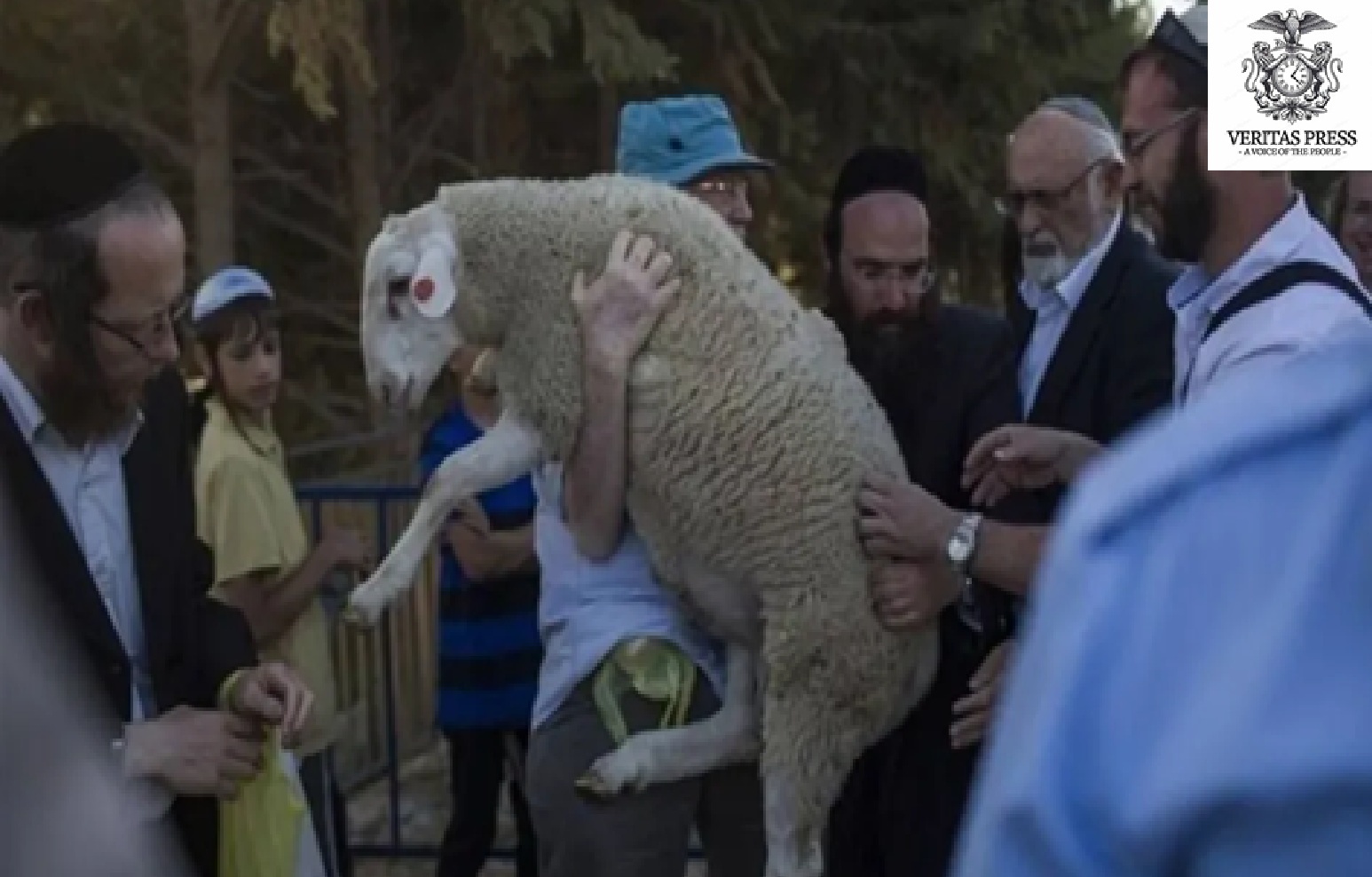
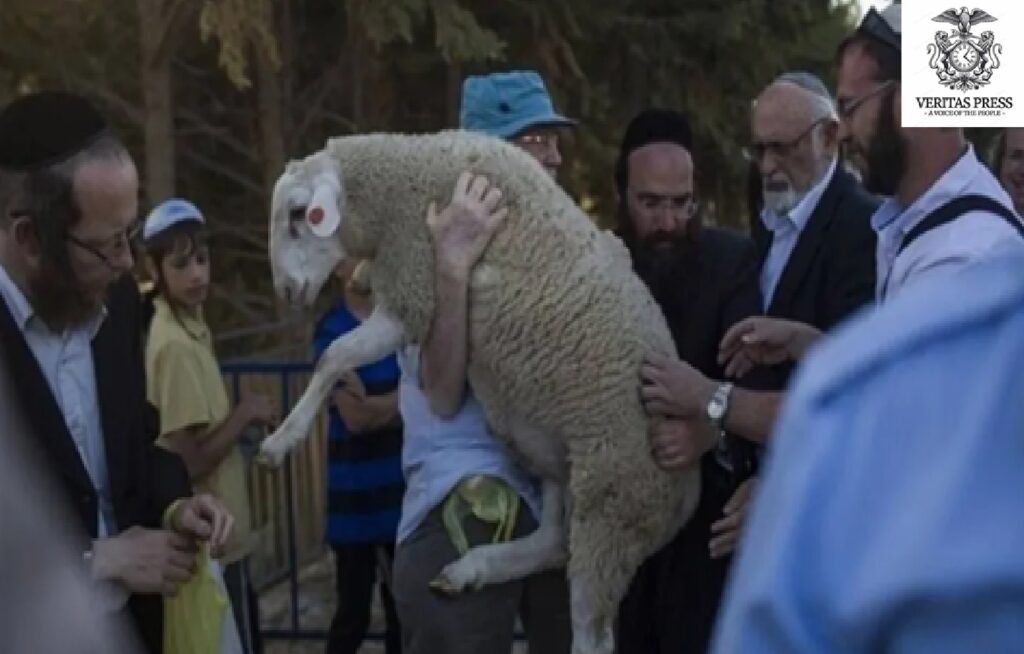
During this year’s Jewish Passover, the Jerusalem Governorate documented seven attempts by Israeli settler groups to introduce sacrificial animals into the mosque compound, the highest number recorded since Israel’s occupation of East Jerusalem in 1967.
The attempts, some of which saw settlers reach the Old City carrying lambs or goats, coincide with an unprecedented 37-day closure of both Al-Aqsa and the Church of the Holy Sepulchre, raising urgent questions about religious freedom, political intent, and the future of one of the world’s most sensitive religious sites.
From Fringe Ritual To Political Project:
Palestinian authorities and religious officials say the attempts to carry out animal sacrifice inside Al-Aqsa are not isolated provocations, but part of a long-term ideological campaign driven by Israeli settler movements seeking to transform the site.
“These are not symbolic acts anymore,” a senior Islamic Waqf official in Jerusalem told local media.
“They are organised, repeated, and protected. This is about changing Al-Aqsa itself.”
Groups often referred to as “Temple Mount organisations” have openly advocated for the reintroduction of biblical sacrificial rites at the compound, known in Jewish tradition as the Temple Mount, viewing such acts as a precursor to the construction of a Third Temple.
In recent years, their messaging has become increasingly sophisticated. According to the Jerusalem Governorate, these groups have launched intensive digital campaigns using AI-generated imagery and videos, depicting sacrificial rituals taking place inside the mosque compound.
A Palestinian analyst tracking these networks described the strategy:
“This is narrative engineering. First you imagine it, then you normalise it, and eventually you attempt to implement it.”
Israeli Position: “Freedom Of Worship” Or Managed Escalation?
Israeli authorities have largely framed their policies in Jerusalem as a matter of maintaining security and freedom of access, though critics argue these claims mask a deeper shift.
Israeli police, in statements cited by Israeli media, have said they are working to “balance freedom of worship with security needs,” particularly amid heightened regional tensions following the US-Israeli war on Iran and its spillover into Lebanon.
At the same time, Israeli officials have not publicly endorsed animal sacrifice attempts, and such acts remain formally prohibited under Israeli law.
However, critics, including Israeli human rights groups, argue that enforcement has been inconsistent.
An Israeli NGO monitoring settlement activity noted:
“While officially banned, these movements operate in a permissive environment. The line between tolerance and encouragement is becoming increasingly blurred.”
Far-right Israeli ministers have also repeatedly voiced support for expanding Jewish prayer rights at the site, further fuelling Palestinian fears of the gradual annexation of religious space.
Total Closure: Security Or Reshaping Control?
Since February 28, Israeli authorities have imposed a sweeping closure on Al-Aqsa and the Church of the Holy Sepulchre, citing emergency security conditions linked to regional conflict.
For Palestinians, however, the closure tells a different story.
- Five consecutive Fridays without Muslim worshippers at Al-Aqsa
- Ninth full Friday closure since 1967
- Restricted Christian access during major religious observances
A Jerusalem resident described the impact:
“They have emptied the mosque. Not just physically, but symbolically. It is being disconnected from its people.”
Christian leaders have also voiced concern. European diplomats reportedly raised objections after Israeli authorities barred senior clergy, including the Latin Patriarch, from participating in Palm Sunday ceremonies.
A representative of a Jerusalem church body said:
“When both Muslim and Christian holy sites are restricted at the same time, this is no longer about security. It is about control.”
International Law: Occupation, Status Quo, And Religious Rights.
Under international law, East Jerusalem is considered occupied territory, and Israel is bound by legal obligations regarding religious sites.
Legal experts point to several frameworks:
- The United Nations has repeatedly affirmed the status of East Jerusalem as occupied
- UNESCO recognises Al-Aqsa as a Muslim holy site and has warned against unilateral changes
- The International Court of Justice has emphasised protections for civilians and religious freedoms under occupation
A legal scholar specialising in international humanitarian law explained:
“The occupying power must preserve the status quo at religious sites. Systematic restrictions combined with facilitation of ideological incursions could constitute a breach of those obligations.”
Human rights organisations have also raised concerns that prolonged closures may violate protections on freedom of religion and access to places of worship.
Historical Context: A Gradual Shift Since 1967.
The current escalation cannot be understood in isolation.
Since Israel’s occupation of East Jerusalem in 1967, Al-Aqsa has been governed under a fragile “status quo” arrangement:
- The Islamic Waqf administers the site
- Non-Muslims may visit, but not pray
However, over the past two decades, Palestinians and observers say this arrangement has been steadily eroded:
- Increasing frequency of settler incursions under police protection
- Growing calls within Israeli political circles for Jewish prayer rights
- Periodic closures during times of unrest
The seven attempted sacrificial incursions in 2025 represent, in this context, a qualitative shift from access disputes to ritual transformation.
Regional Dimension: From Jerusalem To A Wider Conflict.
The developments in Jerusalem are unfolding amid a broader regional crisis.
The closure of Al-Aqsa began shortly after the outbreak of the US-Israeli war on Iran on February 28, followed by an escalation in Lebanon in early March.
Regional actors have increasingly linked events in Jerusalem to wider instability.
Türkiye has issued repeated warnings, calling for the protection of Al-Aqsa and urging international intervention.
In a recent statement, Turkish officials said:
“Attempts to alter the status of Al-Aqsa Mosque threaten not only Palestinians, but regional peace as a whole.”
Analysts warn that Jerusalem remains a symbolic trigger point, capable of igniting unrest across the region, from the West Bank to Gaza and beyond.
Voices From The Ground: “This Is A Turning Point.”
For Palestinians in Jerusalem, the convergence of closures, settler activity, and ideological mobilisation signals a critical moment.
Local activists have called for mass mobilisation at checkpoints surrounding the Old City, attempting to break what they describe as a “siege” on the mosque.
A youth activist from East Jerusalem said:
“This is not just about prayer. It is about existence. If Al-Aqsa changes, everything changes.”
The Road Ahead: Entrenchment Or Intervention?
The Jerusalem Governorate has issued urgent appeals for Palestinian, Arab, and international action, warning that failure to respond could allow irreversible changes.
The central question now is whether the current trajectory represents:
- A temporary escalation tied to a regional conflict
or - A deliberate, incremental strategy to redefine control over Al-Aqsa
For many observers, the answer may already be visible on the ground.
“What we are witnessing,” one analyst said,
“It is not a sudden crisis, but the culmination of a long process. The difference now is that it is no longer being hidden.”
As Jerusalem stands at the intersection of religion, politics, and conflict, the fate of Al-Aqsa Mosque may once again determine not only the future of the city but the stability of the wider region.
Conclusion: Between “Status Quo” And A Project Of Transformation.
What is unfolding in occupied Jerusalem can no longer be credibly framed as a series of reactive security measures. The prolonged closure of Al-Aqsa Mosque, the simultaneous restriction of access to the Church of the Holy Sepulchre, and the unprecedented attempts to introduce sacrificial rituals point instead to a deeper, more consequential shift, one that many Palestinians, analysts, and rights advocates describe as a managed reconfiguration of religious space and sovereignty.
At the centre of this shift lies an issue that has long existed at the margins of political discourse but is now moving closer to the mainstream: the growing influence of ideological movements advocating for the removal of Islamic structures at Al-Aqsa and the construction of a so-called Third Temple in their place.
Palestinian officials and Jerusalem-based religious authorities argue that the escalation seen during this year’s Passover, particularly the attempts to carry out animal sacrifice, cannot be separated from this ideological framework. For them, these are not isolated provocations, but incremental steps toward altering both the physical and symbolic reality of the compound.
A senior Waqf official, speaking to regional media, warned:
“You cannot separate the talk of sacrifices from the wider discourse about the Temple. These are stages. What begins as ritual ends with transformation.”
It is important to distinguish between state policy and ideological advocacy. The Israeli government has not officially declared any intention to demolish Al-Aqsa or construct a temple. However, the concern raised by Palestinians, and echoed by some Israeli analysts, is that state practices are increasingly creating the conditions in which such fringe ambitions can gain traction.
These practices include:
- Repeated closures of Muslim and Christian holy sites during key religious periods
- Restricting Palestinian access while allowing or failing to prevent settler incursions
- Expanding political rhetoric around Jewish prayer rights at the compound
- Providing a permissive environment in which Temple-focused movements can organise and mobilise
Within this context, restrictions on worship are viewed not simply as security measures, but as part of a broader process of detaching the site from its existing religious custodians and reasserting control over its future.
A Jerusalem-based political analyst described the dynamic:
“You don’t begin by demolishing a site. You begin by emptying it, legally, physically, and psychologically. Control comes first, then change.”
International law, as articulated by bodies such as the United Nations and reinforced in advisory opinions of the International Court of Justice, is clear in principle: an occupying power must preserve the character and status of religious sites and guarantee freedom of worship. Yet the emerging reality on the ground suggests a widening divergence between these obligations and actual practice.
For Palestinians, the fear is not only of immediate restrictions, but of a long-term, irreversible transformation, one in which Al-Aqsa is gradually redefined, its Islamic identity diluted, and its physical integrity ultimately threatened.
A community leader in East Jerusalem expressed this fear bluntly:
“People think the danger is sudden destruction. But the real danger is gradual change, until one day, what stands there is no longer Al-Aqsa as we know it.”
The invocation of the “Third Temple” is deeply sensitive and politically explosive. While many religious scholars and observers stress that such visions remain aspirational and contested even within Jewish communities, their increasing visibility in political discourse and their intersection with state-enabled realities on the ground have amplified Palestinian anxieties.
In this light, the ongoing closures of both Muslim and Christian holy sites take on a broader significance. They are seen not merely as responses to regional conflict, but as mechanisms of control that reshape access, redefine authority, and create space for new claims to emerge.
Whether this trajectory is the result of deliberate long-term planning or the cumulative effect of political pressures, ideological alliances, and security doctrine remains contested. What is less contested, however, is its impact.
Jerusalem is not only a city of faith, but it is a city where symbols become facts, and facts become permanent.
If current trends continue, the world may soon confront a reality in which the question is no longer whether Al-Aqsa’s status quo is being challenged, but whether it has already been fundamentally altered, increment by increment, closure by closure, until the transformation is complete.
And in a city where history is layered with contested sacred space, even the perception of such a trajectory carries consequences that extend far beyond its ancient walls.
Source: Multiple News Agencies
Submissions:
For The Secure Submission Of Documentation, Testimonies, Or Exclusive Investigative Reports From Any Global Location, Please Utilise The Following Contact Details For Our Investigations Desk: enquiries@veritaspress.co.uk or editor@veritaspress.co.uk
Help Support Our Work:
Popular Information is powered by readers who believe that truth still matters. When just a few more people step up to support this work, it means more lies exposed, more corruption uncovered, and more accountability where it’s long overdue.
Help Protect Independent Journalism, Which Is Currently Under Attack.
If you believe journalism should serve the public, not the powerful, and you’re in a position to help, becoming a DONATOR or a PAID SUBSCRIBER truly makes a difference.
DONATION APPEAL: If You Found This Reporting Valuable, Please Consider Supporting Independent Journalism.
Help Support Our Work – We Know, We Know, We Know …
Seeing these messages is annoying. We know that. (Imagine what it’s like writing them … )
Your support fuels our fearless, truth-driven journalism. In unity, we endeavour to amplify marginalised voices and champion justice, irrespective of geographical location.
But it’s also extremely important. One of Veritas Press’s greatest assets is its reader-funded model.
1. Reader funding means we can cover what we like. We’re not beholden to the political whims of a billionaire owner. We are a small, independent and impartial organisation. No one can tell us what not to say or what not to report.
2. Reader funding means we don’t have to chase clicks and traffic. We’re not desperately seeking your attention for its own sake: we pursue the stories that our editorial team deems important and believe are worthy of your time.
3. Reader Funding: enables us to keep our website and other social media channels open, allowing as many people as possible to access quality journalism from around the world, particularly those in places where the free press is under threat.
We know not everyone can afford to pay for news, but if you’ve been meaning to support us, now’s the time.
Your donation goes a long way. It helps us:
- Keep the lights on and sustain our day-to-day operations
- Hire new, talented independent reporters
- Launch real-time live debates, community-focused shows, and on-the-ground reporting
- Cover the issues that matter most to our communities, in real time, with depth and integrity
We have plans to expand our work, but we can’t do it without your support. Every contribution, no matter the size, helps us stay independent and build a truly people-powered media platform.
If you believe in journalism that informs, empowers, and reflects the communities we serve, please donate today.
JERUSALEM, OPT – Occupied Jerusalem is witnessing what Palestinian officials, religious authorities, and analysts describe
TEHRAN – The conflict, which began with a devastating US-Israeli pre-emptive strike on Iran on
WASHINGTON – The white-knuckle countdown is ticking towards President Donald Trump’s self-imposed Tuesday deadline, a
WASHINGTON – The United States’ sudden descent into war with Iran is not merely another
TEHRAN – The fog of war thickened over central Iran on Sunday, as sharply conflicting
ISFAHAN PROVINCE, IRAN – April 5, 2026, In the rugged, mountainous terrain south of the
Original Article Date Modified: Article Date Modified: Help support our mission, donate today and be
The raw numbers tell a story of profound inequality. On 1 April 2026, more than
What began on February 28, 2026, as a coordinated US-Israeli campaign to decapitate Iran’s military
The idea of a “freedom flotilla” carries a ghost in its hold: the 2010 Mavi