

Original Article Date Published:
Article Date Modified:
Help support our mission, donate today and be the change. Every contribution goes directly toward driving real impact for the cause we believe in.
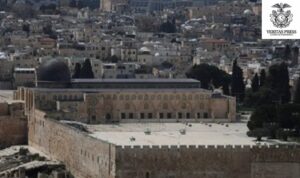
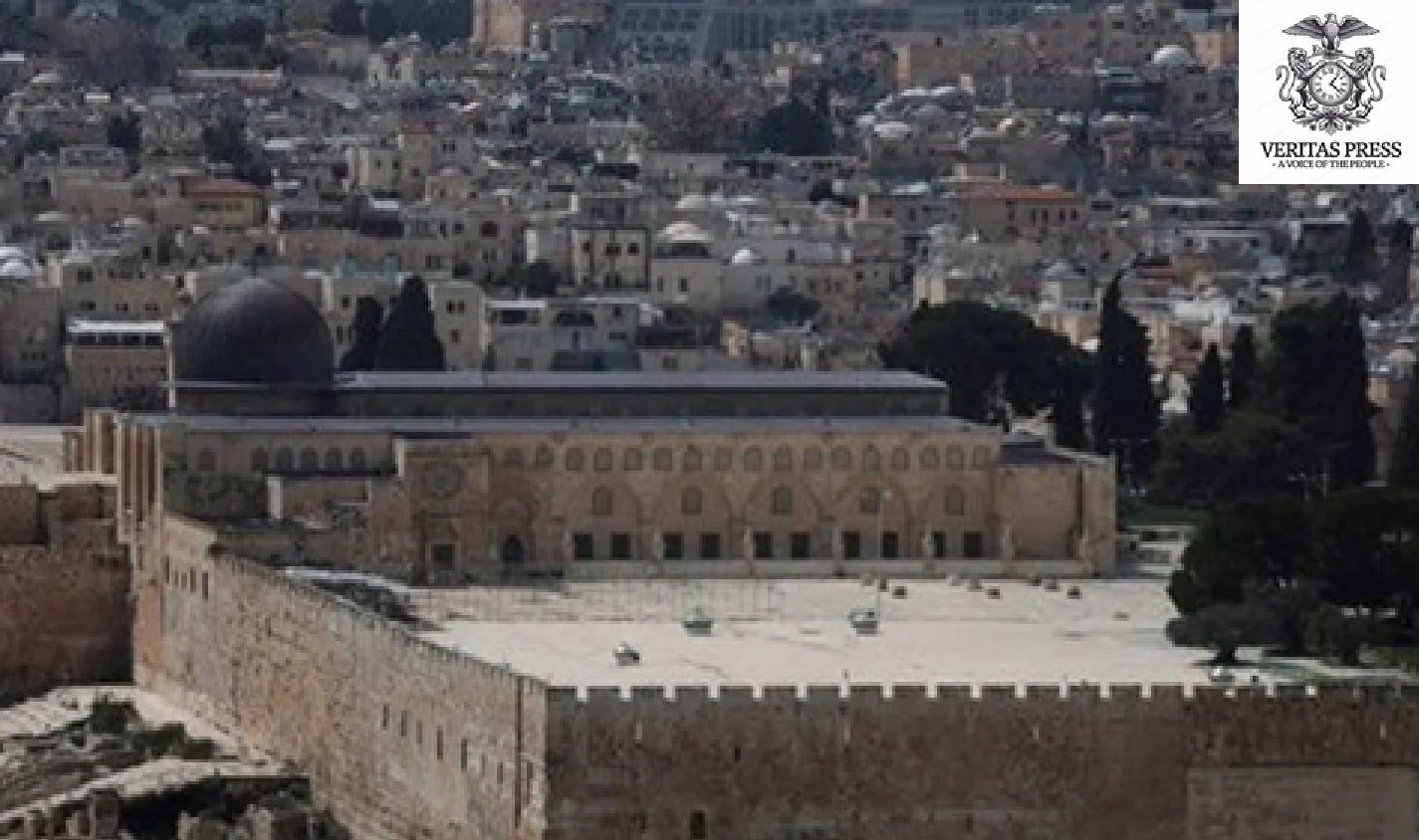
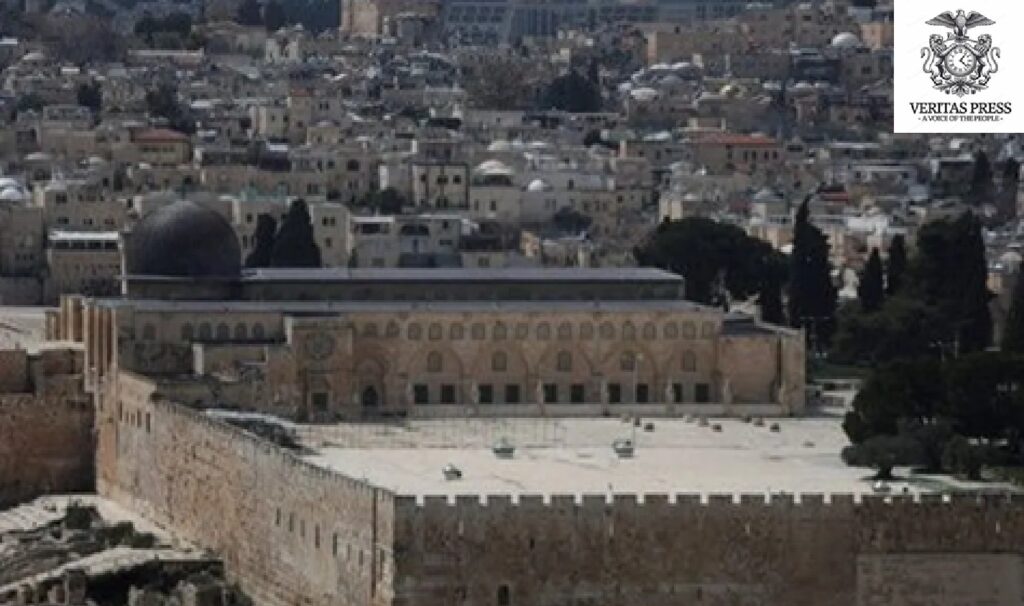
JERUSALEM — For the 29th consecutive day, the heavy iron gates surrounding the Al-Aqsa Mosque compound in occupied East Jerusalem remain sealed. What began in late February as an emergency security measure has hardened into the longest uninterrupted closure of Islam’s third holiest site since the Crusades, a duration that surpasses even the darkest periods of the First and Second Intifadas, the pandemic lockdowns, and decades of occupation.
As the sun rose over the limestone walls of the Old City on this final Friday of March, Israeli police deployed in force at every entrance, turning away worshippers who had walked for miles before dawn. Hundreds gathered on Salah al-Din Street, the main commercial artery of East Jerusalem, only to be dispersed with sound bombs and physical force. A few dozen managed to pray in nearby alleys, their voices rising toward the closed gates they could not reach.
“The occupation wants us to forget that this is our city, our sanctuary,” said Abu Khalil, a 63-year-old Jerusalemite who has prayed at Al-Aqsa every Friday for four decades. He stood at the Damascus Gate checkpoint, watching younger men being pushed back by border police. “They think if they keep us out long enough, we will accept it. But we have been here for fourteen centuries. We will be here when these gates open again.”
But when, and under what conditions, the gates will reopen remains shrouded in uncertainty. The Zionist Israeli government extended the nationwide state of emergency until mid-April, citing the ongoing US-Israeli war with Iran, codenamed “Operation Roaring Lion”. Yet for Palestinians and many international observers, the closure of the holy sites is not merely a byproduct of war but a calculated act of spatial and political erasure.
A War Elsewhere, A Siege At Home:
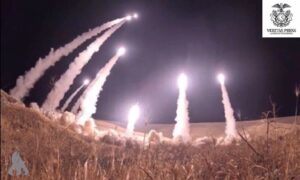
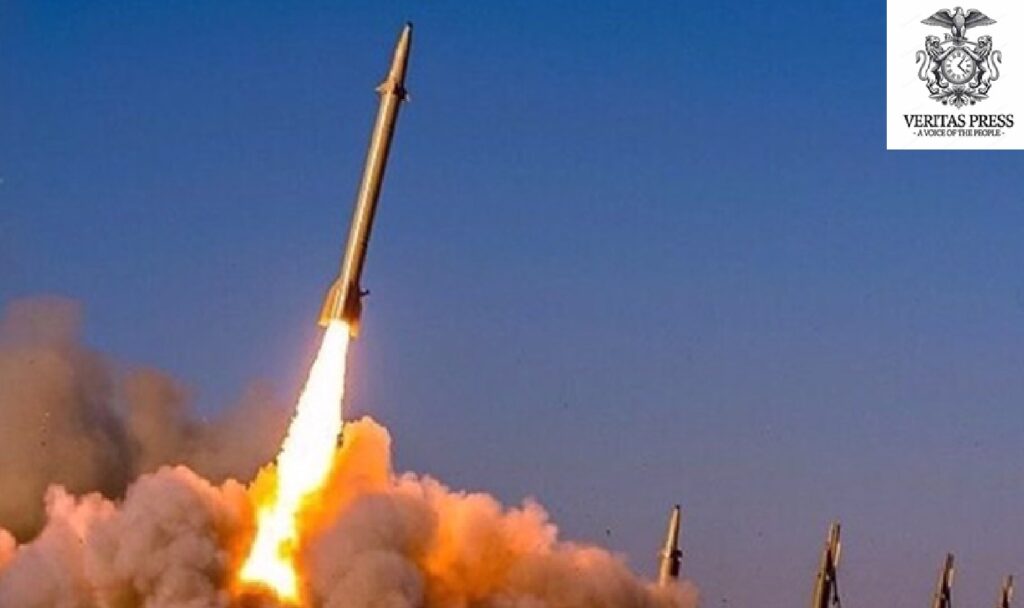
The official Israeli rationale is rooted in security. Following the outbreak of hostilities with Iran on February 28, a conflict that has seen hundreds of ballistic missiles fired toward Israeli territory, the Home Front Command imposed strict restrictions on gatherings of more than 50 people outdoors and 100 people indoors. The Al-Aqsa compound, which on a normal Friday would host tens of thousands of worshippers, was deemed incompatible with these emergency guidelines.
“We are in a state of war,” Jerusalem Mayor Moshe Lion stated in a recent address, urging residents to adhere to safety protocols. “The safety of the guest is as sacred as the land itself”. The tourism ministry has worked to assist stranded pilgrims and travellers, offering shelter and evacuation routes for those caught in the crossfire.
But for Palestinians in East Jerusalem, the West Bank, and across the occupied territories, the closure of Al-Aqsa reads not as a neutral safety measure but as a continuation and escalation of a long-standing policy of spatial control. The mosque compound has been sealed to worshippers since February 28, but the isolation of the Old City began long before the first missile was fired.
“The closure is a political decision dressed in security language,” said Ziyad Ibhais, a researcher on Jerusalem affairs who has documented the occupation’s policies in the city for over two decades. “This is the longest closure of Al-Aqsa since the liberation of Jerusalem from the Crusaders more than eight hundred years ago. We are witnessing something unprecedented”.
Ibhais describes the closure as part of a “calculated act of war” aimed at asserting Israeli control over the site and isolating it during one of the most significant periods for Muslim worship, the final weeks of Ramadan. “They are testing the limits of what they can impose,” he said. “If they succeed in keeping the mosque closed through Ramadan and Eid, what will stop them from extending it further?”
The Double Sealing: Christian Holy Places Also Shuttered.
The restrictions have not been limited to Muslim holy sites. In a move that has drawn less international attention but carries equally profound religious significance, the Church of the Holy Sepulchre, venerated by Christians as the site of Jesus’s crucifixion and resurrection, has also remained closed to worshippers and visitors since February 28.
The great wooden doors of the church, which have guarded the sanctuary for centuries, have never been sealed for such an uninterrupted period. Wars, tensions, and even the pandemic had restricted access before, but never for this long, according to Ibrahim Faltas, Director of Schools of the Custody of the Holy Land.
“We were not permitted to celebrate the second, third, and fourth Sundays of Lent at the Holy Sepulchre, even behind closed doors, as was possible during the pandemic or other dark and painful moments in history,” Faltas wrote in a recent reflection.
His words carry a plea that extends beyond the Christian community: “Eyes closed to goodness, eyes blinded by power, cannot open, cannot see the suffering and pain of others, cannot stop the consequences of hatred that spreads and kills. Let us help these eyes, dulled by despair, open to the courage to unite and seek the truth.”
The simultaneous closure of Islam’s third holiest site and Christianity’s most sacred church reflects what many describe as a comprehensive policy of isolating Jerusalem’s Old City from its Palestinian surroundings and from the world. Military checkpoints now encircle the historic basin, allowing entry only to residents. Even the distribution of iftar meals, a Ramadan tradition of communal breaking of the fast, has been suppressed; earlier this month, Israeli forces closed the Damascus Gate area and forced shop owners to shutter their doors after young men and women distributed meals to passersby.
An Unprecedented Ramadan: Eid Prayers Banned For First Time Since 1967.
The timing of the closure has magnified its impact. Ramadan, the holiest month in the Islamic calendar, is a period when Al-Aqsa typically swells with worshippers from across Palestine and beyond. The final ten days of Ramadan, in particular, are marked by spiritual retreat (i’tikaf) and intensified prayer.
This year, all of that has been denied.
“This is the first Eid al-Fitr in which Eid prayers are not held in Al-Aqsa Mosque, because it has been closed since the US-Israeli war on Iran,” said Sheikh Ikrima Sabri, the preacher of Al-Aqsa Mosque, in an interview with The New Arab. “This is an arbitrary and unjustified measure by the occupying authorities that violates freedom of worship and contradicts international conventions and norms.”
Sabri noted that since the occupation of East Jerusalem in 1967, Eid prayers had never been stopped, until this year. “The takbirs have never ceased being raised from Al-Aqsa Mosque,” he said, his voice carrying the weight of a tradition now broken.
On the morning of Eid, Israeli forces moved preemptively, closing checkpoints around Jerusalem and preventing Palestinians, including elderly people and permit holders, from entering the city. Soldiers fired sound bombs at worshippers near Bab al-Sahira (Herod’s Gate) and chased dozens who gathered at Bab al-Asbat (Lions’ Gate), dispersing them despite the cold rain.
At least one young man was arrested on Salah al-Din Street on suspicion of gathering for Eid prayers, and Sheikh Fadi al-Jabrini, imam of a mosque in Beit Hanina, was detained during an early morning raid on his home.
The Waqf’s Predicament: Guardians Without Access.
Inside the sealed compound, a ghostly scene unfolds. Eyewitnesses confirm that only Al-Aqsa guards and employees of the Islamic Waqf Department, the Jordanian-appointed body that has administered the site since 1924, are permitted within the courtyards. Limited prayers are held inside the covered prayer halls with minimal attendance, but the outer courtyards, which on a typical Friday would be carpeted with worshippers stretching toward the golden Dome of the Rock, remain eerily empty.
The Waqf’s position is delicate. The Hashemite Kingdom of Jordan holds the official custodianship of the holy sites in Jerusalem, a responsibility that King Abdullah II has repeatedly emphasised. At a Ramadan iftar hosted by the Department of Palestinian Affairs in Amman earlier this month, Jordanian Minister of Awqaf and Islamic Affairs Mohammad Khalaileh declared that the closure of Al-Aqsa constitutes “a crime against Muslims across the world”.
“The Jordanian and Palestinian peoples are bound by ties of religion, brotherhood, history and a shared destiny,” Khalaileh said. “Jordan’s compass will always remain directed toward Palestine and Jerusalem until the Palestinian people obtain their legitimate rights”.
But on the ground, the Waqf’s ability to exercise its custodial role has been severely compromised. The Israeli authorities have effectively assumed control over access to the compound, determining who may enter and under what conditions. The Waqf’s guards, traditionally responsible for the site’s security, now find themselves the only Palestinians permitted inside, a cruel irony that has not gone unnoticed.
International Condemnation, Limited Action:
The closure has drawn sharp rebukes from across the Arab and Islamic worlds, as well as from international organisations. In a rare joint statement, the General Secretariat of the Organisation of Islamic Cooperation, the General Secretariat of the League of Arab States, and the African Union Commission condemned the closure as “a grave violation of the existing historical and legal status quo”.
The three bodies called on the UN Security Council to assume its responsibilities and compel Israeli authorities to “respect the right to freedom of worship, to preserve and protect the existing historical and legal status of the holy places, to reopen the gates of the blessed Al-Aqsa Mosque immediately”.
Yet despite these condemnations, concrete international action has been absent. The United States, Israel’s closest ally and a partner in the ongoing war with Iran, has not publicly pressed for the reopening of the holy sites. European governments have issued statements expressing concern but have taken no tangible steps to alter the situation on the ground.
The Palestinian Jerusalem Governorate has described the closure as “an unprecedented escalation and an attempt to impose dangerous measures” to demographically alter the character of the city. In a statement, the Governorate warned that the measures form part of a broader effort “to isolate the mosque from its Palestinian and Islamic surroundings”.
Beyond Security: The Politics Of Access.
To understand the closure, one must place it within a longer arc of Israeli policy toward the Haram al-Sharif/Temple Mount, the 144-dunum (35-acre) compound that is the holiest site in Judaism (as the location of the First and Second Temples) and the third holiest in Islam (as the site of the Al-Aqsa Mosque and Dome of the Rock).
Since 1967, Israel has maintained a fragile arrangement known as the “status quo,” under which the Waqf administers the compound while Israeli security forces control access. Over the past two decades, this arrangement has been increasingly strained. Visits by Jewish groups, often accompanied by heavy police escorts, have become more frequent and provocative. Calls for the construction of a Jewish temple on the site, once confined to fringe extremist groups, have entered mainstream political discourse.
The current closure, occurring under the cover of a war emergency, represents the most dramatic alteration of the status quo in decades. Unlike previous closures, which typically lasted days or weeks in response to specific incidents, this one has now stretched into its fifth week with no clear endpoint.
“This is not about rockets or missiles,” said a Palestinian shopkeeper in the Old City who asked not to be named for fear of reprisal. “They have closed the gates to punish us, to show us that they control everything. The war with Iran is an excuse. The real war is here, over every stone and every door.”
Voices From The Streets: Resistance And Resilience.
Despite the closure, Palestinian worshippers have found ways to assert their connection to the site. On each Friday since the gates were sealed, hundreds have gathered as close as they can reach, on Salah al-Din Street, at the Damascus Gate plaza, in the alleyways leading to the compound. Israeli forces have consistently dispersed these gatherings, using sound bombs, batons, and arrests to prevent congregational prayers.
“It is our right to pray in our mosque, but if we cannot reach it, we will pray at its gates,” said Fatima, a woman in her fifties who joined the gathering on Salah al-Din Street. She held a small prayer rug under her arm. “We have no other choice. This is our identity. If they take Al-Aqsa from us, what remains?”
Sheikh Sabri issued a religious ruling (fatwa) encouraging worshippers to pray in the streets and squares leading to Al-Aqsa, declaring that those who do so “will receive the same reward as those who pray inside the mosque”. The ruling has been widely circulated on social media, serving as both a spiritual guide and a political call to action.
Smaller mosques throughout East Jerusalem have seen increased attendance as worshippers adapt to the closure. But for many, the inability to pray at Al-Aqsa, especially during Ramadan, represents a profound spiritual deprivation that cannot be compensated.
“Al-Aqsa is not just a building,” said Sheikh Raed, an imam at a small mosque in the Shu’fat refugee camp. “It is the heart of our ummah. When the heart is closed, the whole body feels it. Every Muslim, from Indonesia to Morocco, feels this pain. The occupation knows this. That is why they are doing it.”
A Precedent Of Exclusion: The Danger Of Normalisation.
The extension of the state of emergency until mid-April raises the possibility that the closure could continue through the remainder of Ramadan and beyond. The Israeli government has not clarified whether the mosque will reopen when the emergency period ends, leaving Palestinians and the international community in a state of anxious uncertainty.
“This is the longest such closure in modern history,” researcher Ibhais warned. “If the occupation succeeds in keeping the mosque closed for this extended period, it will set a precedent. They will have demonstrated that they can shut the compound for weeks at a time, under the pretext of security, without facing meaningful consequences”.
The precedent would extend beyond Al-Aqsa. The simultaneous closure of the Church of the Holy Sepulchre, a site of immense significance to Christians worldwide, suggests a broader willingness to restrict religious freedom across denominations. For the first time in decades, Holy Week services are under threat, with the doors of the church remaining sealed as Lent draws to a close.
“When the doors of the Holy Sepulchre are closed, when the gates of Al-Aqsa are sealed, it is not only Jerusalem that is locked out,” Faltas wrote. “It is the hope of millions who look to this city as a symbol of faith and coexistence”.
The Cost Of Silence: A Call For Accountability.
As the closure enters its 30th day and counting, the gap between international condemnation and international action grows increasingly conspicuous. UN Security Council resolutions from 1968, 1969, and 1980 cited in the joint statement by the OIC, Arab League, and African Union call for the protection of holy sites and the preservation of Jerusalem’s character. Yet these resolutions remain unimplemented, their words hollowed by decades of inaction.
The Zionist Israeli government has not publicly indicated any intention to reopen the mosque. The state of emergency, extended just days ago, provides a renewable legal framework for continued restrictions. Unless the international community applies meaningful pressure or the security situation shifts dramatically, the gates may remain sealed for the foreseeable future.
For Palestinians, the closure is not merely a temporary hardship but a lived experience of dispossession. “They want us to get used to this,” Abu Khalil said, gesturing toward the closed Damascus Gate. “First, it is 29 days. Then it is 30. Then it is 300. This is how they take things from us, slowly, so that the world does not notice, so that we begin to forget.”
But standing at the gates, watching the young men and women gather despite the dispersal orders, one senses that forgetting is not an option. The Friday prayers will continue on Salah al-Din Street, the iftar meals will be distributed in defiance of closures, and the takbirs will rise from the streets if not from the minarets.
The stones of Jerusalem have witnessed many sieges. They have seen Crusaders and Mamluks, Ottomans and the British. They have seen wars and peace treaties, walls built and walls torn down. And they have seen, through it all, that the gates which close in violence eventually open again, though never, for those who remember, without a price.
Timeline Of The Closure:
- February 28, 2026: Israeli authorities close the Al-Aqsa Mosque compound to worshippers following the outbreak of “Operation Roaring Lion,” the US-Israeli war on Iran. The Church of the Holy Sepulchre is also closed.
- March 1, 2026: Ben Gurion Airport closes to civilian traffic as the nationwide state of emergency takes effect.
- March 9, 2026: Israeli forces close Damascus Gate and disperse worshippers distributing iftar meals.
- March 13, 2026: OIC, Arab League, and African Union issue joint condemnation of the closure.
- March 15, 2026: Jordanian Awqaf Minister calls the closure “a crime against Muslims worldwide.”
- March 19, 2026: Eid al-Fitr prayers are prevented at Al-Aqsa for the first time since 1967.
- March 25, 2026: The Israeli government extends the state of emergency until mid-April.
- March 27, 2026: Israeli authorities prevent Friday prayers for the fifth consecutive week.
- March 30, 2026: The closure enters its 30th day.
Source: Multiple News Agencies
Submissions:
For The Secure Submission Of Documentation, Testimonies, Or Exclusive Investigative Reports From Any Global Location, Please Utilise The Following Contact Details For Our Investigations Desk: enquiries@veritaspress.co.uk or editor@veritaspress.co.uk
Help Support Our Work:
Popular Information is powered by readers who believe that truth still matters. When just a few more people step up to support this work, it means more lies exposed, more corruption uncovered, and more accountability where it’s long overdue.
Help Protect Independent Journalism, Which Is Currently Under Attack.
If you believe journalism should serve the public, not the powerful, and you’re in a position to help, becoming a DONATOR or a PAID SUBSCRIBER truly makes a difference.
DONATION APPEAL: If You Found This Reporting Valuable, Please Consider Supporting Independent Journalism.
Help Support Our Work – We Know, We Know, We Know …
Seeing these messages is annoying. We know that. (Imagine what it’s like writing them … )
Your support fuels our fearless, truth-driven journalism. In unity, we endeavour to amplify marginalised voices and champion justice, irrespective of geographical location.
But it’s also extremely important. One of Veritas Press’s greatest assets is its reader-funded model.
1. Reader funding means we can cover what we like. We’re not beholden to the political whims of a billionaire owner. We are a small, independent and impartial organisation. No one can tell us what not to say or what not to report.
2. Reader funding means we don’t have to chase clicks and traffic. We’re not desperately seeking your attention for its own sake: we pursue the stories that our editorial team deems important and believe are worthy of your time.
3. Reader Funding: enables us to keep our website and other social media channels open, allowing as many people as possible to access quality journalism from around the world, particularly those in places where the free press is under threat.
We know not everyone can afford to pay for news, but if you’ve been meaning to support us, now’s the time.
Your donation goes a long way. It helps us:
- Keep the lights on and sustain our day-to-day operations
- Hire new, talented independent reporters
- Launch real-time live debates, community-focused shows, and on-the-ground reporting
- Cover the issues that matter most to our communities, in real time, with depth and integrity
We have plans to expand our work, but we can’t do it without your support. Every contribution, no matter the size, helps us stay independent and build a truly people-powered media platform.
If you believe in journalism that informs, empowers, and reflects the communities we serve, please donate today.
TEHRAN, IRAN – Twenty-eight days after the assassination of Iran’s Supreme Leader Ayatollah Seyyed Ali
Original Article Date Published: Article Date Modified: Help support our mission, donate today and be
NEW YORK, US – On the night of March 26, 2026, Nerdeen Kiswani received a
JERUSALEM — For the 29th consecutive day, the heavy iron gates surrounding the Al-Aqsa Mosque

GAZA, March 27, 2026 — The cries of 28-day-old Adam Al-Ustaz shattered the silence of
TEHRAN – In the pre-dawn hours of March 27, 2026, the Islamic Revolution Guards Corps
MOSCOW, LONDON – In what marks a significant escalation in the prolonged confrontation between London
TEL-AVIV – When Lieutenant General Eyal Zamir, Chief of Staff of the Israel Defence Forces
GREEK ISLANDS – A controversial proposal by Israeli politician Avri Steiner to purchase Greek islands
TEHRAN, IRAN – In the early hours of Thursday, the Islamic Revolutionary Guard Corps (IRGC)