
Original Article Date Published:
Article Date Modified:
Help support our mission, donate today and be the change. Every contribution goes directly toward driving real impact for the cause we believe in.
Ramadan Without Al-Aqsa:
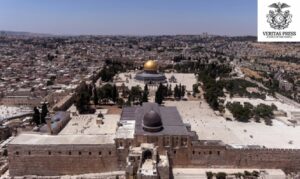
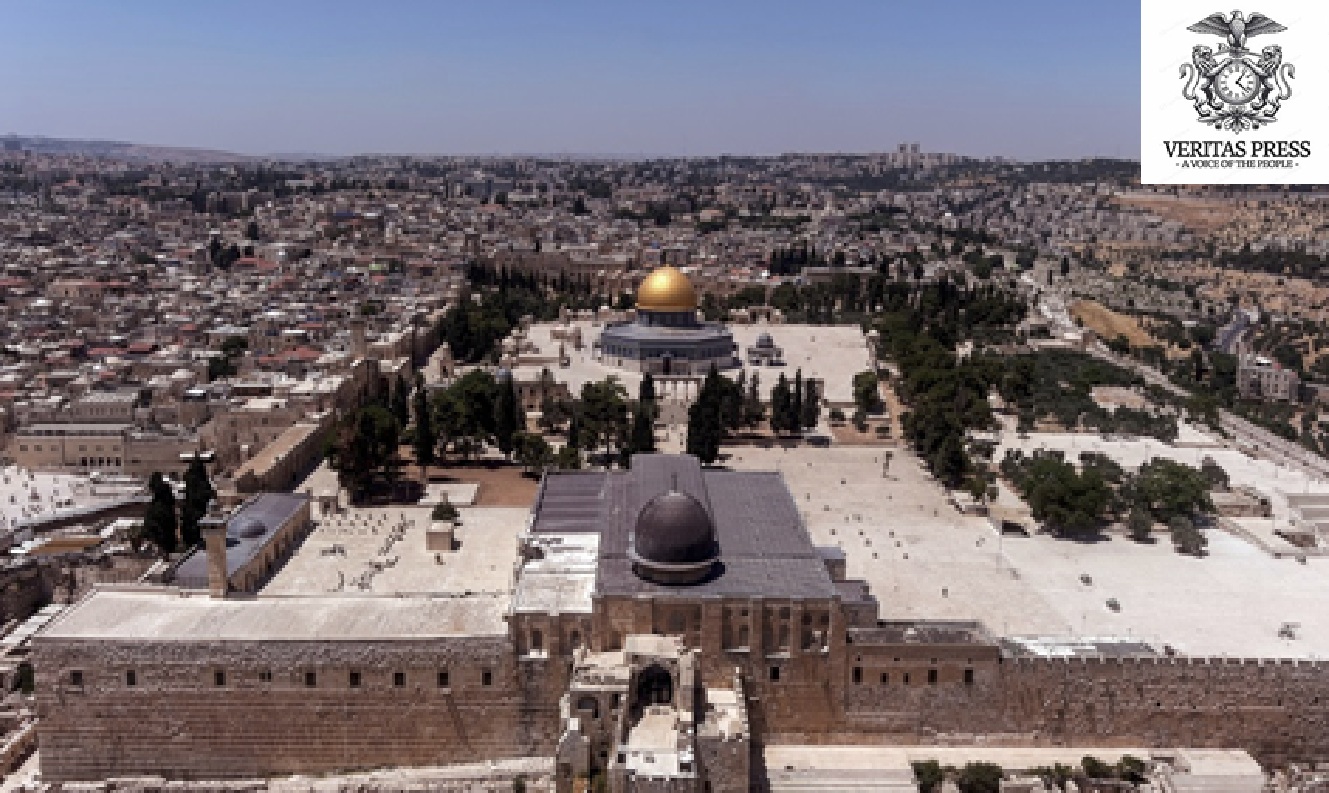
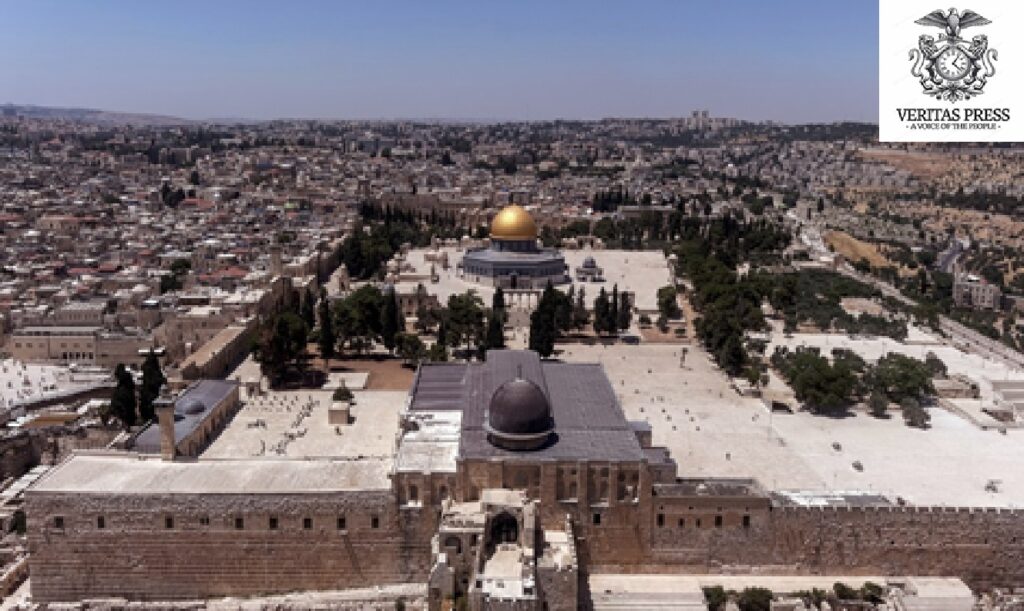
For nearly two weeks during the most sacred period of Ramadan, the courtyards of Al-Aqsa Mosque in occupied East Jerusalem, normally filled with tens or even hundreds of thousands of worshippers, have stood eerily empty.
Israeli authorities sealed the compound and imposed sweeping restrictions across Jerusalem’s Old City shortly after the United States and Israel launched attacks on Iran on February 28, citing wartime emergency regulations and security concerns.
The decision has prevented Palestinians from attending nightly Tarawih prayers, observing iʿtikaf, a traditional spiritual retreat during the final days of Ramadan, and performing Friday prayers at Islam’s third-holiest site.
For many Palestinians, the closure has transformed what is usually the spiritual climax of Ramadan into a period of unprecedented exclusion.
Maarouf al-Rifai, media adviser to the Jerusalem Governorate, warned that the measure represents a profound escalation in Israel’s control over the compound.
“Israeli occupation authorities continue to close Al-Aqsa Mosque and prevent worshippers from praying there during the last days of Ramadan,” al-Rifai said. “These measures violate freedom of worship and target the historical and legal status quo governing Al-Aqsa.”
Palestinian officials say the restrictions have blocked thousands of worshippers from attending two consecutive Friday prayers, while also preventing Muslims from gathering for Laylat al-Qadr, the holiest night of Ramadan, when the mosque typically receives some of the largest crowds of the year.
According to the Jerusalem Governorate, such a sweeping closure during Ramadan has no precedent since Israel occupied East Jerusalem in the Six-Day War, making it one of the most severe restrictions imposed on the holy site in decades.
Testimonies From Worshippers Turned Away:
Across checkpoints leading into Jerusalem, Palestinians attempting to reach the mosque describe scenes of frustration and despair.
At the Qalandiya checkpoint north of the city, thousands attempted to cross during Ramadan despite strict permit restrictions.
Ezaldeen Mustafah, a Palestinian worshipper hoping to attend Friday prayers, said many people were turned away despite waiting for hours.
“We need more people than this,” he said. “Every year we come to pray at Al-Aqsa. This year, they tell us we cannot enter.”
Another worshipper from Ramallah, Abu Khaled, said he had tried several times during Ramadan to reach the mosque.
“I have prayed there every Ramadan since I was a child,” he said. “Now they tell us we are a security threat.”
Some Palestinians ended up performing prayers outside checkpoints or in the streets near the Old City walls.
Jerusalem-based activist Rana Abu Shamsiya said the restrictions sever connections between Palestinians and their holy city.
“Preventing people from reaching Al-Aqsa is not just about security. It isolates Jerusalem from the rest of Palestine.”
A Strategic Shift Behind The Closure:
Israeli authorities insist the closure is a temporary security measure linked to regional escalation.
Yet Palestinian officials and many analysts argue the move reflects a deeper political strategy aimed at consolidating Israeli control over the site.
Jerusalem affairs researcher Hisham Yaqub said the decision effectively undermines the longstanding governance arrangements of the compound.
“The closure legally undermines the historical status quo,” Yaqub said. “By closing the mosque unilaterally, Israel is asserting its authority over its administration.”
The “status quo” governing the Al-Aqsa compound dates back to the Ottoman period and was maintained through successive political agreements.
Under this arrangement, the Islamic Waqf, administered by Jordan, retains religious authority over the site, while Israel controls security around it.
Jordan’s custodianship dates back to 1924, when Jerusalem’s Muslim leadership recognised Sharif Hussein bin Ali as guardian of the holy sites. The arrangement was reaffirmed in the Israel–Jordan Peace Treaty and again in a 2013 agreement between King Abdullah II and Palestinian President Mahmoud Abbas.
But critics argue Israel has increasingly bypassed the Waqf’s authority through unilateral restrictions, police raids, and administrative decisions inside the compound.
Jordan’s Foreign Ministry condemned the closure as “an illegal and unjustified action” and warned it constitutes a “flagrant violation of international law and the historical and legal status quo.”
Ramadan And A Dangerous Political Moment:
The timing of the closure, during the final days of Ramadan, has heightened tensions dramatically.
Ramadan has historically been one of the most volatile periods in Jerusalem, when religious observance, political grievances, and mass gatherings converge around Al-Aqsa.
Jerusalem affairs expert Hassan Khater described the shutdown as an unprecedented provocation.
“Closing the mosque during the last days of Ramadan amounts to a declaration of war,” Khater said.
Khater and other analysts point to the celebratory reaction from extremist settler groups that have long campaigned to expand Jewish prayer rights at the site.
According to Palestinian officials, these organisations have portrayed the closure as an opportunity to reshape the site’s governance and access rules.
Settler Incursions And Rising Numbers:
Incursions by Israeli settlers into the mosque compound, often escorted by heavily armed police, have increased sharply in recent years.
In the early 2000s, only a few thousand settlers visited the site annually.
By the 2010s, the numbers had climbed into the tens of thousands. Recent figures from Jerusalem monitoring groups indicate that more than 65,000 Israeli settlers entered the compound in the past year, one of the highest totals ever recorded.
Monthly figures also illustrate the trend. In November 2025 alone, more than 4,000 settlers entered the compound under police protection.
Palestinian officials say these visits frequently involve activists performing religious rituals inside the mosque courtyards despite longstanding restrictions on non-Muslim prayer there.
Israeli Police Strategy Inside The Compound:
Israeli police play a central role in enforcing access restrictions and facilitating settler visits.
During Ramadan 2026, authorities deployed thousands of police officers across Jerusalem to control entry to the Old City and the mosque compound.
Human rights groups say police tactics follow a consistent pattern:
Checkpoint control: Palestinians must pass through military checkpoints, where permits and age restrictions determine who can enter Jerusalem.
Heavy presence inside the compound: Armed police and border guards patrol the courtyards during sensitive periods such as Ramadan.
Escort for settler visits: Groups of settlers are escorted through specific entrances while Palestinian worshippers face strict limits on access.
Crowd control measures: During confrontations, police have used arrests, barricades, and, in some cases, stun grenades or tear gas.
Critics argue these strategies prioritise facilitating settler access while restricting Palestinian worship.
International Condemnation And Diplomatic Fallout:
The closure has drawn condemnation across the Muslim world.
Foreign ministers from Saudi Arabia, Egypt, Turkey, Qatar, Indonesia, Pakistan, the United Arab Emirates, and Jordan issued a joint statement denouncing the move.
The statement declared:
“Israel has no sovereignty over occupied Jerusalem or its Islamic and Christian holy sites.”
Hamas also condemned the closure, calling it a “dangerous historical precedent” and warning that denying Muslims access to Al-Aqsa during Ramadan threatens to inflame tensions across the region.
Long-Term Objectives and the Temple Movement
For many analysts, the current crisis cannot be separated from a broader transformation underway around the Al-Aqsa compound.
Israeli affairs analyst Imad Abu Awad says the restrictions reflect a long-term strategy that has gradually normalised Israeli control over the site.
In the 1990s, settler incursions into the compound were rare.
Today, tens of thousands enter each year under police protection.
Some organisations now advocate dividing the compound between Muslim and Jewish prayer areas, similar to what occurred at the Ibrahimi Mosque in Hebron.
More radical groups, including the Temple Institute, openly promote demolishing the Dome of the Rock and constructing a Jewish temple in its place.
“We are approaching a very dangerous moment,” Abu Awad warned.
Regional Wars Intensifying The Crisis:
The closure comes amid one of the most volatile regional moments in decades.
Israel’s ongoing military operations in the Gaza Strip, escalating tensions along the Lebanese border with Hezbollah, and the confrontation with Iran have all heightened fears that the Al-Aqsa crisis could spiral into wider unrest.
Analysts say Israeli authorities often impose stricter measures in Jerusalem during periods of regional conflict, viewing the city as a critical front in the broader confrontation.
A Symbol Of Identity And Resistance:
For Palestinians, Al-Aqsa represents far more than a place of worship.
The mosque stands at the heart of Palestinian religious, cultural, and political identity. Its courtyards remain one of the few spaces where Palestinians from Jerusalem, the West Bank, the Gaza Strip, and Palestinian communities inside Israel can gather around a shared cause.
For Israel, however, control over the compound increasingly symbolises political authority over the city.
Access restrictions, closures, and police raids demonstrate the state’s power over one of the most sensitive centres of Palestinian life.
Yet the same symbolism explains why Al-Aqsa remains a focal point of resistance.
Despite decades of occupation, checkpoints, and political fragmentation, the mosque continues to serve as one of the most powerful unifying symbols in Palestinian society.
That symbolic weight is precisely what makes the current moment so volatile.
Changes to the status quo at Al-Aqsa have repeatedly triggered major political upheaval, including the Second Intifada, which erupted after a controversial visit to the compound by Israeli politician Ariel Sharon.
As tensions rise across the region, many analysts warn that attempts to impose new realities at the compound could ignite a far wider confrontation, one that extends far beyond Jerusalem.
Conclusion: A Sacred Site In The Crosshairs Of Power.
For Palestinians, the closure of Al-Aqsa during Ramadan is not an isolated security measure. It is the latest episode in a long pattern of policies that critics say seek to reshape control over one of the most politically and spiritually sensitive sites in the world.
Over the past two decades, Israeli authorities have steadily expanded their operational presence inside the compound. Police units now regulate access gates, dictate crowd movement, and frequently enter the courtyards during prayer hours. Palestinian worshippers and Jerusalem-based observers say these tactics, combined with age restrictions, permit regimes, and sudden closures, have turned religious access into a system of controlled privilege rather than a guaranteed right.
At the same time, the number of Israeli settlers entering the compound under police protection has risen dramatically since the early 2000s. Palestinian officials and monitoring groups say that what were once small symbolic visits have evolved into organised incursions involving tens of thousands of participants each year, many linked to religious-nationalist organisations advocating expanded Jewish prayer rights at the site.
For analysts, this trajectory reflects a broader political project.
Control over Al-Aqsa, they argue, is increasingly intertwined with Israel’s regional military strategy and domestic political dynamics. The wars in Gaza, the escalation along the Lebanon border, and the confrontation with Iran have all reinforced a security narrative in which Jerusalem’s holy sites are treated as strategic assets rather than protected religious spaces.
That framing has profound consequences.
Measures taken under emergency regulations, closures, police raids, and access restrictions can quickly become normalised administrative practices. What begins as a temporary wartime response often evolves into a permanent shift in authority on the ground.
For Palestinians, the fear is that such incremental changes are gradually eroding the historical status quo governing the compound.
The closure during Ramadan, when Al-Aqsa traditionally becomes the beating heart of Muslim religious life in Jerusalem, has amplified those anxieties. Preventing worshippers from gathering during the holiest nights of the year is widely seen not simply as a security decision but as a symbolic assertion of control over Palestinian identity itself.
At the centre of the dispute lies the question of custodianship.
Jordan, under the leadership of King Abdullah II, holds formal guardianship over Muslim holy sites in Jerusalem, a role recognised in the 1994 peace treaty with Israel and reaffirmed in agreements with the Palestinian Authority. The arrangement traces its roots even further back, to the early Islamic era and the protections historically granted to Jerusalem’s holy sites following the Muslim conquest in the 7th century, often associated with the covenant attributed to Caliph Umar ibn al-Khattab.
Yet many Palestinian observers argue that this custodianship has increasingly become symbolic rather than effective.
Despite repeated Israeli police incursions into the compound, the growing number of settler visits, and now the unprecedented closure during Ramadan, critics say Jordan’s responses have largely been limited to diplomatic protests and statements. For some Palestinians, this has fueled frustration that the Hashemite monarchy, long recognised as the guardian of Al-Aqsa, is failing to meaningfully enforce or defend the historical arrangements it is meant to uphold.
That perception has begun to carry political consequences.
Activists and analysts warn that if the custodianship framework continues to weaken in practice, the vacuum may accelerate attempts by Israeli authorities and far-right religious groups to impose new realities at the site.
Some Palestinian analysts and political observers go further, arguing that the escalating restrictions, closures, and increasing settler incursions form part of a longer-term strategy to erode the existing governance arrangements around the compound. According to these interpretations, gradually destabilising the status quo could create the conditions for a broader political or military confrontation in Jerusalem, one that might ultimately allow Israel to assert full control over the site.
Within Israel’s far-right religious-nationalist movements, the Al-Aqsa compound, known in Jewish tradition as the Temple Mount, is viewed as the historic location of the ancient Jewish temples. Groups such as the Temple Institute openly advocate replacing the Islamic structures with a rebuilt Jewish temple, often referred to as the “Third Temple.” While these ideas remain outside official Israeli state policy, critics warn that the growing influence of religious-nationalist factions within Israeli politics has helped push the debate about the compound’s future further into the mainstream.
For Palestinians, the concern is that incremental changes on the ground, expanded police control, normalised settler entry, and repeated closures could gradually pave the way for more dramatic transformations in the site’s governance.
The regional implications are equally significant.
Events at Al-Aqsa have repeatedly served as catalysts for wider confrontation, from the uprising that followed Ariel Sharon’s controversial visit to the compound in 2000 to the wave of protests triggered by restrictions at the mosque in 2021.
Today, with the Middle East already destabilised by wars in Gaza, Lebanon, and rising tensions with Iran, analysts warn that the stakes are even higher.
Al-Aqsa is not merely a local religious site. It is a symbol embedded in the political consciousness of millions across the Muslim world.
Attempts to reshape its governance, restrict access, or alter its status reverberate far beyond Jerusalem’s Old City walls.
For Palestinians, the empty courtyards of Al-Aqsa during Ramadan are therefore not only a moment of spiritual loss. They are a stark reminder of how power, faith, and territory collide in one of the most contested places on earth.
And as regional conflicts intensify, the struggle over who controls access to the mosque, and who truly defends its historic protections, may once again prove capable of igniting forces far larger than the narrow stone pathways that lead to its gates.
In Jerusalem, control over sacred space has always been inseparable from power. The empty courtyards of Al-Aqsa during the holiest nights of Ramadan are therefore more than a temporary security measure; they are a stark symbol of how a centuries-old religious covenant is being tested by modern geopolitics, military conflict, and competing nationalist visions.
For Palestinians, the restrictions represent a profound rupture: a holy site central to their faith and identity placed under increasing military regulation, while the political arrangements meant to safeguard it appear increasingly fragile. For the wider Muslim world, the situation raises difficult questions about custodianship, international law, and the future of Jerusalem’s most contested sanctuary.
Al-Aqsa has repeatedly stood at the centre of historic turning points, from the tensions that ignited the Second Intifada to the mass protests that have erupted whenever its status appears threatened. Each time the compound becomes inaccessible to its worshippers, the reverberations extend far beyond the stone walls of Jerusalem’s Old City.
The present moment may prove no different.
If the historical arrangements governing the mosque continue to erode and if the holiest nights of Ramadan can pass with its gates closed, then the question confronting the region is no longer only about access to a place of worship.
It is about the future of Jerusalem itself.
How long can the status quo at Al-Aqsa survive when the forces reshaping the region appear increasingly willing to challenge it?
Source: Multiple News Agencies
Submissions:
For The Secure Submission Of Documentation, Testimonies, Or Exclusive Investigative Reports From Any Global Location, Please Utilise The Following Contact Details For Our Investigations Desk: enquiries@veritaspress.co.uk or editor@veritaspress.co.uk
Help Support Our Work:
Popular Information is powered by readers who believe that truth still matters. When just a few more people step up to support this work, it means more lies exposed, more corruption uncovered, and more accountability where it’s long overdue.
Help Protect Independent Journalism, Which Is Currently Under Attack.
If you believe journalism should serve the public, not the powerful, and you’re in a position to help, becoming a DONATOR or a PAID SUBSCRIBER truly makes a difference.
DONATION APPEAL: If You Found This Reporting Valuable, Please Consider Supporting Independent Journalism.
Help Support Our Work – We Know, We Know, We Know …
Seeing these messages is annoying. We know that. (Imagine what it’s like writing them … )
Your support fuels our fearless, truth-driven journalism. In unity, we endeavour to amplify marginalised voices and champion justice, irrespective of geographical location.
But it’s also extremely important. One of Veritas Press’s greatest assets is its reader-funded model.
1. Reader funding means we can cover what we like. We’re not beholden to the political whims of a billionaire owner. We are a small, independent and impartial organisation. No one can tell us what not to say or what not to report.
2. Reader funding means we don’t have to chase clicks and traffic. We’re not desperately seeking your attention for its own sake: we pursue the stories that our editorial team deems important and believe are worthy of your time.
3. Reader Funding: enables us to keep our website and other social media channels open, allowing as many people as possible to access quality journalism from around the world, particularly those in places where the free press is under threat.
We know not everyone can afford to pay for news, but if you’ve been meaning to support us, now’s the time.
Your donation goes a long way. It helps us:
- Keep the lights on and sustain our day-to-day operations
- Hire new, talented independent reporters
- Launch real-time live debates, community-focused shows, and on-the-ground reporting
- Cover the issues that matter most to our communities, in real time, with depth and integrity
We have plans to expand our work, but we can’t do it without your support. Every contribution, no matter the size, helps us stay independent and build a truly people-powered media platform.
If you believe in journalism that informs, empowers, and reflects the communities we serve, please donate today.
TEL-AVIV – As regional tensions intensify between **Benjamin Netanyahu’s government and Iran, a wave of
SANA’A — As the U.S.–Israeli war with Iran enters its third week, the already precarious
GAZA, March 14, 2026 — The devastating human cost of Israel’s military offensive on the
For nearly two weeks during the most sacred period of Ramadan, the courtyards of Al-Aqsa
TEHRAN — The juxtaposition could not be more stark. In Tehran, the 12,000-seat indoor volleyball
TEHRAN, IRAN – As the US-Israeli conflict with Iran barrels into its third week, the
In contemporary geopolitics, the language of gender equality and women’s liberation increasingly appears within the
BEIRUT, LEBANON, OCCUPIED PALESTINE — The Middle East is hurtling toward an unprecedented abyss. What
TEHRAN, IRAN – For the past two weeks, the Middle East has been engulfed in
WEST BANK – In the pre-dawn hours of Thursday, March 12, 2026, the occupied West