


Original Article Date Published:
Article Date Modified:
Help support our mission—donate today and be the change. Every contribution goes directly toward driving real impact for the cause we believe in.
The Palestinian Ministry of Foreign Affairs has declared Israel’s plan to register vast areas of the occupied West Bank as “state property” legally invalid, warning that the policy represents a decisive step toward annexation, territorial consolidation, and the dispossession of Palestinians from their land.
In a sharply worded statement, the ministry rejected any attempt by the occupying power to transform Palestinian territory into state land, describing the move as a mechanism to legitimise settlement expansion and entrench what it called the “crime of annexation.”
“The measure constitutes a practical beginning of the annexation process and undermines the foundations of the Palestinian state,” the ministry said, urging the international community and the United Nations Security Council to intervene.
Land Registration Seen As A Mechanism For Territorial Takeover:
The policy, approved by the government of Benjamin Netanyahu and advanced by ministers Bezalel Smotrich, Yariv Levin and Israel Katz, reopens land registration procedures frozen since Israel occupied the territory in 1967.
Under the plan, Palestinians must provide documentary proof of ownership or risk having their land classified as state property, a requirement critics say is nearly impossible for many families whose records were lost through decades of war, displacement, and military administration.
Israeli officials have framed the initiative as a legal process aimed at clarifying property rights. Palestinian leaders and rights groups, however, argue it shifts the legal burden onto an occupied population while enabling the state to formalise control over contested land.
Illegal Annexation Under International Law:
Legal experts note that the appropriation of land in occupied territory violates core principles of international humanitarian law.
In a landmark advisory opinion, the International Court of Justice concluded that Israel’s occupation is unlawful and called for the dismantling of settlements. Likewise, United Nations Security Council Resolution 2334 reaffirmed that settlements in the occupied Palestinian territory have “no legal validity.”
The Fourth Geneva Convention prohibits an occupying power from transferring its civilian population into occupied territory or confiscating private property, provisions widely cited by jurists in critiques of settlement expansion.
For Palestinians, the latest decision reinforces long-standing claims that land seizures are part of a structured project to fragment Palestinian geography, capture strategic resources, and entrench permanent control.
Dispossession, Forced Migration Fears, And Demographic Engineering Concerns:
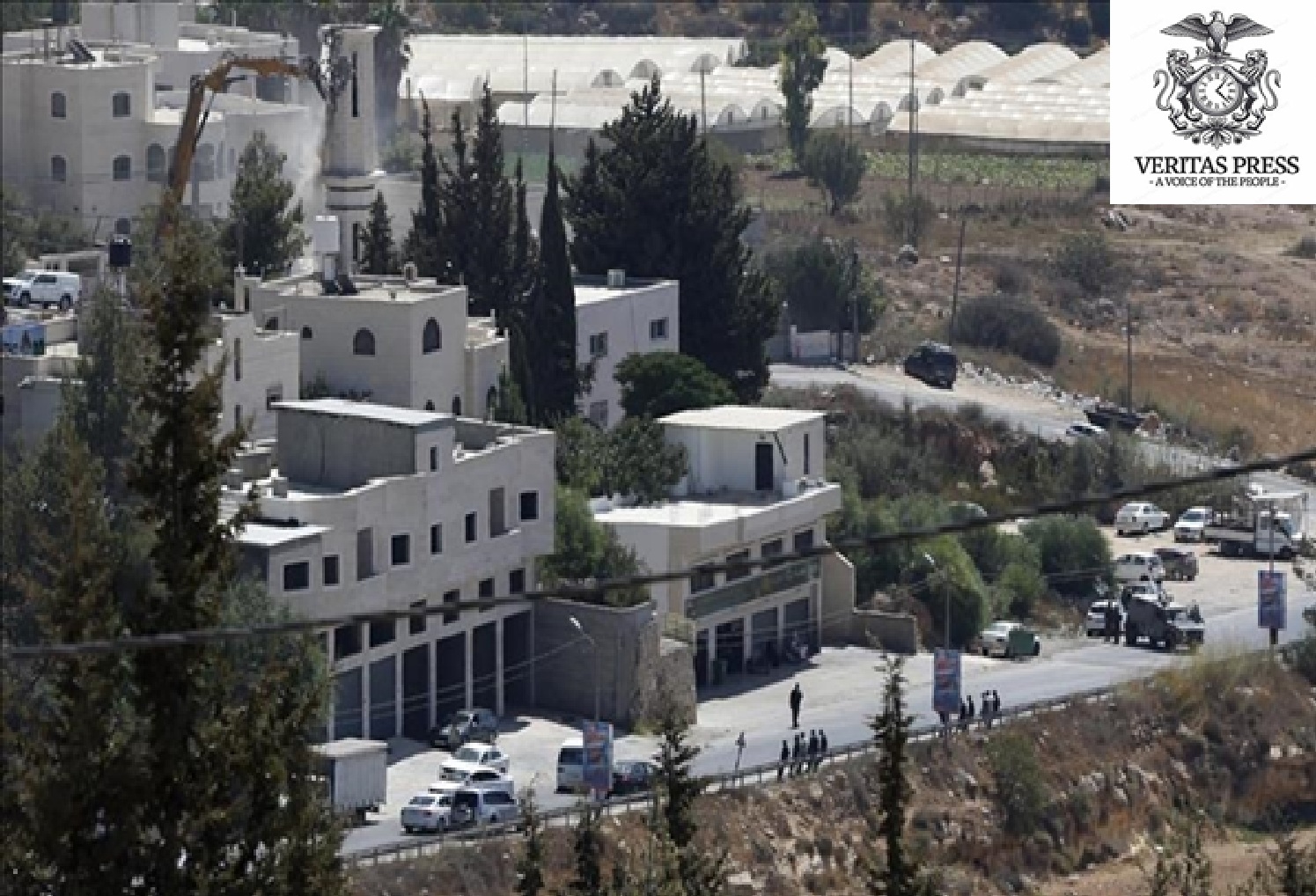
Palestinian officials and analysts warn that registering land as state property could accelerate a cycle of dispossession that pushes communities off agricultural land and out of rural areas, a process that historically has preceded settlement construction, military zoning, or infrastructure projects.
Israeli anti-settlement organisation Peace Now described the initiative as a potential “mega land grab,” cautioning it could allow Israel to gain control over most of Area C.
Settlement Watch director Hagit Ofran said Palestinians will likely be required to prove ownership “in a way they will never be able to do,” raising the risk of large-scale land loss.
Political analyst Xavier Abu Eid characterised the measure as annexation carried out through bureaucratic means:
“This is not just a step toward annexation, we are experiencing annexation as we speak.”
Many Palestinian commentators argue that sustained settlement expansion and land reclassification could reshape demographic realities by restricting Palestinian development while expanding Jewish Israeli communities, a trajectory they say threatens the territorial basis of Palestinian self-determination.
Israeli officials have not stated that the policy is intended to create an ethnically exclusive state. However, critics contend that the cumulative effect of settlement growth, land control, and planning restrictions risks deepening inequality and entrenching a system in which Palestinians face increasing territorial and political constraints.
Broader Measures Tighten Israeli Control:
The registry decision is part of a broader package of policies aimed at expanding Israeli authority across occupied territory. Reported measures include:
- Allowing settlers to purchase land directly
- Removing oversight mechanisms designed to prevent fraudulent transactions
- Opening classified land registries
- Reviving state-backed land purchases
- Expanding enforcement powers into areas administered by the Palestinian Authority
- Transferring planning authority in parts of Hebron
Critics warn these steps collectively weaken Palestinian governance while empowering settler movements to shape territorial realities.
Peace Now accused the government of dismantling barriers to annexation, saying the policies could extend beyond Area C into areas previously administered by Palestinians.
Palestinian Leadership: Unilateral Actions Undermine Peace.
Speaking at the Munich Security Conference, Palestinian Foreign Minister Varsen Aghabekian Shaheen said peace cannot be achieved while Palestinian rights continue to be violated.
“Everything that Israel is undertaking unilaterally in occupied territory should be considered null and void,” she said, calling on global powers to enforce international law.
Shaheen argued that states supporting a two-state framework must move toward recognising Palestinian statehood, warning that annexationist policies are incompatible with a negotiated settlement.
Regional Backlash Grows:
Governments across the Middle East swiftly condemned the decision.
- The Ministry of Foreign Affairs of Jordan called it a “flagrant violation of international law.”
- The Ministry of Foreign Affairs of Egypt described it as a “dangerous escalation.”
- The Ministry of Foreign Affairs of Qatar warned it would deprive Palestinians of their rights.
- The Ministry of Foreign Affairs of Türkiye said the step aims to impose Israeli sovereignty over occupied land and is therefore “null and void.”
There was no immediate response from the United States Department of State. While Donald Trump has publicly ruled out formal annexation, his administration has not significantly curtailed settlement expansion.
Analysts frequently note that longstanding political, military, and diplomatic support from Washington has played a major role in shaping Israel’s strategic environment, a dynamic critics say affects the balance of accountability in the conflict.
Area C: The Territorial Backbone Of A Future State.
Under the Oslo II Accord, the West Bank was divided into Areas A, B, and C, with the latter, roughly 60 percent of the territory, remaining under full Israeli control.
Home to more than 300,000 Palestinians and vital agricultural land, Area C is widely viewed as indispensable to the viability of a future Palestinian state. Formalising Israeli claims there could permanently fragment Palestinian territory, officials warn.
The group Hamas called the decision an attempt to “steal and Judaize lands,” while the Palestinian presidency described it as the “de facto beginning of annexation.”
Escalation Alongside The Gaza War:
The policy comes amid intensified Israeli military operations following the war in the Gaza Strip.
Gaza’s Civil Defence reported at least 11 Palestinians killed in recent strikes, including attacks on tents sheltering displaced people in the Jabalia refugee camp and gatherings in Khan Younis.
Health officials also warned that restrictions at the Rafah Crossing leave more than 20,000 patients awaiting urgent treatment abroad.
Observers caution that simultaneous military escalation and territorial consolidation risk reshaping the conflict in ways that could make a political resolution increasingly remote.
A Turning Point With Lasting Implications:
For many analysts, the land registration initiative signals a structural shift from prolonged occupation toward more formalised control.
Palestinian officials argue the policy is part of a decades-long strategy of land appropriation and settlement expansion that gradually constrains Palestinian presence on territory envisioned for their future state.
Whether characterised by Israeli leaders as administrative reform or condemned by critics as annexation, the decision has intensified warnings that the geographic, demographic, and legal landscape of the conflict is being fundamentally redrawn, with profound consequences for international law, regional stability, and the already fragile prospects for peace.
Conclusion:
Israel’s expanding control over the occupied Palestinian territories is no longer viewed by many legal scholars and human rights observers as a temporary security arrangement, but as a calculated project of territorial acquisition and demographic engineering. Through systematic land seizures, the construction and retroactive legalisation of settlements, and policies that restrict Palestinian building while enabling Israeli expansion, the physical geography of Palestine has been deliberately reshaped. These actions have fragmented Palestinian communities into isolated enclaves, severed economic lifelines, and eroded the territorial continuity necessary for any viable future state.
At the heart of this strategy lies dispossession. Families are uprooted through home demolitions, residency revocations, military orders, and settler encroachment, mechanisms that, taken together, function less as isolated security measures and more as instruments of coercive displacement. Forced migration, whether through direct expulsion or the creation of unlivable conditions, raises profound questions under international law, particularly prohibitions against the transfer of civilian populations and the annexation of occupied land.
Critics argue that the long-term trajectory points toward a reality in which Palestinians are confined to diminishing pockets of autonomy while Israel consolidates permanent sovereignty over the land. In this emerging landscape, reconstruction and development risk become tools not of recovery, but of control, reshaping territory in ways that privilege Israeli citizens while relegating Palestinians to a condition of structural subordination. Backed diplomatically, militarily, and economically by powerful allies, Israel has been able to pursue policies that many observers say would otherwise trigger far greater international consequences.
The implications extend beyond borders and geopolitics. What is unfolding is a struggle over identity, belonging, and the fundamental right of a people to remain on their land. If current patterns persist, the question confronting the international community is no longer whether a negotiated political solution is fading, but whether the world is witnessing the consolidation of a single political order built on unequal rights.
An investigative reading of the evidence suggests that this is not merely a conflict over territory, but a defining test of the global legal system itself. Whether principles such as self-determination, the prohibition of territorial conquest, and civilian protection retain meaning will depend largely on the willingness of international actors to move beyond rhetoric toward accountability. Without such action, the steady dispossession of Palestinians risks becoming normalised, not as an aberration of modern history, but as one of its most consequential precedents.
TEHRAN/ISLAMABAD/WASHINGTON — In the early hours of Wednesday, a deafening silence fell over the skies
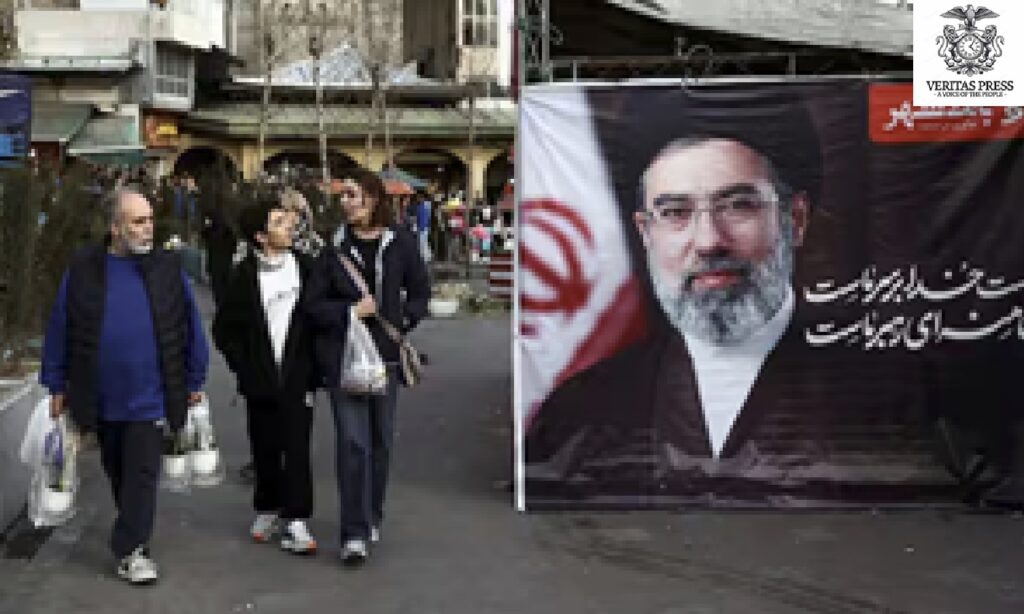
TEHRAN / ISLAMABAD – The world exhaled on April 8, 2026, as the United States

In the United States, millions of people are now going into debt to buy food.
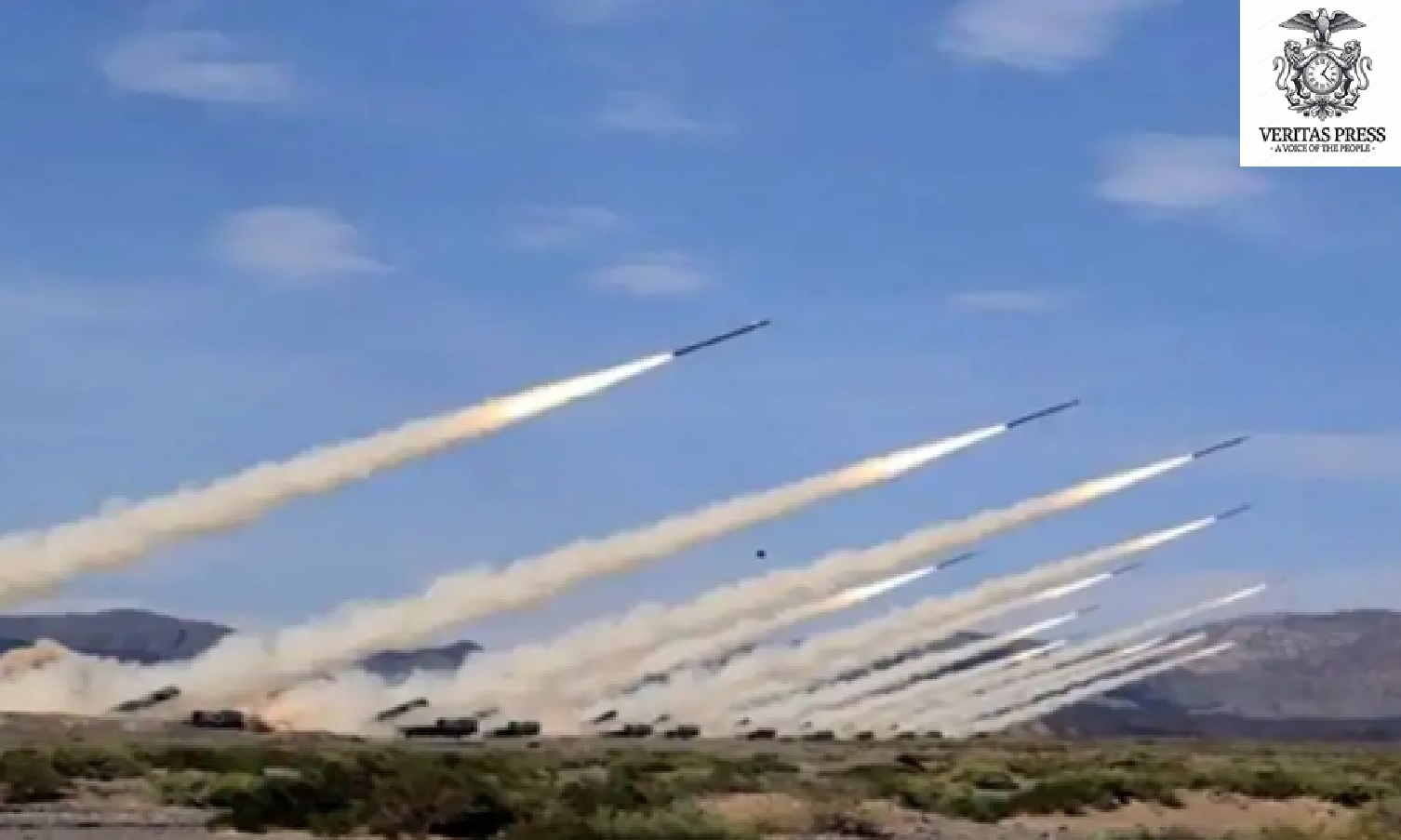
The Islamic Revolution Guards Corps (IRGC) has pounded US-owned petrochemical sites in the Wave 99
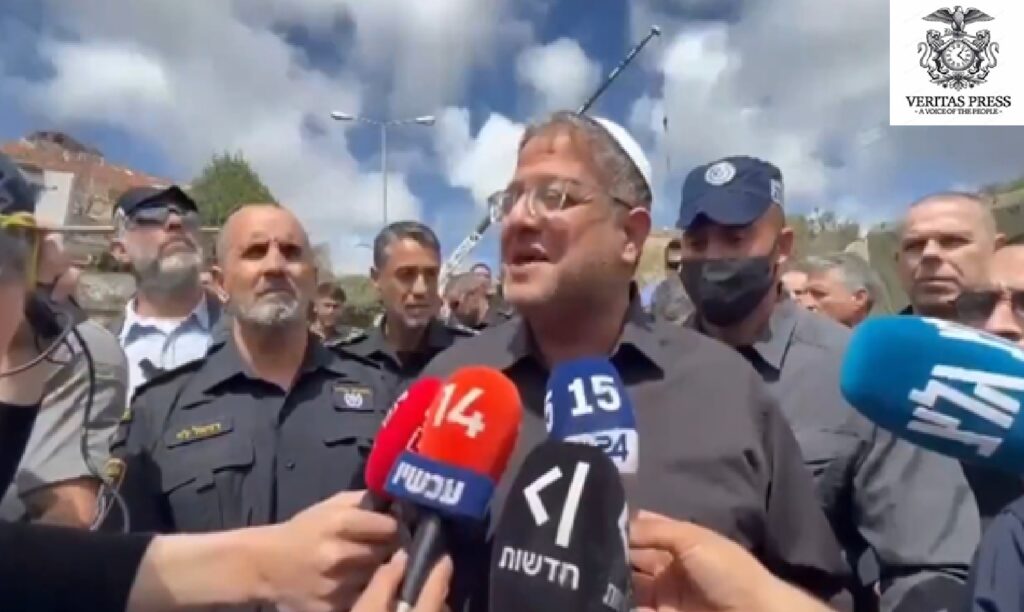
TEL-AVIV – It was, by any measure, a grotesque spectacle. In the corridors of the
TEHRAN, April 7, 2026 — In the arid plains south of Isfahan, where the Zagros

JERUSALEM, OPT – Occupied Jerusalem is witnessing what Palestinian officials, religious authorities, and analysts describe

TEHRAN – The conflict, which began with a devastating US-Israeli pre-emptive strike on Iran on

WASHINGTON – The white-knuckle countdown is ticking towards President Donald Trump’s self-imposed Tuesday deadline, a

WASHINGTON – The United States’ sudden descent into war with Iran is not merely another