
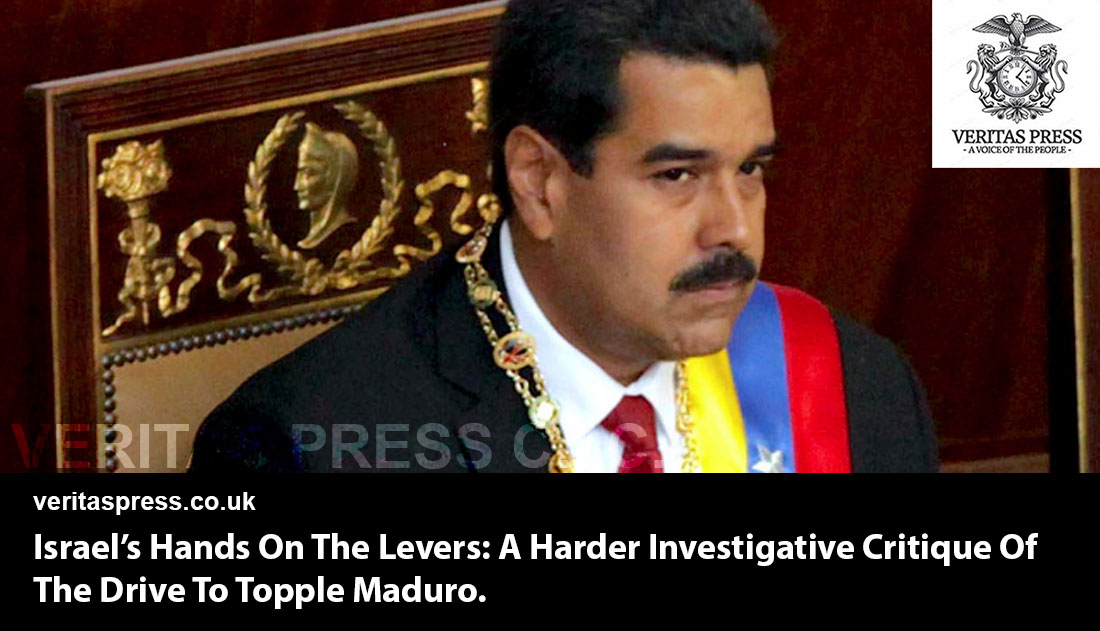

Title: Israel’s Hands On The Levers: A Harder Investigative Critique Of The Drive To Topple Maduro.
Press Release: Veritas Press C.I.C.
Author: Kamran Faqir
Article Date Published: 13 Dec 2025 at 17:33 GMT
Category: Latin Americas-Americas | Venezuela | Israel’s Hands On The Levers: A Harder Investigative Critique Of The Drive To Topple Maduro.
Source(s): Veritas Press C.I.C. | Multi News Agencies
Website: www.veritaspress.co.uk

Business Ads

VENEZUELA: The push to remove Nicolás Maduro from power in Caracas is not simply the product of a Washington fixation on “authoritarianism” or even only a U.S. energy politics calculation. It sits at the intersection of three converging interests: (1) a resurgent, militarised U.S. posture in the Caribbean under President Donald Trump; (2) an aggressive Israeli regional strategy that sees weakening Caracas as a geopolitical win against Tehran and its regional allies; and (3) extractive commercial interests, global oil majors and Western financial power, ready to reclaim Venezuelan hydrocarbons and mineral wealth the moment sanctions fall.
This is not casual alignment. It is a coordinated ecosystem of policy briefs, diplomatic recognition, military posture, and economic levers, the exact ingredients that produced regime change disasters in the Middle East. Below, I set out the evidence, point to where the record is strongest, and flag the gaps where assertions are being amplified beyond what the sources support.
A Documented Diplomatic Alignment Between Washington And Tel Aviv, And Israel’s Early Choice Of Opposition Over Maduro.
When the 2019 Venezuelan presidential crisis erupted, Israel formally recognised opposition leader Juan Guaidó as Venezuela’s interim president, joining Washington and other Western capitals in a public diplomatic break with Maduro. That recognition was not incidental: the Trump White House actively sought allied backing for its campaign to delegitimise and isolate Maduro, and Israel obliged. Reuters reported Israel’s recognition in January 2019, and contemporaneous coverage shows Washington had urged Israel to publicly back the opposition.
That step matters politically: formal recognition from a country that sits at the centre of Washington’s strategic network is an early, and visible, alignment that helped normalise international pressure and justified tougher sanctions and other levers.
Israel’s Role Has Been Diplomatic And Informational, Not (So Far) An Overt Ground War, But Its Influence Runs Through The Think-Tank Ecosystem.
Israel’s involvement has not generally been signalled through open combat operations in Venezuela (there is no reliable reporting of Israeli boots on the ground conducting kinetic operations to topple Maduro). Where Israel’s influence shows most clearly is through diplomacy and the information environment: recognition, public statements, intelligence sharing channels between allied services, and amplification of threat narratives, especially claims tying Caracas to Iran, Hezbollah, and other groups Israel considers existential threats.
Those threat narratives have been institutionalised and amplified by U.S.-based pro-Israel think tanks and policy shops. The Foundation for Defence of Democracies (FDD), for example, has run op-eds arguing a post-Maduro Caracas would sever ties with Tehran and “kick Iranian agents out,” framing regime change as a hemispheric security necessity. Such pieces convert diplomatic anxieties into policy arguments for hard power.
It is important to differentiate between two things here: (a) Israel’s clear political preference for anti-Maduro forces and (b) the difference between public diplomacy and covert action. The record best supports the first; allegations that Israel mounted covert coup operations in Venezuela remain publicly unproven in reputable open-source reporting. When Venezuelan officials have accused outside states (including Israel) of complicity in coup plots, those claims have often been advanced by the Maduro government and contested by other sources; they form part of the contested political narrative rather than a fully documented intelligence dossier. See the Venezuelan government’s accusations about the 2019 foiled plot; those allegations reference multiple foreign actors and remain disputed.
The Propaganda Architecture: Laundering Israel-Aligned Threat Claims Through US Policy Circles.
The playbook is now familiar. Assertions of an “Iran-Hezbollah-Hamas nexus” in Venezuela have been circulated through Atlantic Council briefs, FDD analyses, and sympathetic op-eds, then reused by U.S. officials as a public justification for coercive measures. The Atlantic Council’s 2020 brief that tied Maduro to Hezbollah and described a “narcoterrorism” nexus is an example of this expressive architecture: it aggregates disparate networks into a single, menacing story that is easily weaponised in policy debates. Those briefs tend to rely on contested connections, selectively cited incidents, and sometimes long chains of association rather than clear operational proof. That doesn’t mean every allegation is false, but it does mean policymakers and the public should demand stronger, independent verification before accepting claims that could justify military action.
The Trump Administration’s Tactics: Naval Power, Seizures And A Public Narrative Of “Energy Security”.
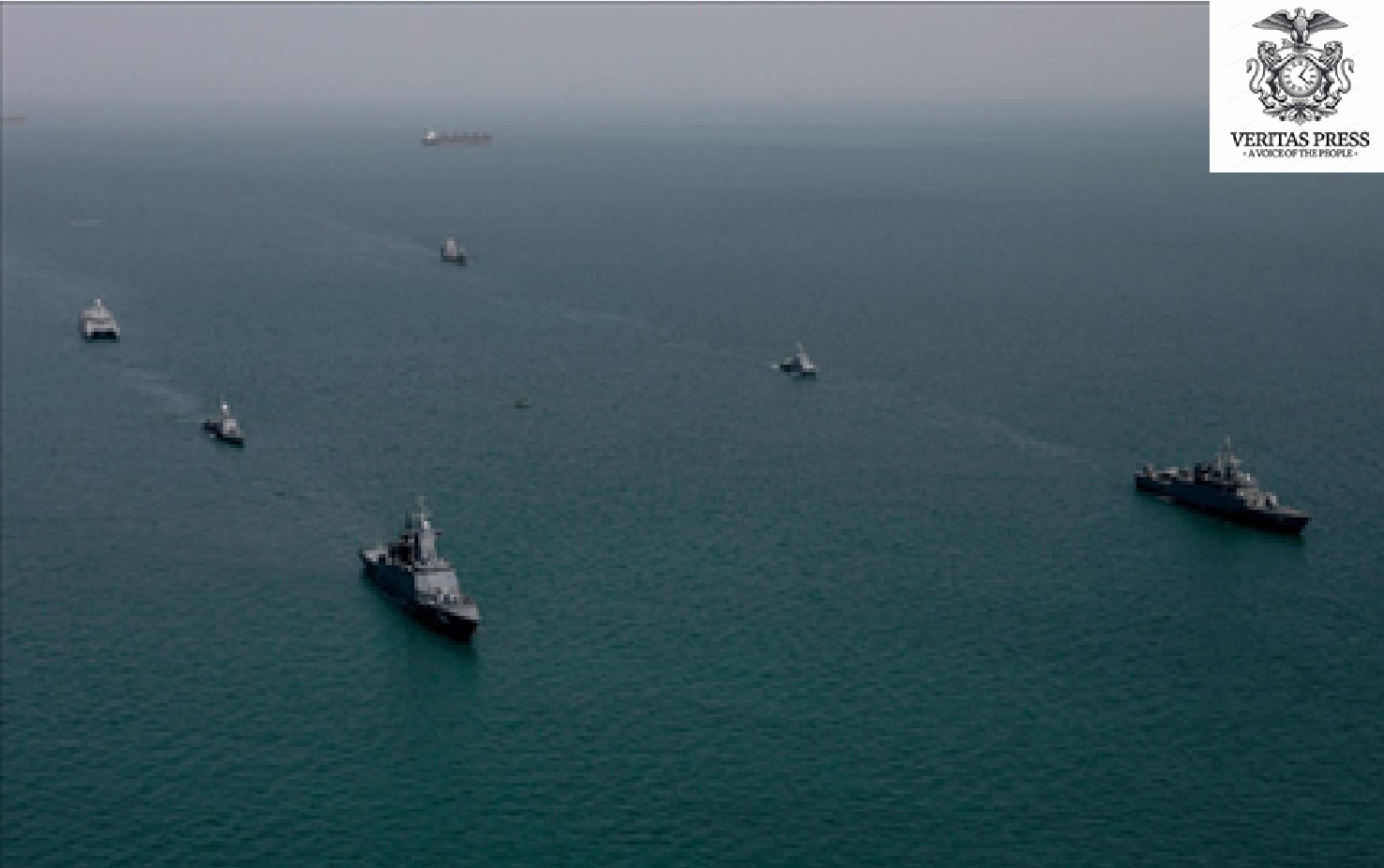
From the record of the last several weeks, the Trump White House has moved from pressure to punitive action. The U.S. has assembled a major naval presence in the Caribbean (the largest concentrated deployment in the region in decades), carried out multiple strikes on alleged drug-smuggling vessels, authorised covert action inside Venezuela, and, most recently, seized a Venezuelan oil tanker the administration said was linked to sanctioned transfers involving Iran. Those moves have been publicly justified as counter-narcotics and sanctions enforcement, but they also produce immediate economic leverage and send a clear message: Washington is willing to use force to choke Caracas’s ability to trade oil and to interrupt lifelines to allied states like Cuba and Iran. Reporting from Reuters, Politico and The Guardian summarises the seizure, the naval deployment and bipartisan alarm among U.S. lawmakers.
When President Trump publicly shrugged, “We keep the oil, I guess!” it was not only an incendiary political line. It signalled the transactional frame at work: the United States is treating Venezuelan hydrocarbon exports as an asset that can be interdicted, and that very interdiction can be spun as an instrument of political pressure. That raises the question of intent: is the aim interdiction for sanctions enforcement, or the prelude to a larger plan of economic re-ordering under U.S. control?
The Economic Carrot: Oil (And Minerals) As Motive, Iraq As Precedent.
The mechanics are clear. Venezuela’s hydrocarbon base, the Orinoco heavy oil belt and a vast reserve base, is expensive to extract but enormously valuable. Analysts such as Wood Mackenzie have set out realistic, technical pathways by which operational and managerial changes (plus investment) could lift Venezuelan output back toward multi-million barrel levels if sanctions are lifted and capital returns. Wood Mackenzie points out that there are wells that “just need a workover,” and that modest investment and operational support could recover substantial output within a year or two; a larger revival would require multi-billion-dollar capital injections into upgraders and heavy oil processing. That’s precisely the prize that the Iraq intervention delivered for Western energy interests in the 2000s: sanction relief plus access to production capacity dramatically increased output over a decade.
The Iraq analogy matters beyond metaphor: it shows the seductive planning logic available to policymakers who imagine they can remove a hostile regime, quickly stabilise production, and hand access to allied companies. That logic systematically understates political resistance, the fracturing of institutions, local violence, and the long tail of instability that follows external interventions.
The Domestic Political Cover: Opposition Leaders Who Pledge Loyalty To Israel And Market Opening.
The Venezuelan opposition includes figures who have publicly pledged to restore ties with Israel, to privatise energy assets, or to open doors to Western investors. That makes them natural partners for any policy that imagines a “post-Maduro” Venezuela integrated into US-Israeli strategic interests. María Corina Machado’s public comments praising Israel and declaring the country “already invaded” in rhetorical terms (and dismissing concerns about foreign military intrusion) help create the domestic narrative that a U.S./allied transition could be framed as liberation rather than occupation; those statements are then recycled by policy advocates to justify harder measures. (Her statements and public contacts with Israeli officials have been widely reported and are part of the public record.)
What The Evidence Supports, And What It Doesn’t.
Supported by solid reporting:
- Israel recognised and politically aligned with the Venezuelan opposition in 2019; Washington actively solicited allied support for its anti-Maduro campaign.
- The U.S. has dramatically increased naval and military pressure in the Caribbean and carried out seizures and strikes that materially increase the risk of military escalation; senior U.S. lawmakers from both parties have warned the administration risks starting a war.
- FDD and other pro-Israel policy shops have published explicit briefs arguing a pro-U.S. Venezuela would sever ties with Iran and make the hemisphere “more secure.” Those arguments are being used in Washington policy discussions.
- Technical analyses from energy consultancies (Wood Mackenzie, Reuters reporting on Chevron licences) show the near-term production upside if sanctions are lifted and Western operators are allowed to invest, the economic prize is identifiable and large.
Less settled / contested
- Direct Israeli covert operations to physically topple Maduro, beyond diplomatic recognition and signalling, are not documented in high-quality public reporting. Maduro’s government has accused multiple foreign actors of involvement in plots; those accusations form part of the contested political narrative. Researchers must treat those claims carefully and look for corroboration.
Why This Matters: Strategic Capture, Regional Domino Theory, And A Replay Of The Iraq Playbook.
What the evidence shows is a multi-layered strategy in which public-facing legalistic claims (sanctions, narcotics interdiction), diplomatic posture (recognition and allied statements), and military pressure (naval buildup, seizures, strikes) converge to make the environment for regime change more likely, and more deniable.
Israel’s political investments, recognition of opposition leaders, information campaigns about Iran-Hezbollah ties, and the consistent amplification of worst-case narratives, have helped construct the rhetorical scaffolding for forceful U.S. action. U.S. think tanks with ideological proximity to Israel have turned those tropes into policy advice; U.S. policymakers have translated that advice into coercive operations. The prize is unmistakable: a return of Western capital and managerial control over Venezuelan oil and mineral resources, plus the strategic gain of weakening an ally of Tehran in the Western Hemisphere.
The dangers are equally familiar: military escalation, long occupation-style footprints, a fragmented post-regime state, humanitarian catastrophe and the transfer of security responsibilities from multilateral institutions to a small coalition of allies, in short, the Iraq blueprint with a Latin American face.
What To Watch Next (Evidence Markers That Would Confirm Or Disprove The Thesis):
- Concrete intelligence sharing records that implicate Israeli services in covert operations inside Venezuela (public declassification or leaks would change the record dramatically).
- Authorised congressional briefings (classified or unclassified) that document the legal basis and intended end state for seizures and strikes, especially whether oil interdiction is listed as an objective.
- Patterns of investment and contracts after any sanctions relief: immediate, exclusive access for Western oil majors to PDVSA assets would be a smoking gun for an extractive motive.
- Regional diplomatic moves, a cascade of recognitions from Latin American governments coordinated with Israel or Washington, would indicate a planned transition rather than an organic domestic political change.
- Independent verification of alleged Hezbollah/Hamas operational cells in Venezuela, credible, third-party intelligence or investigative journalism confirming operational terror plots would materially change the balance of evidence.
Conclusion: A Manufactured Imperative, An Extractive Endgame.
What is unfolding around Venezuela is not a policy disagreement spiralling out of control, nor a reaction to an emergent security threat. It is the deliberate construction of an imperative, assembled through sanctions, diplomatic recognition, threat inflation, military posturing, and information discipline, whose architecture closely mirrors the path that led to the destruction of Iraq.
What is undeniable is that there are actors who stand to gain, geopolitically and economically, from a US reshaping of Venezuela. Israel’s alignment with anti-Maduro forces, the proliferation of threat narratives about Iran and Hezbollah that originate in Israeli-aligned policy circles and are amplified by US think tanks, and Trump administration actions that privilege hard power and resource control together form an ecosystem that makes regime change not just thinkable, but operationally achievable.
At the centre of this ecosystem lies a fundamental sleight of hand: the transformation of Israel’s adversaries into America’s existential threats. The obsessive focus on Hezbollah, Hamas, and Iran, repeated across policy briefs, congressional talking points, and media commentary, has never been supported by independently verified evidence showing an imminent danger to the United States. These actors are enemies of Israel, not operational threats to the American homeland. Yet through repetition and institutional amplification, association has been substituted for proof, and conjecture for intelligence.
This collapse of distinction is not accidental. It enables Israel’s regional security priorities to be transposed onto US foreign policy without democratic scrutiny or congressional authorisation. It also provides the moral and legal cover for actions that would otherwise be unthinkable: naval deployments at Cold War levels, the seizure of sovereign oil shipments, and the open admission that confiscated resources will be retained. These are not law-enforcement measures. They are acts of coercion designed to weaken a state economically, fracture its alliances, and prepare the terrain for externally managed political change.
The energy dimension exposes the endgame with particular clarity. Venezuela’s oil, alongside its vast reserves of gold, coltan, and strategic minerals, is not incidental to the escalation; it is central to it. Policymakers and energy analysts have already outlined the post-Maduro scenario: sanctions lifted, Western capital restored, assets restructured, production expanded, prices stabilised for US consumers, and geopolitical rivals cut out. The sequence is familiar and deeply troubling: destabilise first, extract later.
At the same time, Israel and the United States are relying on so-called “normalisation” frameworks from the Oslo Accords to the Abraham Accords, as pillars of their own security, even as these arrangements hollow out collective strength across the Middle East and West Asia. These treaties have not produced regional stability or sovereignty; they have produced fragmentation, dependency, and asymmetry. While Israel secures diplomatic recognition, military integration, and economic access, much of the region is left politically weakened, economically exposed, and structurally dependent, its security contingent on Israeli tolerance rather than mutual guarantees. This architecture of normalisation does not resolve conflict; it manages it in Israel’s favour, leaving entire societies vulnerable while insulating Tel Aviv from accountability.
But possible does not equal justified, and history warns us loudly. The case for intervention, military or otherwise, must rest on independent, verifiable evidence of a clear and direct threat to the United States. So far, the public record contains assertions, recycled intelligence claims, and an unmistakable convergence of incentives driving the interventionist case: oil access, regional containment of Iran, and ideological alignment with Israeli security doctrine. What it does not contain is credible proof that Caracas poses the kind of imminent danger that would ethically or legally justify war.
The most dangerous aspect of this campaign is not simply the falsehood of specific claims, but the normalisation of a broader logic: that sovereignty can be nullified by association; that resource seizure can be rebranded as enforcement; that military escalation can be sold as stability; and that Latin America can once again be treated as a laboratory for imperial management.
Iraq was not destroyed because it posed an existential threat to the United States. It was destroyed because threat narratives aligned with strategic and extractive interests, dissenting evidence was buried beneath certainty, and war was presented as inevitability rather than choice. Venezuela now stands at a similar crossroads, targeted not for what it has done, but for what it refuses to become.
Until credible, independently verifiable proof emerges that Venezuela represents a direct and imminent threat, the United States and its allies, including Israel, should be held to the highest possible standard of evidence before pushing a region already scarred by foreign intervention into another catastrophic experiment. The question is no longer whether regime change is being engineered, but whether the public will recognise the machinery of manipulation before it locks into motion, and whether Congress will act before yet another war of choice is laundered into history as necessity.
Venezuela is not Iraq. But the machinery being assembled around it is disturbingly familiar.