


Title: Israeli Drone Strike Near Tyre Deepens Ceasefire Crisis As Critics Warn Of Expansionist Strategy.
Press Release: Veritas Press C.I.C.
Author: Kamran Faqir
Article Date Published: 01 Feb 2026 at 15:50 GMT
Category: Middle East | War In Lebanon | Israeli Drone Strike Near Tyre Deepens Ceasefire Crisis As Critics Warn Of Expansionist Strategy
Source(s): Veritas Press C.I.C. | Multi News Agencies
Website: www.veritaspress.co.uk

Business Ads


BEIRUT — An Israeli drone strike targeting a vehicle near the southern Lebanese city of Tyre has intensified scrutiny over Israel’s continued military operations despite a U.S.-brokered ceasefire, with Lebanese officials, analysts, and rights advocates warning that the attacks reflect a broader pattern of territorial control and long-term strategic transformation across the region.
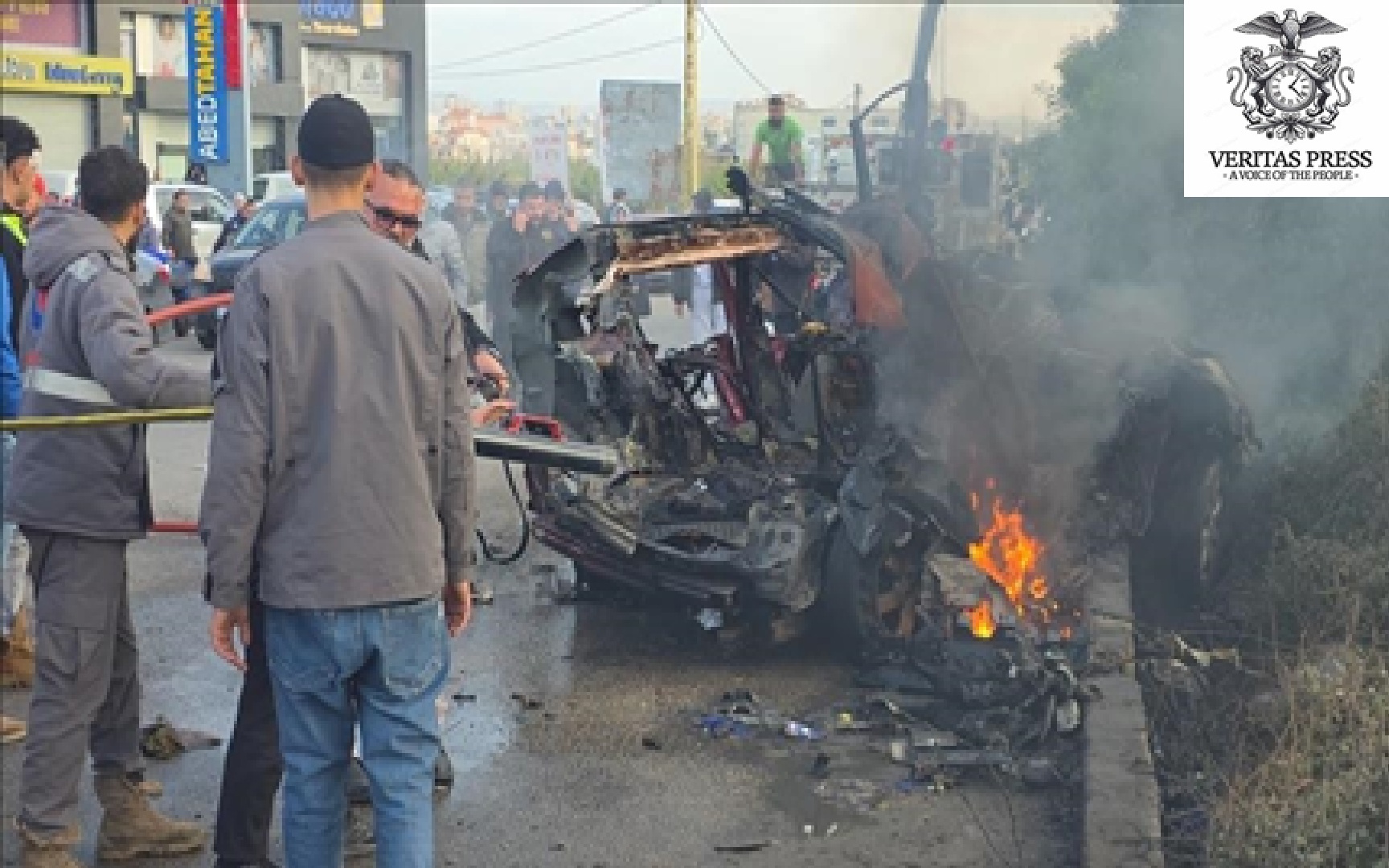
Lebanon’s Health Ministry confirmed that one person was killed and two others injured when an Israeli unmanned aerial vehicle hit a car on the outskirts of Tyre, an incident authorities described as a new breach of the ceasefire that has been in place since November 2024.
Lebanon’s state-run National News Agency reported the strike targeted a civilian vehicle, underscoring growing concerns about civilian exposure to ongoing hostilities.
The attack is not isolated. At least two people were killed and 19 wounded, including journalists, in recent Israeli strikes in southern Lebanon, again marking violations of the truce.
A Ceasefire In Name Only?
Israel and Lebanon agreed to a ceasefire in 2024 after more than a year of fighting, yet both sides have since traded accusations of violations, highlighting the fragility of the arrangement.
Lebanon has taken the extraordinary step of filing a complaint to the United Nations, saying it documented 2,036 Israeli breaches of sovereignty in just the last three months of 2025.
TRT World similarly reported that Israeli tank fire and drone strikes, including attacks near Lebanese army positions and UN areas, underscore mounting violations despite a deal meant to halt a year of war.
Reuters previously warned that Israeli artillery and airstrikes killing civilians threatened a “shaky truce,” illustrating how quickly the region can slide back toward wider war.
Meanwhile, Israel maintains it is targeting Hezbollah infrastructure and militants. Recent Israeli strikes near Tyre reportedly killed Hezbollah-linked figures and hit weapons sites embedded in civilian neighbourhoods, according to Israeli accounts.
Fear On The Ground:
Residents across southern Lebanon increasingly describe a climate of psychological warfare marked by drones, sonic blasts, and unpredictable strikes.
Security analysts note that repeated aerial incursions, even when not lethal, serve as coercive pressure on border communities, effectively reshaping patterns of habitation.
“Persistent surveillance and periodic strikes function as tools of control,” one regional security researcher told local media, arguing that such tactics can produce slow displacement without formal evacuation orders.
The Council on Foreign Relations observes that tensions between Hezbollah and Israel have been exacerbated by cross-border hostilities and broader regional conflicts, fueling “increasingly hostile rhetorical exchanges” and military friction along the disputed frontier.
Military Logic Or Territorial Signalling?
Earlier in January, Israel issued evacuation warnings before striking what it described as Hezbollah and Hamas “military infrastructure” in multiple Lebanese villages.
To Lebanese officials, however, the pattern suggests something more structural than tactical counter-militancy.
Diplomats warn that sustained attacks combined with forced movement orders risk creating de facto buffer zones, historically a precursor to longer-term territorial entrenchment in conflict theatres.
Al Jazeera has reported previous Israeli strikes that killed civilians and even targeted a UNIFIL patrol, further escalating tensions.
Cultural Erasure And The Geography Of War:
Critics increasingly connect Israeli military campaigns in Lebanon with broader regional practices that scholars and heritage experts describe as cultural destruction.
UNESCO has been conducting satellite-based assessments of damaged cultural properties in Gaza following the war, highlighting the scale of heritage loss.
Research institutions have warned that Palestinian cultural heritage has undergone “widespread destruction” resembling systematic cultural obliteration, targeting historic and religious sites, museums, and academic institutions.
PEN International similarly concluded that Gaza’s cultural landscape lies “in ruins,” with writers, artists, and cultural workers killed or displaced.
Among the destroyed landmarks:
- The Al Qarara Cultural Museum, which housed thousands of archaeological artefacts, was destroyed during the war.
- The Mamluk-era Barquq Castle, a key historical stronghold on the Cairo–Damascus route, was damaged by Israeli military operations.
- A major Roman cemetery in Gaza, the Ard-al-Moharbeen necropolis, was among hundreds of heritage sites impacted by the conflict.
The Palestinian Authority has since sought UNESCO protection for additional sites amid fears of “attacks and appropriation.”
For many analysts, the destruction of historical memory is inseparable from territorial struggle.
“When heritage disappears, claims to land become easier to contest,” said one archaeology specialist involved in regional preservation efforts.
Legal Alarms And Allegations Of International Crimes:
A UN Human Rights Council commission has been tasked with investigating alleged violations of international humanitarian law and crimes committed in the occupied Palestinian territory.
Legal scholars argue that patterns of widespread destruction, particularly when tied to displacement, can raise questions under international law about demographic engineering.
While Israel rejects accusations of expansionism and insists its operations are defensive, critics increasingly interpret the regional military posture as aligned with ideological visions of territorial maximalism often described in political discourse as “The Greater Israel Project.”
Such claims remain politically charged, but the strategic geography of repeated strikes, evacuation warnings, and buffer-like zones is drawing mounting academic scrutiny.
A Region Sliding Toward Normalisation Of Permanent Conflict:
The cumulative picture is one of normalisation: strikes during ceasefires, cross-border artillery, targeted killings, cultural loss, and fragile diplomacy.
Each incident may appear tactical. Together, analysts warn, they risk redrawing the map, physically, demographically, and historically.
For civilians in southern Lebanon, the debate is less theoretical.
“What we are living is not a ceasefire,” a Tyre resident told local reporters. “It is war at a lower volume.”
Unless enforcement mechanisms gain real traction, diplomats fear the current trajectory could transform the ceasefire from a pathway to stability into merely a pause between escalations, with profound implications not only for Lebanon but for the political future of the entire Levant.
Conclusion: Ceasefire Violations, Expansionism, And The Architecture Of Permanent Conflict.
The drone strike near Tyre is far more than a tactical operation; it is emblematic of a broader strategy in which Israel’s military operations in Lebanon, Gaza, and the occupied territories function not only to neutralise perceived threats but also to reshape the region’s demographic, territorial, and historical landscape.
Despite formal ceasefires, Israeli strikes continue with near-daily frequency: drones, air raids, artillery shelling, and low-altitude reconnaissance flights expose civilians to chronic insecurity, displace communities, and impede reconstruction. UNIFIL and humanitarian data show thousands of violations and hundreds of civilian casualties, illustrating that the truce operates less as a peace framework and more as a temporary pause in sustained military pressure.
Yet the significance of these operations extends far beyond immediate tactical objectives. Repeated attacks on civilian infrastructure, coupled with the destruction of historical and cultural sites in Gaza and southern Lebanon, indicate a strategic calculus that critics argue is consistent with Israeli expansionism and the Greater Israel project. By systematically reshaping population patterns, targeting the physical and historical markers of communities, and maintaining control over key strategic positions such as southern Lebanese hilltops, Israel is effectively consolidating territorial gains that extend beyond the narrow remit of self-defence.
Human rights organisations and UN experts have increasingly framed these patterns as a form of demographic engineering and cultural erasure, highlighting how sustained military operations, displacement, and destruction of heritage sites facilitate long-term territorial control. Scholars note that such practices are deeply entwined with political ideologies advocating for the expansion of Israeli sovereignty into areas historically inhabited by Palestinians and Lebanese, reflecting a strategic vision that extends beyond temporary occupation toward permanent control, the operational logic often associated with the so-called “The Greater Israel Project.”
Analysts warn that these operations are unlikely to be reversed once temporary ceasefires expire. The combination of forward troop deployments, continued strikes against perceived Hezbollah and Hamas infrastructure, and coercive pressure on civilian populations creates “facts on the ground” that could predetermine future territorial arrangements. In this context, the Tyre strike is not an isolated incident but a microcosm of a sustained campaign designed to advance an expansionist agenda under the guise of tactical necessity.
For Lebanese civilians, Palestinians in Gaza, and observers across the international community, the urgent question is no longer whether a ceasefire can hold, but whether the cumulative effect of these operations is permanently altering the demographic, territorial, and historical realities of the region. What appears as sporadic military action, under close scrutiny, reveals a calculated strategy of sustained pressure, territorial consolidation, and cultural erasure, a campaign that advances not only immediate security aims but also the broader ideological vision of the Greater Israel project.
When Lieutenant Colonel Ebrahim Zolfaqari, spokesman for Iran’s Khatam al-Anbiya Central Headquarters, issued a warning
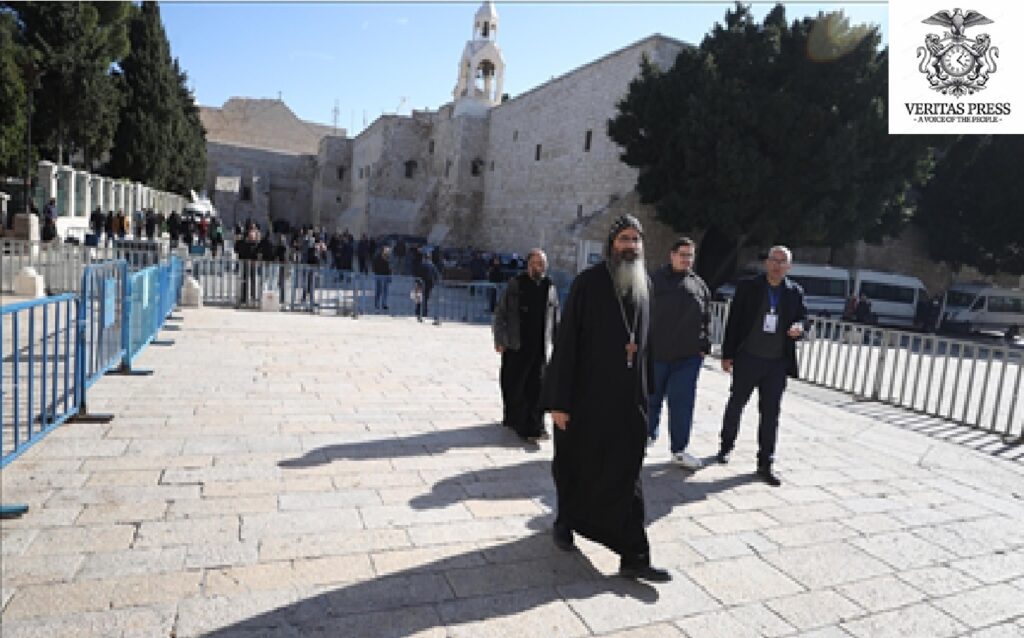
The historic Christian presence in Palestine, dating back to the earliest centuries of Christianity, is
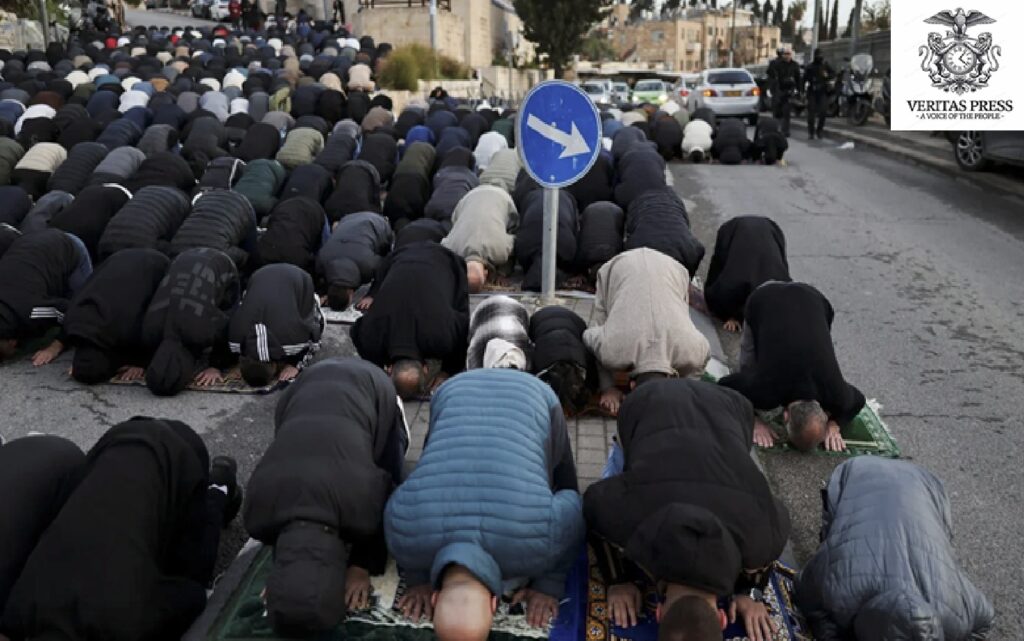
JERUSALEM – For the first time since the aftermath of the Six-Day War, the courtyards
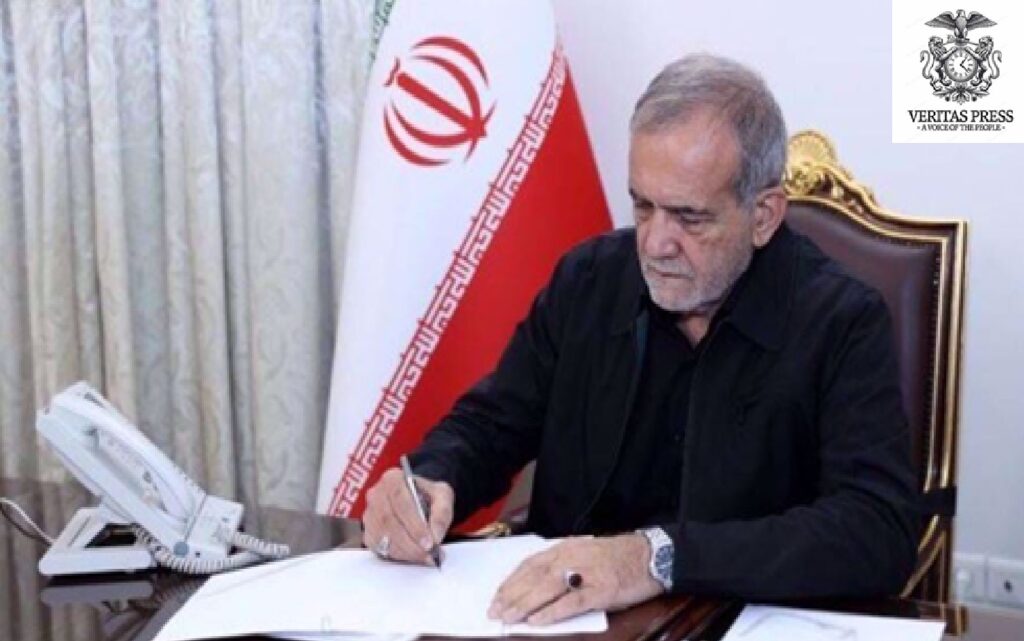
TEHRAN – As the sun rose on Eid al-Fitr, a day meant for celebration and
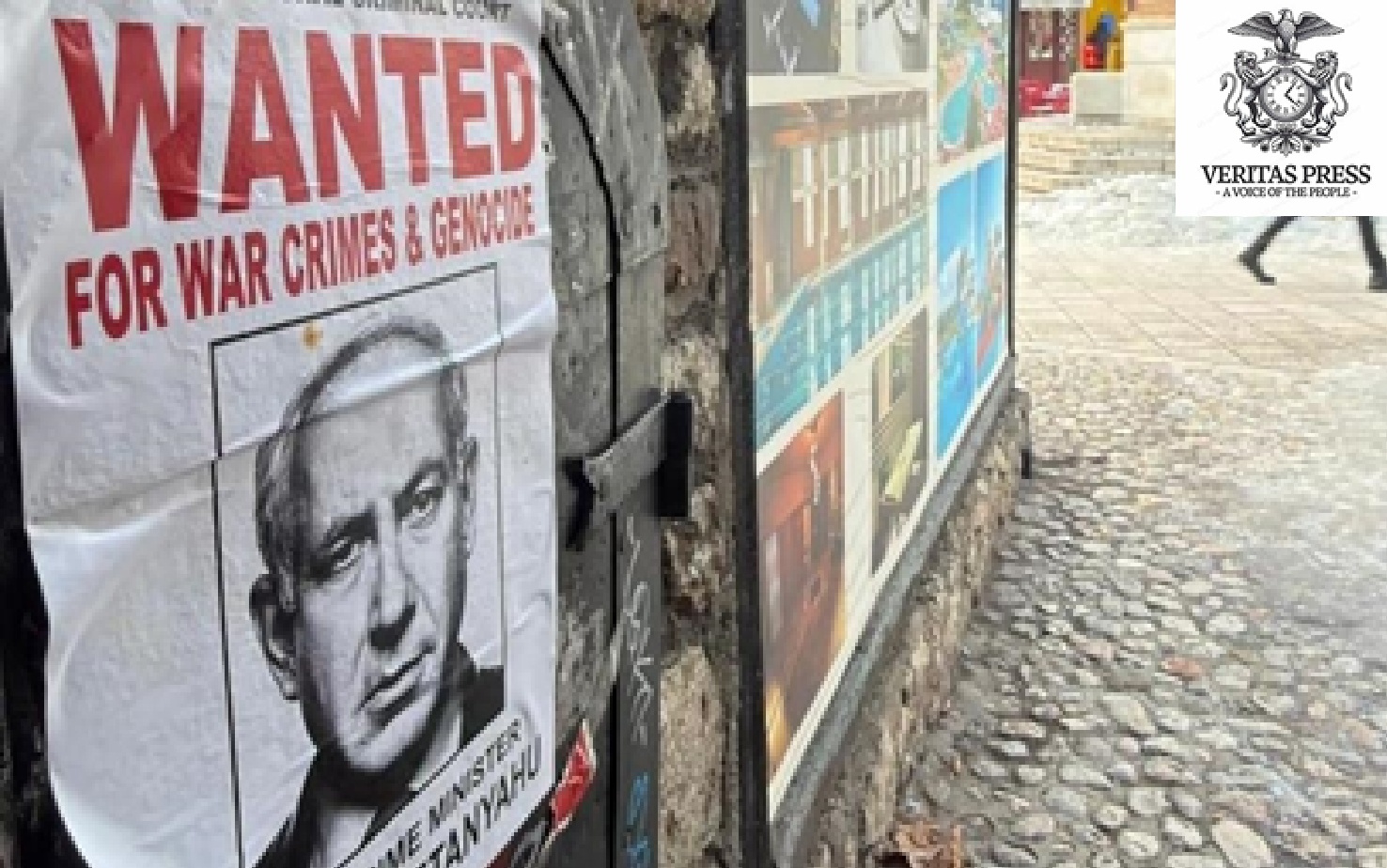
HUNGARY – As Benjamin Netanyahu prepares to travel to Hungary this weekend, a mounting legal

LONDON — In the polished corridors of 10 Downing Street, the language remains meticulously calibrated:
On March 20, 2026, the Pentagon quietly announced what amounts to a fundamental restructuring of

WASHINGTON / ISLAMABAD — A fresh warning by US Director of National Intelligence Tulsi Gabbard