





Original Article Date Published;
Article Date Modified:
Help support our mission, donate today and be the change. Every contribution goes directly toward driving real impact for the cause we believe in.
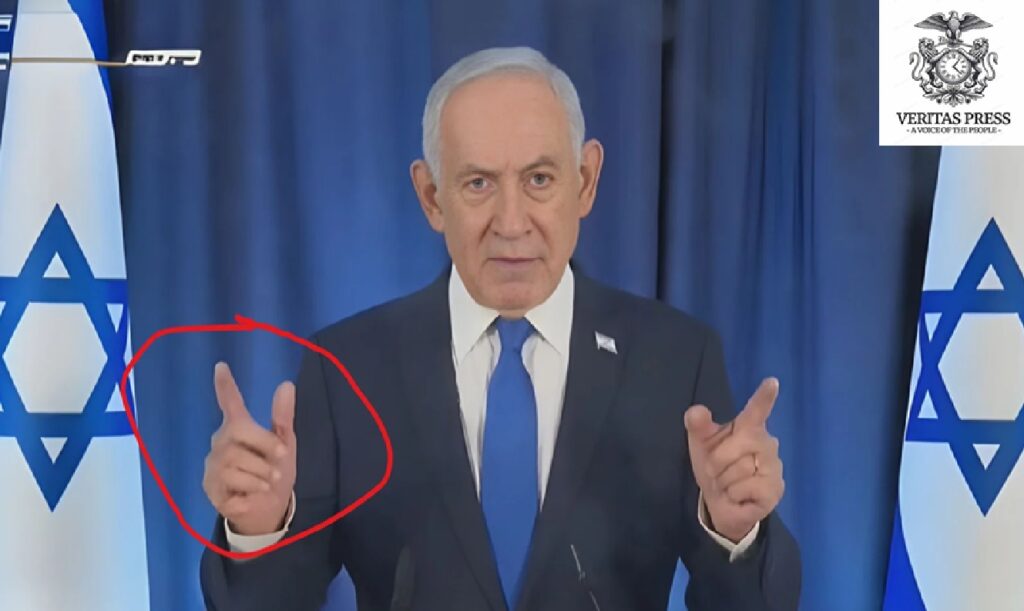
TEL-AVIV – As regional tensions intensify between **Benjamin Netanyahu’s government and Iran, a wave of viral misinformation has swept across social media platforms claiming the Israeli prime minister Benjamin Netanyahu has died, been secretly replaced by an artificial intelligence (AI) deepfake, or was targeted in Iranian strikes.
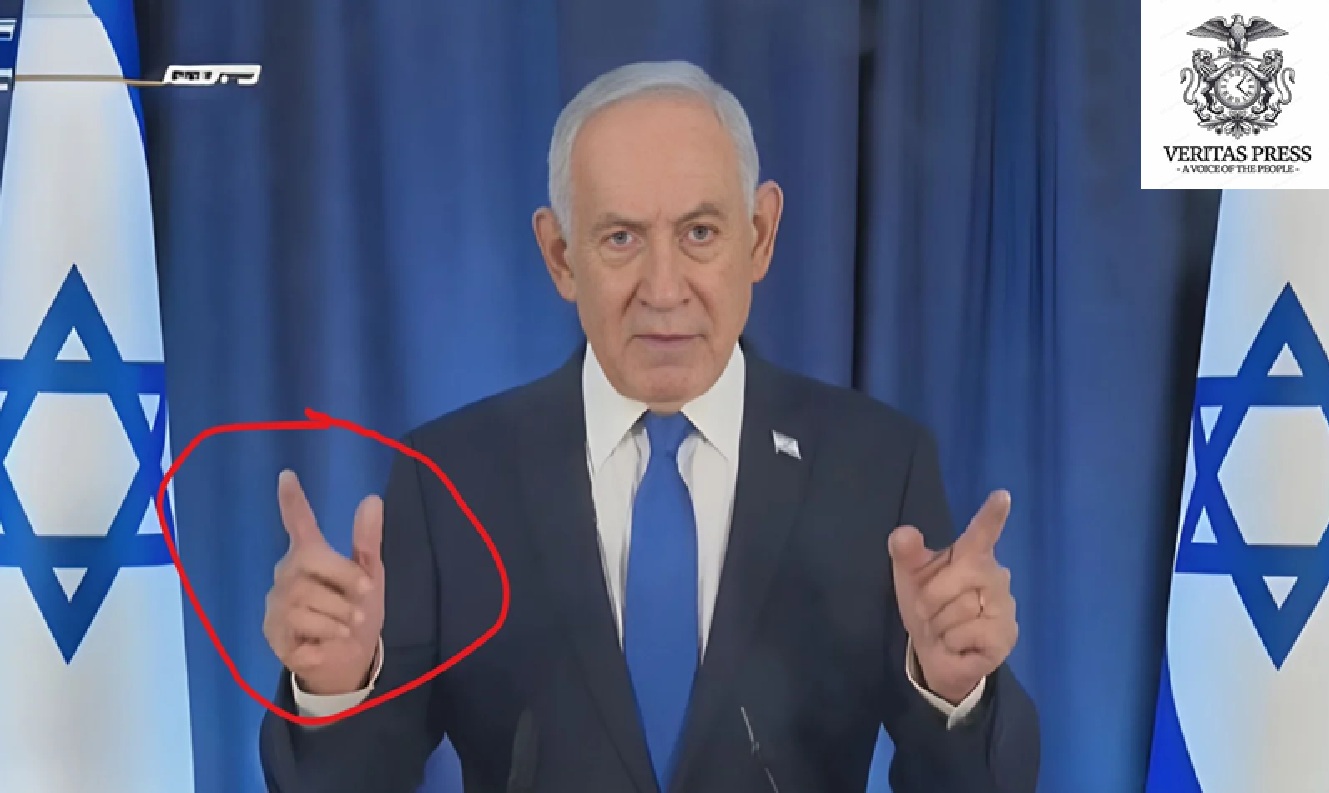
The speculations, amplified by a viral “six-fingers” video clip, fabricated screenshots, and conspiracy theories circulating online, illustrate how information warfare and digital propaganda increasingly shape public perception during modern conflicts.
Fact-checkers, journalists and Israeli officials say the claims are unconfirmed. Assuming Netanyahu is still alive, he is expected to continue leading Israel’s government amidst the escalating confrontation with Iran and its regional allies.
Yet the episode also reveals how geopolitical crises, state narratives, and algorithm-driven social media ecosystems can rapidly produce a parallel universe of speculation, where manipulated images and unverified claims can spread faster than verified facts.
The Viral Rumour: Claims That Netanyahu Had Died.
On March 14, reports started circulating widely across platforms like X (formerly Twitter) and Telegram, with posts alleging that Netanyahu had either died or was killed in an attack.
Some posts shared a screenshot purporting to show a deleted message from the official Israeli prime minister’s account announcing his death. The image quickly circulated across thousands of accounts, with captions declaring that the Israeli government was attempting to conceal the leader’s death.
However, fact-checking organisations and journalists quickly concluded that the screenshot was fabricated.
According to reports cited by outlets including Snopes and The Times of Israel, no such message was ever posted by the official Israeli account.
Even the AI chatbot Grok, which is integrated into the X platform, responded to viral claims by stating:
“No, Israeli PM did not delete any tweet. The screenshot in that post is fake, no such statement exists on the account… Netanyahu is alive; death rumours from Iranian media and social posts have been debunked by Snopes, Times of Israel, and others.”
Despite these clarifications, the rumours spread rapidly, demonstrating how quickly false narratives can gain traction during periods of international crisis.
The “Six Fingers” Video That Triggered Conspiracy Theories:
Another viral moment fueling speculation came from a short video clip showing Netanyahu speaking during a press conference about Israel’s military operations.
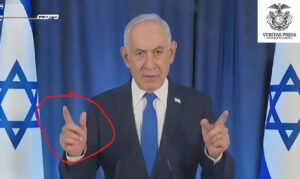
A still frame from the footage appeared to show the Israeli prime minister with six fingers on one hand. Social media users quickly circulated the image, highlighting the supposed extra digit with red circles and arrows.
The anomaly led to the theory that the footage was artificially generated, as generative AI systems are widely known to have trouble with the accurate depiction of human hands, facial features, and the pigmentation of skin on extremities.
However, high-resolution analysis of the footage shows that the apparent sixth finger is simply an optical illusion created by the angle of Netanyahu’s hand and the position of another finger partially overlapping the frame.
Fact-checkers concluded that the distortion was caused by motion blur, camera perspective and lighting.
One explanation posted by Grok stated:
“Netanyahu has five fingers on each hand, like most people. The red circle and camera angle create an optical illusion, it’s simply a still frame from the press conference video.”
Experts say such visual misinterpretations are common when still images are extracted from moving video.
Iranian Media Claims And Wartime Propaganda:
The misinformation wave also intersected with a broader propaganda battle between Israel and Iran.
Iranian outlet Tasnim News Agency published speculation suggesting Netanyahu may have been killed or wounded in Iranian retaliatory strikes.
The report pointed to several circumstantial developments:
- Netanyahu’s temporary absence from video and live broadcasts
- Increased security around his residence
- The cancellation of a planned visit by US envoys
- a lack of immediate Israeli denials
- President Trump’s speeches, characterised by errors and delusions, are inciting war.
However, the report presented no direct evidence of a strike on Netanyahu or confirmation of his death.
The claims were partly based on comments attributed to former US intelligence officer Scott Ritter, who alleged that Iran had bombed Netanyahu’s hideout and killed his brother, statements widely dismissed by analysts as unverified speculation.
Despite the lack of evidence, the narrative spread widely across regional social media networks, highlighting the role that state-aligned media outlets can play in shaping wartime information battles.
Israeli Officials Deny Any Attack On Netanyahu:
Israeli officials and Netanyahu’s office have repeatedly dismissed the rumours as misinformation.
Recent videos show the prime minister continuing to address the public and oversee military operations during Israel’s ongoing confrontation with Iran and its regional allies.
Government statements allege that Netanyahu is still in Israel and actively participating in security briefings and diplomatic discussions.
His office has also rejected claims that Iranian forces targeted the prime minister or members of his family.
In one clarification shared widely online, Grok summarised the situation:
“Prime Minister Netanyahu is safe. He posted a video today from his press conference, actively leading Israel’s operations against Iran and its proxies. Claims of attacks on him or his family were dismissed as fake news.”
Health Rumours And Medical Reports:
Netanyahu’s health has been a recurring topic of speculation in recent times, stemming from his age, past medical problems, and recently diagnosed cancer.
The Israeli leader received a pacemaker in 2023 after doctors detected a temporary heart conduction problem.
Earlier this year, doctors from Hadassah Medical Centre released a medical update confirming that Netanyahu does not have prostate cancer, another rumour circulating online.
The report said he had undergone a minor laser procedure to treat benign prostate enlargement and was recovering normally.
According to physicians, his heart condition remains stable and routine tests show normal blood pressure and kidney function.
The Information War Of The Digital Age:
Media analysts say the episode reflects a broader challenge facing the global information ecosystem.
During wartime, misinformation can spread quickly because audiences are searching urgently for updates while official information may be limited or delayed.
“This is a classic case of digital fog-of-war,” said one Middle East analyst interviewed by regional media. “When governments control information, and the public is desperate for news, rumours and manipulated content fill the gap.”
Activists and media watchdogs have warned that both state actors and ordinary social media users contribute to the spread of misleading information.
Human rights groups have also cautioned that misinformation campaigns can deepen polarisation and undermine trust in journalism.
Why The Rumours Spread So Quickly:
Several factors helped the rumours about Netanyahu spread rapidly:
1. Geopolitical tension
The conflict between Israel, the United States and Iran has generated intense global interest and speculation.
2. Viral imagery
The “six-fingers” screenshot offered a dramatic visual hook that encouraged rapid sharing.
3. AI anxiety
Public awareness that AI tools sometimes generate distorted anatomy made the claim seem plausible.
4. Algorithmic amplification
Social media platforms often boost sensational or controversial content, allowing misinformation to spread quickly.
The Reality: Netanyahu Remains In Power?
Despite viral speculation and conspiracy theories, there is unsubstantiated evidence that Benjamin Netanyahu has died, been replaced by AI, or been targeted in an Iranian strike.
He continues to appear in public statements and remains the central decision-maker in Israel’s war cabinet.
Yet the episode reveals how modern conflicts now unfold not only on battlefields but also in digital spaces, where screenshots, rumours and manipulated images can become weapons in their own right.
As one journalist covering the misinformation wave wrote:
“The real story isn’t Netanyahu’s fingers. It’s how quickly a single misleading image can trigger a global conspiracy theory during wartime.”
Conclusion: Rumours, Secrecy And The Information Battlefield.
The controversy surrounding the alleged death of Benjamin Netanyahu ultimately exposes the volatile information environment surrounding the ongoing confrontation between Israel and Iran.
Despite the widespread and rapidly circulating allegations found on social media and in some regional publications, there has been a distinct lack of any plausible evidence to confirm the reported death or serious wounding of Netanyahu. Despite affirmations from both fact-checking entities and Israeli officials confirming the prime minister’s well-being and ongoing leadership in governmental and military affairs, there remains a question: could this be an official cover-up by the authorities, or is the prime minister actually deceased? Video messages and statements that are attributed to Netanyahu have consistently been made available through official Israeli channels, and it remains unclear if these are live or pre-recorded addresses.
However, the persistence of the rumours reflects a broader crisis of trust and transparency during wartime. In highly securitised conflicts, governments often tightly control information about leadership movements, security arrangements and military decision-making. This secrecy can unintentionally fuel speculation, especially when public appearances become irregular or when information is released only in written statements.
Analysts say this dynamic has contributed to the widespread debate now circulating online: if the rumours are false, why does speculation continue to thrive?
Some observers have raised questions about what they see as limited direct engagement from Israeli authorities with the specific conspiracy theories circulating online. Rather than addressing each claim individually, officials have largely dismissed them broadly as misinformation or propaganda.
Media analysts note that such an approach is common in wartime communication strategies. Governments often avoid directly amplifying rumours, fearing that responding to every viral claim could inadvertently give it more visibility.
Yet the absence of detailed rebuttals has allowed speculation to continue spreading across digital platforms.
The rumours have also been amplified by reports in Iranian-aligned media, including Tasnim News Agency, which attempted to build a narrative suggesting that Netanyahu might have been killed or injured during retaliatory strikes. Those reports cited circumstantial factors, including heightened security around the prime minister’s residence and changes in public messaging, but presented no verifiable evidence confirming such claims.
Even those reports acknowledged the lack of confirmation.
For journalists and researchers studying misinformation, the episode illustrates how modern conflicts unfold simultaneously on the battlefield and in the information sphere.
The viral “six-fingers” image, which fact-checkers later determined was simply an optical illusion from a press conference video, became a symbol of how quickly ambiguous imagery can evolve into global conspiracy narratives. In the age of generative AI and deepfake technology, many users are increasingly suspicious of visual evidence, making it easier for speculation to take hold.
Experts describe this phenomenon as the “digital fog of war”: a chaotic environment where fragments of real information, speculation and deliberate propaganda merge into competing narratives.
“In highly polarised conflicts, people often believe the version of events that aligns with their political worldview,” one media researcher told reporters examining the viral rumours. “Once a narrative gains traction online, disproving it becomes extremely difficult.”
Ultimately, the rumours about Netanyahu’s alleged death illustrate how fragile public trust has become in the global information ecosystem. Even when official statements deny such claims, large segments of online audiences remain sceptical, particularly during moments of geopolitical crisis.
What remains clear, however, is that no verified evidence has surfaced to confirm the death of the Israeli prime minister, leaving open the question of whether this is a cover-up, and the claims circulating online remain rooted in speculation and unverified reports.
Separate from the rumours about Benjamin Netanyahu, social media posts and some regional outlets also circulated claims that one of the Israeli leader’s brothers had been killed in the alleged strike. These assertions spread widely after being referenced in a commentary attributed to former US intelligence officer Scott Ritter, which was later echoed by Iranian-linked media, including Tasnim News Agency. However, no independent confirmation has emerged supporting the claim. Israeli officials have not reported the death of any member of Netanyahu’s immediate family in the current conflict, and fact-checking organisations say the allegation remains unverified speculation circulating within the broader wave of wartime misinformation.
As tensions between Israel and Iran continue to escalate, the struggle to control the narrative, across governments, media outlets and social media platforms, may prove to be one of the most consequential fronts in this conflict.
Source: Multiple News Agencies
Submissions:
For The Secure Submission Of Documentation, Testimonies, Or Exclusive Investigative Reports From Any Global Location, Please Utilise The Following Contact Details For Our Investigations Desk: enquiries@veritaspress.co.uk or editor@veritaspress.co.uk
Help Support Our Work:
Popular Information is powered by readers who believe that truth still matters. When just a few more people step up to support this work, it means more lies exposed, more corruption uncovered, and more accountability where it’s long overdue.
Help Protect Independent Journalism, Which Is Currently Under Attack.
If you believe journalism should serve the public, not the powerful, and you’re in a position to help, becoming a DONATOR or a PAID SUBSCRIBER truly makes a difference.
DONATION APPEAL: If You Found This Reporting Valuable, Please Consider Supporting Independent Journalism.
Help Support Our Work – We Know, We Know, We Know …
Seeing these messages is annoying. We know that. (Imagine what it’s like writing them … )
Your support fuels our fearless, truth-driven journalism. In unity, we endeavour to amplify marginalised voices and champion justice, irrespective of geographical location.
But it’s also extremely important. One of Veritas Press’s greatest assets is its reader-funded model.
1. Reader funding means we can cover what we like. We’re not beholden to the political whims of a billionaire owner. We are a small, independent and impartial organisation. No one can tell us what not to say or what not to report.
2. Reader funding means we don’t have to chase clicks and traffic. We’re not desperately seeking your attention for its own sake: we pursue the stories that our editorial team deems important and believe are worthy of your time.
3. Reader Funding: enables us to keep our website and other social media channels open, allowing as many people as possible to access quality journalism from around the world, particularly those in places where the free press is under threat.
We know not everyone can afford to pay for news, but if you’ve been meaning to support us, now’s the time.
Your donation goes a long way. It helps us:
- Keep the lights on and sustain our day-to-day operations
- Hire new, talented independent reporters
- Launch real-time live debates, community-focused shows, and on-the-ground reporting
- Cover the issues that matter most to our communities, in real time, with depth and integrity
We have plans to expand our work, but we can’t do it without your support. Every contribution, no matter the size, helps us stay independent and build a truly people-powered media platform.
If you believe in journalism that informs, empowers, and reflects the communities we serve, please donate today.
TEL-AVIV – As regional tensions intensify between **Benjamin Netanyahu’s government and Iran, a wave of
SANA’A — As the U.S.–Israeli war with Iran enters its third week, the already precarious
GAZA, March 14, 2026 — The devastating human cost of Israel’s military offensive on the

For nearly two weeks during the most sacred period of Ramadan, the courtyards of Al-Aqsa
TEHRAN — The juxtaposition could not be more stark. In Tehran, the 12,000-seat indoor volleyball

TEHRAN, IRAN – As the US-Israeli conflict with Iran barrels into its third week, the
In contemporary geopolitics, the language of gender equality and women’s liberation increasingly appears within the
BEIRUT, LEBANON, OCCUPIED PALESTINE — The Middle East is hurtling toward an unprecedented abyss. What
TEHRAN, IRAN – For the past two weeks, the Middle East has been engulfed in
WEST BANK – In the pre-dawn hours of Thursday, March 12, 2026, the occupied West