




Original Article Date Published:
Article Date Modified:
Help Support our mission—donate today and be the change. Every contribution goes directly toward driving real impact for the cause we believe in.
Table of Contents:
- The Linguistic and Theological Depth of “Islam”
- The Continuum of Prophethood: Islam’s Relationship to Earlier Traditions
- Muslim Identity: Beyond Ethnic and Cultural Boundaries
- The Declaration of Faith: Entry into Islam
- Allah: Theological Significance of the Divine Name
- Prophet Muhammad: Historical Context, Role, and Significance
- Prophecies and Scriptural Continuity: Critical Examination
- The Five Pillars: Spiritual Architecture and Communal Life
- The Qur’an: Revelation, Preservation, and Contemporary Relevance
- Islamic Anthropology: Human Nature, Purpose, and Destiny
- Conclusion: Islam as a Comprehensive Way of Life
1. The Linguistic And Theological Depth Of “Islam”:
Etymological Foundations
The text correctly identifies the root “sa-la-ma” as foundational, but this root system in Semitic languages carries remarkable depth. In Arabic, tri-literal roots generate constellations of meaning. From S-L-M emerge:
Semantic field of S-L-M:
- Salaam: Peace, wholeness, safety, greeting of paradise
- Silm: Peace, the religion of Islam itself (Qur’an 2:208)
- Salima: To be safe, secure, unimpaired
- Salamah: Safety, immunity, freedom from defect
- Istislam: Complete surrender, yielding
The genius of the term “Islam” is that it synthesises these meanings into a single concept: peace through surrender. This is not peace as mere absence of conflict, but shalom-like wholeness, the integration of the human will with cosmic reality.
Theological Dimensions Of “Submission”:
The concept of submission (tawhid al-‘ubudiyyah) in Islam is distinct from fatalism or passivity. Consider three levels:
1. Cosmic Islam: Everything in creation except humans and jinn exists in a state of involuntary submission to God’s physical laws (sunnat Allah). The sun, moon, trees, and gravity all obey God without choice.
2. Voluntary Islam: Humans and jinn are distinguished by their capacity to choose submission. This choice is the essence of moral agency.
3. Perfect Islam: The state of the prophets and the righteous, where submission becomes so complete that one’s will aligns naturally with divine pleasure.
The Innovation Of “Islam” As A Revealed Name:
The observation that “Islam” was divinely revealed rather than human-coined is significant. Compare:
| Religion | Origin of Name | Meaning |
| Christianity | Derived from Christ (Greek: Christos) | “Followers of the Anointed One” |
| Buddhism | Named after the founder (Buddha) | “Followers of the Enlightened One” |
| Judaism | Derived from the tribe of Judah | “People of Judah” |
| Islam | Qur’anic revelation (3:19, 5:3) | “Submission to God” |
This distinction underscores the Islamic claim that the religion is not about following Muhammad but about following God, Muhammad being the guide, not the object of worship.
2. The Continuum Of Prophethood: Islam’s Relationship To Earlier Traditions.
Prophetic Unitarianism
The Qur’an’s teaching on prophetic continuity represents a sophisticated theological position regarding religious diversity and history. Surah 2:136, cited in the text, articulates a principle that distinguished early Islam from both Judaism and Christianity:
Say, ˹O believers, “We believe in Allah and what has been revealed to us; and what was revealed to Abraham, Ishmael, Isaac, Jacob, and his descendants; and what was given to Moses, Jesus, and other prophets from their Lord. We make no distinction between any of them. And to Allah we all submit.” – Qur’an 2:136
The Islamic “No Distinction” Principle:
Muslims are commanded not to make invidious distinctions between prophets, accepting some and rejecting others. This is a direct critique of:
- Jewish rejection of Jesus and Muhammad
- Christian rejection of Muhammad
- Both traditions’ tendency to elevate particular prophets to divine or semi-divine status
The Covenant Of The Prophets:
Less discussed but theologically crucial is Qur’an 3:81, where God takes a covenant from all prophets:
“And when Allah took the covenant of the prophets: ‘Whatever I give you of the Scripture and wisdom, and then there comes to you a messenger confirming what is with you, you must believe in him and support him.’ He said, ‘Do you affirm and take upon that My covenant?’ They said, ‘We affirm.’ He said, ‘Then bear witness, and I am with you among the witnesses.'”
This establishes that every prophet, including Abraham, Moses, and Jesus, was committed to acknowledging and supporting the final messenger. The implication is profound: the prophets themselves were Muslims in the original sense.
The Question Of Scriptural Corruption:
The text mentions that previous scriptures were “in their original form” before corruption. This requires nuance:
Islamic scholarly positions on tahrif (corruption):
- Minimalist view (some classical scholars): Previous scriptures were misinterpreted, but textually preserved
- Moderate view (predominant classical position): Some textual additions and deletions occurred, but the core message remains partially discernible
- Maximalist view (common in popular literature): Complete textual corruption necessitates exclusive reliance on the Qur’an
The Qur’an itself uses language suggesting earlier scriptures were present and could be consulted (5:43, 5:68), while also warning about those who “distort words from their meanings” (4:46). This indicates that interpretation, not just text, was corrupted.
“But why do they come to you for judgment when they ˹already˺ have the Torah containing Allah’s judgment, then they turn away after all? They are not ˹true˺ believers.” – Qur’an 5:43
Say, ˹O Prophet,˺ “O People of the Book! You have nothing to stand on unless you observe the Torah, the Gospel, and what has been revealed to you from your Lord.” And your Lord’s revelation to you ˹O Prophet˺ will only cause many of them to increase in wickedness and disbelief. So do not grieve for the people who disbelieve” – Qur’an 5:68
“Some Jews take words out of context and say, “We listen, and we disobey,” “Hear! May you never hear,” and “Râ’ina!” [Herd us!], playing with words and discrediting the faith. Had they said ˹courteously˺, “We hear and obey,” “Listen to us,” and “Unẓurna,” [Tend to us!] it would have been better for them and more proper. Allah has condemned them for their disbelief, so they do not believe except for a few.” – Qur’an 4: 46
3. Muslim Identity: Beyond Ethnic And Cultural Boundaries.
Demographics And Diversity
The text correctly notes that over 80% of Muslims are non-Arab, but the demographic reality is even more striking:
Contemporary Muslim Demographics:
- Indonesia: ~231 million (largest Muslim population)
- Pakistan: ~212 million
- India: ~200 million (third largest, though minority population)
- Bangladesh: ~153 million
- Nigeria: ~95 million
- Egypt: ~85 million
- Iran: ~82 million
- Turkey: ~80 million
- Europe: ~50 million (with France, Germany, and the UK having the largest populations)
This global distribution makes Islam uniquely positioned at the intersection of nearly every major cultural zone, African, Asian, European, and increasingly American.
The Historical Multi-Ethnicity Of Early Islam:
The text mentions early companions from diverse backgrounds. This deserves expansion:
Bilal ibn Rabah: An Ethiopian slave, became the first mu’adhdhin (caller to prayer) and a revered companion. His elevation to this position in the 7th century represents a radical social levelling.
Salman al-Farsi: A Persian who journeyed through Christianity and Zoroastrianism before finding Islam. The Prophet declared him “part of our household.”
Suhayb ar-Rumi: A Byzantine Roman (ethnic Arab raised in Byzantine territory) whose accent marked him as culturally Roman.
This diversity was not incidental but central to the Qur’anic vision:
“O mankind, indeed We have created you from male and female and made you peoples and tribes that you may know one another. Indeed, the most noble of you in the sight of Allah is the most righteous.” – Qur’an 49:13
The Error Of “Muhammadanism”:
The text correctly identifies “Muhammadanism” as a misnomer. This term, common in 19th-century Orientalist scholarship, reflects a Christian theological framework being imposed on Islam. Christians follow Christ (Christos → Christianity); Muslims do not follow Muhammad in the same sense they follow God, with Muhammad as His messenger.
The Prophet himself explicitly rejected any hint of veneration approaching worship:
“Do not exaggerate in praising me as the Christians praised the son of Mary, for I am only a slave. So say, ‘The slave of Allah and His Messenger.'” – Sahih Al-Bukhari Hadith.
4. The Declaration Of Faith: Theology And Transformation.
The Two Testaments (Shahadatayn)
The declaration “There is no god but Allah, Muhammad is the Messenger of Allah” contains two distinct but inseparable testimonies:
First Testimony (Tawhid):
- Negation (nafy): “There is no god”
- Affirmation (ithbat): “but Allah”
- This structure systematically negates all false objects of worship before affirming the One
Second Testimony (Risalah):
- Acknowledges Muhammad as rasul (messenger), distinguishing him from nabi (prophet)
- Every Rasul is a Nabi, but not every Nabi is a Rasul. Messengers bring new law
- Affirms that the way to know God’s will is through prophetic guidance
Transformative Effects Of The Shahadah:
The declaration is not merely cognitive assent but ontological transformation. In Islamic theology, uttering the shahadah with conviction:
- Removes previous sins (the convert becomes “like a newborn”)
- Changes legal status (marriage, inheritance, burial rites)
- Reorients one’s entire teleology (purpose of existence)
- Integrates one into the global community (ummah)
The Convert’s Experience:
Contemporary conversion narratives reveal consistent patterns:
- Intellectual dissatisfaction with the previous worldview
- Encounter with the Qur’an’s linguistic or existential power
- Attraction to the Islamic conception of God’s transcendence and nearness simultaneously
- The shahadah is a moment of “coming home” rather than “changing teams”
5. Allah: Linguistic And Theological Uniqueness.
Linguistic Inimitability
The Arabic “Allah” possesses grammatical features that make it unique:
1. No feminine form: Unlike ilah (god), which can be made feminine (ilahah), Allah has no feminine counterpart
2. No plural: Unlike Elohim in Hebrew (grammatically plural though theologically singular), Allah is never pluralised
3. Definite article inherent: The word is not al-ilah (the god) contracted, but is unique in Arabic morphology, it cannot be made indefinite
4. Etymology: Traditional Arab grammarians derive it from walaha (to be bewildered, to be filled with reverential awe), suggesting it means “The One who bewilders minds”
Continuity With Semitic Monotheism:
The text correctly notes that Arabic-speaking Christians and Jews use “Allah.” This continuity is evident in:
| Language | Word for God | Cognate Relationship |
| Arabic | Allah | Direct cognate |
| Hebrew | Eloah/Elohim | Same Semitic root (‘L-H) |
| Aramaic (Jesus’ language) | Alaha | Nearly identical |
| Akkadian (ancient Mesopotamian) | Ilu | Distant cognate |
This linguistic family demonstrates that Islamic monotheism stands in direct continuity with earlier Middle Eastern monotheism, not apart from it.
Philosophical Dimensions:
Islamic theology developed sophisticated discussions of the divine nature:
Tawhid al-Dhat (Oneness of Essence): God’s essence is one, not composite
Tawhid al-Sifat (Oneness of Attributes): God’s attributes are not separate entities but are identical with His essence
Tawhid al-Af’al (Oneness of Acts): No agent acts independently of God’s creative power
Tawhid al-‘Ibadah (Oneness of Worship): Worship is directed to God alone
The Ash’ari-Maturidi-Salafi discussions on God’s attributes represent one of the most sophisticated theological conversations in religious history, grappling with how to affirm what God reveals about Himself without anthropomorphism or empty negation.
6. Prophet Muhammad: Context, Role, And Significance.
Pre-Prophetic Arabia: The Jahiliyyah Context
Understanding Muhammad’s mission requires appreciating the jahiliyyah (age of ignorance) he confronted:
Religious landscape:
- Pagan polytheism centred at Mecca’s Ka’bah (360 idols)
- Judaism in Medina and Khaybar
- Christianity in Yemen, Najran, and among Arab tribes
- Zoroastrianism from Persian influence
- Hanifs: scattered monotheists, neither Jewish nor Christian
Social conditions:
- Tribal feuds lasting generations
- Female infanticide is practised by some tribes
- Slavery, economic exploitation of the weak
- No centralised authority or rule of law
Prophetic Biography: Key Themes.
Al-Amin (The Trustworthy): Before revelation, Muhammad was known for integrity, earning this title. His character was his primary credential.
The First Revelation: In Cave Hira, 610 CE, the command Iqra (“Read/Recite”) came when he was unlettered. The encounter with Gabriel was overwhelming; he feared for his life, thinking himself possessed.
The Meccan Period (13 years): Characterised by:
- Weak, persecuted community
- Emphasis on faith, resurrection, charity
- Gradual revelation addressing polytheism
- Boycott, torture, and two migrations to Abyssinia
- Year of Sorrow: loss of Khadijah and Abu Talib
The Medinan Period (10 years): Characterised by:
- Political sovereignty
- Community building (ummah)
- Armed conflict and treaties
- Expansion of revelation to include law
- Return to Mecca, general amnesty
The “Living Qur’an”:
Aisha, when asked about Muhammad’s character, replied: “His character was the Qur’an.” This means:
- Embodiment: He didn’t just recite revelation, he became its living interpretation
- Consistency: His private life matched his public preaching
- Accessibility: Followers could see Islam actualised in human form
The Seal Of Prophethood:
The doctrine of Khatm al-Nubuwwah (Seal of Prophethood) from Qur’an 33:40 is definitive. This means:
“Muḥammad is not the father of any of your men,1 but is the Messenger of Allah and the seal of the prophets. And Allah has ˹perfect˺ knowledge of all things.” – Qur’an 33:40
Negative: No prophet after him, no new revelation, no abrogation of his law
Positive: His prophethood confirms, protects, and completes all previous prophetic missions.
Islamic scholars distinguish between nubuwwah (prophethood) and muhaddath (inspired non-prophet saints). The latter may receive inspiration (ilham), but never prophetic revelation (wahy).
7. Prophecies And Scriptural Continuity: Critical Examination.
Methodology for Prophetic Interpretation
The text presents several biblical passages as prophecies of Muhammad. This requires contextualization:
Principles of Islamic scriptural reasoning:
- Original scriptures contained true prophecies
- Some prophecies remain textually preserved
- Others may be textually corrupted or misinterpreted
- The Qur’an serves as the criterion (furqan) for evaluating earlier scriptures
Deuteronomy 18:18 – Critical Analysis:
The text’s argument for Muhammad over Jesus as fulfilment requires nuance:
Strengths of the argument:
- “From among their brethren” (Arabs are brethren of Israelites through Abraham)
- “Like unto thee” (Moses-Muhammad parallels are substantial)
- “Put my words in his mouth” (oral revelation, fits Muhammad’s unlettered status)
Potential responses from biblical scholars:
- The “prophet like Moses” is understood as a prophetic succession generally
- Joshua, not Muhammad, is the immediate referent
- The passage may refer to the prophetic institution collectively
The Islamic position finds the cumulative case, across Deuteronomy, Isaiah, Song of Solomon, Psalms, and Gospels, more compelling than any single text.
The Paraclete In John’s Gospel:
The Greek Parakletos (advocate, comforter) vs. Periklytos (praised one) presents:
Text-critical considerations:
- No extant Greek manuscript reads Periklytos
- All manuscripts read Parakletos
- Muslim scholars note that ancient scribal errors are possible
- Even as Parakletos, the description fits Muhammad in function
Contextual arguments:
- “He will not speak on his own authority” (16:13) – fits the revelation coming to Muhammad
- “He will guide you into all truth” – Qur’an’s comprehensive guidance
- “He will glorify me” – Islam honours Jesus as virgin-born Messiah
The identification of the Paraclete as the Holy Spirit in Christian tradition raises the question: why would Jesus need to depart for the Spirit to come when the Spirit was already present? This is a significant Islamic critique.
Beyond Abrahamic Scriptures:
The Bhavishya Purana reference requires careful framing. While some Muslims cite this as prophecy, scholars note:
- The Bhavishya Purana is a minor Purana, and this section may be a post-Islamic interpolation
- However, the text’s respectful treatment of Muhammad as “angelic disposition” is remarkable, given likely Hindu authorship.
- The broader principle: Islam’s claim to universality means finding traces of its truth in all religious traditions
8. The Five Pillars: Spiritual Architecture And Communal Life.
Pillar 1: Shahadah – Foundational Reality
Beyond mere declaration, the shahadah functions as:
Ontological anchor: Daily reaffirmation of one’s place in reality
Critical consciousness: Screening all loyalties through the lens of divine claim
Liberation: Freeing from servitude to anything finite
Pillar 2: Salah – The Vertical Connection
Physical dimensions:
- Five distinct postures (standing, bowing, prostrating, sitting)
- Prostration (sajdah) as a physical pinnacle, placing the highest part of the body (forehead) at the lowest point
- Facing Mecca (qiblah) creates global orientation
Spiritual dimensions:
- Interruption of worldly engagement five times daily
- Recitation of Qur’an (primarily Surah al-Fatiha)
- Communal prayer emphasises solidarity
The Night Prayer (Tahajjud): While not obligatory, the pre-dawn prayer is highly emphasised. The Prophet’s feet would swell from lengthy standing in prayer.
Pillar 3: Zakah – Economic Purification
The text’s description “2.5% of capital” requires refinement:
Zakah applies to:
- Gold, silver, currency
- Commercial merchandise
- Livestock (specific thresholds)
- Agricultural produce (5-10%)
- Minerals and treasure
Zakah does NOT apply to:
- Personal residence
- Personal vehicles
- Household furniture
- Tools of trade
Beyond Zakah: Islamic economic ethics include:
- Sadaqah: Voluntary charity, linguistically from “truthfulness”
- Waqf: Endowed charitable trusts that built Islamic civilization’s infrastructure
- Qard Hasan: Interest-free loans
- Prohibition of riba (usury/interest)
Pillar 4: Sawm – Self-Purification
Ramadan fasting involves:
External dimensions:
- Abstention from food, drink, and marital relations from dawn to sunset
- Intensified prayers (Tarawih)
- Qur’anic recitation (Gabriel reviewed the Qur’an with the Prophet annually in Ramadan)
Internal dimensions:
- Training in God-consciousness (taqwa)
- Experiencing hunger to cultivate compassion
- Breaking attachments to legitimate pleasures to strengthen against illegitimate ones
- Qur’an 2:183: “Fasting is prescribed for you as it was prescribed for those before you”
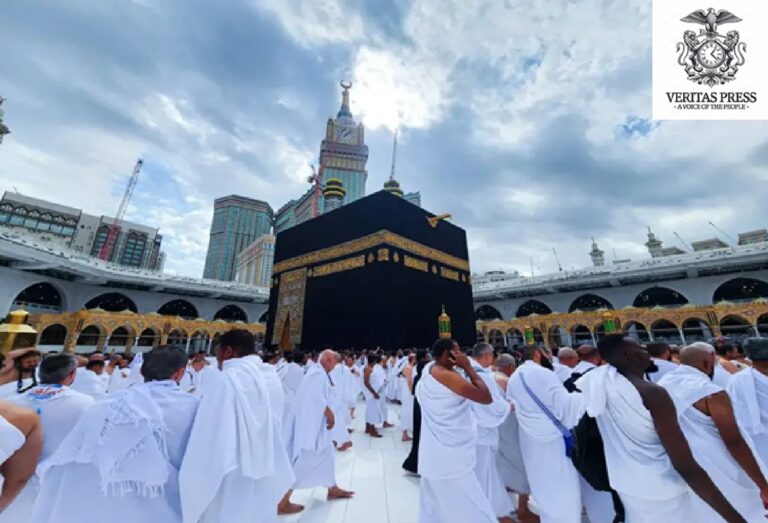
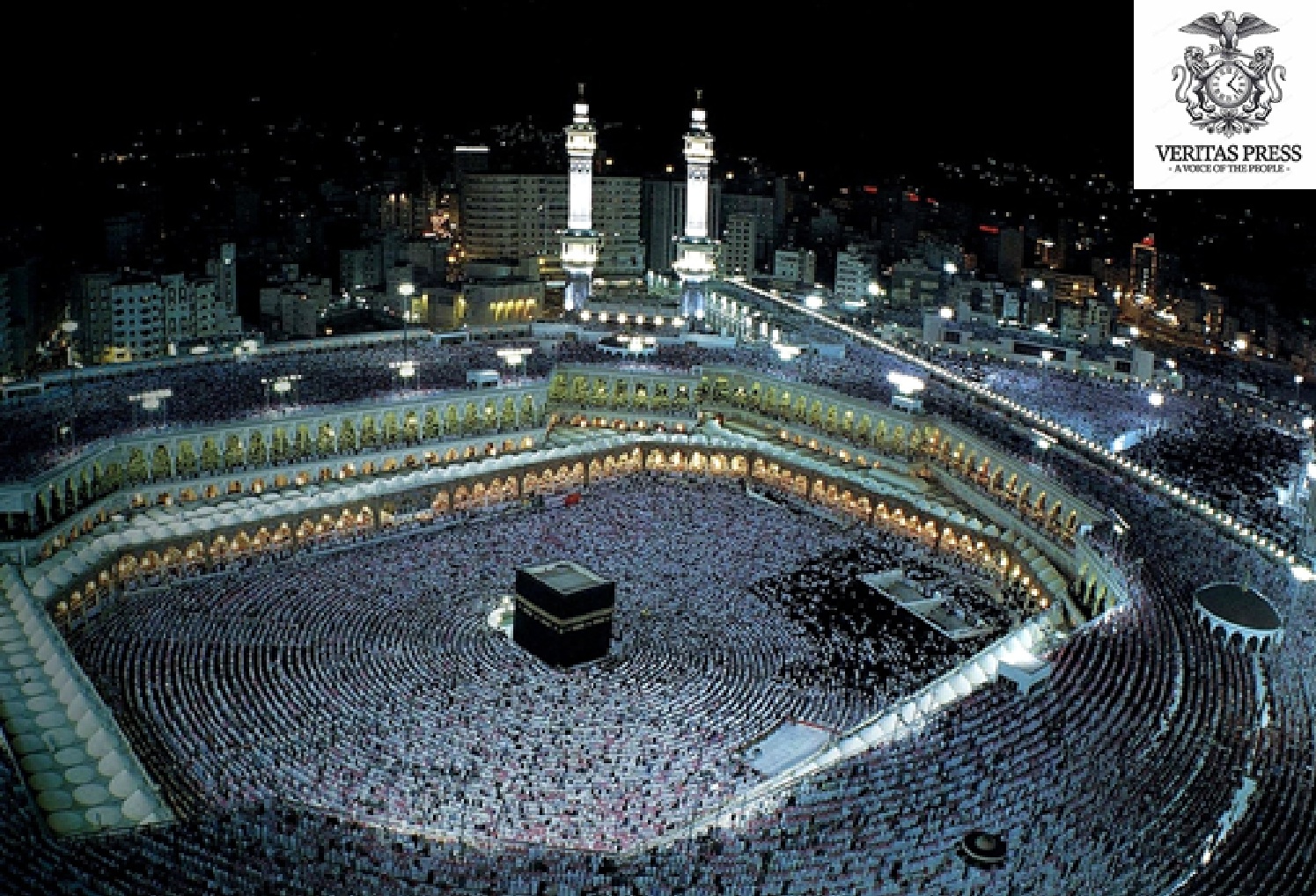
Pillar 5: Hajj – The Gathering
The pilgrimage to Mecca is multivocal in meaning:
Abrahamic connection: Sites associated with Abraham, Hagar, and Ishmael
Eschatological rehearsal: Plain of Arafat resembles descriptions of resurrection
Universal gathering: All languages, races, classes in identical white garments
Self-annihilation (fana’): In the crowd circling the Ka’bah, individual identity dissolves
The Sixth Pillar? Jihad and the Forgotten Obligations
The “five pillars” hadith describes the foundation, not the entire structure. Classical scholars recognised:
Jihad: While not a “pillar” in the hadith, some scholars (like Ibn Hazm) considered it the sixth pillar. Two forms:
- Jihad al-akbar (Greater Jihad): Struggle against one’s own lower self
- Jihad al-asghar (Lesser Jihad): Armed defence when necessary
Enjoining good and forbidding evil: Qur’an 3:104 makes this a collective obligation
“And do not be like those who split ˹into sects˺ and differed after clear proofs had come to them. It is they who will suffer a tremendous punishment.” – Qur’an 3:104
Seeking knowledge: Talab al-‘ilm is obligatory for every Muslim.
9. The Qur’an: Revelation, Preservation, And Contemporary Relevance.
Nature of Qur’anic Revelation
Process of revelation (Wahy):
- Angel Gabriel conveyed the Qur’an from the Preserved Tablet (Lawh al-Mahfuz)
- Revelation came in Arabic to the Prophet’s heart (Qur’an 26:193-195)
- Three modes: angelic voice like a bell, angel appearing as a man, direct inspiration
“which the trustworthy spirit ˹Gabriel˺ brought down” – Qur’an 26:193
“into your heart ˹O Prophet, so that you may be one of the warners” – Qur’an 26:194
“ in a clear Arabic tongue.” – Qur’an 26:195
Occasions of revelation (Asbab al-nuzul):
Verses were revealed in response to specific situations, questions, or events. This does not limit their meaning but provides interpretive context.
Preservation – A Multifaceted Miracle:
The text emphasises oral and written preservation. This is historically exceptional:
Comparative scriptural preservation:
| Scripture | Period of Revelation | Written During Lifetime? | Memorised by the masses? | Original Language Living? |
| Qur’an | 23 years | Yes | Yes | Yes |
| New Testament | ~50 years | No | No | No (Koine Greek extinct) |
| Hebrew Bible | Centuries | No | Only liturgical | No (Biblical Hebrew extinct) |
The Uthmanic codex:
Third Caliph Uthman standardised the Qur’anic text (c. 650 CE), sending copies to major centres. Variant readings (qira’at) preserved in oral tradition represent different authentic dialects, not textual corruption.
Literary Inimitability (I’jaz)
The Qur’an’s challenge to produce a chapter like it (2:23, 10:38) has been central:
“And if you are in doubt about what We have revealed to Our servant,1 then produce a sûrah like it and call your helpers other than Allah, if what you say is true.” – Qur’an 2:23
“ Or do they claim, “He1 made it up!”? Tell them ˹O Prophet˺, “Produce one sûrah like it then, and seek help from whoever you can, other than Allah, if what you say is true!” – Qur’an 10:38
Dimensions of inimitability:
- Linguistic: Unique blend of poetry and prose (saj’), unachievable by Arabs of the highest eloquence
- Legislative: Laws that transformed society while maintaining adaptability
- Prophetic: Accurate predictions and fulfilled prophecies
- Scientific: Verses understood in light of modern discovery (though Qur’an is not a science textbook)
- Psychological: Transformative effect on listeners
Contemporary Engagement:
The Qur’an speaks to modern concerns:
Environmentalism: “Corruption has appeared on land and sea because of what human hands have earned” (Qur’an 30:41)
Social justice: “Woe to those who give short measure” (Qur’an 83:1-3)
Racial equality: “We created you from male and female and made you peoples and tribes that you may know one another” (Qur’an 49:13)
Religious pluralism: “For each We have appointed a law and a way” (Qur’an 5:48)
10. Islamic Anthropology: Human Nature, Purpose, And Destiny.
The Original Human Constitution (Fitrah)
The text correctly notes that Islam rejects original sin. The Qur’anic account:
“So direct your face toward the religion, inclining to truth. [Adhere to] the fitrah of Allah upon which He has created [all] people. No change should there be in the creation of Allah. That is the correct religion, but most people do not know.” – Qur’an 30:30
Implications of Fitrah:
- Every child is born in a state of natural monotheism
- The environment (parents, society) may corrupt this orientation
- Sin does not transmit; each soul bears its own burden
- Repentance (tawbah) returns one to one’s original nature
The Covenant Of Alast (Primordial Covenant):
Qur’an 7:172 describes God addressing all potential human souls before creation:
“Am I not your Lord?” They said: “Yes, we bear witness.”
This covenant means:
- Knowledge of God is innate, not acquired
- Life is a test of fidelity to this primordial acknowledgement
- Prophets come as reminders, not teachers of fundamentally new information
Human Dignity And Vicegerency (Khalifah):
“And when your Lord said to the angels, ‘Indeed, I will make upon the earth a successive authority (khalifah)'” – Qur’an 2:30
Vicegerency means:
- Humans are God’s deputies on earth
- Earth is entrusted to human care
- Authority is delegated, not absolute
- Accountability accompanies authority
The Purpose Of Life:
The text correctly cites Qur’an 51:56: “I did not create jinn and mankind except to worship Me.”
Worship (‘ibadah) here is comprehensive:
“Say: Indeed, my prayer, my rites of sacrifice, my living and my dying are for Allah, Lord of the worlds” – Qur’an 6:162
Al-Baydawi comments: “Everything a believer does in obedience to God, with sincerity, is worship—including eating if intending strength for obedience, sleeping if intending rest for worship.”
Eschatology: The Life To Come.
Death (Barzakh): An intermediate state between death and resurrection
Resurrection (Qiyamah): Bodily resurrection of all humans
Judgment (Hisab): Individual accountability; books of deeds presented; scales of justice
Paradise (Jannah):
- Eternal bliss
- Levels corresponding to spiritual attainment
- Vision of God (the greatest reward)
Hell (Jahannam):
- Eternal punishment for those who rejected the truth after clear evidence
- Levels of severity
- Purpose is justice, not divine cruelty
The balance of hope and fear is essential: neither despair of mercy nor presumption upon it.
11. Conclusion: Islam As A Comprehensive Way Of Life.
Integration of Dimensions
Islam refuses the sacred/secular bifurcation characteristic of post-Enlightenment Western thought. The religion integrates:
1. Creed (‘Aqidah): What Muslims believe
2. Law (Shari’ah): How Muslims act
3. Spirituality (Tazkiyah): How Muslims purify the soul
4. Community (Ummah): How Muslims relate collectively
Contemporary Relevance:
The Islamic worldview addresses modern crises:
Existential emptiness: Purpose located in divine worship
Consumerism: Contentment through sufficiency, not accumulation
Relativism: Objective moral truth accessible through revelation and reason
Fragmentation: Tawhid integrates all knowledge under divine unity
Alienation: Direct access to God without a priesthood or institution
The Invitation:
The text concludes with an invitation to accept Islam. This reflects the Qur’anic imperative:
“And who is better in speech than one who invites to Allah and does righteousness and says, ‘Indeed, I am of the Muslims’?” – Qur’an 41:33
The shahadah remains open to all who recognise its truth. The invitation is extended not for tribal or communal reasons but because:
- Islam claims to be the final revealed truth
- Salvation in Islamic theology ultimately requires acceptance of this message
- The message itself is a mercy to be shared
Final Reflection:
The comprehensive nature of Islamic teaching, simultaneously transcendent and practical, individual and communal, this-worldly and other-worldly, explains both its rapid historical expansion and its contemporary vitality. From the linguistic precision of “Islam” to the global solidarity of Hajj, from the daily rhythm of prayer to the life-or-death stakes of eschatology, Islam presents an integrated vision of reality. Its claim is not merely to be one religion among many, but to be the original religion of humanity itself, the natural and primordial orientation of the human soul toward its Creator.
The word “Islam” thus names not a denominational label but the eternal relationship between creation and Creator. To be Muslim is not to join a new community but to return to one’s own deepest nature, to acknowledge the covenant made before birth, and to live in conscious harmony with the reality that all things, whether they recognise it or not, already submit to God.
“This day I have perfected for you your religion and completed My favour upon you and have approved for you Islam as your religion.” (Qur’an 5:3)

In the annals of American foreign policy, few moments have laid bare the tectonic shift
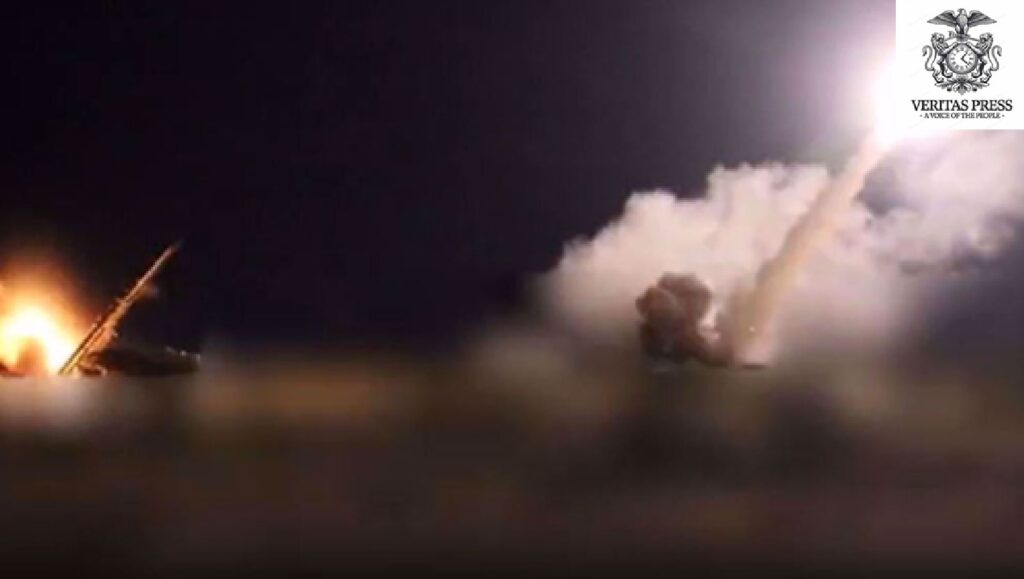
TEHRAN — In the early hours of March 31, 2026, the Islamic Revolution Guards Corps

On March 30, 2026, the Israeli Knesset passed legislation that fundamentally alters the country’s relationship
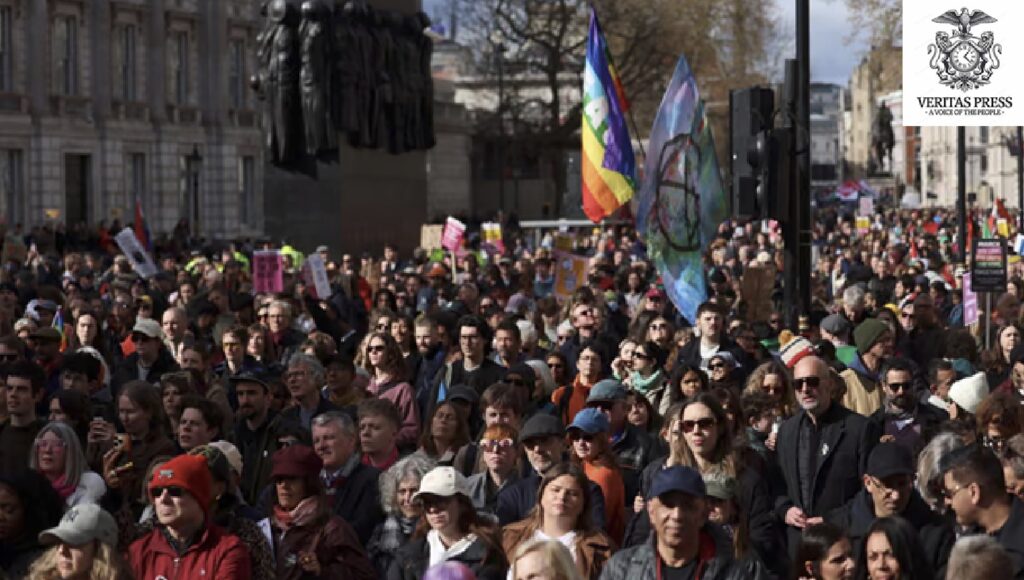
LONDON, UK – On a crisp Saturday in late March, central London became the stage
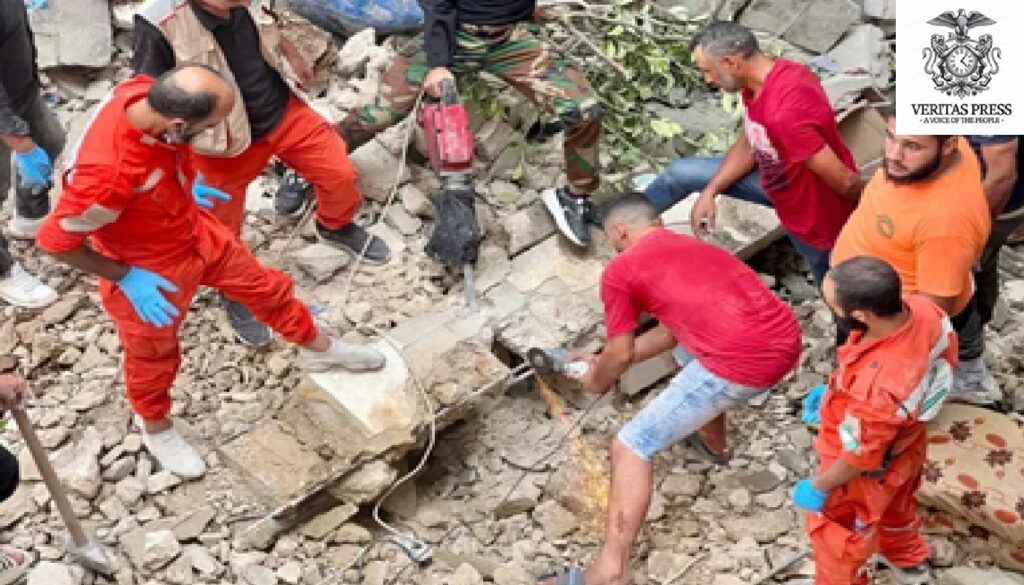
BINT JBEIL, LEBANON – The airstrike came just after midnight. Israeli warplanes targeted the perimeter

More than half a decade after COVID-19 first reshaped global society, a new variant dubbed
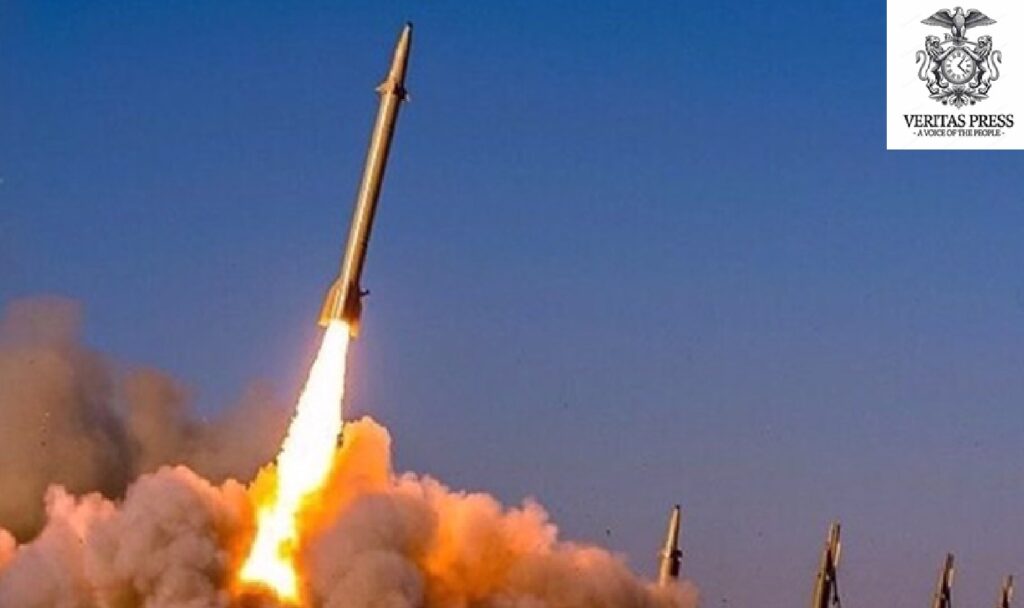
TEHRAN, IRAN – Twenty-eight days after the assassination of Iran’s Supreme Leader Ayatollah Seyyed Ali
Original Article Date Published: Article Date Modified: Help support our mission, donate today and be
NEW YORK, US – On the night of March 26, 2026, Nerdeen Kiswani received a
JERUSALEM — For the 29th consecutive day, the heavy iron gates surrounding the Al-Aqsa Mosque