
Title: Iran’s Protesters Need Our Support, Not Another Western-Intervention Disaster
Press Release: Veritas Press C.I.C.
Author: Kamran Faqir
Article Date Published: 13 Jan 2026 at 18:40 GMT
Category: West Asia | Politics | Iran’s Protesters Need Our Support, Not Another Western-Intervention Disaster
Source(s): Veritas Press C.I.C. | Multi News Agencies
Website: www.veritaspress.co.uk

Business Ads

What does it take to finally shatter the illusion that Western intervention can bring freedom? This is not a question designed to deflect from the brutality being unleashed by Iran’s theocratic regime. That brutality is real, escalating and systematic. But clarity is required, both about the internal struggle now unfolding in Iran and about the external forces claiming to champion it.
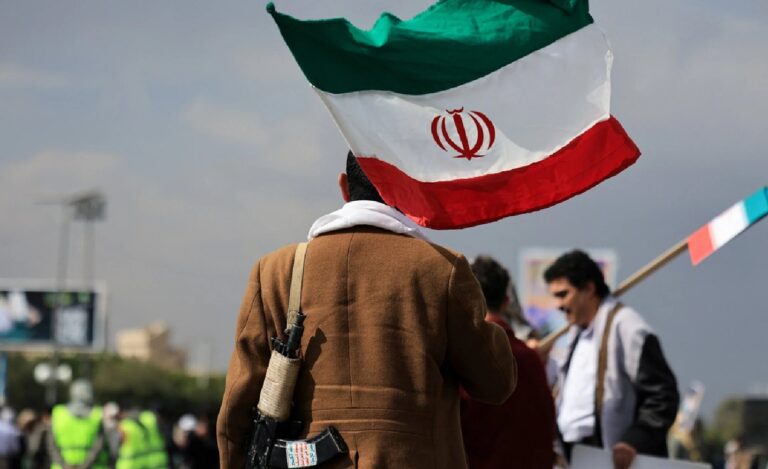
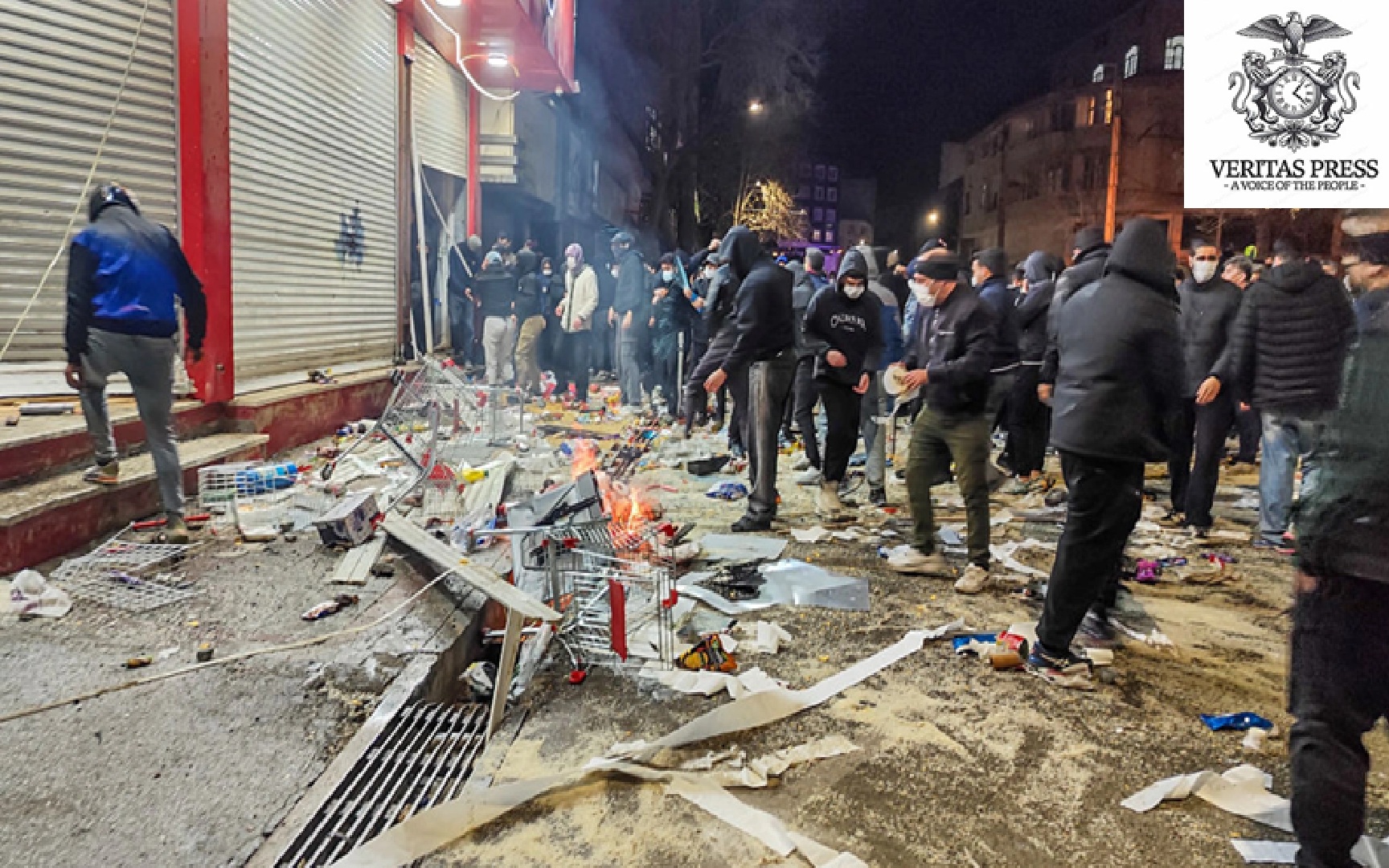
Because Iranian authorities have repeatedly severed internet access, establishing facts on the ground remains difficult. Still, respected monitoring groups such as Human Rights Activists in Iran have confirmed that hundreds have been killed and well over 10,000 arrested, figures widely believed to be significant underestimates. Protesters have been shot in the streets, beaten in custody, and dragged before revolutionary courts. Trade unionists, students, women’s rights activists and ethnic-minority organisers have been targeted with particular ferocity.
None of this emerged in a vacuum. Iran’s ruling system consolidated power in the aftermath of the 1979 revolution by slaughtering leftists, secularists and dissidents throughout the 1980s, a process cynically facilitated by Western intelligence agencies. MI6 and the CIA supplied the new regime with lists of alleged Soviet agents, helping it eliminate rivals and entrench clerical rule. Today’s repression is not an aberration; it is the continuation of a system built on blood.
Economic collapse, exacerbated by sanctions, corruption and mismanagement, may have ignited the current protests. But the fuel runs deeper. Millions of Iranians are exhausted by life under fundamentalist rule. Surveys conducted before the crackdown showed growing religious non-observance, particularly among the young, and widespread opposition to compulsory hijab laws. The anger now spilling into the streets is the product of decades of suffocation.
Yet as Iranians risk their lives, a familiar and dangerous narrative is re-emerging abroad: that salvation will arrive via Western power.
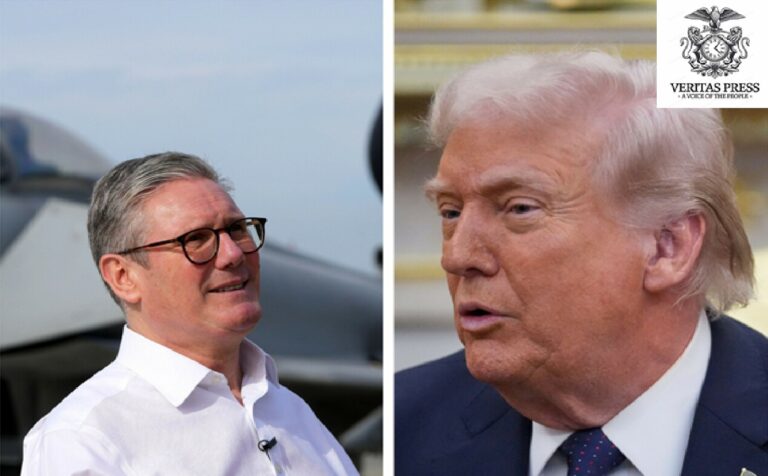
Donald Trump has once again threatened Iran with military action, egged on by exiled figures such as Reza Pahlavi, son of the deposed shah. Trump’s appeal to the protests is paper-thin. This is a man who incited an attempted coup against his own democracy, openly praised authoritarian rulers, and made clear during attacks on Venezuela that oil, not human rights, was his overriding concern. As far back as 1980, Trump argued the United States should have intervened militarily in Iran, claiming that “right now we’d be an oil-rich nation” if it had done so.
Nor were Trump’s actions in office motivated by concern for Iranian civilians. The assassination of Qassem Soleimani, the bombing of Iranian nuclear facilities, and reckless brinkmanship during moments of extreme regional tension were all undertaken without regard for the consequences for ordinary people. Long before Trump, Washington had no objection to supporting tyranny in the Middle East, from Saudi Arabia’s beheadings of dissidents to its US-armed slaughter of civilians in Yemen. The pretence that American power exists to spread democracy has long since collapsed, not least amid its unconditional facilitation of Israel’s genocide in Gaza.
Given these precedents, it would be delusional to believe that the one Western intervention that will finally succeed, that will somehow avoid catastrophe, fragmentation and mass death, would be led by Donald Trump, the United States, or their regional allies. The historical record is unambiguous. Western power does not dismantle authoritarianism in the Middle East; it repackages domination under a different flag.
More fundamentally still, American intervention in Iran would not liberate the country; it would enslave it to Western imperialism. It would replace one form of authoritarian control with another, subordinating Iranian society to foreign military power, intelligence agencies, economic leverage and geopolitical priorities. The language of “freedom” would mask a familiar reality: external actors deciding Iran’s future in Washington, Tel Aviv and European capitals, while ordinary Iranians bear the costs in blood, displacement and permanent instability.
This is not speculation. It is the lesson of Iraq, Afghanistan and Libya, societies shattered, not freed; sovereignty stripped away, not restored. Iran’s protesters are fighting for dignity, rights and self-determination, not for a foreign power to inherit control over their country’s political and economic life.
Iran’s own modern nightmare began with Western interference. In 1953, Britain and the United States overthrew the democratically elected government of Mohammad Mosaddegh after he nationalised Iran’s oil. U.S. Secretary of State John Foster Dulles justified the coup by warning that the “free world” would be deprived of Iranian oil. The reinstated shah later told a CIA agent: “I owe my throne to God, my people, my army, and to you.” The brutality of his US-backed dictatorship paved the way for the 1979 revolution itself.
The wider record of Western intervention in the Muslim world is devastating. Iraq was ripped apart not only by invasion but by sectarian rule imposed by returning exiles. Afghanistan’s women were invoked as justification for occupation, only to be abandoned to an even harsher Taliban regime after two decades of war. Libya, bombed in the name of protecting protesters, collapsed into militia rule and permanent instability.
Iran is far larger and more complex than any of these cases. Its population is more than three times that of Iraq at the time of the invasion, encompassing Persians, Azeris, Kurds, Arabs, Lurs, Turkmens and others. While a large majority has lost patience with clerical rule, the regime still retains a substantial, if eroding, social base. Any collapse would be contested, volatile and highly vulnerable to foreign manipulation.
That danger is no longer abstract. Amid the protests, Iran’s leadership has repeatedly accused Israel’s Mossad of interference, claims often dismissed as paranoia. But those accusations have been fuelled by explicit admissions from Israeli officials themselves. Israel’s far-right Heritage Minister Amichai Eliyahu publicly confirmed that Israeli intelligence agents are operating inside Iran.
Speaking to Israel’s Army Radio, Eliyahu said:
“When we attacked in Iran during ‘Rising Lion’, we were on its soil and knew how to lay the groundwork for a strike. I can assure you that we have some of our people operating there right now.”
Though he claimed these operatives were not seeking regime change, such distinctions are meaningless in practice. Intelligence operations during mass unrest do not exist in a vacuum. Public boasts of covert activity hand Tehran precisely the justification it needs to brand protesters as foreign agents and escalate repression. They place Iranian civilians directly in the firing line.
Israel’s broader regional record offers little reassurance. In Syria, it has repeatedly bombed infrastructure and promoted fragmentation, preferring weakened neighbours to democratic ones. A genuinely free Iran would not necessarily align with Israeli or American interests. Chaos, however, often does.
The choice, then, is not between Iran’s theocracy and Western intervention. That is a false binary designed to erase Iranian agency. Clerical repression and imperial domination are not opposites; they have repeatedly sustained one another. To place Iran’s future in the hands of foreign powers would not break the chains imposed by the Islamic Republic; it would simply replace them with new ones, forged in the language of “security” and “democracy” while serving power, oil and regional control.
Solidarity with Iran’s uprising must therefore mean opposition to both clerical repression and imperial intervention. It means amplifying Iranian voices, demanding accountability for state violence, protecting refugees and activists, and refusing to allow genuine popular struggle to be hijacked by those who view Iran not as a society of human beings, but as a strategic prize.
Freedom cannot be delivered by bombs, covert operations or great-power fantasies. It can only be won by Iranians themselves, and defended by an international movement that has finally learned the difference between solidarity and domination.
Conclusion: An Uprising At Risk Of Being Stolen.
If history teaches anything, it is that the greatest threat to popular uprisings does not always come from the regimes they confront, but from the external powers that move to appropriate them. Iran’s revolt is unfolding at a moment of extreme geopolitical volatility, where great powers, intelligence agencies, and regional rivals view the country less as a society in revolt than as a strategic object to be managed, weakened, or reshaped to their advantage.
At its core, the revolt in Iran is an internal matter, one that only Iranians have the right to resolve. It is rooted in domestic political repression, economic collapse, gender apartheid, and decades of exclusion from meaningful power. Foreign intervention does not clarify these struggles; it distorts, weaponises, and delegitimises them. Across history, external interference has repeatedly transformed legitimate social revolts into proxy conflicts, leaving countries shattered and populations paying the price.
Crucially, the Iranian state has seized on these dynamics to claim that violence during the protests has been instigated or amplified by foreign intelligence services, particularly Mossad. Tehran alleges that operatives and proxy networks are coordinating armed provocations and sabotage designed to escalate unrest and justify brutal crackdowns. Whether these allegations are fully accurate or exaggerated, their effect is the same: the regime is able to recast a popular uprising as a national security threat, delegitimise dissent, and rationalise arrests, executions, and mass repression. Even the suggestion of foreign interference poisons the movement, placing ordinary protesters at extreme risk and undermining their agency.
This is precisely why foreign involvement, real or alleged, is so dangerous. Once foreign intelligence or military actors are implicated, the logic of repression escalates: peaceful civil resistance is framed as armed insurrection, protests are militarised, and sovereignty is displaced from the people to distant capitals. Any foreign intervention aimed at “regime change” would not liberate Iran; it would enslave it to Western imperialism, binding its political future to military dependency, intelligence oversight, and economic coercion, all while masking subordination as “democracy.” The language of liberation and regime change would disguise a familiar reality: external actors deciding Iran’s political and economic life, while ordinary Iranians pay the cost in blood, displacement, and permanent instability.
This is not speculation. It is the lesson of Iraq, Syria, Afghanistan, and Libya, etc: societies shattered, not freed; sovereignty stripped away, not restored. Iran’s protesters are fighting for dignity, rights, and self-determination, not for foreign powers to seize control under the pretext of regime change. The 1953 coup that toppled Mohammad Mosaddegh demonstrates this pattern: Western interference destroyed a democratic trajectory and replaced it with a security state whose brutality ultimately produced the theocracy now in power. Today’s interventionist rhetoric threatens to repeat that cycle, crushing a genuine grassroots uprising between the hammer of domestic repression and the anvil of foreign ambition.
The responsibility of the international community is therefore not to intervene, but to respect Iran’s sovereignty while opposing repression. That means blocking arms, intelligence, and political legitimacy from flowing to all forces that escalate violence, state and foreign alike. It means protecting refugees, journalists, and human rights defenders. It means amplifying Iranian voices without imposing external agendas.
Iran’s uprising stands at a crossroads. One path leads toward a future contested, but owned, by Iranians themselves. The other leads toward another externally engineered disaster, marked by instability, fragmentation, and long-term subordination. History has already shown where that road ends.
The question now is not whether Iran will change, but whether its people will be allowed to change it themselves. Anything else is not solidarity; it is imperialism masquerading as liberation, a foreign-engineered regime change that would steal the country’s future.