



Original Article Date Published:
Article Date Modified:
Help support our mission, donate today and be the change. Every contribution goes directly toward driving real impact for the cause we believe in.
A War That Was Meant To End Quickly:
What began as a calculated act of overwhelming force has hardened into a war with no clear endpoint.
On February 28, the United States and Israel launched coordinated strikes on Iran, reported by US officials as a targeted effort to degrade military infrastructure. But instead of achieving strategic paralysis, the operation triggered a sustained and expanding conflict now stretching across the Middle East.
More than a month later, the war has settled into a volatile pattern: Iranian missile and drone barrages in successive “waves,” countered by US and Israeli strikes on Iranian infrastructure. Beneath this cycle lies a deeper reality. This is no longer a short confrontation, but a war of attrition shaped as much by narrative as by firepower.
A senior Western diplomat, quoted by Reuters in recent briefings, described the situation bluntly:
“There is no decisive phase anymore. This has become a rolling conflict with no clear off-ramp.”
The February 28 Strikes: Civilian Toll And Disputed Narratives.
Iranian authorities say the opening assault killed more than 1,300 people, including senior leadership figures such as Ali Khamenei, alongside military officials and civilians.
While Western governments have not confirmed the assassination or casualty figures, Amnesty International and Human Rights Watch have both warned that early evidence points to significant civilian harm and potential violations of international humanitarian law, particularly in strikes affecting populated urban areas.
A preliminary United Nations assessment, cited in reporting by the Associated Press, noted:
“Credible indications that civilian infrastructure, including residential zones, sustained damage during the initial strikes.”
A Tehran-based emergency physician, speaking to regional media and later cited by Reuters, described the aftermath:
“We were treating entire families. Whatever the intended targets were, civilians were caught in it.”
The lack of independent access for international investigators has made verification difficult, but rights groups stress that the burden of proof lies with attacking forces under international law.
Iran’s Response: Structured Escalation.
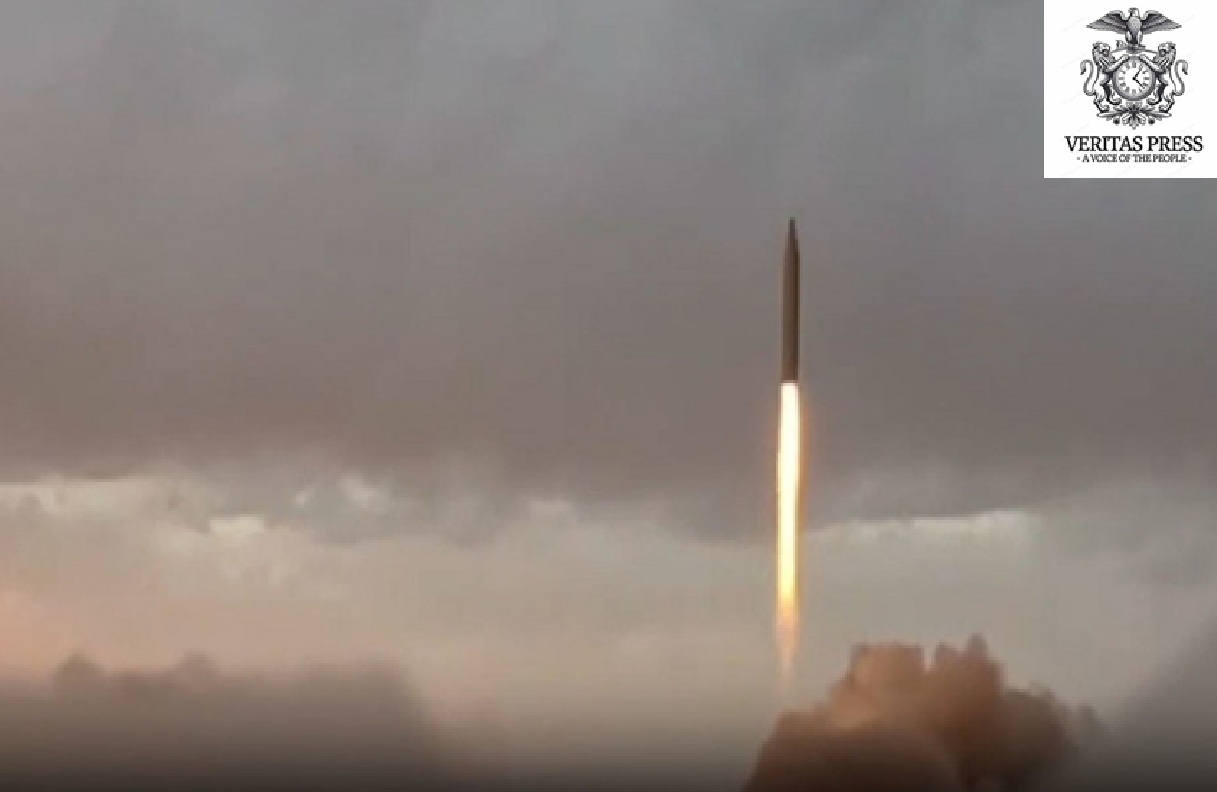
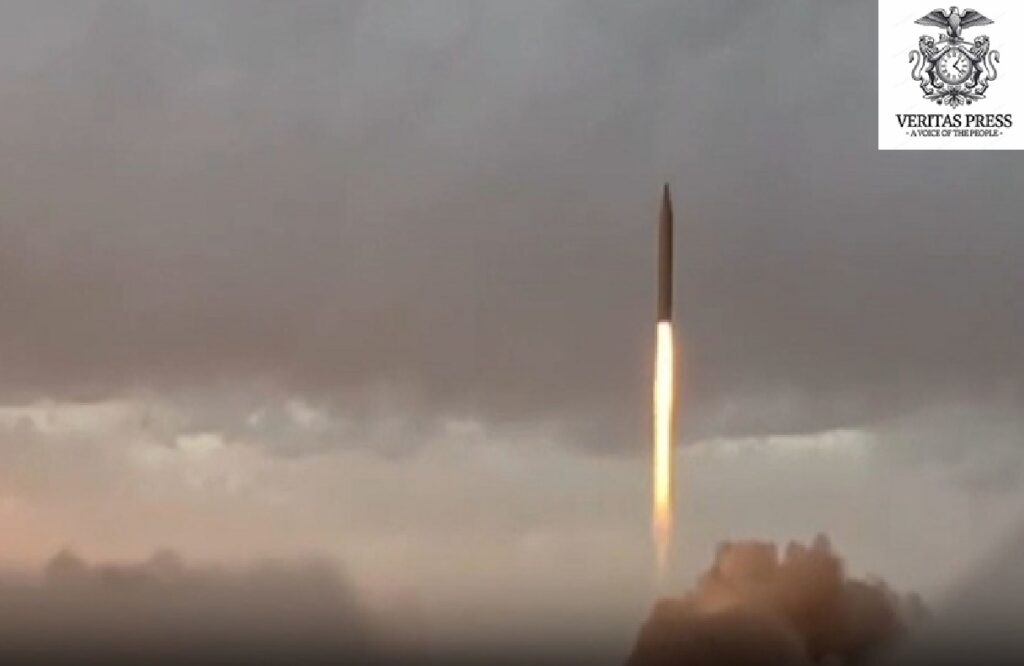
In retaliation, Iran launched Operation True Promise 4, a sustained campaign of missile and drone strikes targeting US and Israeli assets.
By early April, Iranian military sources claimed at least 92 waves of attacks, a framing that analysts say is as much psychological as operational.
The latest escalation, the 92nd wave, was announced by the Islamic Revolutionary Guard Corps (IRGC), which described coordinated strikes on US naval assets, regional radar systems, and Israeli military infrastructure.
“This is a campaign of endurance,” said a regional security analyst cited by Al Jazeera.
“It’s designed to signal that Iran can absorb and respond indefinitely.”
Wave 92: Sweeping Claims, Limited Evidence.
According to the IRGC, the latest wave targeted:
- US amphibious vessels at Kuwait’s Shuwaikh Port
- A strategic radar installation in Bahrain
- Israeli airbases, including Ramat David Airbase
- More than 50 sites in Tel Aviv
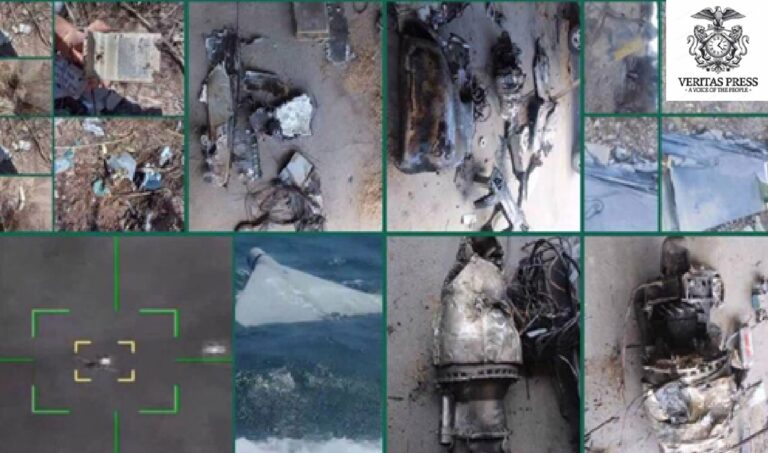
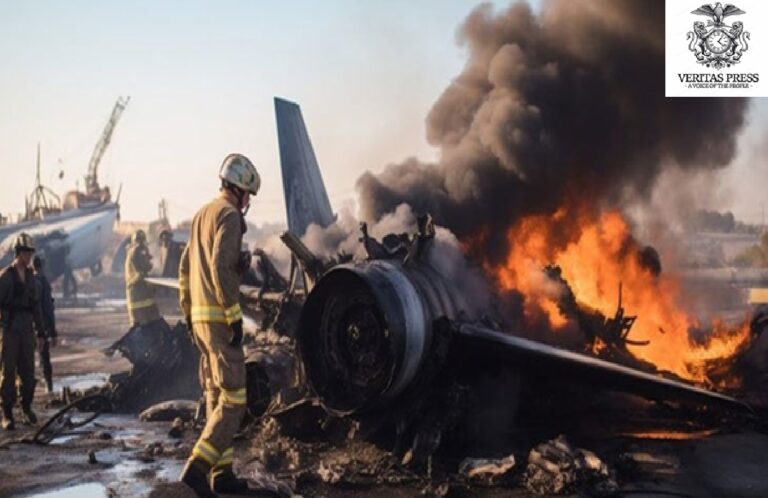
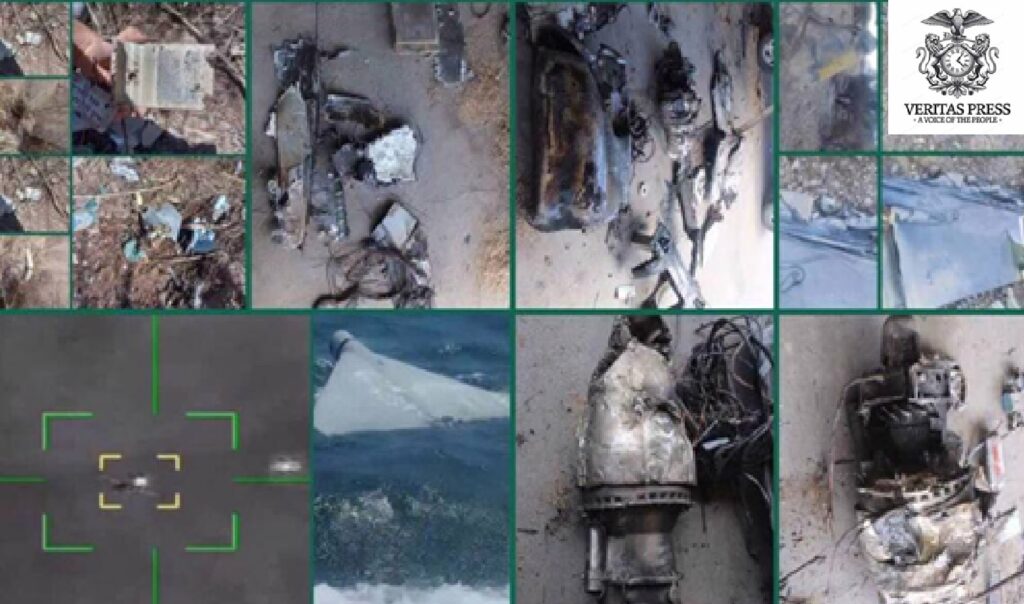
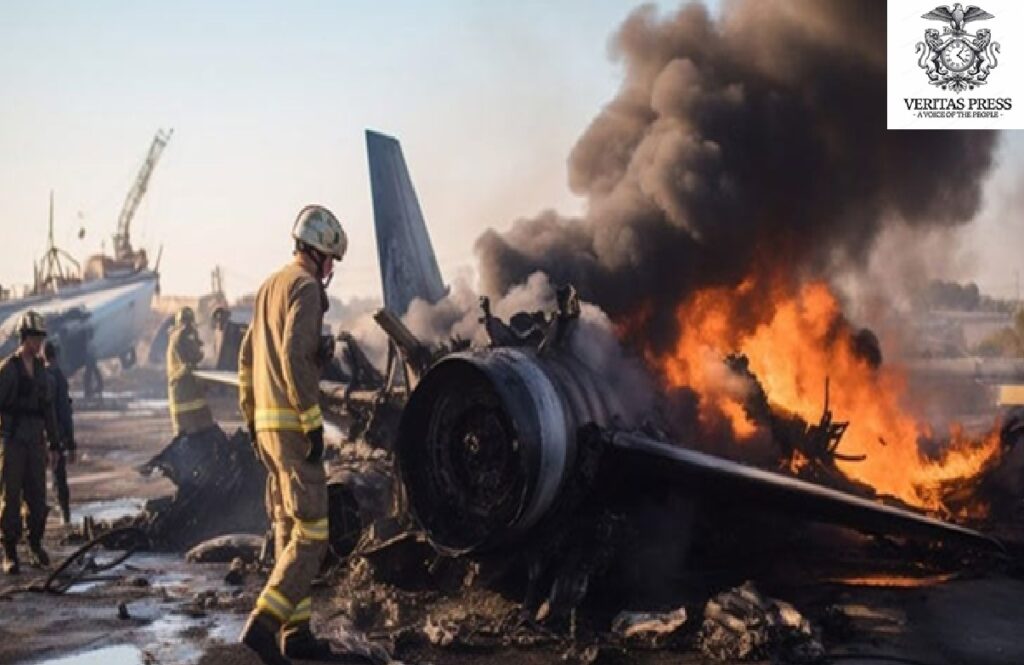
The IRGC also claimed to have shot down a second US F-35 Lightning II.
“These operations inflicted heavy losses,” the IRGC said.
Verification Gap: What Independent Reporting Shows.
Despite the scale of these claims, independent verification remains limited.
Reporting by Reuters and the Associated Press indicates:
- No confirmation of damage to US naval assets in Kuwait
- No verified destruction of radar systems in Bahrain
- No evidence supporting the downing of an F-35
United States Central Command (CENTCOM) dismissed the aircraft claim outright:
“All aircraft are accounted for.”
Israeli officials confirmed missile fire and at least one impact in central Israel, causing damage to homes and infrastructure, but denied any critical damage to military facilities.
A military analyst quoted by the AP noted:
“There is a consistent pattern, claims of strategic impact that are not borne out by verifiable evidence.”
Information Warfare: Manufacturing Strength.
The gap between Iranian claims and independently verifiable facts highlights a parallel battlefield: information warfare.
Analysts say Tehran’s messaging strategy serves multiple purposes:
- Reinforcing domestic morale
- Projecting deterrence
- Challenging Western technological superiority
“Iran’s repeated claims of downing F-35s appear to be a calculated information operation,” a defence analyst told Reuters.
“It’s about perception, not confirmation.”
At the same time, US and Israeli officials have incentives to downplay vulnerabilities, particularly regarding high-value military assets.
The result is a conflict where:
- Claims are amplified
- Losses are obscured
- Truth is contested
The Gulf Front: Civilian Risk and Strategic Fallout.
The conflict has expanded into Gulf states hosting US military infrastructure.
Countries including Bahrain and Kuwait have reported:
- Heightened air defence activity
- Repeated interceptions of drones and missiles
- Growing concern over civilian exposure
A Gulf-based human rights monitor, cited in regional reporting, warned:
“The expansion of strikes into densely populated areas risks catastrophic civilian consequences.”
Earlier reporting by Reuters suggested that US-linked infrastructure in Bahrain sustained significant financial damage in earlier waves, though full details remain classified.
Legal Questions: War Crimes And Accountability.
Human rights organisations are increasingly raising concerns about potential violations of international law.
Amnesty International has called for:
- Independent investigations into civilian casualties
- Transparency regarding targeting decisions
Human Rights Watch has similarly warned:
“All parties must distinguish between military objectives and civilian objects. Failure to do so may constitute war crimes.”
The United Nations has echoed these concerns, urging restraint and accountability.
The Silent Axis: Strategic Restraint Or Deferred Escalation.
Notably, Iran’s regional allies, including Hezbollah and other armed groups, have remained largely on the sidelines.
According to analysis from the Stimson Centre:
“These actors face an excruciating choice: escalate and risk full-scale war, or preserve their capabilities for later.”
Their restraint suggests a deliberate effort to avoid immediate regional war, though analysts warn this could shift rapidly.
Global Stakes: A Fragile System Under Strain.
The war’s impact extends far beyond the region.
- China has urged de-escalation, citing risks to global trade
- Russia has offered mediation while deepening ties with Iran
According to Reuters reporting, disruptions to Gulf shipping routes and energy markets have already:
- Increased oil price volatility
- Complicated global supply chains
A European official told Reuters:
“This is no longer a regional issue; it has systemic global implications.”
The Human Cost: Beyond The Numbers.
Amid the competing narratives, the human toll continues to rise.
- Over 1,300 reported killed in the initial strikes
- Hundreds more in subsequent attacks
- Millions affected by displacement and economic disruption
A humanitarian worker cited by the Associated Press described the situation:
“This is a sustained war now. Civilians are living in constant uncertainty.”
A War Without End:
US President Donald Trump has vowed to continue strikes on Iran, warning of further destruction.
Iran, in turn, has pledged continued retaliation.
What has emerged is a conflict defined by repetition:
- Iranian “waves” of attacks
- US-Israeli counterstrikes
- Expanding regional involvement
The IRGC’s numbering of its operations, “Wave 92”, serves as both military sequencing and propaganda framing, reinforcing the perception of relentless pressure.
Conclusion: Manufactured Realities, Multi-Front Warfare, And The Architecture Of Endless Conflict.
Wave 92 is not simply another escalation; it is emblematic of a conflict increasingly defined by attrition, ambiguity, and narrative control.
What it reveals is not just the trajectory of a military confrontation, but the architecture of a war deliberately sustained through managed escalation, strategic messaging, and expanding fronts that now reach far beyond the battlefield.
Iran projects strength through sweeping claims. The United States and Israel project control through denial and counterforce. Between them lies a reality that remains difficult to verify, fragmented by design, obscured by competing interests, and increasingly inaccessible to independent scrutiny.
A War Fought Across Interconnected Fronts:
This is no longer a conflict confined to missiles and ռազմական strikes. It is being waged simultaneously across military, energy, economic, mineral, and financial domains, each reinforcing the other.
- Energy flows through the Gulf have become both leverage and liability, with instability driving global price shocks.
- Economic systems are strained by sanctions, countermeasures, and disrupted trade routes.
- Critical minerals and supply chains—essential to advanced weapons and technologies – are increasingly embedded in geopolitical competition.
- Financial markets and gold reserves reflect deepening uncertainty, as states and investors hedge against systemic instability.
War, in this sense, is no longer just kinetic; it is structural, embedded in the very systems that sustain the global order.
Narrative As A Weapon Of War:
At the centre of this multi-front conflict lies a parallel struggle: the battle for perception.
Iran’s “wave” strategy constructs an image of relentless momentum and endurance. Each numbered escalation signals continuity, control, and strategic patience. The United States and Israel, meanwhile, respond with calibrated denials and selective transparency, preserving deterrence while minimising perceived vulnerability.
This is not incidental; it is a form of information warfare as infrastructure.
Each side operates within a framework where:
- Escalation is continuous but carefully modulated
- Success is defined as much by perception as by measurable outcomes
- Accountability is diluted by contested or unverifiable facts
The result is a conflict sustained not despite uncertainty, but because of it.
The Expanding Risk Of Miscalculation:
What is clear is this:
- The conflict is expanding
- The risk of miscalculation is increasing
- The line between truth and propaganda is eroding
As one European diplomat told Reuters:
“We are entering a phase where perception may be as dangerous as reality.”
And in this war, both are spiralling toward an outcome that remains uncertain, but increasingly dangerous.
The danger lies not only in deliberate escalation, but in systemic misinterpretation across multiple fronts.
A military claim exaggerated for domestic audiences may be read as a strategic escalation by an adversary.
A denial intended to maintain deterrence may obscure a vulnerability that invites further attack.
A disruption in energy or financial systems may trigger political decisions that feed back into military escalation.
This is how wars expand, not always through intent, but through interconnected reactions to incomplete or distorted information.
A Conflict Without A Clear Endgame:
What makes this moment particularly volatile is the absence of a viable off-ramp.
Iran’s “wave” doctrine signals long-term endurance. The United States, under Donald Trump, has committed to sustained pressure. Israel continues parallel military operations across multiple fronts.
None of the actors involved appears structurally incentivised to de-escalate. Instead, the conflict has settled into a model of indefinite continuation, a rolling convergence of military action, economic pressure, and narrative competition.
Final Assessment: A War Beyond Control.
Wave 92 is not just another strike cycle. It is a manifestation of a deeper transformation:
A war no longer defined by clear fronts, decisive victories, or shared facts, but by endurance, perception, and systemic entanglement.
The question is no longer who is winning.
It is whether a conflict fought simultaneously across battlefields, markets, energy systems, and financial reserves can be contained at all.
Because if perception continues to outpace verification, if narrative continues to substitute for fact, then the next escalation may not be intentional.
It may simply be the inevitable outcome of a system in which:
No actor fully controls the battlefield, and no one fully sees it anymore.
Source: Multiple News Agencies
Submissions:
For The Secure Submission Of Documentation, Testimonies, Or Exclusive Investigative Reports From Any Global Location, Please Utilise The Following Contact Details For Our Investigations Desk: enquiries@veritaspress.co.uk or editor@veritaspress.co.uk
Help Support Our Work:
Popular Information is powered by readers who believe that truth still matters. When just a few more people step up to support this work, it means more lies exposed, more corruption uncovered, and more accountability where it’s long overdue.
Help Protect Independent Journalism, Which Is Currently Under Attack.
If you believe journalism should serve the public, not the powerful, and you’re in a position to help, becoming a DONATOR or a PAID SUBSCRIBER truly makes a difference.
DONATION APPEAL: If You Found This Reporting Valuable, Please Consider Supporting Independent Journalism.
Help Support Our Work – We Know, We Know, We Know …
Seeing these messages is annoying. We know that. (Imagine what it’s like writing them … )
Your support fuels our fearless, truth-driven journalism. In unity, we endeavour to amplify marginalised voices and champion justice, irrespective of geographical location.
But it’s also extremely important. One of Veritas Press’s greatest assets is its reader-funded model.
1. Reader funding means we can cover what we like. We’re not beholden to the political whims of a billionaire owner. We are a small, independent and impartial organisation. No one can tell us what not to say or what not to report.
2. Reader funding means we don’t have to chase clicks and traffic. We’re not desperately seeking your attention for its own sake: we pursue the stories that our editorial team deems important and believe are worthy of your time.
3. Reader Funding: enables us to keep our website and other social media channels open, allowing as many people as possible to access quality journalism from around the world, particularly those in places where the free press is under threat.
We know not everyone can afford to pay for news, but if you’ve been meaning to support us, now’s the time.
Your donation goes a long way. It helps us:
- Keep the lights on and sustain our day-to-day operations
- Hire new, talented independent reporters
- Launch real-time live debates, community-focused shows, and on-the-ground reporting
- Cover the issues that matter most to our communities, in real time, with depth and integrity
We have plans to expand our work, but we can’t do it without your support. Every contribution, no matter the size, helps us stay independent and build a truly people-powered media platform.
If you believe in journalism that informs, empowers, and reflects the communities we serve, please donate today.

The raw numbers tell a story of profound inequality. On 1 April 2026, more than
What began on February 28, 2026, as a coordinated US-Israeli campaign to decapitate Iran’s military
The idea of a “freedom flotilla” carries a ghost in its hold: the 2010 Mavi

Original Article Date Published: Article Date Modified: Help support our mission, donate today and be

Original Article Date Published: Article Date Modified: Help support our mission, donate today and be
A United States fighter jet has been shot down over Iran, marking a dangerous and
On February 28, the United States and Israel launched coordinated strikes on Iran, reported by

LONDON, UK – Just weeks after being appointed as the government’s “Cost of Living Champion”,

On February 28, 2026, the first wave of U.S.-Israeli pre-emptive strikes hit Iranian military and
USA, NASA – Spurred by American ingenuity, astronauts on NASA’s Artemis II mission are in