

Original Article Date Published:
Article Date Modified:
Help support our mission, donate today and be the change. Every contribution goes directly toward driving real impact for the cause we believe in.
A War Without An End:
On the 25th day of a conflict that has already rewritten the geopolitical map of the Middle East, two irreconcilable narratives compete for global credibility. In Washington, President Donald Trump declares victory, claiming Iran is “totally defeated” and that negotiations to end the war are proceeding favourably. In Tehran, the Islamic Revolution Guards Corps (IRGC) announces its 80th wave of retaliatory strikes under Operation True Promise 4, missiles streaking toward Israeli positions and American bases across the region while Iranian military spokespersons mock the United States as a nation reduced to “negotiating with itself.”
The chasm between these competing claims is not merely rhetorical. It represents a fundamental crisis of authority, intelligence failure, and the dangerous blurring of wishful thinking with strategic reality. As this investigation reveals, the conflict’s fourth week finds all parties trapped in a paradox: a war that none can decisively win, a negotiation that may not exist, and a regional order that has been shattered beyond recognition.
The 80th Wave, Military Reality On The Ground:
Strikes Across Three Fronts:
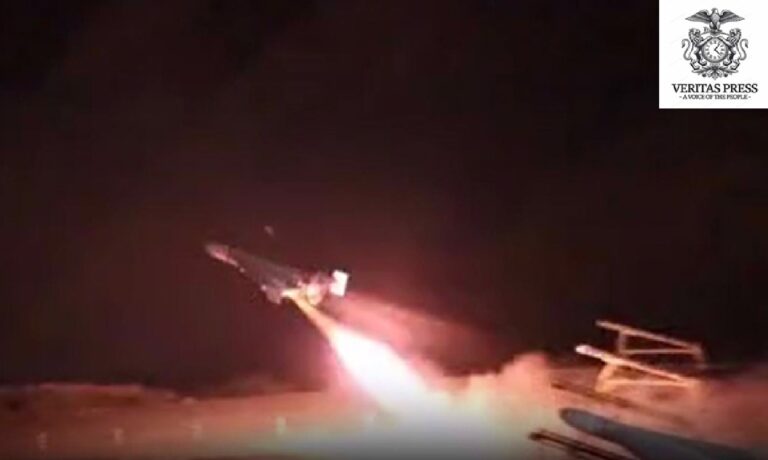
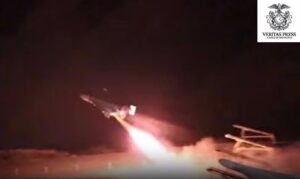
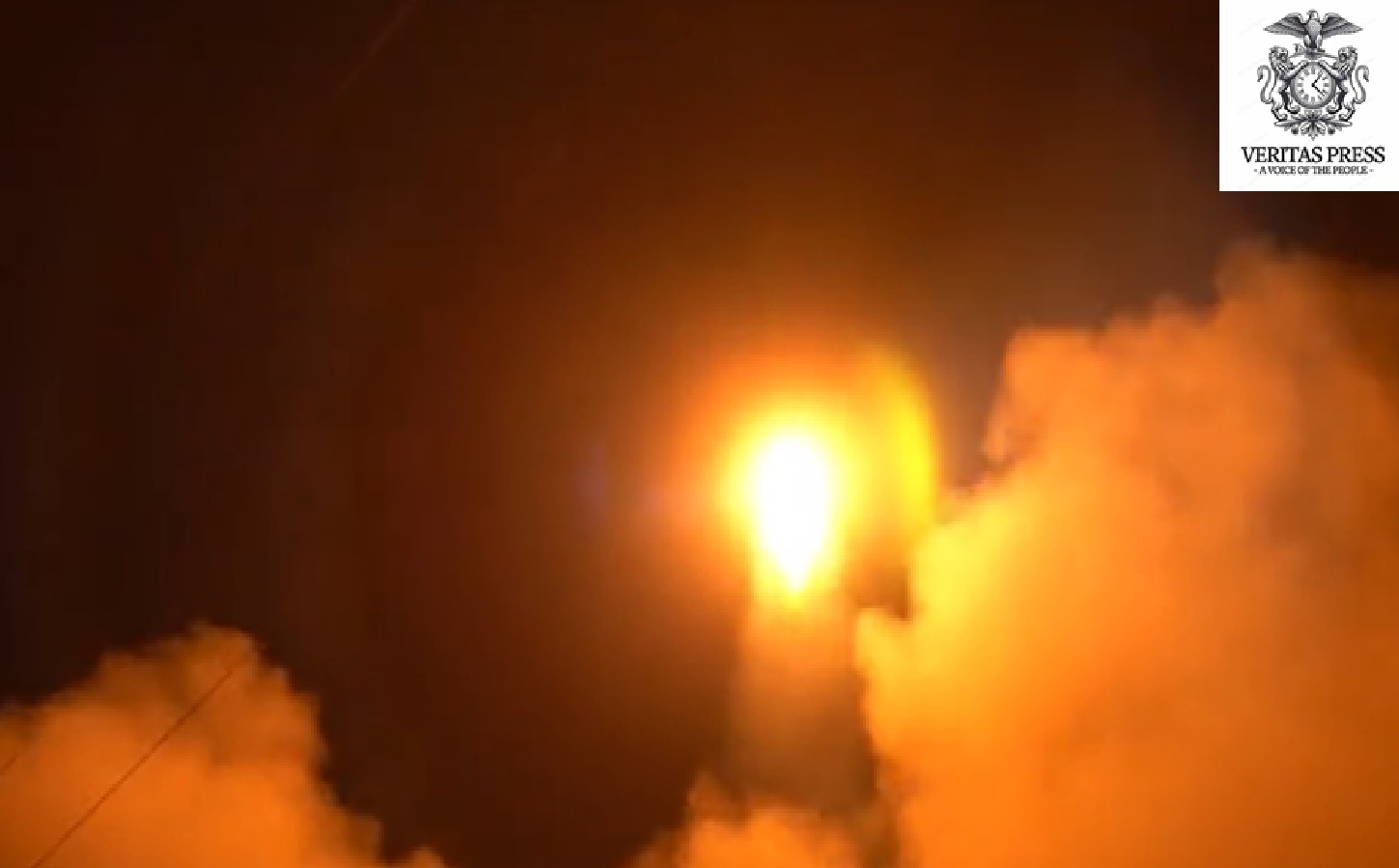
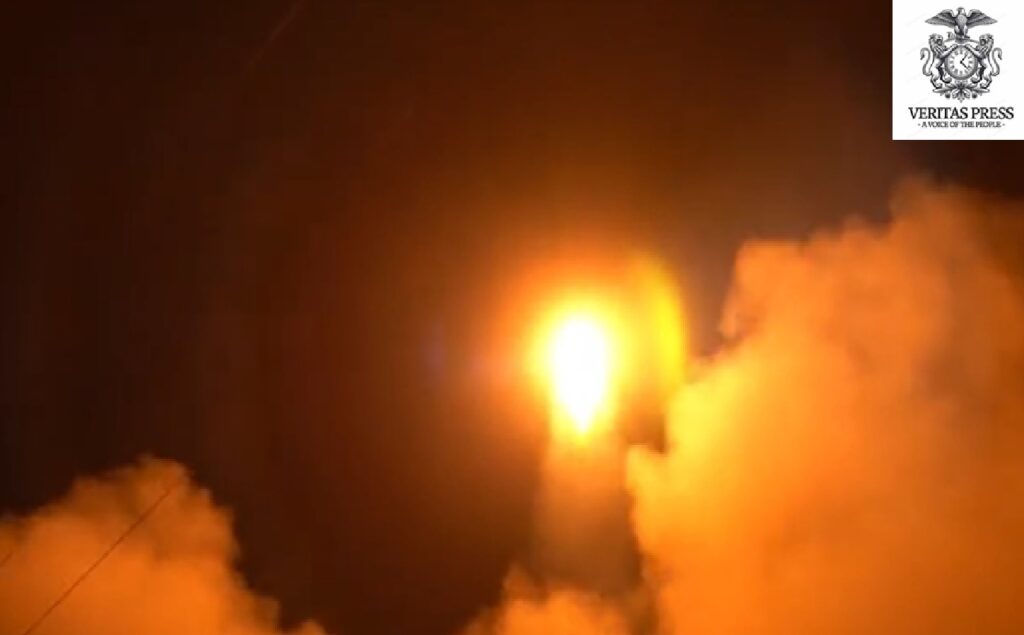
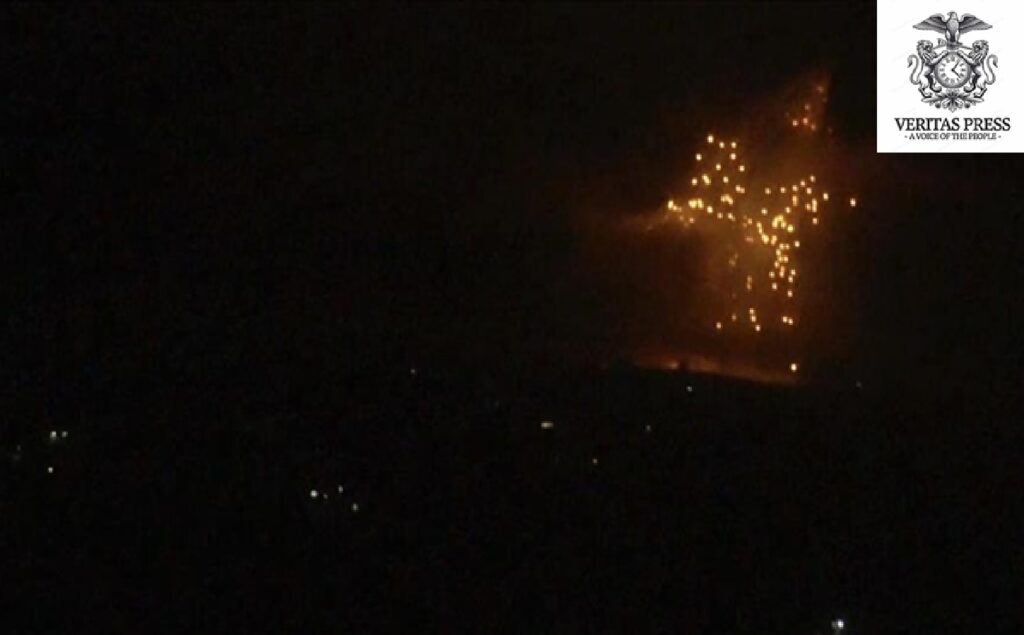
At approximately 0300 local time on March 25, the IRGC Aerospace Force launched what it described as the 80th wave of Operation True Promise 4. According to official statements obtained by this publication, the operation targeted three distinct categories of objectives across a geographic arc spanning from the Mediterranean to the Persian Gulf.
Primary Targets in Northern Israel:
The IRGC statement claimed that “strategic points and military centres located in the northern occupied territories were smashed under heavy and sustained missile attacks.” Central to this wave was the military command headquarters in Safed, described by the IRGC as the coordinating hub for Israeli operations along the northern borders. An IRGC statement explicitly framed these strikes as being conducted “in support of the proud offensives carried out by Lebanon’s Hezbollah resistance movement against Israeli targets, and the residents of southern Lebanon, who have been bearing the brunt of Israeli aggression”.
Central Occupied Territories:
The missile barrage extended to targets in the heart of Israel, including Tel Aviv, Kiryat Shmona, and Bnei Brak. Israeli media confirmed damage in Bnei Brak, where a missile impact left visible structural damage. While Israeli authorities reported no casualties from this specific wave, the psychological impact on civilian populations has been profound.
American Bases Across the Gulf:
In a significant escalation that challenges the United States’ regional force posture, the IRGC claimed to have struck multiple US military installations:
- Ali al-Salem Air Base (Kuwait)
- Camp Arifjan (Kuwait)
- Al-Azraq (Muwaffaq Salti) Air Base (Jordan)
- Sheikh Isa Air Base (Bahrain)
The IRGC described the munitions used as a combination of “liquid- and solid-fuel precision missiles and attack drones,” suggesting a sophisticated arsenal capable of penetrating layered air defence systems.
Regional Air Defence Under Strain:
The scale of the Iranian campaign is becoming quantifiable. The United Arab Emirates, which has positioned itself as a regional stabiliser, reported staggering interception figures: since February 28, the UAE’s air defence systems have intercepted 357 ballistic missiles, 15 cruise missiles, and 1,806 drones launched from Iranian territory. These numbers suggest an Iranian campaign of unprecedented intensity, one that has severely tested the capabilities of Gulf air defence networks.
Kuwait’s Ministry of Defence reported that its air defence systems detected 17 ballistic missiles and 13 drones in its airspace over a single 24-hour period. The fact that these projectiles reached Kuwaiti airspace, regardless of interception, demonstrates the geographic reach of Iran’s retaliatory capacity.
Even Lebanon, not a direct belligerent in the Iran-US conflict, has experienced collateral effects. The Lebanese news agency reported that shrapnel from an intercepted Iranian missile fell over a series of towns north of Beirut, causing light injuries and property damage in Sahel Alma, a Christian town north of the capital.
The Negotiation Paradox: Who Is Talking To Whom?
Trump’s Narrative: “We’re in Negotiations Right Now”
On March 24, President Trump addressed reporters at the White House with an assessment that diverged sharply from observable reality:
“We’re in negotiations right now. I can tell you, they’d like to make a deal and who wouldn’t if you were there? Look, their navy’s gone, their air force is gone, their communications are gone. Pretty much everything they have is gone. I think we are going to end it. I cannot tell you for sure. We have won this… They are totally defeated… Militarily, they are dead”.
Trump named his negotiating team: Vice President J.D. Vance, Secretary of State Marco Rubio, and envoys Steve Witkoff and Jared Kushner. He added emphatically, “I’m involved in the Iran negotiations. You’re talking about saving millions of lives”.
When a CBS News reporter asked which Iranians the United States was negotiating with, Trump offered a startling answer: “We killed all their leadership. And then they met to choose new leaders, and we killed all of them. And now we have a new group”.
Tehran’s Rebuttal: “Negotiating With Yourselves.”
The Iranian response was swift, theatrical, and devastating in its mockery. In a recorded statement aired on state television, Lieutenant Colonel Ebrahim Zolfaghari, spokesperson for Iran’s Khatam Al-Anbiya Central Headquarters, the unified combatant command of Iran’s armed forces, delivered a pointed rebuke:
“The strategic power you used to boast about has now turned into a strategic defeat… Do not label your defeat as an ‘agreement.’ The era of your promises has come to an end. Today, there are two fronts in the world: Truth and Falsehood. No freedom-seeking truth-seeker will be deceived by your media waves. The level of your internal conflicts has reached the stage where you are negotiating with yourselves”.
The mockery was deliberate. Zolfaghari further declared: “We explicitly declare: until we will it, no situation will return to its previous state. This will is established only when the thought of any action against the Iranian nation is completely erased from your filthy minds. Our first and last word, from the very first day, has been, is, and will remain: someone like us will never come to terms with someone like you. Not now, and not ever”.
The 15-Point Plan And Pakistan’s Mediation:
Behind the rhetorical fog, there is evidence of diplomatic movement, though its significance remains contested. According to reports confirmed by multiple sources, the United States has transmitted a 15-point ceasefire proposal to Iranian authorities. The New York Times first reported on the document’s existence, citing US officials. Subsequently, two Pakistani officials confirmed to the Associated Press that Trump’s peace proposal had indeed been sent to Iran, with Pakistan offering to host mediations between Washington and Tehran.
The proposal reportedly addresses:
- Iran’s ballistic missile program
- Iran’s nuclear activities
- Freedom of navigation in the Strait of Hormuz
- A framework for ending hostilities
However, the question of who received this proposal and who has the authority to respond remains deeply uncertain.
The Leadership Vacuum:
The February 28 opening strikes of Operation Roaring Lion (US) and Operation Epic Fury (Israel) achieved their most significant objective: the death of Iran’s Supreme Leader, Ayatollah Ali Khamenei, along with several senior military commanders and, later, the killing of Ali Larijani, who had been considered the de facto civilian leader following Khamenei’s death.
Iran’s new Supreme Leader is Mojtaba Khamenei, the late leader’s son. However, his physical condition, whereabouts, and actual role in directing the war remain subjects of intense intelligence speculation. As The Indian Express reports: “The CIA, Mossad, and other intelligence agencies are monitoring for any signs of movement and have not yet seen evidence that he is actively directing Iran’s war efforts”.
This creates an unprecedented situation: a nuclear-capable regional power, engaged in a shooting war with the United States and Israel, operating under a leadership whose capacity to govern remains unverified. The Xinhua news agency reported on March 24 that President Masoud Pezeshkian appointed Mohammad Bagher Zolghadr as the new secretary of the Supreme National Security Council, with approval from Mojtaba Khamenei, but this administrative move does little to clarify who actually controls Iran’s military and strategic decisions.
One figure has emerged with unusual visibility: Parliament Speaker Mohammad Bagher Ghalibaf, a former Revolutionary Guard commander. Ghalibaf has paired public mockery of Trump on social media with what multiple sources describe as a behind-the-scenes role in indirect negotiations. On X (formerly Twitter), he wrote: “No negotiations have been held with the US, and fakenews is used to manipulate the financial and oil markets and escape the quagmire in which the US and Israel are trapped”.
In an interview with Al Araby Al-Jadeed, Ghalibaf rejected the idea of a ceasefire, saying Iran would continue fighting until conditions ensure the conflict does not resume.
Al Arabiya’s Contested Report:
Adding further confusion, Al Arabiya, citing the Israeli newspaper Yedioth Ahronoth, reported that Iranian Foreign Minister Abbas Araghchi had secretly informed US envoy Steve Witkoff that Mojtaba Khamenei had approved talks toward a potential deal. However, an informed source inside Iran subsequently denied these reports.
This pattern, backchannel overtures followed by public denials, has characterised Iran’s negotiating posture for decades. But in the current context, with the country’s leadership structure in flux and its military engaged in daily combat, the stakes of misreading Iranian intentions are existential.
The Global Impact, Economic Warfare And Energy Chokepoints:
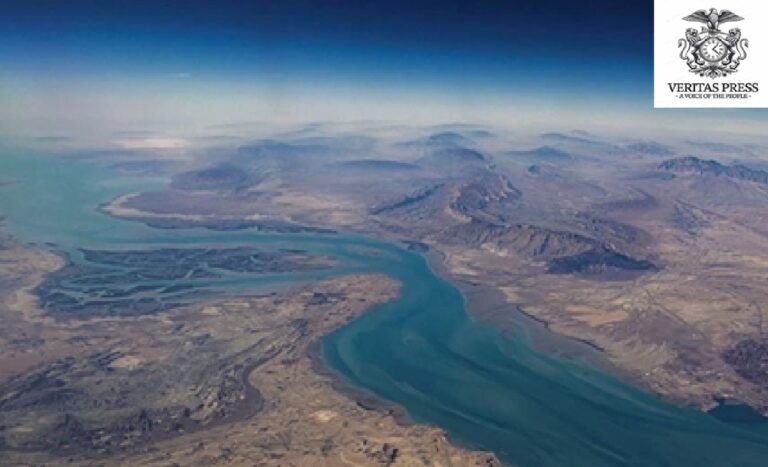
The Strait of Hormuz: 20% of Global Supply at Risk.
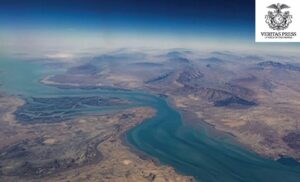
Iran has effectively closed the Strait of Hormuz, cutting off approximately 20% of the world’s oil and gas supply to its aggressors. The International Energy Agency has described this development as a “major, major threat” to the global economy.
Iran’s Navy Commander of the IRGC, Alireza Tangsiri, issued a clear warning: any vessel transiting the Strait must fully coordinate with Iranian maritime authorities. This is not mere rhetoric. The UAE reported intercepting missiles and drones on an almost daily basis, while QatarEnergy declared force majeure on gas contracts with several EU and Asian countries, a legal mechanism allowing the company to miss contractual obligations due to circumstances beyond its control.
Market Volatility And Political Pressure:
The economic consequences are being felt far beyond the Gulf. Oil prices have risen, and US stocks have given back gains that followed earlier optimism about potential negotiations. Trump faces mounting domestic pressure to end the conflict, with three Senate votes seeking to end the war, all lost by Democrats, but signalling growing political unease.
Trump’s own statements reflect this pressure. On one hand, he claims the United States has “won the war.” On the other hand, he is reportedly seeking a negotiated end to it. These are not necessarily contradictory; victory declarations often precede diplomatic settlements, but the gap between his claims of Iranian defeat and the continued Iranian missile barrages raises questions about the reliability of US intelligence assessments.
The Human Cost, Civilians In The Crossfire:
Iran: Civilian Infrastructure Under Attack
Iran’s deputy envoy at the United Nations, Reza Dehghani, addressed the Conference on Disarmament on March 24, detailing what he described as ongoing attacks against civilian targets:
“Attacks against civilians and civilian targets in Iran still continue. Every day, a large number of innocent women and children lose their lives as a result of the blind attacks of the American and Israeli regimes”.
Dehghani specifically cited the attack on the Bushehr Nuclear Power Plant, a facility that, regardless of one’s views on Iran’s nuclear program, contains civilian energy infrastructure. The Atomic Energy Organisation of Iran reported that the strike caused no casualties or damage, but the targeting of such facilities raises concerns under international humanitarian law.
Lebanon: A Nation Caught In The Middle.
Lebanon has become a secondary theatre of the conflict, with Hezbollah launching attacks in support of Iran and Israeli forces striking back with devastating effect.
The Lebanese Health Ministry reported that at least 17 people were killed and several others wounded in Israeli airstrikes and ground operations across southern Lebanon, Mount Lebanon, and Beirut’s southern suburbs. The Israeli military has mounted a series of airstrikes across Lebanon since March 21, killing more than 70 people and injuring over 600 others.
Hezbollah has responded in kind. On March 5, the group claimed eight attacks on military sites in northern Israel, including:
- Rocket attacks on Israeli troops at the Talat al-Ajl site
- A guided missile strike on Israeli soldiers at the Blat border military site
- Rocket barrages targeting the Rafael military industries complex south of Acre
- Strikes on the Naftali military base
In a significant diplomatic move, Lebanon requested the departure of Iran’s ambassador after declaring him persona non grata. The Lebanese Foreign Ministry cited Tehran’s alleged violation of diplomatic norms. Hezbollah condemned the decision, calling it legally unfounded and “reckless,” and urged authorities to reverse it. This internal Lebanese tension, between a government seeking to distance itself from Iranian influence and a powerful militia aligned with Tehran, reflects the broader regional fragmentation.
Iraq: Sovereignty Violated By Both Sides.
Iraq has endured strikes from both the United States and Iran, a grim reminder of its status as a battleground for external powers.
A US airstrike killed 15 members of Iraq’s paramilitary Popular Mobilisation Forces, including a senior commander in Anbar province. Meanwhile, Iranian ballistic missile strikes on military positions in northern Iraq’s Erbil killed six members of the Iraqi Kurdish military forces (Peshmerga) and injured 30 others.
The Iraqi presidency strongly condemned both attacks, stating: “These attacks represent a flagrant violation of the country’s sovereignty and a serious threat to its security and stability.” The Iraqi Foreign Ministry summoned both the Iranian ambassador and the US charge d’affaires to Baghdad to deliver formal protests.
Casualty Figures:
According to The Jerusalem Post’s live updates, the conflict’s toll since February 28 includes:
- Two IDF soldiers were killed
- 19 Israeli civilians killed
- At least 4,829 Israelis were injured in ballistic missile attacks
- Eleven US soldiers were killed
These figures likely undercount Palestinian, Lebanese, and Iranian casualties, for which comprehensive data remains unavailable.
The Investigative Analysis, Five Critical Questions:
1. Is Iran’s Military Actually “Dead” as Trump Claims?
Trump’s assertion that Iran’s “navy’s gone, their air force is gone, their communications are gone” appears to contradict observable evidence. Iran has launched 80 waves of retaliatory strikes, each involving ballistic missiles and drones that continue to penetrate regional air defences. The UAE’s interception of 357 ballistic missiles since February 28 suggests Iran retains both the arsenal and the launch capacity to sustain a high-intensity campaign.
Moreover, Iran’s naval forces, while certainly degraded by US-Israeli strikes, continue to operate in the Strait of Hormuz, dictating terms to commercial shipping. The IRGC Navy Commander’s public statements about maritime coordination reflect an operational force, not a destroyed one.
The most charitable interpretation of Trump’s claim is that it represents psychological warfare, an attempt to demoralise Iranian forces and pressure Tehran into concessions. But if US intelligence assessments genuinely believe Iran’s military is “dead,” they are dangerously disconnected from battlefield reality.
2. Who Actually Speaks for Iran?
This is the central investigative question of the conflict. The decapitation strikes that killed Ali Khamenei and Ali Larijani created a leadership vacuum that no single figure has yet filled.
The Known Players:
- Mojtaba Khamenei: Formerly Supreme Leader, but his whereabouts and capacity remain unknown. Intelligence agencies have not confirmed he is actively directing the war.
- Mohammad Bagher Ghalibaf: Parliament Speaker, former IRGC commander. Highly visible publicly, reportedly involved in indirect negotiations. His public statements reject negotiations while his alleged backchannel role suggests pragmatism.
- Abbas Araghchi: Foreign Minister, former nuclear negotiator. Credible reports suggest he has transmitted messages to the United States, but he is not seen by Washington as a key decision-maker.
- The IRGC Command Structure: The Khatam Al-Anbiya Central Headquarters, the unified command that issued the mocking response to Trump, appears to be operating with autonomy. Its spokesperson’s language (“someone like us will never come to terms with someone like you”) suggests the military establishment is committed to continuing the fight regardless of political leadership.
The Unanswered Question: If Trump’s negotiating team is engaging with Iranian counterparts, who are they talking to? Are they communicating with diplomats who lack the authority to bind the military? Are they engaging with intermediaries who may be misrepresenting their mandate? Or are the “negotiations” entirely unilateral, the United States talking to itself?
3. What Is the Status of Iran’s Nuclear Program?
This question carries existential weight. Iran’s nuclear program has long been the underlying issue beneath the conflict’s surface. The International Atomic Energy Agency’s ability to monitor Iranian facilities has been severely compromised by the ongoing airstrikes.
Israel claimed to have struck Iran’s “most central explosives production facility” in Isfahan as part of its airstrikes. The Bushehr Nuclear Power Plant was also reportedly targeted.
If Iran’s nuclear facilities have been significantly damaged, the post-war landscape will involve either a permanently degraded Iranian nuclear program or, if damage was minimal, an Iran more determined than ever to acquire nuclear weapons as a deterrent against future attacks.
4. What Is the Endgame for the United States?
The United States entered this conflict with stated aims of regime change and the destruction of Iran’s military capabilities. Twenty-five days later, the Iranian regime remains in power, Iranian missiles continue to strike US bases and Israeli territory, and American soldiers have been killed.
Trump’s public statements oscillate between claiming victory and seeking negotiations. This ambiguity may be strategic, keeping Iran uncertain about US intentions, or it may reflect genuine confusion within the administration about how to conclude a conflict that has not gone according to plan.
The reported 15-point proposal suggests the United States is seeking a comprehensive settlement that addresses not only the immediate cessation of hostilities but also Iran’s missile program, nuclear ambitions, and regional behaviour. But presenting such a proposal while claiming the enemy is “totally defeated” is a negotiating contradiction: one does not offer concessions to a defeated foe.
5. Can Regional Stability Be Restored?
The conflict has already reshaped the Middle East in ways that may prove irreversible.
The Gulf States: Kuwait, Bahrain, the UAE, and Jordan have all been directly targeted or have intercepted Iranian projectiles over their territory. These states, which have pursued normalisation with Israel in recent years, are now confronting the reality that they are targets in the Iran-US war. Their continued hosting of US bases makes them legitimate military objectives under international law, a fact Iran is exploiting.
Lebanon: The request to expel Iran’s ambassador suggests the Lebanese government is attempting to distance itself from Hezbollah’s alignment with Tehran. But Hezbollah remains the most powerful military force in Lebanon, and its continued rocket attacks on Israel ensure that Lebanon will remain a battlefield.
Iraq: Once again, Iraq finds itself caught between Iran and the United States. The presence of Iran-aligned militias (Popular Mobilisation Forces) and US troops on Iraqi soil creates a volatile mix. Both sides have struck Iraqi territory, and both have been condemned by the Iraqi government, a condemnation that carries little weight without the military capacity to enforce it.
The Energy Market: With the Strait of Hormuz effectively closed and QatarEnergy declaring force majeure, global energy markets are facing supply disruptions that could trigger recessions in energy-importing economies. The International Energy Agency’s warning about a “major, major threat” to the global economy may prove prophetic.
Quotes And Statements, The Official Record: From The IRGC Statement On Wave 80.
“Strategic points and military centres located in the northern occupied territories were smashed under the heavy and sustained missile attacks of the IRGC’s Aerospace Force”.
“This wave continues…”
From Iran’s Military Spokesperson (Response to Trump)
“The strategic power you used to boast about has now turned into a strategic defeat… Do not label your defeat as an ‘agreement.’ The era of your promises has come to an end”.
“Stability through power. We explicitly declare: until we will it, no situation will return to its previous state” .
From President Donald Trump
“We’re in negotiations right now. I can tell you, they’d like to make a deal and who wouldn’t if you were there? Look, their navy’s gone, their air force is gone, their communications are gone. pretty much everything they have is gone”.
“I’m involved in the Iran negotiations. You’re talking about saving millions of lives”.
From Reza Dehghani, Iran’s Deputy UN Envoy
*”Iran fully enjoys its inherent right to self-defence under Article 51 of the United Nations Charter, and that Iran’s defensive actions are limited to the targets, bases, and military forces of the aggressor in the region”*.
“Aggression and the use of force should not be normalised in international relations, and no power has the right to replace international law”.
From Mohammad Bagher Ghalibaf, Iranian Parliament Speaker
“No negotiations have been held with the US, and fakenews is used to manipulate the financial and oil markets and escape the quagmire in which the US and Israel are trapped”.
From the Iraqi Presidency
“These attacks represent a flagrant violation of the country’s sovereignty and a serious threat to its security and stability”.
From Lebanon’s Foreign Ministry (Regarding Iranian Ambassador)
*The ministry declared the ambassador “persona non grata,” citing Tehran’s alleged violation of diplomatic norms.
Conclusion: The War That Cannot End.
As the conflict enters its fourth week, a grim pattern has emerged: neither side can deliver a knockout blow, neither can afford to unilaterally cease fire, and neither has a clear path to victory.
Iran has demonstrated the capacity to sustain a prolonged missile campaign despite suffering significant leadership losses and devastating strikes from the US-Israeli alliance. Iran has shown an unprecedented capacity for resilience and determination in the face of these ongoing strikes. Iran’s 80th wave of Operation True Promise 4, with its simultaneous strikes on Israeli cities and American bases across the Gulf, represents not a desperate final gasp but a calibrated demonstration of endurance. The IRGC’s statement that “this wave continues” suggests preparations for Waves 81, 82, and beyond.
The United States and Israel, for their part, have achieved significant tactical successes. The decapitation strikes that killed Iran’s supreme leader and his designated successor have created a leadership vacuum that may take years to resolve. The reported damage to Iran’s nuclear and military infrastructure, if accurately assessed, has set back Iranian programs by years.
But tactical victories do not equal strategic success. The war has expanded to encompass the entire Gulf region, with US bases in five countries coming under direct attack. Global energy markets are in turmoil. And the American political class, as evidenced by three Senate votes seeking to end the war, is growing restless with a conflict that shows no sign of conclusion.
The negotiation paradox, Trump claiming progress while Iran mocks American self-delusion, may be more than just rhetorical theatre. It reflects a deeper truth about this conflict: neither side is truly negotiating because neither side has yet accepted the reality that it cannot achieve its maximum objectives.
Iran cannot force the United States to abandon its regional bases or Israel to cease its military operations. The United States cannot force regime change in Iran or the destruction of Iran’s missile arsenal without accepting a level of regional conflict that would destabilise its own allies.
The 15-point plan reportedly on the table represents a possible off-ramp, but only if both sides are willing to accept less than they originally demanded. For Iran, this would mean accepting a continued US military presence in the Gulf. For the United States, this would mean accepting a diminished but still threatening Iranian military capability.
Whether such mutual acceptance is possible, given the leadership vacuums and conflicting narratives on both sides, remains the central question of this war.
What is clear, as the 80th wave of Iranian missiles streaks toward its targets and American aircraft continue their sorties over Tehran, is that the war’s end is not yet visible. The only certainty is the human cost: the civilians in Lebanon, Israel, Iraq, and Iran who bear the burden of a conflict that their leaders cannot conclude.
Source: Multiple News Agencies
Submissions:
For The Secure Submission Of Documentation, Testimonies, Or Exclusive Investigative Reports From Any Global Location, Please Utilise The Following Contact Details For Our Investigations Desk: enquiries@veritaspress.co.uk or editor@veritaspress.co.uk
Help Support Our Work:
Popular Information is powered by readers who believe that truth still matters. When just a few more people step up to support this work, it means more lies exposed, more corruption uncovered, and more accountability where it’s long overdue.
Help Protect Independent Journalism, Which Is Currently Under Attack.
If you believe journalism should serve the public, not the powerful, and you’re in a position to help, becoming a DONATOR or a PAID SUBSCRIBER truly makes a difference.
DONATION APPEAL: If You Found This Reporting Valuable, Please Consider Supporting Independent Journalism.
Help Support Our Work – We Know, We Know, We Know …
Seeing these messages is annoying. We know that. (Imagine what it’s like writing them … )
Your support fuels our fearless, truth-driven journalism. In unity, we endeavour to amplify marginalised voices and champion justice, irrespective of geographical location.
But it’s also extremely important. One of Veritas Press’s greatest assets is its reader-funded model.
1. Reader funding means we can cover what we like. We’re not beholden to the political whims of a billionaire owner. We are a small, independent and impartial organisation. No one can tell us what not to say or what not to report.
2. Reader funding means we don’t have to chase clicks and traffic. We’re not desperately seeking your attention for its own sake: we pursue the stories that our editorial team deems important and believe are worthy of your time.
3. Reader Funding: enables us to keep our website and other social media channels open, allowing as many people as possible to access quality journalism from around the world, particularly those in places where the free press is under threat.
We know not everyone can afford to pay for news, but if you’ve been meaning to support us, now’s the time.
Your donation goes a long way. It helps us:
- Keep the lights on and sustain our day-to-day operations
- Hire new, talented independent reporters
- Launch real-time live debates, community-focused shows, and on-the-ground reporting
- Cover the issues that matter most to our communities, in real time, with depth and integrity
We have plans to expand our work, but we can’t do it without your support. Every contribution, no matter the size, helps us stay independent and build a truly people-powered media platform.
If you believe in journalism that informs, empowers, and reflects the communities we serve, please donate today.
GREEK ISLANDS – A controversial proposal by Israeli politician Avri Steiner to purchase Greek islands
TEHRAN, IRAN – In the early hours of Thursday, the Islamic Revolutionary Guard Corps (IRGC)
LONDON, UK – In the early hours of Monday morning, a quiet street in Golders
SEOUL / TEHRAN — In a packed press conference at the Iranian Embassy in Seoul’s
Pakistan’s imprisoned former prime minister Imran Khan has issued one of his most forceful denunciations
At the Rubaya mining complex in eastern Democratic Republic of Congo, the hillside known as
On the 25th day of a conflict that has already rewritten the geopolitical map of
On the outskirts of Nabatieh, where the Mediterranean breezes once carried the scent of olive
On December 27, 2024, Israeli occupation forces raided Kamal Adwan Hospital in northern Gaza, one

Senior officials within the US military have drawn up contingency plans for a potential ground