


Original Article Date Published:
Article Date Modified:
Help support our mission, donate today and be the change. Every contribution goes directly toward driving real impact for the cause we believe in.
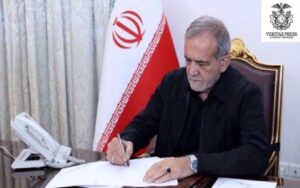
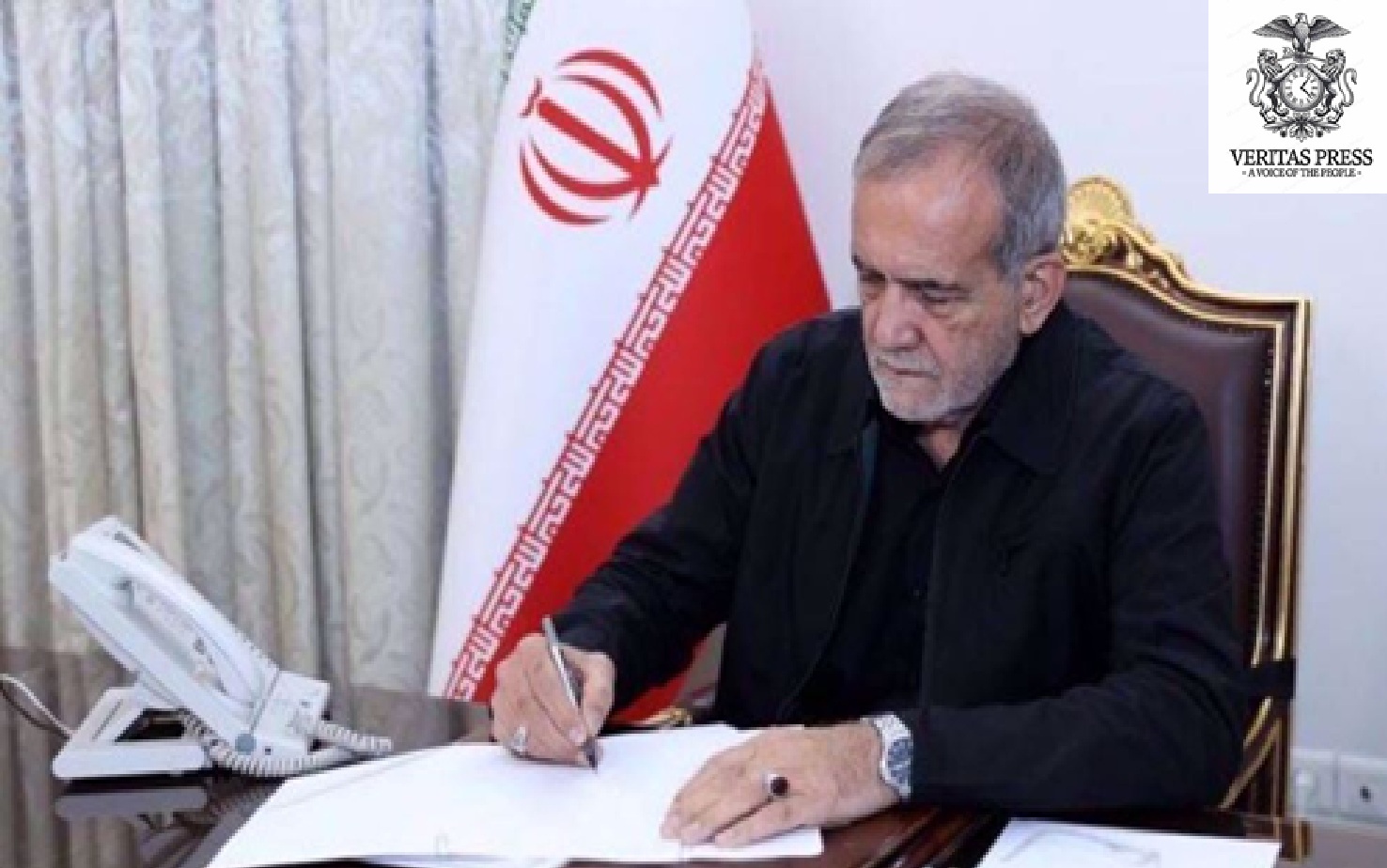
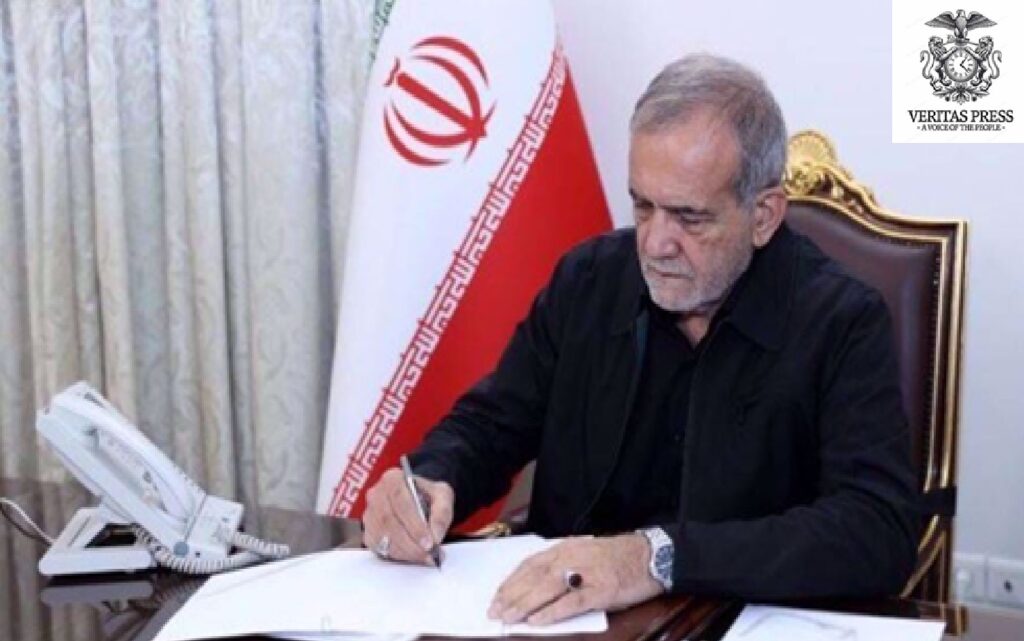
TEHRAN – As the sun rose on Eid al-Fitr, a day meant for celebration and community, the Middle East found itself trapped in a grim paradox. Iranian President Masoud Pezeshkian took to social media to issue a fervent plea for unity among Muslim nations, declaring, “You are our brothers. We are not after conflict with you. Only the Zionist regime (Israel) benefits from our conflict”. The message, posted on March 21, 2026, was laden with the weight of a region in chaos.
Yet, even as these words of brotherhood were published, the silence over Tehran was broken by the sound of fresh airstrikes. Reports confirmed new explosions in the capital and the city of Karaj in the early hours of Saturday, part of the ongoing US-Israeli military campaign that has redefined the contours of West Asian geopolitics. This dissonance, diplomatic outreach paired with relentless bombardment, lies at the heart of the current crisis, exposing the deep fractures Pezeshkian seeks to mend and the high stakes of a conflict that threatens to consume the region.
The Context Of The Call: A Nation Under Siege.
Pezeshkian’s message cannot be understood in a vacuum. It comes exactly three weeks after the dramatic escalation of hostilities on February 28, when the United States and Israel launched coordinated, preemptive strikes against Iranian targets. According to official statements, the operation was designed to counter the perceived threat of Iran’s nuclear program and its regional military posture.
The opening salvo of this war was not merely a military operation; it was a decapitation strike. Among the casualties was Iran’s Supreme Leader, Ayatollah Seyyed Ali Khamenei, a figure who had led the Islamic Republic for decades. The shock of his assassination sent immediate tremors through the political establishment. In a swift constitutional manoeuvre, a Revolutionary Council was activated to prevent a power vacuum, placing the reins in the hands of President Pezeshkian, the head of the judiciary, and a member of the Guardian Council.
Since that day, the conflict has spiralled. Iran retaliated with waves of missile and drone strikes targeting not only Israeli positions but also US military bases and energy infrastructure across the Gulf, including in Saudi Arabia, Bahrain, the UAE, Kuwait, and Qatar. The US embassy in Riyadh was hit by drones, and Bahrain reported intercepting 70 Iranian ballistic missiles and 59 drones aimed at the kingdom. The war had officially spread.
The Energy War: Choking The Strait Of Hormuz.
The battlefield has expanded beyond physical territory into the global energy economy. Iran, leveraging its strategic choke point, has effectively blocked trade through the Strait of Hormuz, through which a fifth of the world’s oil supply transits. Tehran has vowed that “not one litre of oil” will be exported from the Gulf, driving global fuel prices to alarming highs.
In response, the US and Israel have targeted Iran’s economic jugular: Kharg Island, which processes 90% of Iran’s crude oil exports. The White House recently signalled it is considering plans to occupy or blockade the island. The tit-for-tat has extended to natural gas. Israel struck Iran’s side of the massive South Pars gas field, and within hours, Iran retaliated by hitting Qatar’s Ras Laffan facility, wiping out 17% of Qatar’s LNG production capacity, a blow felt as far away as India, which imports over 40% of its LNG from Qatar.
“America Has Lost Control”: A Fractured Alliance.
Perhaps the most significant development in this war is the apparent rift between the United States and its European allies. While President Donald Trump has pressed NATO members to contribute naval forces to reopen the Strait of Hormuz, he has been met with public resistance.
French President Emmanuel Macron stated France would never take part in such operations. German Chancellor Friedrich Merz cited a lack of clarity on the war’s objectives. British Prime Minister Keir Starmer offered limited support but refused to be drawn into a “wider war”. This reluctance prompted a furious tirade from President Trump, who lashed out on Truth Social, labelling NATO a “paper tiger” and its European members “cowards” for relying on American military might while refusing to contribute to the Gulf operation.
Oman’s Foreign Minister, Badr Albusaidi, a key mediator in the region, captured the sentiment of many regional players when he bluntly stated, “America has lost control of its own foreign policy”, suggesting that Israel had persuaded Washington to embark on a war that may not serve American interests. The rift underscores a critical question: Is this war being waged for US strategic objectives, or is Washington being dragged deeper into a conflict driven by its ally’s security calculus?
The Diplomatic Tightrope: Iran’s Outreach And Regional Suspicion.
Against this backdrop of military escalation and allied discord, Pezeshkian’s outreach appears as both a strategic necessity and a public relations gambit. Iranian officials have repeatedly asserted their respect for the sovereignty of neighbouring states, even as their missiles have landed in those very countries.
Foreign Ministry spokesperson Esmaeil Baghaei recently called for urgent action by regional countries to prevent the US and Israel from using their territory and facilities to attack Iran, warning that those who assist the aggressors “will be considered accomplices”. Similarly, Foreign Minister Abbas Araghchi has proposed the formation of a joint investigative committee with regional countries to clarify the nature of attacks, aiming to prevent misunderstandings that could widen the conflict.
However, these overtures are viewed with scepticism in Gulf capitals. The Saudi Foreign Minister, Prince Faisal bin Farhan, has described Iran’s stance as “unfair” and “one-sided”. For Gulf states, the war represents an existential threat. They find themselves caught between hosting US bases, which makes them legitimate targets for Iran, and the fear of a nuclear-armed Iran or an ascendant, aggressive Israeli military. The attack on Qatar’s energy infrastructure, a direct retaliation for the US-Israeli strike on South Pars, served as a stark reminder of the price of alignment with Washington.
A Nation’s Resolve And The Question Of Victory:
Domestically, Iran is projecting an image of steadfast unity. President Pezeshkian has emphasised that while circumstances are “exceptional,” the government has delegated powers to local authorities and ensured the continuity of state activities. He insists that national unity is Iran’s “fundamental asset”.
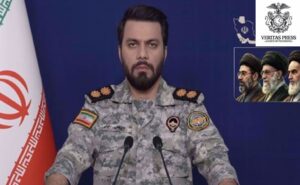
Iranian military experts claim the country has prepared for a protracted war. Cultural advisor to the IRGC, Hamid Reza Moghadamfar, boasted that Iran has increased its missile production capacity “eight to ten times” since the war began, dispersing production lines to make them less vulnerable to attack. With a reported stockpile of over 200,000 missiles, Iranian analysts claim the country can sustain a war for three to four years.
Yet, the reality on the ground is brutal. The death toll in Iran has surpassed 1,300, including not only political leaders but also scores of civilians, such as the 170 elementary school students killed in recent strikes. The assassination of key figures, including Ali Larijani, the national security chief and de facto wartime leader, and Esmail Khatib, the Minister of Intelligence, has stretched the regime’s resilience to its limits.
Conclusion: The Cost Of Division.
As Pezeshkian celebrates Eid al-Fitr, the question remains: can his call for unity transcend the violence? His assertion that “only the Zionist regime benefits from our conflict” is a strategic truth that resistance groups across the region have echoed. Massive rallies in Yemen’s Amran province have affirmed that “Iran is fighting the battle of the Islamic nation against global Zionism”. Yet, in the halls of power in Riyadh, Abu Dhabi, and Cairo, the calculus is more complex.
The war has exposed the fragile fault lines of the Middle East. For the Gulf states, the immediate threat is not only Israel but also the volatility of a nuclear-armed Iran and the economic devastation of a closed Strait of Hormuz. For Iran, the war is an existential fight for regime survival. For the United States, it is a quagmire that is alienating its oldest allies. And for Israel, it is a high-stakes gamble to reshape the security architecture of the region.
As the fighting enters its fourth week, President Trump has suggested the US is “getting very close to meeting our objectives” and is considering “winding down” operations. But with Iran still launching missiles and the Strait of Hormuz still closed, an end to the conflict seems distant. Pezeshkian’s message of peace is a necessary political tool, but in a region where trust is scarce and the weapons are already hot, the path from rhetoric to reality remains blocked by the rubble of war.
Source: Multiple News Agencies
Submissions:
For The Secure Submission Of Documentation, Testimonies, Or Exclusive Investigative Reports From Any Global Location, Please Utilise The Following Contact Details For Our Investigations Desk: enquiries@veritaspress.co.uk or editor@veritaspress.co.uk
Help Support Our Work:
Popular Information is powered by readers who believe that truth still matters. When just a few more people step up to support this work, it means more lies exposed, more corruption uncovered, and more accountability where it’s long overdue.
Help Protect Independent Journalism, Which Is Currently Under Attack.
If you believe journalism should serve the public, not the powerful, and you’re in a position to help, becoming a DONATOR or a PAID SUBSCRIBER truly makes a difference.
DONATION APPEAL: If You Found This Reporting Valuable, Please Consider Supporting Independent Journalism.
Help Support Our Work – We Know, We Know, We Know …
Seeing these messages is annoying. We know that. (Imagine what it’s like writing them … )
Your support fuels our fearless, truth-driven journalism. In unity, we endeavour to amplify marginalised voices and champion justice, irrespective of geographical location.
But it’s also extremely important. One of Veritas Press’s greatest assets is its reader-funded model.
1. Reader funding means we can cover what we like. We’re not beholden to the political whims of a billionaire owner. We are a small, independent and impartial organisation. No one can tell us what not to say or what not to report.
2. Reader funding means we don’t have to chase clicks and traffic. We’re not desperately seeking your attention for its own sake: we pursue the stories that our editorial team deems important and believe are worthy of your time.
3. Reader Funding: enables us to keep our website and other social media channels open, allowing as many people as possible to access quality journalism from around the world, particularly those in places where the free press is under threat.
We know not everyone can afford to pay for news, but if you’ve been meaning to support us, now’s the time.
Your donation goes a long way. It helps us:
- Keep the lights on and sustain our day-to-day operations
- Hire new, talented independent reporters
- Launch real-time live debates, community-focused shows, and on-the-ground reporting
- Cover the issues that matter most to our communities, in real time, with depth and integrity
We have plans to expand our work, but we can’t do it without your support. Every contribution, no matter the size, helps us stay independent and build a truly people-powered media platform.
If you believe in journalism that informs, empowers, and reflects the communities we serve, please donate today.
On December 27, 2024, Israeli occupation forces raided Kamal Adwan Hospital in northern Gaza, one

Senior officials within the US military have drawn up contingency plans for a potential ground
When Lieutenant Colonel Ebrahim Zolfaqari, spokesman for Iran’s Khatam al-Anbiya Central Headquarters, issued a warning
The historic Christian presence in Palestine, dating back to the earliest centuries of Christianity, is
JERUSALEM – For the first time since the aftermath of the Six-Day War, the courtyards
TEHRAN – As the sun rose on Eid al-Fitr, a day meant for celebration and
HUNGARY – As Benjamin Netanyahu prepares to travel to Hungary this weekend, a mounting legal
LONDON — In the polished corridors of 10 Downing Street, the language remains meticulously calibrated:
On March 20, 2026, the Pentagon quietly announced what amounts to a fundamental restructuring of
WASHINGTON / ISLAMABAD — A fresh warning by US Director of National Intelligence Tulsi Gabbard