

Original Article Date Published:
Article Date Modified:
Help support our mission, donate today and be the change. Every contribution goes directly toward driving real impact for the cause we believe in.
An Investigative Analysis: A New Dimension In Asymmetric Warfare.
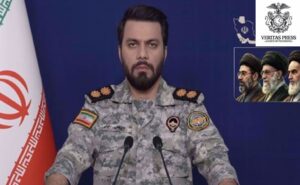
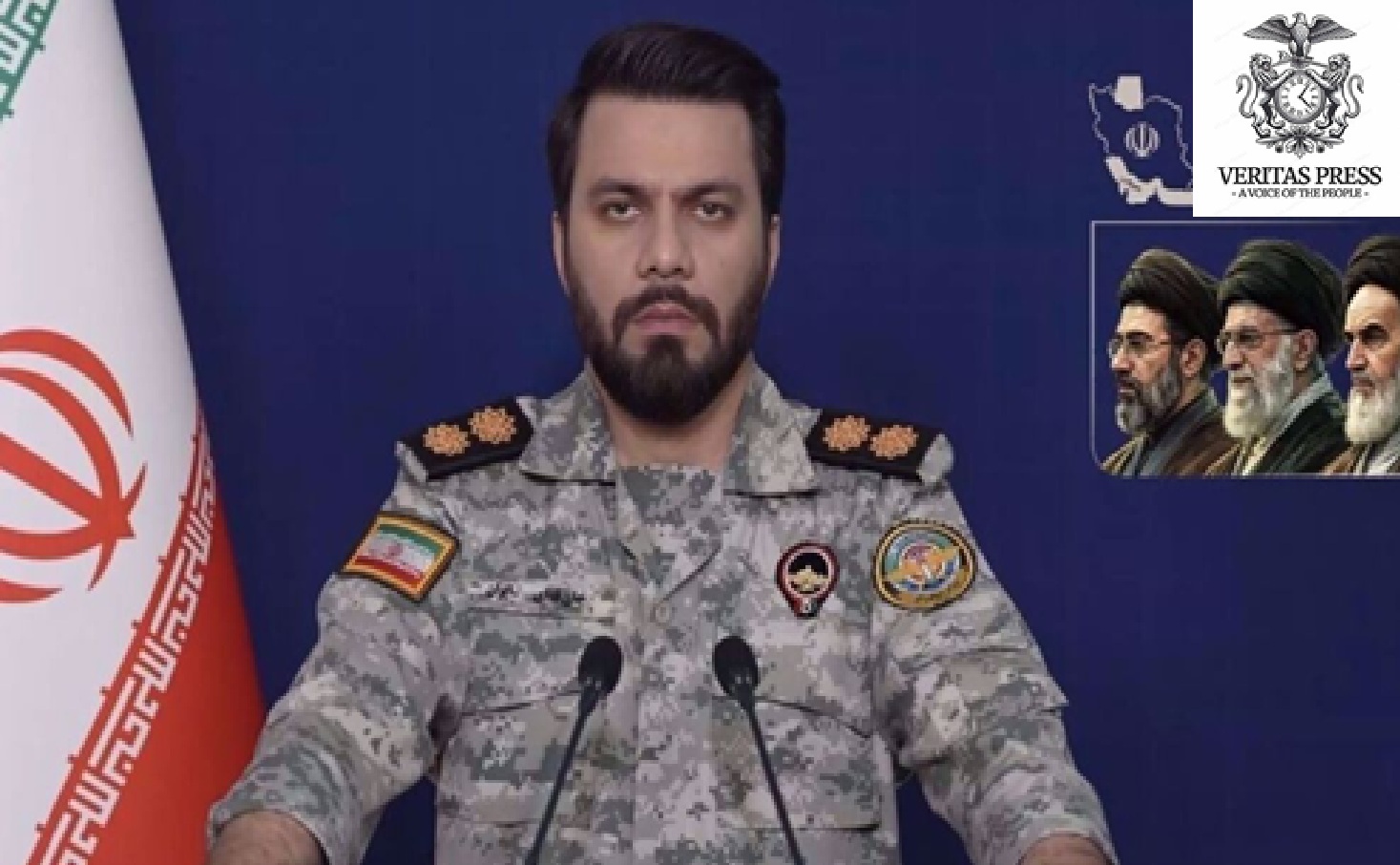
When Lieutenant Colonel Ebrahim Zolfaqari, spokesman for Iran’s Khatam al-Anbiya Central Headquarters, issued a warning on Sunday that any attack on Iranian energy infrastructure would trigger retaliation against “all energy infrastructure, as well as information technology (IT) and water desalination facilities, belonging to the US and the regime in the region,” he did more than escalate rhetorical brinkmanship. He illuminated a strategic vulnerability so profound, so existential, that its exposure represents a paradigm shift in Gulf security calculations.
The threat to target desalination plants, the literal lifelines of the Arabian Peninsula, transforms a conflict framed around oil prices and maritime chokepoints into something far more primal. In a region where freshwater sources are measured not in abundance but in hours of operational resilience, Iran has signalled its willingness to weaponise thirst.
This article undertakes a deep investigative critique of the escalating US-Iranian confrontation over the Strait of Hormuz, examining not merely the military posturing but the underlying strategic calculus, the human stakes, and the geopolitical contradictions that have brought the region to the precipice of a war that neither side appears capable of concluding or controlling.
The Anatomy Of A Threat: Understanding Iran’s Desalination Warning.
The warning from Khatam al-Anbiya, the body that coordinates operations between Iran’s regular army and the Islamic Revolution Guards Corps (IRGC), represents a significant doctrinal evolution in Iranian military strategy. Unlike previous threats that focused on oil infrastructure or shipping lanes, the explicit naming of water desalination facilities introduces a new category of target: civilian critical infrastructure with no military value but absolute existential importance.
“The emphasis on desalination plants is not rhetorical excess,” says Dr. Mehdi Khalaji, a former Qom seminary scholar now at the Washington Institute for Near East Policy. “It reflects a calculated Iranian assessment that the Gulf Arab states’ dependence on desalinated water, which accounts for nearly 90% of potable water in countries like Kuwait, Qatar, and the UAE, represents an asymmetric vulnerability that can be exploited to fracture the US-led coalition.”
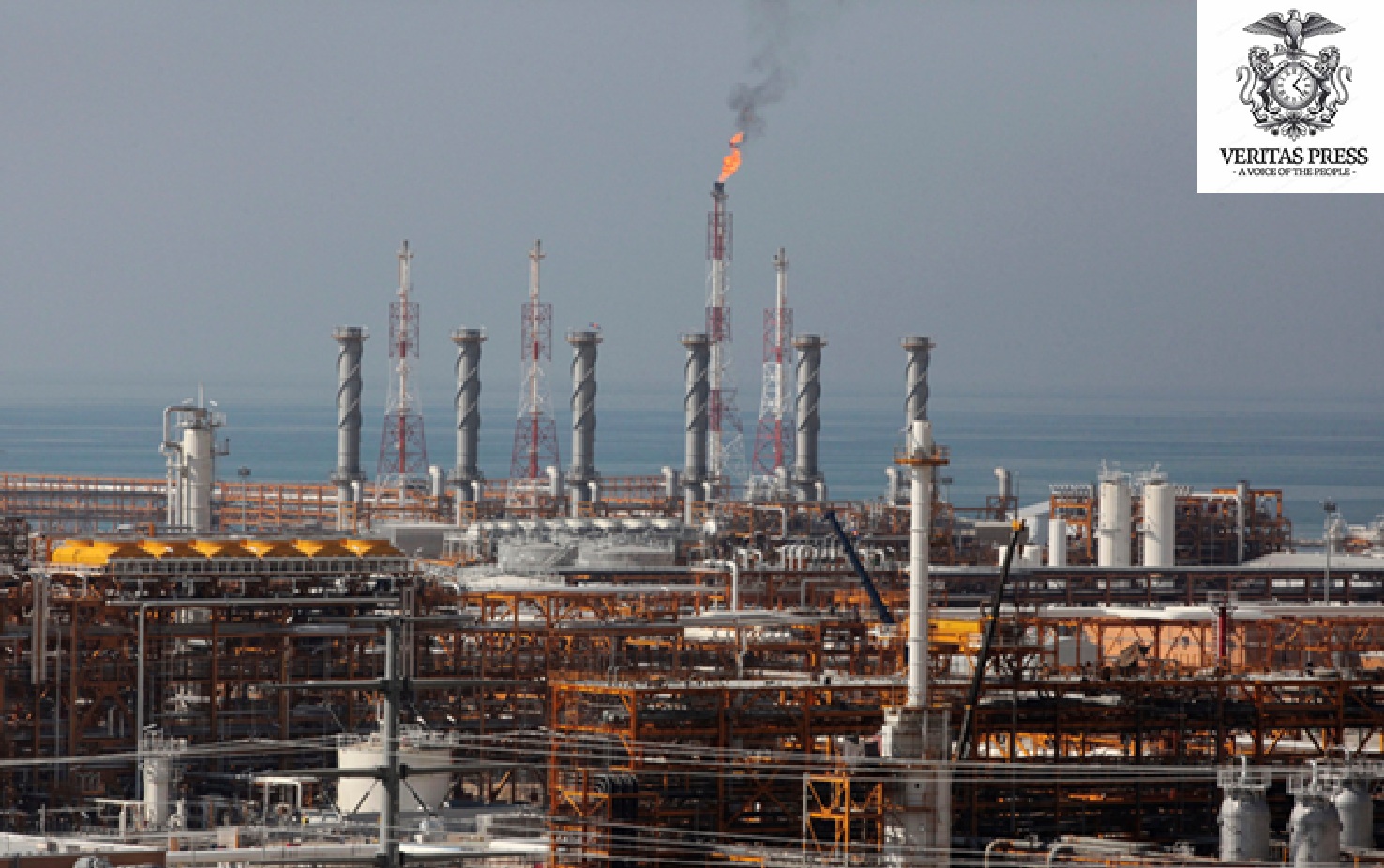
Iran’s Mehr news agency, which operates in close coordination with state security organs, published a map on Sunday identifying major power plants across Gulf countries, noting that “70% to 80% of the region’s major power plants are built along the Persian Gulf coastline and are within range of Iranian missiles.” The significance of this targeting is that desalination facilities are inextricably linked to power grids; without electricity, reverse osmosis and multi-stage flash distillation plants cease to function within hours.
Dr. Mohammed Al-Mahmoud, a Qatari water security expert who has advised the Gulf Cooperation Council, explained in an interview with Al Jazeera last week: “What the Iranian warning reveals is that they have conducted a granular analysis of our infrastructure dependencies. A desalination plant isn’t just a facility; it’s the difference between life and death for millions. Iran is saying: we are prepared to cross that threshold.”
The Strait Of Hormuz: Anatomy Of A Closure.
The immediate precipitant of the current crisis was Iran’s closure of the Strait of Hormuz to vessels affiliated with the United States, Israel, and their allies, a move initiated on February 28, following what Iran characterises as “unprovoked aggression” by the US and Israel. The strategic waterway, which at its narrowest point measures just 21 nautical miles across, typically handles approximately 20% of global oil consumption and 30% of liquefied natural gas trade.
Ali Mousavi, Iran’s representative to the International Maritime Organisation (IMO), articulated Tehran’s position with calculated ambiguity on Sunday: “Diplomacy remains Iran’s priority; however, a complete cessation of aggression and mutual trust and confidence are more essential.” The statement, carried by Mehr news, emphasised that the strait remains open to all vessels except those of “enemy” countries, a classification that Iran has defined to include the US, Israel, and what it terms their “allies.”
This selective closure represents an innovation in maritime warfare. Rather than a blanket blockade that would invite universal condemnation, Iran has implemented a system of coordinated access for friendly nations. According to shipping industry sources who spoke to Reuters on condition of anonymity, Iran has permitted China, India, and Pakistan to arrange secure passage for their vessels, effectively creating a parallel maritime governance structure that challenges the US-proclaimed freedom of navigation doctrine.
“The Iranians have turned the strait into a geopolitical filter,” says Captain John Konrad, founder of gCaptain, a maritime news outlet. “They’re not closing it to everyone; they’re demonstrating they can control who passes and who doesn’t. That’s a far more sophisticated message than simply blowing things up.”
Trump’s Ultimatum: 48 Hours And The Politics Of Escalation.
President Donald Trump’s Saturday ultimatum, demanding that Iran “FULLY OPEN, WITHOUT THREAT, the Strait of Hormuz, within 48 HOURS” or face strikes that would “obliterate” Iranian power plants, represents one of the most dramatic escalations since the conflict began. The social media declaration came barely a day after Trump had spoken of “winding down” the war, leaving analysts and allies alike struggling to interpret US strategic intent.
The 48-hour ultimatum carries particular significance. Under international law and maritime conventions, Iran’s closure of the strait to enemy-affiliated vessels occupies a legal grey zone, neither a full blockade nor an open waterway. Trump’s demand for “full” opening without conditions essentially demands that Iran abandon its core strategic position without any reciprocal concessions.
“What we’re witnessing is not strategy but improvisation,” says Dr. Vali Nasr, professor of international affairs at Johns Hopkins University. “The administration appears to be lurching between escalation and de-escalation, driven by domestic political pressures rather than any coherent theory of victory. The 48-hour ultimatum is a gamble, a bet that the threat of overwhelming force will compel Iranian capitulation. But Iran has spent forty years developing precisely the asymmetric capabilities to respond to such threats.”
The domestic context cannot be overstated. With energy prices surging, European gas prices jumped as much as 35% last week, and inflation emerging as a political liability ahead of November’s midterm elections, Trump faces mounting pressure to resolve the crisis on terms that demonstrate American strength. Yet the administration’s inability to assemble a coalition for Strait security operations reveals the limits of US power projection.
A senior European diplomatic source, speaking to this reporter on condition of anonymity, described the situation as “profoundly frustrating”: “The United States created this crisis without consulting its allies. Now they expect us to contribute forces to resolve it, but without any clarity on what the endgame actually is. What does ‘victory’ look like here? Regime change in Tehran? A negotiated settlement? No one in Washington seems able to answer that question.”
The Diego Garcia Strike: A Strategic Watershed.
Perhaps the most significant military development in recent days was Iran’s launch of two 4,000-kilometre range ballistic missiles at the US-British military base at Diego Garcia in the Indian Ocean. According to Israeli military chief Eyal Zamir, this marked the first time Iran has employed long-range missiles since the conflict began on February 28.
The selection of Diego Garcia is strategically significant. The remote atoll, leased by the UK to the United States, serves as a critical logistics hub for US military operations across the Indian Ocean and the Middle East. More importantly, its location, approximately 3,800 kilometres from Iran’s coast, demonstrates a reach capability that fundamentally alters regional threat perceptions.
“These missiles are not intended to strike Israel,” Zamir said in a statement on Saturday. “Their range reaches European capitals, Berlin, Paris, and Rome are all within direct threat range.” The statement was both a factual observation and a signal to European powers that their reluctance to join the US-led coalition carries its own risks.
A source at Britain’s defence ministry, speaking on condition of anonymity, confirmed that the Diego Garcia attack occurred before the UK government had given specific authorisation for US forces to use British bases for strikes on Iranian missile sites. The timing raises questions about whether Iran’s targeting was calibrated to exploit a window of allied coordination gaps.
The Dimona Strike: Proximity To The Nuclear Threshold.
Iran’s missile strikes on the southern Israeli cities of Dimona and Arad late Saturday, which injured dozens, including children, introduced a new level of risk to the conflict. Dimona is home to Israel’s Negev Nuclear Research Centre, a facility widely believed to house Israel’s nuclear weapons program, located approximately 13 kilometres southeast of the city.
The Israeli military’s admission that its air defences did not intercept the strikes, with Brigadier General Effie Defrin stating in a post on X that “We will investigate the incident and learn from it”, represents a significant operational failure for a military that has long prided itself on air defence superiority.
“This has been a very difficult evening in the battle for our future,” Israeli Prime Minister Benjamin Netanyahu said in a statement following the strike on Arad. The language, “battle for our future”, reflects the existential framing that Israeli leadership has adopted as the conflict expands.
Iran’s Revolutionary Guards described the strikes in a statement early Sunday as targeting “military installations” and security centres, not civilian areas. Yet the proximity to residential neighbourhoods in Arad and the reported injuries to children complicate this narrative. Independent verification of the targets remains limited due to Israeli military censorship of operational details.
Dr. Emily Landau, a senior research fellow at the Institute for National Security Studies in Tel Aviv, observed: “Iran is testing Israel’s red lines. They’ve now struck close to Dimona without triggering an overwhelming Israeli response, at least not yet. The question is whether this is the beginning of a pattern of testing, or whether we’re seeing the opening stages of a sustained campaign against Israel’s most sensitive sites.”
The Natanz Attack: Striking At The Nuclear Heart.
Iranian media reported Saturday morning that US and Israeli forces had attacked the Shahid Ahmadi-Roshan Natanz enrichment complex, one of Iran’s most heavily fortified nuclear facilities. The strike, if confirmed, would represent a significant escalation in direct attacks on Iran’s nuclear infrastructure.
Technical experts dispatched to the site found no radioactive leaks, and Iranian authorities assured nearby residents they were not at risk. The International Atomic Energy Agency (IAEA) confirmed it was investigating the incident, though the agency’s ability to conduct independent assessments in a conflict zone remains severely constrained.
Israeli officials, maintaining their policy of ambiguity regarding operations against Iran’s nuclear program, stated they were unaware of such a strike. The denial follows a long-standing Israeli pattern of neither confirming nor denying operations intended to degrade Iran’s nuclear capabilities.
The Natanz complex has been targeted before, including a 2020 explosion that Iran attributed to Israeli sabotage, but never in the context of an open, declared war. The strike, if confirmed, would represent the first overt attack on Iranian nuclear facilities since the current conflict began.
Kharg Island: The Strategic Prize.
Iranian media also reported strikes on a passenger terminal in the southern port of Bushehr and an empty passenger ship at nearby Kharg Island. The latter is particularly significant: Kharg Island serves as Iran’s primary oil export terminal, handling approximately 90% of the country’s crude exports before the current conflict.
US officials have reportedly considered plans to occupy or blockade Kharg Island as a means of pressuring Tehran to reopen the strait. The island’s strategic importance cannot be overstated; it is Iran’s economic jugular. A US seizure of Kharg would represent not merely an escalation but a fundamental transformation of the conflict from aerial bombardment to territorial occupation.
“The conversation about Kharg Island is where the war becomes potentially uncontainable,” says retired Admiral James Stavridis, former NATO Supreme Allied Commander Europe. “Seizing Iranian territory, even uninhabited islands, crosses a threshold that Iran would almost certainly respond to with attacks on US forces throughout the region, and quite possibly with direct strikes on Gulf Arab states that host US forces.”
Iran appears to anticipate such a scenario. The attacks on US bases in the United Arab Emirates and Kuwait that Iran claimed this week, using drones against facilities it says were used to stage attacks on Iranian islands, demonstrate a proactive approach to disrupting US operational logistics.
The Coalition Challenge: NATO’s Reluctance.
President Trump’s frustration with NATO allies has been a consistent theme throughout the crisis. His accusation that allies have demonstrated “cowardice” over their reluctance to help open the strait reflects a genuine strategic problem: the United States is fighting a war that its traditional partners are unwilling to join.
The reasons for this reluctance are multiple. European powers, still recovering from the energy shocks of Russia’s war on Ukraine, are acutely sensitive to disruptions in Gulf energy supplies. Germany, France, and the UK have all declined to contribute naval assets to Strait security operations, though they have provided diplomatic support for US positions at the United Nations.
More fundamentally, however, European capitals question the legal basis and strategic rationale for the conflict. The US-Israeli attacks on Iran that began on February 28 were launched without UN Security Council authorisation and without prior consultation with key allies. European leaders, many of whom have invested years in diplomatic efforts to contain Iran’s nuclear program through the JCPOA framework, are reluctant to validate an approach they view as strategically reckless.
A European diplomat, speaking on condition of anonymity, told this reporter: “There is a fundamental disagreement about what constitutes strategy. Washington appears to believe that maximum pressure will force the Iranian collapse. We believe it will produce Iranian proliferation. These are not compatible views.”
The Saudi Dimension: Riyadh’s Precarious Position.
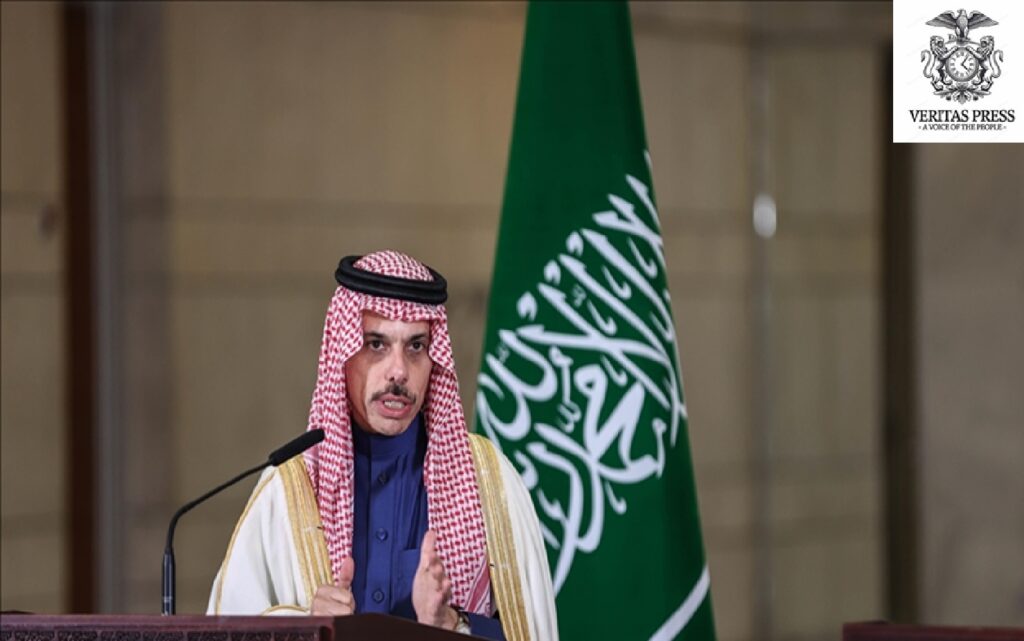
Saudi Arabia’s decision on Saturday to order Iran’s military attache and four other Iranian diplomats to leave the country represents a significant diplomatic escalation. The move, announced without public explanation, appears linked to Iranian drone attacks on US bases in the UAE, attacks that inevitably implicate Saudi security as well.
Yet Saudi Arabia’s position remains extraordinarily delicate. The kingdom’s desalination facilities, concentrated along the Gulf coast, are among the most exposed targets in Iran’s crosshairs. Saudi water security depends almost entirely on desalination plants that Iran has now explicitly threatened to destroy.
“The Saudis are trapped between their alliance with the United States and their physical vulnerability to Iranian retaliation,” says Dr. Karen Young, a senior fellow at the Middle East Institute. “They cannot afford to be seen as complicit in an American war on Iran that will directly target their own infrastructure. At the same time, they cannot simply stand aside if the US is attacked.”
The kingdom’s oil infrastructure remains a potential target as well. The 2019 Abqaiq–Khurais attack, which temporarily knocked out half of Saudi oil production, demonstrated both Iranian capability and the limits of US-provided air defence. A repeat in the context of open war would have devastating consequences for global energy markets.
The Human Toll: Beyond Geopolitical Calculations.
Amid the strategic analyses and military assessments, the human cost of the conflict continues to mount. According to figures cited in the narratives provided, more than 2,000 people have been killed during the war, a number that likely undercounts actual casualties given the challenges of verification in active conflict zones.
In Israel, fifteen people have been killed in Iranian strikes. In Iran, strikes on residential areas have killed civilians, including three members of a family killed in a strike on a residential building in Ramsar, according to Iranian media.
The psychological impact on civilians in the region is profound. In Gulf Arab states, residents face the prospect of water shortages, power outages, and economic disruption. In Iran, economic sanctions and direct strikes have crippled infrastructure and displaced thousands. In Israel, the expansion of missile range has brought the entire country within Iran’s targeting envelope.
Dr. Layla Al-Hassan, a psychologist based in Dubai who has been treating patients experiencing acute anxiety related to the conflict, described the situation as “a collective trauma”: “People here are not just worried about a missile hitting their building. They’re worried about what happens when the desalination plants stop working. They’re worried about whether they can get their medications, whether the schools will stay open, and whether they’ll be able to leave if they need to. The uncertainty is the hardest part.”
Energy Markets: The Economic Weapon.
The near-closure of the Strait of Hormuz has triggered a surge in energy prices that is already reverberating through the global economy. European gas prices jumped as much as 35% last week, with further increases likely as winter approaches and storage levels remain uncertain.
The economic impact is asymmetrically distributed. European economies, still adjusting to the loss of Russian pipeline gas, face particular vulnerability to disruptions in LNG shipments from Qatar, which must transit the strait. Asian economies, heavily dependent on Gulf oil, face similar exposure.
Trump’s offer of political risk insurance for tankers transiting the strait reflects the administration’s awareness that private shipping companies are unwilling to risk vessels and crews in a conflict zone without guarantees. Yet insurance alone cannot address the fundamental problem: Iran has demonstrated its ability to interdict shipping selectively, targeting vessels affiliated with adversaries while allowing others to pass.
The strategic implications extend beyond energy markets. If Iran can successfully implement a selective closure of the strait, permitting Chinese and Indian vessels while denying passage to US and Israeli-affiliated ships, it effectively demonstrates that the US Navy cannot guarantee freedom of navigation for its own vessels in a critical global chokepoint.
The Nuclear Dimension: A Crisis Within A Crisis.
The attack on the Natanz enrichment complex raises the spectre of Iranian nuclear escalation. For years, the strategic logic of the US-Israeli approach to Iran’s nuclear program has been to prevent Tehran from achieving weapons capability. Yet the current conflict may be producing precisely the outcome it was intended to prevent.
Iran has consistently maintained that its nuclear program is peaceful, though Western intelligence agencies assess that Iran conducted weapons-related work until 2003 and has maintained the capability to produce nuclear weapons if it chooses. The JCPOA framework, negotiated during the Obama administration and abandoned by Trump in 2018, was designed to constrain Iran’s nuclear program in exchange for sanctions relief.
With the JCPOA effectively dead and Iran under direct attack, the incentives for nuclear escalation are clear. If Iran perceives that its nuclear facilities are being systematically destroyed, the logic of crossing the threshold to weapons possession becomes compelling.
“The greatest irony of this conflict is that it may be the thing that finally pushes Iran to build a nuclear weapon,” says Dr. Trita Parsi, executive vice president of the Quincy Institute for Responsible Statecraft. “The Iranian regime, whatever its faults, has demonstrated remarkable strategic patience in keeping its program below the weapons threshold. But if the regime believes its survival is at stake, all bets are off.”
Diplomatic Paralysis: The Failure Of International Institutions.
The conflict has exposed the profound limitations of international institutions to manage great power conflict in the Middle East. The United Nations Security Council has been paralysed, with Russia and China unwilling to support US-backed resolutions and the US unwilling to accept any resolution that does not explicitly condemn Iran.
The International Maritime Organisation, where Iran’s representative Mousavi has presented Tehran’s position, lacks enforcement mechanisms adequate to the crisis. The IAEA can investigate attacks on nuclear facilities but cannot prevent them.
Perhaps most significantly, the conflict has demonstrated the failure of the US-led post-Cold War order to prevent or contain regional wars. The United States, despite its overwhelming military superiority, has been unable to compel Iranian compliance with its demands. Iran, despite its asymmetric capabilities, has been unable to force a US withdrawal from the region.
“We are witnessing the bankruptcy of both deterrence and coercion as strategic frameworks,” says Dr. Emile Hokayem, senior fellow for Middle East security at the International Institute for Strategic Studies. “Neither side can achieve its objectives through military means, yet neither side can afford to back down without appearing weak. This is the classic formula for protracted conflict.”
The Water War: A New Strategic Framework.
The threat to target water desalination facilities represents a qualitative shift in Gulf security. For the first time, a regional power has explicitly threatened to weaponise the most fundamental requirement for human survival.
The implications extend far beyond the immediate conflict. Even if a ceasefire is negotiated, the mere fact that Iran has publicly identified water infrastructure as a target changes the strategic calculus for Gulf states. The construction of new desalination plants, the development of strategic water reserves, and the hardening of existing facilities against attack will become urgent priorities, at enormous cost.
Dr. Marcus Dubois King, a water security expert at Georgetown University, argues that the threat represents a form of “hydro-terrorism” that requires a rethinking of regional security architecture: “Water infrastructure has historically been considered off-limits in armed conflict, protected by the Geneva Conventions and international humanitarian law. Iran’s explicit threat to target these facilities signals a willingness to abandon these norms. The Gulf states cannot simply rely on international law to protect them; they need physical, operational, and diplomatic defences.”
The environmental consequences of a successful attack on a desalination plant are also severe. The release of concentrated brine and chemicals into Gulf waters would cause lasting damage to already stressed marine ecosystems. The Gulf’s shallow, enclosed nature means that pollutants would circulate for years, affecting fisheries, desalination intake for other plants, and coastal communities.
Local Voices: On The Ground In The Gulf.
The narratives provided in the source materials are largely official statements from Iranian military spokesmen, Israeli officials, and US presidential social media posts. But the human reality of the conflict is told in smaller, more intimate moments.
A taxi driver in Dubai, who gave his name only as Mohammed, described the atmosphere in the city: “Three weeks ago, people were talking about real estate prices and the new restaurants opening. Now everyone is talking about how long the water will last if the plants are hit. People are buying bottled water, not just a few bottles, but pallets. The supermarkets can’t keep it in stock.”
In Kuwait City, a government official who spoke on condition of anonymity described the planning underway: “We have always had emergency plans for water shortages, but they were designed for technical failures or natural disasters, not for someone deliberately bombing the plants. The scenarios we’re running now are things we never thought we’d have to consider.”
In Tehran, a university professor who requested anonymity for security reasons described a city on edge: “The strikes are getting closer. People are trying to maintain normal routines, but everyone knows someone who has left the city or who is thinking about it. The economic pressure was already terrible. Now the fear is that basic infrastructure, electricity, water, could be gone in an instant.”
Media Coverage And Information Warfare:
The conflict is being fought not only with missiles and drones but with narratives and information. The competing claims, about who struck what, when, and with what consequences, create a fog of war that makes objective assessment difficult.
Mehr News Agency’s publication of a map showing potential targets in Gulf countries, accompanied by the headline “Say goodbye to electricity,” represents a form of psychological warfare designed to terrorise civilian populations and pressure governments. The explicit language, “with the smallest attack” on Iranian power infrastructure, “the entire region will fall into darkness”, is intended to create panic and uncertainty.
Similarly, US and Israeli statements about Iranian missile ranges serve to communicate threat capabilities to European audiences. The claim that Iranian missiles can reach Berlin, Paris, and Rome is both a factual assertion and a message to European governments about the stakes of non-participation.
Journalists covering the conflict face extraordinary challenges. Access to conflict zones is restricted, sources have incentives to provide selective information, and the rapid pace of events makes verification difficult. The result is an information environment in which claims and counterclaims proliferate without adequate filtering.
Strategic Analysis: The Logic Of Mutual Vulnerability.
What emerges from an examination of the current situation is a picture of mutual vulnerability that neither side has fully acknowledged. The United States and Israel can inflict devastating damage on Iranian infrastructure, but they cannot prevent Iran from responding in kind against targets, including desalination plants, that would cause catastrophic harm to US allies and potentially draw the US into a wider war.
Iran, for its part, can disrupt global energy markets and threaten Gulf infrastructure, but it cannot survive a sustained US-Israeli campaign against its nuclear program, military capabilities, and economic infrastructure. The regime’s survival depends on its ability to impose costs that outweigh the benefits of continued attacks.
The classic logic of deterrence suggests that such mutual vulnerability should produce restraint. Yet the current conflict has continued to escalate, with each side apparently believing that additional pressure will compel the other to concede.
“The problem is that both sides have committed to positions that are fundamentally incompatible,” says Dr. Kenneth Pollack, a former CIA analyst and National Security Council official. “The US demands that Iran open the Strait without conditions and stop its attacks on US forces. Iran demands that the US and Israel stop attacking Iranian territory. Neither side can accept the other’s demands without appearing to lose face. And face, in this region, is not a trivial matter; it is the currency of political survival.”
Scenarios And Projections:
As the conflict enters its fourth week, several scenarios present themselves:
Scenario One: Escalation to Full-Scale War
A US strike on Iranian power plants, as threatened by Trump, triggers Iranian retaliation against Gulf desalination and energy infrastructure. The US responds with attacks on Iranian military facilities. The conflict expands to include direct US-Iranian ground combat, possibly including an assault on Kharg Island. Oil prices surge to historic highs, triggering a global recession.
Scenario Two: Negotiated De-escalation
Diplomatic efforts, possibly mediated by China or Russia, produce a framework for mutual de-escalation. Iran permits the resumption of strait traffic in exchange for a US commitment to cease strikes on Iranian territory. The JCPOA is revived as a framework for nuclear constraints in exchange for sanctions relief.
Scenario Three: Protracted Conflict
Neither side escalates to full-scale war, but neither agrees to de-escalate. The conflict settles into a pattern of periodic strikes, cyber operations, and maritime interdictions. Energy markets remain volatile. Gulf states invest heavily in infrastructure hardening and alternative supply routes. The regional security environment remains unstable indefinitely.
Scenario Four: Iranian Nuclear Breakout
Facing existential threats, Iran decides to cross the nuclear threshold. The regime conducts a nuclear test, triggering an even more severe crisis. Israel faces the prospect of a nuclear-armed Iran. The US confronts the failure of its Iran policy. The international community faces a proliferation cascade as regional powers reconsider their nuclear options.
Conclusion: The Water’s Edge.
The threat to target water desalination facilities may prove to be the moment when the current conflict is remembered, if it is remembered at all, as the point at which warfare in the Gulf fundamentally changed. By introducing the weaponisation of water into strategic calculations, Iran has lowered a threshold that, once crossed, cannot be uncrossed.
For the Gulf Arab states, the implications are existential. The desalination plants that line their coasts are not merely infrastructure; they are the difference between habitation and desert, between civilisation and abandonment. The knowledge that these facilities are now explicitly in the crosshairs of Iranian missiles will shape every aspect of Gulf security policy for decades to come.
For the United States, the crisis represents the culmination of decades of strategic drift in the Middle East. Having abandoned diplomatic frameworks like the JCPOA in favour of maximum pressure, the US now finds itself in a war it cannot easily win, with allies who will not join it, facing an adversary who has demonstrated both the capability and the will to impose catastrophic costs.
For Iran, the warning issued by Lieutenant Colonel Zolfaqari is both a threat and an acknowledgement of vulnerability. Iran can destroy its neighbours’ water supply, but it cannot protect its own energy infrastructure from US and Israeli strikes. The logic of mutual vulnerability that has shaped nuclear strategy for decades now applies to the most basic human necessity.
As the 48-hour ultimatum expired and the world waited to see whether Trump would make good on his threat to “obliterate” Iranian power plants, residents of Gulf cities faced an uncertain dawn. The water in their taps flowed freely, for now. But the knowledge that the flow could stop, with no warning and no recourse, had transformed the region’s relationship with its most taken-for-granted resource.
“We have always known that water was precious in this region,” said the Kuwaiti official, speaking quietly after a long day of emergency planning. “We just never imagined that someone would threaten to take it away from us all at once. That’s not war. That’s something else entirely. And I’m not sure we have a name for it yet.”
Source: Multiple News Agencies
Submissions:
For The Secure Submission Of Documentation, Testimonies, Or Exclusive Investigative Reports From Any Global Location, Please Utilise The Following Contact Details For Our Investigations Desk: enquiries@veritaspress.co.uk or editor@veritaspress.co.uk
Help Support Our Work:
Popular Information is powered by readers who believe that truth still matters. When just a few more people step up to support this work, it means more lies exposed, more corruption uncovered, and more accountability where it’s long overdue.
Help Protect Independent Journalism, Which Is Currently Under Attack.
If you believe journalism should serve the public, not the powerful, and you’re in a position to help, becoming a DONATOR or a PAID SUBSCRIBER truly makes a difference.
DONATION APPEAL: If You Found This Reporting Valuable, Please Consider Supporting Independent Journalism.
Help Support Our Work – We Know, We Know, We Know …
Seeing these messages is annoying. We know that. (Imagine what it’s like writing them … )
Your support fuels our fearless, truth-driven journalism. In unity, we endeavour to amplify marginalised voices and champion justice, irrespective of geographical location.
But it’s also extremely important. One of Veritas Press’s greatest assets is its reader-funded model.
1. Reader funding means we can cover what we like. We’re not beholden to the political whims of a billionaire owner. We are a small, independent and impartial organisation. No one can tell us what not to say or what not to report.
2. Reader funding means we don’t have to chase clicks and traffic. We’re not desperately seeking your attention for its own sake: we pursue the stories that our editorial team deems important and believe are worthy of your time.
3. Reader Funding: enables us to keep our website and other social media channels open, allowing as many people as possible to access quality journalism from around the world, particularly those in places where the free press is under threat.
We know not everyone can afford to pay for news, but if you’ve been meaning to support us, now’s the time.
Your donation goes a long way. It helps us:
- Keep the lights on and sustain our day-to-day operations
- Hire new, talented independent reporters
- Launch real-time live debates, community-focused shows, and on-the-ground reporting
- Cover the issues that matter most to our communities, in real time, with depth and integrity
We have plans to expand our work, but we can’t do it without your support. Every contribution, no matter the size, helps us stay independent and build a truly people-powered media platform. If you believe in journalism that informs, empowers, and reflects the communities we serve, please donate today.
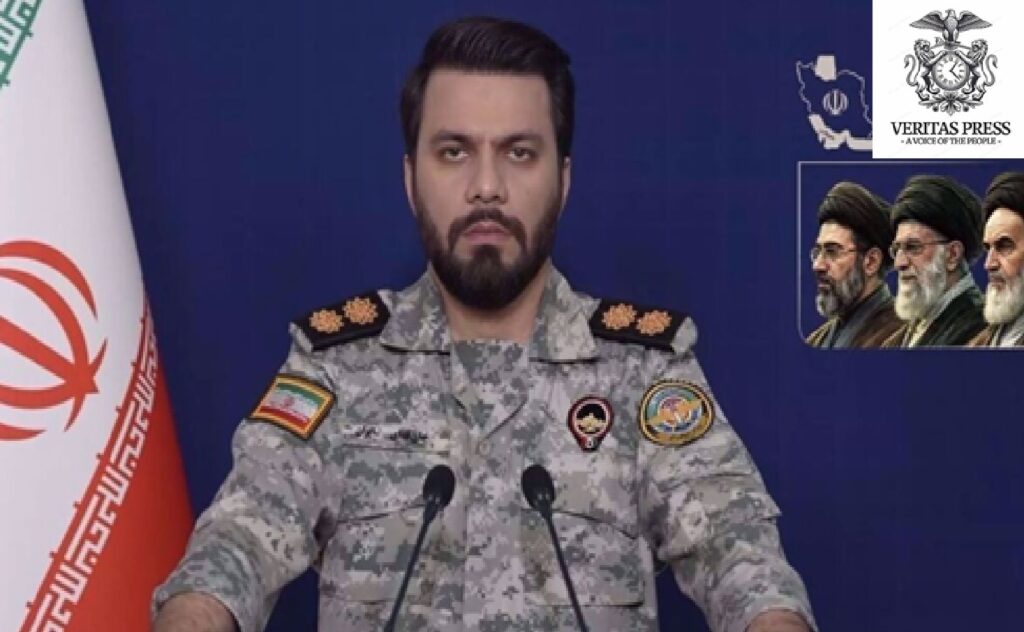
When Lieutenant Colonel Ebrahim Zolfaqari, spokesman for Iran’s Khatam al-Anbiya Central Headquarters, issued a warning
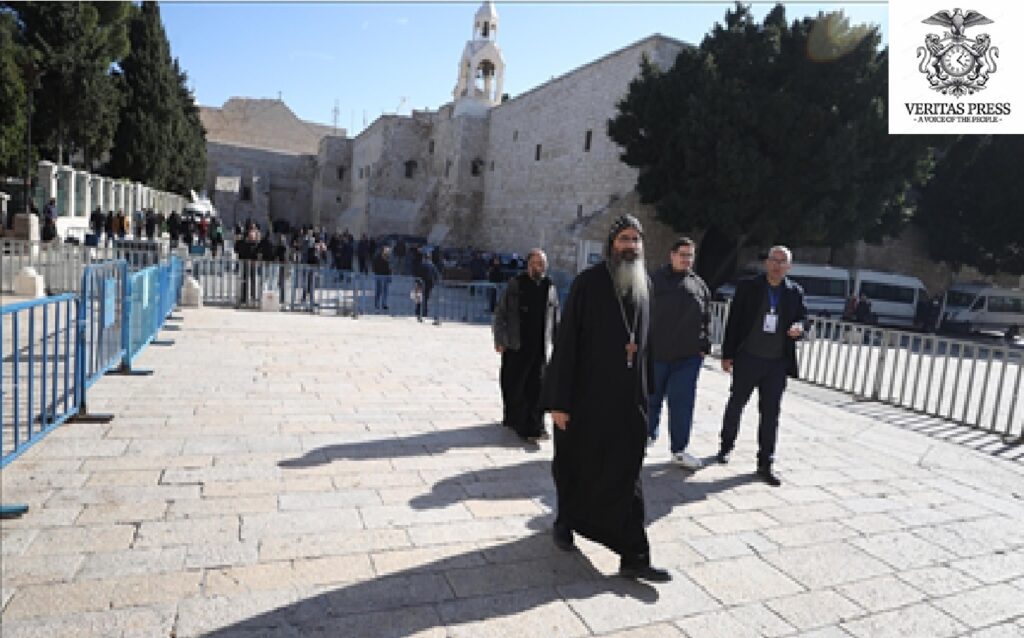
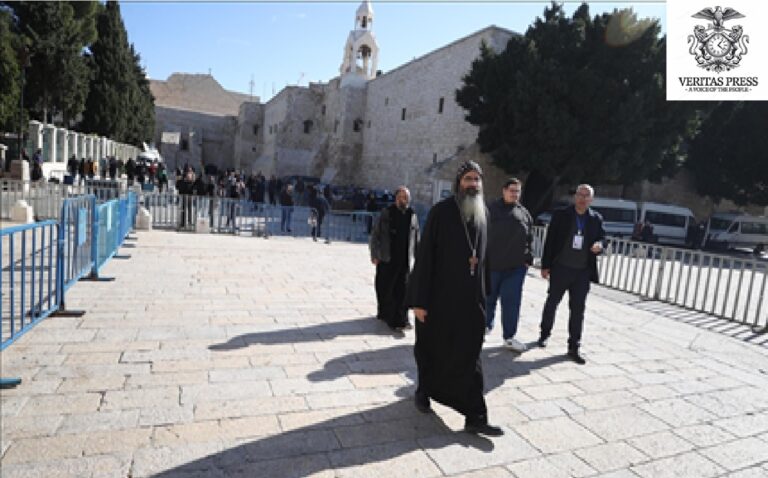
The historic Christian presence in Palestine, dating back to the earliest centuries of Christianity, is
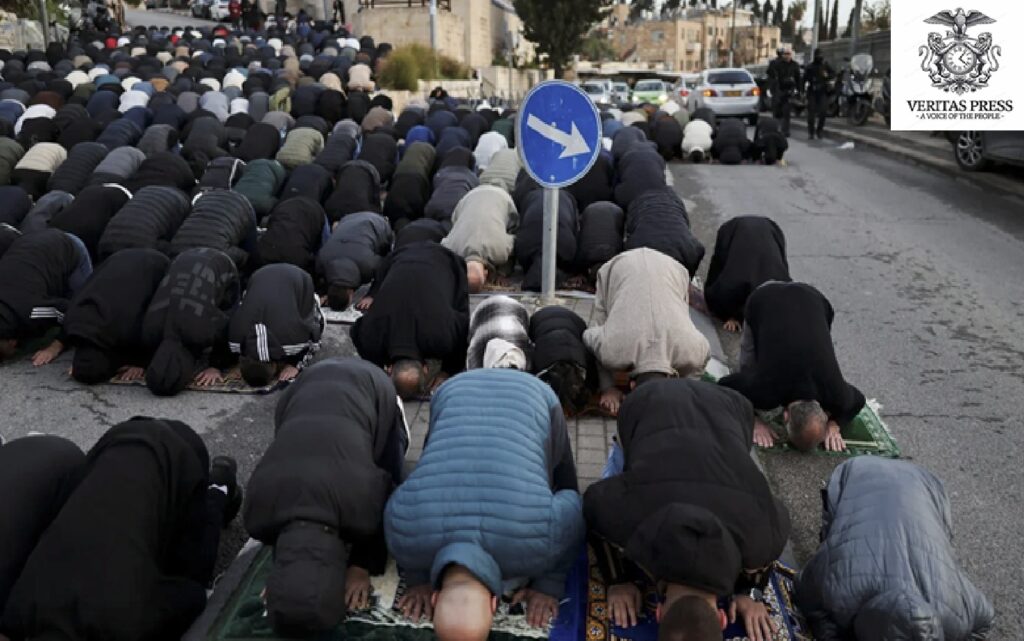
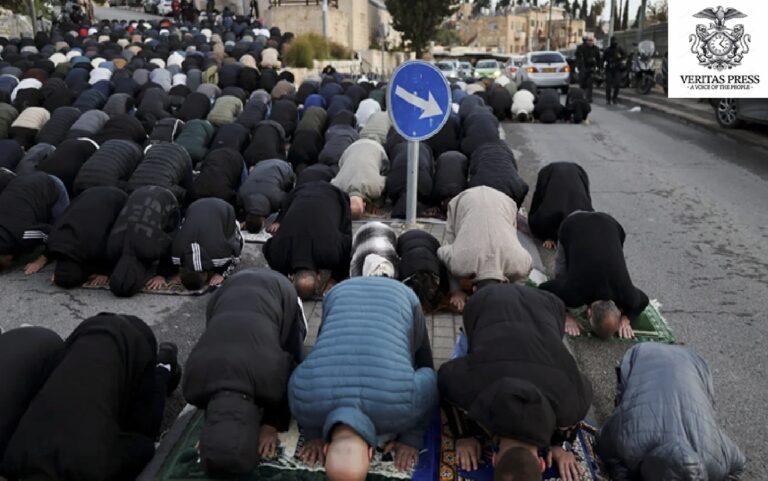
JERUSALEM – For the first time since the aftermath of the Six-Day War, the courtyards
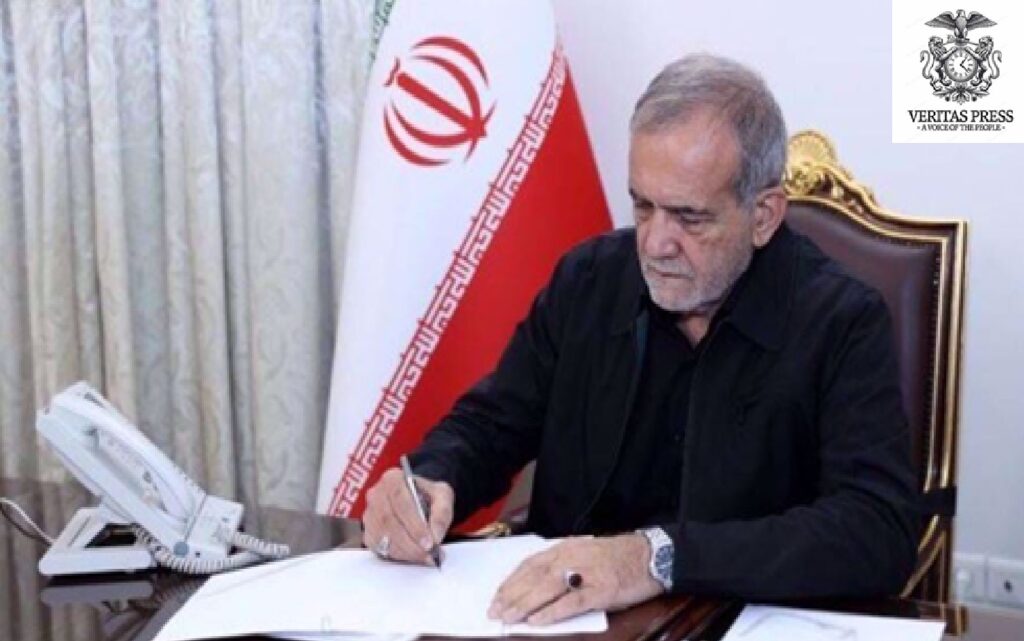
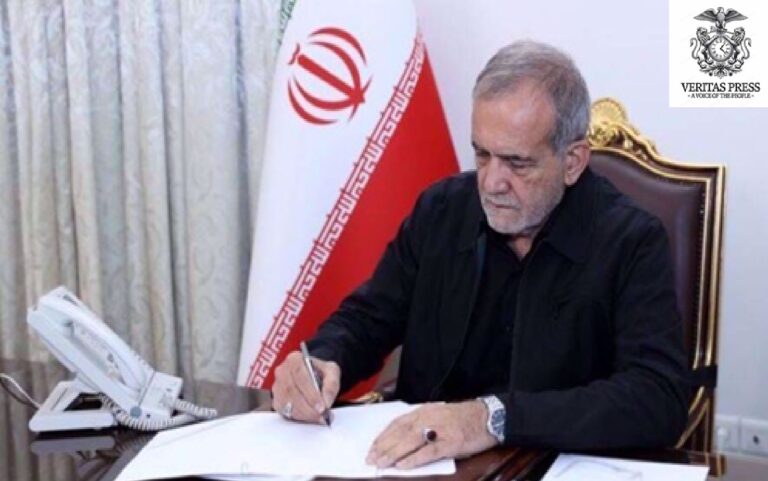
TEHRAN – As the sun rose on Eid al-Fitr, a day meant for celebration and
HUNGARY – As Benjamin Netanyahu prepares to travel to Hungary this weekend, a mounting legal
LONDON — In the polished corridors of 10 Downing Street, the language remains meticulously calibrated:
On March 20, 2026, the Pentagon quietly announced what amounts to a fundamental restructuring of
WASHINGTON / ISLAMABAD — A fresh warning by US Director of National Intelligence Tulsi Gabbard
For the first time since the US-Israeli campaign against Iran began on February 28, the
Tensions across the Gulf have escalated to levels not seen in decades, as Saudi Arabia