

Original Article Date Published:
Article Date Modified:
The End Of An Era:
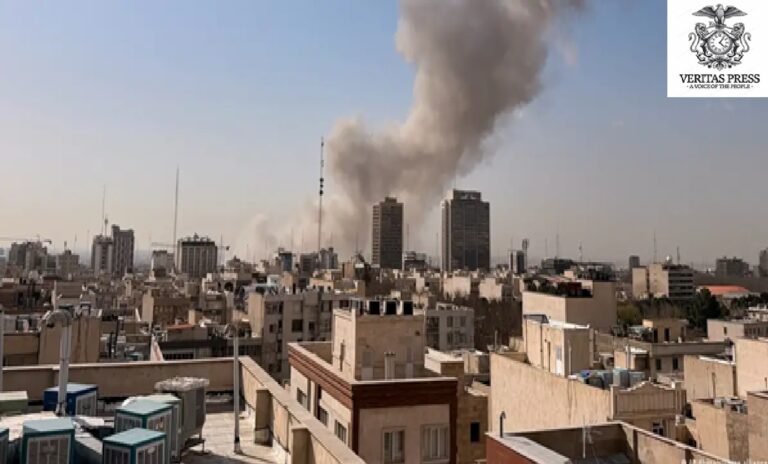
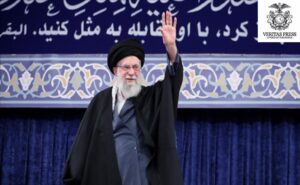
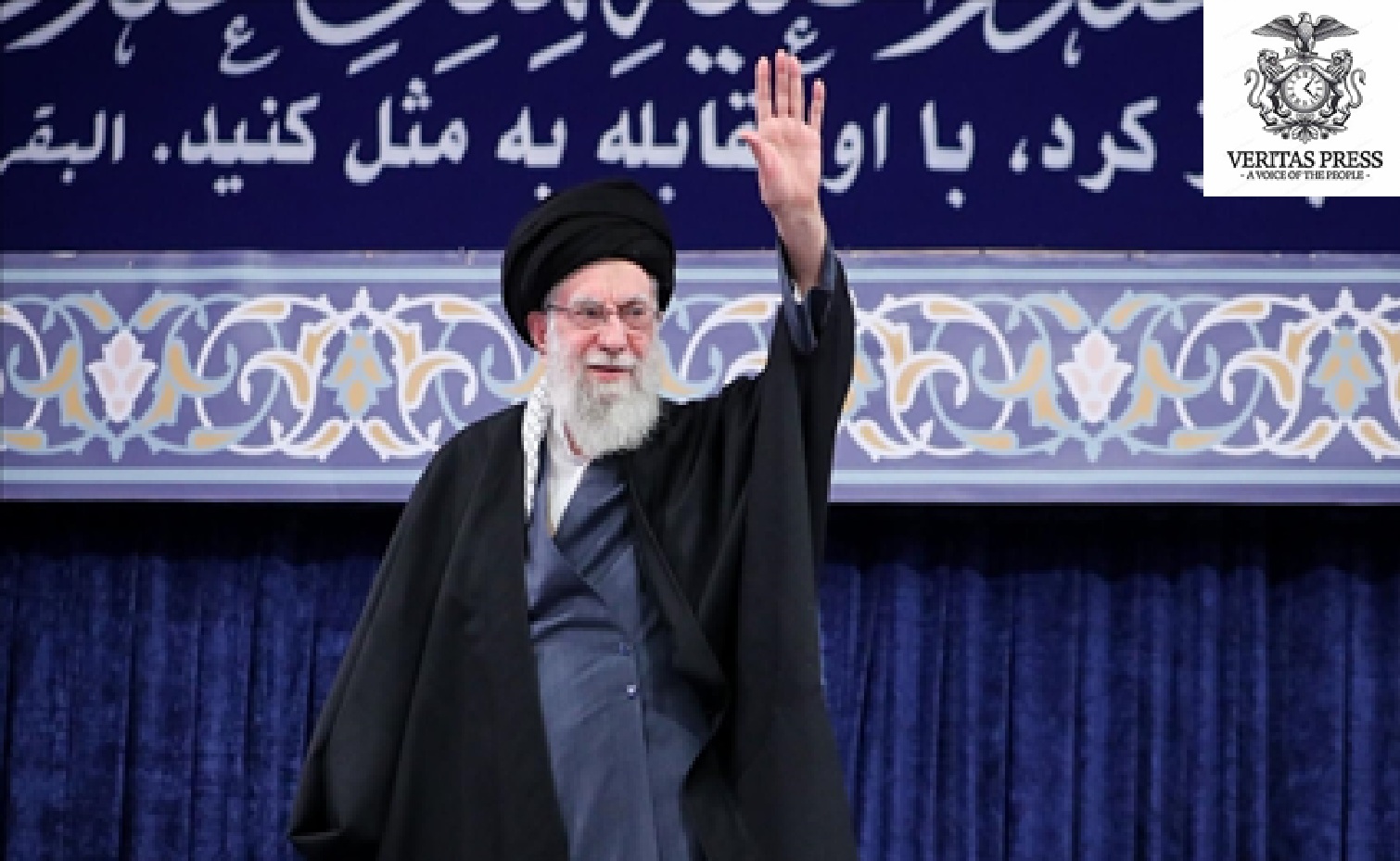
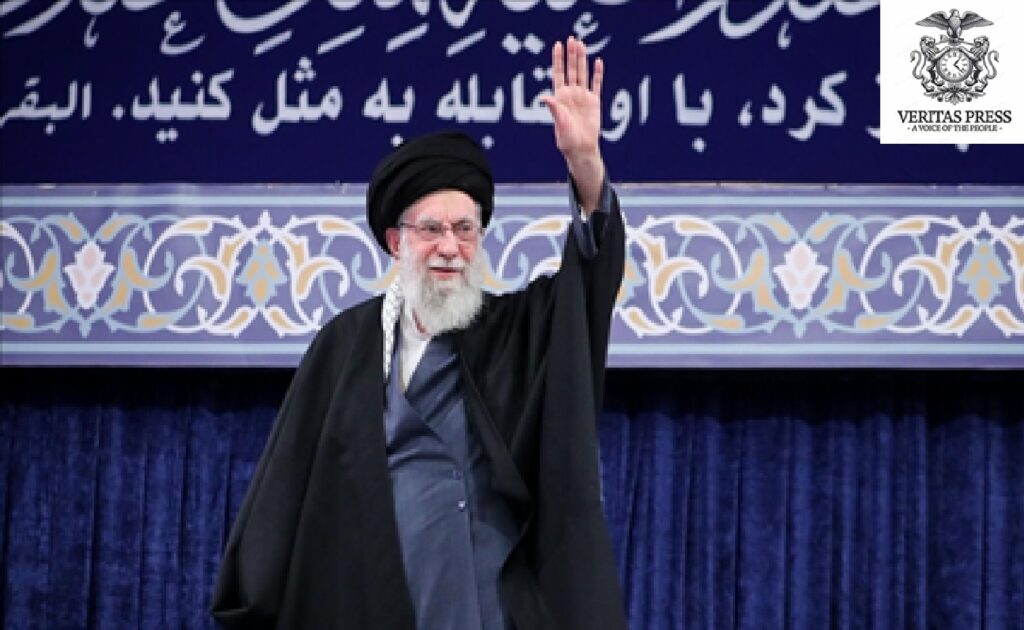
TEHRAN, IRAN – At 5:00 a.m. on Sunday, March 1, 2026, Iranian state television did something it had not done in nearly four decades: it announced the death of a supreme leader. The screen displayed archive images of Ayatollah Ali Khamenei beneath a black mourning banner, as a presenter recited the Quranic verse, “To Allah we belong, and to Him we shall return”. The 86-year-old cleric, who had ruled Iran with an iron grip since 1989, had been killed in a coordinated American-Israeli bombardment that targeted his compound in Tehran.
The confirmation came hours after U.S. President Donald Trump took to his Truth Social platform to declare that “Khamenei, one of the most evil people in History, is dead”, an announcement that caught many in the intelligence community off guard, not because of the news itself, but because the American president had chosen to break it before official channels had been fully briefed. Within hours, Israel’s military confirmed that the operation, dubbed “Operation Epic Fury” by the Pentagon, had involved some 200 fighter jets striking 500 targets throughout Iran. It was the largest flying mission in Israeli history.
But beneath the headlines and the official statements lies a more complex and disturbing reality. The killing of Ali Khamenei is not merely a dramatic escalation in the long-running shadow war between Iran and the West; it is a fundamental rupture in the political order of the Middle East, one whose consequences are only beginning to unfold. This article reconstructs the events of those 48 hours, examines the immediate aftermath, and poses the critical questions that will shape the region’s future: Who will lead Iran? Will the regime collapse or consolidate? Has the United States, in pursuing regime change through military force, repeated the catastrophic mistakes of Iraq and Libya?
The Strike: Anatomy Of An Assassination.
The operation that killed Ali Khamenei did not begin on Saturday morning. According to senior U.S. officials who spoke to Reuters, it was the culmination of months of intelligence gathering, satellite tracking, and covert human intelligence on the ground. Trump later boasted that “intelligence and highly sophisticated tracking systems monitored Khamenei’s whereabouts,” adding that “there was not a thing he, or the other leaders that have been killed along with him, could do.”
The strikes began at approximately 8:30 a.m. Tehran time on Saturday, February 28. The first wave targeted air defence systems across Iran, clearing the path for subsequent strikes. The second wave hit what Israeli Prime Minister Benjamin Netanyahu later described as “the heart of Tehran”, the secure compound where Khamenei had been meeting with senior military commanders. Satellite imagery reviewed by news agencies showed significant damage to the compound.
Among those killed alongside Khamenei were his daughter, son-in-law, and granddaughter, according to the semi-official Fars news agency. Also confirmed dead were Iranian Defence Minister Amir Nasirzadeh, Revolutionary Guards commander Mohammad Pakpour, and top security official Ali Shamkhani. The Human Rights Activists News Agency (HRANA) reported that at least 133 civilians had been killed across 18 provinces, including 85 children at a girls’ primary school in the southern town of Minab. The Pentagon has not commented on the school strike.
Iran’s initial response was one of denial and confusion. An Iranian official was quoted by state media as saying that “the enemy is resorting to mental warfare”. Foreign Minister Seyed Abbas Araghchi insisted that almost all Iranian officials, “except one or two commanders,” were “safe and sound and alive”. But by early Sunday morning, the denials collapsed. State television confirmed what the world already knew.
In a statement issued after the confirmation, Iran’s Supreme National Security Council framed Khamenei’s death in explicitly religious terms, declaring that he had “joined the highest celestial abode after tasting the pleasant nectar of martyrdom in the holy month of Ramadan”. The council promised that his death would “mark the beginning of a great uprising in the fight against the world’s oppressors”.
The Response: Revenge, Mourning, And Celebration.
Tehran: A City Divided
In the streets of Tehran, the reaction was immediate and deeply divided. Witnesses reported groups of Iranians celebrating, waving pre-revolutionary flags, and chanting anti-regime slogans. Videos verified by the BBC showed gatherings in Tehran and the nearby city of Karaj. For a regime that had spent 47 years cultivating an image of unified popular support, the images were a stark reminder of the fractures beneath the surface.
But in other parts of the city, thousands gathered to mourn. Dressed in black and carrying portraits of Khamenei, they chanted “death to America” and “death to Israel”. State television broadcast images of the gatherings, seeking to project continuity and strength in a moment of profound uncertainty.
The Islamic Revolutionary Guard Corps (IRGC) moved quickly to channel the grief into a threat. In a statement posted to its official Telegram channel, the IRGC vowed “the most ferocious offensive operation in history” against the United States and Israel. “The hand of revenge of the Iranian nation will not rest,” the statement declared, “until a severe, decisive and regrettable punishment is delivered”.
Regional Shockwaves
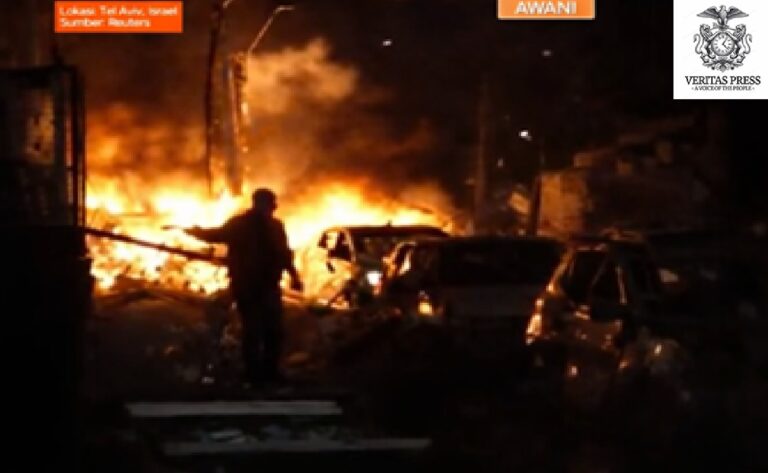
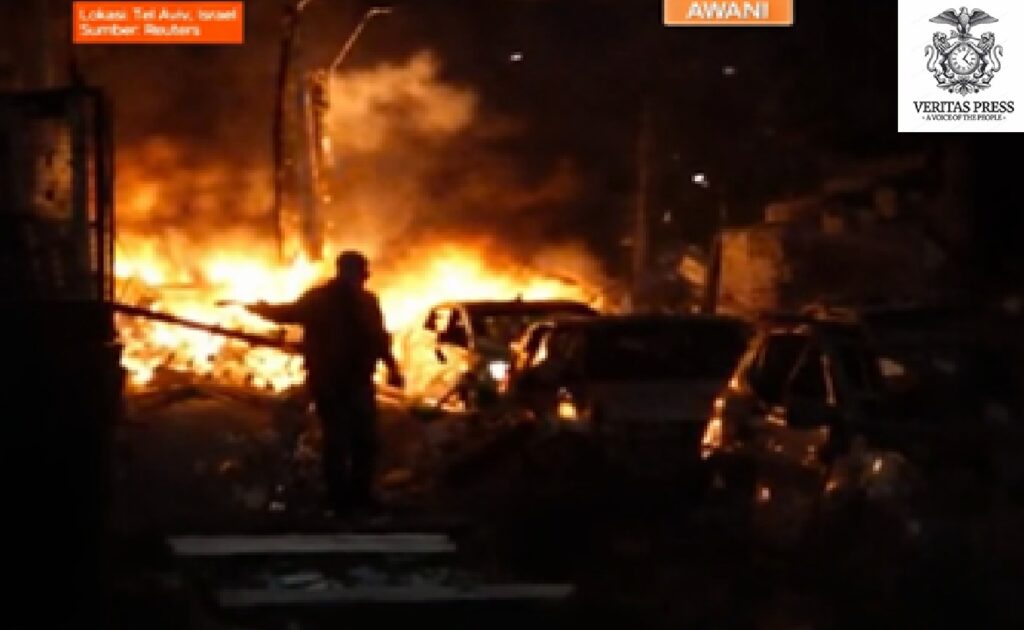
Within hours of Khamenei’s death being confirmed, Iran launched retaliatory strikes against Israel and U.S. bases across the Middle East. Explosions were reported over Doha, Dubai, Manama, and Erbil. Iranian state media announced that 27 U.S. military bases were being targeted, along with Israel’s military command headquarters and a defence complex in Tel Aviv.
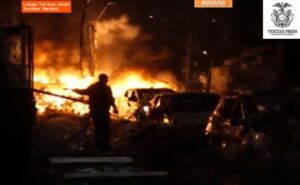
The strikes triggered panic across the region. In Tel Aviv, a 50-year-old woman was killed by a missile, the first fatality in Israel since the war began. In Abu Dhabi, shrapnel killed one person, and debris from aerial interceptions caused fires at Dubai’s main port and on the facade of the iconic Burj Al Arab hotel.
Airlines cancelled flights across the Middle East. The Strait of Hormuz, through which around a fifth of global oil consumption passes, was closed by Iranian forces. Traders braced for a sharp spike in oil prices.
The Global Reaction: Allies, Adversaries, And The Uncommitted.
The United States: Cheers and Warnings
In the United States, reaction to Khamenei’s death split sharply along political and ethnic lines. In Los Angeles, home to one of the largest Iranian diaspora communities in the world, thousands took to the streets in celebration. They waved pre-revolutionary flags and posters bearing Trump’s image; some wore T-shirts reading “Liberate Iran”. Roozbeh Farahanipour, a 54-year-old restaurant owner in the city’s “Little Tehran” neighbourhood, told AFP his feelings were “very complicated.” Watching the celebrations, he said, reminded him of “the early days of the Iraq war, when the Iraqi people were also celebrating in the streets. I hope this time the outcome will be different”.
But in New York, at an anti-war protest, activists voiced scepticism. Layan Fuleihan, a 36-year-old activist, told AFP: “Bombing people will not make them free. If Trump really cared about democracy or the well-being of the Iranian people, he would lift the crippling economic sanctions that prevent Iranian workers from even making ends meet”.
On Capitol Hill, Trump faced rare bipartisan pushback. Democrats and a handful of Republicans argued that a prolonged campaign against Iran would be illegal without congressional approval. Brent Gray, a 27-year-old engineer in Washington, told AFP the strikes represented an “unauthorised military action”. The anti-war group ANSWER Coalition called for nationwide protests on March 2, denouncing what it called an “unjustified, illegal war”.
The International Community: Condemnation And Condolences.
International reaction was predictably divided. Australia’s Prime Minister Anthony Albanese offered no condolences, stating bluntly: “There will be no mourning for him. Khamenei was responsible for the Iranian regime’s ballistic missile and nuclear programs, for supporting armed proxies, and for perpetrating brutal violence and intimidation against his own people. He was also responsible for plotting attacks on Australian soil. There will be no mourning for his death”.
At an emergency session of the United Nations Security Council, the United States and Israel clashed with Iran and its allies. U.S. Ambassador Mike Waltz insisted the military action was lawful, declaring, “Iran cannot have a nuclear weapon. That principle is not a matter of politics. It’s a matter of global security”. Iran’s Ambassador Amir Saeid Iravani countered that the airstrikes were a “war crime and a crime against humanity”. Russia’s UN envoy Vasily Nebenzya accused the U.S. of stabbing Iran “in the back” while it was negotiating in good faith. China expressed being “shocked” by the attacks.
UN Secretary-General António Guterres urged an immediate halt to hostilities, warning that “the alternative is a potential wider conflict with grave consequences for civilians and regional stability”.
The Muslim World: Solidarity And Anger.
In the Muslim world, Khamenei’s death triggered an outpouring of grief and anger among Shia communities and regime loyalists. In Pakistan, hundreds of protesters attempted to storm the U.S. consulate in Karachi. At least eight people were killed and 20 wounded, many by bullet wounds, as police fired tear gas to disperse the crowd. In Lahore and Skardu, thousands took to the streets, with larger demonstrations expected in Islamabad.
In Baghdad, hundreds of Iraqis, many dressed in black, attempted to breach the heavily fortified Green Zone housing the U.S. embassy. “The martyrdom of Sayyed Ali Khamenei has hurt us,” one masked protester told AFP. “We are here because we want the withdrawal of the occupying American forces from Iraq”.
In Indian-administered Kashmir, thousands of Shia Muslims gathered in Srinagar’s main square, holding red, black, and yellow flags and chanting anti-Israel and anti-U.S. slogans. “This day we are all very heavy-hearted,” said Syed Towfeeq, a 40-year-old protester. “We are mourning our beloved leader, who was martyred. We all have a message for Trump: We will always stand against your oppression”. The Jammu and Kashmir Pradesh Congress Committee postponed all political activities, calling the strikes an “inhuman, barbaric and cowardly act”.
The Succession Question: Who Leads Now?
With Khamenei dead, Iran faces its first leadership transition since 1989, and the circumstances could not be more volatile. Under normal conditions, the Assembly of Experts, an 88-member panel of senior clerics, would convene to select a new supreme leader. But these are not normal conditions.
The Constitutional Framework:
On Sunday morning, Ali Larijani, head of Iran’s Supreme National Security Council and an adviser to Khamenei, announced that a transitional council had been formed. “An interim leadership council will soon be formed,” he told state television. “The president, the head of the judiciary and a jurist from the Guardian Council will assume responsibility until the election of the next leader”. The council comprises President Masoud Pezeshkian, Judiciary Chief Gholamhossein Mohseni Ejei, and a third official yet to be named.
But this constitutional process may prove irrelevant. As Mehrzad Boroujerdi, Dean of the College of Arts, Sciences, and Education at the Missouri University of Science and Technology, told DW: “It is likely, in this vacuum that has been created, that we see the Revolutionary Guards invoking the argument of an emergency situation”. The IRGC, Boroujerdi noted, is “now less in the shadow of the clerics. They are no longer just the bodyguards”.
The Military Option:
Analysts have long warned that Khamenei’s death could trigger a military takeover. The IRGC is an armed force of nearly 1 million personnel, comprising ground, air, and naval forces, internal security militias, and paramilitary groups. These forces are designed to retaliate against the United States and Israel, and with the clerical leadership decapitated, they may now be operating without meaningful civilian oversight.
Allyson Horn, the ABC’s former Middle East correspondent, warns that “the world is now facing the likely scenario that no one is left inside Iran to tell its military to stop, or put limits on what it will do”. The elevation of a leader from the IRGC, she argues, “could result in an even more dangerous military battle, unlike anything ever seen before in the Middle East”.
The Candidates:
Who might that leader be? Khamenei had reportedly prepared multiple scenarios for succession, including designating “three senior clerics” as possible replacements. His son, Mojtaba Khamenei, has long been rumoured as a potential successor. But it is unknown how many of these designated figures survived Saturday’s strikes.
Outside the regime structure, opposition figures are jockeying for position. Reza Pahlavi, the U.S.-based son of Iran’s last shah, published an op-ed in the Washington Post declaring: “Many Iranians, often despite facing bullets, have called on me to lead this transition. I am in awe of their courage, and I have answered their call”. But Pahlavi’s support is strongest among the diaspora; his popularity inside Iran is uncertain.
The People’s Mujahideen Organisation of Iran (MEK), once a powerful militant group, advocates for the overthrow of the Iranian government but has shown little evidence of activity inside Iran for years. Ethnic minority groups, Kurdish and Baluch separatists, have long opposed Tehran’s rule but lack unified leadership.
As Boroujerdi noted, successful regime change requires “an opposition force on the ground and active in a certain part of the country.” In Iran, no such force exists.
The Deeper Crisis: Why This Is Not 1979.
To understand why Khamenei’s death may not trigger the revolution Trump envisions, one must look beyond Tehran to the country’s political and social architecture.
The Regime’s Resilience
The Islamic Republic was built to outlast any single man. As the ABC’s Horn observes, “the very architecture of the Islamic regime in Iran was built to outlast any single man”. Khamenei spent decades consolidating power across multiple institutions, the IRGC, the judiciary, the bonyads (religious foundations), and the clerical network. That infrastructure does not disappear with his death.
Peking University Middle East Studies Centre Director Wu Bingbing notes that Khamenei had long prepared for his own succession, designating not one but four potential successors. These successors, Wu argues, are likely to be drawn from the conservative establishment that has dominated Iranian politics for decades. “It will be difficult for reformists or other factions to gain greater power,” he told China’s International Online.
The Protest Movement: Fragmented And Leaderless.
Mass protests have swept Iran repeatedly in recent years, in 2009, in 2022, and as recently as last month, when soaring inflation and economic hardship triggered demonstrations. But these movements have been fragmented, leaderless, and brutally suppressed.
The 2009 Green Movement, which sought democratic reform within the Islamic Republic, was crushed, and its leaders, Mir Hossein Mousavi and Mehdi Karoubi-remain under house arrest. The 2022 women’s rights protests produced figures like Nobel laureate Narges Mohammadi, but she remains imprisoned in Evin Prison. There is no unified opposition, no government-in-waiting, no organised force capable of seizing power.
Wu warns that while opposition groups may attempt to exploit the leadership vacuum, “it is quite difficult to systematically shake the foundations of the Iranian regime”.
The Risk of Civil War
The greatest danger may not be regime change but state collapse. A violent power struggle among IRGC factions, clerical elites, and regional commanders could plunge Iran into civil war, with catastrophic consequences for the region. Iraq, Turkey, and Pakistan would be destabilised. Proxy forces in Lebanon, Syria, Yemen, and Iraq would be left leaderless or would splinter. The nuclear program, if any of it remains, could become a bargaining chip for whichever faction emerges victorious.
Trump, who campaigned as a “peace president,” needs only look to Afghanistan and Libya for examples of what happens when a regime is ousted without a plan for what comes next.
The Nuclear Question: What Remains?
Trump has justified Operation Epic Fury as necessary to prevent Iran from acquiring a nuclear weapon. “Iran cannot have a nuclear weapon,” his UN ambassador declared. “That principle is not a matter of politics. It’s a matter of global security”.
But the timing is curious. Negotiations between U.S. and Iranian officials had taken place as recently as Thursday, just two days before the strikes. Omani and Iranian officials had suggested progress was being made. On Friday, Trump signalled frustration, saying he was “unhappy” with the pace of negotiations.
The strikes reportedly targeted nuclear scientists and facilities. Netanyahu announced that “several leaders” involved in the nuclear program had been killed. But it remains unclear how much of the program was destroyed, and how much remains. The International Atomic Energy Agency has called an extraordinary meeting for Monday at Russia’s request.
Wu argues that the nuclear window has now closed. “The current negotiation window for the Iranian nuclear issue is already very narrow, and it will be difficult to advance; it may even temporarily close,” he told International Online. Iran, he suggests, may wait for a change in U.S. administration before returning to the table.
The Inside Job Reality: Treason At The Highest Level.
But beneath the thunder of missiles and the fury of official statements lies a darker truth that Iranian authorities have been reluctant to acknowledge: the killing of Ayatollah Ali Khamenei was not merely a triumph of Western military technology, it was an inside job, made possible by the penetration of Iran’s most secure inner circles by Mossad agents and traitors within the Iranian government itself. As details emerge from intelligence sources on both sides, a picture emerges of an Iranian leadership not merely outmatched by superior firepower but betrayed from within.
The depth of Israeli infiltration into Iran’s security apparatus has been laid bare in the operation’s aftermath. A former U.S. official revealed that the intelligence network which located Khamenei during the June 2025 war, when he was reportedly hiding in an underground bunker outside Tehran, was the same network that enabled Saturday’s strike. “He ultimately did not escape our intelligence network and advanced tracking systems,” Trump declared on Truth Social, a boast that intelligence officials now interpret as confirmation of human sources on the ground.
The Mossad’s penetration of Iran has been decades in the making. At its peak, according to Mossad Director David Barnea, “hundreds” of Mossad agents were active inside Iran, “spending months or even years waiting for the right moment”. This was not hyperbole aimed at psychological warfare; it was a statement of operational fact. Israeli intelligence had mapped Khamenei’s movements, his meeting patterns, and the security protocols of his compound with sufficient precision to know not only that he would be meeting with top advisers on Saturday morning, but the exact timing and location of that meeting.
The operation’s architects understood that killing Khamenei required more than missiles; it required turning his own security apparatus against him. Israeli intelligence had identified not only the supreme leader’s location but had cultivated sources within the Iranian security establishment who provided real-time confirmation of his presence. When U.S. and Israeli planners detected that Khamenei had moved up his meeting from Saturday evening to Saturday morning, they received this intelligence and adjusted their strike window accordingly, a feat impossible without human assets inside the Iranian decision-making circle.
The scope of the betrayal is staggering. Iranian Defence Minister Amir Nasirzadeh, Revolutionary Guards commander Mohammad Pakpour, and top security official Ali Shamkhani were all killed alongside Khamenei, men whose positions should have made them the guardians of the supreme leader’s security, not casualties of his assassination. That they died in the same strike suggests either that Israeli intelligence had mapped the entire Iranian command structure with chilling accuracy or that someone within that circle had provided the targeting information.
Mossad’s psychological warfare campaign in the months preceding the strike further suggests deep penetration. According to reports, Israeli operatives directly telephoned more than 20 senior Iranian military commanders, delivering chilling warnings: “You have 12 hours to take your wife and children and run. Otherwise, you will appear on our list”. The callers taunted their targets with the phrase, “We are closer to you than the vein in your neck”. Such threats, delivered with apparent knowledge of the commanders’ private contact information and personal circumstances, were designed to “disrupt and destabilise the Iranian regime” by demonstrating that nowhere, not even their own homes, was safe from Israeli intelligence. More critically, they served to sow paranoia and distrust within the Iranian security apparatus, making it impossible for commanders to know whether their colleagues might already be compromised.
The question that now haunts Tehran’s remaining leadership is not merely how Mossad found Khamenei, but who helped them. The precise timing of the strike, minutes into a meeting that had been rescheduled from evening to morning, points to a source with direct access to the supreme leader’s schedule. The destruction of three simultaneous gatherings of Iranian security and intelligence officials suggests that Israel had mapped not one but multiple nodes of the Iranian command structure. Such intelligence does not come from satellites or signal intercepts alone; it comes from human sources.
Iranian officials, in their first statements after the strike, attempted to project confidence. Parliament speaker Mohammad Bagher Qalibaf insisted that “we have prepared ourselves for these moments and considered all scenarios”. But the reality is far grimmer: if the Islamic Republic’s most protected leader could be killed with precision in his own compound, with his own top commanders dying beside him, then nowhere is safe, and no one can be trusted.
The implications for Iran’s succession are profound. As the remaining leadership gathers to select Khamenei’s replacement, they must do so knowing that the same intelligence network that killed their supreme leader is still operating, still recruiting, still listening. Paranoia will be the order of the day. Meetings will be held in underground bunkers, with attendance limited to those whose loyalty is beyond question, if such individuals still exist. The Revolutionary Guards, already positioned to fill the power vacuum, may now view the clerical leadership with suspicion, wondering whether the betrayal originated not among foreign spies but within the ranks of those who claimed to serve the revolution.
The irony is devastating: a regime built on the premise of absolute loyalty to the Supreme Leader has been brought to its knees not by external invasion alone, but by the very human failing it could never fully eradicate, the willingness of insiders to betray their own for reasons of ideology, money, or fear. In the end, the most protected man in Iran was undone not by the failure of his air defences, but by the failure of his people to remain loyal.
It’s not just the passing of a leader that is mourned, but the death of a false hope: the idea that the Islamic Republic could ensure its own security. The upcoming weeks and months will see a bloody hunt for traitors, which will be more destructive to the regime’s remaining power than any war fought abroad.
Conclusion: A Defining And Dangerous Moment.
The death of Ali Khamenei is an extraordinary moment in the history of the Middle East. It brings the curtain down on 36 years of clerical rule by a man who shaped Iran’s transformation from a war-torn country to a major regional power. It marks the most ambitious military operation by the United States and Israel since the invasion of Iraq. And it plunges a nation of 85 million people into uncertainty.
But extraordinary moments do not always produce happy endings. As Lyse Doucet, the BBC’s chief international correspondent, observed: “No matter who emerges, their overriding goal will remain the same, the survival of an order that keeps the clerics and its powerful security forces in power”.
The celebrations in Los Angeles and the mourning in Tehran; the explosions over Dubai and the sirens in Tel Aviv; the protesters in Karachi and the mourners in Srinagar are all witnesses to a moment whose outcome no one can predict. What happens next in Iran will not be determined by American bombs or Israeli drones. It will be determined by Iranians themselves, by whether they take to the streets, by whether the IRGC holds together or fractures, by whether the clerical establishment can project unity in the face of its greatest challenge.
For now, one thing is certain: the Middle East has entered a new and dangerous chapter. The old rules no longer apply. And the limits that once constrained war and peace have been shattered.
Submissions:
For The Secure Submission Of Documentation, Testimonies, Or Exclusive Investigative Reports From Any Global Location, Please Utilise The Following Contact Details For Our Investigations Desk: enquiries@veritaspress.co.uk or editor@veritaspress.co.uk
Help Support Our Work:
Popular Information is powered by readers who believe that truth still matters. When just a few more people step up to support this work, it means more lies exposed, more corruption uncovered, and more accountability where it’s long overdue.
If you believe journalism should serve the public, not the powerful, and you’re in a position to help, becoming a DONATOR or a PAID SUBSCRIBER truly makes a difference.
DONATION APPEAL: If You Found This Reporting Valuable, Please Consider Supporting Independent Journalism.
Help Support Our Work – We Know, We Know, We Know …
Seeing these messages is annoying. We know that. (Imagine what it’s like writing them … )
Your support fuels our fearless, truth-driven journalism. In unity, we endeavour to amplify marginalised voices and champion justice, irrespective of geographical location.
But it’s also extremely important. One of Veritas Press’s greatest assets is its reader-funded model.
1. Reader funding means we can cover what we like. We’re not beholden to the political whims of a billionaire owner. We are a small, independent and impartial organisation. No one can tell us what not to say or what not to report.
2. Reader funding means we don’t have to chase clicks and traffic. We’re not desperately seeking your attention for its own sake: we pursue the stories that our editorial team deems important and believe are worthy of your time.
3. Reader Funding: enables us to keep our website and other social media channels open, allowing as many people as possible to access quality journalism from around the world, particularly those in places where the free press is under threat.
We know not everyone can afford to pay for news, but if you’ve been meaning to support us, now’s the time.
Your donation goes a long way. It helps us:
- Keep the lights on and sustain our day-to-day operations
- Hire new, talented independent reporters
- Launch real-time live debates, community-focused shows, and on-the-ground reporting
- Cover the issues that matter most to our communities, in real time, with depth and integrity
We have plans to expand our work, but we can’t do it without your support. Every contribution, no matter the size, helps us stay independent and build a truly people-powered media platform.
If you believe in journalism that informs, empowers, and reflects the communities we serve, please donate today.
On Saturday, February 28, 2026, Israeli authorities announced the indefinite closure of all crossings into
The military confrontation between Israel, the United States, and Iran is no longer confined to
TEHRAN, IRAN – At 5:00 a.m. on Sunday, March 1, 2026, Iranian state television did
In the early hours of Saturday morning, the Middle East lurched into a new and
MINAB, IRAN — In the quiet coastal town of Minab, along the strategic Strait of

GORTON AND DENTON, UK – At 4:30 am on February 27th, 2026, Hannah Spencer stood
IRAN/US/ISRAEL – In the early hours of February 28, 2026, residents of Tehran awoke to
ISLAMABAD/KABUL – The thunder of Pakistani warplanes over the capitals of two nations at dawn
A Muslim community centre adjacent to a mosque in Worcester was firebombed in the early
GAZA CITY — In the predawn stillness of the 27th day of Ramadan, the sound