

Original Article Date Published:
Article Date Modified:
Help support our mission—donate today and be the change. Every contribution goes directly toward driving real impact for the cause we believe in.
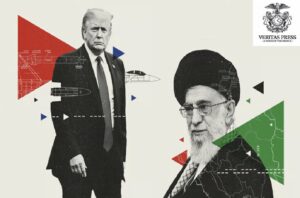
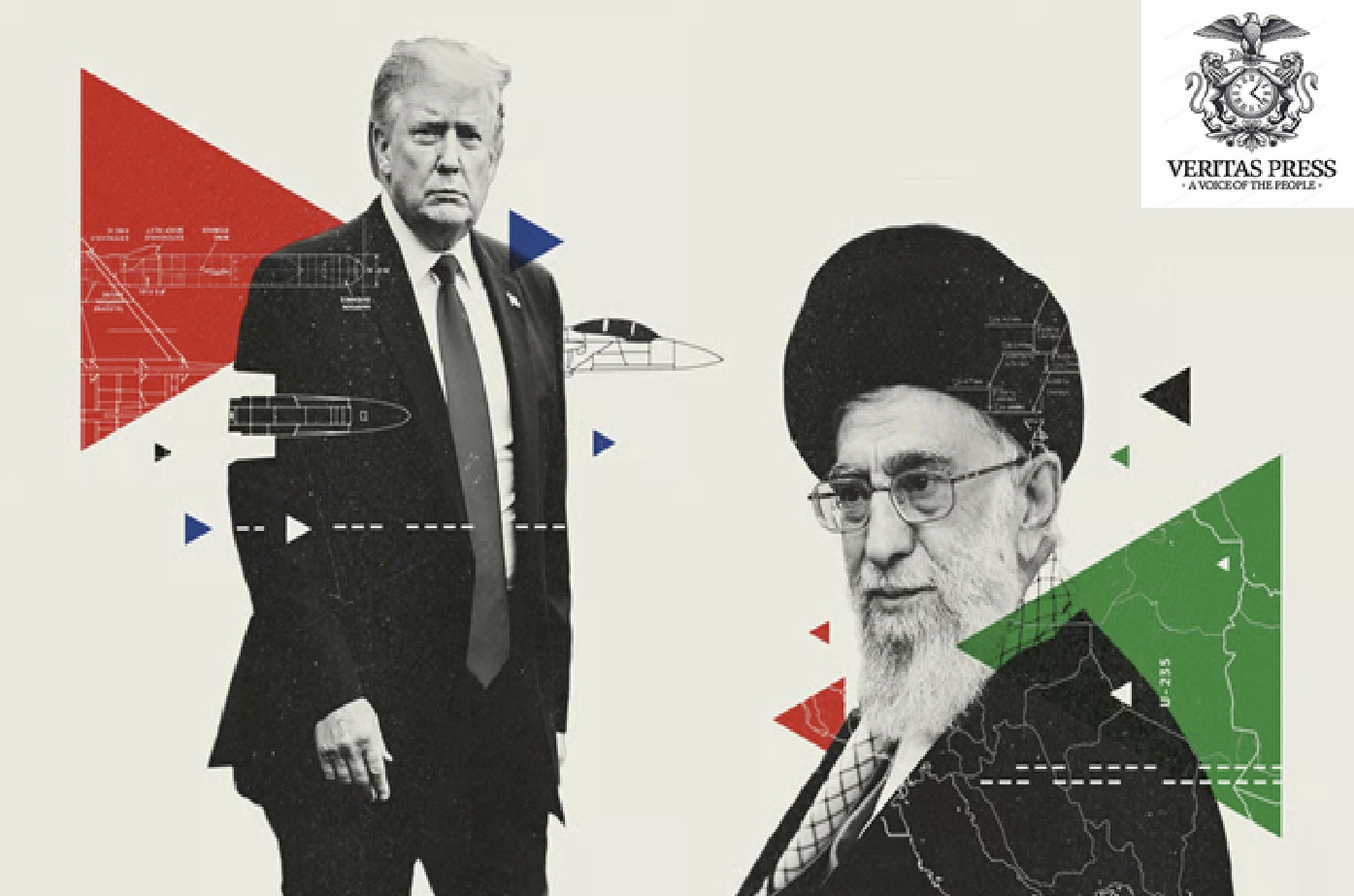
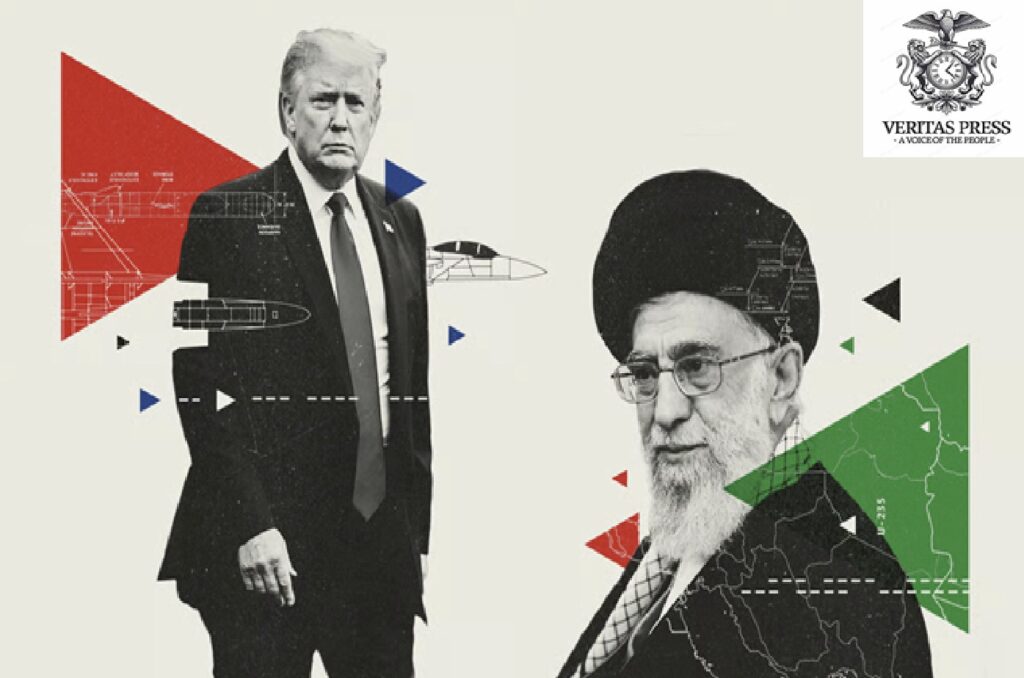
WASHINGTON/TEHRAN, Feb 25, 2026 – For the second time in a week, Tehran has levelled an accusation steeped in historical gravity against Washington: that the United States and Israel are systematically employing a propaganda technique straight out of the Nazi playbook to manufacture consent for conflict. Iranian Foreign Ministry spokesman Esmaeil Baghaei took to X on Wednesday to accuse the US administration of co-opting Joseph Goebbels’ infamous maxim—“Repeat a lie often enough, and it becomes the truth” to fuel a “sinister disinformation & misinformation campaign” against the Iranian nation.
This incendiary rhetoric frames the high-stakes confrontation unfolding in the Persian Gulf and the negotiating halls of Geneva. As the US and Iran prepare for a third round of indirect talks on Thursday, they do so under the shadow of what military analysts are calling the largest American force concentration in the region since the 2003 invasion of Iraq. The central question is whether diplomacy is genuine or whether the US military buildup is a hammer looking for a nail, dressed up in the language of peace.
The Battlefield Of Perception:
Baghaei’s statement was a direct rebuttal to President Donald Trump’s 2026 State of the Union address, in which the President vowed, “I will never allow the world’s number one sponsor of terror… to have a nuclear weapon. Can’t let that happen.” Trump framed the confrontation as a binary choice between American strength and Iranian annihilation.
However, Baghaei asserts that the specific allegations used to justify this posture, regarding the status of Iran’s nuclear program, the nature of its ballistic missile development, and even the casualty figures during internal unrest, are fabrications. “No one should be fooled by these prominent untruths,” he warned.
The accusation of utilising “big lies” is not merely rhetorical. It points to a deeper critique of how Western intelligence and political narratives are being shaped to serve a pre-determined policy of regime change and military intervention, a policy that critics argue is being pushed aggressively by “war profiteers” surrounding the US administration and the Israeli regime, which Baghaei labelled as “genocidal”.
Operation Midnight Hammer: A Case Study In “Obliteration”.
At the heart of the credibility gap is the fate of Iran’s nuclear program itself. In his address, Trump hailed “Operation Midnight Hammer,” the June 2025 strike on Iranian soil, claiming the US military “obliterated Iran’s nuclear weapons program” and “wiped it out”.
This assertion is at odds with early intelligence assessments and subsequent developments.
- The Intelligence Reality: Shortly after the strikes, CNN reported that a preliminary assessment from the US Defence Intelligence Agency (DIA) suggested the operation did not eliminate the fundamental components of the nuclear program, possibly only postponing its progress by a few months. Sources indicated that a significant stockpile of enriched uranium remained intact and had potentially been relocated before the bombs fell.
- The IAEA’s Verdict: The claim of “obliteration” is further undermined by the latest report from the International Atomic Energy Agency (IAEA). On February 21, 2026, the IAEA confirmed that Iran is expanding its nuclear capacities, installing new centrifuge cascades at Natanz and Fordow. The agency noted Iran is enriching uranium up to 60%, just a short technical step from weapons-grade levels and has enough material for several atomic bombs. Far from being obliterated, the program is active and advancing.
The New York Times fact-check of the State of the Union noted the discrepancy: while Trump claims total destruction, his own administration’s national security strategy document is more circumspect, admitting only that the strikes “significantly degraded” the program. This gap between rhetoric and reality fuels Tehran’s narrative that it is facing a disinformation campaign designed to pave the way for further aggression.
The Geneva Charade: Diplomacy Under The Shadow Of The Bomber.
While the accusations fly, negotiators are set to meet in Geneva on Thursday. This follows a second round of talks on February 17, which Iranian Foreign Minister Abbas Araghchi described as “more constructive,” leading to an agreement on “guiding principles” and a move to the text-drafting stage.
Yet, the diplomatic table is surrounded by an ever-tightening military noose. The United States has amassed an overwhelming force:
- Naval Power: Two carrier strike groups, the USS Abraham Lincoln in the Arabian Sea and the USS Gerald R. Ford en route to the Eastern Mediterranean, are in position.
- Air Superiority: At least 12 F-22 Raptor stealth fighters have landed in Israel, with dozens more combat aircraft, including F-35s, stationed at bases in Jordan and Qatar. This includes tankers, surveillance planes, and air defence systems.
- The Threat: President Trump has suggested that strikes could begin “within 10 days” if a deal is not reached, while his envoy, Steve Witkoff, has framed the urgency by stating Tehran is only “one week” away from fissile material suitable for a weapon.
This convergence of maximalist pressure and ongoing talks creates a volatile dynamic. As one analysis in Al-Quds notes, “The higher the military buildup, the narrower Trump’s political manoeuvring room.” If the goal is to coerce Iran into a deal, the extreme public threats may make it politically impossible for Tehran to retreat, and any subsequent settlement short of total surrender could be framed as an American retreat rather than an achievement.
The Unspoken Driver: Beyond The Centrifuge.
Analysts suggest that the confrontation cannot be viewed solely through the lens of uranium enrichment. The deeper strategic objective, as argued by geopolitical commentator Ramzy Baroud, is the reshaping of the Middle East to ensure Israeli dominance and marginalise Palestinian agency. The conflict with Iran, in this view, is inseparable from the Palestinian question. Weakening Tehran is seen as a way to decapitate the “axis of resistance” that has bolstered Palestinian political and military capacity.
This framework explains why US messaging focuses heavily on Iran’s regional influence and missile program, which it frames as a threat to Israel and Europe. Recent reports, citing Iranian dissidents, claim Tehran is developing a nuclear-capable ballistic missile with a range of up to 3,000 kilometres, a direct threat to US bases and European capitals. Iran denies seeking nuclear weapons and insists its missile program is defensive, but the West views the combination of an expanding nuclear program and long-range delivery systems as an existential threat.
Iran’s Red Line: Dignity Or Devastation.
As the clock ticks down to Thursday’s talks, Tehran has attempted to seize the narrative initiative. Parliament Speaker Mohammad Bagher Qalibaf issued a stark warning to Washington: “If you choose the table of diplomacy… we will also be at that table. But if you decide… to launch an attack in the midst of negotiations, you will undoubtedly taste the firm blow of the Iranian nation.”
This statement highlights the paradox of “negotiations under fire.” For Iran, walking away under a barrage of threats is impossible without losing face. For the US, the massive military deployment risks creating an “open test of wills” where deterrence fails, and miscalculation becomes likely.
Conclusion:
The stage is set for a pivotal week. In Geneva, diplomats will attempt to bridge a gap that has widened into a chasm of mistrust. On the ground, the most advanced fighting force in history is positioned to strike.
The Iranian accusation of “big lies” is a calculated attempt to undermine the credibility of the US case for war. Whether the international community views the coming days as a failure of diplomacy or a prelude to a necessary strike will depend on which narrative prevails and whether the truth, whatever remains of it, can survive the propaganda war long enough for peace to have a chance.
For The Secure Submission Of Documentation, Testimonies, Or Exclusive Investigative Reports From Any Global Location, Please Utilise The Following Contact Details For Our Investigations Desk: enquiries@veritaspress.co.uk or editor@veritaspress.co.uk
Popular Information is powered by readers who believe that truth still matters. When just a few more people step up to support this work, it means more lies exposed, more corruption uncovered, and more accountability where it’s long overdue.
If you believe journalism should serve the public, not the powerful, and you’re in a position to help, becoming a DONATOR or a PAID SUBSCRIBER truly makes a difference.
DONATION APPEAL: If You Found This Reporting Valuable, Please Consider Supporting Independent Journalism.
Help Support Our Work – We Know, We Know, We Know …
Seeing these messages is annoying. We know that. (Imagine what it’s like writing them … )
Your support fuels our fearless, truth-driven journalism. In unity, we endeavour to amplify marginalised voices and champion justice, irrespective of geographical location.
But it’s also extremely important. One of Veritas Press’s greatest assets is its reader-funded model.
1. Reader funding means we can cover what we like. We’re not beholden to the political whims of a billionaire owner. We are a small, independent and impartial organisation. No one can tell us what not to say or what not to report.
2. Reader funding means we don’t have to chase clicks and traffic. We’re not desperately seeking your attention for its own sake: we pursue the stories that our editorial team deems important and believe are worthy of your time.
3. Reader Funding: enables us to keep our website and other social media channels open, allowing as many people as possible to access quality journalism from around the world, particularly those in places where the free press is under threat.
We know not everyone can afford to pay for news, but if you’ve been meaning to support us, now’s the time.
Your donation goes a long way. It helps us:
- Keep the lights on and sustain our day-to-day operations
- Hire new, talented independent reporters
- Launch real-time live debates, community-focused shows, and on-the-ground reporting
- Cover the issues that matter most to our communities, in real time, with depth and integrity
We have plans to expand our work, but we can’t do it without your support. Every contribution, no matter the size, helps us stay independent and build a truly people-powered media platform.
If you believe in journalism that informs, empowers, and reflects the communities we serve, please donate today.
In what press freedom watchdogs are calling a historic collapse of civilian protection, 2025 has
In an extraordinary parliamentary intervention that has sent shockwaves through Westminster, a coalition of Labour

GREATER MANCHESTER, UK – On the evening of February 24, prayers at Manchester Central Mosque,
WEST BANK, Date: February 25, 2026 – The occupied West Bank is witnessing a dramatic
NEW DELHI/KASHMIR -As Narendra Modi makes his second official visit to Israel starting February 25,
WASHINGTON/TEHRAN, Feb 25, 2026- For the second time in a week, Tehran has levelled an
US – In a move that has simultaneously energised moderate pro-Israel advocates and drawn sharp
GAZA – A comprehensive investigation has concluded that the deaths of 39 Palestinians, including 22
As Indian Prime Minister Narendra Modi prepares to land in Tel Aviv on February 25
In the complex tapestry of Middle Eastern geopolitics, cartography is often the sharpest weapon. In