



Original Article Date Published:
Article Date Modified:
Help support our mission, donate today and be the change. Every contribution goes directly toward driving real impact for the cause we believe in.
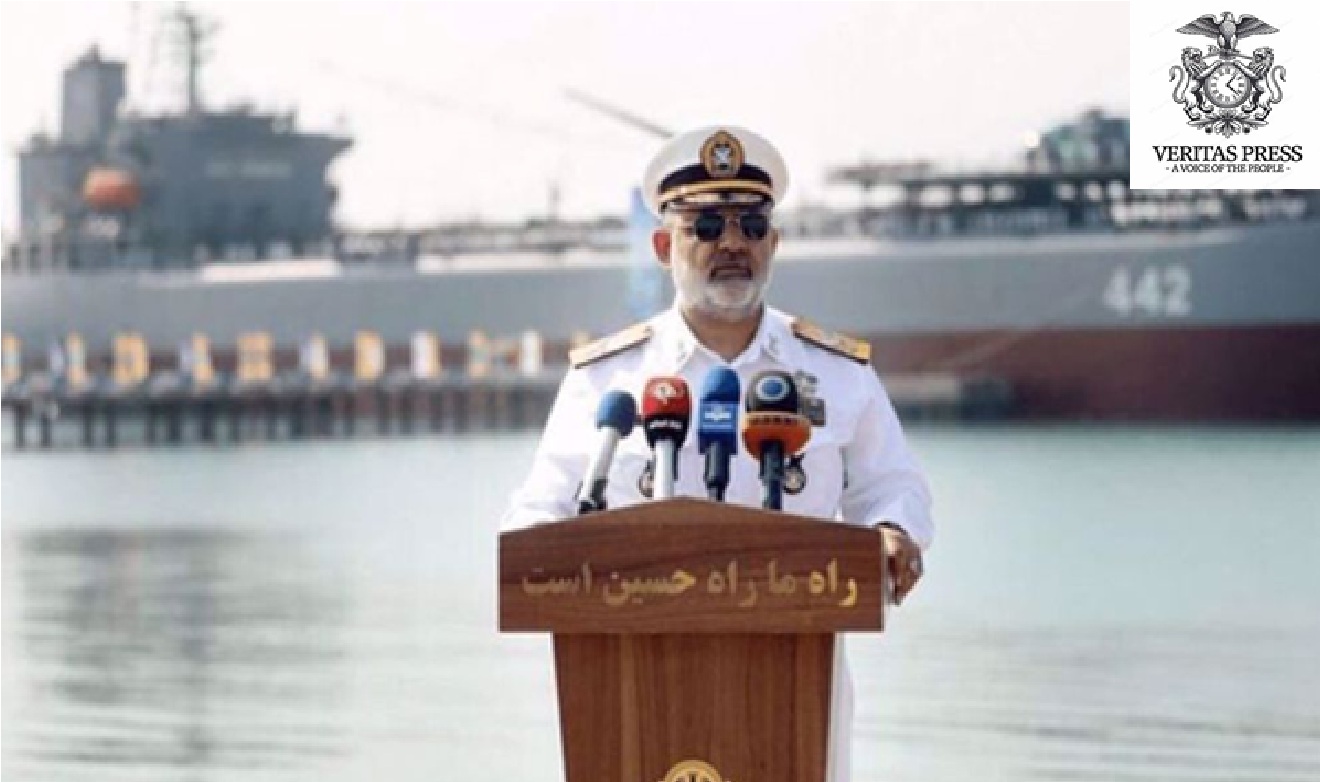
TEHRAN – The Indian Ocean, a vast expanse often viewed as a conduit for global commerce, has been transformed into a theatre of open warfare. The sinking of the Iranian frigate IRIS Dena by a US Navy submarine on March 4, 2026, off the coast of Sri Lanka, marks a perilous escalation, not merely in the conflict between Washington and Tehran, but in the very norms that have governed international relations since the Second World War.
While Iranian leaders, draped in the gravitas of mourning, have issued thunderous vows of “deadly retaliation,” a closer investigation reveals a story far more complex than the official narratives. It is a story of strategic miscalculation, of small nations caught in a geopolitical vice, and of a world order where the rules of engagement are being rewritten with torpedoes, not treaties.
The ‘Quiet Death’ Of A Diplomatic Guest:
What makes the sinking of the IRIS Dena particularly egregious is the context of its voyage. The Moudge-class frigate was not stealthily patrolling near the Strait of Hormuz or engaged in a hostile act. It was returning home from the Indian Navy’s flagship multilateral exercise, MILAN 2026, in Visakhapatnam, where it had been an official diplomatic guest.
“The U.S. torpedoing of the Iranian frigate IRIS Dena in India’s maritime backyard is more than a battlefield event; it is a strategic embarrassment for New Delhi,” strategic affairs commentator Brahma Chellaney told Defence Mirror. “By sinking a vessel returning from an Indian-hosted multilateral exercise, Washington effectively turned India’s maritime neighbourhood into a war zone”.
The attack, confirmed by US Defence Secretary Pete Hegseth, was carried out by a fast-attack submarine using a Mk-48 torpedo. Hegseth chillingly described it as a “quiet death,” the first sinking of an enemy ship by torpedo since World War II. Chairman of the Joint Chiefs of Staff Gen. Dan Caine added that the strike was part of Operation Epic Fury, an effort to “neutralise” Iran’s naval presence. The Pentagon later released infrared footage from the submarine’s periscope, showing the moment the torpedo “lifted” the warship from the water, buckling its hull.
For Tehran, the location of the strike, approximately 40 nautical miles off the coast of Galle, Sri Lanka, and over 2,000 miles from the Gulf, is a central pillar of its condemnation. “The U.S. has perpetrated an atrocity at sea,” Iranian Foreign Minister Abbas Araghchi posted on X. “Frigate Dena, a guest of India’s Navy carrying almost 130 sailors, was struck in international waters without warning”.
The Toll Of War And The Stench Of Realpolitik:
The human cost is stark. Initial reports from Sri Lankan hospital authorities confirmed 87 bodies recovered and 32 sailors rescued, with dozens more missing from an estimated crew of 180. The scene was chaotic: Sri Lankan navy spokesman Commander Buddhika Sampath described rescuers reaching the location to find only an oil slick and “people floating in the water”.
The bodies were taken to the Karapitiya hospital in Galle. Under normal circumstances, Islamic tradition demands burial within 24 hours. Yet, for nearly a week, the 84 identified sailors remained in cold storage units, caught not in a storm, but in a diplomatic squall.
The Leaked Cable: When ‘Allies’ Become Pawns.
The most explosive development in this saga is the revelation of Washington’s attempts to manipulate its “ally,” Sri Lanka. A leaked internal U.S. State Department cable, dated March 6 and reported by Reuters, laid bare a stunning diplomatic overreach.
According to the cable, the U.S. charge d’affaires in Colombo, Jayne Howell, pressured the Sri Lankan government not to repatriate the 32 survivors of the Dena or the 208 crew members of a second Iranian ship, IRIS Booshehr, which had taken shelter in Sri Lankan waters.
The cable stated that Howell “emphasised to Sri Lanka’s government that neither the Booshehr crew nor the 32 Dena survivors should be repatriated to Iran.” It further noted that she told the Israeli ambassador that “there was no plan to repatriate the crew to Iran,” and that “Sri Lankan authorities should minimise Iranian attempts to use the detainees for propaganda”.
This was not a request; it was perceived by many in Colombo as an instruction. The language stripped away the veneer of sovereign equality. It suggested that the U.S. viewed Sri Lanka not as an independent nation, but as a convenient holding cell for its enemy’s personnel.
Sri Lanka’s Quiet Act Of Sovereignty:
For a moment, it seemed the island nation, bankrupt and dependent on international goodwill just a few years prior, might capitulate. However, a remarkable sequence of events unfolded.
On March 5, President Anura Kumara Dissanayake went public. “We are not partial to any state or subject to any state,” he asserted in a late-night press briefing. “We are an independent sovereign state. We have a responsibility to our people, to our land. We are protecting our neutral status”.
Then, the judiciary stepped in. On March 10, Galle Chief Magistrate Sameera Dodangoda, acting on a request, ordered the Director of the Galle National Hospital to release the 84 bodies to the Iranian embassy. The ruling was a small but powerful act of defiance against U.S. pressure, a victory for the rule of law in a nation often buffeted by the winds of great-power politics.
Following the court order and perhaps the public airing of its heavy-handed tactics, the U.S. was forced into a humiliating retreat. A US official subsequently claimed they “respect and recognise Sri Lanka’s sovereignty,” stating that the disposition of the sailors was “a decision for Sri Lanka to make”. The whiplash was dizzying: from “should not be repatriated” to “it’s your decision.”
The ‘Unarmed’ Warship: A Matter Of Definition.
A central point of contention is whether the IRIS Dena was a legitimate military target. Iran’s Deputy Foreign Minister Saeed Khatibzadeh insisted the vessel was on a “ceremonial” mission. “It was unloaded. It was unarmed,” he told reporters in New Delhi.
The U.S. Indo-Pacific Command rejected this as “false,” a claim backed by an Indian navy official who noted the ship was not “entirely unarmed”. Experts suggest a nuance is being lost in translation. Visiting warships at goodwill port calls typically do not carry a full combat load of live munitions, especially if not scheduled for live-fire drills. While it may have had some defensive weaponry, it was not operating in a “fight configuration.” The debate misses the broader point: its mission was diplomatic, not belligerent, making the attack a profound violation of the unspoken norms of naval hospitality.
The Geopolitical Aftershocks:
The incident has sent tremors through the region. In India, opposition leader Rahul Gandhi attacked Prime Minister Narendra Modi’s silence. “The conflict has reached our backyard,” Gandhi said, pointing to the threat to India’s oil supplies. New Delhi now faces the unenviable task of maintaining its strategic autonomy and its “MAHASAGAR” vision of being a net security provider in the Indian Ocean, while managing its deepening defence ties with the United States.
Meanwhile, the conflict rages on. The IRGC has launched waves of “Operation True Promise,” targeting US bases like Al Dhafra in the UAE with ballistic missiles. Iran has effectively closed the Strait of Hormuz, threatening 20% of the world’s LNG trade. US officials claim a significant drop in Iranian missile launches, suggesting its arsenal is depleting under relentless American and Israeli strikes.
Conclusion: The Price Of A Quiet Death.
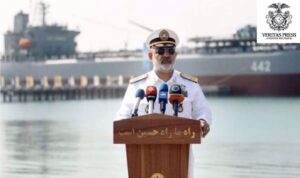
The vow of “deadly retaliation” from Admiral Shahram Irani is more than rhetoric. It is a promise from a nation that has seen its top military leaders, and as Tehran claims, even its former Supreme Leader Ayatollah Ali Khamenei, killed in the opening salvoes of this war on February 28. Iran’s Foreign Ministry spokesman Esmaeil Baqaei has framed the attack as a “war crime” under UN Resolution 3314 and a violation of the Geneva Conventions, citing the deliberate obstruction of rescue efforts.
The sinking of the IRIS Dena is not just another battle in a distant war. It is a watershed moment. It demonstrates the geographic expansion of the US-Israeli campaign against Iran. It exposes the fragility of international law when confronted by military necessity. And, as the Sri Lankan magistrate’s ruling shows, it also reveals the small spaces where sovereignty can still be asserted.
As the bodies of the 84 sailors are finally laid to rest, the “quiet death” of their ship has created shockwaves that will be felt for years to come. The enemy now knows punishment can come from “unexpected locations,” as Admiral Irani warned. The world now knows that nowhere, not even the peaceful waters off Galle, is safe from the long arm of this war.
Source: Multiple News Agencies
Submissions:
For The Secure Submission Of Documentation, Testimonies, Or Exclusive Investigative Reports From Any Global Location, Please Utilise The Following Contact Details For Our Investigations Desk: enquiries@veritaspress.co.uk or editor@veritaspress.co.uk
Help Support Our Work:
Popular Information is powered by readers who believe that truth still matters. When just a few more people step up to support this work, it means more lies exposed, more corruption uncovered, and more accountability where it’s long overdue.
Help Protect Independent Journalism, Which Is Currently Under Attack.
If you believe journalism should serve the public, not the powerful, and you’re in a position to help, becoming a DONATOR or a PAID SUBSCRIBER truly makes a difference.
DONATION APPEAL: If You Found This Reporting Valuable, Please Consider Supporting Independent Journalism.
Help Support Our Work – We Know, We Know, We Know …
Seeing these messages is annoying. We know that. (Imagine what it’s like writing them … )
Your support fuels our fearless, truth-driven journalism. In unity, we endeavour to amplify marginalised voices and champion justice, irrespective of geographical location.
But it’s also extremely important. One of Veritas Press’s greatest assets is its reader-funded model.
1. Reader funding means we can cover what we like. We’re not beholden to the political whims of a billionaire owner. We are a small, independent and impartial organisation. No one can tell us what not to say or what not to report.
2. Reader funding means we don’t have to chase clicks and traffic. We’re not desperately seeking your attention for its own sake: we pursue the stories that our editorial team deems important and believe are worthy of your time.
3. Reader Funding: enables us to keep our website and other social media channels open, allowing as many people as possible to access quality journalism from around the world, particularly those in places where the free press is under threat.
We know not everyone can afford to pay for news, but if you’ve been meaning to support us, now’s the time.
Your donation goes a long way. It helps us:
- Keep the lights on and sustain our day-to-day operations
- Hire new, talented independent reporters
- Launch real-time live debates, community-focused shows, and on-the-ground reporting
- Cover the issues that matter most to our communities, in real time, with depth and integrity
We have plans to expand our work, but we can’t do it without your support. Every contribution, no matter the size, helps us stay independent and build a truly people-powered media platform.
If you believe in journalism that informs, empowers, and reflects the communities we serve, please donate today.
LONDON, UK – London’s busiest airport is confronting a striking symbol of how war in
TEHRAN – The Indian Ocean, a vast expanse often viewed as a conduit for global
TEHRAN, TEL-AVIV – A new wave of Iranian ballistic missiles struck the occupied Palestinian territories

LONDON, UK – The warning, delivered with the calm authority of a former insider, has
WASHINGTON, TEL-AVIV – As the US-Israeli war on Iran barrels into its third week, the
GAZA STRIP – The fragile ceasefire in the Gaza Strip, already buckling under the weight
TEHRAN — In the predawn hours of Monday, the skies over the Middle East once
TEHRAN – The war between Israel, Iran, and their regional allies escalated dramatically early Sunday
TORONTO — In the shadow of the US Consulate on University Avenue, the air was
BAGHDAD/TEHRAN – As the US-Israel military campaign against Iran enters its third week, a complex