

Original Article Date Published:
Article Date Modified:
Help support our mission, donate today and be the change. Every contribution goes directly toward driving real impact for the cause we believe in.
A Conflict Transformed:
TEHRAN, IRAN – Twenty-eight days after the assassination of Iran’s Supreme Leader Ayatollah Seyyed Ali Khamenei and the onset of what Tehran calls an “unprovoked war of aggression” by the United States and Israel, the Middle East finds itself engulfed in a conflict of unprecedented scale and ferocity. What began on February 28 as a targeted killing operation, one that decapitated the Islamic Republic’s leadership in a single stroke, has spiralled into a multi-front war involving direct military exchanges between Iran and US-Israeli forces across West Asia, the effective closure of the Strait of Hormuz, and the gravest energy crisis in modern history.
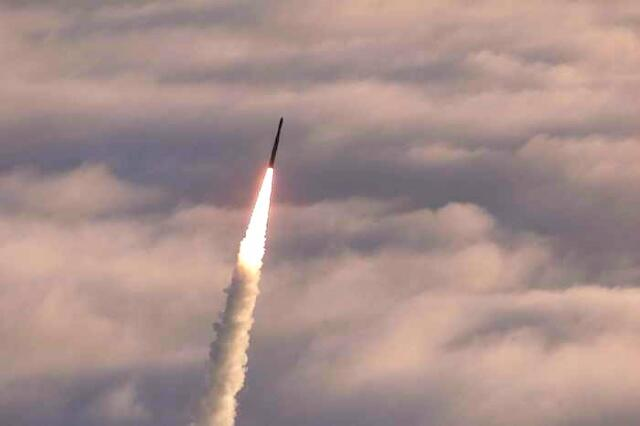
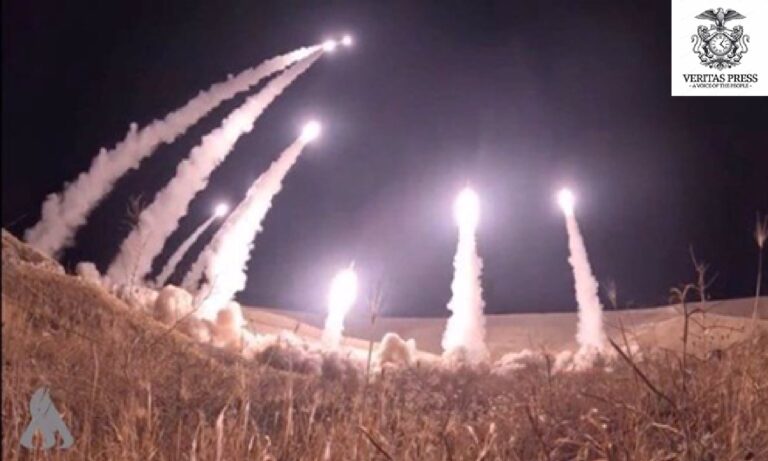
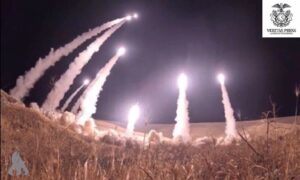
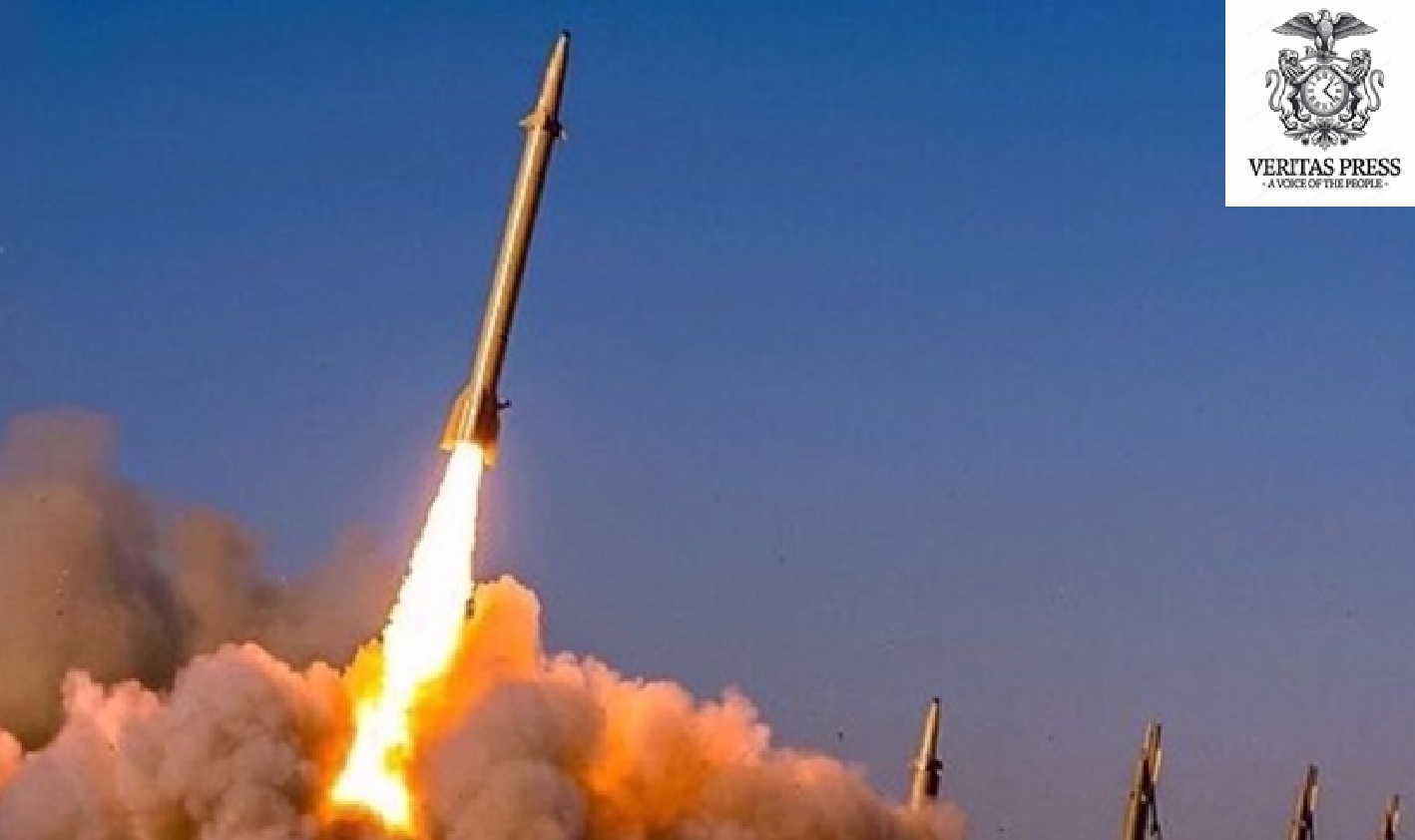
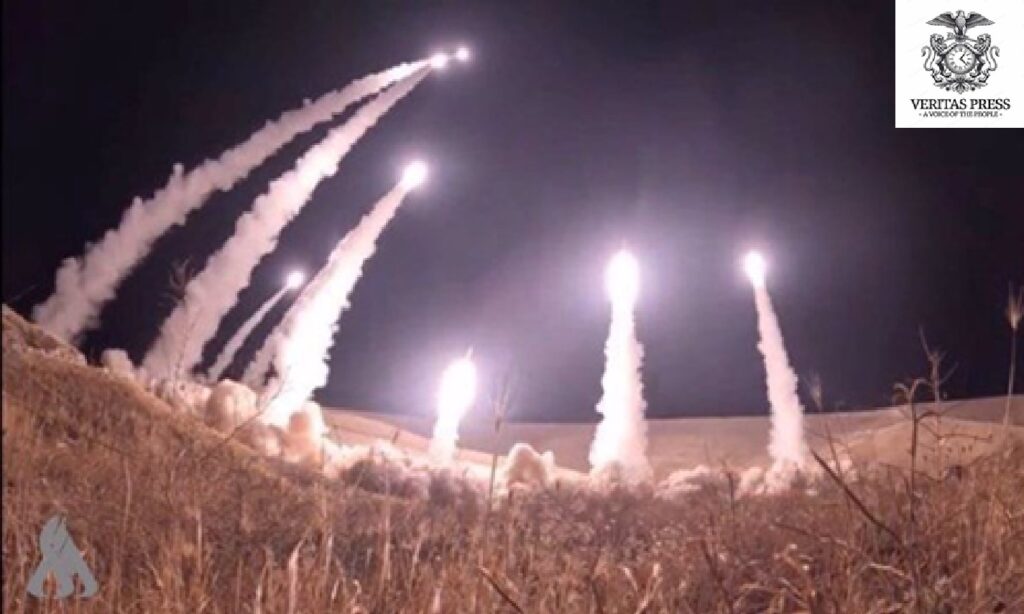
The Islamic Revolutionary Guard Corps (IRGC) has now executed the 85th wave of what it terms “Operation True Promise 4,” a sustained campaign of missile and drone strikes targeting American and Israeli industrial facilities, military assets, and commercial infrastructure throughout the region. This article provides a comprehensive investigative analysis of these operations, their strategic implications, and the broader context of a conflict that has fundamentally reshaped the geopolitical landscape of the Middle East.
Part I: The Anatomy Of Operation True Promise 4.
Wave 84: Naval Strikes In The Persian Gulf
On March 27, the IRGC Navy launched what it described as the 84th wave of Operation True Promise 4, targeting US positions in Kuwait’s Banda Shweikh Port and commercial infrastructure along the Dubai coastline. According to IRGC statements carried by Iran’s Tasnim News Agency, the operation employed a combination of ballistic missiles and Ghadr-380 cruise missiles against six US Landing Craft Utility (LCU) vessels stationed at Shweikh port.
The IRGC’s Public Relations Office reported that three of the vessels were directly hit and sank, while the remaining ships caught fire. Field reports cited by Iranian state media claimed “significant casualties” among US military personnel, with ambulances in Dubai reportedly “busy for hours transferring the dead and wounded”. The IRGC further claimed that more than 500 US Army personnel were present at two “hideouts” targeted in the operation, approximately 400 at the first location and 100 at the second.
A spokesperson for the Khatam al-Anbiya Central Headquarters, the IRGC’s strategic command centre, stated that the operation targeted “gathering points for US Marine personnel along the coast” as well as “a hotel in Dubai” where US officers were allegedly billeted. The IRGC described these strikes as “precise,” resulting in “heavy casualties”.
These claims remain unverified by independent sources. The United States Central Command (CENTCOM) has not publicly confirmed casualties from the Dubai strikes, though the IRGC asserts that CENTCOM has acknowledged damage to US assets in the region. What is clear, however, is that the targeting of commercial and port facilities in the United Arab Emirates represents a significant strategic escalation, one that directly challenges the Gulf states’ longstanding role as hosts to US military installations.
Wave 85: Striking Heavy Industries.
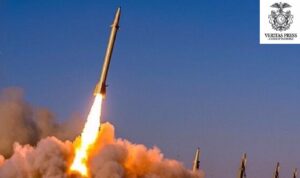
The following day, March 28, the IRGC announced the launch of the 85th wave of Operation True Promise 4, this time targeting “heavy industries belonging to the American-Israeli enemy in occupied territories and other locations across the region”. The operation was conducted jointly by the IRGC Navy and Aerospace Force, employing “long- and medium-range missile systems with solid and liquid fuel, as well as one-way loitering drones” under the codename “O Messenger of Allah”.
The IRGC’s statement claimed that “several heavy industrial facilities” were targeted, with “some sites destroyed”. The operation was framed as retaliation for recent US-Israeli strikes on Iranian civilian industries, including the March 26 attacks on Isfahan’s Mobarakeh Steel Company, Iran’s largest steel and iron producer, and the Khouzestan Steel Company. The IRGC dedicated this round of strikes to “the martyrs of Iran’s industrial sector and all its workers and producers”.
Aerial Engagements: The MQ-9 And F-16 Incidents.
Perhaps the most significant developments during the 85th wave were the IRGC’s claims regarding engagements with US aircraft. According to the IRGC’s statement, US and allied air forces attempted to target Iranian missile launch platforms during the operation. In response, IRGC air defence units reportedly shot down an American MQ-9 Reaper strategic unmanned aerial vehicle (UAV) “over Shiraz”.
More dramatically, the IRGC claimed that an American F-16 fighter jet was struck “over southern Fars Province” and was “destroyed before landing at an airfield in Saudi Arabia”. The IRGC further asserted that US Central Command “acknowledged the strike and the total damage to the aircraft”.
Xinhua News Agency, citing Iran’s semi-official Fars News Agency, reported that CENTCOM had posted on X that a US Air Force F-16 “landed at a base in the Middle East after a combat flight, without providing further details”. While this acknowledgement falls short of confirming combat damage, it represents a rare admission of an operational incident involving US aircraft in the region.
These claims, if verified, would represent the first direct shoot-down of US fixed-wing combat aircraft by Iranian forces since the 2019 downing of a Global Hawk drone, and a significant escalation in direct US-Iran military confrontation.
Part II: The Strategic Context, Assassination And Succession.
The February 28 Strike
The current wave of conflict traces directly to February 28, when US and Israeli forces launched what Iranian officials describe as a coordinated assassination operation targeting Iran’s leadership. On that day, Ayatollah Seyyed Ali Khamenei, the Supreme Leader of the Islamic Revolution for 37 years, was killed alongside several high-ranking military commanders.
The strikes occurred despite ongoing indirect negotiations between Tehran and Washington regarding Iran’s peaceful nuclear program, according to Iranian state media. The assassination represented a dramatic shift in US-Israeli strategy, moving from containment and sanctions to direct decapitation strikes against Iran’s political and religious leadership.
The Succession Of Mojtaba Khamenei:
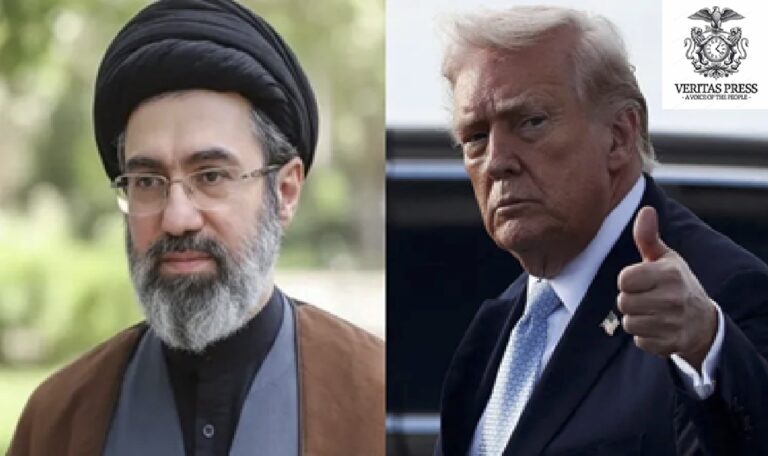
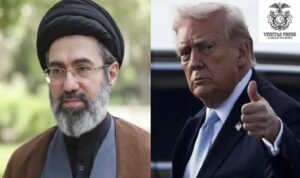
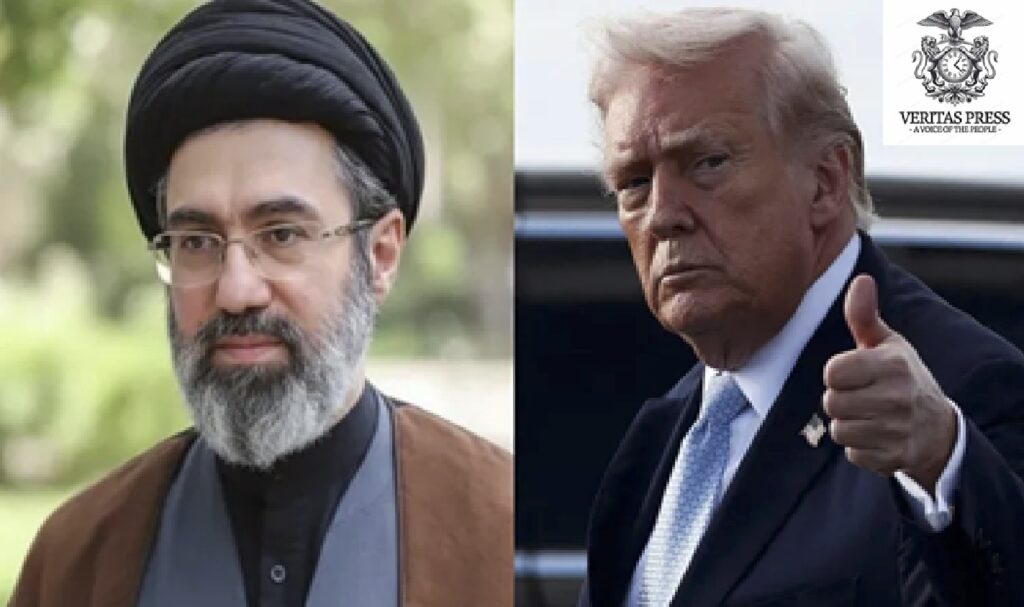
On March 8, Iran’s Assembly of Experts elected Seyyed Mojtaba Khamenei, the late Supreme Leader’s son, as the third Supreme Leader of the Islamic Republic by majority vote. The transition occurred amid ongoing airstrikes and with the new leader’s condition shrouded in mystery.
According to reports from Axios, cited by Newsmax, Mojtaba Khamenei has not been seen in any photograph or video footage since his appointment. Secretary of War Pete Hegseth has claimed that Mojtaba was “wounded and likely disfigured” in the strike that killed his father. This has led to speculation about the new Supreme Leader’s fitness to govern, with some intelligence officials referring to him derisively as “the cardboard ayatollah”.
“We have no evidence that [Mojtaba] is really the one giving orders,” a senior Israeli official told Axios. A US official echoed this scepticism: “It’s beyond weird. We don’t think the Iranians would have gone through all this trouble to choose a dead guy as the supreme leader, but at the same time, we have no proof that he is taking the helm”.
Raz Zimmt, director of the Iran Program at the Institute for National Security Studies in Tel Aviv, offered a more cautious assessment: “Under the current exceptional circumstances, one should not expect him to appear in public, and it is possible that his injury does not even allow him to release a recorded video in order not to expose to the public the severity of his condition”.
The new Supreme Leader did release a written statement on March 21, Nowruz, asserting that Iranians have “dealt him (the enemy) a dizzying blow so that he now starts uttering contradictory words and nonsense”. The statement claimed that US-Israeli strategists had miscalculated, believing that the assassination “would instil fear and despair in our dear people… and through this means, the dream of dominating Iran and subsequently dismembering it would be realised”.
Whether Mojtaba Khamenei is genuinely directing Iran’s military response or serving as a symbolic figurehead while the IRGC and military establishment exercise actual control remains one of the most critical unanswered questions of this conflict.
Part III: The Nuclear Dimension, NPT Withdrawal Debate
“There Is No Justification for Remaining”
As the conflict has intensified, Iran has begun signalling a potential withdrawal from the Treaty on the Non-Proliferation of Nuclear Weapons (NPT)—a move that would have profound implications for the global non-proliferation regime.
According to reports from Iran’s Tasnim News Agency and international outlets, “a number of relevant bodies in Iran, including the Parliament, are urgently reviewing the issue of withdrawal from the NPT”. The calculus driving this review is stark: Iranian officials argue that the treaty has failed to provide the protections it guarantees.
Ebrahim Rezaei, spokesperson for the Iranian Parliament’s National Security and Foreign Policy Committee, posted on X that continuing as an NPT party “is of no benefit” to Iran and that “it is time to withdraw”. Rezaei specifically cited the treaty’s failure to protect Iranian nuclear facilities from attack, noting that “relevant international documents and agreements have been completely disregarded”.
The IAEA’s Role Under Scrutiny:
Iranian officials have levelled particularly sharp criticism at International Atomic Energy Agency (IAEA) Director General Rafael Grossi. Iranian state media claimed that Grossi has “implicitly encouraged the enemy to use nuclear weapons against Iranian facilities”, a reference to his public statements expressing concern about Iran’s growing stockpile of near-weapons-grade enriched uranium.
The IRGC’s statement on the NPT withdrawal debate asserted that with “the US-Israeli enemy attack[ing] Iranian facilities without any hindrance or condemnation from the IAEA, there remains no justification for Iran to stay in the NPT”.
Importantly, Iranian officials have sought to frame a potential withdrawal not as a step toward nuclear weapons development but as a defensive measure. According to the official narrative, exiting the NPT would “prevent the continuation of spying by the United States and the Israeli regime under the guise of IAEA inspectors”. Rezaei explicitly stated that Iran’s policy of “not manufacturing nuclear weapons has not changed”.
The US-Israeli Assessment:
This framing has done little to reassure US and Israeli intelligence agencies. US assessments cited by Reuters indicate that Iran now possesses “large quantities of near-weapons-grade enriched uranium” and has restricted IAEA access to key facilities. Israel has explicitly linked its strikes on Iranian nuclear infrastructure, including the Arak heavy water plant and a yellowcake production facility, to concerns about nuclear weapons development.
The Israel Defence Forces (IDF) stated that it had targeted “Iran’s Arak Heavy Water Plant in central Iran, describing it as a key facility linked to plutonium production”. The IDF declared that it “will not allow the Iranian regime to continue advancing its nuclear weapons program,” which it described as a threat to both Israel and global security.
This dynamic, Iran signalling potential NPT withdrawal while denying weapons intentions, Israel striking nuclear facilities preemptively, represents perhaps the most dangerous escalation vector in the current conflict.
Part IV: “Beyond Eye for Eye”, The IRGC’s Escalation Doctrine
Brigadier General Mousavi’s Warning
In the aftermath of the March 26 strikes on Iranian steel plants, IRGC Aerospace Force Commander Brigadier General Seyyed Majid Mousavi issued a stark warning that has come to define Iran’s operational posture. “You tested us once before; the world saw again that you yourselves started playing with fire and attacking infrastructure,” Mousavi stated.
“This time,” he declared, “the equation will no longer be an eye for an eye; just wait!”
The warning was accompanied by a direct and urgent advisory to civilians: “Employees of industrial companies linked to the Americans and the Zionist regime must immediately leave their workplaces so their lives are not endangered!”
This shift from proportional retaliation, “an eye for an eye”, to what the IRGC terms a response “beyond your imagination” represents a significant doctrinal evolution. Where earlier waves of Operation True Promise 4 focused on military targets, the 85th wave explicitly targeted “heavy industries” with potential civilian workers present. The evacuation warning suggests that the IRGC is prepared to strike industrial facilities with little regard for collateral casualties, a strategy designed to maximise economic and psychological impact.
The Strategic Rationale:
From Tehran’s perspective, this escalation is framed as necessary deterrence. The IRGC’s March 28 statement emphasised that “we had warned the imprudent rulers of America that we would retaliate against attacks on industrial targets”. The strikes on Iranian steel plants on March 26, which injured 16 workers at the Khouzestan facility, were presented as the precipitating event that triggered the expanded targeting doctrine.
President Masoud Pezeshkian has reinforced this messaging, warning Gulf countries against allowing their territory to be used for strikes on Iran. “If you want development and security, don’t let our enemies run the war from your lands,” Pezeshkian posted on X. He reiterated that “Iran doesn’t carry out preemptive attacks, but we will retaliate strongly if our infrastructure or economic centres are targeted”.
This formulation, no preemptive strikes, but overwhelming retaliation, is designed to position Iran as a reactive power while justifying increasingly severe responses.
Part V: Regional And Global Fallout
The Strait of Hormuz and Energy Crisis
The conflict’s most tangible global impact has been the effective closure of the Strait of Hormuz, through which approximately 20% of the world’s oil and liquefied natural gas flows. According to Reuters reporting, the disruption has caused “the worst energy shock in history,” with oil prices surging and fuel shortages emerging globally.
The economic ripple effects extend far beyond energy markets. Businesses, “from airlines to supermarkets and used car dealers, are grappling with challenges including rising costs, weakening demand and disrupted supply chains”. Some governments are reportedly “weighing support measures last used during the COVID pandemic” to address the economic fallout.
The World Food Programme has issued dire warnings: “Farmers are struggling to source diesel for their tractors and tens of millions more people will face acute hunger if the war continues into June”.
US Military Posture:
The United States has significantly reinforced its military presence in the region. Admiral Brad Cooper, CENTCOM chief, claimed in a video briefing that US forces have “hit over 10,000 targets inside Iran” and are “on track to limit Iran’s ability to project power outside its borders”. Cooper further asserted that “92% of Iran’s largest naval vessels had been destroyed” and that “its drone and missile launch rates were down by more than 90%”
These claims, which would represent devastating losses for Iran’s military capabilities, have not been independently verified and should be treated with appropriate scepticism. They serve, however, to frame the conflict as one in which the US-Israeli coalition is achieving strategic success.
The Pentagon is reportedly planning to deploy “thousands of airborne troops to the Gulf to give Trump more options to order a ground assault,” according to sources cited by Reuters. Two Marine contingents are already en route, with the first amphibious assault ship expected to arrive by the month’s end. Reports also indicate that a possible ground operation targeting Iran’s Kharg Island, a critical oil export terminal, is under consideration.
Diplomatic Efforts:
Against this backdrop of military escalation, diplomatic channels remain active, if unproductive. The United States has transmitted a 15-point ceasefire proposal to Iran through Pakistani intermediaries. According to three Israeli cabinet sources cited by Reuters, the proposal calls for:
- Removal of Iran’s stocks of highly enriched uranium
- Halting uranium enrichment activities
- Curbing Iran’s ballistic missile program
- Cutting off funding for regional allies
Iranian Foreign Minister Abbas Araqchi has acknowledged receiving messages but emphasised that “there had been no dialogue or negotiation with the US”. “Messages being conveyed through our friendly countries and us responding by stating our positions or issuing the necessary warnings is not called negotiation or dialogue,” Araqchi clarified in a state television interview.
President Donald Trump has offered a contrasting narrative, claiming that Iranian leaders “are negotiating, by the way, and they want to make a deal so badly, but they’re afraid to say it because they will be killed by their own people”. Trump’s assertion raises the question of who, precisely, the US believes it is negotiating with, particularly given the murky circumstances surrounding Supreme Leader Mojtaba Khamenei’s condition and control.
Israel has expressed scepticism about the diplomatic process. A senior Israeli defence official told Reuters that “Israel was sceptical Iran would agree to the terms” and expressed concern that “US negotiators might make concessions”. Israel reportedly seeks to preserve “its option to conduct pre-emptive strikes” in any ceasefire agreement.
Iran, for its part, has insisted that “Lebanon must be included in any ceasefire agreement”, a condition that would tie the fate of Hezbollah and Lebanese stability to the Iran-US-Israel negotiations.
Part VI: Investigative Analysis, Claims, Verification, And Propaganda.
The Challenge of Verifying Operational Claims
Any analysis of this conflict must grapple with the fundamental challenge of verification. Both sides have strong incentives to inflate claims of success and downplay losses. The fog of war is particularly dense in this conflict, with limited independent access to conflict zones and both Iranian and US-Israeli forces tightly controlling operational information.
The IRGC’s claims regarding US casualties, particularly the assertion that 500 US personnel were killed or wounded in Dubai, remain unconfirmed by any independent or US source. CENTCOM’s limited acknowledgement of an F-16 landing in Saudi Arabia after a combat flight falls far short of confirming combat damage, let alone the shoot-down claimed by Iran.
Similarly, US claims of destroying 92% of Iran’s naval vessels and crippling its missile and drone forces by 90% strain credulity. Iran has continued to launch multiple waves of strikes across the region, suggesting that its capabilities, while likely degraded, remain substantial.
The Information War:
This conflict is being waged as intensely in the information domain as on the battlefield. Iranian state media, including Press TV, Tasnim, Fars, and others, present a narrative of successful retaliation, heavy US casualties, and growing regional opposition to American presence. The framing of Operation True Promise 4 as a “tribute to the resilience of the Iranian people” and the “martyrs of Iran’s industrial sector” is designed to maintain domestic morale and present the IRGC as defenders of the nation.
Western and Israeli media outlets, by contrast, emphasise US-Israeli military superiority, Iranian losses, and the strategic decapitation of Iran’s leadership. The narrative of Mojtaba Khamenei as “the cardboard ayatollah”, hidden, possibly incapacitated, perhaps not even in control, serves to delegitimise Iran’s new leadership and cast doubt on the regime’s stability.
What We Know With Reasonable Certainty:
Despite the fog of war, certain facts can be established with reasonable confidence:
- A devastating strike on Iranian leadership occurred on February 28, killing Ayatollah Ali Khamenei and senior military commanders. This is acknowledged by all parties, even as they dispute details.
- Iran has launched sustained missile and drone operations under the rubric of Operation True Promise 4, now reaching at least 85 waves. The scope and scale of these operations are documented by both Iranian state media and independent outlets.
- The Strait of Hormuz has been effectively closed, causing a global energy crisis. This is reflected in oil price surges and supply chain disruptions reported internationally.
- Diplomatic efforts are underway but have not yet produced a ceasefire. The US has transmitted proposals; Iran has received them; no agreement has been reached.
- US military forces are being reinforced in the region, with ground troops deploying and naval assets arriving.
Part VII: Voices From The Ground
Iranian Civilian Perspectives
State media have presented images of Iranian civilians rallying in support of the military response, but independent reporting from inside Iran is severely limited. The IRGC’s warning to workers at US- and Israeli-linked industries to evacuate has introduced an element of terror for civilians employed at such facilities. Valiollah Hayati, deputy governor general of Khuzestan, reported that 16 individuals “suffered minor injuries” in the strike on Khouzestan Steel Company, with all victims treated and discharged.
These workers, Iranian citizens employed at facilities deemed “enemy-linked”, find themselves caught between the strategic targeting priorities of the US-Israeli coalition and the retaliatory posture of their own government.
Regional Reactions:
Gulf states have found themselves increasingly drawn into the conflict. The targeting of facilities in Dubai and Kuwait’s Banda Shweikh Port represents a direct challenge to their hosting of US military assets. President Pezeshkian’s warning to “not let our enemies run the war from your lands” reflects Iran’s effort to pressure Gulf states into distancing themselves from US operations.
The conflict has also drawn in other regional actors. According to Fars News Agency, “the valiant Lebanese resistance, with 87 operations, the Iraqi resistance, with 23 operations”, have participated alongside Iranian forces in “the largest number of jihadist attacks in the history of the war against American and Zionist targets”.
International Calls For Restraint
United Nations Secretary-General Antonio Guterres issued a stark warning on March 25: the “world is staring down the barrel of a wider war”. “It is time to stop climbing the escalation ladder, and start climbing the diplomatic ladder,” Guterres urged from UN headquarters in New York.
The Secretary-General’s plea has gone largely unheeded, with both sides continuing to escalate militarily while diplomatic channels remain stalled.
Conclusion: A Conflict Without A Clear Endgame
One month into this conflict, its trajectory remains deeply uncertain. The assassination of Ayatollah Khamenei was intended, presumably, to destabilise the Islamic Republic and perhaps trigger its collapse. Instead, it has produced a unified Iranian response under new leadership, however shadowy that leadership may be, and a sustained campaign of retaliation against US and Israeli assets across the region.
Iran’s shift to a “beyond eye for eye” doctrine suggests that further escalation is likely, particularly if US-Israeli strikes on Iranian infrastructure continue. The debate over NPT withdrawal adds a nuclear dimension that could transform a regional conflict into a global crisis.
For the United States and Israel, the challenge is equally acute. Having chosen to decapitate Iran’s leadership, they now face a conflict with no clear exit strategy. The ceasefire proposal transmitted to Tehran represents an acknowledgement that military operations alone will not resolve the crisis, but the terms demanded are unlikely to be acceptable to a regime that has just lost its leader to assassination.
The people of the region, Iranian workers at targeted industrial facilities, Gulf residents living near US bases, and civilians across the Middle East are bearing the human cost of this escalation. The IRGC’s warning to evacuate, the US claim of 10,000 targets struck, and the rising global energy prices affecting farmers and families worldwide, all testify to a conflict that has already escaped its intended boundaries.
As UN Secretary-General Guterres warned, the world faces a choice between climbing the escalation ladder or the diplomatic ladder. Thus far, all parties have chosen escalation. Whether diplomacy can regain traction before the conflict expands further, potentially to include nuclear dimensions or ground invasions, remains the central question of this crisis.
Source: Multiple News Agencies
Submissions:
For The Secure Submission Of Documentation, Testimonies, Or Exclusive Investigative Reports From Any Global Location, Please Utilise The Following Contact Details For Our Investigations Desk: enquiries@veritaspress.co.uk or editor@veritaspress.co.uk
Help Support Our Work:
Popular Information is powered by readers who believe that truth still matters. When just a few more people step up to support this work, it means more lies exposed, more corruption uncovered, and more accountability where it’s long overdue.
Help Protect Independent Journalism, Which Is Currently Under Attack.
If you believe journalism should serve the public, not the powerful, and you’re in a position to help, becoming a DONATOR or a PAID SUBSCRIBER truly makes a difference.
DONATION APPEAL: If You Found This Reporting Valuable, Please Consider Supporting Independent Journalism.
Help Support Our Work – We Know, We Know, We Know …
Seeing these messages is annoying. We know that. (Imagine what it’s like writing them … )
Your support fuels our fearless, truth-driven journalism. In unity, we endeavour to amplify marginalised voices and champion justice, irrespective of geographical location.
But it’s also extremely important. One of Veritas Press’s greatest assets is its reader-funded model.
1. Reader funding means we can cover what we like. We’re not beholden to the political whims of a billionaire owner. We are a small, independent and impartial organisation. No one can tell us what not to say or what not to report.
2. Reader funding means we don’t have to chase clicks and traffic. We’re not desperately seeking your attention for its own sake: we pursue the stories that our editorial team deems important and believe are worthy of your time.
3. Reader Funding: enables us to keep our website and other social media channels open, allowing as many people as possible to access quality journalism from around the world, particularly those in places where the free press is under threat.
We know not everyone can afford to pay for news, but if you’ve been meaning to support us, now’s the time.
Your donation goes a long way. It helps us:
- Keep the lights on and sustain our day-to-day operations
- Hire new, talented independent reporters
- Launch real-time live debates, community-focused shows, and on-the-ground reporting
- Cover the issues that matter most to our communities, in real time, with depth and integrity
We have plans to expand our work, but we can’t do it without your support. Every contribution, no matter the size, helps us stay independent and build a truly people-powered media platform.
If you believe in journalism that informs, empowers, and reflects the communities we serve, please donate today.
TEHRAN, IRAN – Twenty-eight days after the assassination of Iran’s Supreme Leader Ayatollah Seyyed Ali
Original Article Date Published: Article Date Modified: Help support our mission, donate today and be

NEW YORK, US – On the night of March 26, 2026, Nerdeen Kiswani received a
JERUSALEM — For the 29th consecutive day, the heavy iron gates surrounding the Al-Aqsa Mosque

GAZA, March 27, 2026 — The cries of 28-day-old Adam Al-Ustaz shattered the silence of
TEHRAN – In the pre-dawn hours of March 27, 2026, the Islamic Revolution Guards Corps
MOSCOW, LONDON – In what marks a significant escalation in the prolonged confrontation between London
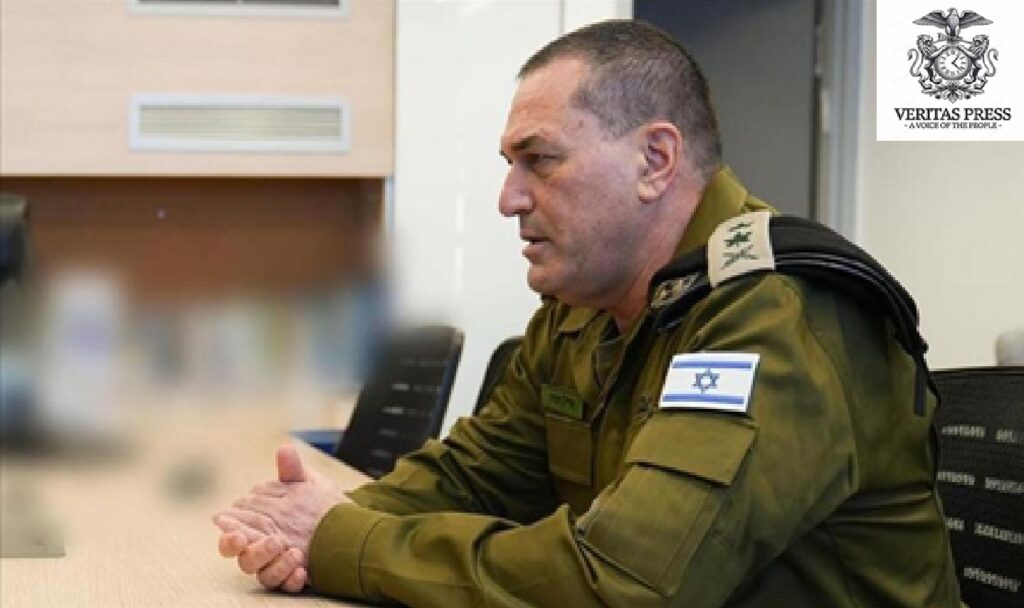
TEL-AVIV – When Lieutenant General Eyal Zamir, Chief of Staff of the Israel Defence Forces
GREEK ISLANDS – A controversial proposal by Israeli politician Avri Steiner to purchase Greek islands
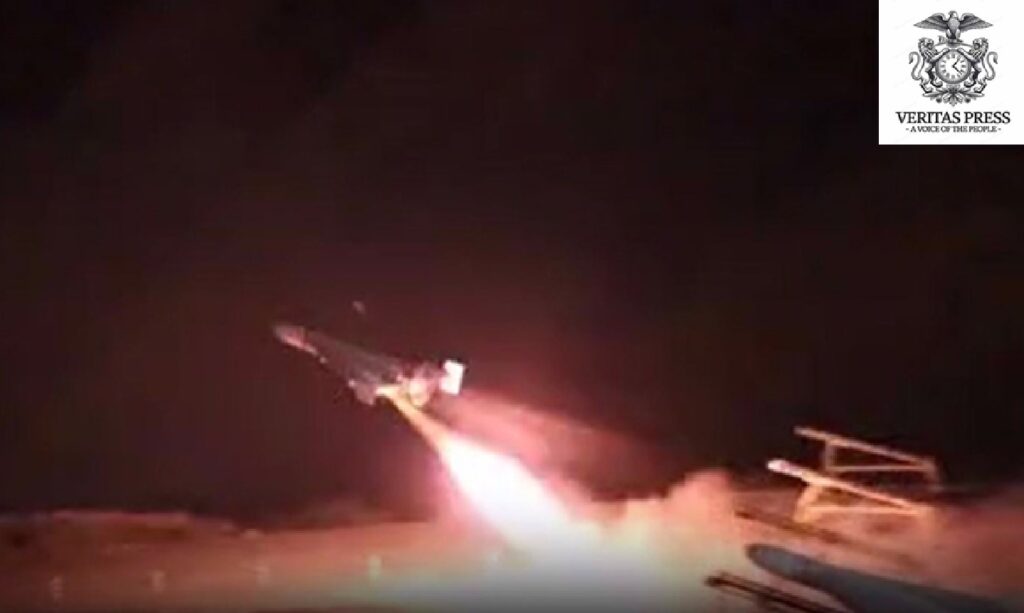
TEHRAN, IRAN – In the early hours of Thursday, the Islamic Revolutionary Guard Corps (IRGC)