

Original Article Date Published:
Article Date Modified:
Help support our mission, donate today and be the change. Every contribution goes directly toward driving real impact for the cause we believe in.
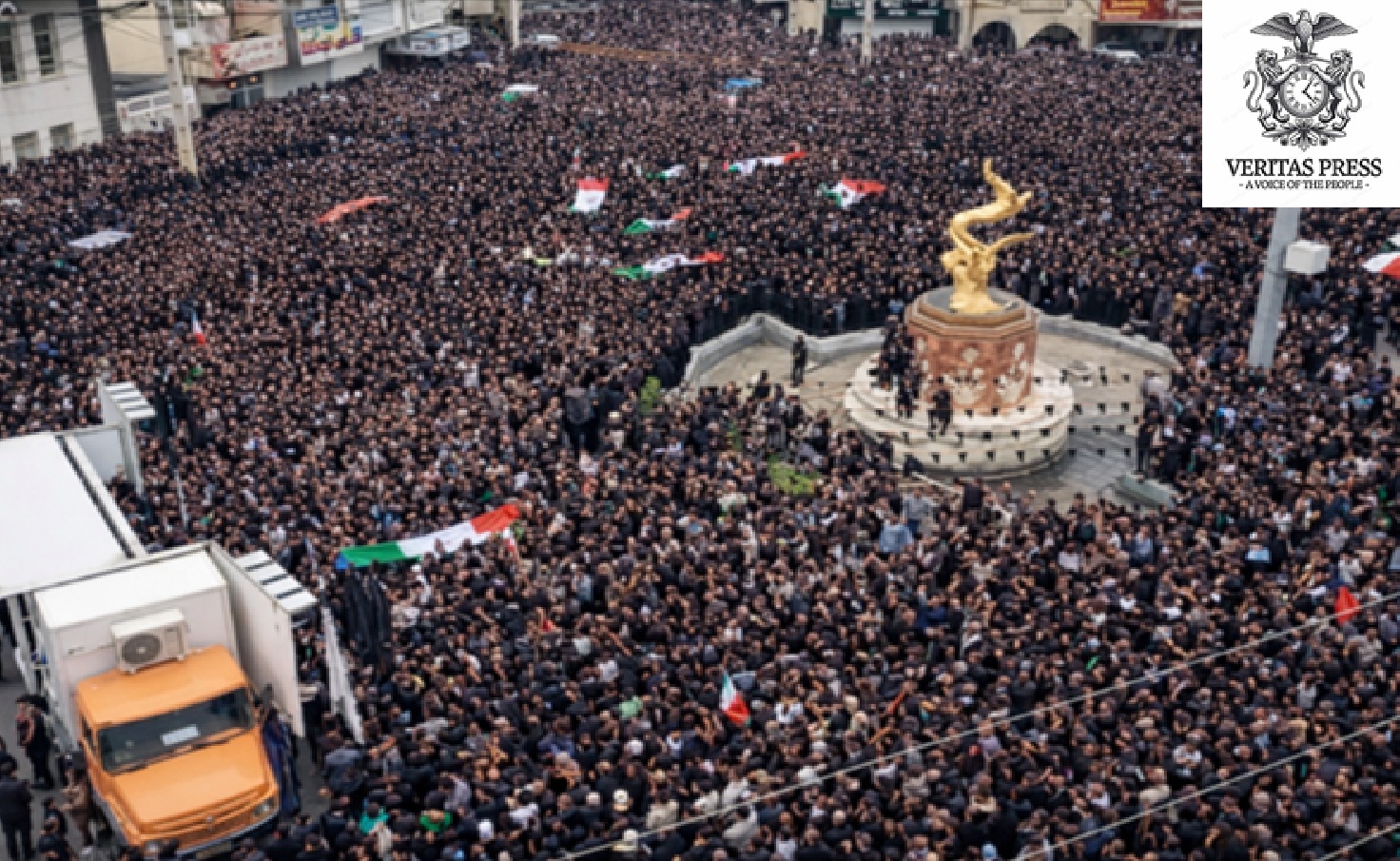
MINAB, IRAN – Funerals were held this week for 168 victims of the devastating bombing of the Shajareh Tayyebeh (Taiba Tree) Girls’ Elementary School in Minab, southern Iran, as authorities confirmed that 69 of the slain students remain unidentified nearly days after the attack.
The strike on February 28, 2026, during what Iranian officials describe as coordinated US-Israeli military operations across multiple provinces, has rapidly become one of the deadliest single attacks on a school in Iran in decades, and a flashpoint in an escalating regional war.
A City In Mourning:
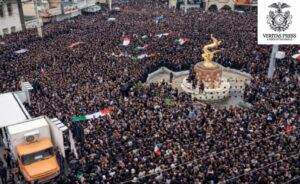
On Tuesday, thousands gathered in the streets of Minab, a coastal city in Hormozgan province, to bury rows of small white-shrouded coffins. State television broadcast images of grieving parents clutching photographs of daughters in school uniforms.
The Shajareh Tayyebeh school was struck while classes were in session, according to Iran’s Ministry of Education and multiple local witnesses. Authorities say 168 people were killed, the vast majority elementary-age girls, alongside several teachers, staff members, and parents who were on campus at the time. Ninety-six others were wounded, some critically.
Hossein Sadeghi, head of the Information and Public Relations Centre at Iran’s Ministry of Education, told Tasnim News Agency that 99 of the victims have been fully identified and their names publicly released. However, 69 children remain unaccounted for in official records.
“To complete identification, families must provide DNA samples,” Sadeghi said. “We are working with forensic teams to ensure that every child is returned to her family with certainty.”
For many families, that process compounds the trauma.
“My daughter left home with her backpack and a math test that morning,” one father told state media at the funeral procession. “Now they are asking for DNA. There is nothing left to recognise.”
The Strike And Competing Narratives:
The broader assault began in the early hours of February 28, when US and Israeli forces reportedly launched coordinated strikes targeting sites across several Iranian provinces. Iranian authorities claim hundreds were killed nationwide, including senior political and military figures. Unconfirmed reports circulating in regional media also suggest that senior leadership figures were among those targeted, though details remain contested.
Tehran has described the Minab school bombing as a deliberate attack on civilian infrastructure, a potential war crime under international humanitarian law. Officials from the Iranian Foreign Ministry called it “a massacre of schoolchildren” and “clear evidence of a policy of collective punishment.”
US and Israeli officials have not publicly acknowledged targeting a school in Minab. In previous cross-border operations, both governments have maintained that strikes are directed at military infrastructure and strategic assets. Neither Washington nor Tel Aviv has, as of this writing, provided operational details about the Minab strike or responded directly to the casualty figures released by Tehran.
The absence of independent international verification has complicated efforts to establish a definitive account. Iran has restricted access to foreign journalists in the immediate aftermath of the attacks, while international humanitarian organisations have yet to release independent assessments.
Civilian Infrastructure Under Fire:
What is not disputed is that the Shajareh Tayyebeh school was operational and filled with students at the time it was hit. Video footage aired by Iranian outlets shows collapsed concrete slabs, scattered textbooks, and charred desks.
Human rights advocates warn that, if confirmed as a direct strike, the attack could constitute a grave breach of the Geneva Conventions.
“Schools are protected civilian objects under international humanitarian law,” said a regional researcher with a Middle East-focused rights organisation who requested anonymity due to security concerns. “Even if there were military objectives nearby, the principle of proportionality strictly limits any action that would cause excessive civilian harm. The reported scale of child casualties raises very serious legal questions.”
Local activists in Hormozgan have begun calling for an independent international investigation. “We do not want this to become just another number in a regional war,” said Leila Rahimi, a community organiser in Minab. “These were eight- and nine-year-old girls. There must be accountability.”
The Identification Crisis:
The forensic challenge underscores the scale of destruction. Iranian officials say the blast’s intensity left many bodies unrecognisable, requiring DNA-based identification.
Medical staff at Minab’s main hospital, speaking to Iranian media, described an influx of severely burned and dismembered victims. “Many of the injured children arrived without identification documents,” one nurse reportedly said. “We were trying to match names from class rosters with the wounded.”
The requirement for DNA sampling has also exposed gaps in emergency preparedness. Several families in rural areas of Hormozgan province lack ready access to documentation, complicating cross-referencing efforts.
“This tragedy reveals how unprepared local systems are for mass-casualty events of this magnitude,” said an Iranian disaster response specialist interviewed by domestic press. “Identification protocols, morgue capacity, psychological support, all were overwhelmed.”
Regional Escalation And International Response:
The Minab strike occurred amid one of the most serious escalations between Iran, the United States, and Israel in recent years. The coordinated strikes reportedly targeted multiple provinces, signalling a shift from covert shadow conflict to overt military confrontation.
International reaction has been muted but cautious. Several regional governments have called for de-escalation, while the United Nations has urged all parties to protect civilians.
A spokesperson for the UN Secretary-General, in a statement released Monday, said the organisation was “deeply concerned by reports of civilian casualties, including children, in recent hostilities involving Iran,” and reiterated that “schools must never be targeted.”
However, no formal international investigation has yet been announced.
Information War And Verification Gaps:
The tragedy in Minab is unfolding not only on the ground but also in the realm of information warfare. Iranian state outlets have labelled the attack an “inhumane crime” and “terror bombing,” while Western media coverage has been comparatively limited and cautious, citing difficulties in independently verifying casualty figures.
This asymmetry has fueled anger inside Iran.
“Why is the world silent?” asked one teacher at the funeral procession, speaking to local journalists. “If this happened elsewhere, there would be global outrage.”
Independent analysts caution that verifying battlefield claims during active hostilities is inherently difficult. Satellite imagery, open-source intelligence analysts, and international monitors may provide further clarity in the coming days. But for families in Minab, the debate over narratives is secondary.
They are waiting for confirmation, for a name matched to remains, for a burial that can be completed with certainty.
As one grieving mother reportedly said at the cemetery: “They say 69 are still unknown. Until they tell me for sure, I will not believe my daughter is gone.”
In Minab, the funerals may have begun, but for dozens of families, the mourning remains suspended, trapped between hope, uncertainty, and the brutal arithmetic of war.
Source: Multiple News Agencies
Submissions:
For The Secure Submission Of Documentation, Testimonies, Or Exclusive Investigative Reports From Any Global Location, Please Utilise The Following Contact Details For Our Investigations Desk: enquiries@veritaspress.co.uk or editor@veritaspress.co.uk
Help Support Our Work:
Popular Information is powered by readers who believe that truth still matters. When just a few more people step up to support this work, it means more lies exposed, more corruption uncovered, and more accountability where it’s long overdue.
Help Protect Independent Journalism, Which Is Currently Under Attack.
If you believe journalism should serve the public, not the powerful, and you’re in a position to help, becoming a DONATOR or a PAID SUBSCRIBER truly makes a difference.
DONATION APPEAL: If You Found This Reporting Valuable, Please Consider Supporting Independent Journalism.
Help Support Our Work – We Know, We Know, We Know …
Seeing these messages is annoying. We know that. (Imagine what it’s like writing them … )
Your support fuels our fearless, truth-driven journalism. In unity, we endeavour to amplify marginalised voices and champion justice, irrespective of geographical location.
But it’s also extremely important. One of Veritas Press’s greatest assets is its reader-funded model.
1. Reader funding means we can cover what we like. We’re not beholden to the political whims of a billionaire owner. We are a small, independent and impartial organisation. No one can tell us what not to say or what not to report.
2. Reader funding means we don’t have to chase clicks and traffic. We’re not desperately seeking your attention for its own sake: we pursue the stories that our editorial team deems important and believe are worthy of your time.
3. Reader Funding: enables us to keep our website and other social media channels open, allowing as many people as possible to access quality journalism from around the world, particularly those in places where the free press is under threat.
We know not everyone can afford to pay for news, but if you’ve been meaning to support us, now’s the time.
Your donation goes a long way. It helps us:
- Keep the lights on and sustain our day-to-day operations
- Hire new, talented independent reporters
- Launch real-time live debates, community-focused shows, and on-the-ground reporting
- Cover the issues that matter most to our communities, in real time, with depth and integrity
We have plans to expand our work, but we can’t do it without your support. Every contribution, no matter the size, helps us stay independent and build a truly people-powered media platform.
If you believe in journalism that informs, empowers, and reflects the communities we serve, please donate today.
BEIRUT, LEBANON – The echoes of the 2024 ceasefire, already faint after months of daily
MINAB, IRAN – Funerals were held this week for 168 victims of the devastating bombing
On March 2, 2026, the United Nations Security Council convened for a meeting that was
LONDON, UK – Prime Minister Keir Starmer insists the United Kingdom is “not at war.”
Global financial markets have been jolted by the rapid escalation of war between the United
DEIR EL-BALAH, GAZA STRIP – The first wave of panic did not arrive with an
The human cost of the “Lion’s Roar” operation has crystallised into a stark, horrifying statistic.
IRAN – The third day of “Operation Epic Fury” has plunged the Middle East into
On Saturday, February 28, 2026, Israeli authorities announced the indefinite closure of all crossings into
The military confrontation between Israel, the United States, and Iran is no longer confined to