



Original Article Date Published:
Article Date Modified:
Help support our mission, donate today and be the change. Every contribution goes directly toward driving real impact for the cause we believe in.
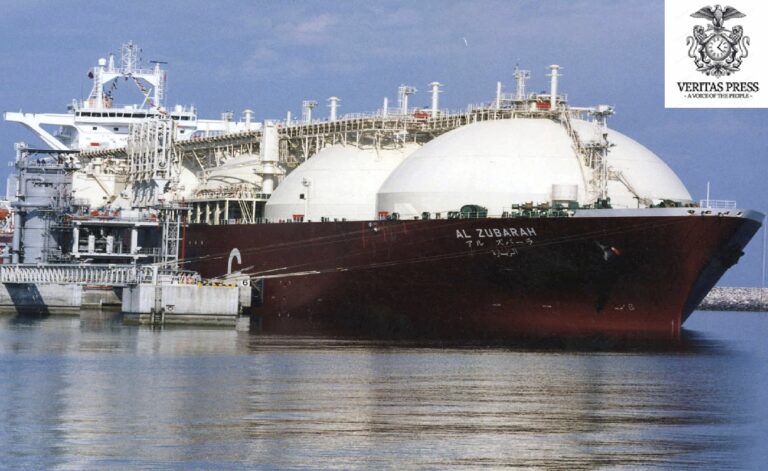
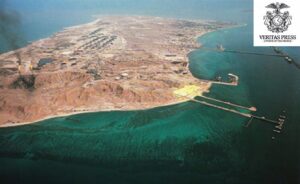
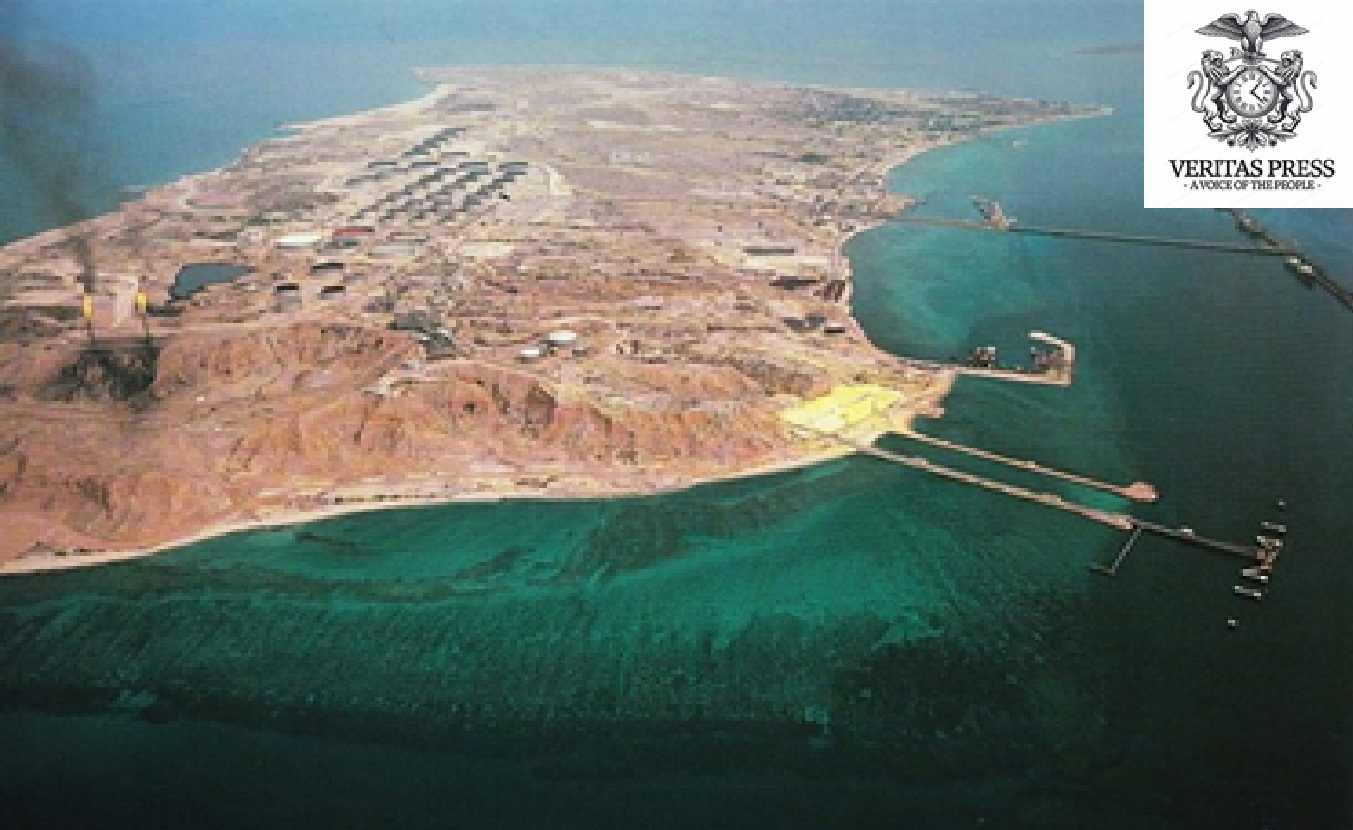
TEHRAN, IRAN – In the northern waters of the Persian Gulf lies a small coral island barely five miles long. Yet this narrow strip of land called Kharg Island has become one of the most strategically sensitive pieces of energy infrastructure on Earth. Nearly 90% of Iran’s crude oil exports pass through the island, making it the backbone of the country’s economy and a focal point in the escalating confrontation involving Iran, the United States and Israel.
As military strikes intensify across Iran and regional tensions push global energy markets to the brink, analysts say the fate of Kharg Island could determine not only the trajectory of the war but also the stability of global oil supplies and potentially reshape the geopolitical struggle over energy in the Middle East.
Iran’s Oil Lifeline:
Kharg Island lies roughly 25 kilometres off Iran’s coast near Bushehr province. Developed during the oil boom of the 1960s with assistance from the American oil company Amoco, the island quickly evolved into the country’s principal crude export terminal.
Subsea pipelines connect Kharg to offshore platforms in the Persian Gulf and to major mainland oilfields in southwestern Iran. The island hosts large storage tanks, worker housing complexes and long deep-water jetties capable of accommodating the world’s largest supertankers.
Energy analysts estimate the facility can load up to seven million barrels of oil per day, although actual exports fluctuate due to sanctions and production restrictions. Most of the oil shipped from Kharg travels through the nearby Strait of Hormuz, which carries roughly 20% of global oil shipments.
Former U.S. sanctions official Richard Nephew described the island as indispensable to the Iranian economy.
“The economy bottoms out without it,” Nephew said, noting that losing Kharg would immediately cut off the country’s primary source of foreign revenue.
Much of the crude exported from the island ultimately reaches Asian markets, especially China, often through complex shipping arrangements designed to circumvent U.S. sanctions.
A Single-Point Vulnerability In The Global Oil Network:
Energy experts often describe Kharg Island as a rare “single-point vulnerability” in the global energy system.
Unlike Saudi Arabia or the United Arab Emirates, which operate multiple export terminals, Iran channels most of its oil exports through a single hub. That concentration makes Kharg one of the most strategically valuable and vulnerable energy sites in the world.
Satellite imagery analysed by tanker-tracking firms in early March showed multiple supertankers anchored near Kharg, even as U.S. and Israeli strikes targeted Iranian military facilities elsewhere in the country.
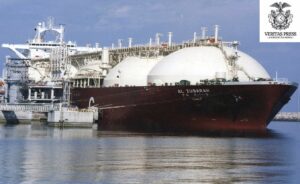
Images released via the European Union’s Copernicus Earth observation programme showed a very large crude carrier capable of holding roughly two million barrels docked at the island’s eastern jetty during the early phase of the conflict.
Despite the intensifying military campaign, oil loading appeared to continue.
Why Kharg Has Not Been Attacked — Yet:
While Israeli and U.S. forces have reportedly struck missile sites, military bases and fuel depots across Iran, including large fires at oil storage facilities in Tehran, Kharg itself has so far remained untouched.
Energy analyst Ellen Wald said targeting the island would risk triggering severe regional escalation.
“Attacking Kharg would likely provoke retaliation against energy infrastructure across the Gulf,” Wald warned, adding that the result could be “dramatic spikes in oil prices and major supply disruptions.”
The Persian Gulf hosts some of the world’s most important oil and gas installations. Saudi Arabia, the United Arab Emirates and Qatar all operate major facilities within striking distance of Iranian missiles and drones.
Even the threat of conflict in the area has already unsettled global markets, with analysts warning crude prices could surge toward $100–$200 per barrel if the war disrupts Gulf energy flows.
Strategic Debates In Washington: Seizure Rather Than Destruction.
Yet behind the scenes, policy debates in Washington increasingly centre on a more radical proposal: seizing Kharg Island rather than bombing it.
Several U.S. strategists argue that physically controlling the island would allow Washington to cut off Iran’s oil revenues while preserving the infrastructure for future exploitation.
Former Pentagon adviser Michael Rubin has been among the most vocal proponents of the idea.
“If they can’t sell their own oil, they can’t make payroll,” Rubin said, arguing that capturing Kharg would deprive Tehran of the funds it uses to govern.
White House energy adviser Jarrod Agen went even further, stating in a televised interview that Washington ultimately wants to “get massive oil reserves out of the hands of terrorists.”
Those remarks have fuelled speculation among analysts that the war’s strategic objectives may extend beyond nuclear issues to control over Iran’s vast energy resources.
Iran holds the world’s third-largest proven oil reserves, making its energy sector one of the most valuable strategic prizes in the global economy.
Accusations Of Resource Seizure And Economic Warfare:
Critics argue that the idea of seizing Kharg Island reflects a broader strategy aimed at economic strangulation and resource control.
Human rights groups and regional analysts say capturing the island would effectively amount to taking control of Iran’s most valuable national asset, depriving the country’s population of revenue generated by its own natural resources.
Middle East political analyst Guy Laron warned that such a move could transform Iran into what he described as a “resource protectorate”.
“If the United States controls Kharg, it doesn’t necessarily need regime change,” Laron wrote in a commentary circulating among policy analysts. “It would directly control the country’s most important source of income.”
For critics, the strategy recalls earlier episodes in Middle Eastern history in which foreign powers exerted control over oil infrastructure for geopolitical leverage.
Activists and regional commentators have described the proposal as “resource annexation by military force”, arguing that it would deepen regional instability and entrench perceptions that the war is driven by economic interests rather than security concerns.
Echoes Of Earlier Wars:
Kharg Island has long been a target during conflicts involving Iran.
During the Iran–Iraq War, Iraqi aircraft repeatedly bombed the island in an attempt to cripple Iran’s oil exports.
By the mid-1980s, much of the terminal infrastructure had been heavily damaged. Yet Iran managed to keep exports flowing, using emergency repairs and offshore loading methods to maintain crude shipments.
Following the war, Tehran spent years rebuilding and expanding the facilities, transforming Kharg into an even larger export hub.
An Island With Centuries Of Maritime History:
Long before the rise of the oil industry, Kharg Island was already a significant trading outpost.
Medieval records describe it as a centre for pearl fishing and Gulf trade, while 17th-century travellers noted its role as a stopover for ships travelling between Basra, southern Iran and the wider Persian Gulf.
Mariners navigating the shallow waters near Basra often hired experienced Gulf pilots from the island to guide them safely through the region’s treacherous channels.
That long maritime tradition stands in stark contrast to the island’s modern role as a heavily fortified oil export terminal.
Global Markets On Edge:
The intensifying conflict has already rattled energy markets worldwide.
Disruptions to Kharg Island or the Strait of Hormuz could result in severe supply shocks and an intensification of the war, according to analysts.
Roughly 20 million barrels of oil per day pass through the strait, along with massive volumes of liquefied natural gas.
If shipping becomes unsafe, tankers could avoid the region entirely, causing a chain reaction across global energy markets. Governments have already begun discussing emergency measures such as releasing oil from strategic reserves to stabilise prices.
A Tiny Island With Global Consequences:
For now, Kharg Island continues to function as Iran’s oil lifeline, with tankers still loading crude as the conflict escalates.
But its strategic importance means it remains at the centre of war planning in Washington and Tel Aviv.
Whether the United States and Israel ultimately decide to leave the island untouched, strike it, or attempt to seize it intact could determine the economic fate of Iran—and potentially reshape the global energy landscape.
For Iran, Kharg represents the economic survival of the state.
For critics of the war, it represents something else entirely: a stark example of how control over natural resources can become a central objective in modern geopolitical conflict.
Conclusion: A War Over Power And The Control Of Energy.
Ultimately, the debate over Kharg Island reveals how the conflict with Iran extends far beyond missile strikes or nuclear diplomacy. At its core lies a far older geopolitical struggle: control over energy, trade routes and the economic lifelines of states.
For decades, Iran’s economy has depended on oil exports flowing from Kharg’s terminals through the Strait of Hormuz. That concentration of infrastructure has turned the island into both a strategic vulnerability and a coveted prize. The very discussions now taking place in Washington, about seizing or controlling the island rather than destroying it, illustrate how energy infrastructure itself has become a battlefield. The conflict in Iran is just an excuse for the US and Israel to seize resources, control supply chains, and gain geopolitical advantage.
Critics say such proposals expose the deeper logic driving the war. If Kharg were captured or placed under foreign control, Iran would effectively lose access to the primary revenue stream generated by its own natural resources. The situation prompts uneasy reflections among numerous analysts regarding the potential transformation of the conflict into economic warfare, with the objective of not only weakening Iran’s state apparatus but also of capturing the economic worth of its oil sector by enforcing economic subservience.
Human rights advocates and political economists warn that the seizure of a country’s principal export terminal would amount to a profound violation of sovereignty, depriving millions of citizens of national income derived from resources legally belonging to the Iranian people. In such a scenario, Iran’s oil, long a symbol of national independence since the nationalisation battles of the 20th century, could effectively fall under external control.
The idea that a foreign power might capture and operate the island also evokes memories of earlier eras when global powers competed to dominate Middle Eastern oil infrastructure for strategic and commercial advantage. For critics, the discussion of “securing” or “liberating” Iran’s oil resources echoes language historically used to justify resource extraction under geopolitical pressure.
Yet the stakes extend far beyond Iran itself. Any attempt to seize or disable Kharg would likely provoke retaliation across the Persian Gulf, threatening oil terminals, shipping routes and energy infrastructure across multiple countries. In an interconnected global energy system, the consequences would ripple far beyond the battlefield, impacting economies from Asia to Europe. Moving towards a worldwide war.
In that sense, Kharg Island represents more than a strategic oil terminal. It is a stark reminder that modern wars are often fought not only with bombs and missiles but also through control of economic lifelines and natural resources.
Whether the island remains untouched, becomes a military objective, or turns into the centre of a broader confrontation will depend on decisions made in the coming weeks in Washington, Tel Aviv and Tehran. But one reality is already clear: a small island in the Persian Gulf has become a focal point in a conflict where energy, sovereignty and geopolitical power are deeply intertwined.
Source: Multiple News Agencies
Submissions:
For The Secure Submission Of Documentation, Testimonies, Or Exclusive Investigative Reports From Any Global Location, Please Utilise The Following Contact Details For Our Investigations Desk: enquiries@veritaspress.co.uk or editor@veritaspress.co.uk
Help Support Our Work:
Popular Information is powered by readers who believe that truth still matters. When just a few more people step up to support this work, it means more lies exposed, more corruption uncovered, and more accountability where it’s long overdue.
Help Protect Independent Journalism, Which Is Currently Under Attack.
If you believe journalism should serve the public, not the powerful, and you’re in a position to help, becoming a DONATOR or a PAID SUBSCRIBER truly makes a difference.
DONATION APPEAL: If You Found This Reporting Valuable, Please Consider Supporting Independent Journalism.
Help Support Our Work – We Know, We Know, We Know …
Seeing these messages is annoying. We know that. (Imagine what it’s like writing them … )
Your support fuels our fearless, truth-driven journalism. In unity, we endeavour to amplify marginalised voices and champion justice, irrespective of geographical location.
But it’s also extremely important. One of Veritas Press’s greatest assets is its reader-funded model.
1. Reader funding means we can cover what we like. We’re not beholden to the political whims of a billionaire owner. We are a small, independent and impartial organisation. No one can tell us what not to say or what not to report.
2. Reader funding means we don’t have to chase clicks and traffic. We’re not desperately seeking your attention for its own sake: we pursue the stories that our editorial team deems important and believe are worthy of your time.
3. Reader Funding: enables us to keep our website and other social media channels open, allowing as many people as possible to access quality journalism from around the world, particularly those in places where the free press is under threat.
We know not everyone can afford to pay for news, but if you’ve been meaning to support us, now’s the time.
Your donation goes a long way. It helps us:
- Keep the lights on and sustain our day-to-day operations
- Hire new, talented independent reporters
- Launch real-time live debates, community-focused shows, and on-the-ground reporting
- Cover the issues that matter most to our communities, in real time, with depth and integrity
We have plans to expand our work, but we can’t do it without your support. Every contribution, no matter the size, helps us stay independent and build a truly people-powered media platform.
If you believe in journalism that informs, empowers, and reflects the communities we serve, please donate today.
TEHRAN, IRAN – In the northern waters of the Persian Gulf lies a small coral
LONDON, UK – As the US-Israeli campaign against Iran enters its second week, a chilling
WASHINGTON, US – The United States and Israel are deepening their military campaign against Iran,

JERUSALEM — In the narrow, winding streets of the Old City, the silence is deafening.
GAZA CITY — Israel’s continued closure of Gaza’s border crossings for more than ten consecutive
TEHRAN, IRAN — In the smouldering aftermath of the February 28 US-Israeli airstrikes that decapitated
Tehran, Iran – The sudden death of Ayatollah Ali Khamenei in the joint US-Israeli strikes
LONDON, UK – As the Middle East conflict entered its eighth day, the ominous silhouette
The sun rises over a shattered Tehran, not over the majestic Alborz mountains, but over
GAZA CITY / CAIRO — Despite the partial reopening of the Kerem Shalom Crossing this