


Original Article Date Published:
Article Date Modified:
Help support our mission, donate today and be the change. Every contribution goes directly toward driving real impact for the cause we believe in.
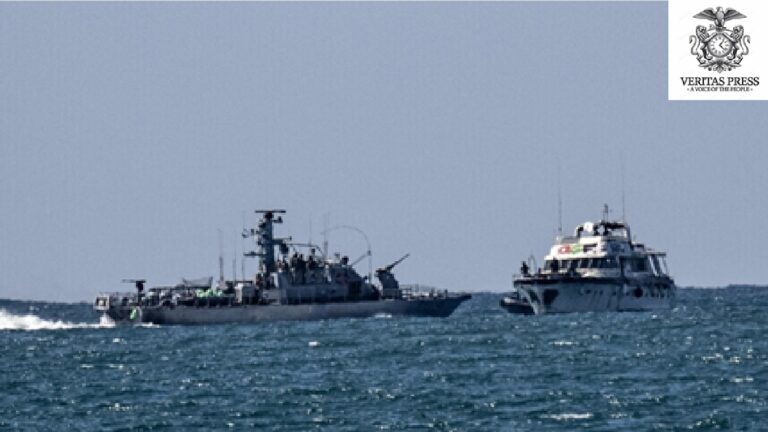
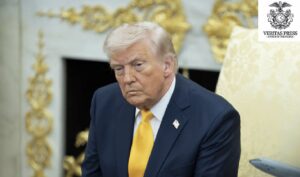
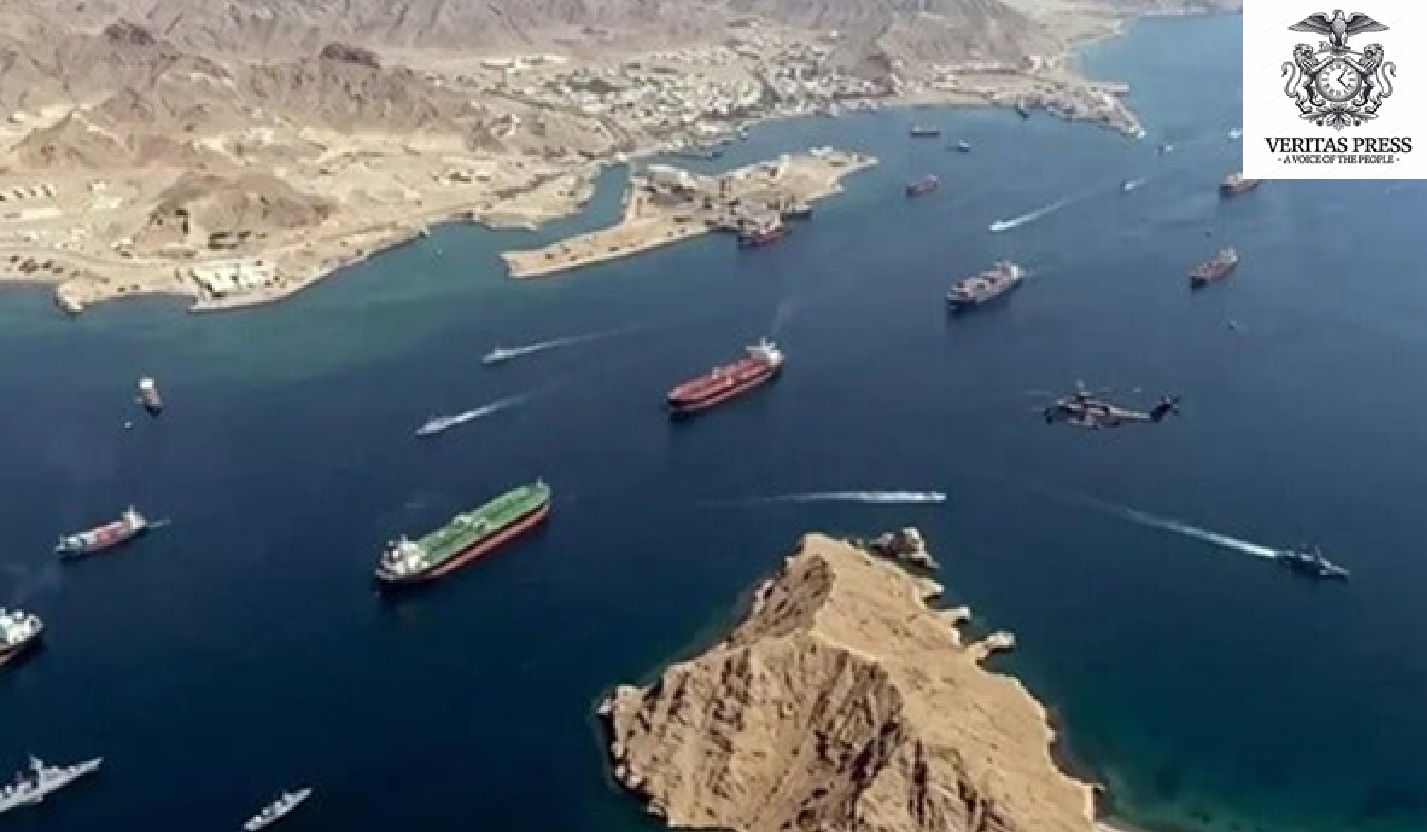
TEHRAN, April 13, 2026 – A tenuous two-week ceasefire has shattered, plunging the Persian Gulf into a direct naval confrontation. The US Navy, under direct orders from President Donald Trump, has begun enforcing a full naval blockade of all Iranian ports, a high-stakes gamble that global oil markets are already punishing with an immediate price shock. Iran, in an equally defiant response, has issued an ultimatum of its own, declaring that any aggression against its ports will render “no port in the Persian Gulf or the Sea of Oman safe,” and has vowed to maintain control over the strategic Strait of Hormuz indefinitely.
“Either Everyone Or No One”: The M.A.D. Doctrine Of The Gulf.
The confrontation crystallised in the early hours of Monday when US Central Command (CENTCOM) announced it would begin “blockading any and all Ships” attempting to enter or leave Iranian waters, effective 10:00 AM Eastern Time. The order came after a reported 21 hours of failed peace negotiations in Islamabad, Pakistan. US Vice President JD Vance, who led the delegation, stated that the American team had arrived with “open hands” but were forced to walk away due to Iran’s refusal to “commit to never seeking a nuclear weapon”.
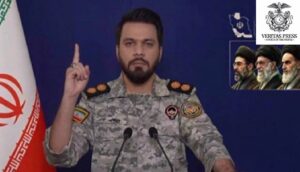
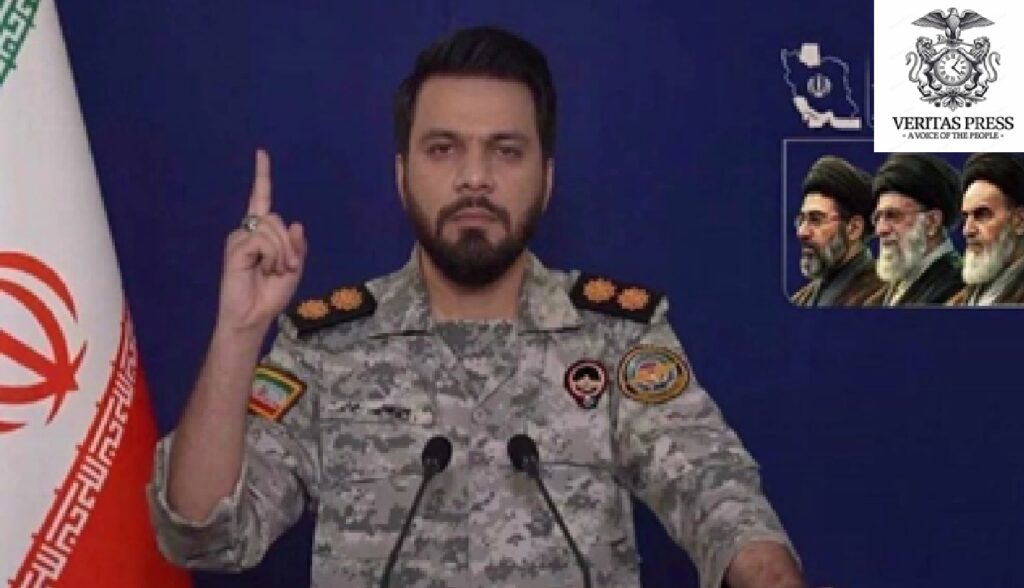
However, beneath the official narrative of nuclear non-proliferation lies a far more complex and volatile reality: a battle for economic survival and regional hegemony. Tehran’s response was not merely a military threat but a stark declaration of mutual economic destruction. The Islamic Republic’s Khatam al-Anbiya Central Headquarters, the country’s top military command, issued an unequivocal statement on Monday. Lieutenant Colonel Ebrahim Zolfaqari warned that the security of the Persian Gulf is a collective matter that must apply “either to everyone or no one”.
“If the security of the ports of the Islamic Republic of Iran in the waters of the Persian Gulf and the Sea of Oman is threatened, no port in the Persian Gulf and the Sea of Oman will be safe,” Zolfaghari stated, effectively laying out a maritime variant of Mutually Assured Destruction (MAD) that now holds the region’s critical infrastructure hostage.
While Zolfaqari’s rhetoric set the tone for total war, it was the political wing of the regime that weaponised global anxiety. Parliament Speaker Mohammad Bagher Ghalibaf took to social media to taunt the White House directly, attaching a screenshot of a gas station near the White House. “Enjoy the current pump figures. With the so-called ‘blockade,’ you will soon be nostalgic for $4-$5 gasoline,” Ghalibaf wrote, a calculated attempt to turn the blockade’s economic fallout back onto American consumers. Iranian Navy Commander Rear Admiral Shahram Irani dismissed Trump’s naval threats as “very ridiculous and laughable,” asserting that the Iranian military is meticulously tracking every US naval movement in the region.
The 8% Shock: Global Markets Teeter on the Edge
The international financial system reacted with immediate alarm. By midday Monday, the threat of a “dual chokepoint” crisis sent crude oil prices soaring nearly 10%. Brent crude futures surged past $103 per barrel, while West Texas Intermediate (WTI) topped $104, reversing the brief stability brought by the failed ceasefire. This represents a staggering 45% increase from pre-war levels of roughly $70 a barrel.
For analysts, the blockade of the Strait of Hormuz, through which approximately 20% of the world’s petroleum transits, represents an economic Rubicon. Goldman Sachs has warned that if the closure persists for another month, Brent prices will likely remain above $100 for the rest of the year, potentially spiking to $120 per barrel if regional oil infrastructure is damaged. This volatility has already begun to ripple through the Horn of Africa, where Morgan Stanley predicts a slow recovery only if the conflict de-escalates, a scenario that currently seems distant.
Bab Al-Mandab: The Forgotten Front.
While the world’s eyes are fixed on the missile batteries lining the Strait of Hormuz, a secondary, potentially more devastating front is opening 1,500 miles to the southwest. The Bab al-Mandab Strait, the narrow gateway between the Horn of Africa and the Arabian Peninsula, is rapidly becoming the conflict’s “Gate of Tears.”
The Iran-backed Houthis in Yemen have escalated their campaign against Red Sea shipping. Following missile and drone attacks on Saudi-operated oil tankers earlier this month, the Houthis have issued explicit threats to seize vessels linked to the US and Israeli camps. European naval commanders have admitted they are bracing for a “resumption of Houthi attacks,” acknowledging that the rebels could effectively close this waterway through which roughly 12% of global trade passes.
This southern front is not merely a sideshow; it is an existential threat to the Horn of Africa. A World Food Programme (WFP) analysis warns that the current disruptions could push an additional 45 million people globally into acute hunger, with Africa bearing the brunt of the impact.
“The Dead Will Pile Up”: The Humanitarian Meltdown In Africa.
An investigative examination of the ground-level data reveals a humanitarian catastrophe in the making, detached from the high-tech naval showdown. The Horn of Africa is uniquely vulnerable. Countries like Djibouti, which serves as the primary maritime gateway for landlocked Ethiopia, are facing systemic collapse. Over 90% of Ethiopia’s trade transits through Djiboutian ports, and any prolonged disruption to Red Sea shipping threatens to choke off food and fuel supplies to over 120 million people.
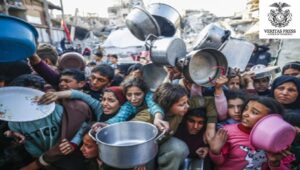
The numbers on the ground are staggering. UN experts report that crisis-level hunger in Somalia has nearly doubled in the past year, reaching 6.5 million people. The Integrated Food Security Phase Classification (IPC) warns that 1.84 million children under five are at risk of acute malnutrition, with nearly half a million facing severe, life-threatening conditions.
UNICEF reports that mothers in displacement camps in southern Somalia are struggling to keep their children alive, as the Iran war has exacerbated existing droughts and aid funding shortages. In Sudan, already ravaged by civil war, the World Food Programme estimates that over 21 million people (41% of the population) are acutely food insecure. The UN now predicts that 33.7 million Sudanese, two-thirds of the nation, will require humanitarian assistance in 2026, a number that will rise exponentially if Port Sudan is cut off from global shipping lanes.
The Legal Vacuum And The Descent Into Chaos:
From an investigative standpoint, this crisis represents a profound failure of international governance. UN Secretary-General Antonio Guterres has repeatedly expressed alarm, calling for an immediate cessation of hostilities and warning that the rhetoric from Washington “risks a wider regional conflict with grave consequences for civilians”. Yet, the Security Council remains paralysed, offering no mechanism to enforce the very international maritime laws both sides are trampling.
The US frames its blockade as a legitimate response to nuclear intransigence, but legal experts point out that imposing a blanket blockade, effectively a wartime measure, without a UN Security Council resolution against a nation not formally at war with the US exists in a grey zone of international law. Similarly, Iran’s threat to make the Gulf insecure for everyone is a direct violation of the UN Convention on the Law of the Sea (UNCLOS), which guarantees innocent passage.
Yet, in the current power vacuum, legal arguments are irrelevant. The Islamic Revolutionary Guard Corps (IRGC) Navy has already declared that “all movements and non-movements in the Strait of Hormuz are under complete control of the Iranian armed forces,” warning that “any erroneous manoeuvre will trap the enemy in deadly whirlpools”.
Conclusion: The New Normal.
As the sun sets on April 13, 2026, the world is witnessing a fundamental shift in the nature of conflict. This is no longer a proxy war fought in shadows; it is a direct economic siege. By weaponising chokepoints, both the United States and Iran have created a system where the primary victims are not soldiers on a battlefield, but the 6.5 million hungry Somalis, the displaced Sudanese families, and the global consumer paying at the pump.
Iranian Parliament Speaker Ghalibaf may have been grandstanding when he said, “If you fight, we will fight,” but his words reflect a grim reality. The blockade has begun. The missiles are primed. And for the millions living along the shores of the Bab al-Mandab, the Gate of Tears has never lived up to its name more cruelly than it does today.
Source: Multiple News Agencies
Submissions:
For The Secure Submission Of Documentation, Testimonies, Or Exclusive Investigative Reports From Any Global Location, Please Utilise The Following Contact Details For Our Investigations Desk: enquiries@veritaspress.co.uk or editor@veritaspress.co.uk
Help Support Our Work:
Popular Information is powered by readers who believe that truth still matters. When just a few more people step up to support this work, it means more lies exposed, more corruption uncovered, and more accountability where it’s long overdue.
Help Protect Independent Journalism, Which Is Currently Under Attack.
If you believe journalism should serve the public, not the powerful, and you’re in a position to help, becoming a DONATOR or a PAID SUBSCRIBER truly makes a difference.
DONATION APPEAL: If You Found This Reporting Valuable, Please Consider Supporting Independent Journalism.
Help Support Our Work – We Know, We Know, We Know …
Seeing these messages is annoying. We know that. (Imagine what it’s like writing them … )
Your support fuels our fearless, truth-driven journalism. In unity, we endeavour to amplify marginalised voices and champion justice, irrespective of geographical location.
But it’s also extremely important. One of Veritas Press’s greatest assets is its reader-funded model.
1. Reader funding means we can cover what we like. We’re not beholden to the political whims of a billionaire owner. We are a small, independent and impartial organisation. No one can tell us what not to say or what not to report.
2. Reader funding means we don’t have to chase clicks and traffic. We’re not desperately seeking your attention for its own sake: we pursue the stories that our editorial team deems important and believe are worthy of your time.
3. Reader Funding: enables us to keep our website and other social media channels open, allowing as many people as possible to access quality journalism from around the world, particularly those in places where the free press is under threat.
We know not everyone can afford to pay for news, but if you’ve been meaning to support us, now’s the time.
Your donation goes a long way. It helps us:
- Keep the lights on and sustain our day-to-day operations
- Hire new, talented independent reporters
- Launch real-time live debates, community-focused shows, and on-the-ground reporting
- Cover the issues that matter most to our communities, in real time, with depth and integrity
We have plans to expand our work, but we can’t do it without your support. Every contribution, no matter the size, helps us stay independent and build a truly people-powered media platform.
If you believe in journalism that informs, empowers, and reflects the communities we serve, please donate today.
TEHRAN, April 13, 2026 – A tenuous two-week ceasefire has shattered, plunging the Persian Gulf
ISLAMABAD / TEHRAN – In the hours after a 21-hour diplomatic marathon collapsed in Pakistan’s

VATICAN, WASHINGTON – In the annals of modern geopolitics, few confrontations have been as symbolically
WASHINGTON – The American experiment is under stress. Not from a foreign adversary or an
LONDON, UK – This wasn’t just another protest. On a Saturday afternoon in London’s Trafalgar
GAZA – The fragile ceasefire in Gaza was never a return to normalcy, but for
ISTANBUL — In a dramatic escalation of legal and political pressure against Israeli leadership, the
ISLAMABAD, TEHRAN, WASHINGTON – For 21 hours, the world watched Islamabad. Delegations from Washington and
GAZA CITY / GENEVA – The ceasefire was supposed to mark the beginning of the
EAST JERUSALEM — On a crisp April morning in the Ras al-Amud neighbourhood of Silwan,