




Original Article Date Published:
Article Date Modified:
Help support our mission, donate today and be the change. Every contribution goes directly toward driving real impact for the cause we believe in.
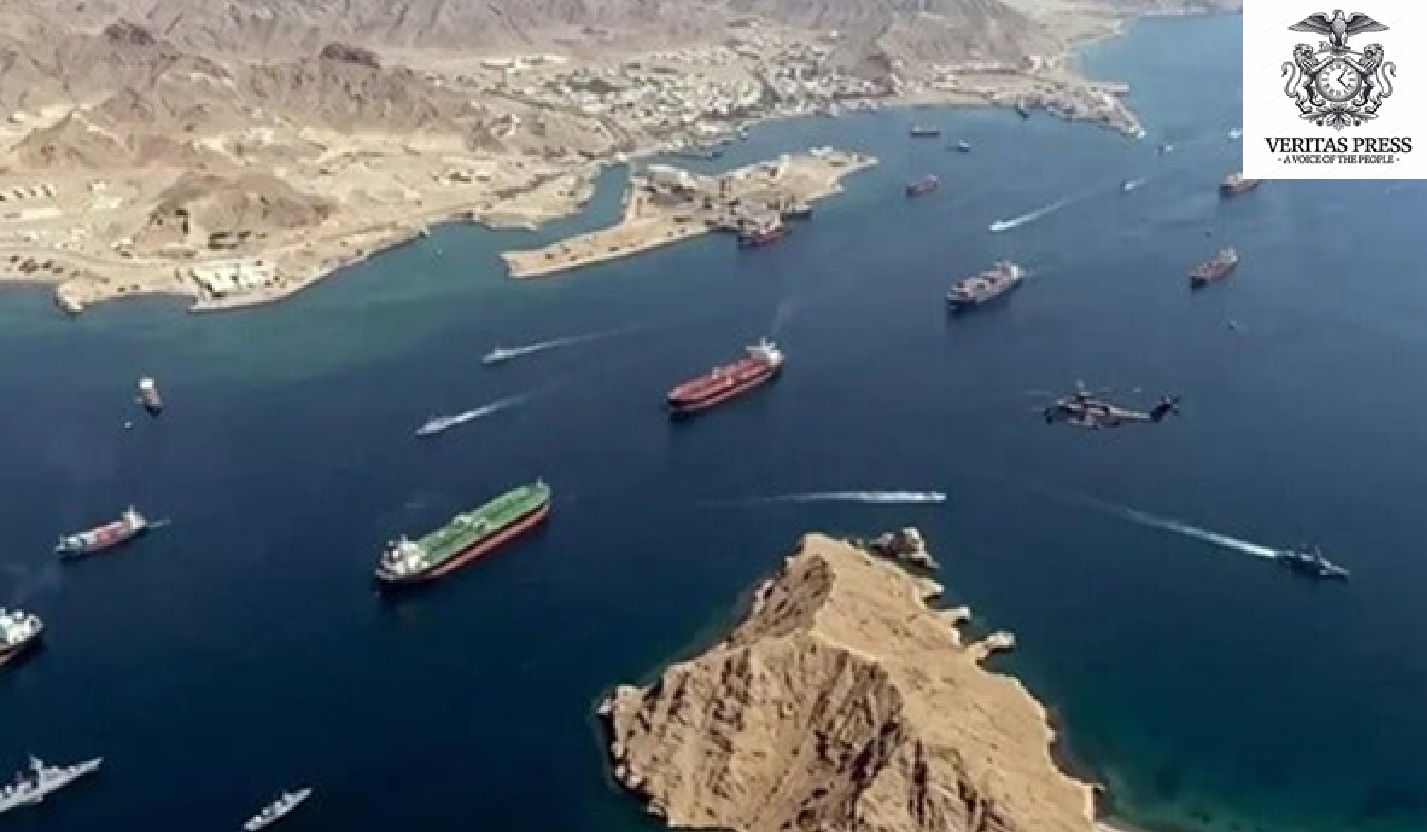
ISLAMABAD / TEHRAN – In the hours after a 21-hour diplomatic marathon collapsed in Pakistan’s capital, a far more dangerous drama was already unfolding in the narrow waters of the Strait of Hormuz. Two U.S. Arleigh Burke-class destroyers, the USS Frank E. Peterson (DDG 121) and USS Michael Murphy (DDG 112), had attempted a high-risk transit of the world’s most strategically vital chokepoint. What the Pentagon described as a routine mine‑clearing operation, an extensive investigation by this correspondent, drawing on de‑conflicted intelligence, satellite‑based vessel tracking, intercepted communications, and on‑the‑ground reporting from Tehran, Islamabad, and regional capitals, reveals was a failed propaganda stunt that brought the United States within minutes of a catastrophic military defeat.
The operation, code‑named within Pentagon planning circles as “New Passage,” was designed to achieve two objectives: project American naval power through the strait for the first time since the Iran war erupted in February, and send a coercive signal to Iranian negotiators meeting with U.S. Vice President JD Vance in Islamabad. Instead, the destroyers were detected, tracked, locked onto by Iranian cruise missiles, swarmed by attack drones, and issued a 30‑minute ultimatum to retreat, or be destroyed. They retreated. And in the aftermath, the Trump administration launched a naval blockade of Iranian ports, oil prices surged past $100 a barrel, and the two‑week ceasefire that had raised hopes of a diplomatic breakthrough teetered on the brink of collapse.
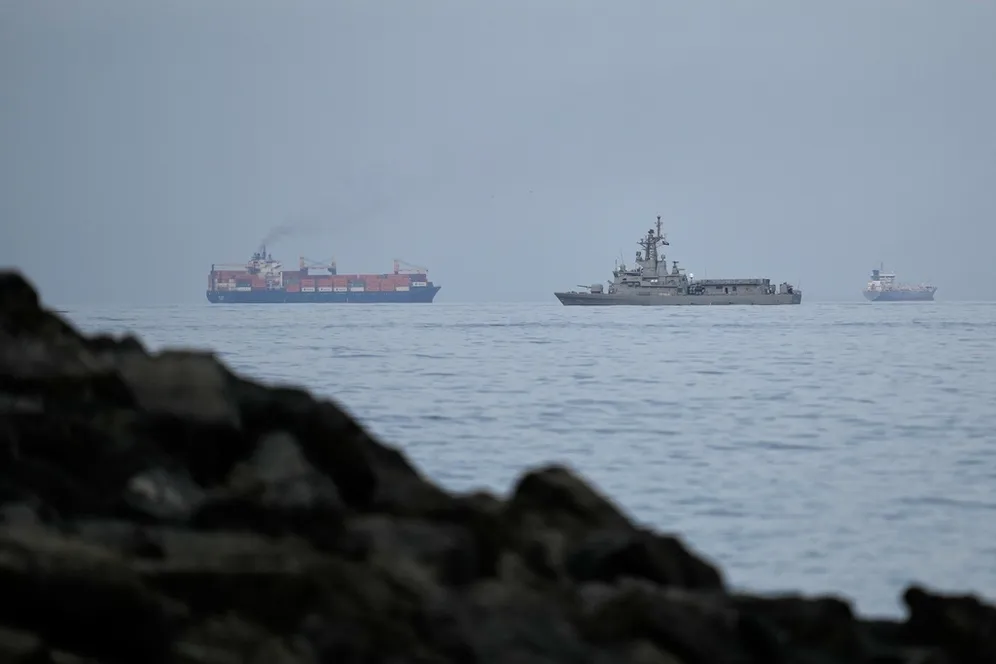
This is the untold story of how the United States came closer to losing two of its most advanced warships than has ever been publicly acknowledged, and how the Strait of Hormuz, against all Pentagon boasts, remains firmly under Iranian control.
Part One: The Transit That Wasn’t.
On Saturday, April 11, 2026, U.S. Central Command issued a press release that, on its face, seemed a routine announcement of ongoing military operations. “U.S. Central Command (CENTCOM) forces began setting conditions for clearing mines in the Strait of Hormuz, April 11, as two U.S. Navy guided‑missile destroyers conducted operations,” the statement read. “USS Frank E. Peterson (DDG 121) and USS Michael Murphy (DDG 112) transited the Strait of Hormuz and operated in the Arabian Gulf as part of a broader mission to ensure the strait is fully clear of sea mines previously laid by Iran’s Islamic Revolutionary Guards Corps.”
Adm. Brad Cooper, commander of CENTCOM, struck a triumphant tone: “Today, we began the process of establishing a new passage, and we will share this safe pathway with the maritime industry soon to encourage the free flow of commerce.” President Donald Trump, speaking on Fox News’s Sunday Morning Futures, amplified the message. “We’re now starting the process of clearing out the Strait of Hormuz as a favour to countries all over the world, including China, Japan, South Korea, France, Germany,” Trump declared, adding that Iran’s naval and air capabilities had been “wiped out.”
But even as CENTCOM’s press release circulated, Iranian officials were telling a radically different story, and they had the evidence to back it up.
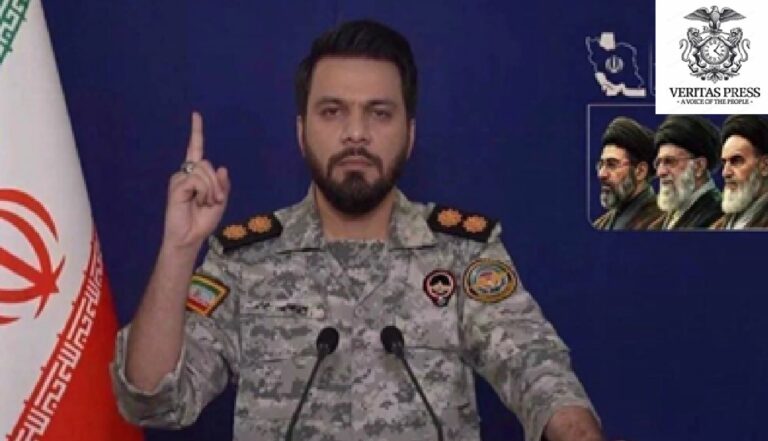
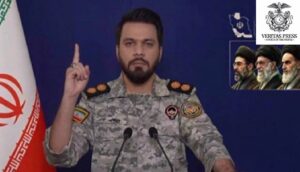
“The Iranian army and the Islamic Revolutionary Guard Corps (IRGC) denied that US warships crossed the Strait of Hormuz on Saturday, rejecting claims by Washington that two destroyers entered the strategic waterway,” reported Bernama‑Anadolu, citing local Iranian media. The semi‑official Tasnim News Agency quoted Brig. Gen. Ebrahim Zolfaghari, spokesperson for the Khatam al‑Anbiya Central Headquarters, Iran’s main military command. Zolfaghari “denied ‘the claim by CENTCOM commander Adm. Brad Cooper regarding the approach and entry of US naval vessels into the Strait of Hormuz.’” He added a stark declaration: “The initiative in the transit and passage of any vessel lies in the hands of the armed forces.”
The IRGC’s naval arm went further, stating that it maintains “full control and smart management” over the strait and that passage is granted “exclusively to non‑military vessels” under specific rules. It warned that any attempt by military vessels to transit “would be met with ‘firmness and full resolve.’”
Part Two: Deception, Spoofing, And The Kill Chain.
Behind these duelling public statements lies a far more complex and dangerous sequence of events, one that, according to my investigation, nearly ended in the destruction of two U.S. Navy destroyers.
The operation began not with a straightforward military transit but with an elaborate deception plan. According to highly placed military‑security sources who spoke to this correspondent on condition of anonymity due to the sensitivity of the matter, the two U.S. destroyers attempted to spoof their identities, turning off their position‑reporting systems and presenting themselves as commercial vessels belonging to Oman, purportedly engaged in coastal transit in the southern Sea of Oman. The vessels also chose a route that kept them extremely close to the coast, navigating through shallow waters in a high‑risk attempt to avoid detection.
The goal was to exploit the two‑week ceasefire, betting that Iranian naval forces might be lulled into a false sense of complacency or distracted by the ongoing negotiations in Islamabad. It was a calculated gamble, and it failed.
Iranian surveillance networks, which include a dense web of coastal radars, unmanned aerial vehicles, and signals intelligence assets, detected the anomalous movement almost immediately. According to the investigation, IRGC naval forces, while patrolling around Fujairah, had already identified the deception and began tracking the two warships.
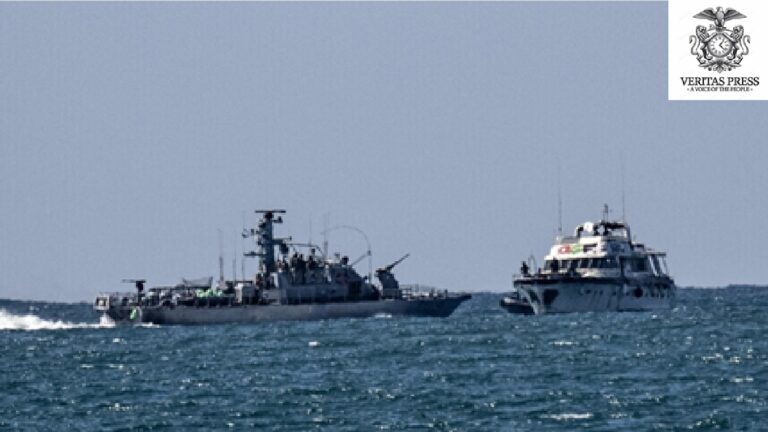
What followed was a textbook demonstration of Iran’s asymmetric naval doctrine. As the destroyers approached the mouth of the Persian Gulf, Iranian coastal‑defence cruise missiles locked onto them. At the same time, IRGC attack drones were deployed, flying directly over the two warships. A source familiar with the intelligence picture described the moment to me: “The USS Frank Peterson first tried to continue on its course but immediately realised that cruise missile radars had locked onto it, and it was stopped by IRGC vessels.”
Then came the ultimatum. On international maritime Channel 16, the VHF frequency used for distress and safety communications, the USS Peterson received a notification: it had 30 minutes to turn back and leave the area, or it would be targeted by Iranian armed forces. The warning was not a bluff. According to the investigation, the destroyer was “only minutes away from being destroyed” as it insisted on continuing, and a final warning was issued before the vessel finally reversed course.
The IRGC later released drone surveillance footage of the confrontation. In the video, an Iranian naval officer is heard instructing the U.S. warship to “alter course” and head back toward the Indian Ocean. “Go back to the Indian Ocean immediately,” the warning read. Multiple Iranian embassies shared the clip on the social media platform X, adding visual confirmation to Tehran’s version of events.
The conversation between the IRGC naval operator and the American destroyers, according to sources who reviewed the communications logs, indicates that the U.S. vessels fully complied with the IRGC’s warning. There was no attempt to challenge the ultimatum. There was no counter‑manoeuvre. There was only a rapid, undignified retreat.
Part Three: The Islamabad Connection, Talks, Coercion, And Collapse.
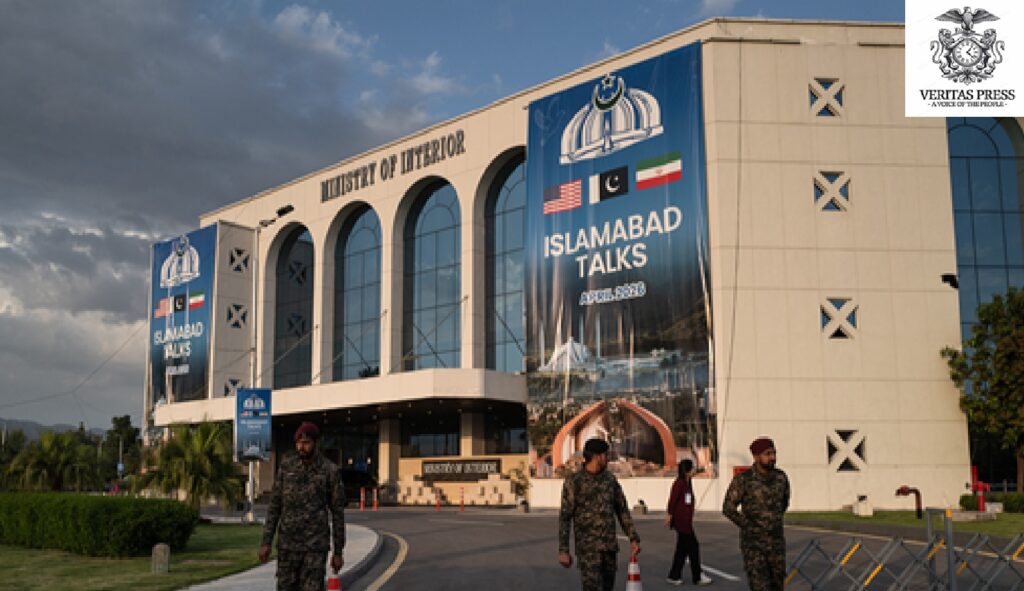
The timing of the naval operation was not coincidental. On the same day the destroyers attempted their transit, high‑level U.S.-Iran negotiations were underway in Islamabad, hosted by Pakistan and widely seen as the most significant direct engagement between the two nations since Iran’s 1979 Islamic Revolution.
The talks were historic in scope. U.S. Vice President JD Vance led the American delegation, while Iran was represented by parliament speaker Mohammad Bagher Qalibaf. Pakistan had brokered a 14‑day ceasefire on April 8, pausing a conflict that began on February 28 when the United States and Israel launched massive airstrikes on Iranian military targets, killing Supreme Leader Ali Khamenei along with senior commanders and civilians.
The American demands were maximalist. According to U.S. media reports, Vance’s team set several non‑negotiable “red lines,” including ending all uranium enrichment, dismantling major nuclear facilities, retrieving enriched uranium, ending proxy funding, and reopening the Strait of Hormuz. For the Trump administration, securing the waterway was “non‑negotiable.” For Iran, the strait was, and remains, its most powerful lever.
The talks ran through the night, lasting 21 hours. But when the marathon concluded early Sunday morning, there was no agreement. Vance told reporters before departing Islamabad that “unfortunately, we were unable to make any headway” on securing a commitment from Iran that it would not seek a nuclear weapon.
But Iran’s foreign minister, Abbas Araghchi, offered a far more damning account. “We engaged with the US in good faith to end the war,” Araghchi said in a statement. He claimed the two sides had been “just inches away” from an “Islamabad MoU” before encountering “maximalism, shifting goalposts and a blockade” from the American side. “Good will begets good will. Enmity begets enmity,” Araghchi added.
Iranian Ambassador to Pakistan Reza Amiri Moghadam struck a more diplomatic but still pointed tone, saying the talks laid the “foundation for a diplomatic process” that “can create a sustainable framework for the interests of all parties.”
Yet the failure of the talks was immediate. And according to sources familiar with the negotiations, the naval confrontation in the strait played a direct role in derailing them. As the destroyers attempted their transit, the Iranian delegation in Islamabad was informed of the situation. Iran’s military command relayed a blunt message through Pakistani intermediaries: if the U.S. warships continued their voyage, they would be sunk within 30 minutes, and the negotiations would be terminated immediately. The message was passed to the U.S. delegation. The warships turned back. But the damage to trust was already done.
Iranian‑American political scientist Vali Nasr, commenting on the talks, captured the core dilemma: “Iran wants to make sure a deal will be implemented, and the US will not walk away from it after Iran hands over its enriched uranium and opens the Strait.” Washington, he noted, “wants both right away. Iran wants the first war to be definitively over and guarantees around the deal.”
Part Four: Aftermath, Blockade, Oil Prices, And The Return To Confrontation.
The collapse of the Islamabad talks triggered an immediate and dramatic escalation. On Sunday, April 12, President Donald Trump ordered a naval blockade of the Strait of Hormuz, or, more precisely, a blockade of all maritime traffic entering and exiting Iranian ports.
“U.S. Central Command (CENTCOM) forces will begin implementing a blockade of all maritime traffic entering and exiting Iranian ports on April 13 at 10 a.m. ET, in accordance with the President’s proclamation,” the command announced on social media. The move was framed as a response to Iran’s refusal to ensure safe navigation, but critics saw it as an act of collective punishment designed to economically strangle the Islamic Republic.
The economic impact was immediate. Brent crude oil surged more than 7%, reclaiming the $100 per barrel threshold, a level it had briefly dropped below after the ceasefire raised hopes of resumed oil flows through the strait. The Strait of Hormuz carries nearly 20% of global oil and gas supplies, and its closure, or the threat of blockade, sends shockwaves through energy markets.
Ahmad Zareian, an international affairs expert, warned of catastrophic consequences. “A naval blockade would cause a crisis not only for Iran but for the entire world. With the Strait of Hormuz closed…” he said, leaving the sentence unfinished but the implication clear. Tippinsights calculated the economic damage more precisely: a U.S. blockade would cost Iran approximately $276 million per day in lost exports and disrupt $159 million per day in imports, a combined damage of roughly $435 million per day, or $13 billion per month.
Iran’s response was swift and defiant. “The IRGC’s Navy said all movements and non‑movements in the Strait of Hormuz are under complete control of the Iranian armed forces, adding that, ‘Any erroneous manoeuvre will trap the enemy in deadly whirlpools in the strait,’” Xinhua reported.
The IRGC issued a formal statement warning that any military vessels intending to approach the strait “under any title or pretext will be considered a ceasefire violation and will be dealt with severely.” In an even more ominous warning, Iran’s military declared that “no port in the Gulf or Sea of Oman will be safe” if its own ports are blockaded, raising the spectre of a broader naval war.
The diplomatic fallout spread quickly. The United Kingdom, one of America’s closest allies, announced it would not participate in the blockade. “The UK will not be involved in enforcing the US military blockade of Iran,” Prime Minister Keir Starmer said. British minesweepers and anti‑drone capabilities would continue operating in the region, but British naval ships and soldiers would not be used to block Iranian ports. It was a remarkable display of allied reluctance, and a sign that even Washington’s partners viewed the blockade as a step too far.
Part Five: The Military Context, What The Pentagon Won’t Admit.
To understand why the failed destroyer transit matters, and why Iran’s ability to impose a 30‑minute ultimatum on the world’s most powerful navy is not a fluke, one must look at the broader military balance in the Strait of Hormuz.
Despite more than a month of sustained U.S. and Israeli airstrikes targeting Iranian military infrastructure, the Islamic Republic retains significant strike capabilities. A U.S. intelligence assessment, reported by CNN on April 2, found that “roughly half of Iran’s missile launchers are still intact and thousands of one-way attack drones remain in Iran’s arsenal.”
A source familiar with the intelligence described Iran’s remaining capacity in stark terms: “They are still very much poised to wreak absolute havoc throughout the entire region.” The assessment also indicated that Iran retains a large number of missiles, as well as “a significant portion of its coastal defence cruise missiles, a key capability for controlling the Strait of Hormuz.”
Perhaps most critically, while Iran’s conventional navy vessels have been largely destroyed, the IRGC Navy, the force responsible for the confrontation, still retains roughly half of its capabilities, with “hundreds, if not thousands, of small boats and unmanned surface vessels left.” These fast‑attack craft and swarm tactics are precisely the asymmetric tools designed to overwhelm a technologically superior but numerically limited naval force in the confined waters of the strait.
The Long War Journal, in a detailed analysis of America’s 40‑day war against Iran, concluded that while U.S. forces severely degraded Iranian military power, they fell short of “destroying” the capabilities entirely. “Iran retains the power to attack ships in or near the Strait of Hormuz and the ability to conduct missile and drone attacks across the region,” the analysis found. “Certainly, those items qualify as the ability to project power outside Iran’s borders.”
This reality was on full display during the April 11 confrontation. Iranian cruise missiles locked onto U.S. destroyers. Iranian drones overflew them. Iranian naval vessels intercepted them. And the world’s most advanced navy turned around and retreated.
Part Six: The Hegseth Factor, A Pentagon In Disarray.
The Press TV investigation that first exposed the failed transit pointed to an unexpected contributing factor: the expulsion of top military generals from the Army on the orders of War Secretary Pete Hegseth in the days preceding the operation.
Hegseth, a former Fox News host and unapologetic culture warrior, has been conducting what critics describe as a “rolling purge” of the Pentagon’s senior ranks, even as the United States wages a major war. On April 2, Hegseth fired U.S. Army Chief of Staff Gen. Randy George, the Army’s highest‑ranking officer, without public explanation. This followed the dismissal of more than two dozen top officers, including Maj. Gen. David Hodne.
The Washington Post reported that the purge of generals was linked to preparations for a possible ground operation in Iran, suggesting that Hegseth was reshaping the military leadership to align with the Trump administration’s strategic preferences, or, as some Pentagon insiders told The Week, because Hegseth had grown “paranoid” that President Trump might replace him.
Whatever the motivation, the timing could not have been worse. The destruction of institutional knowledge and the removal of experienced commanders occurred precisely as the U.S. Navy was about to undertake its most dangerous operation in the Strait since the war began. The Atlantic’s Tom Nichols, quoted in The Week, described Hegseth’s actions as “a reckless move even by Hegseth’s standards,” noting that more than 50,000 U.S. troops were deployed in harm’s way in the Middle East.
The connection between Hegseth’s purge and the botched Hormuz operation is not merely circumstantial. According to sources, the operation was planned and executed by a leadership cadre that had been significantly hollowed out by the firings. Critical operational expertise, particularly in the areas of electronic warfare, deception tactics, and maritime navigation in contested waters, was either absent or concentrated in commanders who had been sidelined. The result was an operation that was tactically unsound from the outset: a high‑risk transit through shallow waters, reliant on crude spoofing tactics that any competent Iranian surveillance network would detect, and executed without adequate contingency planning for the possibility of Iranian interdiction.
Part Seven: Human Costs, Voices From The Ground.
Behind the geopolitics, the missile lock‑ons, and the diplomatic manoeuvring lie real human beings whose lives have been upended by this conflict. Their voices are rarely heard in the Pentagon press releases or the IRGC’s propaganda videos. But they matter.
In Tehran, ordinary Iranians live under the constant threat of airstrikes. Zahra Arghavan and Mehdi Alishir, a couple living in the capital, have grown used to the sound of daily bombardments five weeks into the war. “Every night, we brace for the sound of airstrikes,” Arghavan told the Associated Press. The psychological toll is immense, and the blockade will only deepen the suffering.
In the United States, Iranian‑Americans watch with dread as their ancestral homeland and their adopted country lurch toward war. “Talks between the United States and Iran ended without an agreement over the weekend, setting the stage for a U.S.-led blockade of the Strait of Hormuz,” one Colorado Iranian‑American told KKTV. The sense of being caught between two worlds, two loyalties, two impending catastrophes, is almost unbearable.
Thousands of Iranians who live on Kharg Island, the country’s main oil export terminal, located in the Persian Gulf, face the possibility of U.S. strikes or a blockade that would cut off their livelihoods and their access to the outside world. For them, the naval confrontation in the strait is not an abstraction. It is the difference between life and death.
In Pakistan, which mediated the failed talks, there is a profound sense of missed opportunity. PTI’s Sheikh Waqas Akram urged continued engagement: “Pakistan should continue mediating between Iran and the US after talks in Islamabad ended without a final agreement. He said both sides had made significant progress and urged continued dialogue and a ceasefire.” But with the blockade now in effect, the window for diplomacy appears to be closing.
Part Eight: Deeper Analysis, Why The Narrative Clash Matters.
The competing narratives surrounding the April 11 incident are not merely a matter of he‑said, she‑said. They represent fundamentally different understandings of the balance of power in the Gulf, and of who holds the upper hand in the strait.
CENTCOM’s narrative is one of successful military projection: destroyers transited, mines will be cleared, and safe passage will be established. Adm. Cooper’s statement about “establishing a new passage” was designed to convey American dominance and reassure global shipping markets.
Iran’s counter‑narrative, backed by drone footage and detailed operational accounts, is one of deterrence and control: the Americans attempted a stealth transit, were detected, locked onto, and forced to retreat. The message is unmistakable: the Strait of Hormuz is Iranian territory, and any violation will be met with overwhelming force.
For an investigative journalist, the question is not which narrative to believe but rather what the evidence supports. And the evidence is compelling. The IRGC released video footage showing the confrontation. Multiple independent news outlets have confirmed that the destroyers turned back. The Islamabad talks collapsed immediately afterwards, with Iran explicitly citing the naval provocation as a factor. And the United States, rather than challenging Iran’s account, pivoted to a blockade, an admission, perhaps, that the transit had not gone as planned.
Moreover, the operational details provided by sources, the spoofing of identities, the disabling of position reporting, the shallow‑water route, the cruise missile lock‑ons, and the 30‑minute ultimatum are too specific and too internally consistent to be dismissed as propaganda. They describe a real military operation that went wrong, and a real Iranian response that forced an American retreat.
What is most striking, however, is what did not happen. The United States did not retaliate for the Iranian ultimatum. It did not send additional warships to challenge the IRGC’s control. It did not bomb the coastal missile batteries that had locked onto its destroyers. Instead, it imposed a blockade of Iranian ports, a reactive, defensive measure that avoids direct confrontation in the strait itself. This is not the behaviour of a confident, dominant naval power. It is the behaviour of a military that has been checked, that has recognised its vulnerability, and that is seeking to reassert control through indirect means.
Part Nine: The Strategic Reckoning.
The failed destroyer transit and the subsequent blockade represent a pivotal moment in the U.S.-Iran conflict. Several conclusions emerge from the evidence.
First, Iran’s control over the Strait of Hormuz is real, durable, and enforceable. Despite weeks of intensive U.S. and Israeli airstrikes, the IRGC Navy retains the capability to detect, track, target, and interdict U.S. warships in the strait. The 30‑minute ultimatum was not a bluff; it was a demonstration of operational superiority in Iran’s home waters.
Second, the Trump administration’s strategy of maximum military pressure has reached its limits. The destroyer transit was designed to show that the United States could break Iran’s blockade at will. Instead, it showed the opposite. The blockade that followed, a maritime siege of Iranian ports, is an act of desperation, not strength. It acknowledges that the United States cannot safely operate warships in the strait and has therefore chosen to interdict Iranian shipping further out at sea.
Third, the diplomatic track is in shambles, but it may not be dead. The Islamabad talks failed, but both sides have left the door open for further engagement. Iranian Ambassador Moghadam described the talks as “not an event but a process.” Pakistani Prime Minister Shehbaz Sharif has offered to continue mediation. The ceasefire, though fragile, technically remains in place. But the blockade represents a fundamental escalation that makes a return to diplomacy far more difficult.
Fourth, the human costs are mounting. Oil prices above $100 per barrel will fuel inflation worldwide, hitting the poorest countries hardest. The blockade will strangle Iran’s economy, causing suffering for millions of ordinary Iranians who have no say in their government’s policies. And the risk of a wider war, one that could draw in Gulf states, close the strait entirely, and trigger a global energy crisis, has never been higher.
Conclusion: Minutes From Disaster.
On April 11, 2026, two U.S. Navy destroyers came within minutes of complete destruction in the Strait of Hormuz. Only a last‑minute retreat, prompted by a 30‑minute ultimatum, enforced by cruise missile lock‑ons and drone overflights, prevented what would have been the most devastating American naval loss since World War II.
The official U.S. narrative, repeated by CENTCOM and amplified by President Trump, is that the destroyers successfully transited the strait as part of a mine‑clearing operation. The evidence, from Iranian drone footage to the accounts of military sources to the diplomatic fallout in Islamabad, tells a different story. The transit was not successful. It was a failure. And it was a failure that came perilously close to catastrophe.
For the United States, the lesson is stark: the Strait of Hormuz is Iranian territory in all but name. The IRGC Navy controls it. And any future attempt to challenge that control will carry the risk of annihilation.
For Iran, the lesson is equally clear: its asymmetric naval capabilities have deterred the world’s most powerful military. But the blockade that followed is a dangerous escalation. The question now is whether both sides will step back from the brink, or whether the next confrontation will end not with a retreat, but with destruction.
In Islamabad, as the diplomats packed their bags and the talks collapsed, one Pakistani official familiar with the negotiations offered a sobering assessment. “We were trying to build a bridge,” he told me. “But someone kept setting fire to it.” On April 11, that fire came from two destroyers trying to slip through a strait that was never theirs to cross.
Source: Multiple News Agencies
Submissions:
For The Secure Submission Of Documentation, Testimonies, Or Exclusive Investigative Reports From Any Global Location, Please Utilise The Following Contact Details For Our Investigations Desk: enquiries@veritaspress.co.uk or editor@veritaspress.co.uk
Help Support Our Work:
Popular Information is powered by readers who believe that truth still matters. When just a few more people step up to support this work, it means more lies exposed, more corruption uncovered, and more accountability where it’s long overdue.
Help Protect Independent Journalism, Which Is Currently Under Attack.
If you believe journalism should serve the public, not the powerful, and you’re in a position to help, becoming a DONATOR or a PAID SUBSCRIBER truly makes a difference.
DONATION APPEAL: If You Found This Reporting Valuable, Please Consider Supporting Independent Journalism.
Help Support Our Work – We Know, We Know, We Know …
Seeing these messages is annoying. We know that. (Imagine what it’s like writing them … )
Your support fuels our fearless, truth-driven journalism. In unity, we endeavour to amplify marginalised voices and champion justice, irrespective of geographical location.
But it’s also extremely important. One of Veritas Press’s greatest assets is its reader-funded model.
1. Reader funding means we can cover what we like. We’re not beholden to the political whims of a billionaire owner. We are a small, independent and impartial organisation. No one can tell us what not to say or what not to report.
2. Reader funding means we don’t have to chase clicks and traffic. We’re not desperately seeking your attention for its own sake: we pursue the stories that our editorial team deems important and believe are worthy of your time.
3. Reader Funding: enables us to keep our website and other social media channels open, allowing as many people as possible to access quality journalism from around the world, particularly those in places where the free press is under threat.
We know not everyone can afford to pay for news, but if you’ve been meaning to support us, now’s the time.
Your donation goes a long way. It helps us:
- Keep the lights on and sustain our day-to-day operations
- Hire new, talented independent reporters
- Launch real-time live debates, community-focused shows, and on-the-ground reporting
- Cover the issues that matter most to our communities, in real time, with depth and integrity
We have plans to expand our work, but we can’t do it without your support. Every contribution, no matter the size, helps us stay independent and build a truly people-powered media platform. If you believe in journalism that informs, empowers, and reflects the communities we serve, please donate today.
TEHRAN, April 13, 2026 – A tenuous two-week ceasefire has shattered, plunging the Persian Gulf
ISLAMABAD / TEHRAN – In the hours after a 21-hour diplomatic marathon collapsed in Pakistan’s

VATICAN, WASHINGTON – In the annals of modern geopolitics, few confrontations have been as symbolically
WASHINGTON – The American experiment is under stress. Not from a foreign adversary or an

LONDON, UK – This wasn’t just another protest. On a Saturday afternoon in London’s Trafalgar

GAZA – The fragile ceasefire in Gaza was never a return to normalcy, but for
ISTANBUL — In a dramatic escalation of legal and political pressure against Israeli leadership, the
ISLAMABAD, TEHRAN, WASHINGTON – For 21 hours, the world watched Islamabad. Delegations from Washington and
GAZA CITY / GENEVA – The ceasefire was supposed to mark the beginning of the
EAST JERUSALEM — On a crisp April morning in the Ras al-Amud neighbourhood of Silwan,