





Original Article Date Published:
Article Date Modified:
Help support our mission, donate today and be the change. Every contribution goes directly toward driving real impact for the cause we believe in.
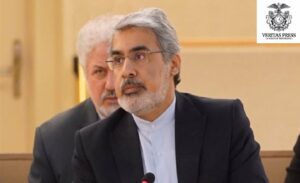
GENEVA / MINAB — In the sterile, diplomatic corridors of the United Nations in Geneva, the language is precise, measured, and rooted in the lexicons of international humanitarian law. But the words delivered by Iran’s ambassador on Wednesday carried the weight of smouldering rubble and the grief of a nation.
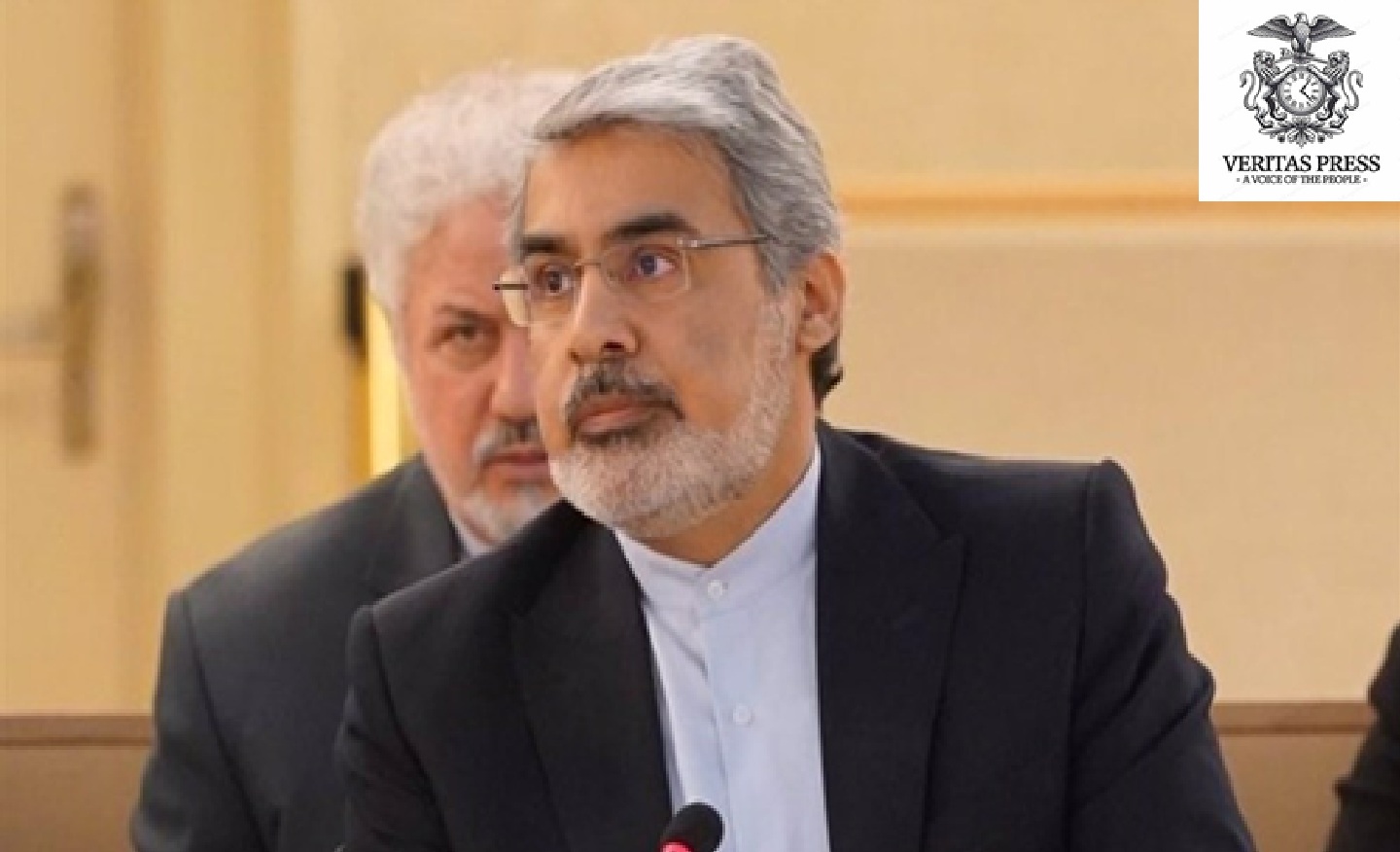
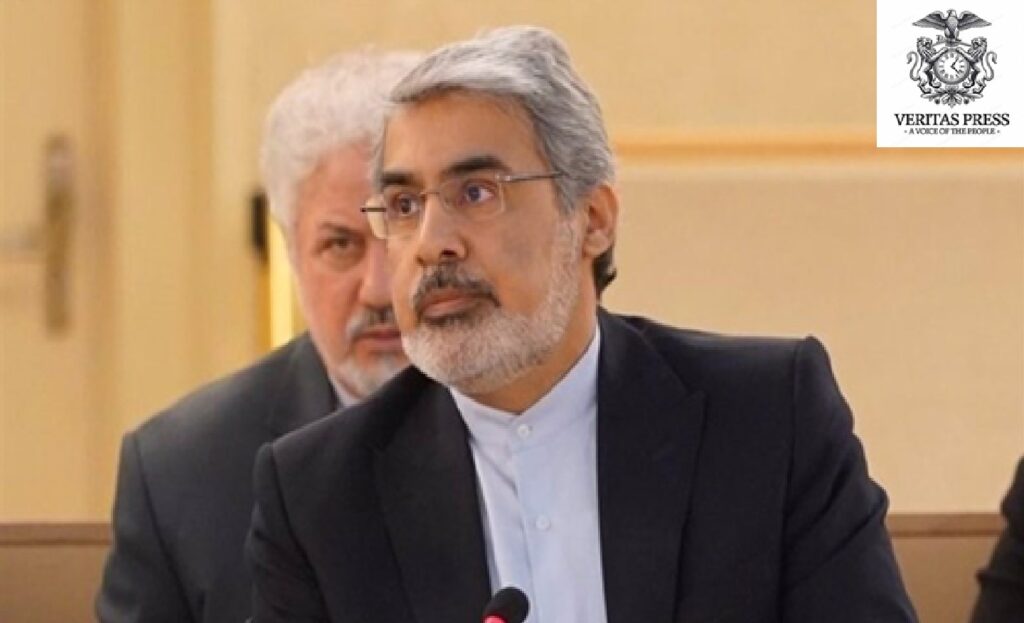
Ali Bahraini, Iran’s permanent representative to the international organisations in Geneva, stood before the Group of Governmental Experts (GGE) on Lethal Autonomous Weapon Systems (LAWS) and levelled an accusation that cuts to the very heart of 21st-century warfare. He formally denounced the use of autonomous killer systems by the US and Israel against Iranian civilians, asserting that the deployment of such weaponry constitutes a grave “war crime” and a blatant violation of international law.
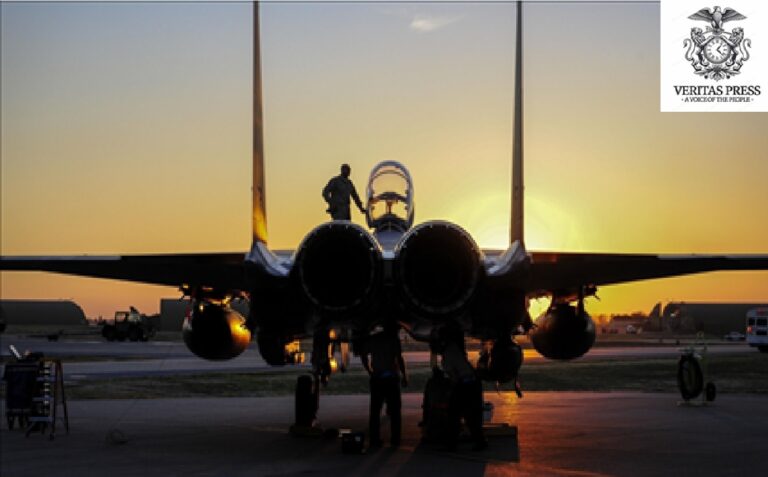
Bahraini’s statement was not a hypothetical warning about a dystopian future; it was a prosecution of the present. “The intentional application of autonomous killer systems, like the extensive use of MQ-9 Reaper and LUCAS drones by the United States and the Israeli regime on unarmed individuals and non-military structures, marks a flagrant breach of international principles,” he declared. He anchored his condemnation to a specific, bloody coordinate on the map: the southern city of Minab, where, according to Iranian officials, an indiscriminate attack massacred 160 schoolgirls.
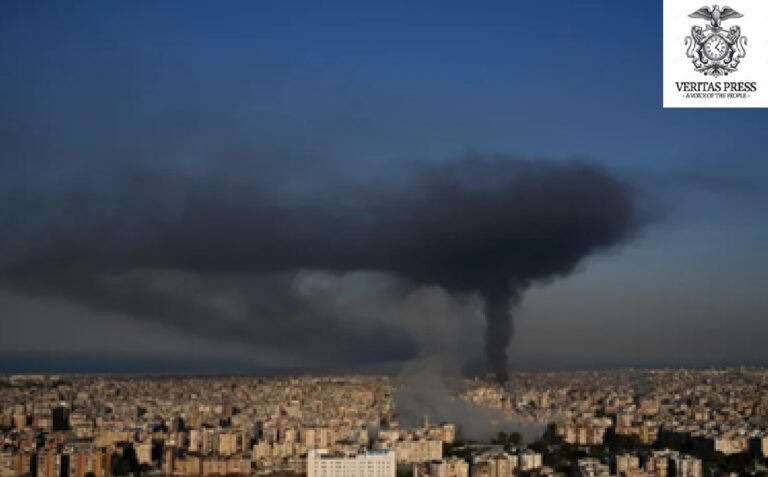
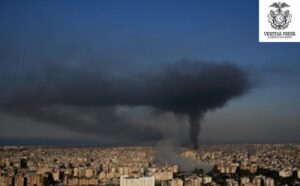
While Bahrain addressed the world body, a very different scene unfolded 4,000 kilometres away in Minab. Thousands of mourners filled the streets for a mass funeral, not for soldiers, but for children. “The ground didn’t just shake from the bombs; it shook from the weeping,” one local resident, who wished to remain anonymous for fear of reprisal, told Arise News. “They were in their classroom. They were learning their lessons. Who programs a missile to kill a child?”
The ‘Black Box’ Accountability: An Investigative Critique
The horror of Minab is not just the death toll, which the Saudi Gazette now reports has climbed to at least 787 across Iran, with the Iranian Red Crescent confirming the mounting casualties, but the mechanism of the killing. Ambassador Bahraini specifically named the MQ-9 Reaper and LUCAS (Loitering Munitions) as the instruments of death. These are not precision-guided munitions in the traditional sense; they are platforms capable of selecting and engaging targets with minimal human intervention.
This reliance on autonomy creates what critics call an “accountability-dissolving machine.” As reported by The New Republic in a deep-dive investigation published just days after the strikes, the US military has been aggressively pursuing the integration of AI into its kill-chain. The Pentagon’s standard contractual clause requiring AI firms to agree to “any lawful use” of their technology is designed to eliminate any friction between corporate ethics and military application.
The timing of the strikes on Iran has exposed a fierce debate within the US military-industrial complex. Just days before the bombing of Minab, the Trump administration declared the AI lab Anthropic a “supply chain risk to national security, a designation usually reserved for adversarial foreign firms, because Anthropic refused to waive its ban on its AI model “Claude” being used in autonomous weapons.
“Anthropic had asked for two things: a contractual guarantee that its generative AI model, Claude, would not be used as part of autonomous weapons systems… The administration knew the terms. It was signed anyway. And then it decided, months later, that those terms were intolerable,” the investigation revealed.
In contrast, competitors like OpenAI (led by Sam Altman) and xAI (led by Elon Musk) quickly moved to fill the void, agreeing to the military’s terms. This has sparked an urgent question among ethicists and legal scholars: Were the systems that identified the school in Minab as a target, or the loitering munitions that may have circled above it awaiting final confirmation, powered by or reliant upon AI models whose creators have explicitly waived their right to object to their use in killing?
“When an algorithm makes a targeting recommendation, and a human approves it in seconds without adequate information, and the AI system that generated the recommendation is governed by a contract that says it can be used for ‘all lawful purposes,’ the chain of accountability… becomes nonexistent,” wrote The New Republic.
Diplomatic Fire At The UN:
The international response to the escalating conflict has been a study in diplomatic fracture. At an emergency UN Security Council meeting convened by French President Emmanuel Macron, the rhetoric was explosive.
Iran’s ambassador to the UN, Amir Saeid Iravani, faced off directly with US Ambassador Mike Waltz. “I advise the representative of the United States to be polite,” Iravani cautioned, following the US strikes that killed Iran’s leadership.
Waltz shot back, refusing to “dignify this with another response,” and labelled Iran’s government a “tyranny”. The exchange underscored the complete breakdown of diplomacy. Meanwhile, Israeli Ambassador Danny Danon defended the campaign, arguing that “we are stopping extremism before it becomes unstoppable”.
UN Secretary-General Antonio Guterres, caught in the middle, issued a stark warning. While his office reiterated that the use of force undermines international peace and security, the legal nuance was clear: all member states must respect the UN Charter, which prohibits the threat or use of force against the territorial integrity of any state. UN Human Rights Chief Volker Türk added a moral plea, stating that bombs are not the way to resolve differences and that “civilians end up paying the ultimate price”.
The Expanding Theatre Of War:
As diplomats spoke, the war expanded. In a move with massive global economic implications, Tehran announced the closure of the Strait of Hormuz, a vital corridor for global oil shipments, vowing to “set ablaze” any vessel attempting to pass through.
The retaliation was swift and widespread. Iran launched massive missile and drone strikes on American bases across West Asia, including the US 5th Fleet service centre in Bahrain, Al-Udeid air base in Qatar, and facilities in the UAE and Kuwait. For the first time, the conflict directly threatened the stability of the Gulf Arab states. The UAE, in particular, faces an economic crisis as the interest of foreigners in buying property has “plummeted” after the attacks.
The strikes also reached Cyprus, with reports indicating Iranian drones targeted the British military airbase at Akrotiri, a direct response to Britain allowing the US to use its bases for strikes on Iran. British Prime Minister Keir Starmer has now signalled an intent to involve Ukrainian military personnel in the defence of allied countries in the region, further internationalising the conflict.
The Unanswered Questions Of Minab:
As the death toll mounts, the world is left with the haunting images from Minab. The International Atomic Energy Agency (IAEA) confirmed damage to Iran’s Natanz nuclear facility, though it assured no radiological leak occurred. Yet, for the families of the 165 schoolgirls buried in a mass ceremony, the concern is not nuclear enrichment, but the nature of the conventional weapons that killed their children.
“The United States and the Israeli regime launched a war of aggression… by assassinating the Leader of the Islamic Revolution,” Bahraini told the Geneva summit, framing the attack on Khamenei as the opening salvo.
But the deeper, more uncomfortable question posed by his presence at the LAWS summit is one of technological ethics. Did a machine decide that a school was a military target? Did a proprietary algorithm, trained on data and devoid of conscience, contribute to the death of a child?
“We have seen it for five years in Ukraine. We have seen it for three years in Gaza. We see it in real time this week in Iran,” the New Republic investigation concluded. “And it’s unconscionable”.
As the US and Israel press their military campaign, and Iran vows further retaliation, the world is not just witnessing a new war, but a new kind of warfare, one where the decision to kill is increasingly made in the “black box” of an algorithm, and where the concept of a “war crime” struggles to keep pace with the speed of automation. The massacre at Minab, whether ultimately deemed a tragic error or a deliberate strike, may well become the defining case study in the fight to regulate autonomous weapons before they are used on a civilian population again.
Source: Multiple News Agencies
Submissions:
For The Secure Submission Of Documentation, Testimonies, Or Exclusive Investigative Reports From Any Global Location, Please Utilise The Following Contact Details For Our Investigations Desk: enquiries@veritaspress.co.uk or editor@veritaspress.co.uk
Help Support Our Work:
Popular Information is powered by readers who believe that truth still matters. When just a few more people step up to support this work, it means more lies exposed, more corruption uncovered, and more accountability where it’s long overdue.
Help Protect Independent Journalism, Which Is Currently Under Attack.
If you believe journalism should serve the public, not the powerful, and you’re in a position to help, becoming a DONATOR or a PAID SUBSCRIBER truly makes a difference.
DONATION APPEAL: If You Found This Reporting Valuable, Please Consider Supporting Independent Journalism.
Help Support Our Work – We Know, We Know, We Know …
Seeing these messages is annoying. We know that. (Imagine what it’s like writing them … )
Your support fuels our fearless, truth-driven journalism. In unity, we endeavour to amplify marginalised voices and champion justice, irrespective of geographical location.
But it’s also extremely important. One of Veritas Press’s greatest assets is its reader-funded model.
1. Reader funding means we can cover what we like. We’re not beholden to the political whims of a billionaire owner. We are a small, independent and impartial organisation. No one can tell us what not to say or what not to report.
2. Reader funding means we don’t have to chase clicks and traffic. We’re not desperately seeking your attention for its own sake: we pursue the stories that our editorial team deems important and believe are worthy of your time.
3. Reader Funding: enables us to keep our website and other social media channels open, allowing as many people as possible to access quality journalism from around the world, particularly those in places where the free press is under threat.
We know not everyone can afford to pay for news, but if you’ve been meaning to support us, now’s the time.
Your donation goes a long way. It helps us:
- Keep the lights on and sustain our day-to-day operations
- Hire new, talented independent reporters
- Launch real-time live debates, community-focused shows, and on-the-ground reporting
- Cover the issues that matter most to our communities, in real time, with depth and integrity
We have plans to expand our work, but we can’t do it without your support. Every contribution, no matter the size, helps us stay independent and build a truly people-powered media platform.
If you believe in journalism that informs, empowers, and reflects the communities we serve, please donate today.
For The Secure Submission Of Documentation, Testimonies, Or Exclusive Investigative Reports From Any Global Location,
JENIN, OCCUPIED WEST BANK — For the residents of Faqqu’a, a small town nestled east
NEW DELHI/TEL AVIV: When Narendra Modi stood before the Knesset and described Israel as the

US Lawmakers clash over the rationale behind Trump’s Iran strikes, calling them “very disturbing” as
Just four days into what President Donald Trump has dubbed “Operation Epic Fury,” the United
BEIRUT, LEBANON – The echoes of the 2024 ceasefire, already faint after months of daily

MINAB, IRAN – Funerals were held this week for 168 victims of the devastating bombing
On March 2, 2026, the United Nations Security Council convened for a meeting that was
LONDON, UK – Prime Minister Keir Starmer insists the United Kingdom is “not at war.”

Global financial markets have been jolted by the rapid escalation of war between the United