





Original Article Date Published:
Article Date Modified:
Help support our mission, donate today and be the change. Every contribution goes directly toward driving real impact for the cause we believe in.
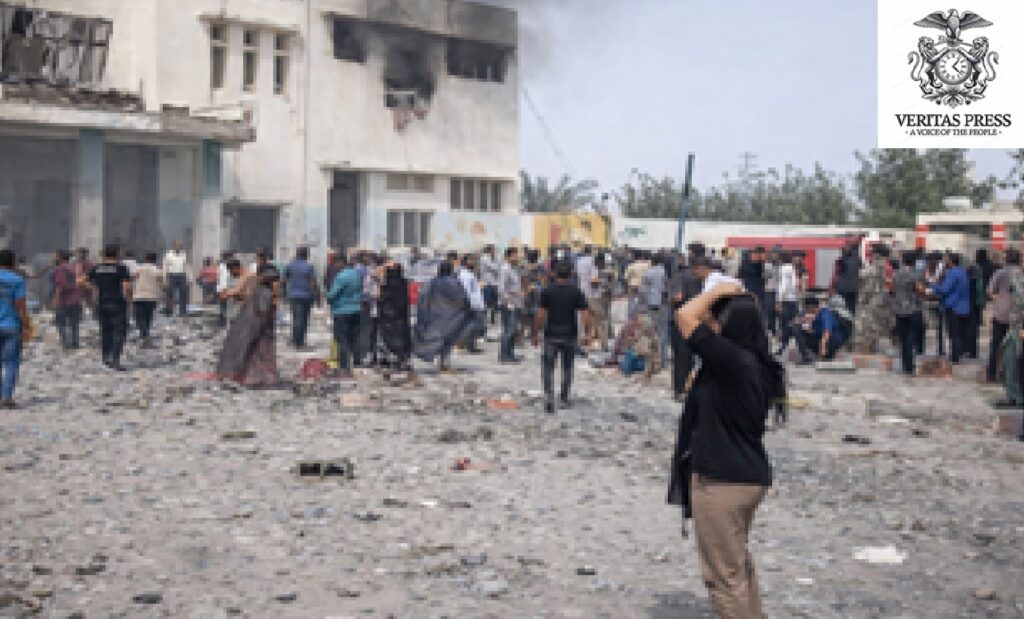
MINAB, IRAN — In the quiet coastal town of Minab, along the strategic Strait of Hormuz, the walls of the Shajareh Tayyiba girls’ elementary school were once painted with pastel-colored flowers. On Saturday, February 28, 2026, those walls were reduced to rubble, burying dozens of young students under an avalanche of concrete, glass, and twisted metal. What the United States and Israel described as a “preemptive” military operation to “dismantle the Iranian regime’s security apparatus” has left a trail of carnage that critics say points to a far more sinister reality: the indiscriminate, and potentially deliberate, targeting of civilian life.
As the initial shock gives way to horror, the official death toll has solidified at 85 killed, with another 93 injured, according to Iran’s state news broadcaster, IRIB. However, witnesses and local officials fear the final number may never be fully known, as rescuers continue to pull body parts from the debris. This is not a story of collateral damage; it is an investigation into a strike that targeted the most vulnerable in a conflict that powerful nations claim is about dismantling a regime.
“God Knows How Many More Children Will Be Pulled Out of the Rubble”
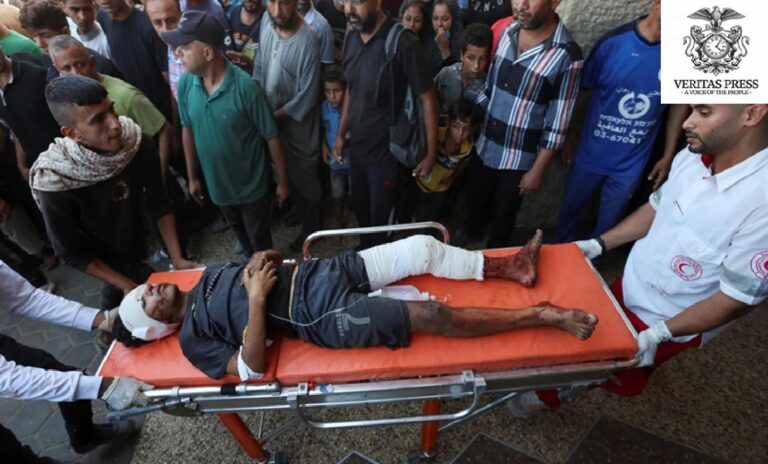
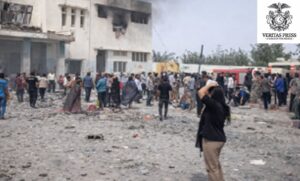
The attack occurred around 10 a.m. local time, the start of the workweek in Iran. Classrooms were full. A video verified by The New York Times paints a visceral picture of the aftermath. One clip shows black smoke billowing from the crumbling building as onlookers scream, wail, and embrace. Other footage, too graphic for many news outlets to broadcast in full, shows rescuers, armed with nothing but shovels and their bare hands, digging through debris alongside heavy cranes. Piles of bloodied, dusty backpacks lay in rows, silent testaments to the lives lost.
Hossein Kermanpour, a spokesman for Iran’s health ministry, was visibly shaken in a social media post. “God knows how many more children will be pulled out of the rubble,” he wrote. “May God give their families strength and patience”. The deputy governor of Hormozgan province confirmed that approximately 170 students were inside the building at the time of the bombardment.
“We heard the jets, and then a sound unlike anything we’ve ever heard,” a local shopkeeper, who gave his name only as Reza, told Reuters from a hospital in Bandar Abbas, where he had accompanied a wounded neighbour. “The dust took minutes to settle. When it did, we saw the school, or what was left of it. The girls… they were just little girls.”
US-Israeli Coordinated Assault On Sovereignty And Civilians:
The strike on Minab was not an isolated incident. It was part of a massive, coordinated wave of joint US-Israeli attacks that began early Saturday. US Central Command (CENTCOM) issued a statement claiming the operation targeted “Islamic Revolutionary Guard Corps command and control facilities, Iranian air defence capabilities, missile and drone launch sites, and military airfields” with the goal to “dismantle the Iranian regime’s security apparatus”. Additionally, to strengthen control over resources and ensure authority over maritime and trade routes.
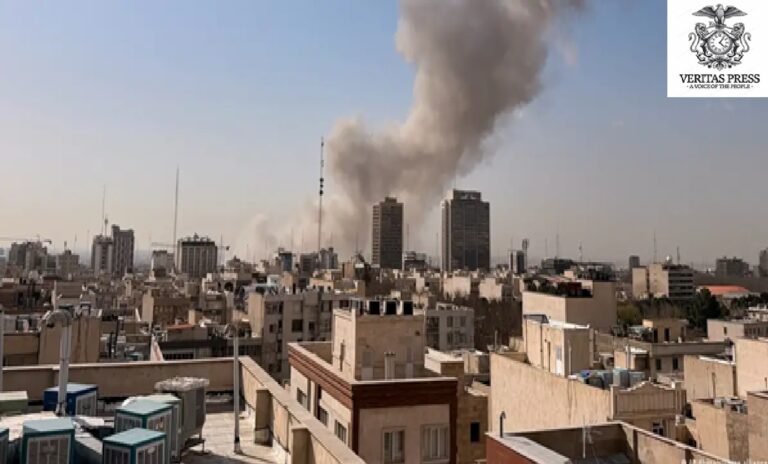
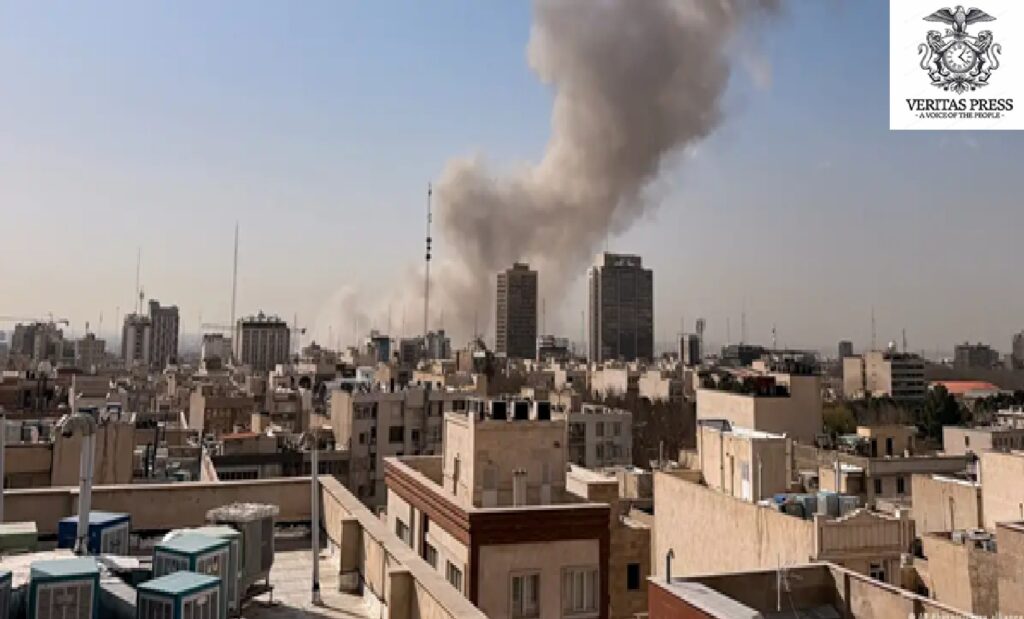
Yet, on the ground, the reality was starkly different. Simultaneously with the Minab tragedy, strikes hit the heart of Tehran. Satellite imagery from Airbus, analysed by CNN, showed black smoke billowing from the compound of Iran’s Supreme Leader Ayatollah Ali Khamenei, with several buildings appearing to be directly hit. An Israeli official stated that the joint operations specifically targeted locations where Khamenei and Iranian President Masoud Pezeshkian were present.
While the “decapitation” strikes appeared to fail in their primary objective, they succeeded in igniting a regional firestorm. Iran launched massive retaliatory missile and drone attacks toward Israel and US assets across the Middle East. Explosions were reported in Dubai, Abu Dhabi, Bahrain, Qatar, and Kuwait. The UAE Ministry of Defence reported a “flagrant attack” by Iranian ballistic missiles, debris from which killed one Asian national in a residential area of Abu Dhabi.
International Condemnation And A Test Of International Law:
The Minab school strike has drawn sharp international criticism, forcing allies and adversaries alike to confront difficult questions about the legality and morality of the US-Israeli campaign.
In a phone call with his Russian counterpart Sergei Lavrov, Iranian Foreign Minister Seyyed Abbas Araghchi stressed “the importance of decisive action by the international community, particularly the UN Security Council, to stop aggressive actions and hold criminals accountable.” He described the military aggression as “a serious violation of the fundamental principles of the UN Charter and a clear crime against international peace and security”. Araghchi later posted on X, alongside a photo of the destroyed school: “These crimes against the Iranian People will not go unanswered”.
Norwegian Foreign Minister Espen Barth Eide delivered a scathing critique, directly challenging the narrative of a “preemptive” strike. He stated that Israel’s justification was unjustified, noting that international law only allows such action in the face of an imminent threat, a threshold he implied was not met. He condemned the attacks as a breach of international law.
Even US allies expressed deep concern. French President Emmanuel Macron warned that “the outbreak of war between the United States, Israel, and Iran carries grave consequences for international peace and security,” urging an immediate halt to the escalation. Spanish Prime Minister Pedro Sánchez went further, explicitly stating that Spain “rejects the unilateral military action of the United States and Israel, which constitutes an escalation and contributes to a more uncertain and hostile international order”.
Finland’s President Alexander Stubb offered a sobering geopolitical assessment, noting that the US is now “largely operating outside traditional international law”. At home, Democratic Senator Tim Kaine did not mince words, calling the strikes “dangerous, unnecessary, and idiotic,” and demanding the Senate return to session to vote on a War Powers Resolution to block US hostilities against Iran.
The Failure Of “Precision”:
The central question emerging from the Minab massacre is one of accountability. How does a campaign boasting of “precision strikes” against military targets level an elementary school in broad daylight?
The US and Israel have remained silent on the specific strike, offering no comment on the school. This silence is deafening. Al Jazeera’s Mohammed Vall noted from Tehran that the attacks call into question US and Israeli claims that “they are targeting only military targets and they are trying to punish the regime, not the people of Iran”.
Analysis of the targeting suggests two possibilities, both damning. The first is gross incompetence: a failure of intelligence so profound that a girls’ school was mistaken for a military installation. Given the sophisticated surveillance capabilities of the US and Israeli militaries, this explanation strains credulity. The second, more disturbing possibility is a calculated disregard for civilian life, an acceptance that destroying a target, even one near a civilian structure, is worth the cost.
The fact that the strike occurred on the first day of the Iranian workweek, when schools were at maximum capacity, further fuels accusations of a deliberate choice in timing. While CENTCOM reported “no American fatalities” and “minimal damage” to US installations, Iran is left counting its dead in bags of school supplies recovered from the rubble.
Voices From The Rubble: A Nation’s Fury And Despair.
On the streets of Tehran, the response is a complex mix of fear, fury, and, among some regime opponents, a grim hope.
“I am terrified, but I am also angry,” said a Tehran resident named Roxanna, speaking to NPR. “We have protested this regime. We want change. But this is not how it should happen. They are killing children. It doesn’t matter who is in power; no one wants to see their children die in a school.” She noted that she and others had stored food and were bracing for what comes next.
Another resident in western Tehran, speaking on condition of anonymity, described the panic as the strikes began. “Children are running out of school,” she said. There had been no warning from the government, no time to prepare. People were caught completely off guard.
President Masoud Pezeshkian, himself a target of the strikes, described the attack as a “barbaric act” and “another black page in the record of the countless crimes committed by the aggressors”. The Supreme Leader’s whereabouts remain unknown, his compound in ruins, but the regime he symbolises is using the blood of its children to rally a nation.
Conclusion:
As the sun sets on Minab, the rescue operations continue, not to find survivors, but to identify the dead. The strike on Shajareh Tayyiba elementary school has transformed the conflict from a geopolitical standoff into a humanitarian catastrophe. The US and Israel sought to dismantle a security apparatus; instead, they have dismantled a classroom, orphaned dozens of families, and provided Iran with a powerful, tragic symbol of resistance.
The international community now faces a choice. It can accept the justifications of “preemptive” war and “precision” bombing, or it can look at the images coming out of Hormozgan province, of small, bloodstained shoes and shattered flower paintings, and demand accountability for what, by any standard, appears to be a major war crime. The silence of the Security Council and the complicity of the silence from Washington and Tel Aviv will be judged by history. As Foreign Minister Araghchi warned, the world is watching, and this crime will not go unanswered
Submissions:
For The Secure Submission Of Documentation, Testimonies, Or Exclusive Investigative Reports From Any Global Location, Please Utilise The Following Contact Details For Our Investigations Desk: enquiries@veritaspress.co.uk or editor@veritaspress.co.uk
Help Support Our Work:
Popular Information is powered by readers who believe that truth still matters. When just a few more people step up to support this work, it means more lies exposed, more corruption uncovered, and more accountability where it’s long overdue.
If you believe journalism should serve the public, not the powerful, and you’re in a position to help, becoming a DONATOR or a PAID SUBSCRIBER truly makes a difference.
DONATION APPEAL: If You Found This Reporting Valuable, Please Consider Supporting Independent Journalism.
Help Support Our Work – We Know, We Know, We Know …
Seeing these messages is annoying. We know that. (Imagine what it’s like writing them … )
Your support fuels our fearless, truth-driven journalism. In unity, we endeavour to amplify marginalised voices and champion justice, irrespective of geographical location.
But it’s also extremely important. One of Veritas Press’s greatest assets is its reader-funded model.
1. Reader funding means we can cover what we like. We’re not beholden to the political whims of a billionaire owner. We are a small, independent and impartial organisation. No one can tell us what not to say or what not to report.
2. Reader funding means we don’t have to chase clicks and traffic. We’re not desperately seeking your attention for its own sake: we pursue the stories that our editorial team deems important and believe are worthy of your time.
3. Reader Funding: enables us to keep our website and other social media channels open, allowing as many people as possible to access quality journalism from around the world, particularly those in places where the free press is under threat.
We know not everyone can afford to pay for news, but if you’ve been meaning to support us, now’s the time.
Your donation goes a long way. It helps us:
- Keep the lights on and sustain our day-to-day operations
- Hire new, talented independent reporters
- Launch real-time live debates, community-focused shows, and on-the-ground reporting
- Cover the issues that matter most to our communities, in real time, with depth and integrity
We have plans to expand our work, but we can’t do it without your support. Every contribution, no matter the size, helps us stay independent and build a truly people-powered media platform.
If you believe in journalism that informs, empowers, and reflects the communities we serve, please donate today.
In the early hours of Saturday morning, the Middle East lurched into a new and
MINAB, IRAN — In the quiet coastal town of Minab, along the strategic Strait of

GORTON AND DENTON, UK – At 4:30 am on February 27th, 2026, Hannah Spencer stood
IRAN/US/ISRAEL – In the early hours of February 28, 2026, residents of Tehran awoke to
ISLAMABAD/KABUL – The thunder of Pakistani warplanes over the capitals of two nations at dawn
A Muslim community centre adjacent to a mosque in Worcester was firebombed in the early
GAZA CITY — In the predawn stillness of the 27th day of Ramadan, the sound
JERUSALEM / WASHINGTON — The skies over the Middle East have become a barometer of
US/IRAN – In a significant escalation of American military posture in the Middle East, the
ISLAMABAD, PAKISTAN – The political temperature in Pakistan, already simmering after years of instability, has