





Original Article Date Published:
Article Date Modified:
Help support our mission, donate today and be the change. Every contribution goes directly toward driving real impact for the cause we believe in.
The Myth Of Air Superiority Unravels:
What began on February 28, 2026, as a coordinated US-Israeli campaign to decapitate Iran’s military leadership has, after 36 days of ferocious combat, evolved into something its architects never anticipated: a grinding war of attrition that has exposed the vulnerabilities of the world’s most advanced air forces.
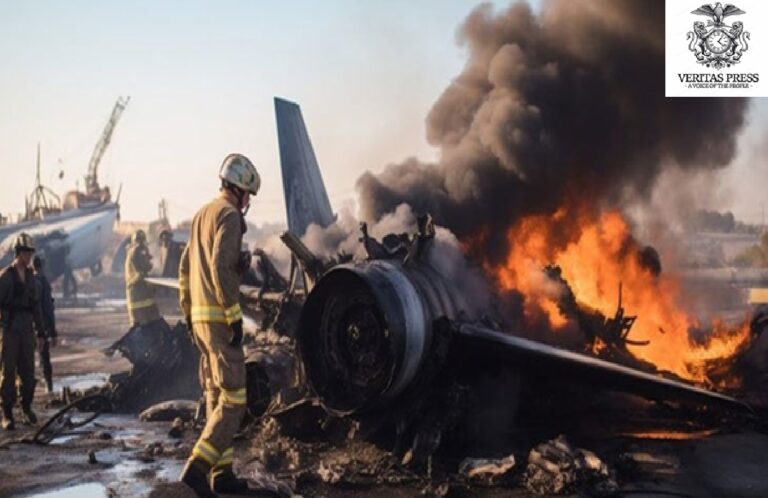
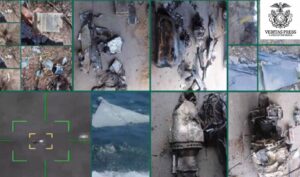
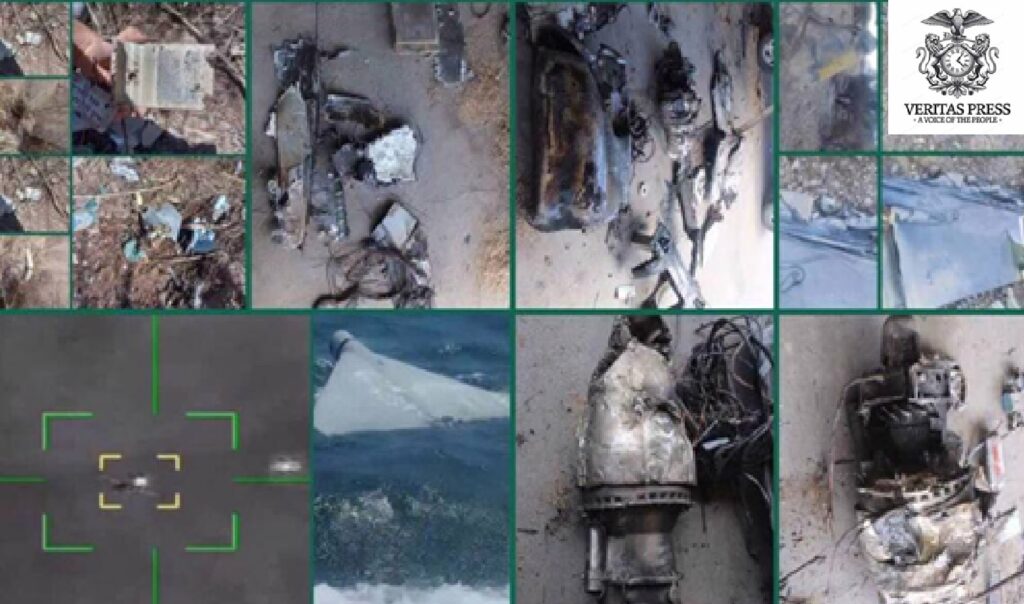
On Friday, Iranian air defence forces announced they had downed at least two fighter jets, including a second F-35 Lightning II stealth fighter, along with multiple cruise missiles and drones in a single day. The Islamic Revolution Guards Corps (IRGC) described it as a “black day” for American and Israeli air power.
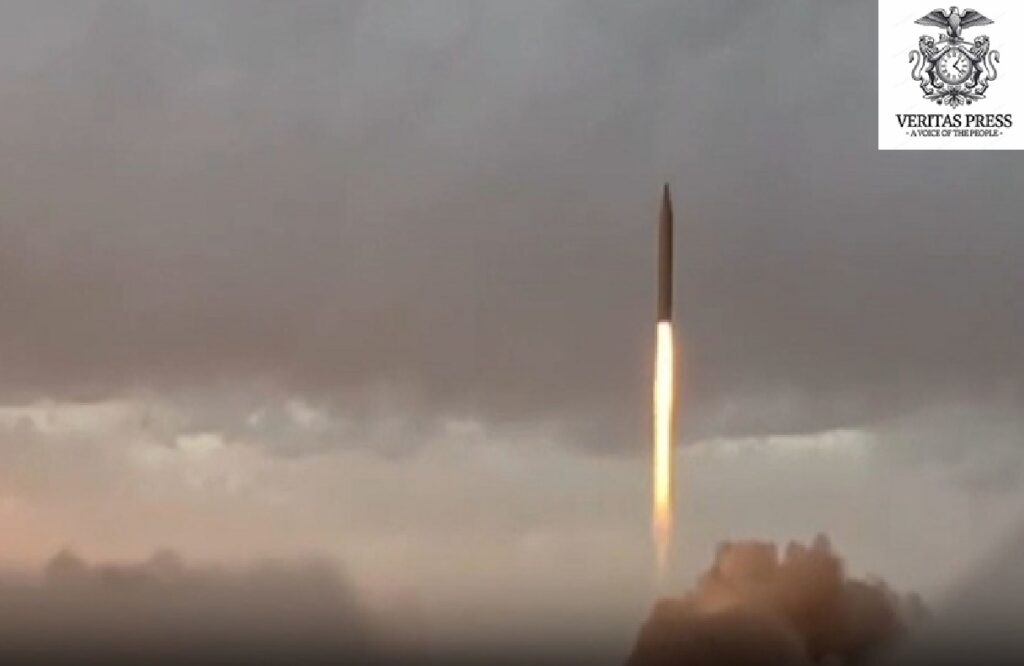
Cruise missiles were destroyed over Khomein and Zanjan. Two MQ-9 Reaper attack drones were shot down over Isfahan. A Hermes drone was destroyed over Bushehr. An A-10 Warthog was reportedly engaged over the Strait of Hormuz and crashed into Persian Gulf waters. And in what military analysts are calling the most significant development, a second F-35 Lightning II was struck and destroyed over central Iran.
“With the continued innovative, sustained, and precise monitoring by Iran’s air defence heroes, the skies of Iran will become increasingly unsafe for the fighter jets of the aggressor enemy,” the IRGC declared in a statement Saturday.
But beneath the headlines lies a more complex and troubling picture, one of hubris, strategic miscalculation, and the unravelling of the technological dominance that has underpinned Western military power for decades.
Part I: The Anatomy Of An Air Battle.
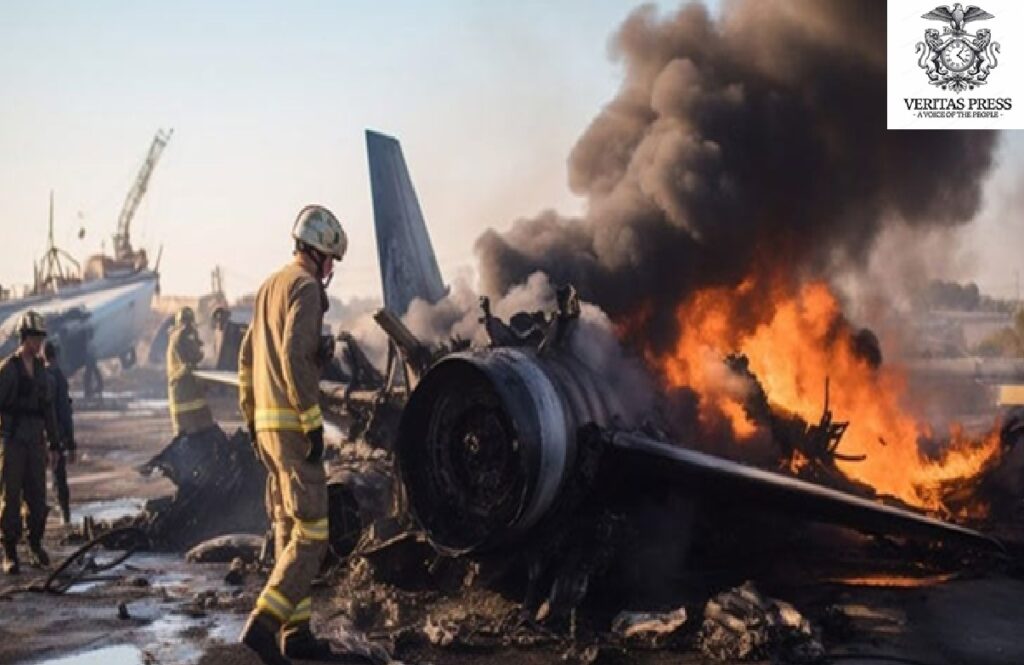
The downing of two US fighter jets in a single day, first reported in the early hours of Friday, has sent shockwaves through Pentagon war rooms. According to US media reports, an F-15E Strike Eagle went down over Kohgiluyeh and Boyer-Ahmad provinces, while an A-10 Warthog crashed into the Persian Gulf. Two American crewmembers were reportedly rescued; one airman remains missing. A US Black Hawk helicopter involved in search operations was also struck by Iranian fire but managed to remain airborne.
The White House confirmed that President Trump had been briefed on the downings. But the administration’s public response has been notable for what it hasn’t said, a stark contrast to the triumphalism that marked the campaign’s early days.
“This changes the propaganda equation,” geopolitical analyst Phyllis Bennis told Al Jazeera. “It doesn’t necessarily change the military balance, but it makes it much harder for the White House to maintain public support, particularly among Trump’s MAGA base”.
Yet the downings were not isolated events. They represent the culmination of a systematic erosion of US-Israeli air superiority that began weeks earlier.
Part II: The F-35 Engagement, A Technological Watershed.
On March 19, Iran achieved what no nation had before: a successful engagement against the F-35 Lightning II, the US Air Force’s crown jewel. Using the indigenous Majid infrared-guided system (AD-08), Iranian operators exposed a fundamental vulnerability that the F-35’s trillion-dollar development program had failed to eliminate: its heat signature.
The Majid system, first unveiled in 2021, operates on infrared guidance rather than conventional radar. The F-35’s Pratt & Whitney F135 engine generates immense thermal emissions that no amount of engineering can fully mask. And critically, the aircraft’s electronic countermeasures, designed to jam radar frequencies, are rendered useless against a passive optical system.
“The F-35’s vaunted stealth capabilities have always been compromised by a persistent vulnerability: its heat signature,” explains Yousef Ramazani, writing for Press TV. “The Majid system exploits precisely this weakness”.
Military Watch Magazine, citing multiple intelligence sources, assessed that the Iranian operation “was carried out using an infrared guided surface-to-air missile, possibly from the Majid system,” which damaged the F-35 sufficiently to cause shrapnel wounds to the pilot.
But the March 19 engagement was only the beginning. On Friday, the IRGC announced that a second F-35 had been struck and downed over central Iran. “Given the massive explosion on impact and during the crash, the pilot is unlikely to have ejected,” the IRGC statement noted.
Part III: Iran’s Underground Air Defence Network.
How has Iran, subjected to weeks of relentless bombing, managed not only to survive but to strike back so effectively? The answer lies deep beneath its soil.
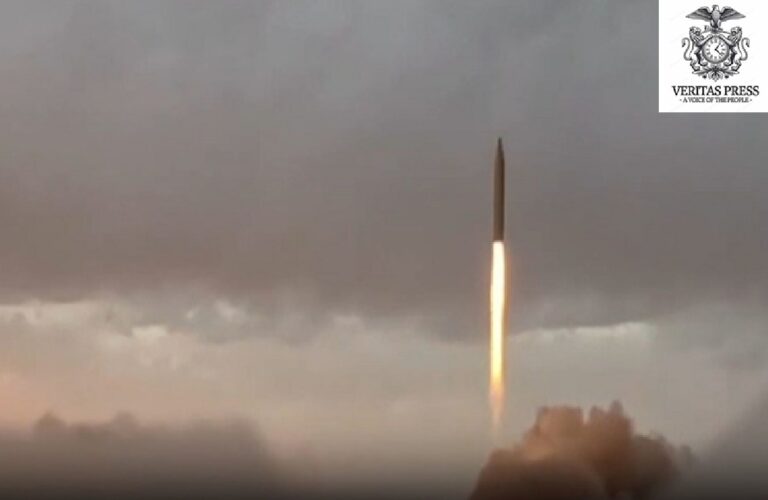
Iran has kept much of its air defence arsenal hidden in an extensive network of underground tunnels and bunkers, a strategy that has preserved capabilities that US and Israeli intelligence had assessed as largely destroyed. The IRGC recently released footage of one such “missile city,” showing not only launchers but large stockpiles of interceptor missile containers stored inside fortified sites.
“It is quite possible that some Iranian air defence assets are still operational and hidden and concealed in many locations across the country,” said Federico Borsari, a non-resident fellow with the Transatlantic Defence and Security Program at the Centre for European Policy Analysis. “These are mobile systems. They are based on a truck which can move, and you can conceal those systems”.
The Khordad-15 system, unveiled in 2019, can detect up to six targets simultaneously and engage aircraft at ranges of up to 150 kilometres. Iranian military officials claim it can detect stealth aircraft at up to 85 kilometres. And while the US military has claimed it destroyed roughly 92% of Iran’s Russian-made S-300 systems, the proliferation of indigenous systems like Khordad and Majid has proven more resilient than anticipated.
Perhaps most troubling for Pentagon planners: the systems that downed the F-35s and A-10s were not Iran’s most advanced assets. They were medium-range, mobile platforms, the kind that can be moved, concealed, and redeployed.
Part IV: Operation True Promise 4, The Retaliatory Campaign.
Iran’s defensive successes have been matched by an aggressive retaliatory campaign. Since February 28, the IRGC and Iranian Army have carried out 93 waves of missile and drone strikes under the banner of Operation True Promise 4, targeting Israeli military facilities in the occupied territories and US bases across the Gulf region.
On Friday alone, as part of “Wave 93,” Iranian and allied forces struck critical Israeli military staging grounds in Western Galilee, Haifa, Kafr Kanna, and Krayot, using a combination of solid and liquid fuel missiles, long-range guided missiles, and suicide drones.
The IRGC has released details of multiple phases of the operation. Wave 90 reportedly targeted seven air bases belonging to American and Zionist forces. Wave 91 included ballistic missiles, Qadir cruise missiles, and drones targeting military and infrastructural assets in the Arab Gulf countries.
“This phase involved the use of a combination of ballistic missiles, Qadir cruise missiles, and suicide drones, resulting in the destruction of prominent military targets belonging to the Zionist-American enemy,” the IRGC stated in a release detailing Phase 2 of Wave 89.
The scale of Iran’s retaliatory strikes has been staggering. According to one report, since February 28, Iran has launched approximately 6,770 missiles and drones targeting Jordan, Gulf countries hosting US military bases, and Israel. While the pace of attacks has declined, US Central Command claims a 90% reduction from the opening days of the war, the strikes continue to inflict damage and psychological terror.
“Millions of Israelis are still rushing into bomb shelters day and night,” the Deccan Herald reported. “Seven people were injured in central Israel on Thursday following missile barrages”.
Part V: The Cracks In The Israeli War Machine.
Israel’s ability to sustain this conflict is increasingly in question. The war with Iran, layered atop ongoing operations in Gaza and Lebanon, has cost the Israeli economy an estimated $112 -120 billion, a staggering sum for a nation of fewer than ten million people. Daily civilian life remains heavily disrupted; schools across the country remain closed.
But the more immediate crisis is within the Israeli military itself. On Friday, Air Force chief Maj. Gen. Tomer Bar warned that the force’s readiness was “worsening” after reserve pilots declared they would no longer show up for volunteer duty. Some 10,000 reservists have said they will not serve in what they describe as an “undemocratic” Israel following the Knesset’s vote to limit judicial oversight of government decisions.
“All participants in the discussion agreed that political disputes should be left outside the army,” read a statement from Prime Minister Benjamin Netanyahu’s office following an emergency security meeting last week. But the statement’s very necessity underscored the depth of the problem.
Netanyahu has rejected the reservists’ protests as “political blackmail,” but the damage is done. Even the United States, Israel’s traditional bedrock ally, described the parliamentary vote as “unfortunate” and has repeatedly raised concerns about Israel’s political turmoil.
Despite these disruptions, 78% of Jewish Israelis still support the war against Iran, according to recent polling. But pollsters warn that public backing could erode as casualties mount and economic pain deepens.
Part VI: The Pentagon’s “Maximum Optionality”, And Its Limits.
The US response to these setbacks has been to double down. The Pentagon is deploying the full spectrum of military forces for what officials call “maximum optionality” in the Middle East.
Thousands of soldiers from the Army’s 82nd Airborne Division are arriving in the region, alongside Marines, Navy SEALs, and elements of Delta Force. The 75th Ranger Regiment is already deployed. The incoming forces include approximately 2,500 Marines and a brigade combat team.
“Forces are already there,” said Jonathan Hackett, a former special operations capabilities specialist and military analyst. “We’re just waiting for the president to actually make that political decision to do it”.
The menu of potential missions includes seizing Kharg Island, which handles roughly 90% of Iran’s oil exports, operations to secure highly enriched uranium, and interventions to ensure the safe passage of oil tankers through the Strait of Hormuz.
Yet the military buildup has not been without friction. Spain has barred the US from using its bases, a decision defended by its defence minister. And Trump’s reported frustration with NATO allies, particularly the UK and France, has intensified as oil prices in the US reach their highest level in four years.
The human cost is already mounting. Since February 28, US forces have struck more than 11,000 targets under Operation Epic Fury. The campaign has resulted in over 300 American soldiers wounded and 13 service members killed, figures that may rise sharply if ground operations commence.
Part VII: Regional Spillover, The War Expands.
The conflict has long since ceased to be contained within Iranian borders.
In the United Arab Emirates, an Egyptian national was killed, and four others were wounded after a fire at a gas complex in Abu Dhabi, caused by falling debris from an intercepted attack. Workers at an aluminium facility were wounded by missile and drone strikes.
In Kuwait, authorities said Iranian strikes hit an oil refinery and a desalination plant, though Tehran denied targeting the water facility. In Bahrain, four people were injured, and several homes were damaged in the Sitra area after shrapnel fell from an intercepted Iranian drone.
In Saudi Arabia, an Iranian strike on a US military base injured two dozen troops.
The economic reverberations have been global. The UN’s Food and Agriculture Organisation reported that its Food Price Index rose 2.4% in March. Australia faces petrol shortages, with hundreds of service stations in rural towns running out of diesel. Pakistan’s government has made state-run public transport free for a month to ease the burden on citizens.
Part VIII: Diplomatic Paralysis.
Amid the fighting, diplomatic efforts have stalled entirely. Iran’s semi-official Fars news agency reported Friday that Tehran had rejected a US proposal for a 48-hour ceasefire, a claim the US neither confirmed nor commented on.
Iran’s Foreign Minister Abbas Araghchi told Al Jazeera that there is “zero” trust in the United States and no expectation that talks will yield results. “Tehran is not engaged in direct negotiations with Washington,” he said, contradicting US claims of ongoing talks.
President Masoud Pezeshkian has questioned whether the US is sincere about diplomacy, accusing Washington of hypocrisy. Following a recent attack that killed the wife of a senior Iranian official, Pezeshkian asked the world to judge “which side engages in dialogue and negotiation, and which in terrorism”.
Trump, for his part, told NBC News that the war is “coming to an end” and that “We’re doing great”, without providing a timeline or evidence to support his claim.
Part IX: Voices From The Ground.
The human toll of this conflict is often lost in the strategic analysis. Iranian authorities report at least 2,076 people killed and 26,500 wounded since the war began on February 28. Among the dead are approximately 170 children killed in an attack on a primary school in Minab.
In Tehran, Iranians have taken to the streets to celebrate what authorities describe as major military successes. But celebrations mask a population enduring daily attacks, power outages, and economic hardship.
In Israel, the psychological toll is equally severe. The daily routine of sirens and booms sows fear and paralysis. Surveillance footage captured two people rushing out of harm’s way before a car near them exploded and pinwheeled through the air. A Tel Aviv man was killed by a bomblet from a missile with a cluster-munition warhead.
“It is not a video game, and the adversary is a thinking adversary in a desperate position,” a former US Air Force officer, who could not speak publicly about Iranian capabilities, told the Deccan Herald.
Conclusion: The New Calculus Of Air Power.
The downing of two US fighter jets in a single day, including a second F-35, represents more than a tactical setback for the US-Israeli coalition. It signals a fundamental shift in the strategic calculus of modern air warfare.
For decades, the assumption underpinning Western military doctrine has been that technological superiority, stealth, precision munitions, and electronic warfare provide near-immunity from adversary defences. Iran’s successful engagements with the Majid and Khordad systems have shattered that assumption.
The F-35, the most expensive weapons program in human history, was supposed to be invulnerable. It is not. The A-10, the B-52, and the MQ-9 Reaper are not safe in Iranian skies. And as Iran continues to unveil new systems, including the Arman anti-ballistic missile system and the Azarakhsh low-altitude air defence system, unveiled just last week, the threat to US and Israeli air operations will only grow.
“Iran has been basing its resiliency on underground missile cities and tunnels and bunkers everywhere,” said Federico Borsari. “It is quite possible that some Iranian air defence assets are still operational and hidden and concealed in many locations across the country”.
The question now is not whether Iran can continue to fight; it clearly can, but how long the United States and Israel can sustain a campaign that has failed to achieve its stated objectives. Trump has asked Congress for a $1.5 trillion defence budget for 2027, even as public support for the war wanes and allied cooperation frays.
As of Friday, the IRGC announced that the total number of enemy drones downed by Iran’s integrated air defence network has crossed 155. The “black day” for US and Israeli air forces may prove to be not an anomaly, but a preview of what is to come.
Source: Multiple News Agencies
Submissions:
For The Secure Submission Of Documentation, Testimonies, Or Exclusive Investigative Reports From Any Global Location, Please Utilise The Following Contact Details For Our Investigations Desk: enquiries@veritaspress.co.uk or editor@veritaspress.co.uk
Help Support Our Work:
Popular Information is powered by readers who believe that truth still matters. When just a few more people step up to support this work, it means more lies exposed, more corruption uncovered, and more accountability where it’s long overdue.
Help Protect Independent Journalism, Which Is Currently Under Attack.
If you believe journalism should serve the public, not the powerful, and you’re in a position to help, becoming a DONATOR or a PAID SUBSCRIBER truly makes a difference.
DONATION APPEAL: If You Found This Reporting Valuable, Please Consider Supporting Independent Journalism.
Help Support Our Work – We Know, We Know, We Know …
Seeing these messages is annoying. We know that. (Imagine what it’s like writing them … )
Your support fuels our fearless, truth-driven journalism. In unity, we endeavour to amplify marginalised voices and champion justice, irrespective of geographical location.
But it’s also extremely important. One of Veritas Press’s greatest assets is its reader-funded model.
1. Reader funding means we can cover what we like. We’re not beholden to the political whims of a billionaire owner. We are a small, independent and impartial organisation. No one can tell us what not to say or what not to report.
2. Reader funding means we don’t have to chase clicks and traffic. We’re not desperately seeking your attention for its own sake: we pursue the stories that our editorial team deems important and believe are worthy of your time.
3. Reader Funding: enables us to keep our website and other social media channels open, allowing as many people as possible to access quality journalism from around the world, particularly those in places where the free press is under threat.
We know not everyone can afford to pay for news, but if you’ve been meaning to support us, now’s the time.
Your donation goes a long way. It helps us:
- Keep the lights on and sustain our day-to-day operations
- Hire new, talented independent reporters
- Launch real-time live debates, community-focused shows, and on-the-ground reporting
- Cover the issues that matter most to our communities, in real time, with depth and integrity
We have plans to expand our work, but we can’t do it without your support. Every contribution, no matter the size, helps us stay independent and build a truly people-powered media platform.
If you believe in journalism that informs, empowers, and reflects the communities we serve, please donate today.

The raw numbers tell a story of profound inequality. On 1 April 2026, more than
What began on February 28, 2026, as a coordinated US-Israeli campaign to decapitate Iran’s military

The idea of a “freedom flotilla” carries a ghost in its hold: the 2010 Mavi

Original Article Date Published: Article Date Modified: Help support our mission, donate today and be

Original Article Date Published: Article Date Modified: Help support our mission, donate today and be
A United States fighter jet has been shot down over Iran, marking a dangerous and
On February 28, the United States and Israel launched coordinated strikes on Iran, reported by

LONDON, UK – Just weeks after being appointed as the government’s “Cost of Living Champion”,

On February 28, 2026, the first wave of U.S.-Israeli pre-emptive strikes hit Iranian military and

USA, NASA – Spurred by American ingenuity, astronauts on NASA’s Artemis II mission are in