




Original Article Date Published:
Article Date Modified:
Help support our mission—donate today and be the change. Every contribution goes directly toward driving real impact for the cause we believe in.
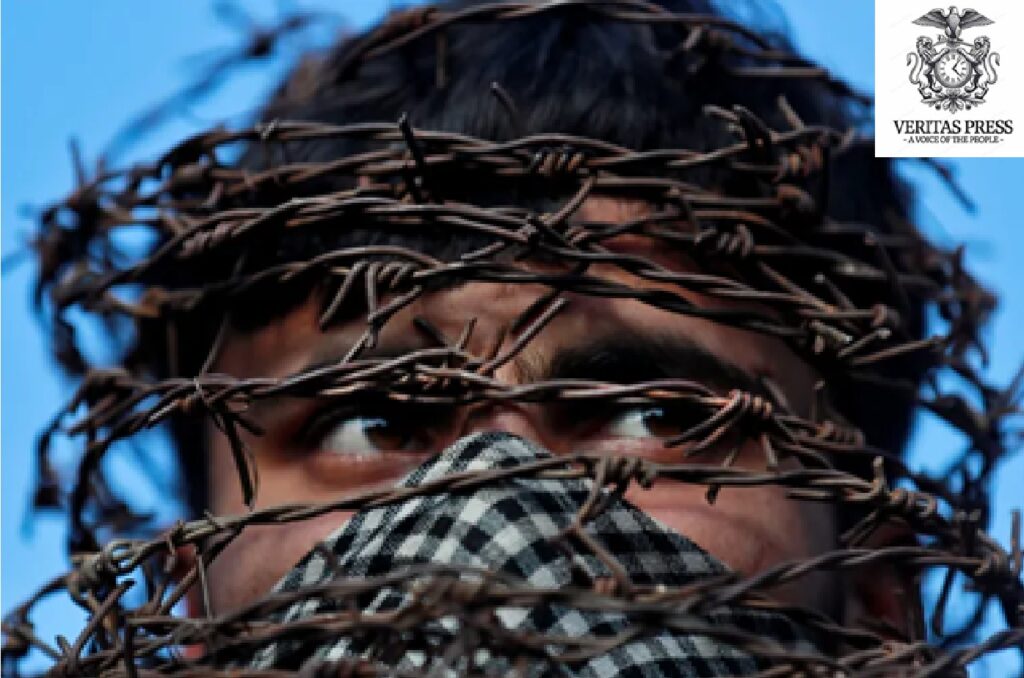
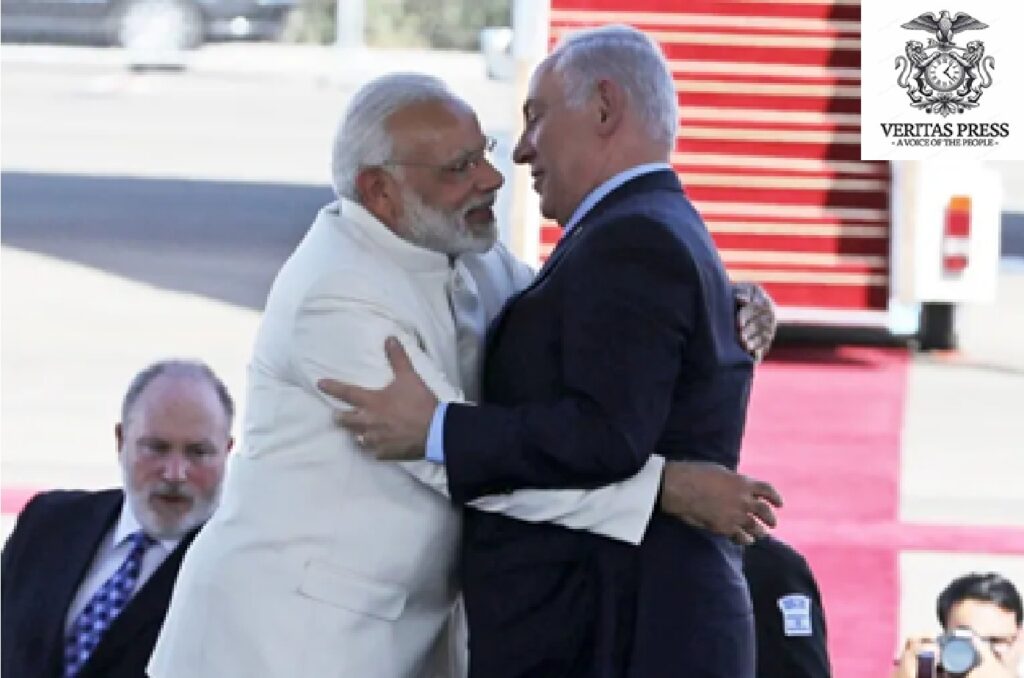
NEW DELHI/KASHMIR -As Narendra Modi makes his second official visit to Israel starting February 25, 2026, the relationship has transcended defence pacts and trade agreements. Analysts and critics argue that India under Modi has not just befriended Israel, but it has sought to emulate it. From the militarisation of Kashmir to punitive home demolitions and the deployment of sophisticated spyware, New Delhi appears to be implementing a domestic version of the “Israeli model,” fundamentally reshaping its governance and democratic fabric.
The Ideological Nexus: Hindutva Meets Zionism
At a private event in New York in 2019, Sandeep Chakravorty, India’s then consul general, was caught on camera suggesting that New Delhi should adopt the “Israeli model” to resettle Kashmiri Hindu migrants in the Muslim-majority region. “If the Israeli people can do it, we can also do it,” he said.
Six years later, that vision appears fully realised. The deepening ties between India and Israel are no longer just strategic; they are ideological. Experts argue that the bond between Modi’s Bharatiya Janata Party (BJP) and Israel’s Likud is rooted in a shared worldview: majoritarian nationalism.
“Modi’s BJP has roots in Hindutva, which seeks to turn India into a Hindu homeland, similar to Israel’s view of itself as a Jewish state,” said Azad Essa, author of Hostile Homelands. “Both ideologies see Muslims as demographic and security threats. The friendship works because they have similar supremacist ends.”
Sumantra Bose, a political scientist, notes that generations of Rashtriya Swayamsevak Sangh (RSS) cadres have been “indoctrinated” with a love for Israel. “The nation-state of Israel, which is majoritarian and supremacist, is the model Hindu nationalists are implementing in India in the Modi era,” he told Al Jazeera.
‘Bulldozer Justice’: The Shadow Of Israeli Demolition Policy.
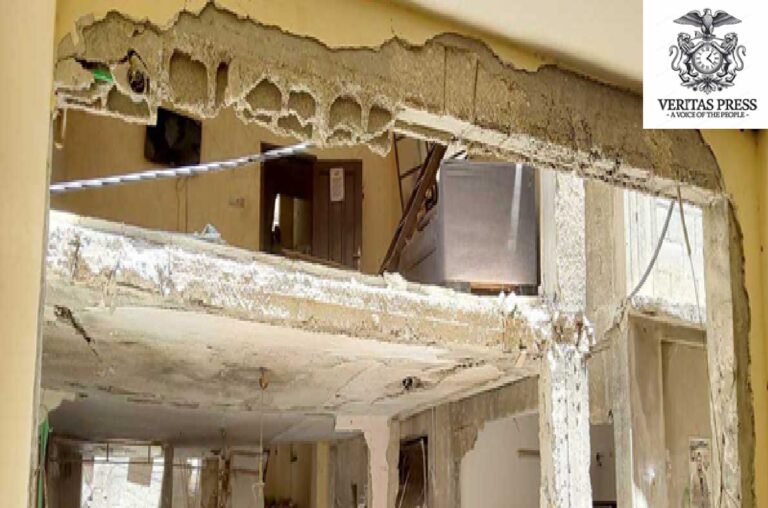
Perhaps the most visible import of the “Israeli model” is the BJP’s punitive demolition policy. In the occupied West Bank, Israel has for decades demolished the homes of Palestinians as a form of collective punishment, a practice critics say amounts to state-sanctioned vengeance.
In India, this has been rebranded as “bulldozer justice.” Over the past decade, authorities in BJP-ruled states have demolished homes, shops, and even mosques belonging to Muslims, often following communal tensions or criminal accusations. Yogi Adityanath, the chief minister of Uttar Pradesh, has earned the moniker “Bulldozer Baba” (Daddy Bulldozer) for his government’s aggressive use of the tactic.
However, the legality of this practice is under severe scrutiny. In November 2024, the Supreme Court of India delivered a landmark verdict, ruling that “bulldozer justice” is “unacceptable under the rule of law.” The court mandated that no property can be demolished without due process, even if it belongs to an accused individual.
Yet, on the ground, the practice persists. In February 2026, the Allahabad High Court observed that punitive demolitions continue to occur in Uttar Pradesh despite the Supreme Court’s ban. The court noted that in several cases, notices are issued “immediately after the commission of an offence” and demolitions are carried out as a “colourable exercise of executive discretion”.
“The bulldozer is a political tool,” said author Suchitra Vijayan. “Like Israel, India uses demolition not just as punishment, but as a message to minorities about who belongs and who is an outsider.”
The Spy In Your Pocket: Pegasus And The Surveillance State.
Beyond bulldozers, India has embraced Israel’s high-tech surveillance apparatus. The Israeli spyware Pegasus, developed by the NSO Group, has become a flashpoint in the debate over democratic backsliding in India.
In 2021, the Pegasus Project revealed that over 300 verified Indian numbers were targeted by the spyware, including journalists, opposition leaders, and Supreme Court judges. Siddharth Varadarajan, co-founder of The Wire, was among those targeted. He described the software as turning an iPhone into a “personal spying device” capable of recording video, audio, and transmitting data without the user’s knowledge.
“The Israeli model of using spyware to monitor any arena of opposition or criticism is something the Modi government has embraced wholeheartedly,” Varadarajan said.
While the Indian government has dismissed the investigations as “conjectures and exaggerations,” international watchdogs remain critical. Transparency International recently highlighted India’s response to the Pegasus scandal as part of a global pattern where governments “resort to obfuscation” to deny the use of surveillance tech against dissidents.
’22 April Is Our 7 October’: The Militarisation Of Rhetoric And Response.
The adoption of the “Israeli model” reached a fever pitch following the Pahalgam terrorist attack in April 2025, when gunmen killed 26 tourists in Indian-administered Kashmir. India’s military response, dubbed “Operation Sindoor”, involved airstrikes deep inside Pakistani territory, utilising Israeli-made Harop loitering missiles and drones.
But beyond the hardware, the rhetoric mirrored Tel Aviv. Indian media outlets drew direct parallels between the attack and the October 7, 2023, Hamas assault on Israel. Arnab Goswami, a prominent news anchor, declared on his show: “22 April is to India what 7 October was to the Israelis.” A guest on his program demanded, “We demand we turn Pakistan into Gaza.”
Former senior police officer S.P. Vaid told a Hindi newspaper: “We must respond like Israel.” Retired Army General M.M. Naravane echoed this in an opinion piece, calling on India to “bare its fangs” and “borrow” from Israeli tactics.
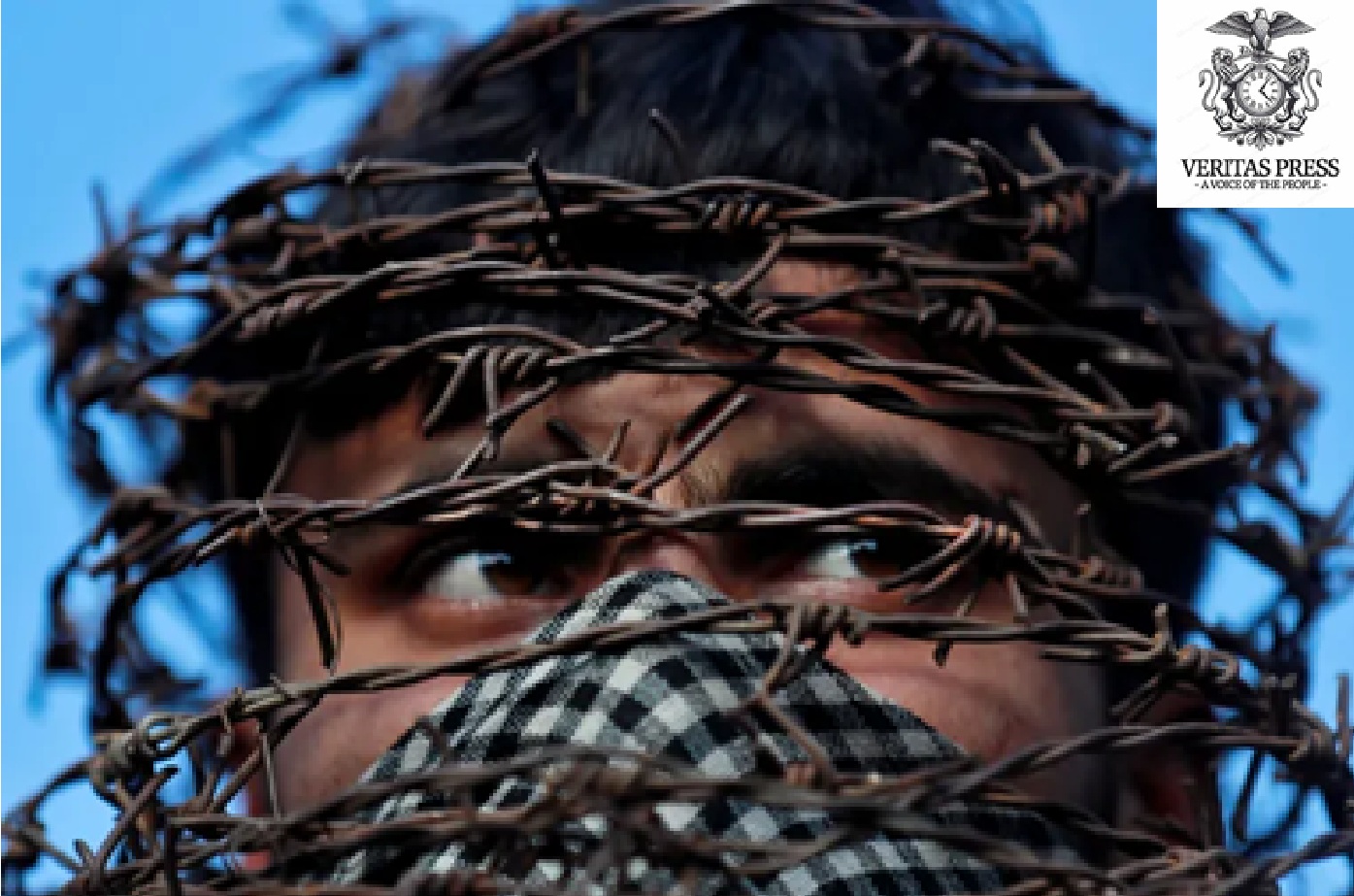
This rhetorical embrace of Israeli-style retaliation has real-world consequences. Following the Pahalgam attack, reports emerged of Kashmiri students being targeted across India, and at least 1,500 Kashmiris were reportedly detained.
Arman Ahmed, a research analyst, notes that Operation Sindoor was not just a military strike but a masterclass in Israeli-style “perception dominance.” India deployed a Muslim woman officer, Colonel Sophia Qureshi, to brief the media, a move seen as an attempt to insulate the operation from charges of Islamophobia.
“Critics say this action conceals more fundamental problems. From under-representation in the military to hate crimes following terror events, Indian Muslims, particularly Kashmiris, still suffer systematic prejudice,” Ahmed wrote.
Kashmir: The Laboratory For The ‘Israeli Model’.
Nowhere is the convergence of Indian and Israeli tactics more evident than in Kashmir. Since the abrogation of Article 370 in August 2019, which stripped the region of its semi-autonomous status, Kashmir has been governed through a security-first lens.
Human Rights Watch, in its World Report 2026, exposed systematic human rights violations in Indian Illegally Occupied Jammu and Kashmir (IIOJK), noting “suppression of dissent, unlawful demolitions, extrajudicial killings, and attacks on minorities”. The report warned that these practices are severely damaging India’s international credibility.
Pakistan has repeatedly raised these issues at the United Nations. On February 25, 2026, Pakistani delegate Zulfiqar Ali told the UN Security Council that children in IIOJK are among the most vulnerable to grave human rights abuses, criticising the international community for “selective omission” of their plight.
Essa argues that India maintains Kashmir in a “state of almost permanent emergency,” mirroring Israel’s control over the West Bank. “There is the militarisation, population management, and the legal regimes that allow both India and Israel to conduct their occupations, from checkpoints to raids and communication blackouts,” he said.
The Strategic Partnership Deepens:
Despite international criticism, the India-Israel axis is stronger than ever. On the very day Modi landed in Israel, the two countries held the 10th meeting of the Joint Working Group on Counter-Terrorism in New Delhi. Both sides “unequivocally condemned terrorism” and discussed threats posed by drones, UAVs, and the abuse of technology for terror purposes.
Defence cooperation remains the cornerstone. According to SIPRI data, India accounted for 34% of Israeli defence exports between 2020 and 2024. Experts expect Modi’s current visit to yield deals on ballistic missile defence systems, laser weapons, and long-range drones.
For Israeli Prime Minister Benjamin Netanyahu, the visit is a diplomatic victory. “Since Israel is quite isolated now, this can be presented by Netanyahu as a big diplomatic achievement,” said former Israeli diplomat Alon Liel.
Conclusion: A Model at What Cost?
As Modi and Netanyahu tout their “strategic partnership,” critics warn that the embrace of the “Israeli model” comes at a steep price for India’s democracy.
“What Israel has done is help provide India with the technology and expertise to become more oppressive, authoritarian, and militarised,” Essa said. “These methods treat populations as external threats.”
Vijayan echoed this sentiment: “Israel’s ability to act with impunity has created a global precedent. India is watching, adopting, and adapting.”
The question now is whether India, by modelling itself on Israel, is prepared to bear the consequences of that role: moral isolation, internal polarisation, and chronic instability. As one analyst put it, “India has to question whether it wants to be the ‘Israel of Asia'”.
For The Secure Submission Of Documentation, Testimonies, Or Exclusive Investigative Reports From Any Global Location, Please Utilise The Following Contact Details For Our Investigations Desk: enquiries@veritaspress.co.uk or editor@veritaspress.co.uk
Popular Information is powered by readers who believe that truth still matters. When just a few more people step up to support this work, it means more lies exposed, more corruption uncovered, and more accountability where it’s long overdue.
If you believe journalism should serve the public, not the powerful, and you’re in a position to help, becoming a DONATOR or a PAID SUBSCRIBER truly makes a difference.
DONATION APPEAL: If You Found This Reporting Valuable, Please Consider Supporting Independent Journalism.
Help Support Our Work – We Know, We Know, We Know …
Seeing these messages is annoying. We know that. (Imagine what it’s like writing them … )
Your support fuels our fearless, truth-driven journalism. In unity, we endeavour to amplify marginalised voices and champion justice, irrespective of geographical location.
But it’s also extremely important. One of Veritas Press’s greatest assets is its reader-funded model.
1. Reader funding means we can cover what we like. We’re not beholden to the political whims of a billionaire owner. We are a small, independent and impartial organisation. No one can tell us what not to say or what not to report.
2. Reader funding means we don’t have to chase clicks and traffic. We’re not desperately seeking your attention for its own sake: we pursue the stories that our editorial team deems important and believe are worthy of your time.
3. Reader Funding: enables us to keep our website and other social media channels open, allowing as many people as possible to access quality journalism from around the world, particularly those in places where the free press is under threat.
We know not everyone can afford to pay for news, but if you’ve been meaning to support us, now’s the time.
Your donation goes a long way. It helps us:
- Keep the lights on and sustain our day-to-day operations
- Hire new, talented independent reporters
- Launch real-time live debates, community-focused shows, and on-the-ground reporting
- Cover the issues that matter most to our communities, in real time, with depth and integrity
We have plans to expand our work, but we can’t do it without your support. Every contribution, no matter the size, helps us stay independent and build a truly people-powered media platform.
If you believe in journalism that informs, empowers, and reflects the communities we serve, please donate today.

In what press freedom watchdogs are calling a historic collapse of civilian protection, 2025 has
In an extraordinary parliamentary intervention that has sent shockwaves through Westminster, a coalition of Labour

GREATER MANCHESTER, UK – On the evening of February 24, prayers at Manchester Central Mosque,
WEST BANK, Date: February 25, 2026 – The occupied West Bank is witnessing a dramatic
NEW DELHI/KASHMIR -As Narendra Modi makes his second official visit to Israel starting February 25,
WASHINGTON/TEHRAN, Feb 25, 2026- For the second time in a week, Tehran has levelled an

US – In a move that has simultaneously energised moderate pro-Israel advocates and drawn sharp
GAZA – A comprehensive investigation has concluded that the deaths of 39 Palestinians, including 22
As Indian Prime Minister Narendra Modi prepares to land in Tel Aviv on February 25

In the complex tapestry of Middle Eastern geopolitics, cartography is often the sharpest weapon. In