
Original Article Date Published:
Article Date Modified:
Help support our mission, donate today and be the change. Every contribution goes directly toward driving real impact for the cause we believe in.
In contemporary geopolitics, the language of gender equality and women’s liberation increasingly appears within the moral vocabulary of war. Western governments, political commentators, and military strategists have frequently framed military interventions not only as security operations but also as humanitarian missions to rescue women and girls from societies portrayed as patriarchal or oppressive.
Yet when the material consequences of such interventions are examined, a stark contradiction emerges.
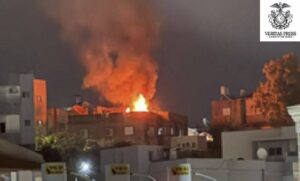
That contradiction became painfully visible in February 2026, when a missile strike during joint US–Israeli attacks on Iran struck the Shajareh Tayyebeh Girls Primary School in Minab, in Iran’s Hormozgan province, killing 165 people, most of them girls aged between seven and twelve.
For many Iranian activists and scholars, the tragedy exposed a profound paradox: wars justified in the name of women’s liberation can end up destroying the lives of the very girls they claim to protect.
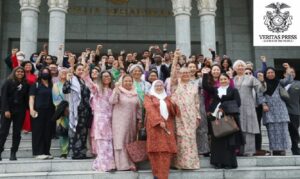
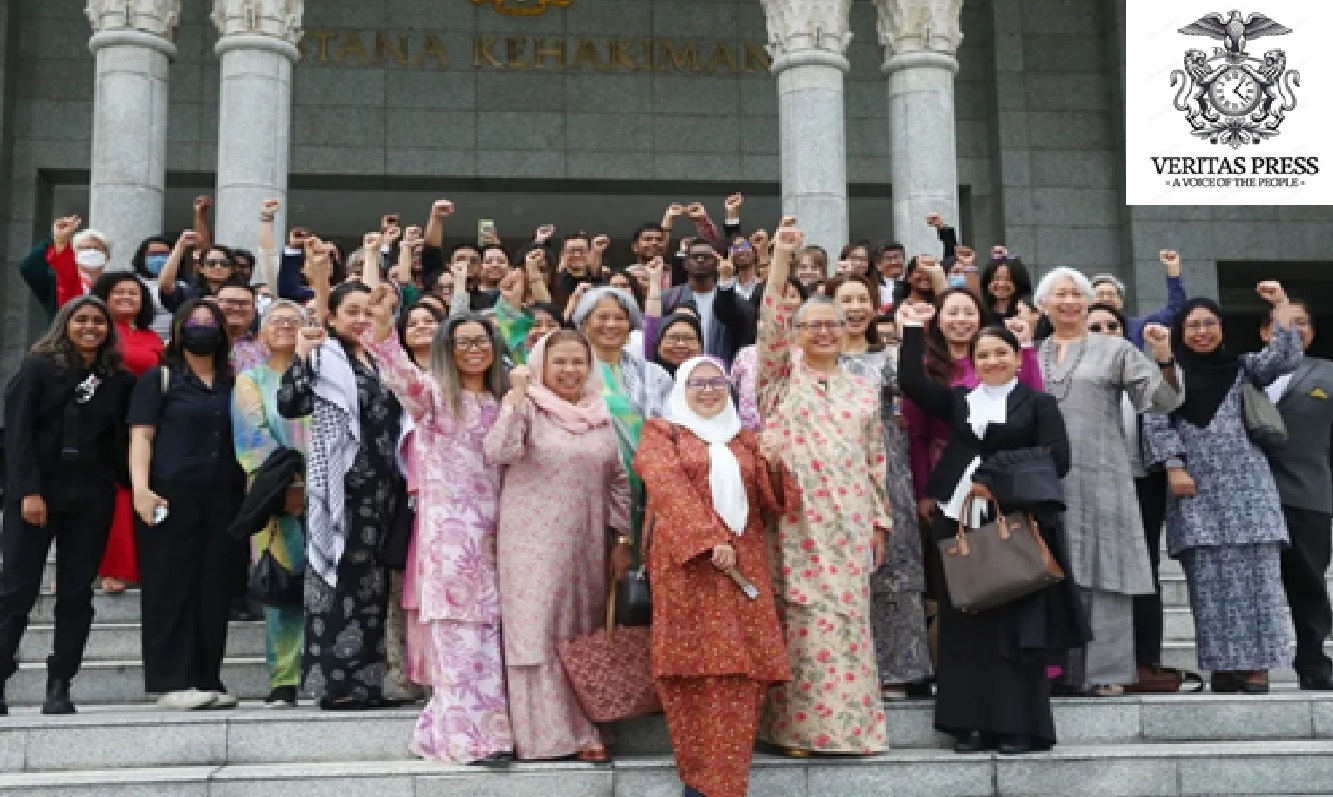
At a vigil outside the Iranian consulate in Istanbul on March 5, mourners placed carnations beside rows of dust-covered school shoes representing the children killed in the strike.
“We resisted repression. We reject bombardment,” one woman said. “Do not bomb our future in our name.”
The incident has intensified debate among feminist scholars, activists, and human-rights observers about the growing phenomenon often described as “imperial feminism”, the instrumentalisation of women’s rights as a moral justification for military intervention.
Western Idealism And The Militarisation Of Liberation:
The crux of this debate exposes a more significant ideological strain: Western secular and liberal values of freedom are progressively being militarised and asserted as universal doctrines, sometimes demanding enforcement by military force.
Under this logic, liberation becomes a geopolitical gamble, a belief that the removal of regimes through military force will inevitably lead to democratic institutions and gender equality.
Political leaders often present such interventions as moral obligations. Democracy, human rights, and gender equality are framed as universal values that justify extraordinary actions. Military campaigns are portrayed as civilisational projects aimed at modernising societies deemed backward or oppressive.
Critics argue that this narrative rests on a problematic assumption: that Western secular models of gender equality represent the only legitimate path to women’s liberation, while alternative ideological traditions, religious, cultural, or locally rooted, are dismissed as inherently inadequate or backwards.
Within this framing, complex local traditions are reduced to caricatures. Societies in the Global South are often portrayed as spaces where women lack agency and must be rescued by external actors.
For activists in the region, such rhetoric transforms feminism into a fog of war, a moral language that obscures the violence of intervention.
“Liberation imposed by missiles is not liberation,” said Iranian activist Laydaan Khanom, now based in Germany. “It is domination disguised as solidarity.”
The Politics Of “Saving” Muslim Women:
The narrative of rescuing women through military intervention has appeared repeatedly in Western foreign policy discourse.
Following the September 11 attacks, the US-led invasion of Afghanistan was widely framed as a mission to free Afghan women from Taliban rule.
Images of veiled women circulated heavily in Western media, symbolising oppression and reinforcing the moral narrative surrounding the war.
Yet when the Taliban returned to power after the withdrawal of Western forces in 2021, the promise of liberation appeared increasingly hollow.
Anthropologist Lila Abu-Lughod famously challenged this narrative in her book Do Muslim Women Need Saving?
Her critique was not a denial that gender inequality exists, but rather a challenge to the assumption that military intervention by foreign powers could realistically serve as a pathway to women’s emancipation.
Similarly, feminist theorist Chandra Talpade Mohanty argued that Western discourse often constructs the “Third World woman” as a passive victim awaiting rescue.
Such representations erase the political agency of women in non-Western societies and obscure the grassroots activism already shaping feminist movements within those communities.
Islam, Women’s Rights, And The Politics Of Misrepresentation:
Another dimension often ignored in these debates is the long-standing Islamic framework for women’s rights, which many scholars argue has historically provided protections that were progressive for their time and continue to influence social justice movements across Muslim societies today.
Within Islamic jurisprudence, women are granted legal identity, education rights, employment rights, property rights, inheritance rights, financial independence, and protection within marriage and more… The right to own property, manage wealth, and consent to marriage were established in Islamic law centuries before similar rights became widespread in many Western societies.
For example, women in Islamic law have long had the right to retain personal wealth after marriage, while husbands bear financial responsibility for family maintenance. Women are also entitled to mahr (a marital endowment) and possess rights to seek divorce under specific legal mechanisms.
Yet critics argue that these traditions are frequently misrepresented or reduced to stereotypes in Western discourse, where Islam is often portrayed as inherently oppressive toward women.
This framing ignores the complex historical and cultural interpretations of Islamic law across different societies, as well as the role of patriarchal political structures that distort religious principles.
“Iranian women are treated as if we have no intellectual tradition of our own,” said attorney Aida Ashouri. “It’s Orientalist and demeaning.”
For many Muslim scholars and activists, the issue is not Islam itself but the political manipulation of religion by state authorities, a phenomenon that exists across multiple cultures and religions.
Iran’s Own History Of Feminist Resistance:
For many Iranian women, the idea that liberation could arrive through foreign bombs contradicts more than a century of domestic feminist activism.
In the nineteenth century, writer and educator Bibi Khanoom Astarabadi challenged patriarchal norms through her satirical work Maayib al-Rijal (The Vices of Men), a critique of male hypocrisy in Iranian society.
She later founded one of Tehran’s earliest girls’ schools, helping lay the foundation for Iran’s modern feminist movement.
That tradition continued across generations:
- Feminist journalism led by Shahla Sherkat, founder of the influential magazine Zanan
- The One Million Signatures Campaign launched in 2006 to reform discriminatory laws
- The “Woman, Life, Freedom” protests were sparked by the death of Mahsa Jina Amini in 2022.
Today, Nobel Peace Prize laureate Narges Mohammadi continues advocating for women’s rights despite repeated imprisonment.
For many Iranian feminists, this history demonstrates that women’s rights in Iran have always been fought for internally, not granted by foreign powers.
The Hypocrisy Within Western Secular Societies:
The moral authority behind interventionist narratives is also complicated by persistent failures within Western societies themselves to protect women from exploitation.
One of the most prominent examples is the global scandal surrounding Jeffrey Epstein and his elitist friends, whose trafficking network allegedly involved the sexual exploitation of underage girls and connections to influential political and financial elites.
Despite extensive investigations, many activists argue that the full extent of the network and the accountability of the powerful individuals involved remains unresolved.
For critics, the scandal illustrates a deeper contradiction: societies that struggle to address systemic abuse within their own institutions often claim moral authority to “liberate” women abroad.
“When governments fail to protect women at home,” said Iranian activist Jasmine Farahani, “their claims to save women elsewhere become difficult to take seriously.”
“Girls Were Killed In The Name Of Freeing Women”:
The strike on the Minab school, therefore, carried immense symbolic weight.
At memorial gatherings, families displayed the children’s schoolbags and shoes recovered from the rubble.
“What exactly is being liberated?” one woman asked at a vigil.
“Girls were killed in the name of freeing women.”
Iranian-American activist Pattie Ehsaei emphasised the structural nature of gender inequality.
“Removing one man does not dismantle institutions,” she said. “You still have the courts, the security services, and the laws.”
Liberation Cannot Be Delivered By Missiles:
The deeper issue raised by critics is the transformation of liberation into a militarised gamble backed by foreign power.
The assumption behind such interventions is simple: remove an oppressive regime, and freedom will follow.
Yet the experiences of Afghanistan, Iraq, and Libya suggest the opposite. War often weakens institutions, fractures societies, and creates environments in which women’s rights deteriorate further rather than improve.
Political freedom and gender equality cannot emerge from landscapes defined by bombardment, displacement, and insecurity.
Rethinking Feminism In An Age Of War:
Across the Global South, women’s rights movements are already engaged in long struggles for liberalism, reform, through activism, education, journalism, and grassroots organising.
Their demands are clear: equal legal rights, bodily autonomy, protection from violence, and accountable institutions.
But those goals require courts, civil society, education systems, and legal reform, not airstrikes.
As Pattie Ehsaei explained:
“We want an Iran where women have equal rights in marriage, divorce, inheritance, and protection from violence. But those changes require independent courts, free media, and accountable institutions.”
At the vigil for the children killed in Minab, one woman summarised the sentiment shared by many Iranian activists.
“We resisted repression,” she said quietly.
“But we reject bombardment. Just do not bomb our future in our name.”
Conclusion: When Liberation Becomes A Weapon.
The idea that bombs can deliver freedom is one of the most enduring myths of modern geopolitics. Wrapped in the language of humanitarianism, democracy, and women’s rights, military interventions are repeatedly framed as moral obligations rather than exercises of power. Yet history reveals a far more troubling reality: liberation framed through war often becomes a weapon rather than a remedy.
The tragedy in Minab, where a missile strike destroyed the Shajareh Tayyebeh Girls Primary School, killing scores of young girls, exposes the moral fracture at the heart of this narrative. When children become casualties of campaigns justified in the name of protecting women, the rhetoric of humanitarian war collapses under its own contradictions.
For decades, Western governments have invoked the suffering of women in Muslim-majority societies as evidence that intervention is both necessary and morally justified. The wars in Afghanistan, Iraq, and Libya were all framed in part through this lens. Yet the outcomes of those interventions demonstrate a persistent pattern: societies shattered by war rarely produce the stable institutions required for genuine gender equality.
Instead, conflict often deepens the very insecurities that harm women most: displacement, poverty, the collapse of education systems, and the erosion of legal protections and morale.
At the same time, the claim that Western powers uniquely embody the moral authority to “save” women abroad is increasingly undermined by contradictions within their own societies. The case of Jeffrey Epstein and his associates, whose vast network of trafficking and corruption exposed the vulnerability of women and girls within powerful Western institutions, demonstrates how international efforts to safeguard women can fall short when it comes to achieving justice domestically.
For many critics, this hypocrisy reveals a deeper dynamic: women’s rights are not always invoked as universal principles but selectively deployed as geopolitical tools.
When gender equality becomes part of the strategic vocabulary of war, it risks being detached from the very people it claims to defend. The lives of women and girls become rhetorical symbols rather than political subjects with agency.
This dynamic also relies on a persistent misrepresentation of societies in the Global South. The portrayal of Muslim-majority societies as uniformly oppressive ignores the complex histories of activism, scholarship, and reform that exist within them, including traditions rooted in Islamic jurisprudence that historically recognised women’s legal and economic rights long before such protections became common in many Western legal systems.
By reducing these societies to caricatures of backwardness, the rhetoric of imperial feminism erases the agency of the very women whose liberation it claims to champion.
Iranian women, like women across the Middle East and the Global South, are not passive recipients waiting for salvation. Their struggles for dignity and equality have been unfolding for generations, through schools, newspapers, legal campaigns, underground organising, and public protest.
From the early writings of Bibi Khanoom Astarabadi to the activism of imprisoned Nobel laureate Narges Mohammadi, Iranian women have repeatedly demonstrated that the path toward liberation emerges from within societies, not from bombs dropped upon them.
The deeper lesson of the Minab tragedy is therefore not simply about the brutality of modern warfare. It is about the danger of allowing the language of justice to be absorbed into the machinery of war.
When liberation becomes militarised, it ceases to be liberation at all.
True solidarity with women across the world cannot be built on aerial bombardment, sanctions, or geopolitical gambles disguised as humanitarianism. It must instead rest on a far more difficult foundation: humility, respect for local agency, and a commitment to peace.
Because the truth that emerges from every conflict zone is painfully consistent.
You cannot bomb a society into freedom.
Source: Multiple News Agencies
Submissions:
For The Secure Submission Of Documentation, Testimonies, Or Exclusive Investigative Reports From Any Global Location, Please Utilise The Following Contact Details For Our Investigations Desk: enquiries@veritaspress.co.uk or editor@veritaspress.co.uk
Help Support Our Work:
Popular Information is powered by readers who believe that truth still matters. When just a few more people step up to support this work, it means more lies exposed, more corruption uncovered, and more accountability where it’s long overdue.
Help Protect Independent Journalism, Which Is Currently Under Attack.
If you believe journalism should serve the public, not the powerful, and you’re in a position to help, becoming a DONATOR or a PAID SUBSCRIBER truly makes a difference.
DONATION APPEAL: If You Found This Reporting Valuable, Please Consider Supporting Independent Journalism.
Help Support Our Work – We Know, We Know, We Know …
Seeing these messages is annoying. We know that. (Imagine what it’s like writing them … )
Your support fuels our fearless, truth-driven journalism. In unity, we endeavour to amplify marginalised voices and champion justice, irrespective of geographical location.
But it’s also extremely important. One of Veritas Press’s greatest assets is its reader-funded model.
1. Reader funding means we can cover what we like. We’re not beholden to the political whims of a billionaire owner. We are a small, independent and impartial organisation. No one can tell us what not to say or what not to report.
2. Reader funding means we don’t have to chase clicks and traffic. We’re not desperately seeking your attention for its own sake: we pursue the stories that our editorial team deems important and believe are worthy of your time.
3. Reader Funding: enables us to keep our website and other social media channels open, allowing as many people as possible to access quality journalism from around the world, particularly those in places where the free press is under threat.
We know not everyone can afford to pay for news, but if you’ve been meaning to support us, now’s the time.
Your donation goes a long way. It helps us:
- Keep the lights on and sustain our day-to-day operations
- Hire new, talented independent reporters
- Launch real-time live debates, community-focused shows, and on-the-ground reporting
- Cover the issues that matter most to our communities, in real time, with depth and integrity
We have plans to expand our work, but we can’t do it without your support. Every contribution, no matter the size, helps us stay independent and build a truly people-powered media platform.
If you believe in journalism that informs, empowers, and reflects the communities we serve, please donate today.
In contemporary geopolitics, the language of gender equality and women’s liberation increasingly appears within the
BEIRUT, LEBANON, OCCUPIED PALESTINE — The Middle East is hurtling toward an unprecedented abyss. What
TEHRAN, IRAN – For the past two weeks, the Middle East has been engulfed in
WEST BANK – In the pre-dawn hours of Thursday, March 12, 2026, the occupied West
Original Article Date Published: Article Date Modified: Help support our mission, donate today and be
TEHRAN, IRAN – The global economy is holding its breath. Nearly two weeks after the
As the Middle East conflict enters its second week, triggering the largest energy supply disruption
RAMALLAH / JERUSALEM / AMMAN — For the twelfth consecutive day, the gates of the
TEHRAN, IRAN – The early hours of March 11, 2026, marked a significant and dangerous

It was the kind of volatility that wipes out traders and creates legends. In a