






Title: “Hands Off Greenland”: UK Backs Denmark Amid Trump’s Renewed Annexation Threats.
Press Release: Veritas Press C.I.C.
Author: Kamran Faqir
Article Date Published: 05 Jan 2026 at 16:00 GMT
Category: UK | Politics | “Hands Off Greenland”: UK Backs Denmark Amid Trump’s Renewed Annexation Threats.
Source(s): Veritas Press C.I.C. | Multi News Agencies
Website: www.veritaspress.co.uk

Business Ads

LONDON & COPENHAGEN — Greenland, the world’s largest island, has again become a geopolitical flashpoint, this time igniting tensions between the United States, Denmark, and their European allies. President Donald Trump revived his longstanding suggestion that the U.S. should “take over” Greenland, framing it as a matter of national security. The move, which Copenhagen and Greenland have repeatedly rejected as legally and politically absurd, has sparked concern across NATO, Europe, and the wider Arctic region.
The situation exposes not only the fragility of global norms on sovereignty but also the U.S.’s willingness under Trump to treat allied territories as strategic assets to be seized, rather than as partners with autonomous rights. It also tests the resolve of European powers to uphold a rules-based order in the face of coercive U.S. foreign policy.
UK Backs Denmark: A Calculated Signal.
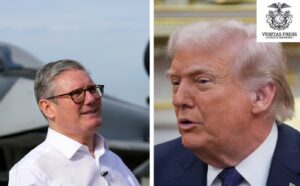
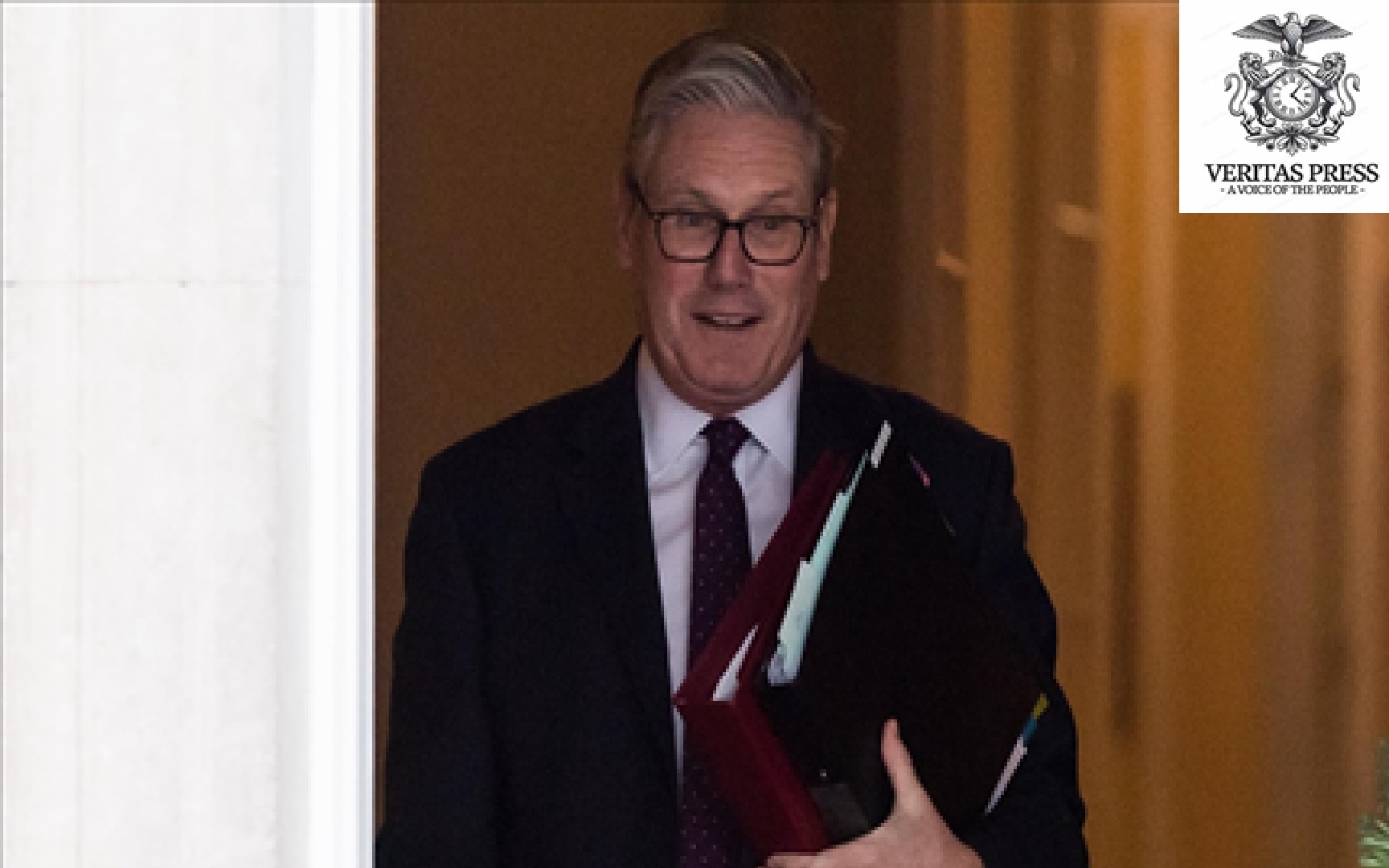
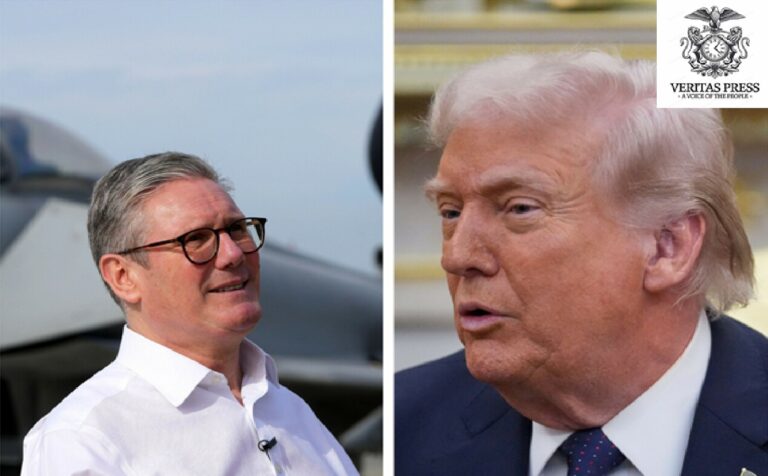
UK Prime Minister Keir Starmer issued a clear and deliberate statement: the future of Greenland “must be decided by Greenland and the Kingdom of Denmark, and only them.” Starmer’s repeated affirmations of solidarity with Danish Prime Minister Mette Frederiksen mark a notable departure from the UK’s historically cautious posture toward U.S. territorial ambitions, signalling a willingness to prioritise European allies over U.S. preferences when fundamental sovereignty is at stake.
Starmer framed the issue through both legal and strategic lenses, emphasising that Denmark is a “close European ally” and a NATO partner. Implicit in his statement is a critique of the U.S.’s habit of treating military superiority and geopolitical reach as de facto rights over smaller nations, a pattern evidenced by both Greenland and, most recently, Venezuela.
Trump’s Arctic Ambitions: Coercion Cloaked As Security.
President Trump’s latest assertions on Greenland, that it is needed “from a national security situation”, are part of a broader, historically unprecedented pattern of U.S. territorial claims. Analysts point out that Trump has previously suggested U.S. annexation of territories under the guise of strategic necessity, from Greenland to northern Canada, framing geography as a tool for unilateral power projection.
Greenland is not only a mineral-rich territory with potential deposits of rare earth metals and uranium, but its location provides a strategic Arctic foothold near Russia and China. U.S. policy under Trump increasingly frames the Arctic as a theatre where alliances and legal norms can be subordinated to perceived strategic expediency.
Experts argue that such rhetoric is destabilising for NATO cohesion. As NATO allies Denmark and the UK emphasise the inviolability of Greenland’s autonomy, Trump’s claims risk creating deep fractures within the alliance, setting a precedent that military and economic might justify unilateral intervention, a challenge to NATO’s collective security framework.
Legal And Normative Implications:
International legal experts have been unequivocal: any attempt by the U.S. to annex Greenland would constitute a breach of international law, violating principles of sovereignty and self-determination enshrined in the UN Charter.
Former UK attorney general Dominic Grieve warned that the renewed Greenland claims reveal a White House “working off fantasies about the United States’ right to intervene anywhere in the Western Hemisphere.” Similarly, former Supreme Court head Lord Sumption described Trump’s Venezuelan intervention as “plainly illegal,” suggesting a broader U.S. pattern of extralegal action.
The combination of coercive rhetoric toward Greenland and the extrajudicial capture of Venezuela’s President Nicolás Maduro underscores a troubling trend: the erosion of international norms by a major power, cloaked as strategic necessity. Analysts warn that such behaviour emboldens revisionist powers like Russia and China, who might interpret U.S. unilateralism as tacit permission for similar territorial encroachments.
Greenland And Denmark: Asserting Autonomy Amid Pressure.
Greenlandic leaders, led by Prime Minister Jens‑Frederik Nielsen, have called Trump’s rhetoric a “fantasy” and insisted on Greenland’s right to decide its future. Copenhagen has similarly been unambiguous: Denmark retains sovereignty over its three constituent nations, and the U.S. has “no right” to annex any of them.
This diplomatic pushback has been reinforced by other European leaders and Nordic countries, who have collectively emphasised the importance of defending territorial integrity and upholding NATO commitments without coercion. Danish strategic planning has also adapted: Copenhagen is investing in Arctic defence capabilities to ensure Greenland remains secure from external pressures, signalling a more assertive posture for a historically reserved state.
Arctic Geopolitics: A High-Stakes Chessboard.
The Greenland dispute is inseparable from broader Arctic competition. Melting ice has opened new maritime routes and resource opportunities, while the island’s location offers direct oversight of polar military activity, missile early-warning systems, and proximity to Russian and Chinese strategic interests. The U.S. military presence at Pituffik Space Base (formerly Thule Air Base) already reflects these priorities, but Trump’s rhetoric seeks to move from partnership to possession, highlighting a shift from alliance cooperation toward zero-sum territorial thinking.
European commentators note that Greenland could become a flashpoint for Arctic conflict, where disputes over natural resources and strategic positions intersect with violations of international law. The risk is not just legal; it is operational, as coercion against a NATO ally undermines collective defence principles and emboldens external adversaries.
UK’s Strategic Balancing Act:
Starmer’s careful diplomacy also reflects the UK’s broader challenge: maintaining relations with the United States while defending European allies and international law. While Starmer has avoided directly condemning Trump’s Venezuelan intervention, his unwavering support for Denmark on Greenland signals a recalibration, a recognition that European sovereignty and NATO credibility must be defended even when it risks friction with Washington.
Labour MPs and opposition figures have been critical of the Prime Minister’s caution on Venezuela, emphasising that principled diplomacy requires confronting extralegal actions wherever they occur. By contrast, the UK’s explicit support for Denmark and Greenland in the Arctic represents a stronger, rule-of-law-oriented stance, signalling to both allies and adversaries that coercion over smaller nations will not go unchallenged.
Conclusion: Sovereignty, Law, And The Limits Of Power.
The Greenland controversy is more than a personal spat between leaders; it is a test of international norms, alliance cohesion, and the principle of self-determination. Trump’s territorial rhetoric exposes a dangerous pattern: powerful states may treat smaller nations as strategic pawns, undermining decades of post-war legal and diplomatic order.
Greenland and Denmark’s resolute opposition, backed by the UK and European partners, is a critical stand for sovereignty over might. The stakes extend far beyond the Arctic: the outcome will influence future U.S. conduct, NATO unity, Arctic security, and the international community’s ability to defend the rules-based order. As analysts warn, Greenland is a litmus test for diplomacy, for law, and for the West’s capacity to restrain unilateralism in an era of great-power competition.













yb368u