
Original Article Date Modified:
Article Date Modified:
Help support our mission, donate today and be the change. Every contribution goes directly toward driving real impact for the cause we believe in.
GAZA CITY – On a night when the world’s attention was pulled toward missile exchanges with Iran, an Israeli drone fired two missiles at a small gathering of Palestinian security officers near Al‑Shawa Square in Gaza City’s eastern Al‑Tuffah neighbourhood. By dawn, three men were dead. The hospital morgue received four bodies. Five more wounded arrived with shrapnel wounds, burn marks, and a question that no one in Gaza can any longer afford to ask: what ceasefire?
I. The Strike: What Happened Near Al‑Shawa Square
1.1 The Sequence of Events
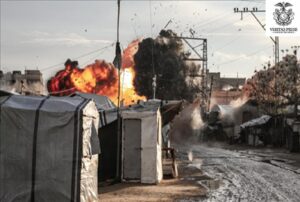
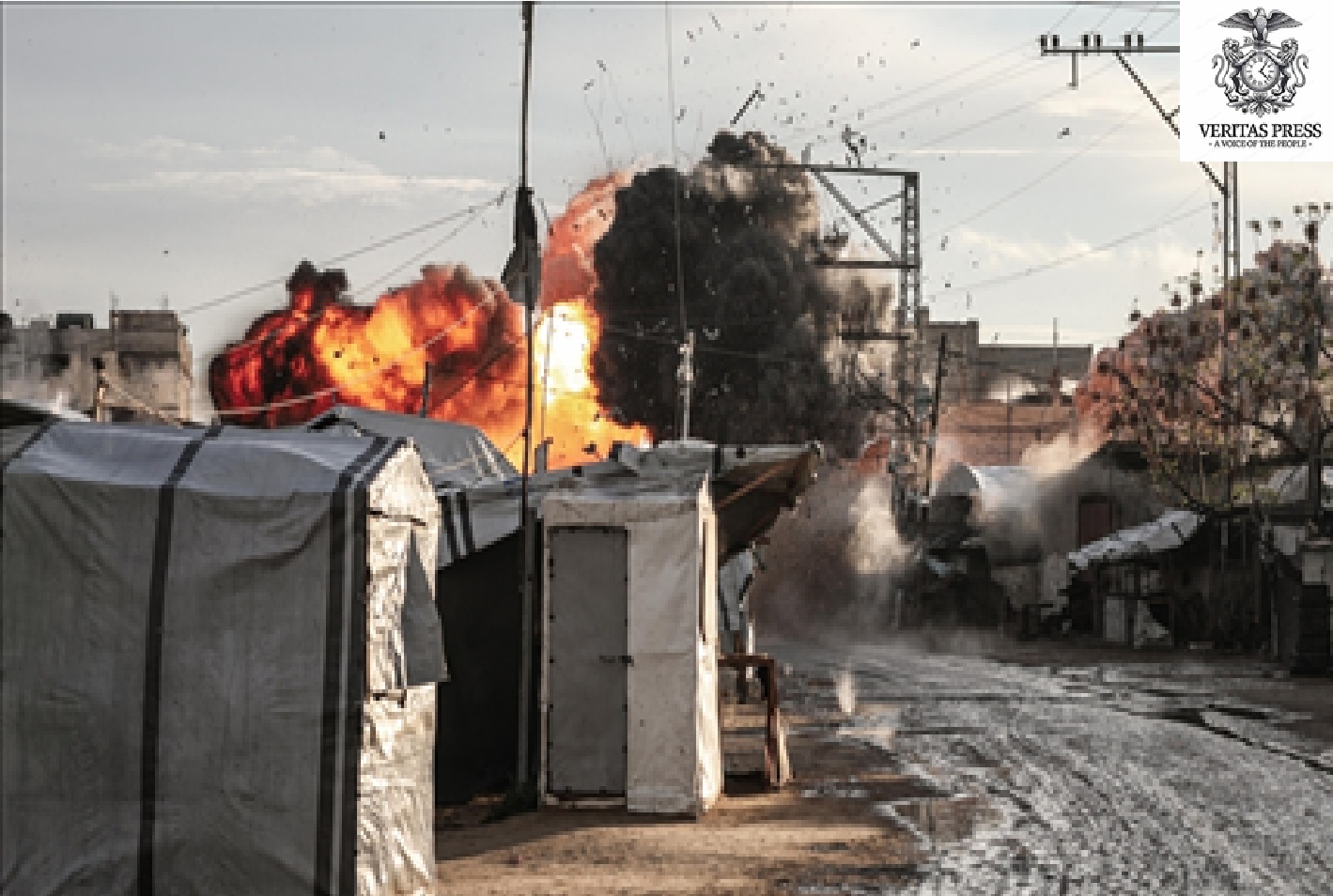
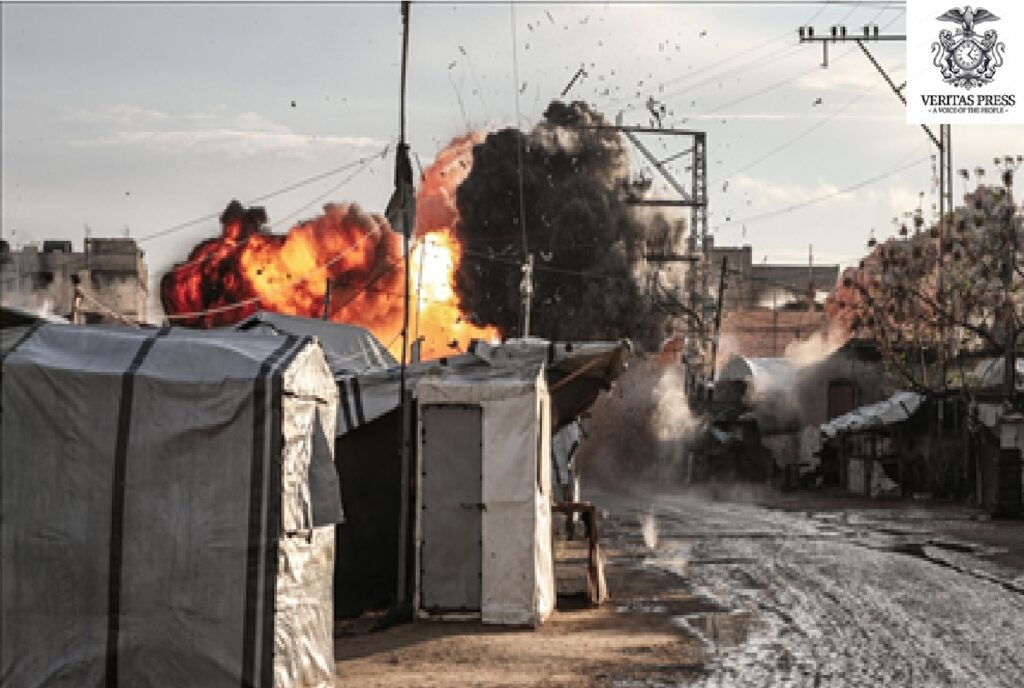
At approximately 4:00 a.m. local time on Sunday, April 5, 2026, residents of the Al‑Tuffah neighbourhood reported the sound of low‑flying drones followed by two distinct explosions. According to Gaza’s Civil Defence agency, which operates as a rescue force under the de facto Hamas administration, an Israeli drone fired two missiles at a group of people near Al‑Shawa Square, an intersection in the eastern part of Gaza City.
Medical sources told Anadolu Agency that the victims were transported to two facilities: Al‑Ahli Baptist Hospital in central Gaza City and Al‑Shifa Hospital in the western part of the city. Al‑Shifa Hospital’s official statement read: “Four martyrs and five wounded arrived at the hospital this morning after an Israeli drone fired two missiles at a group of civilians”.
The number of fatalities was initially reported inconsistently. The Palestinian news agency WAFA named three victims:
- Ahmad Abu Shawish
- Mohammad Al‑Suweirki
- Ramzi Al‑Shawwa
Al‑Shifa Hospital’s count of four martyrs suggests that either a fourth body was taken elsewhere, possibly to Baptist Hospital, which reported receiving victims, or that one of the wounded later succumbed to injuries. Reuters and the Gaza Civil Defence both reported four killed. The discrepancy itself is a recurring feature of reporting from Gaza, where overwhelmed medical systems and ongoing strikes often make casualty counts provisional.
Witnesses described the scene as one of confusion and terror. “The drone was circling above for several minutes before the first explosion,” a local resident who asked not to be named told field reporters. “We thought it was surveillance. Then two hits in quick succession. People were screaming, running in all directions.” Another witness, speaking to Anadolu, said the strike hit a group of Palestinian security personnel, not armed militants engaged in hostilities, but local officers whose precise affiliation remains unclear. Some reports described them as “security officers”; others used the more generic “group of civilians”. This ambiguity is critical, as Israeli military justifications often hinge on the presence of “armed operatives.”
1.2 The Victims: Named, Not Numbered
The three identified victims were:
- Ahmad Abu Shawish
- Mohammad Al‑Suweirki
- Ramzi Al‑Shawwa
Little is publicly known about their lives beyond these names. In the vast machinery of conflict reporting, names are often reduced to statistics. But each name represents a person who was present at a specific place at a specific time, perhaps returning from a shift, perhaps standing guard, perhaps simply in the wrong place when a drone operator several hundred kilometres away made a decision with lethal consequences.
1.3 The Preceding Attacks: A Pattern, Not An Exception
The Al‑Tuffah strike did not occur in a vacuum. Hours earlier, on Saturday, April 4, an Israeli drone targeted a vehicle on Salah al‑Din Street opposite the Maghazi refugee camp in central Gaza, killing one Palestinian and injuring three others, one critically. Eyewitnesses told Anadolu that the drone fired a missile at a moving car, a classic “assassination‑style” strike.
On the same day, Israeli gunboats opened fire on tents belonging to displaced people in the Khan Younis area, injuring civilians. Israeli bulldozers began demolishing civilian structures west of Rafah, while tank fire and helicopter gunfire were reported across multiple areas, including eastern Jabalia, eastern Khan Younis, and the Al‑Bureij refugee camp. The Israeli military’s standard response to such incidents, “looking into the reports” or “the army did not immediately comment”, has become a familiar refrain.
II. The Ceasefire That Wasn’t: A Statistical Autopsy
2.1 The Trump‑Brokered Agreement
The ceasefire took effect on October 10, 2025, following a 20‑point proposal unveiled by the Trump administration. Its key provisions included:
- An end to attacks in Gaza.
- Lifting of the blockade on humanitarian aid.
- Withdrawal of Israeli forces to the so‑called “yellow line” (a buffer zone approximately 500‑800 meters inside Gaza’s eastern border).
- Opening of the Rafah crossing between Gaza and Egypt.
- Gradual release of captives and prisoners.
By any objective measure, most of these provisions have been violated repeatedly and systematically.
2.2 The Toll Since October 10, 2025
Gaza’s Health Ministry, whose figures the United Nations considers reliable, reports the following cumulative numbers since the ceasefire took effect:
| Category | Number |
| Palestinians killed | 720 (as of April 5, 2026) |
| Palestinians injured | 1,968 |
| Bodies recovered from rubble | 756 |
Source: WAFA / Gaza Health Ministry
The ministry also notes that these figures reflect only those who reached hospitals, and that the actual toll may be significantly higher due to difficulties in accessing victims, ongoing shelling, and the presence of bodies still trapped under debris.
Among the 713 victims reported earlier (as of April 2), children, women, and the elderly comprised 43.3% of the dead and 53.7% of the wounded, figures that speak directly to the nature of the weapons used and the environments targeted.
2.3 The Scale Of Violations
According to the Gaza Government Media Office, Israel has violated the ceasefire agreement over 2,070 times as of early April 2026, averaging approximately 13.1 violations per day. These violations include:
- 840 instances of shooting at civilians.
- 1051 aerial and artillery bombardments.
- 95 incursions into residential areas beyond the “yellow line.”
- 271 demolitions of properties.
- Approximately 50 abductions of Palestinians from Gaza.
For comparison, the Al‑Tuffah strike was not an outlier; it was one of more than a dozen separate ceasefire violations reported on that single day.
III. The Al‑Tuffah Neighbourhood: A Case Study In “Altering The Geography”
3.1 The Moving “Yellow Line”
The “yellow line” was originally intended as a temporary military buffer zone, approximately 500‑800 meters deep along Gaza’s eastern border. Under the ceasefire agreement, Israeli forces were to withdraw to this line and not advance beyond it.
In practice, the yellow line has moved steadily westward. In January 2026, a Reuters investigation documented how Israeli forces had advanced deep into the Al‑Tuffah neighbourhood, destroying dozens of residential buildings and forcibly displacing residents in clear violation of the ceasefire terms.
“After moving the yellow‑painted concrete blocks, Israeli forces proceeded to level the area, destroying at least 40 residential buildings.” — Reuters investigative report, January 2026
3.2 The Transformation Of A Historic Neighbourhood
Al‑Tuffah is not a “military zone.” Historically, it was one of the three walled quarters of old Gaza City, alongside Al‑Daraj and Zeitoun. Prior to October 2023, it was a densely populated residential area with schools, mosques, markets, and family homes.
Today, according to Palestinian field reports, Al‑Tuffah has become “a barren land where destroyed buildings and metal debris are spread by Israeli bombing for two years”. The neighbourhood has been subjected to repeated airstrikes, artillery shelling, and, most recently, systematic demolition of what remains standing. In January 2025, an Israeli airstrike on a school sheltering displaced persons in Al‑Tuffah killed 19 people and wounded more than 40.
3.3 Legal Implications: The Fourth Geneva Convention
An international legal body described what is happening in eastern Gaza as “altering the features of the occupied land”, a crime under the Fourth Geneva Convention, which prohibits an occupying power from destroying civilian property except where rendered absolutely necessary by military operations. The systematic expansion of the buffer zone, the demolition of residential buildings, and the forced displacement of residents are not incidental to military operations; they are the operation.
IV. Humanitarian Collapse: The Invisible War
4.1 Displacement: 2.1 Million People Into Half The Space
Even before the April 5 strike, the humanitarian situation in Gaza had deteriorated to catastrophic levels. According to UN OCHA, the ceasefire agreement has forced approximately 2.1 million Palestinians into less than half the area they inhabited before the war, a population density that would be classified as a humanitarian emergency in any other context.
Israeli forces have established seven new military sites along the yellow line, five of which have been prepared for long‑term use through land levelling and paving. Concrete blocks, checkpoints, and restricted access zones have fragmented what remains of Gaza into isolated enclaves.
4.2 Aid Blockade: 39% Of Promised Supplies
The ceasefire agreement explicitly stipulated that “full aid will be immediately sent into the Gaza Strip.” What actually entered between October 10 and April 1?
- 40,572 trucks entered, only 39.3% of the 103,200 trucks allocated.
- Daily average: 235.8 trucks, far below the agreed 600 trucks per day.
- Fuel entered at less than 15% of the agreed amount.
Even more cynically, Israel has systematically blocked nutritious food items, such as meat, dairy, and fresh vegetables, while allowing “snacks, chocolate, crisps, and soft drinks” to enter. This is not aid; it is the deliberate management of malnutrition. The World Health Organization reports that only 42% of health facilities are operational, and most are only partially.
4.3 Shelter Crisis: Tents, Rain, And Fire
Displaced families live in makeshift tents in overcrowded camps. Between November 2025 and February 2026, at least 12 fires broke out in displacement sites, causing injuries and destroying shelters. Heavy rains have flooded tent camps, creating unsanitary conditions and increasing the risk of disease outbreaks. In Gaza’s tent camps, as Al Jazeera’s Tareq Azzoum reported, “rats, debris and sewage endanger children, causing injuries and health risks”.
4.4 The UN’s Warning
On the same day as the Al‑Tuffah strike, April 5, 2026, the UN Office for the Coordination of Humanitarian Affairs issued a stark warning:
“Regional developments, including the U.S.-Israeli war on Iran, have shifted focus away from Gaza. The humanitarian situation remains extremely serious. Israeli restrictions prevent international humanitarian workers from entering Gaza, and any further disruption of aid operations could have devastating consequences for the Palestinian population.”
— Olga Cherevko, OCHA spokesperson
V. The Numbers Game: Disputed Figures, Verified Patterns
5.1 What The Israeli Military Says
The Israeli military has not issued a detailed statement specifically on the April 5 Al‑Tuffah strike. A spokesperson told AFP they were “looking into the reports”, a formulaic response that neither confirms nor denies responsibility.
However, on April 4, the IDF announced it had struck “an armed Hamas terrorist cell operating near troops in the northern Gaza Strip,” claiming that after identifying the threat, “a targeted strike was conducted against the cell”. No evidence was provided that the individuals near Al‑Shawa Square constituted such a cell. No distinction was drawn between security personnel performing routine duties and “terrorists” engaged in active hostilities.
5.2 Casualty Verification: Media Restrictions
AFP, Reuters, and other major news organisations have noted that media restrictions and limited access in Gaza have prevented independent verification of casualty figures. Israeli authorities have denied visas to most international journalists, and those operating inside Gaza face constant danger and restricted movement.
The United Nations considers Gaza’s Health Ministry figures “reliable” based on historical data and cross‑verification methods. Nevertheless, the fog of war, exacerbated by intentional information restrictions, means that the true human cost is almost certainly higher than reported.
5.3 A Comparative Perspective
Consider the asymmetry: Since the ceasefire took effect, five Israeli soldiers have been killed, according to Israeli sources. 720 Palestinians have been killed, a ratio of 144:1. This is not “mutual violation”; this is structural asymmetry. One side possesses advanced drones, F‑35s, and real‑time intelligence. The other side possesses tents, rubble, and a health ministry that counts bodies because no one else will.
VI. International Reactions: Condemnation Without Consequence
6.1 The United Nations
The UN has repeatedly called for accountability, but its mechanisms remain largely powerless. At an April 2 Security Council meeting, speakers urged “stronger UN‑Arab League cooperation” and the need to “consolidate the ceasefire in Gaza and turn this narrow but important opening into irreversible progress”. Yet the gap between rhetoric and reality has never been wider. The Security Council remains paralysed by the U.S. veto power, which has been deployed repeatedly to shield Israel from binding resolutions.
6.2 The European Union: Divided And Ineffective
An EU review published March 31, 2026, concluded that “there are indications that Israel would be in breach of its human rights obligations under Article 2 of the EU‑Israel Association Agreement”. However, when asked about imposing sanctions, EU foreign policy chief Kaja Kallas said she was “not optimistic” due to a lack of consensus among member states.
“The genocide in Gaza exposes Europe’s failure to act and speak with one voice, even as protests spread across European cities and 14 UN Security Council members call for an immediate ceasefire.” — Top EU official
Deep divisions among EU countries on the Israeli‑Palestinian issue have rendered the bloc’s foreign policy inert at the moment it is most needed.
6.3 The Arab League And Regional Actors
The Arab League has affirmed its support for Egyptian and Qatari mediation efforts, but its resolutions carry no enforcement mechanism. An emergency summit on Gaza was postponed to March 4, then further delayed. Meanwhile, Hamas insists on “fully implementing all outcomes of the Sharm El‑Sheikh summit and President Trump’s plan for Gaza”, a plan that, critics argue, was designed more for photo opportunities than for lasting peace.
6.4 The United States: Silence As Policy
Perhaps the most consequential international actor is also the most conspicuously silent. The Trump administration, which brokered the ceasefire, has offered no public condemnation of its violations. A White House spokesperson had not issued any statement on the April 5 strike as of this writing. Earlier statements, such as National Security Council spokesman John Kirby’s assertion that “a ceasefire right now really only benefits Hamas,” suggest a policy framework in which Palestinian civilian deaths are implicitly accepted as collateral.
VII. Competing Narratives: Who Is Violating The Ceasefire?
7.1 Israel’s Position
Israel’s official justification for continued strikes is that it is responding to “immediate threats” and “Hamas violations.” On April 4, the commander of the Israeli army’s Gaza Division was quoted by Israeli Channel 12 as saying that Hamas was exploiting the military operation against Iran to strengthen its capabilities and rearm, and that the group intends to carry out kidnappings of Israeli soldiers. He added that the Israeli army will later return to focusing entirely on the Gaza Strip “to complete the mission”.
This framing, that Hamas is the underlying threat and that strikes are pre‑emptive or responsive, is a recurring feature of Israeli military communications. However, it raises a fundamental question: if a ceasefire agreement is in place, under what legal or contractual authority does one party claim the right to conduct “pre‑emptive” strikes based on anticipated future violations?
7.2 Hamas’s Response
Hamas spokesperson Hazem Qassem dismissed Israel’s claims as “false and baseless allegations, and an attempt by the occupation to justify its violations of the ceasefire agreement”.
“The Gaza Division commander’s assertion that withdrawal from the Yellow Line is not on the table and that he is waiting for an opportunity to resume fighting in Gaza is a clear violation of the ceasefire agreement and reaffirms the enemy’s persistent intentions to sabotage it.”
— Hazem Qassem, Hamas spokesperson
Qassem called on mediators, guarantor states, and the UN Security Council to “take a clear stance against the occupation’s violations and pressure it to implement the commitments stipulated in the agreement”.
7.3 The Problem Of “Mutual Accusation”
Both sides accuse each other of violating the ceasefire. But the asymmetry is not merely one of power, it is also one of definition. When Israel strikes a group of security personnel near a square in Gaza City, it calls it a “targeted strike against a terrorist cell.” When a rocket is fired from Gaza (a rare occurrence since the ceasefire), Israel calls it a “ceasefire violation.” The framework itself is rigged: one party defines the terms of violation, the other party is presumed to be the violator.
VIII. Reconstruction: $70 Billion And No Plan
8.1 The Scale Of Destruction
Two years of Israeli offensive operations (October 2023–October 2025) left more than 72,000 Palestinians dead, 172,000 wounded, and 90% of civilian infrastructure destroyed. The United Nations and the World Bank estimate reconstruction costs at $70 billion, a figure that exceeds the annual GDP of many medium‑sized economies. Some UN assessments have revised this figure upward to $53‑70 billion, noting that the true cost could be higher due to the need for rubble removal, environmental remediation, and psychological trauma services.
8.2 What Reconstruction Would Require
Reconstruction would entail:
- Removal of an estimated 40‑50 million tons of rubble, much of it contaminated with asbestos and unexploded ordnance.
- Rebuilding of hundreds of thousands of housing units—92% of all housing units were either fully destroyed or damaged.
- Restoration of water, electricity, sewage, and telecommunications networks.
- Reconstruction of schools, hospitals, universities, and government buildings.
- Economic recovery and job creation for a population with an unemployment rate exceeding 70%.
8.3 The Political Obstacle
Reconstruction cannot begin in any meaningful sense without a stable ceasefire and unrestricted access for construction materials, engineers, and international monitors. Neither condition currently exists. Israel continues to block the entry of heavy equipment necessary for rubble removal. The Rafah crossing, though nominally open, operates under Israeli‑imposed restrictions that limit both the quantity and type of goods allowed to enter.
A February 2026 report by the UN Office for the Coordination of Humanitarian Affairs noted that the Israeli authorities had “closed all crossings into the Gaza Strip, suspended entry of aid, fuel, and commercial supplies” on February 28, 2026, an act that alone constitutes a fundamental breach of the ceasefire agreement.
IX. Media Coverage: What Gets Reported, What Gets Buried
9.1 The Discrepancies In Reporting
The April 5 strike was reported by multiple outlets: Anadolu Agency (Turkey), WAFA (Palestine), Xinhua (China), Gulf Times (Qatar), and Al Jazeera, among others. Western outlets such as AFP and Reuters also covered the story, though often with more cautious language.
Notable discrepancies include:
- Casualty count: Anadolu and WAFA reported three dead; Al‑Shifa Hospital and Gaza Civil Defence reported four.
- Victim classification: Anadolu described them as “security personnel”; WAFA called them “civilians”; AFP used “group of civilians.”
- Israeli response: Some outlets noted the IDF’s lack of comment; others did not.
These discrepancies are not evidence of “fake news.” They are evidence of the difficulty of real‑time reporting from an active war zone where communications are frequently disrupted, medical systems are overwhelmed, and journalists operate under constant threat.
9.2 The Distraction Of The Iranian Conflict
As OCHA noted, the U.S.-Israeli military campaign against Iran has shifted international attention away from Gaza. On the same weekend as the Al‑Tuffah strike, news headlines were dominated by missile launches, diplomatic manoeuvres, and speculation about a wider regional war. The deaths of three Palestinian security officers near Al‑Shawa Square received far less global attention than they would have six months earlier.
This is not accidental. The strategic diversion of attention is a feature, not a bug, of the current geopolitical landscape. As long as the world looks elsewhere, the slow‑motion catastrophe in Gaza continues without accountability.
Conclusion: The Ceasefire As Fiction
10.1 What The Numbers Tell Us
Let us restate the core facts clearly:
- A ceasefire agreement has been in effect for nearly six months.
- During that period, at least 720 Palestinians have been killed by Israeli forces.
- At least 1,968 have been injured.
- 756 bodies have been recovered from rubble, people who died before the ceasefire but whose remains could not be retrieved until now.
- Israeli forces have committed over 2,070 documented violations of the agreement, averaging 13 per day.
- The “yellow line” has moved westward, swallowing entire neighbourhoods.
- Humanitarian aid has been restricted to less than 40% of the agreed levels.
- 90% of civilian infrastructure remains destroyed, with reconstruction costs estimated at $70 billion.
10.2 The Language Of Deception
What, then, does the word “ceasefire” mean in this context? It cannot mean the cessation of hostilities; hostilities continue daily. It cannot mean the protection of civilians, as civilians are killed with grim regularity. It cannot mean the free flow of humanitarian aid; aid is systematically blocked. It cannot mean a path to reconstruction; reconstruction is impossible under the current conditions.
The word “ceasefire” has been repurposed as a public relations term, a way for the international community to claim that the war is over while the killing continues. As one commentator put it, “Peace here is being used in exactly the same Orwellian sense as ‘ceasefire’”.
10.3 The Moral Asymmetry
There is a profound moral asymmetry at the heart of this situation. When Palestinian security officers are killed near a square in Gaza City, the world debates whether they were “civilians” or “militants.” When Israeli soldiers are killed, their deaths are mourned as national tragedies. The imbalance in media attention, diplomatic pressure, and international sympathy reflects not the facts on the ground but the structure of power in which those facts are interpreted.
The three men killed near Al‑Shawa Square, Ahmad Abu Shawish, Mohammad Al‑Suweirki, and Ramzi Al‑Shawwa, may or may not have been “security personnel.” That classification does not determine the legality of their killing. International humanitarian law prohibits the targeting of individuals who are not directly participating in hostilities. Even if they were security officers, unless they were actively engaged in combat at the precise moment of the strike, their killing may constitute a violation of the laws of war.
10.4 What Accountability Would Require
True accountability would require:
- Independent international investigation into all ceasefire violations, with unrestricted access to Gaza for UN investigators and human rights organisations.
- Suspension of arms sales to any party found to be committing systematic violations.
- Enforcement mechanisms for ceasefire agreements, including meaningful consequences for violations beyond rhetorical condemnation.
- Restoration of full humanitarian access, including the entry of reconstruction materials, heavy equipment, and international monitors.
- A political process that addresses the root causes of the conflict, including the occupation, the blockade, and the denial of Palestinian self‑determination.
None of these measures is currently on the table. The international community prefers the language of “concern” over the language of “consequence.”
10.5 The Human Cost
Behind every statistic is a person. The 720 Palestinians killed since October 10 had names, families, jobs, and dreams. The 756 bodies recovered from rubble were once people who fled their homes, hoping to survive. The 1.2 million children in Gaza, many of whom have now experienced multiple displacements, lost family members, and witnessed scenes that no child should ever see, will carry the psychological scars of this period for the rest of their lives.
The Al‑Tuffah strike was not an exception. It was not a “tragic mistake.” It was not an “isolated incident.” It was the predictable outcome of a ceasefire agreement that was never intended to be honoured, a piece of paper that has been used to legitimise continued violence while providing cover for those who commit it.
The question is not whether the ceasefire is being violated. The question is whether the world is willing to call the violations by their real name.
Source: Multiple News Agencies
Submissions:
For The Secure Submission Of Documentation, Testimonies, Or Exclusive Investigative Reports From Any Global Location, Please Utilise The Following Contact Details For Our Investigations Desk: enquiries@veritaspress.co.uk or editor@veritaspress.co.uk
Help Support Our Work:
Popular Information is powered by readers who believe that truth still matters. When just a few more people step up to support this work, it means more lies exposed, more corruption uncovered, and more accountability where it’s long overdue.
Help Protect Independent Journalism, Which Is Currently Under Attack.
If you believe journalism should serve the public, not the powerful, and you’re in a position to help, becoming a DONATOR or a PAID SUBSCRIBER truly makes a difference.
DONATION APPEAL: If You Found This Reporting Valuable, Please Consider Supporting Independent Journalism.
Help Support Our Work – We Know, We Know, We Know …
Seeing these messages is annoying. We know that. (Imagine what it’s like writing them … )
Your support fuels our fearless, truth-driven journalism. In unity, we endeavour to amplify marginalised voices and champion justice, irrespective of geographical location.
But it’s also extremely important. One of Veritas Press’s greatest assets is its reader-funded model.
1. Reader funding means we can cover what we like. We’re not beholden to the political whims of a billionaire owner. We are a small, independent and impartial organisation. No one can tell us what not to say or what not to report.
2. Reader funding means we don’t have to chase clicks and traffic. We’re not desperately seeking your attention for its own sake: we pursue the stories that our editorial team deems important and believe are worthy of your time.
3. Reader Funding: enables us to keep our website and other social media channels open, allowing as many people as possible to access quality journalism from around the world, particularly those in places where the free press is under threat.
We know not everyone can afford to pay for news, but if you’ve been meaning to support us, now’s the time.
Your donation goes a long way. It helps us:
- Keep the lights on and sustain our day-to-day operations
- Hire new, talented independent reporters
- Launch real-time live debates, community-focused shows, and on-the-ground reporting
- Cover the issues that matter most to our communities, in real time, with depth and integrity
We have plans to expand our work, but we can’t do it without your support. Every contribution, no matter the size, helps us stay independent and build a truly people-powered media platform.
If you believe in journalism that informs, empowers, and reflects the communities we serve, please donate today.
TEHRAN – The fog of war thickened over central Iran on Sunday, as sharply conflicting
ISFAHAN PROVINCE, IRAN – April 5, 2026, In the rugged, mountainous terrain south of the
Original Article Date Modified: Article Date Modified: Help support our mission, donate today and be
The raw numbers tell a story of profound inequality. On 1 April 2026, more than
What began on February 28, 2026, as a coordinated US-Israeli campaign to decapitate Iran’s military
The idea of a “freedom flotilla” carries a ghost in its hold: the 2010 Mavi

Original Article Date Published: Article Date Modified: Help support our mission, donate today and be
Original Article Date Published: Article Date Modified: Help support our mission, donate today and be
A United States fighter jet has been shot down over Iran, marking a dangerous and
On February 28, the United States and Israel launched coordinated strikes on Iran, reported by