

Original Article Date Published:
Article Date Modified:
Help support our mission, donate today and be the change. Every contribution goes directly toward driving real impact for the cause we believe in.
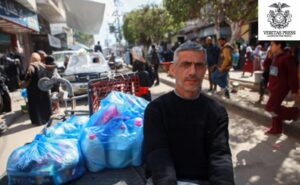
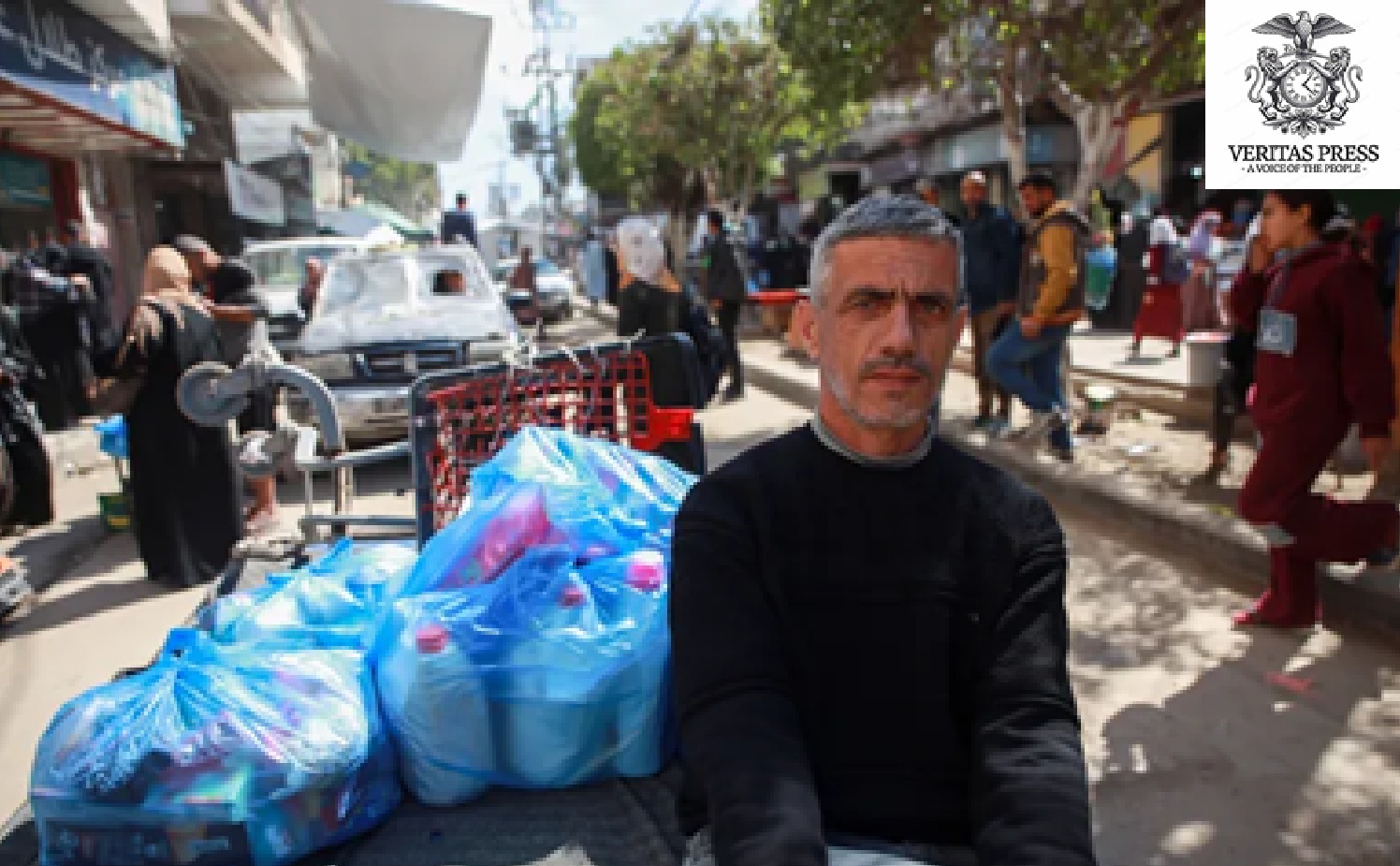
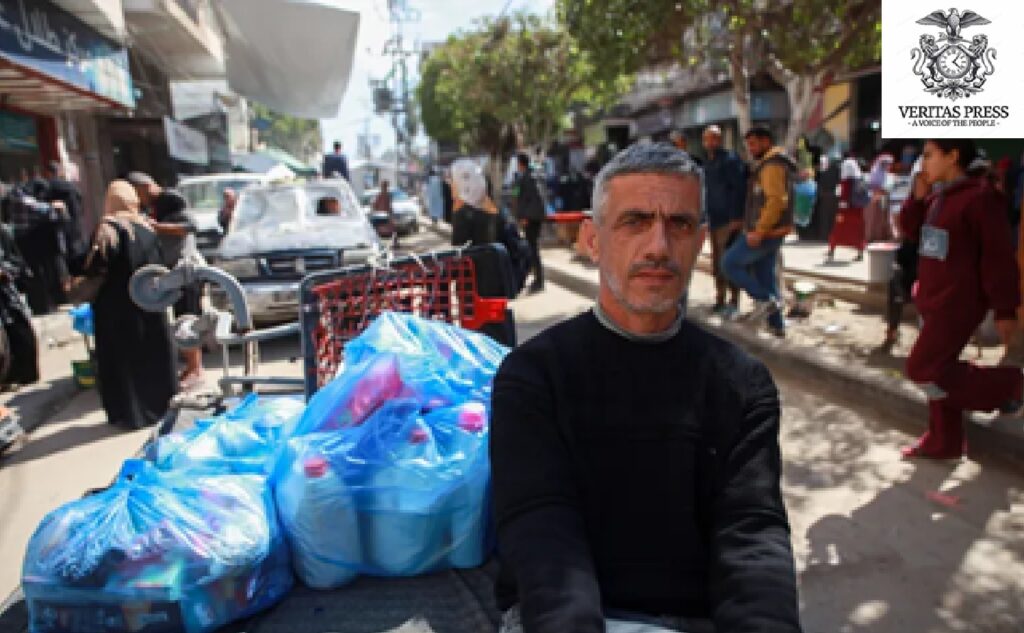
DEIR EL-BALAH, GAZA STRIP – The first wave of panic did not arrive with an air-raid siren or the thunder of airstrikes. It arrived in the silence of a supermarket aisle. On Saturday morning, February 28, 2026, Hani Abu Issa, a 51-year-old father of five, went to the market in Deir el-Balah to buy dates and lamb for his family’s Ramadan iftar. Instead, he found a crowd possessed by the past.
“A passer-by told me that Israel had struck Iran and war had broken out,” Hani told Al Jazeera, his eyes scanning the depleted shelves behind him. “I saw people leaving with sacks of flour on their shoulders. They weren’t buying for the meal tonight; they were buying for the fear of the months to come.”
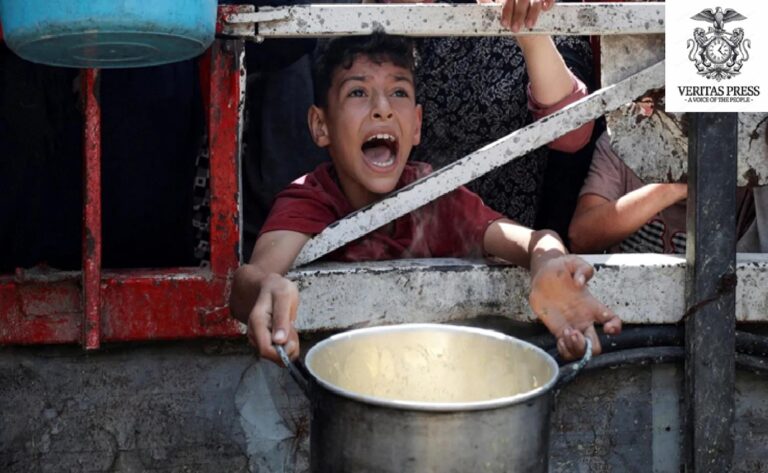
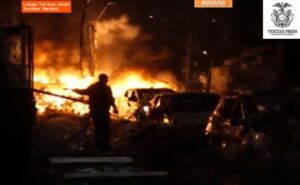
That fear, a direct neural pathway etched by 18 months of genocidal warfare, famine, and displacement, has plunged the Gaza Strip into a new crisis. Triggered by the US-Israeli joint military strikes on Iran and the subsequent “indefinite” closure of all crossings into Gaza by COGAT (the Israeli Coordinator of Government Activities in the Territories), the enclave is experiencing a phenomenon aid workers are calling a “trauma economy.” It is a place where rational thought is overridden by the Post-Traumatic Stress Disorder (PTSD) of starvation, and where the geopolitical chess game between superpowers is translating into empty stomachs in real-time.
The Trigger: Regional War As A Pretext For Collective Punishment?
The immediate cause of the panic was the February 28 announcement by COGAT that, “following recent security developments,” the Rafah, Kerem Shalom, and Erez crossings would be sealed “until further notice.” While COGAT stated this was a security measure to “safeguard lives” amid rocket threats, the decision landed in Gaza with the weight of historical precedent.
“They are closing it ‘until further notice,’” Hani said, his voice dripping with frustration. “But Israel’s word cannot be relied upon. Last year, ‘further notice’ meant months of starvation. It meant grinding bones for bread.”
Investigative Critique: The official Israeli rationale deserves deeper scrutiny. While security justifications are standard procedure during regional escalation, the timing and wording have fueled accusations that Israel is leveraging the Iran distraction to re-impose a closure policy that the International Court of Justice (ICJ) and human rights organizations have previously condemned as a form of collective punishment. COGAT asserted that enough food had entered during the ceasefire to feed the population “four times over,” claiming stocks would last an “extended period”. However, this logistical calculus ignores the reality of displacement. Over two million people, living in tents or destroyed buildings, lack the infrastructure to store bulk quantities. Freezers don’t work without reliable electricity. Dry goods rot in the dampness of makeshift shelters. The Israeli assertion is not just dismissive; it is, as aid workers on the ground call it, a form of “data violence”, using statistics to obscure human reality.
The Panic Economy: Flour As Currency, Trauma As Driver
By Sunday, March 1, the markets of Nuseirat and Gaza City had transformed. Prices for a 25-kg sack of flour, which had stabilised at around 20 shekels during the truce, reportedly tripled in some informal markets as sellers hoarded stock.
In the Nuseirat camp, 28-year-old shopkeeper Omar Al-Ghazali watched his customers with a mixture of empathy and despair. “People’s fear is completely justified,” he said. “They learned from the previous famine. Today, although the war is not taking place on Gaza’s land, the fear is stronger than any logical analysis.”
This is the psychological crux of the crisis. In January and February of 2026, a fragile ceasefire had allowed a semblance of life to return. The World Food Programme noted that families were eating two meals a day, up from one during the height of the famine in mid-2025. The re-opening of the Rafah crossing in early February for pedestrian traffic had offered a glimmer of connectivity to the outside world. But the US-Israeli strikes on Iran shattered that illusion of recovery.
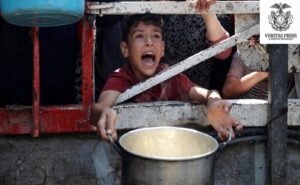
“It felt like a stab in my heart,” said Asmaa Abu Al-Khair, a 38-year-old mother of eight, wandering empty-handed through Gaza City market. Unlike the crowds carrying sacks of flour, Asmaa represents the silent majority who cannot participate in the panic. “Everyone is talking about stockpiling,” she said. “But where would we store it? In our tent? We barely have money for today’s bread. I am afraid of famine returning, but I am also afraid of my children’s hunger tonight”.
Elaboration and Context: This dichotomy highlights a class divide within the catastrophe. The “panic buyers” are the relative elite, those who still have savings or connections to traders. The majority, like Asmaa and the displaced families in the coastal tent camps, are left in a state of paralysed dread. They are the ones who suffered the worst of the 2025 famine, and now they face the same threat without the means to mitigate it. As one activist in Deir el-Balah posted on social media: “The rich are panic-buying. The poor are panic-dying.”
Voices Of The Distracted: The World Looks Away.
Perhaps the most profound fear among Gazans is not just hunger, but invisibility. As the US and Israel pound targets in Iran, and as Tehran scrambles for a response, the international community’s focus has shifted dramatically.
This fear is exacerbated by the political theatre that preceded the strikes. Just two weeks ago, the US President Donald Trump launched his “Board of Peace” in an attempt to garner reconstruction pledges for Gaza. Now, Trump is threatening Iran with a force “never seen before”.
“They are using us as a bargaining chip,” said Mohammed Daher, 46, a displaced man from Jabalia now living in Deir el-Balah. “One minute they talk about rebuilding us, the next they bomb our neighbour and starve us. We are ghosts already. We exist only when they want a ceasefire photo-op.”
The sense of abandonment is being amplified by the timing. The closure coincides with the holy month of Ramadan, turning a period of spiritual reflection and communal feasting into a grim reminder of last year’s famine during the same season. Images of long tables set for iftar among the rubble now feel like a taunt.
The Latest Developments And Humanitarian Alerts:
Aid organisations on the ground are sounding alarms that contradict COGAT’s assurances. World Central Kitchen (WCK), founded by chef José Andrés, issued an urgent warning that its supplies would be exhausted within days if the crossings remained closed. WCK currently provides approximately one million meals daily across Gaza.
“We need food deliveries every single day to feed hungry families who are not part of this war,” Andrés posted on social media. “We cannot wait… let the humanitarian trucks go through today!”
The closure has also severed the lifeline for medical evacuations. The Rafah crossing, which had only just been reopened for critical patients to exit for treatment in Egypt or elsewhere, is now sealed. Cancer patients, the war-wounded, and those with chronic diseases are once again trapped, facing death by logistics as much as by pathology.
Deepening The Critique: Is This “Mowing The Grass” By Other Means?
The silence from international powers is deafening. The United Nations has yet to issue a binding resolution or enforce mechanisms to reopen the crossings. The United States, actively engaged in strikes on Iran, has not publicly pressured its ally Israel to differentiate between the conflict with Tehran and the humanitarian obligations to Gaza.
Ali al-Hayek of the Palestinian Businessmen Association warned that the closures are not just a temporary inconvenience but a potential death blow to what remains of Gaza’s economy. With 97% of industrial facilities already destroyed or inoperative, the enclave relies on imports for 99% of its staple goods. “Closing the crossings is like cutting the oxygen line to a patient on life support,” he said.
Investigative Analysis: We must question the narrative that this is merely a “security precaution.” By closing the crossings indefinitely during a regional war, Israel effectively renders the Gaza population a hostage to the Tehran-Tel Aviv escalation. The message being read by Palestinians is stark: Your life support depends on our military timetable against Iran. This policy weaponises civilian desperation. It leverages the trauma of the 2025 famine, a famine that UN experts called “man-made”, to ensure compliance and passivity.
“We are exhausted,” Daher concluded, refusing to join the stockpiling frenzy. “I have no energy left to endure that torment again. Let whatever happens, happen.” It is not a statement of courage, but of utter despair, the exhaustion of a people who realise that their existence is peripheral to the main event.
Conclusion: The Long Shadow Of “Might”.
As the sun set over the Mediterranean on Sunday, the markets of Gaza grew quiet, not because the panic was over, but because there was little left to buy. The flour was gone. The yeast was gone. The cooking oil was stacked behind counters, reserved for those with dollars or connections.
In the tents along the beach in Deir el-Balah, families lit their Ramadan lanterns, the flickering light a fragile defiance against the darkness of the crossing closures. They have learned that in the game of nations, they are not players, but the board. And as the war with Iran escalates, they brace for the inevitable: the slow, agonising return of famine, hidden behind the smokescreen of a larger war.
The cry from the market, “Not again,” hangs in the air as a plea for a world that is once again proving it isn’t listening.
Source: Multiple News Agencies
Submissions:
For The Secure Submission Of Documentation, Testimonies, Or Exclusive Investigative Reports From Any Global Location, Please Utilise The Following Contact Details For Our Investigations Desk: enquiries@veritaspress.co.uk or editor@veritaspress.co.uk
Help Support Our Work:
Popular Information is powered by readers who believe that truth still matters. When just a few more people step up to support this work, it means more lies exposed, more corruption uncovered, and more accountability where it’s long overdue.
Help Protect Independent Journalism, Which Is Currently Under Attack.
If you believe journalism should serve the public, not the powerful, and you’re in a position to help, becoming a DONATOR or a PAID SUBSCRIBER truly makes a difference.
DONATION APPEAL: If You Found This Reporting Valuable, Please Consider Supporting Independent Journalism.
Help Support Our Work – We Know, We Know, We Know …
Seeing these messages is annoying. We know that. (Imagine what it’s like writing them … )
Your support fuels our fearless, truth-driven journalism. In unity, we endeavour to amplify marginalised voices and champion justice, irrespective of geographical location.
But it’s also extremely important. One of Veritas Press’s greatest assets is its reader-funded model.
1. Reader funding means we can cover what we like. We’re not beholden to the political whims of a billionaire owner. We are a small, independent and impartial organisation. No one can tell us what not to say or what not to report.
2. Reader funding means we don’t have to chase clicks and traffic. We’re not desperately seeking your attention for its own sake: we pursue the stories that our editorial team deems important and believe are worthy of your time.
3. Reader Funding: enables us to keep our website and other social media channels open, allowing as many people as possible to access quality journalism from around the world, particularly those in places where the free press is under threat.
We know not everyone can afford to pay for news, but if you’ve been meaning to support us, now’s the time.
Your donation goes a long way. It helps us:
- Keep the lights on and sustain our day-to-day operations
- Hire new, talented independent reporters
- Launch real-time live debates, community-focused shows, and on-the-ground reporting
- Cover the issues that matter most to our communities, in real time, with depth and integrity
We have plans to expand our work, but we can’t do it without your support. Every contribution, no matter the size, helps us stay independent and build a truly people-powered media platform.
If you believe in journalism that informs, empowers, and reflects the communities we serve, please donate today.
Global financial markets have been jolted by the rapid escalation of war between the United
DEIR EL-BALAH, GAZA STRIP – The first wave of panic did not arrive with an
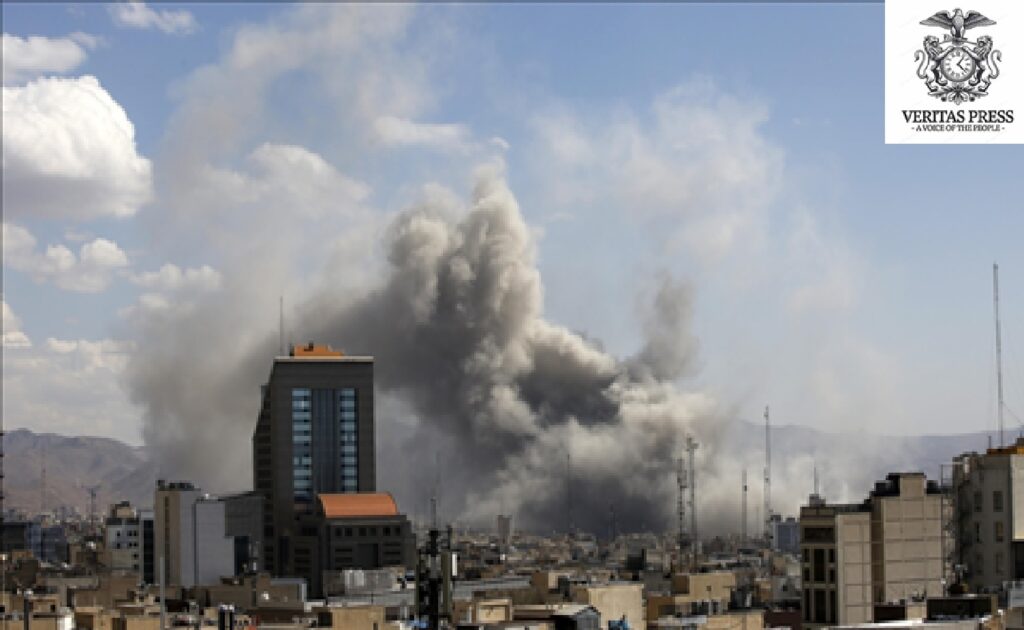
The human cost of the “Lion’s Roar” operation has crystallised into a stark, horrifying statistic.
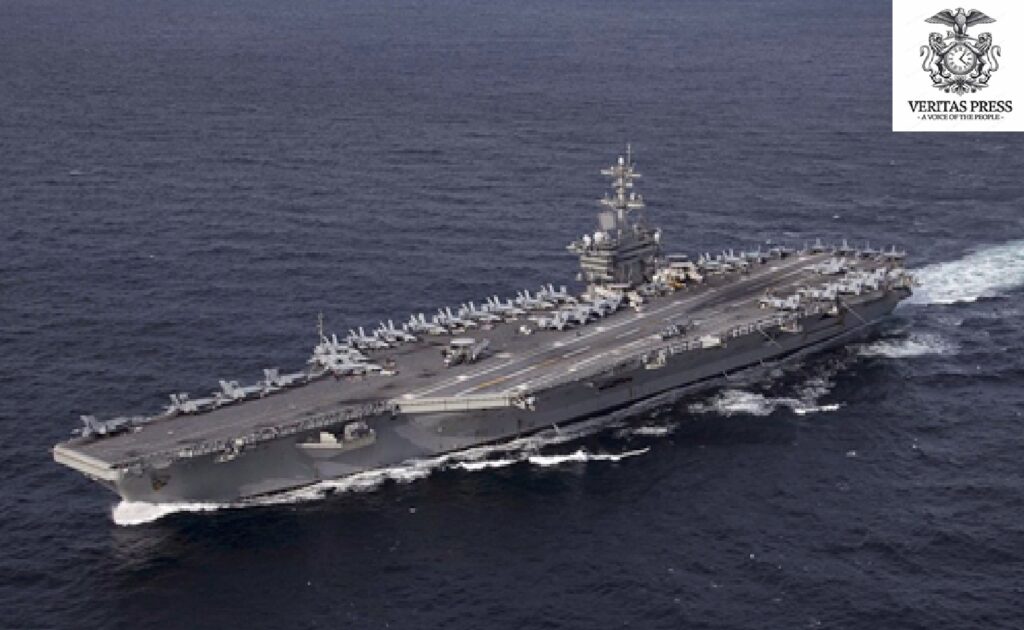
IRAN – The third day of “Operation Epic Fury” has plunged the Middle East into
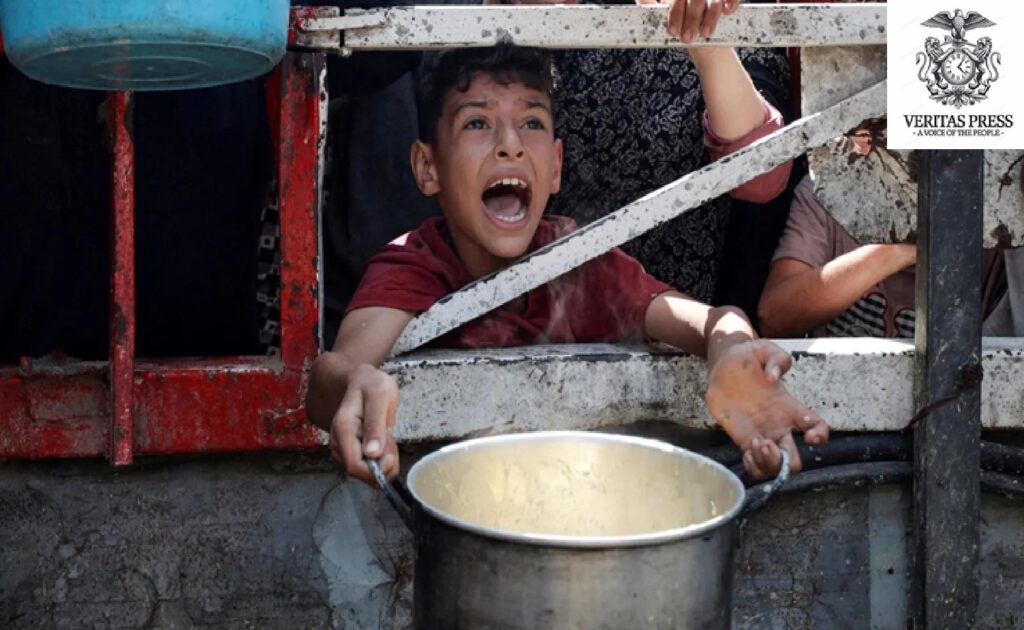
On Saturday, February 28, 2026, Israeli authorities announced the indefinite closure of all crossings into
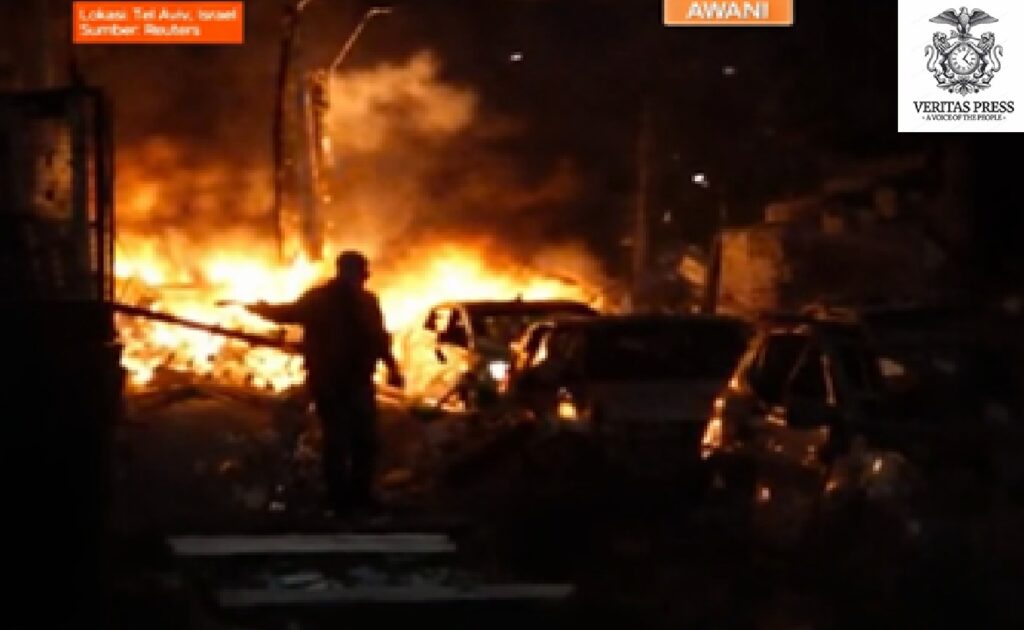
The military confrontation between Israel, the United States, and Iran is no longer confined to
TEHRAN, IRAN – At 5:00 a.m. on Sunday, March 1, 2026, Iranian state television did
In the early hours of Saturday morning, the Middle East lurched into a new and
MINAB, IRAN — In the quiet coastal town of Minab, along the strategic Strait of

GORTON AND DENTON, UK – At 4:30 am on February 27th, 2026, Hannah Spencer stood