


Original Article Date Published:
Article Date Modified:
Help support our mission, donate today and be the change. Every contribution goes directly toward driving real impact for the cause we believe in.
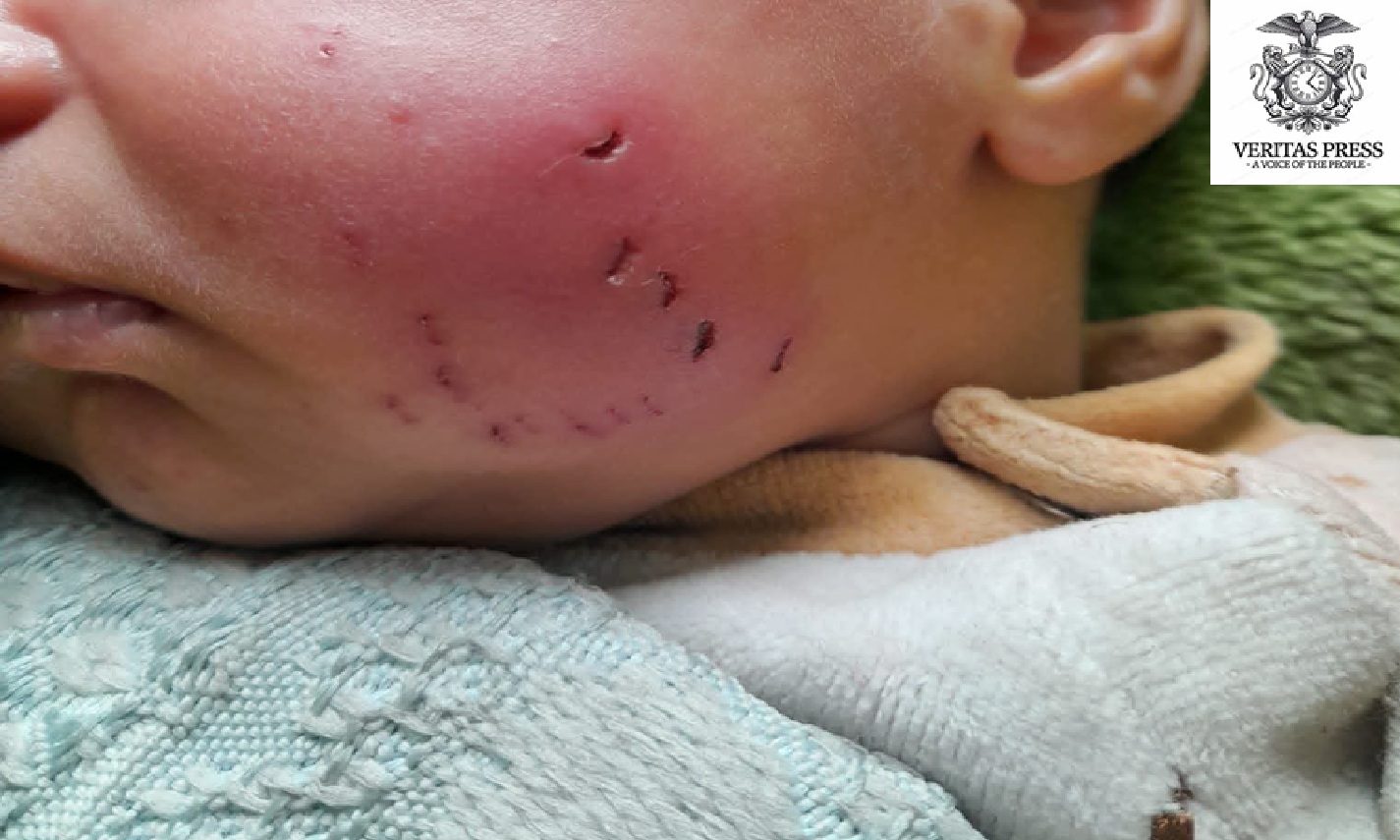
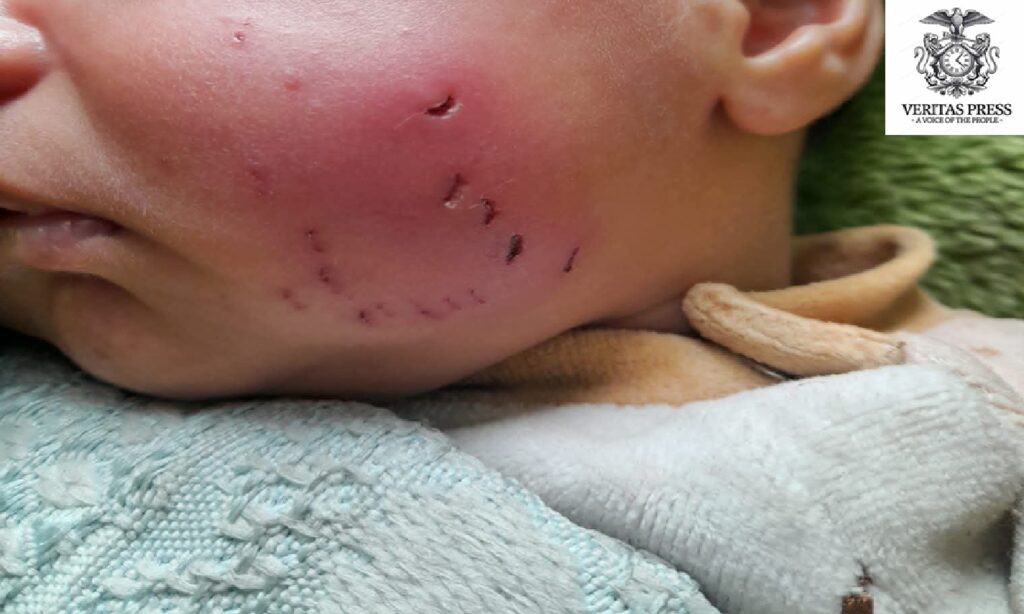
GAZA, March 27, 2026 — The cries of 28-day-old Adam Al-Ustaz shattered the silence of a freezing night inside a displacement tent in western Gaza City, piercing, frantic screams that signalled something was terribly wrong.
His father, Youssef, woke to a scene he says he cannot forget.
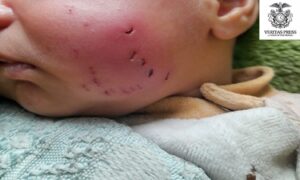
“I saw blood covering my baby’s face, and the rat running out of the tent,” he said. “I was thinking of nothing except saving him.”
The infant had been attacked by a rat as he slept, his face left with deep wounds that could easily have proven fatal. He now lies under observation at Al-Rantisi Children’s Hospital, where doctors are battling to prevent infection in a health system pushed to collapse.
But Adam’s case is not an isolated event; it is the logical outcome of conditions that aid agencies, doctors, and human rights organisations say have been systematically created and sustained.
From Bombardment To Infestation: Survival In Gaza’s Ruins.
Across the Gaza Strip, from the rubble of Khan Younis to the waterlogged tents of Al-Mawasi, the story is the same. Families who survived airstrikes now find themselves besieged by pests that gnaw through their clothes, contaminate their meagre food supplies, and terrorise their children.
Widad Sobh, a displaced resident, described nights that have become a cycle of fear:
“The dogs bang against the tent fabric… they want to attack and eat. I stay up all night chasing them away.”
Her neighbour, a young girl named Shahd, whispered:
“I’m afraid of the dogs because they bark.”
In Khan Younis, Akram Al-Farra, living in a partially destroyed home after refusing to move into a tent, said the infestation has erased any sense of safety:
“They don’t just stop there. They share our food, chew our clothes, and destroy what little belongings remain after the bombing. We suffer; we are dying every moment.”
For 75-year-old Siham Miqdad, displaced from Gaza’s Shati Camp, the scale of the crisis is overwhelming:
“I saw an enormous rat, bigger than any I’ve ever seen… I’m constantly on edge, fearing they might harm the children.”
Her words echo a broader exhaustion:
“As if bombing, starvation, and suffering weren’t enough, now we have rats to worsen our plight.”
The stripping of basic dignity is captured in the testimony of Um Hamza:
“We eat bread after the rats have eaten from it… All I ask is a place away from the waste.”
A Perfect Storm Engineered By Destruction:
Humanitarian agencies are unequivocal: this is not a natural disaster. It is the result of war, blockade, and the dismantling of Gaza’s civilian infrastructure.
The United Nations Relief and Works Agency for Palestine Refugees in the Near East (UNRWA) has warned:
“Health conditions in Gaza are worsening day by day. Insects and rodents are spreading diseases, endangering public health.”
Entire sewage networks have been destroyed. Waste collection has collapsed. Clean water systems are failing. Flooding has turned displacement camps into contaminated swamps.
These conditions, experts say, are directly tied to the broader conduct of the war.
Israel’s repeated bombing of civilian infrastructure, including hospitals, water facilities, and sanitation systems, has crippled the very mechanisms needed to prevent disease outbreaks. Medical facilities that remain operational, such as Al-Rantisi Hospital, function under extreme shortages of fuel, medicines, and equipment.
Simultaneously, restrictions on humanitarian aid, including medical supplies, fuel, and pest control materials, have compounded the crisis.
Systematic Denial: When Prevention Is Blocked.
A deeper investigative analysis reveals a critical dimension: the tools required to contain this crisis are being restricted.
According to UNRWA:
“The limited entry of essential pest control materials… is severely undermining efforts to control rodent infestations.”
Rodenticides, insecticides, sanitation equipment, and even basic waste management support remain insufficient or blocked.
The World Health Organization (WHO) has also confirmed that diagnostic capacity is critically impaired:
“Diagnostics and testing remain severely limited due to lack of laboratory reagents… which have been denied entry,” said spokesperson Christian Lindmeier.
This has turned Gaza into what public health experts describe as a containment failure zone, where diseases can spread largely undetected.
Disease, Displacement, And The Collapse Of Healthcare:
The consequences are already visible.
WHO data shows:
- Over 1.47 million cases of respiratory infections
- More than 670,000 cases of diarrhoeal disease
- Suspected cases of leptospirosis, linked to rodent-contaminated water
Dr. Hamdan Abdullah Hamed warned:
“When sewage mixes with floodwater… the risk of exposure rises sharply… even microscopic skin tears are enough for infection.”
Yet treatment is increasingly out of reach.
Hospitals, many damaged or destroyed, operate under siege conditions. Fuel shortages threaten shutdowns. Medical staff work without adequate supplies. Preventable illnesses become life-threatening.
Philippe Lazzarini, head of UNRWA, warned:
“Children have repeatedly missed out on vaccines… vaccination in such conditions matters more than ever.”
Ethnic Cleansing And Forced Displacement: A Broader Pattern.
Legal experts and human rights organisations have increasingly framed the mass displacement of Gaza’s population, combined with the destruction of homes, infrastructure, and essential services, as part of a broader pattern consistent with forcible transfer and ethnic cleansing.
Nearly the entire population of Gaza has been displaced, many multiple times, into areas that lack even the minimum conditions for survival.
What emerges is a continuum:
- Bombardment destroys homes and infrastructure
- Civilians are forced into overcrowded displacement zones
- Aid and essential supplies are restricted
- Public health collapses
The result is a population pushed to the brink, not only by direct violence, but by the systematic erosion of the conditions required for life.
Winter As A Weapon:
Winter has intensified the crisis further.
Flooded tents, freezing temperatures, and collapsing shelters have created lethal conditions.
According to Gaza’s Ministry of Health:
- 33 people have died due to winter conditions
- Including 9 children from hypothermia
At the same time, disease is surging.
“Winter conditions act as a multiplier,” said Lindmeier, citing the convergence of cold, overcrowding, malnutrition, and lack of healthcare.
International Response: Words Without Action.
Despite mounting warnings from UN agencies, medical professionals, and humanitarian organisations, meaningful international intervention remains absent.
Statements of concern continue, but on the ground, conditions deteriorate.
Aid workers and analysts increasingly describe the global response as inadequate, delayed, and performative.
While governments issue calls for restraint and humanitarian access, restrictions persist, infrastructure remains in ruins, and civilians continue to suffer the consequences.
A Preventable Collapse:
As baby Adam lies in hospital, his face scarred before he has even completed a month of life, his story exposes the human cost of this convergence of policies and violence.
What happened to him was not random.
It was the foreseeable outcome of:
- The destruction of civilian infrastructure
- The targeting and degradation of healthcare systems
- The restriction of humanitarian aid
- The forced displacement of an entire population into unsafe environments
The rats are not the cause of Gaza’s crisis.
They are the symptom.
A visible, immediate, and deeply disturbing manifestation of a much larger collapse—one that has left civilians, especially children, exposed to dangers at every level.
As Ghadah Abu Hajjaj put it simply:
“It’s unbearable.”
For Gaza’s families, survival is no longer just about escaping bombs.
It is about enduring what comes after the slow violence of deprivation, disease, and abandonment.
And for many, the question is no longer what has happened.
It is why it is still being allowed to happen.
Conclusion: A Crisis Manufactured, A Reality Sustained.
What happened to Adam Al-Ustaz is not an aberration; it is evidence.
A newborn mauled by a rat in a displacement tent is not simply a tragic anecdote; it is the clearest possible expression of a system that has collapsed by design and been left to deteriorate by choice.
Across Gaza, the chain of causation is no longer difficult to trace. Homes have been destroyed, families forcibly displaced, and civilians concentrated into overcrowded zones stripped of sanitation, clean water, and protection. Hospitals, once the final line of defence, have been bombed, besieged, or rendered barely functional. At the same time, the entry of life-saving supplies, from fuel to medicines to pest control materials, has been restricted or delayed, ensuring that even preventable threats are allowed to metastasise.
The result is not just a humanitarian crisis, but an environmental and biological collapse.
Rats do not emerge in a vacuum. They proliferate in the absence of waste systems, in the flooding of sewage, in the rot of uncollected debris, and in the enforced proximity of human beings to conditions unfit for survival. Disease does not spread arbitrarily. It follows the pathways carved by policy: blockade, destruction, and deprivation.
This is why aid agencies are no longer warning only of hunger or displacement, but of epidemics, systemic breakdown, and generational harm.
And yet, despite the scale and visibility of this collapse, the international response remains strikingly disproportionate. Diplomatic language continues to orbit around “concern,” “restraint,” and “calls for access,” even as the underlying conditions driving the crisis remain unchanged. For those on the ground, these statements have come to represent not intervention, but inertia, a vocabulary of acknowledgement without consequence.
What is unfolding in Gaza is not confined to moments of mass casualty during bombardment. It is sustained in the aftermath, in the tents, in the floodwater, in the untreated wounds, and in the silent spread of disease. It is here, in these slower, less visible forms of harm, that the full extent of the crisis becomes clear.
A child was attacked in his sleep. Families are eating contaminated food. Parents stay awake through the night to guard against animals. Doctors are forced to treat infections without the tools to prevent them.
These are not incidental hardships. They are the predictable outcomes of a system that has stripped a civilian population of the conditions necessary for life and then constrained the means to restore them.
The question, therefore, is no longer whether this catastrophe is preventable; it is.
The question is whether there is the will to prevent it.
Source: Multiple News Agencies
Submissions:
For The Secure Submission Of Documentation, Testimonies, Or Exclusive Investigative Reports From Any Global Location, Please Utilise The Following Contact Details For Our Investigations Desk: enquiries@veritaspress.co.uk or editor@veritaspress.co.uk
Help Support Our Work:
Popular Information is powered by readers who believe that truth still matters. When just a few more people step up to support this work, it means more lies exposed, more corruption uncovered, and more accountability where it’s long overdue.
Help Protect Independent Journalism, Which Is Currently Under Attack.
If you believe journalism should serve the public, not the powerful, and you’re in a position to help, becoming a DONATOR or a PAID SUBSCRIBER truly makes a difference.
DONATION APPEAL: If You Found This Reporting Valuable, Please Consider Supporting Independent Journalism.
Help Support Our Work – We Know, We Know, We Know …
Seeing these messages is annoying. We know that. (Imagine what it’s like writing them … )
Your support fuels our fearless, truth-driven journalism. In unity, we endeavour to amplify marginalised voices and champion justice, irrespective of geographical location.
But it’s also extremely important. One of Veritas Press’s greatest assets is its reader-funded model.
1. Reader funding means we can cover what we like. We’re not beholden to the political whims of a billionaire owner. We are a small, independent and impartial organisation. No one can tell us what not to say or what not to report.
2. Reader funding means we don’t have to chase clicks and traffic. We’re not desperately seeking your attention for its own sake: we pursue the stories that our editorial team deems important and believe are worthy of your time.
3. Reader Funding: enables us to keep our website and other social media channels open, allowing as many people as possible to access quality journalism from around the world, particularly those in places where the free press is under threat.
We know not everyone can afford to pay for news, but if you’ve been meaning to support us, now’s the time.
Your donation goes a long way. It helps us:
- Keep the lights on and sustain our day-to-day operations
- Hire new, talented independent reporters
- Launch real-time live debates, community-focused shows, and on-the-ground reporting
- Cover the issues that matter most to our communities, in real time, with depth and integrity
We have plans to expand our work, but we can’t do it without your support. Every contribution, no matter the size, helps us stay independent and build a truly people-powered media platform.
If you believe in journalism that informs, empowers, and reflects the communities we serve, please donate today.
TEHRAN, IRAN – Twenty-eight days after the assassination of Iran’s Supreme Leader Ayatollah Seyyed Ali

Original Article Date Published: Article Date Modified: Help support our mission, donate today and be
NEW YORK, US – On the night of March 26, 2026, Nerdeen Kiswani received a
JERUSALEM — For the 29th consecutive day, the heavy iron gates surrounding the Al-Aqsa Mosque
GAZA, March 27, 2026 — The cries of 28-day-old Adam Al-Ustaz shattered the silence of
TEHRAN – In the pre-dawn hours of March 27, 2026, the Islamic Revolution Guards Corps
MOSCOW, LONDON – In what marks a significant escalation in the prolonged confrontation between London
TEL-AVIV – When Lieutenant General Eyal Zamir, Chief of Staff of the Israel Defence Forces
GREEK ISLANDS – A controversial proposal by Israeli politician Avri Steiner to purchase Greek islands
TEHRAN, IRAN – In the early hours of Thursday, the Islamic Revolutionary Guard Corps (IRGC)