
Press Release: Veritas Press C.I.C.
Author: Kamran Faqir
Article Date Published: 15 Nov 2025 at 12:10 GMT
Category: Middle-East | Palestine-Gaza-West Bank | Flooded, Exposed, Ignored
Source(s): Veritas Press C.I.C. | Multi News Agencies
Website: www.veritaspress.co.uk

Business Ads

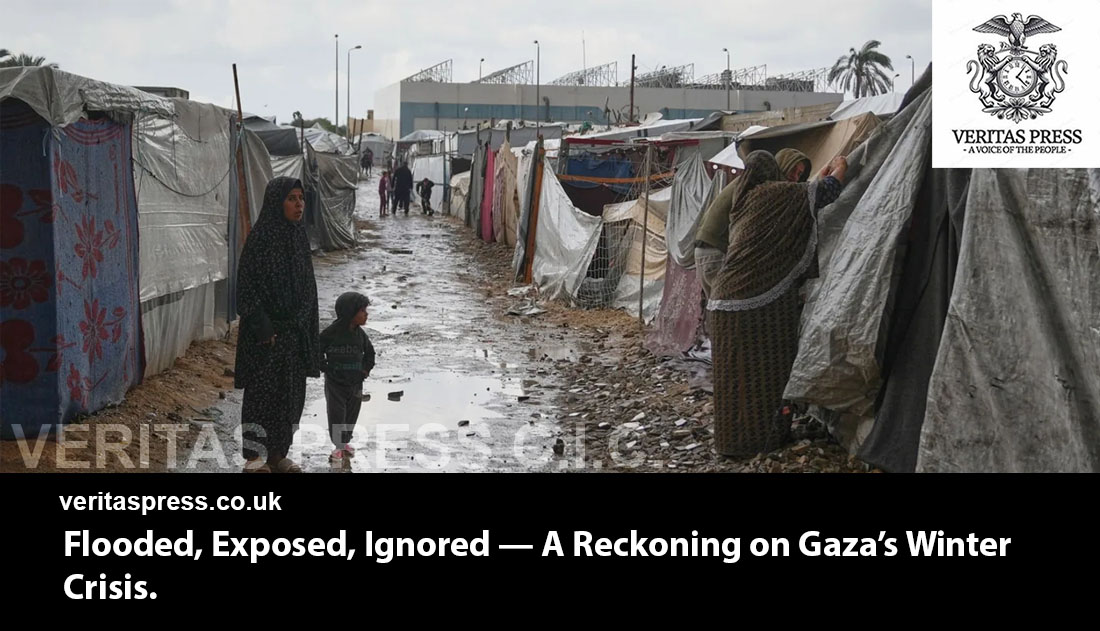
Heavy rains that swept across the Gaza Strip this weekend did more than soak tents; they stripped away a public fiction: that the enclave’s catastrophic humanitarian collapse can be solved by promises and partial aid. Dozens of tents were submerged in Al-Mawasi and other camps in Khan Younis as a low-pressure system brought cold air and sustained rainfall. Civil Defence teams raced to drain water and rescue families, a familiar emergency made worse by two years of structural destruction and political obstruction.
This places the flooding inside the catalogue of failed protections, worn tents, blocked shelter shipments, destroyed drainage, and an international relief architecture that repeatedly stalls at political gates. Below, I set out the facts, first-hand testimony, institutional statements, and a forensic look at who is responsible, who is failing Gaza’s displaced, and how this winter will unfold unless urgent structural changes are made.
What Happened, The Immediate Facts:
• Heavy rainfall on Saturday flooded dozens of displacement tents in Al-Mawasi and elsewhere in western Khan Younis. Gaza Civil Defence crews reported waterlogged tents and soaked bedding.
• The UN and shelter partners have repeatedly warned that hundreds of thousands of families remain exposed to winter weather because most tents are no longer fit for habitation, and critical shelter items remain outside Gaza awaiting approval. UNRWA, OCHA and the Shelter Cluster report limited deliveries so far and huge remaining needs.
Voices From The Ground, Watertight Misery:
“I was submerged in water after half an hour. You can only imagine how much worse it would be if it rained for four hours,” said Hisham Washah, a displaced man whose tent was ruined in one short downpour. His voice, raw, practical, incredulous, captures a repeated pattern: flimsy shelters, little material to fix them, and no alternative safe housing.
Gaza Civil Defence spokesperson Mahmoud Basal told journalists the levels of water “have risen to more than 10 centimetres in shelter centres, mattresses are soaked, blankets are drenched, and there are no options left, because every option has been destroyed.” That phrase, “no options left”, is not hyperbole; it is an admission that basic protective infrastructure has been exhausted.
Medical staff and clinics, already overwhelmed with trauma and malnutrition, warned in earlier cold snaps that infants and the elderly are especially vulnerable: medics reported multiple infant deaths from hypothermia earlier this year after nights in leaking tents. Those deaths are the hard human punctuation to the warnings about shelter shortages.
Counting The Collapse: Tents, Infrastructure And Trapped Aid:
Three interlocking failures make a single rainstorm lethal:
- Deteriorated shelter stock. Gaza’s Government Media Office and local assessments repeatedly show that the vast majority of displacement tents are worn out or damaged and unsuitable for winter. Estimates vary by source and date, but field assessments have placed the unusable share in very high double digits (figures of 74–93% have been cited in recent months). Whatever the exact percentage, the practical reality is identical: most tents are not winter-ready.
- Destroyed public works. Drainage, sewage and rubble-filled streets cannot absorb or channel stormwater. International reporting and UN analyses document collapsed sewage networks and clogged drains: when rain comes, waste mixes with standing water and floodwater pools in tent sites, increasing the risk of water-borne disease.
- Blocked or delayed shelter shipments. Despite ceasefire language and repeated public commitments, millions of shelter and winter items remain outside Gaza, stalled in Jordan, Egypt and Israel pending approvals. OCHA and Shelter Cluster tracking show only a fraction of the tents, tarpaulins and winter kits required have entered under coordinated UN efforts. Independent rights groups say this amounts to a de facto blockade of lifesaving supplies.
Who Is Accountable? The Politics Behind The Weather:
The immediate cause of the flooding is meteorological. The proximate political drivers, however, are choices: movement controls, customs and inspection regimes, security vetting of aid consignments, and selective authorisations that keep shelter packages off the roads into Gaza.
Human Rights Watch and other watchdogs have documented repeated episodes where policy decisions, including comprehensive restrictions on certain aid categories or long bureaucratic delays, have prevented critical items from entering on the speed and scale required by a winter emergency. Those restrictions are not abstract: they leave people sleeping in leaky tents, exposed to cold and sewage-tainted floodwater.
Under the October ceasefire/peace framework, the first phase included commitments related to humanitarian access and reconstruction. Yet multiple monitors and humanitarian agencies report a material gap between the letter of those commitments and the reality on the ground: far too few tents, caravans and pumping equipment have moved through to meet shelter and infrastructure needs. The result is a predictable, preventable catastrophe each time the skies open.
Health And Protection, How Rain Becomes Lethal:
Floodwater in tent encampments is not merely inconvenient; it multiplies risks:
- Hypothermia and respiratory illness. Children and the elderly lose body heat faster in damp, crowded tents with no heating or dry bedding. Hospitals reported cases and deaths from the cold earlier this year.
- Water-borne disease. Sewage and stagnant water create conditions for cholera, dysentery and parasitic infections. With water systems and waste collection degraded or non-functional, a single flood can trigger a public-health emergency.
- Explosive ordnance risk. Displaced families often camp near rubble and unexploded ordnance; standing water obscures hazards and increases the chance of injury while people salvage or collect fuel and timber. UN briefings have flagged this exact danger.
What Humanitarian Actors Say, And What They Can’t Do:
UNRWA: “Winter has come to Gaza”, the agency publicly appealed for immediate entry of shelter items and said it has supplies ready to deploy if allowed into the Strip.
OCHA & Shelter Cluster: tracking shows only limited coordinated deliveries (low thousands of tents/tarpaulins) versus the hundreds of thousands needed; partners on the ground say they lack pumps, heavy equipment and fuel to clear drains or run generators.
Human Rights groups: HRW and others have documented that long periods of restrictions on aid and commercial materials have created the preconditions for this winter crisis, and called for unobstructed entry of lifesaving shelter and infrastructure supplies.
Local civil defence and municipal authorities: they are pleading for pumps, sandbags, tarps and mobile homes. Their resources have been damaged or destroyed; they lack heavy equipment to dig emergency drains or clear sewage blockages.
The Accountability Test, What To Demand Now:
A crisis of this scale demands immediate, verifiable, and enforceable measures, not only promises.
- Unhindered, tracked humanitarian access: Shelter consignments, tents, caravans, tarpaulins, pumps, fuel and winter kits must be authorised for entry without ad-hoc holds. Deliveries should be documented, with independent monitoring of offloading, storage and distribution. (See OCHA / Shelter Cluster coordination data.)
- Emergency infrastructure repair funding: International donors and reconstruction mechanisms must fund immediate drainage, sewage clearing, and provision of pumps and heavy equipment, actions that stop rainwater from becoming standing, contaminated floodwater.
- A transparent reconstruction timetable: If the ceasefire’s reconstruction commitments are real, they must include a public, financed timetable for shelter rehabilitation and durable housing, not temporary fixes repeated year after year.
- Independent monitoring and consequences: Parties that obstruct lifesaving goods should be exposed publicly, with diplomatic and economic pressure applied by states and multilateral bodies if obstruction continues. Humanitarian access cannot be hostage to political bargaining.
A Closing, Forensic Note:
Rain is a test that reveals the seams of policy. When the sky pours and tents fill, the emergency reveals what was already broken: international systems that treat shelter and basic services as negotiable; a reconstruction pact with promises but without the logistics or political will to deliver; and a population repeatedly pushed into improvised survival that becomes a recurrent death-trap in cold weather.
The human quotes, Hisham Washah’s half-hour of flooding, the Civil Defence’s “no options left,” medics’ reports of infant hypothermia, are not isolated laments. They are evidence. They demand a different metric of accountability: one that measures trucks delivered, drainage dredged, pumps installed, and, crucially, lives protected.
Conclusion:
In the end, the picture that emerges is not one of isolated excesses or bureaucratic failures but of a system deliberately structured to produce the very devastation now unfolding. Across testimonies from survivors, aid workers, UN officials, and independent journalists, a consistent pattern appears: a convergence of military policy, political calculation, and structural impunity that renders Palestinian civilian life expendable.
A senior humanitarian coordinator working near the northern corridor told us, “Nothing about the starvation, the chaos at aid points, or the collapse of civilian systems is accidental. Every restriction has a decision-maker behind it.” Local activists echoed this assessment, describing what they called “a manufactured crisis built through years of policy and months of intensified siege.”
Their accounts align with findings from rights groups such as Human Rights Watch, Oxfam, and Amnesty International, all of whom have accused Israel of “deliberate obstruction” of relief operations. Multiple aid agencies report that the Israeli army continues to restrict humanitarian aid into the enclave, imposing layers of inspections, arbitrary denials, and route closures that have turned basic relief deliveries into a high-risk, often deadly, gamble. As one field officer with an international NGO put it bluntly: “Aid isn’t just being blocked, it’s being weaponised.”
Analysts warn that the deeper crisis is political, not merely logistical: a recalibration of territory, demography, and control engineered under the cover of war. A regional expert who has tracked military orders throughout the conflict told us, “This is not a failure of the system; this is the system working exactly as intended. Governance and warfare have merged into a single machinery of deprivation.”
Meanwhile, official Israeli statements continue to insist that operations are “targeted” and “in accordance with international law,” even as satellite imagery, survivor testimony, and independent investigations tell a radically different story. A former Israeli adviser, speaking on condition of anonymity, described the state’s strategy succinctly: “Deny everything publicly. Escalate everything operationally.”
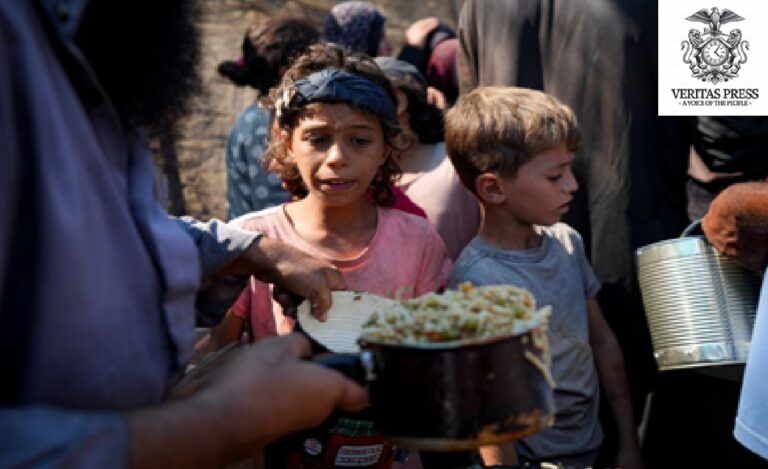
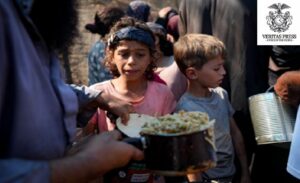
For civilians caught in the rubble of this policy architecture, the debate over intent offers no solace. Children are dying of hunger near aid distribution sites; families are killed attempting to reach convoys; entire districts remain flattened and uninhabitable. A displaced mother interviewed by local media asked the question that now hangs over the entire conflict: “If this is not planned, why does it happen every single day, everywhere, without exception?”
Ultimately, the humanitarian catastrophe persists because it serves the strategic objectives of those with the power to end it. Diplomatic shielding, the silencing of whistleblowers, and intimidation of journalists have created a protective layer around decision-makers. Without substantial international pressure or structural consequences for violations, this pattern will not merely endure but intensify.
The evidence collected throughout this investigation leads to one unavoidable conclusion: this crisis is neither incidental nor unforeseen. It is the direct outcome of explicit choices political, military, and ideological, that prioritise domination over human life. And as rights groups warn, history will judge not only those who designed these policies but also the governments and institutions that allowed them to continue.