



Title: ‘Final Nail In The Coffin’: Israel’s E1 Settlement Tender And The Dead End Of The Two-State Vision.
Press Release: Veritas Press C.I.C.
Author: Kamran Faqir
Article Date Published: 07 Jan 2026 at 13:35 GMT
Category: Middle East | Palestine-Gaza-West Bank-OPT | ‘Final Nail in the Coffin’: Israel’s E1 Settlement Tender and the Dead End of the Two-State Vision
Source(s): Veritas Press C.I.C. | Multi News Agencies
Website: www.veritaspress.co.uk

Business Ads

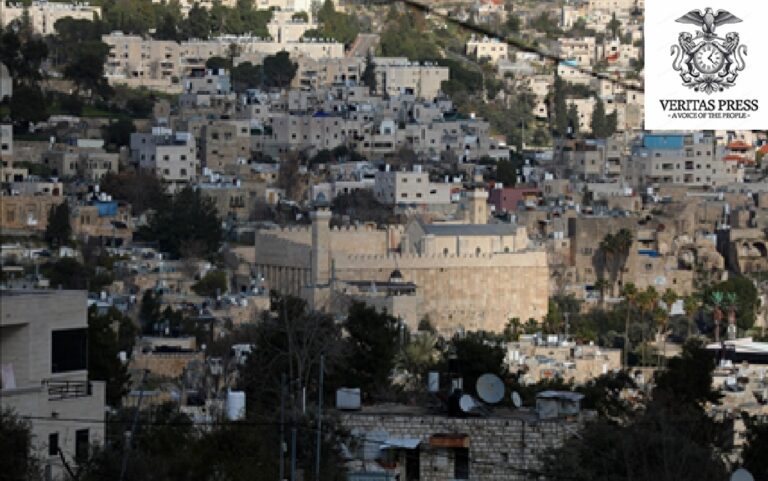
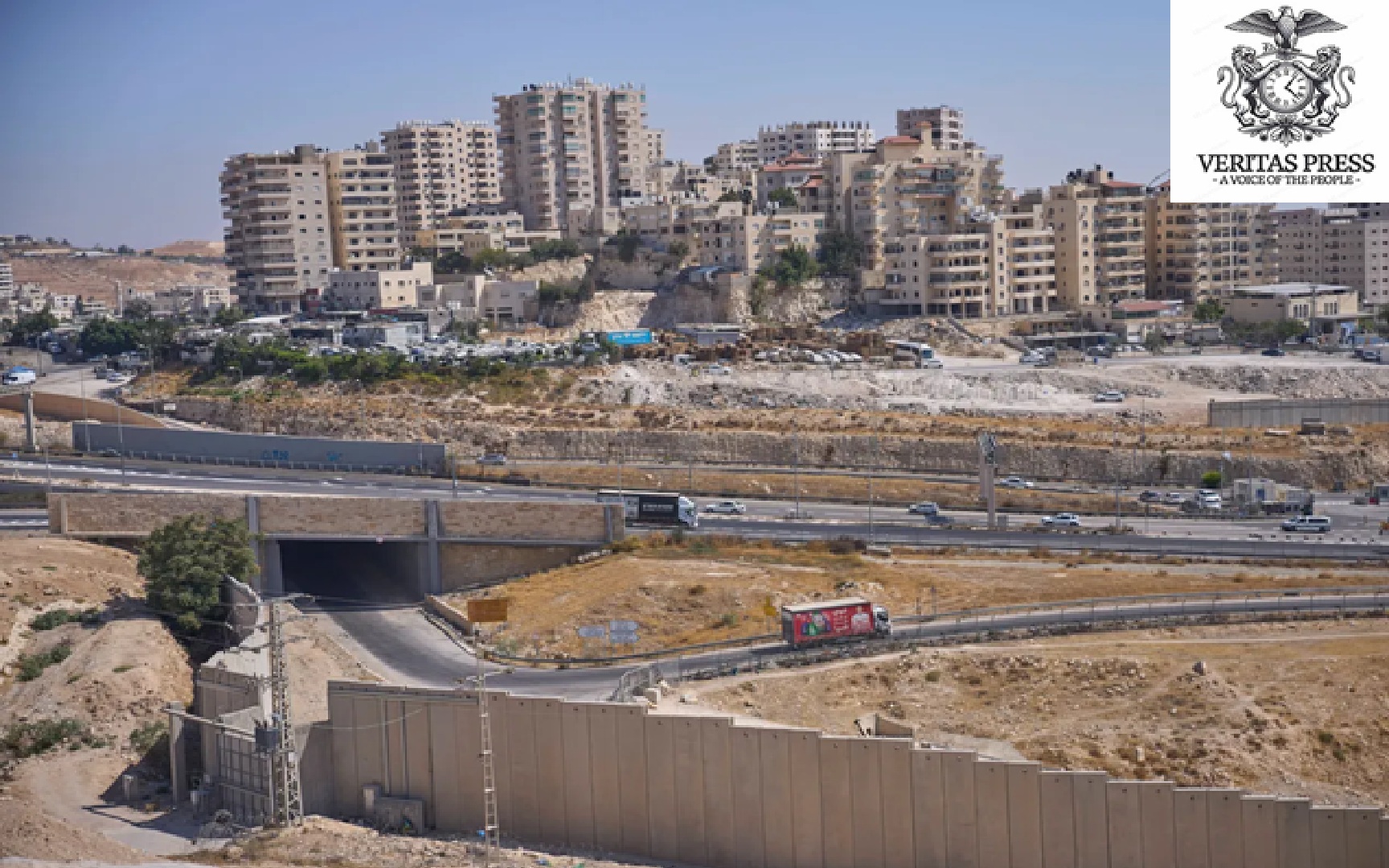
JERUSALEM / RAMALLAH, January 7, 2026 — In a development that critics warn could mark a turning point in the Israeli-Palestinian conflict, Israel has published a tender for 3,401 settler homes in the strategic E1 area, a corridor linking occupied East Jerusalem with the vast Ma’ale Adumim settlement. The tender clears the way for construction that analysts, rights groups, and international officials say would effectively bisect the occupied West Bank and obliterate the territorial basis for a Palestinian state.
This is not a technical planning decision: it is a political declaration embedded in concrete and steel, and one that comes amid a broader right-wing strategy to entrench Israeli control over the land captured in 1967 and…
A Colonial Blueprint Made Concrete:
For more than three decades, E1 has been on and off planning tables, repeatedly frozen because of sustained international pressure and concerns that construction would sever East Jerusalem from the rest of the West Bank, making a contiguous Palestinian state geographically impossible.
Now, with the tender issued by the Israel Land Authority, and a bidding deadline of March 16, the project moves from abstraction to execution. Analysts note that if contracts are signed soon, preparatory work and infrastructure clearance could begin within months.
Palestinian resistance leaders see this as confirmation of long-standing warnings.
“This represents an extremely dangerous development in the accelerating assault on Palestinian land,” said Moayyad Shaaban, head of the Palestinian Wall and Settlement Resistance Commission. “The occupation authorities have moved from planning to implementation, and that fundamentally alters the landscape, physically, politically, and demographically.”
Beyond Building: A Strategic Fragmentation Of Territory.
The E1 development is not an isolated settlement project. It is a centrepiece of an overarching strategy to solidify Israeli political and territorial control across the West Bank.
According to Shaaban, Israel issued 10,098 settlement tenders in 2025, more than 7,000 of which were for Ma’ale Adumim, the settlement targeted to form a continual urban bloc with Jerusalem.
Local activists describe the government’s broader playbook as one of territorial “closure.”
“These tenders reflect an organised approach to deepening settlement control over Palestinian land,” Shaaban said. “This is open annexation disguised as planning.”
Voices From Within Israel: Zionism Vs. Statehood?
The tender’s publication follows explicit statements by Israeli officials that illuminate why the project carries such symbolic significance.
Far-right Finance Minister Bezalel Smotrich, arguably the chief architect of the renewed push, has repeatedly framed the initiative as a deliberate strategy to stymie Palestinian statehood. In August 2025, he declared that approving settlement construction in E1 “buries the idea of a Palestinian state” and emphasised that building “facts on the ground” was a stronger deterrent than diplomatic negotiations.
Israeli peace groups have echoed the seriousness of his words.
“Every settlement, every neighbourhood, every housing unit is another nail in the coffin of this dangerous idea,” Smotrich said, a phrase quoted uncritically in Israeli political discourse.
Within the Israeli peace movement, voices of alarm are equally stark. Peace Now, a leading settlement watchdog, called the E1 tender “political recklessness” and warned that settlement expansion is now “driving toward an abyss at full speed.”
Analysts see in this rhetoric a candid acknowledgement that the current government views the two-state paradigm not as an ultimate negotiation goal but as a political impediment to be engineered out of existence.
International Law, Global Condemnation, And Diplomatic Isolation:
International response has been swift and unusually broad. In August 2025, 21 foreign ministers, including France, the UK, Canada, and other EU partners, called Israel’s E1 approval “unacceptable” and a “violation of international law,” urging its immediate reversal.
The UN Committee on the Exercise of the Inalienable Rights of the Palestinian People similarly condemned the plan, warning that it “severely restricts freedom of movement and further fragments and isolates Palestinian communities” and amounts to a “grave breach of international law.”
Yet, for Netanyahu’s government, international legality holds little sway; the project is pursued with the explicit backing of key political actors, and planning approvals were completed months ago.
Palestinian Perspectives: Land, Livelihood, And Ruinous Fragmentation.
Across the West Bank, Palestinians view the E1 tender through the prism of daily dispossession:
- Bethlehem activists report increasing demolition orders around the E1 corridor, limiting Palestinian access to agricultural land.
- Ramallah civil society leaders warn that severing East Jerusalem undermines family networks, economic exchange, and access to essential services.
“This doesn’t just rob us of land,” said Husam Abu al-Rub, a teacher and community organiser in Bethlehem. “It undermines our ability to live as a people in our homeland.”
Such local testimonies reflect a deeper reality: fragmentation of territory translates into fragmentation of society. Movement between major Palestinian population centres, Ramallah, Bethlehem, and East Jerusalem, will become more circuitous, bureaucratic, and controlled by checkpoints under any E1 build-out.
The Two-State Solution: Dead, Dormant, Or Derailed?
For decades, the idea of two sovereign states living side by side has undergirded international peace efforts. But E1’s tender crystallises the extent to which this vision has lost ground to geopolitical realities on the ground.
International actors warned in 2025 that E1 construction would “permanently cut territorial continuity between East Jerusalem and the West Bank” and further entrench a one-state reality of unequal rights, what some diplomats now describe as de facto apartheid.
Meanwhile, Israeli leadership has increasingly embraced a narrative of permanence:
During a ceremony in Ma’ale Adumim, Prime Minister Benjamin Netanyahu declared: “There will be no Palestinian state … this place belongs to us,” signalling a formal abandonment of even rhetorical support for a two-state outcome.
Conclusion: E1 And The Architecture Of Permanent Control.
The E1 settlement tender is more than a bureaucratic document; it is a symbol of how deeply entrenched settlement expansion has become within Israeli state policy, reshaping not only the physical map of Palestine but the political imagination of two peoples. What was once framed as a “negotiable” issue in peace talks has now been embedded into concrete, asphalt, and zoning law, signalling a decisive shift from temporary occupation to permanent territorial control and demographic engineering.
For Palestinians, E1 represents an existential squeeze that extends beyond restriction into removal. Land is severed from land, East Jerusalem is cut off from its natural Palestinian hinterland, and movement between major population centres is reduced to a system of permits, checkpoints, and settler-only infrastructure. As space for Palestinian life is systematically erased, communities are pushed into ever-smaller, disconnected enclaves, making continued presence increasingly untenable. This is not an accidental by-product of planning, it is a process that facilitates the gradual, permanent displacement of the Palestinian people from their land.
For international supporters of peace, the tender exposes an uncomfortable reality: the diplomatic frameworks that once underpinned the two-state solution have been overtaken by irreversible facts on the ground. Decades of statements condemning settlement expansion, reaffirming international law, and warning against annexation have failed to halt a project that openly aims to foreclose Palestinian self-determination. The E1 plan now stands as a test of whether international law retains any meaningful enforcement power, or whether it has been reduced to moral protest without consequence.
Within Israel itself, the E1 push has sharpened warnings that the country stands at a civilizational crossroads. Israeli settlement watchdogs and human rights advocates argue that the project accelerates a transition toward a single-state reality defined by permanent inequality and exclusion. As Yoni Mizrachi of Peace Now warned in comments cited by The Guardian:
“This isn’t just about land. It’s about whether Israel remains a democracy with equal rights or becomes a stratified state ruling over millions without citizenship.”
That warning speaks to the broader implications of E1. By entrenching settlements while systematically shrinking Palestinian space, Israel is not merely managing a conflict; it is institutionalising a system of domination that denies one population political rights while enabling the long-term removal of another. Legal scholars and rights organisations increasingly describe this trajectory as one of apartheid, forcible transfer, and demographic coercion under international law.
In the shadow of these tenders and the bulldozers they portend, the contours of possible peace continue to shrink. What remains is not a stalled process awaiting revival, but a political future being actively dismantled. The E1 project stands as a blueprint for permanent control, a rejection of coexistence, and a mechanism for the irreversible displacement of the Palestinian people, marking a decisive end to the two-state solution and leaving behind a reality defined by inequality, exclusion, and enforced removal.