




Date Published:
Date Modified:
Council Takes Radical Step in Deepening Bin Strike Crisis
Birmingham City Council has launched an urgent High Court application seeking a sweeping injunction to ban protests outside its bin depots and prevent anyone from interfering with waste collections, a dramatic escalation in one of the longest and most disruptive municipal disputes in recent UK history. The move comes amid a strike now in its 14th month, growing piles of uncollected waste across the city, and deepening tensions between the authority and workers represented by the union Unite.
The council says residents’ quality of life and public health are at risk unless legal action curbs street-level disruption, particularly activity that directly stops vehicles leaving depots or slows down collections. If the High Court grants the injunction, anyone who blocks, slows, or interferes with bin lorries or depot operations, inside or outside depot entrances, could face fines, asset seizures, or even imprisonment for contempt of court.
Council’s Legal Case: ‘Reached A Tipping Point’.
In its urgent application, the council argues that since mid-January 2026, protests by “Persons Unknown”, a legal category covering anyone involved, have escalated into direct obstruction, trespass, and private nuisance, severely impeding waste collection services.
Alleged protestor actions include:
- Occupying or remaining on council depot land
- Blocking entries and exits at the four main depots, Atlas in Tyseley, Perry Barr, Lifford Lane, and Smithfield
- Slowing or preventing refuse vehicles from carrying out collections anywhere in the city
Christopher Smiles, head of waste logistics, argues in court that the situation has “reached a tipping point that we cannot remedy without legal action,” warning that without an injunction, “rubbish mountains on the streets” will worsen. The council also claims there has been a lack of effective police engagement to mitigate protest disruption.
Council finance director Carol Culley confirmed the legal bid is supported by the commissioners overseeing Birmingham’s finances, the same regime installed after a catastrophic period that recently saw the authority declare it was no longer “bankrupt.” To ensure enforceability, the council has published all relevant documents online and affixed notices near depots, satisfying procedural fairness requirements ahead of a hearing expected next week.
Behind The Scenes: Debt, Cuts, And Inflationary Pressures.
1. Escalating Council Tax Amid Crisis
Birmingham’s budgetary woes are longstanding. After issuing a Section 114 Notice in 2023, effectively declaring bankruptcy, the council implemented a series of measures, asset sales, service cuts, and repeated council tax rises, to stabilise finances.
In the current fiscal year, council tax has risen 7.5%, following a 10% increase the previous year, roughly 18% over two years for local households. For many, especially low- and middle-income residents, this comes on top of persistently high inflation in rents, energy, food, and transport, squeezing budgets already stretched to breaking point.
Research indicates Birmingham will pay the largest total council tax increase in England for 2025/26, with households contributing tens of millions more this year alone. Residents are effectively subsidising cuts to services that they are simultaneously taxed to fund.
2. Fiscal Strain Meets Service Collapse
Despite higher bills, essential services have deteriorated: recycling is suspended, bin collections remain inconsistent, refuse heaps attract rats, and residents report missed pickups lasting weeks. In this context, Unite’s demands for better wages and job security are framed as a fight to maintain public service continuity, not merely better pay.
Yet the council’s response has been primarily legalistic: from injunctions against union members to sweeping bids to criminalise all “persons unknown” protesters. The pivot to court enforcement over negotiation signals a governance approach prioritising judicial mechanisms over dialogue with workers or residents.
Industrial Relations Breakdown: Legal Orders As A Substitute For Dialogue.
The legal escalation raises significant civil liberties concerns. Traditional industrial action is lawful, yet protestors argue that the injunction attempt is designed to stifle dissent where negotiation failed. Unite maintains repeated requests for genuine talks, while the council claims it has reached its “absolute limit,” ignoring how its own fiscal and governance choices, such as tax hikes, cuts, outsourcing, and commissioners, have shaped the conditions of the dispute.
The resulting power imbalance heavily favours managerial authority and judicial enforcement, leaving both workers and residents with limited influence over outcomes that directly affect their lives.
Systemic Failures: From Accounting Chaos To Political Fallout.
Birmingham’s governance troubles extend beyond the bin strike:
- A failed £170m IT upgrade left financial accounts in chaos, undermining managerial credibility.
- Hundreds of millions in debt have been serviced at punitive interest rates, diverting funds from core services.
- Government-appointed commissioners have constrained democratic oversight, fueling perceptions of unaccountable decision-making.
These systemic failures feed into public disillusionment, as residents pay increasing taxes while basic services falter.
The Background: Longer Strike, Health Impacts, And Court Battles.
The bin strike began on 11 March 2025 after proposals to cut 150 Waste Recycling and Collection Officer roles and reduce pay for some staff sparked industrial action. The strike has seen widespread participation, including agency staff joining official pickets.
The dispute has drawn national attention: by March 2025, 17,000 tonnes of uncollected waste had accumulated, prompting warnings about public health and rodent infestations. Earlier injunctions limited picketing to union members but were repeatedly breached, resulting in contempt proceedings and financial penalties.
Union And Protestor Perspective:
Unite argues that its members’ actions are lawful industrial action, aimed at protecting working conditions, public services, and living standards. They criticise the council’s legal approach as disproportionate, framing industrial action as criminal activity rather than negotiating in good faith.
Legal Strategy: Annotated Analysis Of The Injunction Application.
The injunction is broad and unprecedented, covering all protestors (“Persons Unknown”) and potentially extending to public highways.
Key Clauses:
- Respondents: “Persons Unknown” — anyone involved in protests, raising civil liberties concerns under Article 11.
- Restricted Actions — entering depot land, blocking vehicles, and impeding traffic. Courts require proof of substantial obstruction.
- Evidence — statements and video footage; may be challenged as lawful industrial action.
- Duration and Urgency — six-month injunction citing imminent risk to public health and service delivery.
- Notification — online and depot notices satisfy procedural fairness.
- Remedies — fines, asset seizure, or imprisonment for breaches.
The injunction reflects a legal-heavy approach to dispute management, prioritising enforcement over resolution.
Public Safety, Services, And Future Risks:
Public safety risks persist: rotting refuse, rodent infestations, suspended recycling, and missed collections compound resident frustration. Combined with rising council tax, inflation, and diminished services, the legal clampdown exacerbates perceptions that residents are paying more for less.
Conclusion: A Crisis Of Contract Between Citizens And The State.
Birmingham’s bin dispute is a multi-layered crisis of governance, economic justice, and civil rights:
- Residents: taxed faster than inflation, while services regress
- Workers: fighting for pay, conditions, and public service continuity
- Council: relying on judicial enforcement rather than negotiation
The High Court’s imminent decision will not only decide the legality of protests but also signal how far the state will go to manage dissent when ordinary residents struggle to pay taxes, access essential services, and protect livelihoods in an inflationary economy. Birmingham’s “rubbish mountains” are thus a symbol of broken governance, economic strain, and a frayed social contract.

When Lieutenant Colonel Ebrahim Zolfaqari, spokesman for Iran’s Khatam al-Anbiya Central Headquarters, issued a warning

The historic Christian presence in Palestine, dating back to the earliest centuries of Christianity, is
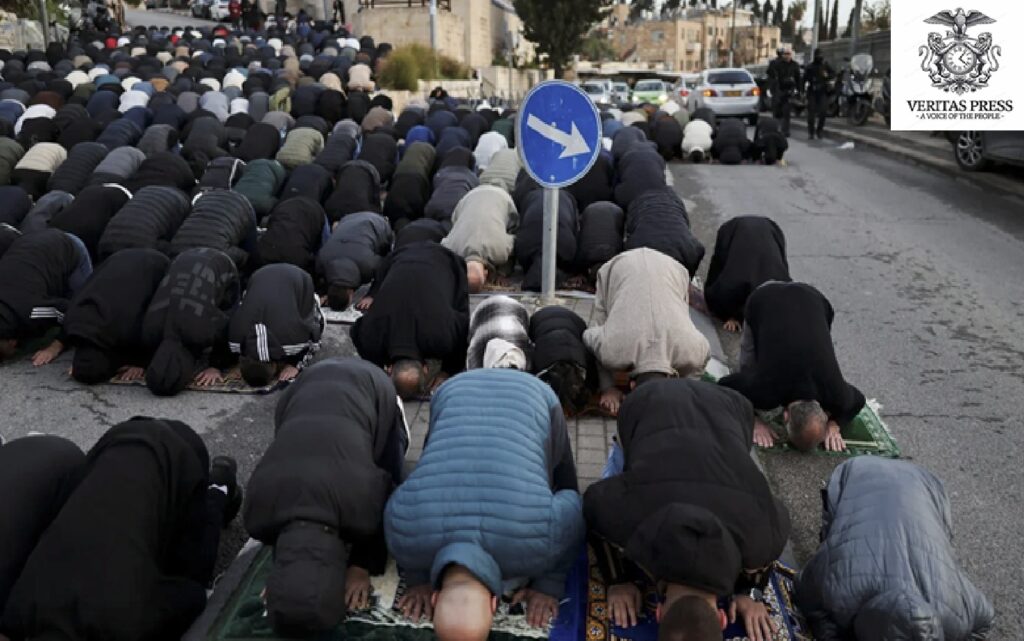
JERUSALEM – For the first time since the aftermath of the Six-Day War, the courtyards
TEHRAN – As the sun rose on Eid al-Fitr, a day meant for celebration and

HUNGARY – As Benjamin Netanyahu prepares to travel to Hungary this weekend, a mounting legal

LONDON — In the polished corridors of 10 Downing Street, the language remains meticulously calibrated:
On March 20, 2026, the Pentagon quietly announced what amounts to a fundamental restructuring of

WASHINGTON / ISLAMABAD — A fresh warning by US Director of National Intelligence Tulsi Gabbard

For the first time since the US-Israeli campaign against Iran began on February 28, the

Tensions across the Gulf have escalated to levels not seen in decades, as Saudi Arabia