


Original Article Date Published:
Article Date Modified:
Help support our mission, donate today and be the change. Every contribution goes directly toward driving real impact for the cause we believe in.
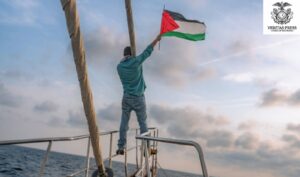
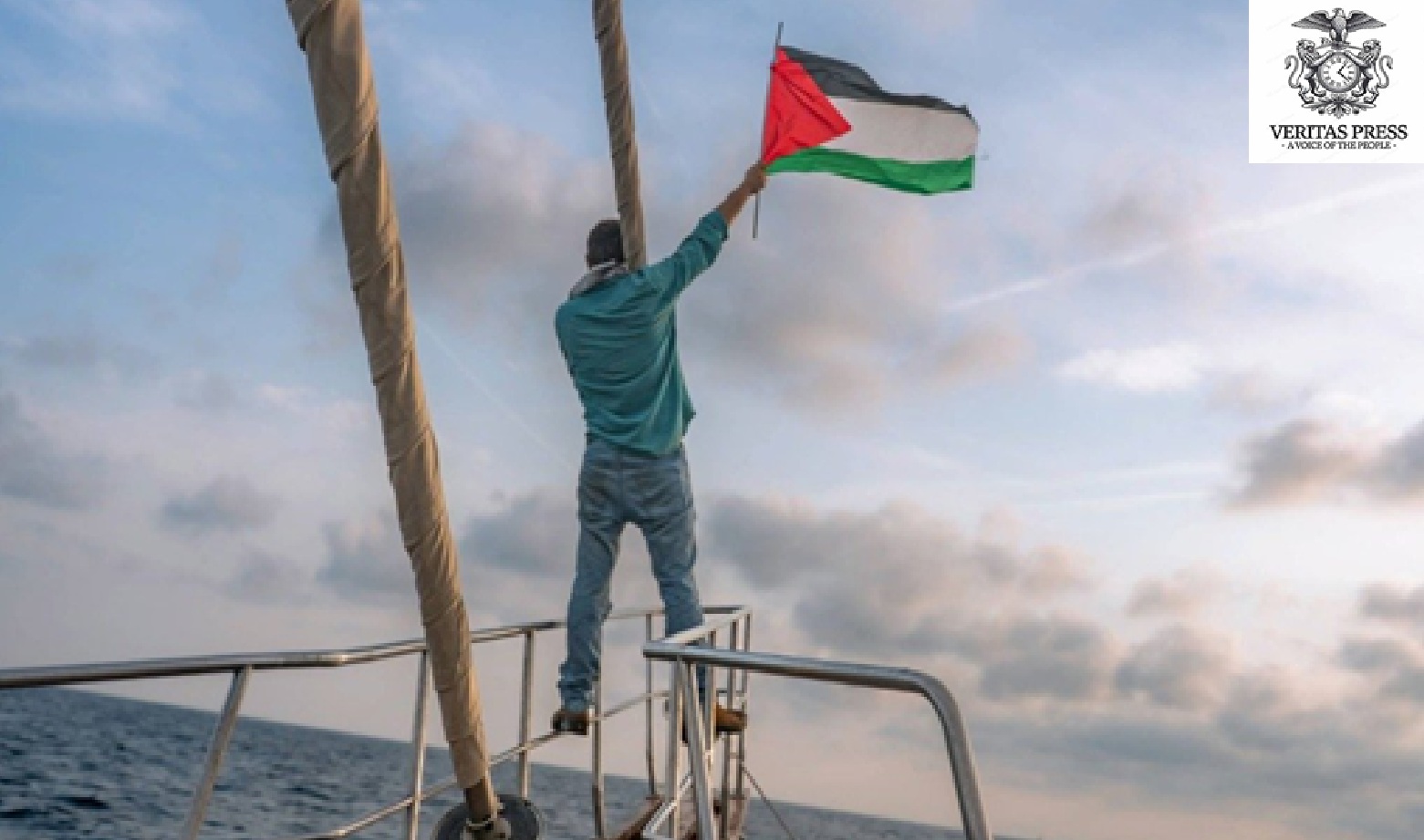
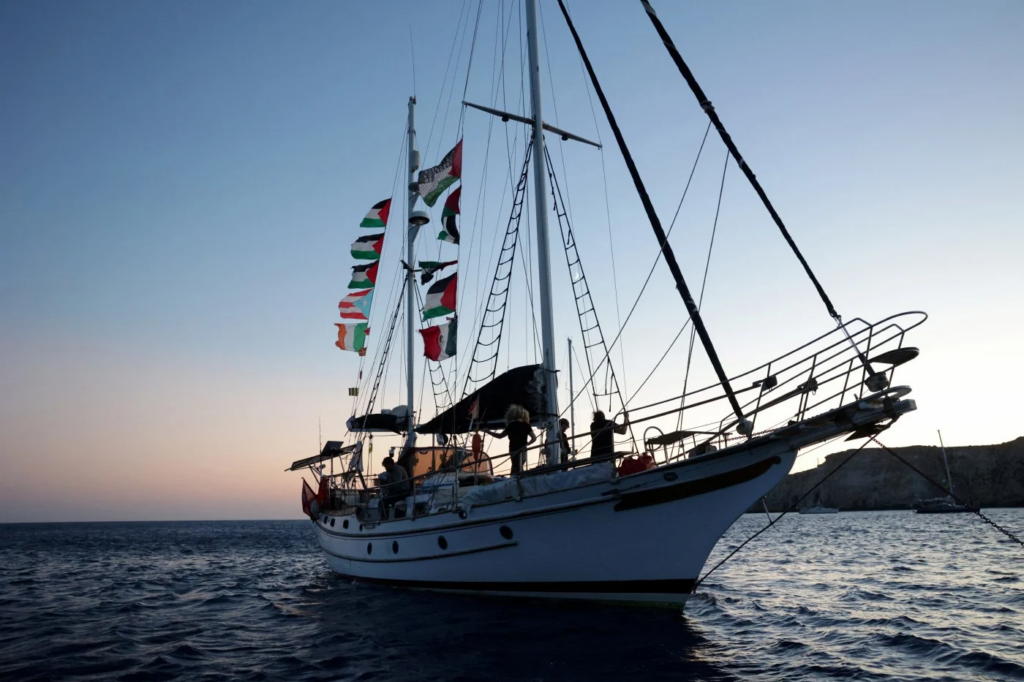
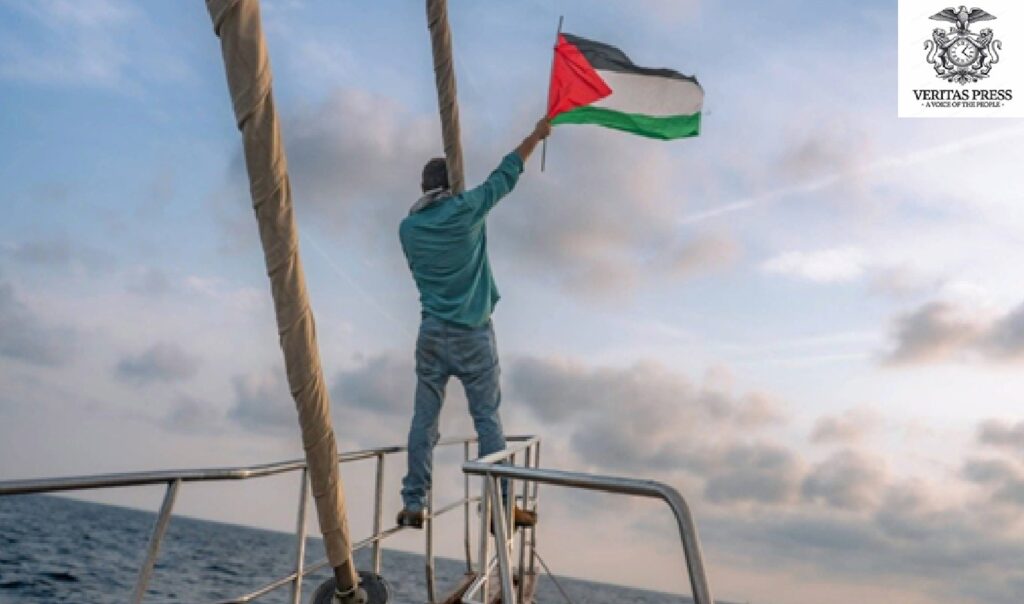
The idea of a “freedom flotilla” carries a ghost in its hold: the 2010 Mavi Marmara, where Israeli commandos killed 10 activists. That ghost haunts every aspect of the Global Sumud Flotilla’s April 12 launch from Barcelona. As 80 boats and 1,000 volunteers prepare to sail, the defining question isn’t whether they will be stopped; almost certainly they will, but what the confrontation reveals about the Gaza siege, international law, and a complicit world that watches from the sidelines.
‘We Have No Option But The Sea’: The Flotilla’s Stated Mission.
On paper, the mission is breathtaking in its ambition. Organisers describe it as the largest civilian-led maritime effort in history to challenge Israel’s 19-year blockade of Gaza. More than 80 vessels and over 1,000 participants from around the world will converge on the Catalan capital, where a three-day media program and weekend of public events are planned before departure.
The flotilla’s stated goals are uncompromising: break what it calls the “illegal” siege, deliver urgent humanitarian aid, and unite global voices across borders, faiths, and movements. But the mission extends far beyond symbolism. Organisers say the flotilla will carry specialised civilian teams, doctors, teachers, and engineers, to support humanitarian relief and early-stage reconstruction efforts in partnership with Palestinians.
Bülent Yıldırım, head of the Turkish Humanitarian Relief Foundation (IHH), told The New Arab that fundraising efforts are underway across Europe, Asia, Africa, Turkey and Gulf countries. “It is important that we have more than 100 ships, God willing, 200,” he said. “The more ships there are, the harder it will be for Israel to stop them. It may even become impossible. We have no option but the sea”.
Activist Dilek Tekocak, speaking for the flotilla’s management at a press conference in Istanbul, framed the initiative as a direct response to “the failure of international mechanisms to ensure adequate humanitarian access to Gaza”.
A Moral Catastrophe: The Siege They Are Challenging.
To understand the flotilla’s urgency, one must understand what Gaza has become. The numbers are staggering. According to the Palestinian Ministry of Health, more than 72,000 Palestinians have been killed since October 2023, with over 171,000 wounded and maimed. Based on the available information, there is a strong indication that these figures have been underreported. And yet The United Nations considers these figures reliable. An additional 720 bodies have been recovered from beneath rubble since the ceasefire began.
The humanitarian crisis is now acute beyond measure. Doctors Without Borders (MSF) reported on April 4, 2026, that Israeli restrictions on medical supplies have reached critical levels. Dr. Randa Abu El-Khair Masoud, an MSF medical adviser, stated that the organisation has been unable to bring any medical supplies into Gaza since January 1, 2026, despite massive humanitarian needs. Nearly 50% of essential medications for non-communicable diseases, including diabetes, hypertension, and respiratory illnesses, are at critically low levels. MSF has stopped admitting new patients to its non-communicable disease programs, limiting treatment to existing patients only.
“We are also seeing a shortage of dressing materials in our medical facilities, such as gauze and compresses,” Masoud warned. “During the full blockade between August and September 2025, we had to resort to using non-sterile gauze, which the team tried to sterilise in batches. This procedure is not optimal, as it may carry a risk of infection and is used as a last resort. Now, we are close to this point again”.
The numbers tell a story of systematic deprivation. More than 1.5 million people now face food insecurity, with conditions worsening as Israel tightens control. Only about 200 aid trucks enter Gaza daily, roughly one-third of what was agreed upon in the ceasefire. A fragile ceasefire declared in October 2025 has done little to halt the bloodshed: Gaza’s health ministry reports that Israeli strikes have killed more than 700 Palestinians since the truce began, while Israel says five of its soldiers have died in the same period.
The Law Of The Sea And The Law Of The Gun:
The legal debate surrounding the flotilla could fill volumes. At its heart lies a fundamental question: Is Israel’s naval blockade, first imposed in 2007 after Hamas seized power, legal under international law?
Supporters of the flotilla argue that the blockade constitutes collective punishment, explicitly prohibited under the Fourth Geneva Convention. They also describe Israeli interceptions of vessels in international waters as acts of piracy under international law.
Sandra Barrilaro, spokesperson for “Rumbo a Gaza,” the Spanish branch of the Freedom Flotilla Coalition, told The Media Line: “The real scandal is that thousands of trucks with food and medical supplies are waiting at Rafah, blocked from entering. What we do is to expose this injustice and to show that international law prohibits collective punishment, attacks on civilians, schools and hospitals. That is our legal basis”.
But legal scholars maintain the opposite. Professor Eugene Kontorovich, director of international law at George Mason University’s law school, emphasised that “blockade is a legal and legitimate aspect of naval warfare. It’s actually one of the principal purposes of naval warfare, to deny access to goods and material to the enemy”.
Kontorovich further explained that once a blockade is declared and properly announced, third-party vessels attempting to breach it can be legally stopped, boarded, or even seized. “International law simply allows the stopping of the vessel. By the way, international law also allows the sinking of the vessel. Once they’re doing this, they are essentially engaged in hostile conduct. And they can be treated as a hostile entity”.
The legal reality, however, may be less important than the political one. Israel’s Permanent Representative to the UN, Danny Danon, has stated that the country will not allow “any PR stunts aimed at entering the combat zone under the pretext of a humanitarian mission”.
Echoes Of The Mavi Marmara: A Bloody Precedent.
The spectre of 2010 hangs over every aspect of this mission. In May of that year, Israeli commandos stormed the Mavi Marmara, part of a six-ship flotilla carrying humanitarian aid to Gaza. Ten activists were shot dead, including Turkish nationals with alleged ties to IHH, the same organisation supporting the current flotilla.
The Israeli government defended its actions, claiming its soldiers were attacked with knives and metal bars. Critics called it a massacre in international waters. The incident triggered international condemnation and severely strained relations between Israel and Turkey, which were allies at the time.
Today, the Mavi Marmara Freedom and Solidarity Association is among the organisations backing the Global Sumud Flotilla, alongside IHH. For participants, the memory is not distant history but a warning of what they might face.
Sandra Barrilaro acknowledged the risks explicitly: “Every participant, whether crew or activist, receives training in nonviolence before setting sail. We are aware of the risks we take: assaults, arrests and imprisonment. We saw it in 2010, during the assault on the Mavi Marmara, when 10 of our colleagues were killed and 50 others injured. But we will continue, because silence is complicity”.
What Happened Last Time: Interception, Detention, And Alleged Torture.
The 2025 attempt of the Global Sumud Flotilla offers a more recent and chilling preview. In October 2025, Israeli naval forces intercepted the flotilla in international waters. Organisers described a coordinated assault: drones overhead, communications jamming, explosions, and naval vessels boarding their boats in the early morning hours.
The Israeli Foreign Ministry announced the deportation of 171 activists, including Swedish climate activist Greta Thunberg and French-Palestinian MEP Rima Hassan. Israeli police spokesman Dean Elsdunne released a video walking through what he claimed was one of the largest vessels, showing it empty. “When we and multiple other countries offered them to take this aid and bring it to the Gazans, we could facilitate its safe arrival, they flat out rejected it, and now we know why: because it was never about bringing aid to Gazans, but it was all about the headlines and the social media followings”.
The flotilla maintained that its ships were carrying aid, including baby formula, food, and medicine, and called the interception “illegal”. But the more troubling allegations emerged from those who survived detention. Rima Hassan, speaking after her deportation, told Agence France-Presse: “I was beaten while being put into a police car by two Israeli officers.” She described conditions in an Israeli prison: “Sometimes there were 13 to 15 of us in a single cell, not on beds but on mats on the floor… in the high-security Israeli prison in the Negev. We lacked everything”.
Greta Thunberg, speaking from Athens, also denounced “mistreatment and abuses” during her detention. Organisers have since described “reports of physical and psychological torture” of detained activists, including starvation, physical assault, intimidation, and humiliation. The Israeli government has denied these allegations.
UN Special Rapporteur Irene Khan expressed grave concern for the safety of detained activists, stating: “This attack against unarmed civilians on the high seas is yet another violation of international law by Israel”. Amnesty International’s Secretary General, Agnès Callamard, condemned the interception as demonstrating “chilling contempt for legally binding orders of the International Court of Justice”.
The World’s Response: Diplomatic Evasions And Hollow Condemnations.
The international response to the flotilla has been characterised by carefully calibrated language that avoids taking meaningful action.
The European Union’s position, articulated by High Representative Kallas, reflects this diplomatic tightrope. “The EU respects the intention of those on board the flotilla ships to draw attention to the humanitarian plight of the population of Gaza,” the statement read. “In the EU, everyone has the right to exercise activism and freedom of assembly; this is a core pillar of EU values. The freedom of navigation under international law must also be upheld”.
But then came the caveat: “At the same time, the EU discourages flotillas. They risk the safety of their participants and carry the potential for escalation. Attacks against such flotillas are not acceptable”.
Turkey has taken a far stronger stance, condemning Israeli interceptions as “piracy” and a “clear violation of international law”. Italy dispatched a navy frigate to assist a flotilla after reports of drone attacks, though its government has urged caution.
The United Nations has called for investigations, with UN Human Rights Office spokesperson Thameen Al-Kheetan demanding “an independent, impartial and thorough investigation into the reported attacks and harassment by drones and other objects”. But investigations, as Palestinians know, rarely translate into accountability.
Meanwhile, the United States has taken a different approach: sanctioning organisers. The US Treasury Department sanctioned the Popular Conference for Palestinians Abroad over its role in organising Gaza aid flotillas, a move the group “unequivocally rejected,” stating it reflects pressure on Palestinian groups abroad and does not affect the legitimacy of their work.
Spain’s Precarious Position: Between Solidarity And Sovereignty.
Spain finds itself in an uncomfortable position. The flotilla launches from Barcelona, but the Spanish government has made clear it will not provide military protection.
Minister for Digital Transformation and Public Function Óscar López stated that Spain has gone “hasta donde podía llegar” (as far as it could go) and will not risk the safety of mission participants, despite Israel “se está saltando la legalidad internacional desde el minuto uno” (violating international law from minute one). The government has “recommended” that flotilla participants not enter waters declared an exclusion zone by Israel.
Yet Spain has also taken a visible diplomatic role. Foreign Minister José Manuel Albares has warned that Spain will respond to any Israeli action taken against the flotilla, and in September 2025, Spain announced the deployment of the naval patrol ship Furor to operate near the flotilla’s route. Spain has also repatriated its nationals detained on previous flotillas and imposed an arms embargo on Israel.
The contradiction is stark: Spain offers consular protection and rhetorical support but stops short of the military protection that might actually deter Israeli interception.
Sumud And The Politics Of Civil Resistance:
The name “Sumud” is not incidental. The Arabic word means “steadfastness”, the Palestinian concept of remaining rooted in one’s land despite occupation, expulsion, and siege. It is a quiet, stubborn refusal to be erased.
Ramzy Baroud, writing for New Age, captured the flotilla’s symbolic importance: “It sent a clear message to Palestinians in occupied Palestine, that their fate is not only determined by the Israeli government and military machine; that there are other actors who are capable of challenging the dreadful silence of the international community; that not all Westerners are as complicit as their governments in the prolonged suffering of the Palestinian people”.
The announcement of the flotilla was made at the Nelson Mandela Foundation in Johannesburg, a location charged with political meaning. The choice anchors the initiative in the tradition of global civil resistance against structural oppression, drawing a parallel between South African apartheid and the blockade on Gaza.
Saif Abukeshek, a member of the flotilla’s steering committee, told Pressenza that the adversary is “not a person nor a people, but a way of life based on dehumanisation, collective punishment, and the normalisation of extreme violence as a tool of domination”.
This framing transforms the flotilla from a humanitarian mission into a political indictment, a direct challenge to an international order that has tolerated, as Pressenza puts it, “if not facilitated, the commission of crimes against humanity and acts constituting genocide”.
Investigative Critique: What The Flotilla Reveals About Us.
For all its moral urgency, the flotilla raises uncomfortable questions that demand honest answers.
First, the humanitarian impact question: Even if the flotilla reaches Gaza, which it almost certainly will not, 80 boats of symbolic aid will not meaningfully address a humanitarian catastrophe that requires thousands of trucks. Barrilaro herself acknowledges this: “We carry symbolic aid, food, medicine, baby formula, not because aid is absent, but because it is deliberately blocked at Gaza’s crossings. Our act challenges that deprivation and calls out collective punishment”. The mission is fundamentally a political protest, not a relief operation.
Second, the provocation question: Israel’s Danon calls the flotilla “PR stunts.” Netanyahu has praised the navy for repelling the flotilla, calling it “a campaign to delegitimise Israel”. The Israeli government has repeatedly offered to transfer any aid through established channels. Whether those offers are genuine or not, the flotilla’s refusal to engage with them raises questions about whether disruption or delivery is the primary goal.
Third, the safety question: Barrilaro admits participants are “aware of the risks we take: assaults, arrests and imprisonment.” The 2010 precedent showed those risks can be fatal. Is it responsible to send 1,000 volunteers, including doctors and teachers, into a situation where they are almost certain to be detained, with real potential for violence? Does the symbolic value outweigh the risk to human life?
Fourth, the effectiveness question: Previous flotillas have been intercepted. Their participants have been detained and deported. The siege remains. What, concretely, will this flotilla achieve that previous ones did not? Organisers argue that 200 boats may make it “impossible” for Israel to stop them all, but Israel’s navy has demonstrated the capacity to intercept flotillas of comparable size in international waters.
Fifth, the international complicity question: This may be the most damning. As Amnesty International’s Callamard noted, “Activists would not have had to risk their lives if Israel’s allies had turned their words into forceful action to allow aid into Gaza”. The flotilla exists because the international community has failed to enforce international law, to pressure Israel to lift the siege, or to hold anyone accountable for the deaths of over 72,000 Palestinians. The flotilla is a symptom of a deeper pathology: a world order that talks about human rights but acts on geopolitical expediency.
What Happens Next?
As the flotilla prepares to sail, organisers are planning not just a maritime mission but a coordinated global mobilisation. Allied groups worldwide will synchronise protests and advocacy campaigns across multiple countries as the fleet moves. A land-based movement will join the maritime action to create pressure across multiple borders simultaneously.
The flotilla also includes a three-day media program at Barcelona Port, cultural activities, political discussions, and community gatherings designed to build momentum and amplify calls to end the blockade.
Whether the flotilla reaches Gaza is almost irrelevant. Its organisers know what awaits them: surveillance drones, naval interception, detention, deportation. The mission is designed to be witnessed, to force the world to look at Gaza, to look at the blockade, to look at what has been done in the name of security, and to ask why silence has been the international community’s primary response.
“The cost of inaction is too high to bear,” the flotilla’s statement reads. The question for the rest of us is whether we will bear it anyway.
Source: Multiple News Agencies
Submissions:
For The Secure Submission Of Documentation, Testimonies, Or Exclusive Investigative Reports From Any Global Location, Please Utilise The Following Contact Details For Our Investigations Desk: enquiries@veritaspress.co.uk or editor@veritaspress.co.uk
Help Support Our Work:
Popular Information is powered by readers who believe that truth still matters. When just a few more people step up to support this work, it means more lies exposed, more corruption uncovered, and more accountability where it’s long overdue.
Help Protect Independent Journalism, Which Is Currently Under Attack.
If you believe journalism should serve the public, not the powerful, and you’re in a position to help, becoming a DONATOR or a PAID SUBSCRIBER truly makes a difference.
DONATION APPEAL: If You Found This Reporting Valuable, Please Consider Supporting Independent Journalism.
Help Support Our Work – We Know, We Know, We Know …
Seeing these messages is annoying. We know that. (Imagine what it’s like writing them … )
Your support fuels our fearless, truth-driven journalism. In unity, we endeavour to amplify marginalised voices and champion justice, irrespective of geographical location.
But it’s also extremely important. One of Veritas Press’s greatest assets is its reader-funded model.
1. Reader funding means we can cover what we like. We’re not beholden to the political whims of a billionaire owner. We are a small, independent and impartial organisation. No one can tell us what not to say or what not to report.
2. Reader funding means we don’t have to chase clicks and traffic. We’re not desperately seeking your attention for its own sake: we pursue the stories that our editorial team deems important and believe are worthy of your time.
3. Reader Funding: enables us to keep our website and other social media channels open, allowing as many people as possible to access quality journalism from around the world, particularly those in places where the free press is under threat.
We know not everyone can afford to pay for news, but if you’ve been meaning to support us, now’s the time.
Your donation goes a long way. It helps us:
- Keep the lights on and sustain our day-to-day operations
- Hire new, talented independent reporters
- Launch real-time live debates, community-focused shows, and on-the-ground reporting
- Cover the issues that matter most to our communities, in real time, with depth and integrity
We have plans to expand our work, but we can’t do it without your support. Every contribution, no matter the size, helps us stay independent and build a truly people-powered media platform.
If you believe in journalism that informs, empowers, and reflects the communities we serve, please donate today.

The raw numbers tell a story of profound inequality. On 1 April 2026, more than
What began on February 28, 2026, as a coordinated US-Israeli campaign to decapitate Iran’s military
The idea of a “freedom flotilla” carries a ghost in its hold: the 2010 Mavi

Original Article Date Published: Article Date Modified: Help support our mission, donate today and be

Original Article Date Published: Article Date Modified: Help support our mission, donate today and be
A United States fighter jet has been shot down over Iran, marking a dangerous and
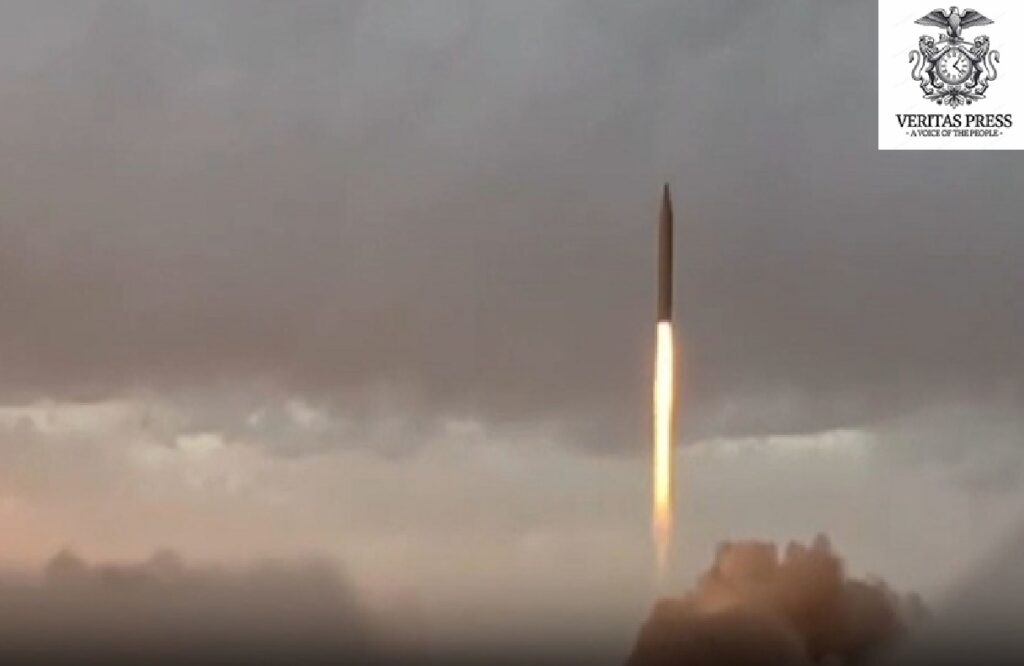
On February 28, the United States and Israel launched coordinated strikes on Iran, reported by

LONDON, UK – Just weeks after being appointed as the government’s “Cost of Living Champion”,

On February 28, 2026, the first wave of U.S.-Israeli pre-emptive strikes hit Iranian military and
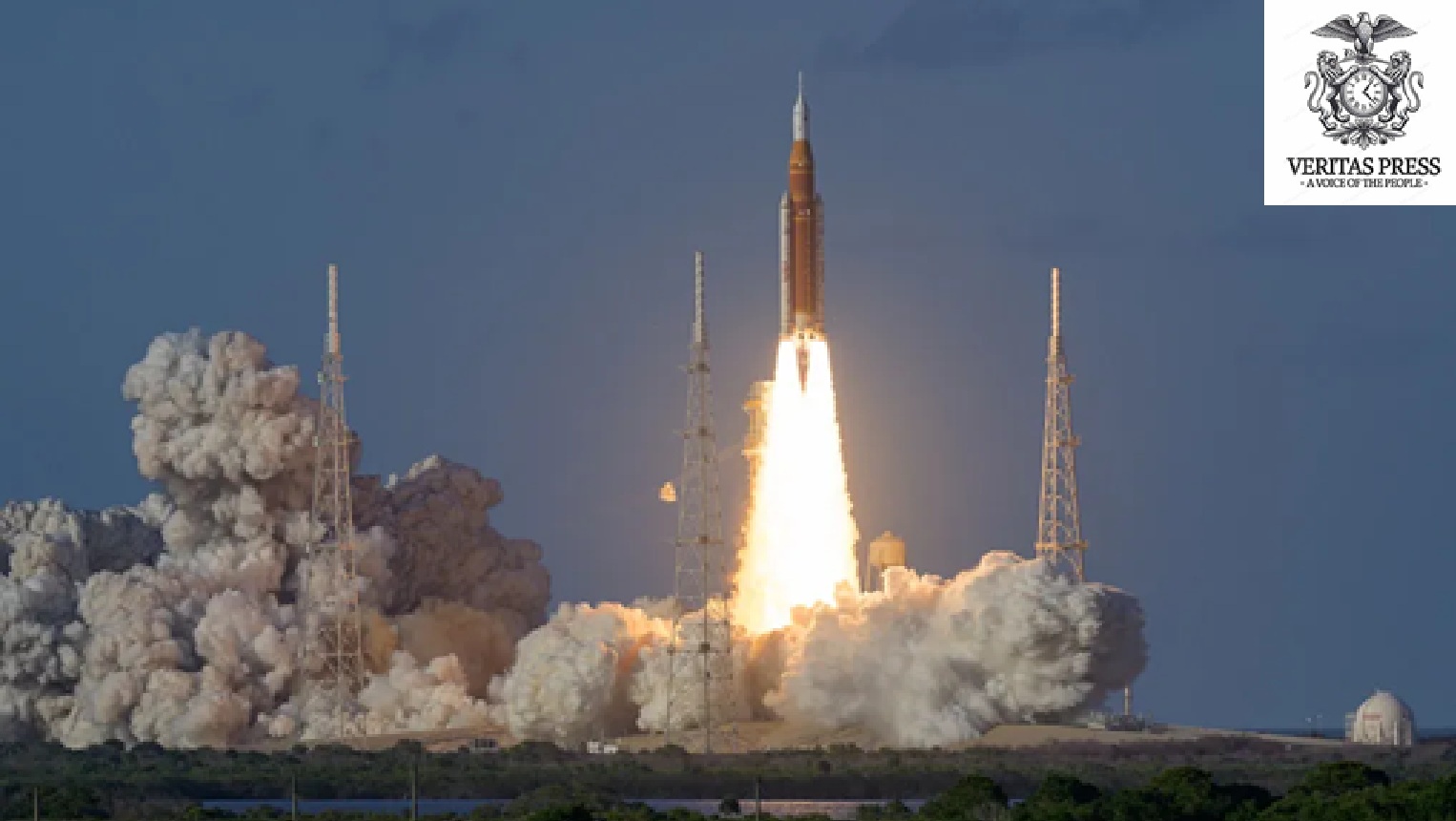
USA, NASA – Spurred by American ingenuity, astronauts on NASA’s Artemis II mission are in