




Original Article Date Published:
Article Date Modified:
Help support our mission—donate today and be the change. Every contribution goes directly toward driving real impact for the cause we believe in.
GAZA CITY — A 14-year-old Palestinian boy was killed in an Israeli drone strike in the northern Gaza Strip on Tuesday, as Israeli forces continued a pattern of daily military operations across the enclave despite a formal ceasefire agreement that has been in place since October. The ongoing violence, coupled with severe restrictions at border crossings and the obstruction of humanitarian aid, has led international observers to conclude that the truce has failed to deliver respite to Gaza’s civilian population.
A Child Killed In Jabaliya:
Medical sources confirmed that Rassem Yousef Asaliya, 14, was killed by a missile fired from an Israeli drone in the town of Jabaliya, north of Gaza City. His body was transferred to Al-Shifa Hospital. Eyewitnesses told the Anadolu news agency that the location hit by the drone lies outside areas currently occupied by Israeli forces in the northern Gaza Strip.
This incident marks the latest in a series of civilian deaths that have continued unabated since the ceasefire’s inception. According to an updated count from the Palestinian Health Ministry, at least 603 Palestinians have been killed and 1,618 others injured in hundreds of Israeli violations since the agreement took effect. The Gaza Government Media Office has emphasised that the overwhelming majority of these victims, 99%, have been civilians, including 292 children, women, and the elderly.
Key Developments: A Multifaceted Assault.
The violations reported on Tuesday paint a picture of a coordinated military campaign rather than a halted conflict, encompassing airstrikes, artillery shelling, naval attacks, and the demolition of residential structures.
- Ground and Air Assaults: Israeli occupation forces carried out shelling and demolition operations targeting areas east of Khan Yunis, while simultaneous airstrikes were reported in both Khan Yunis and Rafah in the southern Gaza Strip. Local sources reported low-altitude flights by warplanes, accompanying artillery barrages.
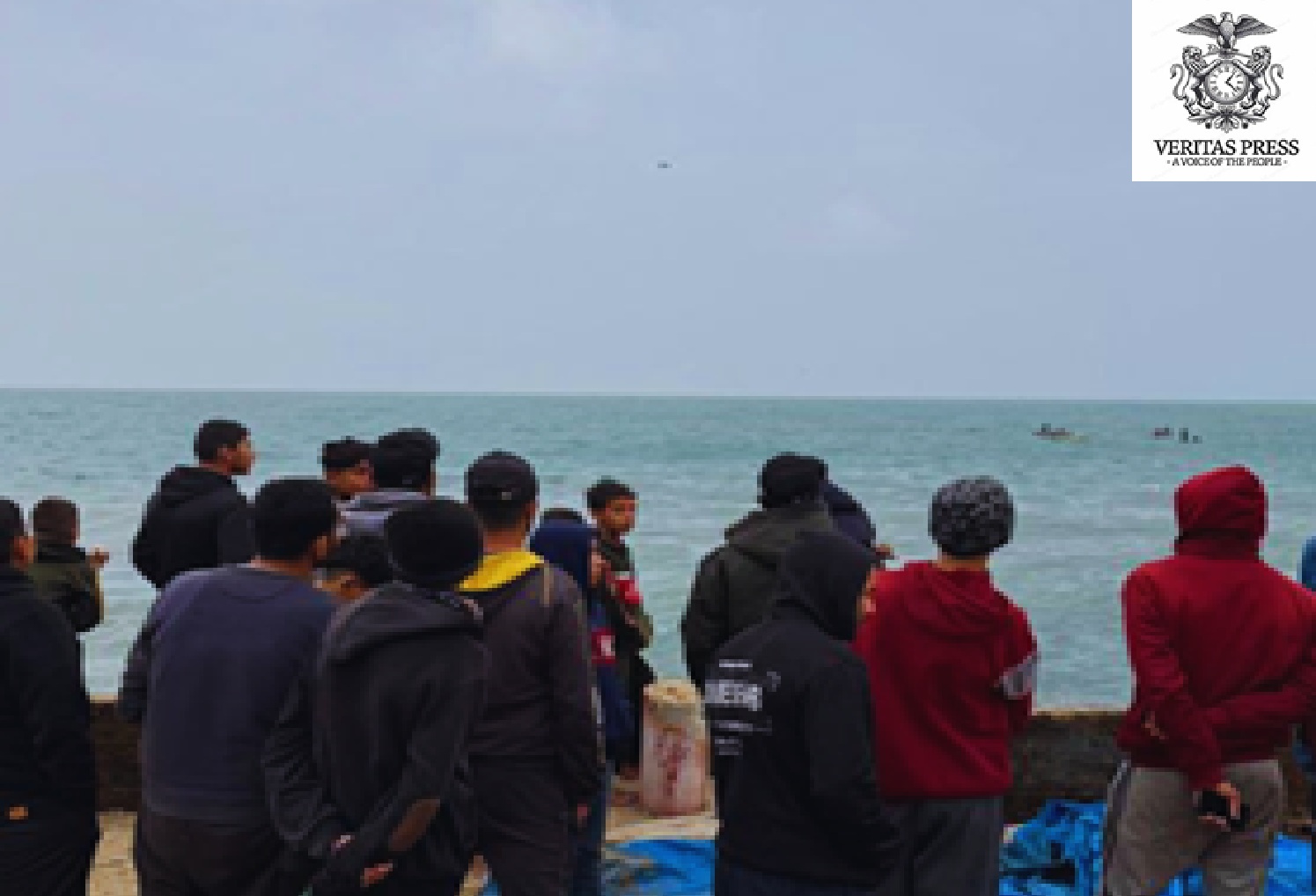
- Naval Attacks: In a continuation of maritime aggression, Israeli naval boats opened fire on a fishing vessel west of Gaza City. Following the attack, forces detained two fishermen, identified by the Palestinian Prisoners’ Media Office as Ahmed Subhi and Muhammad Khamis Saadallah. Such incidents have become recurrent, effectively shrinking the already limited fishing zone and crippling a vital source of livelihood and food.
- Systematic Demolitions: Reports from Al Mayadeen and other outlets, covering the 131st day since the ceasefire declaration, detailed continued raids and the demolition of homes and buildings across multiple parts of the Strip, reinforcing residents’ inability to safely return to their neighbourhoods.
Rafah Crossing: A Reopening In Name Only.
While violence persists inside Gaza, the ability for civilians to flee for medical treatment or to return to their homes remains largely blocked.
The Gaza media office reported that the reopening of the Rafah crossing between Gaza and Egypt is functioning at a mere 29% capacity due to Israeli restrictions. Between February 2 and February 15, only 811 travellers were able to cross in both directions out of a total of 2,800 people expected to travel. Of those, 455 were permitted to depart Gaza, while 356 arrived.
Palestinian authorities stated they have not been informed of the opaque criteria used to determine travel lists, leaving families in agonising uncertainty. This bottleneck has severe humanitarian consequences: an estimated 22,000 wounded and sick people require urgent travel abroad for medical treatment as Gaza’s health sector lies in ruins. At the same time, a paradoxical crisis is unfolding, with around 80,000 Palestinians registering to return to Gaza, demonstrating a firm rejection of displacement despite the widespread destruction.
UN Condemns Obstruction Of Aid:
Compounding the man-made catastrophe, the United Nations has highlighted Israel’s continued obstruction of humanitarian operations. UN Secretary-General’s Spokesperson Stéphane Dujarric stated on Monday that humanitarian efforts in Gaza “continue to face significant impediments.”
Citing the Office for the Coordination of Humanitarian Affairs (OCHA), Dujarric revealed that of nearly 50 humanitarian movements coordinated with Israeli authorities between February 6 and 11, just over half were fully facilitated. Five missions were denied outright, and 11 others faced significant delays or were only partially accomplished. “And just today, we had two more denials,” Dujarric added.
He further detailed logistical hurdles, noting that shipments from Jordan are restricted to a route requiring multiple offloading and reloading points, and that consignments from Egypt via the Kerem Shalom crossing face high return rates.
A Ceasefire In Numbers:
The US-backed ceasefire agreement, which took effect on October 10, 2025, was intended to halt a devastating two-year war that has killed more than 100,000 people in Gaza, mostly women and children, and injured over 377,000 others since October 2023. However, the reality on the ground suggests the agreement has functioned less as a halt to violence and more as a change in its intensity and pattern.
As the international community marks another day of violations, the people of Gaza continue to endure a daily reality of death, detention, and deprivation, with the mechanisms meant to protect them, a ceasefire and humanitarian law, appearing increasingly fragile.
The Legal Framework: Crimes Under International Law.
The pattern of violence, displacement, and territorial expansion documented above is not merely a political or humanitarian crisis; it constitutes a matrix of serious violations of international law, including war crimes, crimes against humanity, and breaches of peremptory norms (jus cogens). The framework of the “ceasefire” has provided neither compliance nor accountability; instead, it has facilitated the continuation of these violations under a veil of diplomatic normalcy.
I. The Law of Occupation: A Status Denied, Obligations Evaded
The foundational legal framework governing Israel’s presence in Gaza is the law of belligerent occupation, principally the Hague Regulations of 1907 and the Fourth Geneva Convention of 1949. Despite Israel’s 2005 “disengagement,” the International Court of Justice (ICJ) has confirmed that Israel remains bound by the law of occupation to the extent that it exercises effective control over the territory.
In its landmark Advisory Opinion of July 19, 2024, the ICJ affirmed that Gaza continues to form an integral part of the Occupied Palestinian Territory occupied since 1967. The Court adopted the “functional approach” to occupation, holding that:
“Where an occupying Power, having previously established its authority in the occupied territory, later withdraws its physical presence in part or in whole, it may still bear obligations under the law of occupation to the extent that it remains capable of exercising, and continues to exercise, elements of its authority in place of the local government”.
Applying this test, the Court found that Israel retains control over Gaza’s airspace, territorial waters, land borders (excluding the Rafah crossing with Egypt), the population registry, and the import of goods. Therefore, Israel continues to bear obligations under the Fourth Geneva Convention commensurate with its degree of control.
II. War Crimes: Specific Violations Under the Geneva Conventions and Rome Statute
The actions documented in Gaza since the ceasefire took effect, the killing of civilians, the destruction of homes, the forced displacement of populations, the blockade on aid, and the expansion of settlements, constitute specific war crimes under international law.
1. Willful Killing and Targeting of Civilians (Fourth Geneva Convention, Article 147; Rome Statute, Article 8(2)(a)(i))
The killing of 14-year-old Rassem Yousef Asaliya and the 603 Palestinians documented since the ceasefire, 99% of them civilians, including 292 children, falls squarely within the definition of willful killing. The drone strike in Jabaliya, an area outside active military engagement, indicates a failure to distinguish between civilian and military targets, a core principle of international humanitarian law.
2. Forcible Transfer and Deportation (Fourth Geneva Convention, Article 49; Rome Statute, Article 8(2)(b)(viii))
Article 49 of the Fourth Geneva Convention categorically prohibits “individual or mass forcible transfers, as well as deportations of protected persons from occupied territory to the territory of the Occupying Power or to that of any other country, occupied or not, regardless of their motive”. The prohibition is absolute and admits no exceptions.
The evacuation orders issued in Bani Suhaila and other areas, the movement of the “yellow line” into residential neighbourhoods, and the policy of “encouraging voluntary migration” all constitute forcible transfer under international law. As legal scholar Vincent Chetail explains, the coercive environment created by bombardment, siege, and destruction vitiates any claim of “voluntariness”:
“When life in a certain place is made impossible by bombing and siege, there is nothing ‘voluntary’ about people leaving… An apparent consent induced by force or threat of force should not be considered to be real consent”.
The International Criminal Tribunal for the former Yugoslavia (ICTY) has established that “the forced character of the displacement is determined by the absence of genuine choice by the victim in his or her displacement”. The widespread destruction of homes, the killing of civilians, and the public announcements demanding evacuation, all present in Gaza, have been held by the ICC to constitute forcible transfer.
3. Settlement Expansion and Transfer of Civilian Population (Fourth Geneva Convention, Article 49(6); Rome Statute, Article 8(2)(b)(viii))
Article 49(6) of the Fourth Geneva Convention provides: “The Occupying Power shall not deport or transfer parts of its own civilian population into the territory it occupies”. The Rome Statute expands this prohibition to include “indirect” transfer, criminalising not only the physical movement of populations but also the creation of incentives and infrastructure that facilitate such transfer.
UN Security Council resolutions 446, 452, and 465 have repeatedly affirmed that Israeli settlements “have no legal validity and constitute a flagrant violation of the Fourth Geneva Convention”. The movement of the “yellow line” into Gaza’s residential areas, the establishment of new buffer zones, and the construction of military infrastructure constitute a de facto annexation and transfer of Israeli authority into occupied territory.
4. Extensive Destruction of Property (Fourth Geneva Convention, Article 53; Hague Regulations, Article 46)
Article 53 of the Fourth Geneva Convention prohibits “any destruction by the Occupying Power of real or personal property belonging individually or collectively to private persons… except where such destruction is rendered absolutely necessary by military operations”. The systematic demolition of residential buildings in Khan Yunis, the destruction of over 2,500 buildings since the ceasefire, and the levelling of entire neighbourhoods fall outside any plausible claim of military necessity. The Hague Regulations further provide that “private property must not be confiscated”.
5. Collective Punishment and Starvation of Civilians (Fourth Geneva Convention, Article 33; Rome Statute, Article 8(2)(b)(xxv))
The blockade on Gaza, the restriction of humanitarian aid (with only 50% of coordinated missions facilitated), and the limitation of the Rafah crossing to 29% capacity constitute collective punishment, prohibited by Article 33 of the Fourth Geneva Convention. As documented in UN Human Rights Council proceedings, such measures, including the denial of water treatment technology and dialysis equipment, “were a clear case of the collective punishment of civilians, which is prohibited by international law”.
The starvation of civilians as a method of warfare is a war crime under the Rome Statute. The obstruction of food, water, and medicine, combined with the destruction of agricultural land and fishing boats (as documented in the naval attack on fishermen west of Gaza City), constitutes precisely such a method.
III. Crimes Against Humanity: The Contextual Element
While war crimes can occur in isolation, crimes against humanity require a “widespread or systematic attack directed against any civilian population” (Rome Statute, Article 7). The pattern documented in Gaza, spanning months, encompassing multiple forms of violence, and targeting the civilian population as such, meets this threshold.
1. Forcible Transfer as a Crime Against Humanity (Rome Statute, Article 7(1)(d))
Forcible transfer becomes a crime against humanity when committed as part of a widespread or systematic attack. The International Commission of Jurists has concluded that Israel’s actions “constitute strong evidence in support of the conclusion that Israel is engaging in genocide” and that the policy of “leaving no choice to the civilian population but to either be expelled or die… appears to constitute evidence of the intent to destroy, at least in part, the Palestinian population of Gaza”.
The three elements of forcible transfer as a crime against humanity are:
- Coercive environment: Established by bombardment, siege, destruction, and evacuation orders
- Lawful presence: Palestinians in Gaza have been present for over 75 years
- Absence of permissible ground: No material reason justifies permanent displacement
2. Persecution and Apartheid (Rome Statute, Article 7(1)(h); ICJ Advisory Opinion)
The ICJ’s July 2024 Advisory Opinion concluded that Israel’s policies in the Occupied Palestinian Territory constitute discrimination, and several judges noted that the dual legal system, one law for settlers, another for Palestinians, amounts to apartheid. The International Convention on the Elimination of All Forms of Racial Discrimination (CERD) prohibits such separate and unequal systems.
3. Extermination and Genocide (Rome Statute, Article 7(1)(b); Genocide Convention)
The International Commission of Jurists has warned that “through its mass killings and forcible transfers of civilians, its extensive destruction of civilian infrastructure, its weaponization of humanitarian aid and its use of starvation as a method of warfare, Israel has been inflicting on Palestinians in Gaza… ‘conditions of life increasingly incompatible with their continued existence as a group in Gaza'” . This language tracks the Genocide Convention’s prohibition on “deliberately inflicting on the group conditions of life calculated to bring about its physical destruction in whole or in part.”
IV. International Institutional Responses
1. International Court of Justice (ICJ)
The ICJ’s July 2024 Advisory Opinion concluded that:
- Israel’s continued presence in the Occupied Palestinian Territory is illegal
- Israel is obligated to bring its presence to an end “as rapidly as possible”
- All States are obligated not to recognise the illegal situation and not to render aid or assistance in maintaining it
While the Opinion temporarily excluded operations after October 7, 2023, its legal conclusions regarding the illegality of settlements, the applicability of occupation law, and the discriminatory nature of Israel’s policies remain fully relevant.
2. International Criminal Court (ICC)
On April 24, 2025, the ICC Appeals Chamber issued a critical ruling on the Situation in the State of Palestine. The Chamber:
- Reversed the Pre-Trial Chamber’s decision on Israel’s jurisdictional challenge
- Remanded the matter for a new ruling on the substance of Israel’s challenge
- Confirmed that Palestine is a State Party to the Rome Statute
- Implicitly affirmed that the Court has jurisdiction over crimes committed in Gaza
The ICC has pending applications for arrest warrants related to the situation in Gaza. The Appeals Chamber’s ruling clears the way for the Pre-Trial Chamber to reconsider Israel’s arguments and potentially proceed with investigations and prosecutions.
3. United Nations Security Council
Decades of Security Council resolutions have affirmed the illegality of Israeli settlements (UNSCR 446, 452, 465), the applicability of the Fourth Geneva Convention (UNSCR 471), and the invalidity of measures altering the status of Jerusalem (UNSCR 252, 267, 298, 478). Resolution 904 (1994) specifically called for “measures to be taken to guarantee the safety and protection of the Palestinian civilians throughout the occupied territory”.
4. United Nations Human Rights Council
The Independent International Commission of Inquiry on the Occupied Palestinian Territory has documented patterns of war crimes by all parties. The Commission’s findings have consistently highlighted forcible transfer, collective punishment, and disproportionate attacks on civilians.
V. The Responsibility of Third States
Under the Articles on Responsibility of States for Internationally Wrongful Acts, and as affirmed by the ICJ in its Wall Advisory Opinion, all States have obligations arising from serious violations of peremptory norms. These include:
- The duty not to recognise as legal the situation created by serious breaches
- The duty not to render aid or assistance in maintaining that situation
- The duty to cooperate to bring to an end, through lawful means, any serious breach
When States continue to provide military aid, diplomatic cover, or economic support to Israel despite the documented pattern of violations, they risk complicity in those violations. As the International Commission of Jurists has urged, “the ICJ calls on all States to act to stop and prevent Israel’s criminal conduct”.
Conclusion: The Architecture Of Erasure, From Ceasefire To Ethnic Cleansing.
The death of 14-year-old Rassem Yousef Asaliya in Jabaliya is not merely a violation of a truce; it is a single data point in a systematic campaign of forced displacement, ethnic cleansing, annexation, and erasure that has continued unabated under the cover of a ceasefire. As the bodies pile, 603 Palestinians killed since the agreement took effect, a far more insidious reality emerges: the “ceasefire” has been weaponised as the administrative phase of a demographic transformation, the bureaucratic continuation of war by other means.
The mechanism of this transformation is visible in the daily expansion of the so-called “yellow line.” Since December, Israeli forces have unilaterally moved these concrete barriers deep into residential neighbourhoods, 200 meters into Gaza City’s Tuffah district, hundreds of meters into Khan Yunis, swallowing land that was supposedly under Palestinian control. With each movement, homes are demolished, tent camps are dismantled, and families are forced to flee. In Bani Suhaila, east of Khan Yunis, at least 70 families received evacuation leaflets in January, the first forced displacement orders since the ceasefire began. The Gaza government media office estimates that at least 9,000 people have been displaced by these incremental land grabs, some for the fourth or fifth time. This is not a ceasefire. This is territorial expansion by stealth, annexation measured in meters per month.
Forced displacement has become the ceasefire’s primary output. At the Rafah crossing, a humanitarian corridor has been transformed into a one-way valve designed for demographic engineering. Israeli authorities retain exclusive control over who enters and exits, and the policy is explicitly structured to allow more Palestinians to leave than return. Internal government papers circulated immediately after October 7, 2023, proposed relocating Gaza’s population to Egypt’s Sinai. National Security doctrine guidelines for 2025-2026 explicitly call for “encouraging voluntary migration”. The numbers tell the story: over 130,000 Palestinians have fled to Egypt since the war began, and while 30,000 have registered to return, Israeli security clearance remains a near-insurmountable barrier. The Rafah crossing is not open; it is a sieve, filtering Palestinians out while keeping them out.
What emerges from these policies is a clear pattern of ethnic cleansing, a term that even former Israeli prime minister Ehud Olmert has applied to his own government’s actions. The easing of land registration rules in the West Bank, the transfer of building permit authority from Palestinian to Israeli control, the systematic destruction of homes and agricultural land, these constitute “an attempt to create an ethnic cleansing in the West Bank with the purpose of cleaning the territories so that the eventual annexation will be easier and simpler,” Olmert told Al Jazeera. The Palestinian National Council chairman has similarly condemned Israel’s land registration campaign in occupied Jerusalem as “race cleansing and property confiscation”. More than two dozen Arab and OIC ambassadors have warned that these measures constitute “de facto annexation of the West Bank”. The UN deputy special coordinator has warned that settlement expansion, land declarations, and outpost legalisation are “carving up Palestinian territory and making vast areas inaccessible”.
Annexation is no longer a future threat; it is an ongoing process. At a Knesset conference titled “Gaza, The Day After,” Israeli Justice Minister Yariv Levin declared that Israel “must be present in Gaza and across the entire Land of Israel,” while far-right lawmakers discussed proposals for permanent Israeli security control and the forced displacement of Palestinians. These statements directly defy the US-backed ceasefire plan, which explicitly rules out Israeli occupation or annexation of Gaza. The contradiction is not a failure of implementation; it is a feature of the design. The ceasefire creates diplomatic cover for settlement expansion, allowing Israel to advance the Greater Israel project while the international community waits for peace talks that never materialise.
The ultimate objective is erasure, not just of Palestinian territory, but of Palestinian presence, Palestinian memory, and Palestinian possibility. As Al Jazeera reported this month, reconstruction has been transformed into Israel’s new weapon of “silent transfer”. By blocking construction materials under “dual use” pretexts, by requiring project-by-project approval for every sack of cement, by allowing UN assessments to project debris removal lasting until 2032 and full reconstruction stretching to 2040, Israel is weaponising time itself. “Time decomposes societies,” warns researcher Ihab Jabareen. “Israel realises that bombing brings condemnation, but bureaucratic delay brings only silence. If the fighter jets failed to displace them, the waiting might succeed”. Meanwhile, the Defence Minister publicly celebrates the destruction, boasting of levelling over 2,500 buildings since the ceasefire began and reducing entire neighbourhoods to rubble. Hamas has condemned this as “an open and explicit admission of genocide”.
The international community has become an accomplice to this erasure. When the UN reports that only 9% of processed aid has entered Gaza via Jordan, when humanitarian missions are routinely denied or delayed, when the Rafah crossing operates at 29% capacity while 22,000 wounded await medical evacuation, these are not logistical failures. They are policy choices. The Security Council meets to discuss “concerns” while the yellow line inches forward. Ambassadors issue statements while families receive evacuation leaflets. The Arab-Islamic Troika warns against annexation while annexation proceeds.
The children of Gaza, Rassem Yousef Asaliya, the 292 children killed since the ceasefire, the thousands displaced from Bani Suhaila, the 30,000 children who fled to Egypt, they are not dying despite the ceasefire. They are dying because of it. The ceasefire has provided the administrative architecture for ethnic cleansing, the bureaucratic cover for annexation, the diplomatic shield for erasure. It has transformed the Palestinian cause from a national rights struggle into a real estate negotiation, turned homes into bargaining chips, and converted the hope of return into a political fantasy managed by occupation authorities.
When the history of this period is written, it will not record a ceasefire that failed. It will record a ceasefire that succeeded in completing, through bureaucracy and delay and incremental displacement, what bombs alone could not achieve. The erasure of Palestine, proceeding meter by meter, family by family, child by child.
The actions documented in Gaza since the ceasefire, the killing of civilians, the forced displacement of populations, the destruction of homes, the expansion of settlements, and the blockade on aid, are not merely political provocations or military excesses. They are war crimes under the Geneva Conventions, crimes against humanity under the Rome Statute, and for some, evidence supporting a finding of genocide.
The legal framework provides the vocabulary for accountability: Article 49 of the Fourth Geneva Convention, Article 7 of the Rome Statute, the ICJ’s July 2024 Advisory Opinion, and the ICC Appeals Chamber’s April 2025 ruling. But law without enforcement is merely literature. The 603 killed since the ceasefire, the 22,000 wounded awaiting medical evacuation, the 9,000 displaced by the creeping “yellow line” they are not statistics. They are evidence.
The international community faces a choice: continue to treat the ceasefire as a diplomatic success while it facilitates ethnic cleansing, or activate the legal mechanisms that exist, sanctions, arms embargoes, ICC prosecutions, and ICJ enforcement, to transform legal violations into legal accountability. The children of Gaza, like Rassem Yousef Asaliya, deserve more than condolences. They deserve justice. And international law, if it is to mean anything, must be the vehicle for that justice.

The raw numbers tell a story of profound inequality. On 1 April 2026, more than
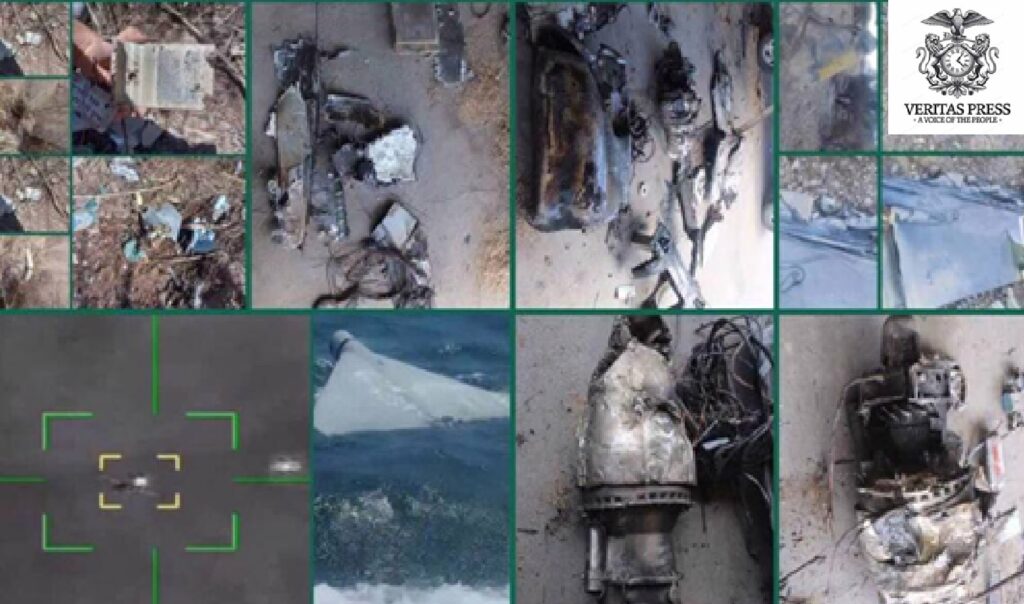
What began on February 28, 2026, as a coordinated US-Israeli campaign to decapitate Iran’s military
The idea of a “freedom flotilla” carries a ghost in its hold: the 2010 Mavi

Original Article Date Published: Article Date Modified: Help support our mission, donate today and be

Original Article Date Published: Article Date Modified: Help support our mission, donate today and be
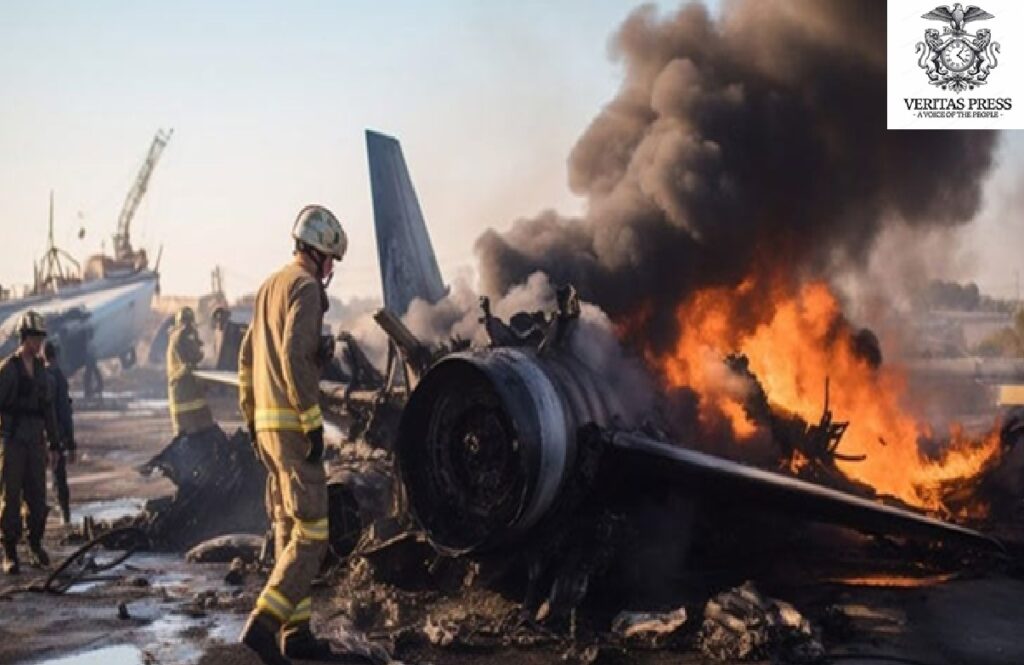
A United States fighter jet has been shot down over Iran, marking a dangerous and
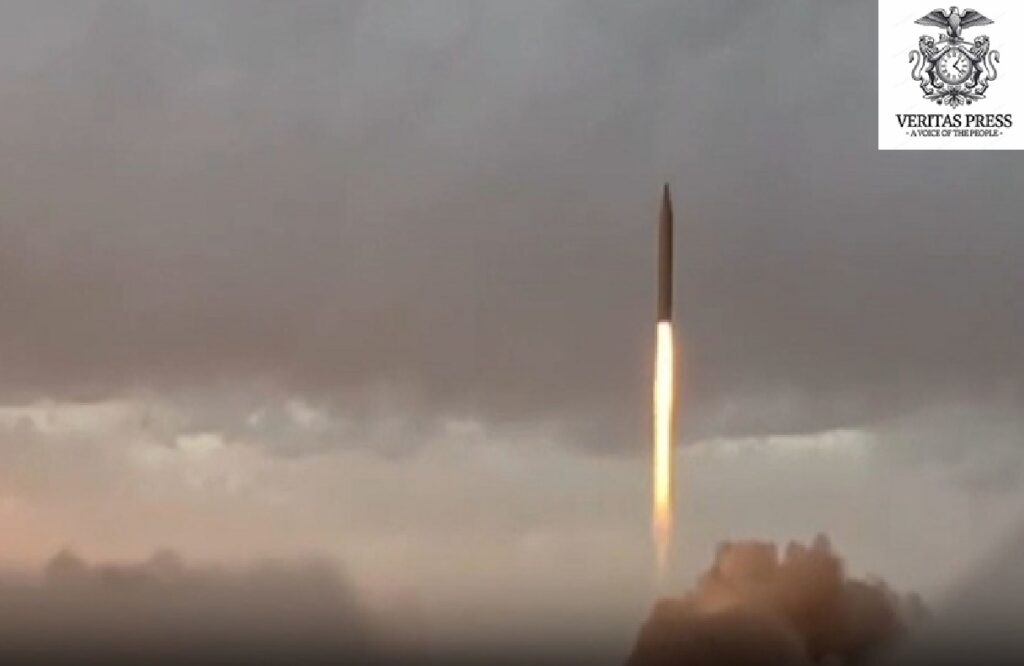
On February 28, the United States and Israel launched coordinated strikes on Iran, reported by

LONDON, UK – Just weeks after being appointed as the government’s “Cost of Living Champion”,

On February 28, 2026, the first wave of U.S.-Israeli pre-emptive strikes hit Iranian military and

USA, NASA – Spurred by American ingenuity, astronauts on NASA’s Artemis II mission are in