
Title: Christmas In Gaza: A Tale Of Resilience And Hope After Two Years Of War
Press Release: Veritas Press C.I.C.
Author: Kamran Faqir
Article Date Published: 25 Dec 2025 at 11:30 GMT
Category: Middle East | Palestine-Gaza-West Bank-OPT | First Christmas in Gaza in Two Years: A Story of Hope and Survival
Source(s): Veritas Press C.I.C. | Multi News Agencies
Website: www.veritaspress.co.uk

Business Ads


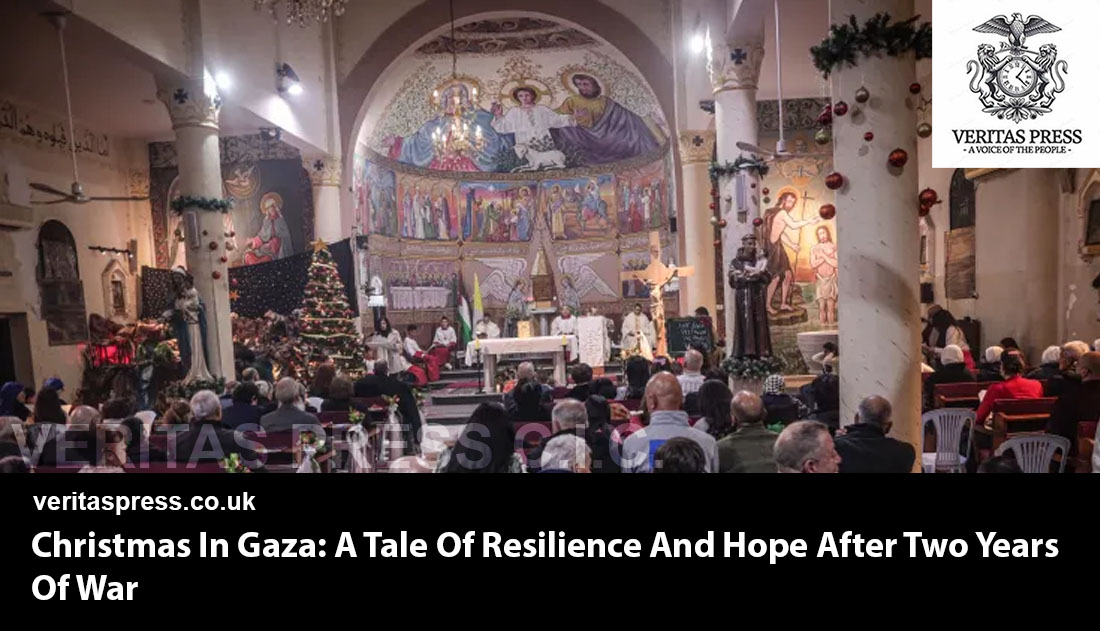
GAZA CITY – For the first time in two years, the Holy Family Church in Gaza has lit its Christmas tree, symbolising a flicker of hope amidst the ongoing devastation caused by Israel’s brutal war on the Strip. On Christmas Eve, the church’s prayer hall was filled with worshippers, not just celebrating the birth of Christ, but also the simple fact that they were alive. This Christmas in Gaza, marked by both sorrow and resilience, is an emotional testament to survival.
The glow of the tree lights and festive decorations inside the church could not obscure the horrors of the war. While the church had scaled down the usual celebrations to a quiet prayer service and brief family gatherings, the ringing bells were enough to bring a smile to many faces. In this bleak landscape, the very act of celebration became an act of resistance.
58-year-old Dmitri Boulos, displaced with his wife and two children early in the conflict, recalls how, in the chaos of Israeli airstrikes, they sought refuge in the church. But the church, too, was not spared. “We fled to the church seeking safety, but it turned out there was no safe place,” Boulos said. “The church was hit twice while we were inside, and we lost friends and loved ones during that period.”
For many in Gaza, the pain of grief has lingered. “Nothing had any taste at all,” Boulos remembers. “There was immense fear and grief for those we lost. How can we celebrate when everything around us is wounded and sad?” Yet, despite the overwhelming sorrow, Boulos and others in Gaza hold onto the hope that this Christmas will bring an end to their suffering.
“This year, we are trying to make ourselves and our children feel that what’s coming will be better, even though the reality is extremely hard,” he said. “We hope things will return to how they were before.”
The Holy Family Church, Gaza’s sole Catholic parish, has long held a symbolic role. It is not just a sanctuary for the region’s dwindling Christian community, but also a lifeline for displaced Palestinians. Throughout the war, Pope Francis maintained a direct connection with the church, offering prayers and solidarity. The number of Christians in Gaza has plummeted from 3,000 in 2007 to just a few hundred today, reflecting the broader exodus of Christians from the region.
Many of Gaza’s churches, including the Holy Family, have been targeted during the conflict, with Christian worshippers among the displaced. Despite Israeli assurances that places of worship would not be harmed, other churches, like the Greek Orthodox Church of Saint Porphyrius and the Anglican St Philip’s Church, have not been spared from airstrikes, forcing hundreds of people into makeshift shelters.
At the Holy Family Church, nearly 550 displaced people have taken refuge, yet even within these walls, the trauma of war persists. “My heart is still heavy with the tragedies and exhaustion we lived through during the war,” says Nowzand Terzi, a mother who lost both her home and, tragically, her daughter. “We were displaced here under bombardment two years ago. I lost my home in an Israeli strike, and then I lost my daughter, who fell suddenly ill last year and passed away,” Terzi recalls, her voice breaking.
Despite the pain, Terzi remains resolute, her wishes reflecting the collective yearnings of Gaza’s people: “May God help those who have lost their loved ones, and may conditions in Gaza calm down,” she says.
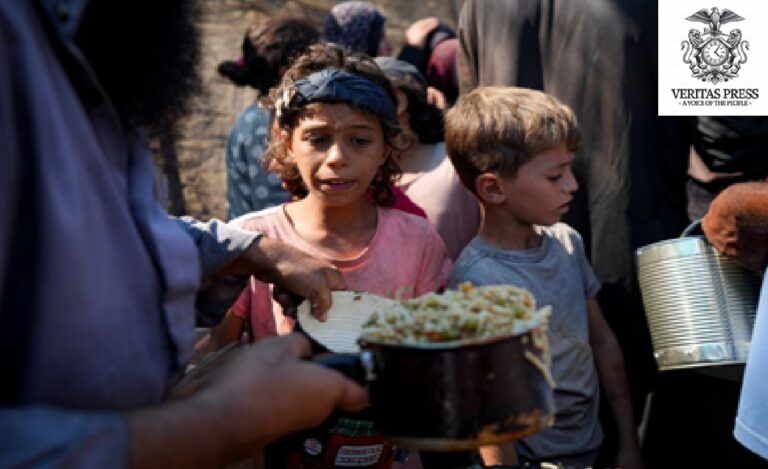
Gaza remains a place of unbearable hardship. More than 288,000 families are facing a shelter crisis, with over 80% of the buildings in the territory damaged or destroyed. The UN reports that nearly 1.8 million people in Gaza are living without adequate housing, food, or access to healthcare. The situation is compounded by restrictions on humanitarian supplies, making the region’s suffering even more acute.
For 18-year-old Edward Sabah, the war has been both a personal tragedy and a cruel reminder of his disrupted youth. Forced to leave his home during the conflict, he found shelter in the Saint Porphyrius Church, which, on October 19, 2023, was bombed during an Israeli airstrike that killed 18 people. “We never expected the church to be targeted, but it happened. Everything unexpected happened during the war,” he recalls.
Like many of Gaza’s displaced, Edward has tried to find some semblance of normalcy amid the chaos. “During the past two Christmases, we tried very hard to create an atmosphere, but it was extremely sad,” he says. Yet, despite the continued violence, he remains hopeful. “This year it’s less intense, but we’re still afraid of what might happen. Still, we decorated the church and tried to create a joyous atmosphere,” he adds, noting his desire to complete his high school education.
For many Christians in Gaza, the holidays are a bittersweet reminder of their enduring attachment to the land and their faith. Janet Massadm, 32, who was displaced with her family from the Remal neighbourhood, describes her emotional journey to celebrate. “We are tired of grief, loss, displacement, and fear that have taken so much from our lives and our years,” she says. “Inside, I am completely exhausted because of what we have witnessed, but what can we do? We must try to create joy and happiness.”
Pope Leo, in his first Christmas sermon as pontiff, made a direct appeal to the world about Gaza’s suffering. He spoke of the “fragile tents” of the people of Gaza, exposed to the elements, and the conditions they endure daily. “How, then, can we not think of the tents in Gaza, exposed for weeks to rain, wind, and cold?” he asked. Pope Leo’s message underscored the urgent need for peace and solidarity, a message that resonates deeply within Gaza, where the lack of resources and continuous bombardment have left a community struggling to survive.
In the West Bank, Christmas has returned to Bethlehem with a mix of joy and sorrow. For the first time in two years, Palestinian Christians in Bethlehem have been able to celebrate openly. The streets of Manger Square are filled with festive music and celebrations, yet the war’s shadow looms large. “This atmosphere is half joy and half sadness,” said George Zalloum, a Palestinian Christian from East Jerusalem. “We have brothers who are still dying in Gaza due to the ongoing bombardment.”
The city of Bethlehem, home to the Church of the Nativity, is a symbol of Christian life and Palestinian resilience. Despite the challenges of the past two years, Bethlehem has seen a resurgence in tourism, with hotels reopening after prolonged shutdowns due to the war. The return of Christmas celebrations in the city has revitalised the local economy, offering hope that the region can heal and rebuild.
Bethlehem’s Mayor Maher Canawati emphasised the resilience of Palestinians. “Bethlehem’s message today is one of steadfastness and hope for the people of the city, for Gaza, and for all of Palestine,” he said. “Today, we send a message to the entire world that the Palestinian people love life and peace, and that they cannot be uprooted from their land and their roots because they are the rightful owners.”
As Gaza’s Christians celebrate this hard-won Christmas, the light of hope shines brightly, even amid the darkest days. Their message is clear: despite the destruction, despite the suffering, Gaza will endure, and the spirit of the Palestinian people will not be extinguished.