


Title: China Condemns Israel’s Recognition Of Somaliland As Foreign Interference, Warning Of Separatism, Militarisation And A Dangerous Red Sea Power Grab.
Press Release: Veritas Press C.I.C.
Author: Kamran Faqir
Article Date Published: 29 Dec 2025 at 13:40 GMT
Category: Africa | Politics-Somaliiland | China Condemns Israel’s Recognition Of Somaliland As Foreign Interference, Warning Of Separatism, Militarisation And A Dangerous Red Sea Power Grab.
Source(s): Veritas Press C.I.C. | Multi News Agencies
Website: www.veritaspress.co.uk

Business Ads


Beijing joins African and Arab blocs in rejecting what critics describe as a geopolitical manoeuvre masquerading as diplomacy.
China has issued a sharp rebuke of Israel’s decision to recognise Somaliland as an independent state, denouncing the move as a violation of international law, an act of foreign interference, and a destabilising attempt to reshape the Horn of Africa through separatism and militarisation.
Responding to Israeli Prime Minister Benjamin Netanyahu’s December 26 announcement that Israel had “officially recognised” Somaliland, Chinese Foreign Ministry spokesperson Lin Jian said Beijing was “gravely concerned” and “firmly opposed”, stressing that Somaliland remains an “inalienable part of Somalia’s territory.”
“The issue of Somaliland is purely an internal affair of Somalia,” Lin said. “External countries should stop improper interference. No country should incite or support separatist forces in other countries for its own selfish interests.”
In unusually direct language, Lin also addressed Somaliland’s leadership itself, urging authorities to “recognise the prevailing situation” and “immediately cease separatist activities and their collusion with external forces.”
China’s intervention places it at the centre of a widening international pushback against what many governments, analysts and activists view not as recognition rooted in principle, but as a strategic land-grab disguised as diplomacy.
A Rare International Consensus Against Israel’s Move:
Beijing’s stance aligns with a rare convergence of opposition across Africa, the Arab world and parts of the Global South. Somalia’s federal government swiftly rejected Israel’s recognition as unlawful, with the Prime Minister’s Office reiterating that Somaliland is an “integral, inseparable, and inalienable part” of Somalia.
Somali President Hassan Sheikh Mohamud described Netanyahu’s decision as “illegal aggression”, writing on X:
“Meddling with Somalia’s internal affairs is contrary to established legal and diplomatic rules. Somalia and its people are one, inseparable.”
Regional and international bodies, including the African Union (AU), Intergovernmental Authority on Development (IGAD), League of Arab States (LAS), Organisation of Islamic Cooperation (OIC) and the Gulf Cooperation Council (GCC)—issued coordinated statements reaffirming Somalia’s sovereignty and warning against unilateral recognition.
IGAD stressed that Israel’s move “runs contrary to the UN Charter, the Constitutive Act of the African Union, and the agreement establishing IGAD,” while Arab League Secretary-General Ahmed Aboul Gheit warned it sets a “dangerous precedent” threatening regional and international stability.
Türkiye And Arab States: “A Pattern Of Destabilisation.”
Türkiye emerged as one of the most outspoken critics. Foreign Ministry spokesperson Oncu Keceli described Israel’s recognition of Somaliland as “a new example of the Netanyahu government’s unlawful actions aimed at creating instability at both regional and global levels.”
“This step constitutes open interference in Somalia’s internal affairs,” Keceli said, adding that Israel, while actively obstructing recognition of the State of Palestine, was selectively endorsing separatism elsewhere for geopolitical gain.
Türkiye’s Communications Director Burhanettin Duran went further, accusing Israel of exporting its destabilising model beyond Palestine:
“This irresponsible act by a government with a dark record of genocide and occupation undermines peace and stability in the Horn of Africa.”
Jordan and Saudi Arabia echoed these warnings, with Amman calling Israel’s move a “flagrant violation” of international law and Riyadh reaffirming full support for Somalia’s unity and territorial integrity.
Recognition Rooted In Strategy, Not Sovereignty:
Despite Israeli claims that the decision reflects Somaliland’s democratic credentials or historical claims, diplomats and analysts across Africa and the Middle East overwhelmingly interpret the move as a calculated geopolitical manoeuvre tied to the Red Sea.
“This is not about democracy,” a senior African diplomat told Al Jazeera. “It is about ports, bases, intelligence and chokepoints.”
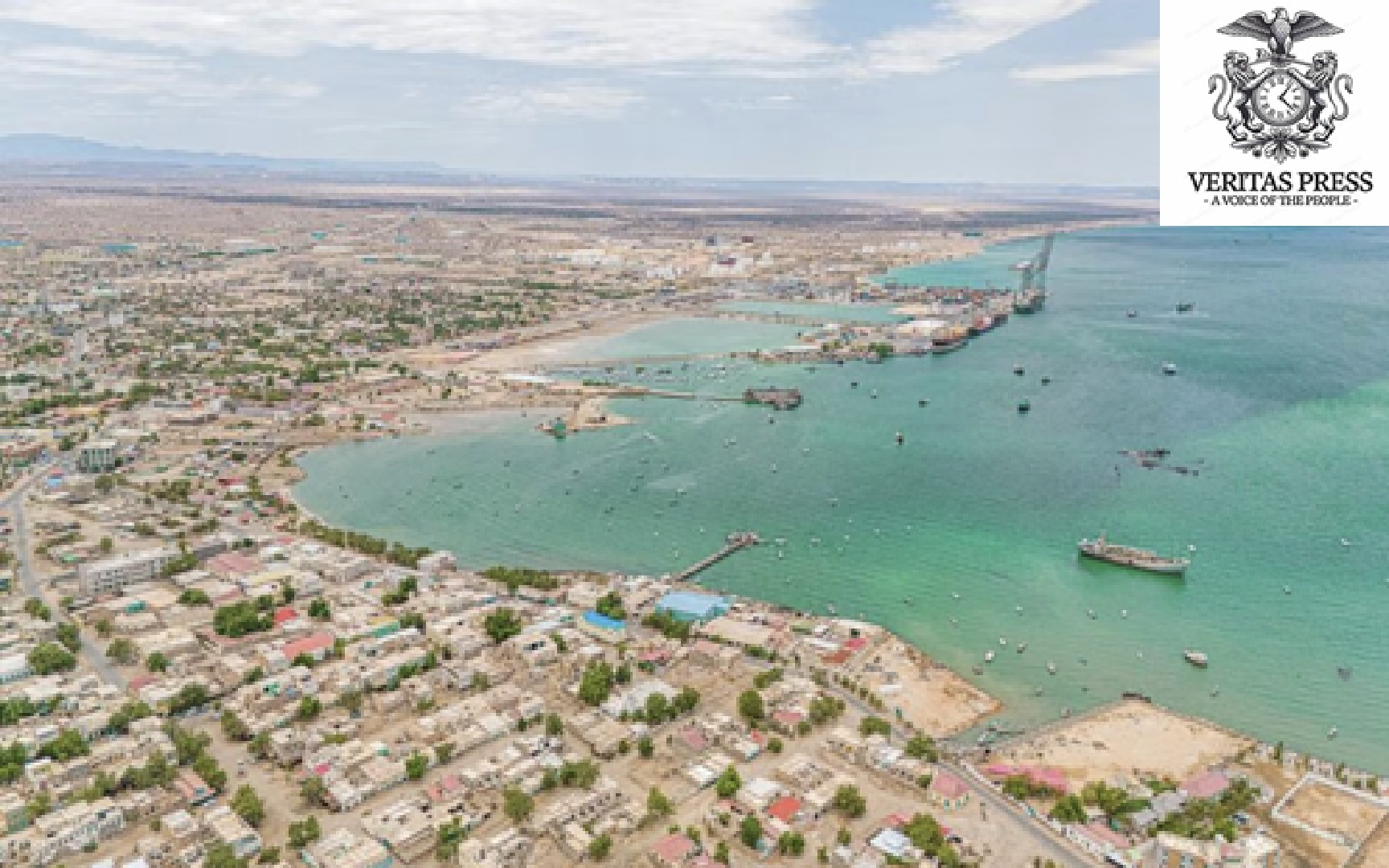
Somaliland sits along the Gulf of Aden, directly opposite Yemen and adjacent to the Bab al-Mandab Strait, one of the world’s most critical maritime chokepoints, through which roughly 12–15 percent of global trade passes en route to the Suez Canal.
Israeli journalist Anshel Pfeffer wrote in Haaretz that Somaliland’s value lies in its ability to serve as “a forward intelligence and monitoring platform over Red Sea shipping lanes”, particularly after Ansar Allah (Houthi) attacks exposed Israel’s maritime vulnerabilities during the Gaza war.
Eyes On Yemen: Bab Al-Mandab As A Military And Intelligence Prize.
From Somaliland, Israeli intelligence assets can track missile launches, drone movements and maritime activity linked to Yemen-based Ansar Allah forces, without deploying large, overt military formations.
Military analysts cited by Yedioth Ahronoth describe Somaliland as a “quiet observation and operational hub,” enabling Israel to act pre-emptively rather than reactively across the southern Red Sea.
That interpretation was reinforced when Ansar Allah leader Abdul Malik al-Houthi issued a direct warning:
“Any Israeli presence in Somaliland is a legitimate military target… It threatens the security of Yemen, Somalia, and the Red Sea.”
His statement underscored fears that Israel’s move could internationalise Yemen’s conflict and pull the Horn of Africa deeper into regional confrontation.
Leveraging UAE Infrastructure, Outsourcing Militarisation:
Israel’s strategy is magnified by the United Arab Emirates’ entrenched military and economic presence in Somaliland, particularly at Berbera port, developed by Emirati firm DP World.
Investigations by Middle East Eye, The Intercept and Associated Press show that Berbera now functions as a dual-use military and logistics hub, featuring a long runway, hardened aircraft shelters and surveillance infrastructure linked to Emirati operations in Yemen.
By embedding itself within Emirati networks, Israel gains logistical depth and intelligence reach without building its own bases.
“Israel gets strategic access without the optics,” a Gulf analyst told Foreign Policy. “Abu Dhabi does the heavy lifting.”
Yemen, Socotra And The Architecture Of Fragmentation:
Somaliland is only one node in a broader UAE–Israeli security architecture stretching across the Horn of Africa and southern Yemen. The Socotra archipelago, at the mouth of the Gulf of Aden, has been heavily militarised by the UAE through infrastructure projects and surveillance platforms, often bypassing Yemen’s central government.
Analysts argue this reflects a wider strategy of encouraging semi-autonomous zones, from Somaliland to southern Yemen, to secure maritime corridors while weakening central states.
Israel benefits indirectly from this fragmentation, gaining intelligence access and operational reach without deploying forces inside Yemen.
Rewriting Gulf Power Balances, Pressuring Egypt And Türkiye:
Israel’s alignment with the UAE also recalibrates Gulf power dynamics, strengthening Abu Dhabi at the expense of Saudi Arabia’s traditional Red Sea dominance.
For Tel Aviv, a stronger UAE serves as a reliable regional partner, less constrained by domestic politics than Riyadh. As analyst Andreas Krieg noted in International Affairs:
“The UAE has become Israel’s most operationally useful partner, not for ideology, but for ports, surveillance and maritime control.”
Israel’s presence in Somaliland also provides indirect leverage over Egypt, particularly regarding Red Sea security and the Suez Canal, intersecting with Cairo’s vulnerabilities over Ethiopia’s Grand Renaissance Dam.
Meanwhile, Turkish officials warn that Israeli-Emirati consolidation in the Horn of Africa undermines Ankara’s regional ambitions, limiting its access to ports, trade corridors and maritime influence.
China’s Warning: Balkanisation As A Global Precedent.
For Beijing, the Somaliland issue resonates far beyond Africa. Chinese analysts writing in Global Times and China Daily argue Israel’s move exemplifies a dangerous trend: weaponising recognition to fragment states while invoking territorial integrity elsewhere.
Political analyst Li Haidong wrote:
“This is not self-determination. It is fragmentation as a tool of power.”
China’s warning against “collusion with external forces” echoes its positions on Taiwan and Kosovo, reinforcing Beijing’s concern that selective recognition erodes the foundations of international law.
Strategic Gain, Structural Instability:
Israel’s recognition of Somaliland is not symbolic; it is a strategic investment in long-term leverage over one of the world’s most sensitive maritime zones. It enhances intelligence reach, secures trade routes, deepens alignment with the UAE and reshapes regional balances.
But as China, African states, Arab governments and regional organisations have warned, the price may be entrenched fragmentation, militarisation and new fault lines across the Horn of Africa.
As a Somali civil society activist told The New Arab:
“We are being turned into a chessboard. Recognition is not sovereignty when it comes with bases, drones and proxy agendas.”
In seeking to secure the Red Sea, Israel and its allies may instead be laying the groundwork for a broader, more volatile confrontation, one where sovereignty is hollowed out, and stability remains elusive.
In Summary: A Blueprint For Fragmentation, Not Recognition.
Israel’s recognition of Somaliland does not merely challenge Somalia’s sovereignty; it codifies a method. It demonstrates how recognition can be stripped of legal principle and repurposed as a weapon of strategic access, deployed selectively to secure ports, intelligence corridors and military leverage while hollowing out international norms from within.
For decades, Tel Aviv has invoked international law, territorial integrity and security doctrine to deny Palestinian self-determination. Yet in Somaliland, those same principles are casually discarded, confirming what legal scholars and diplomats have long argued: Israel does not oppose secession; it opposes secession that does not serve its interests.
“This is not a contradiction, it’s a strategy,” said Professor Neve Gordon, an international law expert at Queen Mary University of London. “Recognition is being instrumentalised to legitimise military geography, not political sovereignty.”
The precedent is dangerous. If recognition becomes conditional on strategic utility rather than legal legitimacy, then no post-colonial border is secure, particularly in regions already scarred by conflict, weak central governance and external intervention.
Militarisation Disguised As Diplomacy:
Despite public messaging about democracy and historical claims, evidence overwhelmingly suggests that Israel’s decision is rooted in Red Sea militarisation, not Somaliland’s political aspirations.
The convergence of Israeli intelligence interests, Emirati port infrastructure, and U.S.-backed maritime security operations has transformed the Horn of Africa into a forward operating zone, one increasingly integrated into Israel’s regional security architecture.
Investigative reporting by Haaretz, Middle East Eye and The Intercept reveals that ports like Berbera are no longer commercial assets alone, but dual-use installations designed for surveillance, rapid deployment and intelligence collection. Somaliland’s leadership, lacking international recognition and economic independence, becomes a security subcontractor, not a sovereign equal.
As Somali analyst Abdirahman Yusuf told African Arguments:
“Recognition without autonomy is not independence. It is a dependency on foreign militaries, foreign capital and foreign wars.”
Exporting The Logic Of Occupation:
What makes Somaliland especially alarming is that it reflects the export of Israel’s occupation doctrine beyond Palestine: fragment the territory, bypass the central authority, empower compliant local elites, and entrench security control while maintaining plausible deniability.
This model, visible in southern Lebanon, southern Syria, and the West Bank, relies on managed instability rather than resolution. Somaliland now risks being folded into this architecture, becoming a quiet node in a network of militarised peripheries stretching from the Mediterranean to the Gulf of Aden.
Yemen’s Ansar Allah movement has already declared Israeli assets in Somaliland legitimate targets, signalling how quickly recognition can convert civilian geography into military terrain. The result is not deterrence, but escalation, drawing Somalia into conflicts it neither initiated nor controls.
Undermining Africa’s Post-Colonial Order:
African diplomats warn that Israel’s move threatens to reopen the continent’s most painful wounds. The African Union’s founding principle that borders inherited at independence must be preserved to prevent endless conflict exists precisely to avoid such unilateral recognitions.
By defying that consensus, Israel aligns itself with a history of external powers redrawing African political maps for strategic gain, a pattern seen during the Cold War and colonial partition.
“This is Balkanisation by recognition,” said a senior AU official speaking anonymously to Reuters. “It invites every grievance to become a proxy battlefield.”
A Transaction, Not A Right:
For Somaliland’s people, recognition promised dignity and global inclusion. What they appear to be receiving instead is transactional recognition, conditional, militarised and externally directed.
China’s warning about “collusion with external forces” may be blunt, but it captures a deeper reality: this recognition is not about self-determination; it is about access.
Access to ports.
Access to airspace.
Access to surveillance over one of the world’s most contested maritime corridors.
As journalist David Hearst wrote in Middle East Eye:
“When recognition arrives hand-in-hand with bases and intelligence assets, it ceases to be liberation. It becomes leverage.”
The Cost Of Strategic Shortcuts:
Israel may gain short-term intelligence depth and maritime reach, but the long-term costs are profound: the erosion of international legal consistency, the normalisation of selective sovereignty, and the entrenchment of militarised fragmentation across Africa and the Middle East.
For Somalia, the risk is national dismemberment.
For the Horn of Africa, perpetual instability.
For international law, another fracture point.
And for Somaliland itself, the bitter possibility that recognition becomes a corridor to conflict, not statehood.
What is unfolding is not recognition; it is the geopolitical monetisation of sovereignty. And history suggests that such bargains rarely end in peace.