



Original Article Date Published:
Article Date Modified:
Help Support our mission—donate today and be the change. Every contribution goes directly toward driving real impact for the cause we believe in.
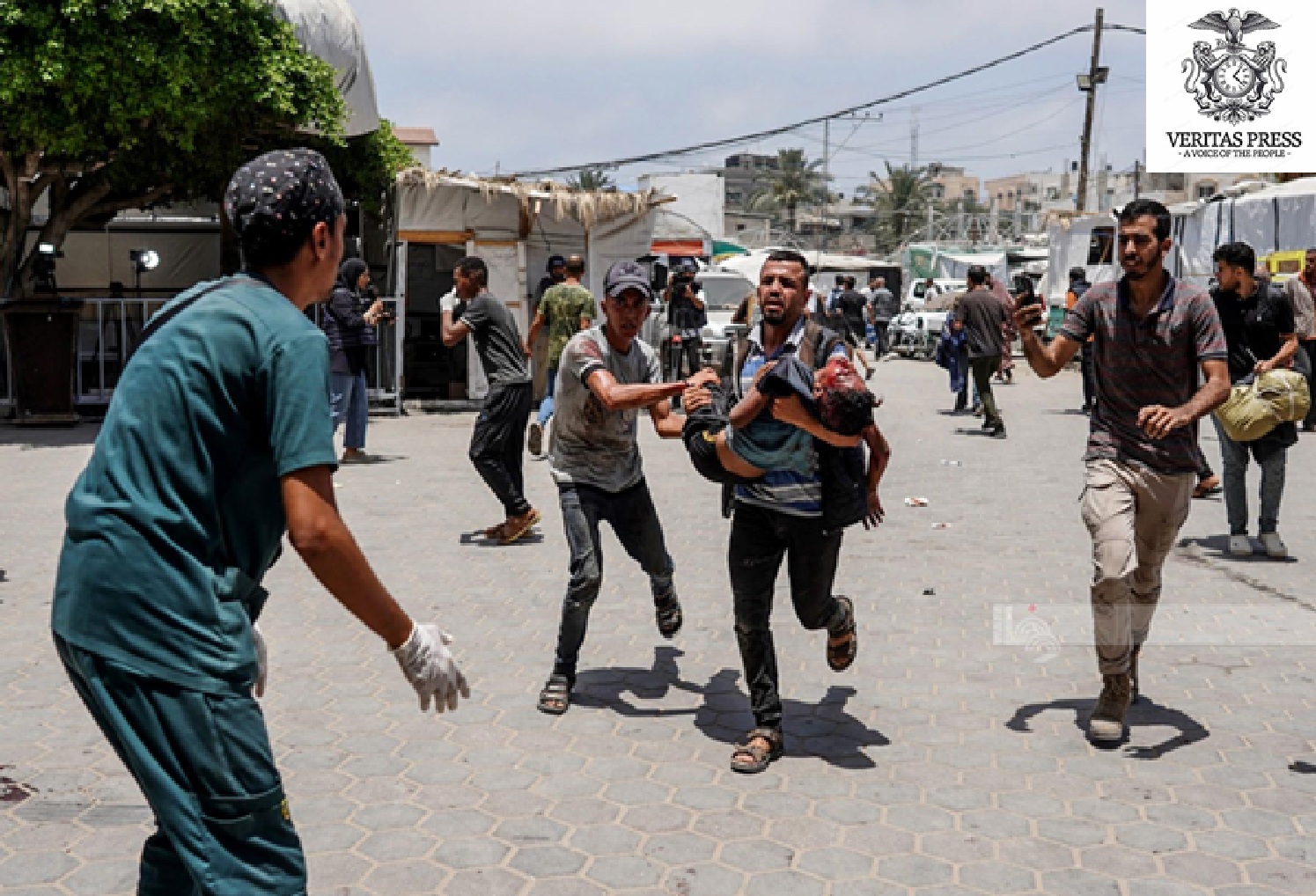
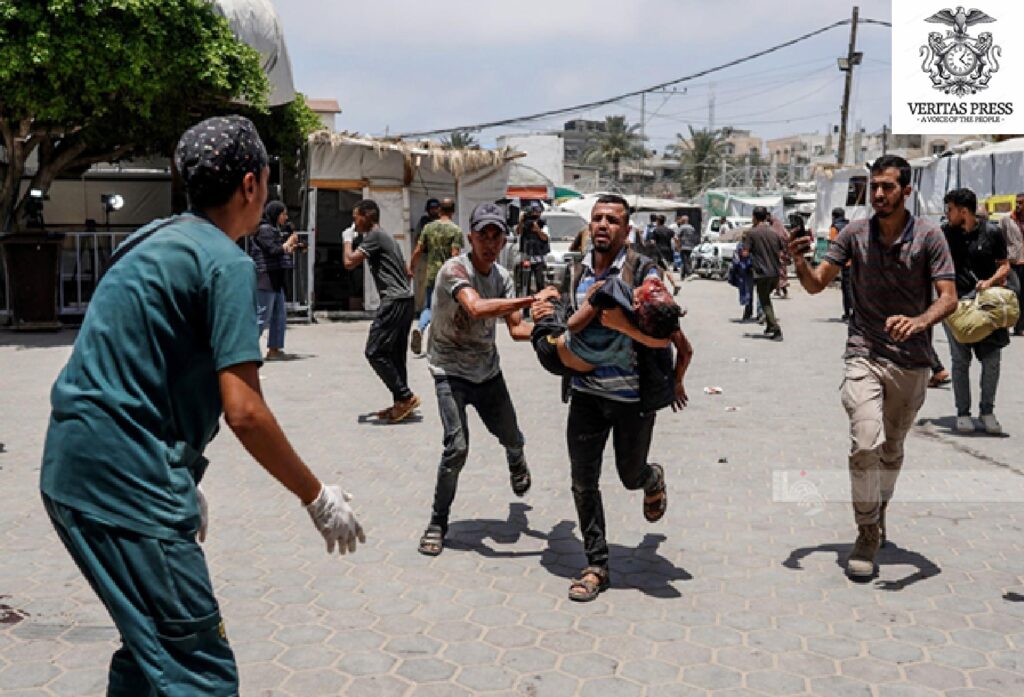
Israeli gunfire, drone strikes, and demolitions across the Gaza Strip have wounded civilians, including children, deepening fears that the October ceasefire is steadily collapsing as casualties mount and reconstruction stalls.
The latest incidents, reported by Palestinian media and medical sources, are not isolated. Diplomats, humanitarian organisations, and doctors increasingly warn that recurring violence is undermining governance plans and prolonging what many describe as a catastrophic humanitarian emergency.
Civilians Under Fire In A “Ceasefire” Zone:
Medical staff reported that Israeli attacks continue to wound civilians in areas from which troops were meant to withdraw. Doctors at hospitals in Gaza City confirmed injuries from gunfire near Netzarim, while witnesses said a drone opened fire on a group of people.
The broader pattern is stark: at least 586 Palestinians have been killed since the ceasefire began, according to Gaza’s Health Ministry, even as diplomatic efforts attempt to stabilise the enclave.
Recent strikes have also killed individuals near Gaza City, with Israel saying it acted in response to incoming fire, illustrating the fragile, contested nature of the truce.
For civilians, however, the distinction between retaliation and violation often disappears amid continuing bombardment.
Doctors Describe “Attack On Civilians”:
Medical workers treating the wounded have issued some of the strongest condemnations.
Doctors Without Borders (MSF) said repeated breaches are driving mass casualties, warning: “We have repeatedly called for a sustained ceasefire” to halt the “overwhelming level of death.”
Dr. Morten Rostrup, speaking from Al-Aqsa Hospital after treating injured patients, described arriving at the emergency room to find “a desperate situation,” adding, “There is no doubt this is an attack on civilians.”
MSF teams reported treating severely wounded patients across multiple hospitals, including children, following Israeli strikes.
Meanwhile, Gaza’s healthcare system is nearing collapse, with shortages of fuel, equipment, and medicines compounded by restrictions on medical aid.
Burn unit supervisor Mohammed Abu Jasser warned that blocking medical operations would have “serious negative consequences,” particularly for the entry of supplies and specialist teams.
Hospitals Caught Between War And Lawlessness:
In a separate development highlighting the volatility inside Gaza, MSF recently suspended non-critical activities at Nasser Hospital after staff reported armed individuals and threats to the facility’s neutrality.
The organisation stressed that hospitals must remain civilian spaces under international law, even as Israel has previously argued that militant infrastructure operates beneath some medical facilities, an allegation Hamas denies.
The episode underscores how insecurity persists not only from airstrikes but also within Gaza itself, complicating care for the wounded.
Analysts Warn Truce Is Unravelling:
Nickolay Mladenov, the diplomat overseeing the ceasefire framework, warned that ongoing violations threaten plans for transitional governance and reconstruction.
Violence has already resulted in 591 Palestinian deaths and several Israeli fatalities since the agreement took effect, casting doubt on the viability of the postwar roadmap.
A transitional committee formed to supervise rebuilding has yet to enter Gaza, an indicator, analysts say, that the political architecture of peace remains largely theoretical.
Near-Daily Deaths And Expanding Military Activity:
The violence has extended beyond isolated shootings.
- A drone strike recently killed two cyclists, while gunfire killed a woman in a refugee camp.
- Separate airstrikes reported by a hospital killed three more people.
Such incidents reinforce warnings that the ceasefire has produced limited tangible security for civilians.
Some observers argue that the continued attacks reflect unresolved structural issues of disarmament, withdrawal, and governance, which the ceasefire never fully addressed.
Aid Restrictions And The Deepening Humanitarian Crisis:
UN agencies have warned that Israeli restrictions on humanitarian organisations could further devastate relief operations in the already war-damaged enclave.
The healthcare crisis is particularly acute. Gaza’s health sector is operating under near-paralysis, with thousands dependent on international medical teams.
An analysis published in February reported that attacks since the ceasefire have killed at least 529 Palestinians and wounded more than 1,400, while authorities recorded over 1,450 violations involving air strikes, artillery fire, and shootings.
Nearly 20,000 patients remain trapped in Gaza, awaiting treatment unavailable locally.
The War’s Expanding Human Toll:
Even months after the truce, the overall death toll from Israel’s campaign has surpassed 72,000 Palestinians, according to health authorities.
Separate data shows more than 100,000 people, mostly women and children, have been killed, with many bodies still unrecovered beneath rubble.
For families, the ongoing violence means the war is experienced not as a past catastrophe but as a continuing reality.
Assessment: A Ceasefire Without Safety.
The emerging picture is one of a ceasefire that exists diplomatically but remains unstable operationally.
Key structural failures appear to be converging:
- Continued Israeli strikes and shootings
- Militant activity cited as justification for retaliation
- Aid restrictions and medical shortages
- Governance plans stalled outside the territory
- Hospitals operating amid insecurity
Doctors’ testimonies suggest that what is unfolding is not merely sporadic violence but a sustained environment of risk for civilians.
When emergency physicians question, “Do we really call this a ceasefire?” the remark captures a widening gap between political declarations and lived reality.
Conclusion: Between Truce And War.
The emerging picture is one of a ceasefire that exists diplomatically but remains unstable operationally, a reality some analysts have bitterly summarised as “you cease, we fire.” The phrase reflects a widening perception that while hostilities were formally paused, the conditions necessary for civilian safety have not materialised.
Warnings from diplomats, including Nickolay Mladenov, reinforce the fragility of the moment, as repeated violations threaten already-delayed reconstruction and governance plans. Yet the deeper investigative concern is no longer limited to breaches alone; it now centres on whether the cumulative effect of ongoing military activity is rendering Gaza fundamentally unlivable.
Converging Structural Failures:
Evidence collected from humanitarian agencies, journalists, and medical teams suggests several structural failures are unfolding simultaneously:
- Continued Israeli strikes and shootings
- Militant activity cited as justification for retaliation
- Aid restrictions and critical medical shortages
- Governance mechanisms stalled outside the territory
- Hospitals operating amid persistent insecurity
Doctors working with Médecins Sans Frontières describe treating civilians months into what was meant to be a cessation of war, warning that the steady flow of casualties signals not isolated flare-ups but a sustained environment of danger. When emergency physicians ask, “Do we really call this a ceasefire?” the question captures the growing gulf between political declarations and lived reality.
Agencies of the United Nations have similarly cautioned that widespread destruction of homes, hospitals, schools, and essential infrastructure risks making normal civilian life impossible, a condition that humanitarian law scholars increasingly scrutinise for its displacement implications.
Beyond Violations: The Question Of Intent.
The shooting of a child and demolition of residential buildings are not only immediate tragedies; they point toward a broader failure to transition from war to recovery. Analysts warn that when the foundational systems required for survival, healthcare, education, shelter, water, and energy are repeatedly degraded, the outcome can extend beyond battlefield damage.
The direct matter under investigation is whether the cumulative effect of such destruction is to make living conditions so untenable that departure becomes the only viable option. If so, what emerges is displacement not always declared, but structurally induced.
Activists and regional experts increasingly warn of layered consequences: physical erasure through infrastructural destruction, cultural erosion as communities fragment, and generational rupture as education collapses and families remain in prolonged displacement. Hospitals cannot easily be rebuilt, lost schooling cannot be rapidly restored, and shattered neighbourhoods rarely return to their original social form.
Should these patterns persist without accountability, some legal analysts argue they risk being interpreted less as incidental outcomes of security operations and more as de facto state policy, regardless of official characterisation.
A Pause Without Peace:
Without credible enforcement mechanisms, meaningful humanitarian access, and durable political consensus, the ceasefire risks becoming little more than a tactical pause punctuated by recurring bloodshed.
What is taking shape resembles neither full-scale war nor genuine peace, but a dangerous middle ground in which violence falls below the threshold that typically provokes decisive international intervention, yet remains severe enough to prevent recovery.
For Gaza’s civilians, the question is no longer whether the war has formally ended. The more urgent question is whether peace was ever operationally implemented at all.
If current trajectories hold, history may judge this period not as the aftermath of conflict, but as its quiet reconfiguration, where a ceasefire existed on paper while conditions on the ground continued to dismantle the possibility of ordinary life.

At its most basic level, Christianity is an Abrahamic monotheistic religion based on the life,
Hajj is the sacred pilgrimage to the holy city of Makkah (Mecca) in Saudi Arabia.
PAKISTAN – A wave of anxiety and solidarity has swept across Pakistan’s sporting and political

US – On February 12, 2026, the Donald Trump administration formally revoked a foundational scientific

In a landmark address at the Munich Security Conference on February 14, 2025, British Prime
From airsoft rifles in primary-school programs to teenage participation in settler harassment, a growing body
Israeli gunfire, drone strikes, and demolitions across the Gaza Strip have wounded civilians, including children,
A tightening U.S. oil squeeze on Cuba is rapidly evolving into one of the most

Israeli authorities are preparing sweeping restrictions on Muslim worshippers seeking access to Al-Aqsa Mosque during
In a stunning legal defeat for the British government, the High Court in London has