



Title: Ben-Gvir’s Jerusalem: Policing, Provocation, And The Assault On Ramadan.
Press Release: Veritas Press C.I.C.
Author: Kamran Faqir
Article Date Published: 06 Jan 2026 at 11:10 GMT
Category: Americas | Politics | Ben-Gvirs Jerusalem Policing Provocation And The Assault On Ramadan
Source(s): Veritas Press C.I.C. | Multi News Agencies
Website: www.veritaspress.co.uk

Business Ads


How A Strategic Police Appointment Signals A Turning Point In Israel’s Campaign To Alter The Status Quo At Al-Aqsa, And What It Means For Palestinians This Ramadan
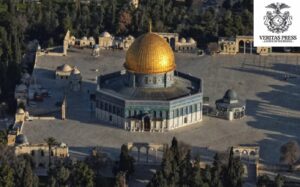
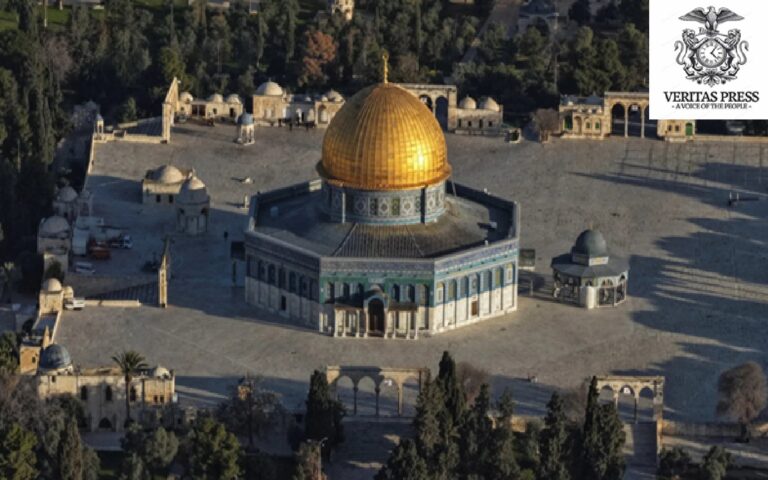
Occupied East Jerusalem — In a deliberate and politically charged move that portends deepening repression and confrontation, Israel’s far-right National Security Minister Itamar Ben-Gvir has installed a loyalist ally as the commander of Jerusalem’s police district just weeks before the Muslim holy month of Ramadan, raising alarm among Palestinians and analysts about the future of the city’s most contentious holy site, the Al-Aqsa Mosque compound.
Maj. Gen. Avshalom Peled, previously deputy police commissioner, was sworn in this week as head of the Jerusalem District Police, replacing Maj. Gen. Amir Arzani reported clashes between Arzani and Ben-Gvir over policing strategy at the Temple Mount/Al-Aqsa. According to Haaretz, Arzani had resisted Ben-Gvir’s push for changes to how the holy site is administered, leading to his removal.
Peled’s appointment, timed with near-surgical precision ahead of Ramadan, lays bare a growing alignment between Israel’s security apparatus and Ben-Gvir’s extremist agenda. Ben-Gvir described the role in his ceremony remarks as among the “most complex, sensitive and influential” positions in the security establishment, and emphasised the importance of enforcing “sovereignty and governability in a resolute and uncompromising manner.”
The choice of Peled, who has no history of neutrality on religious-political matters in Jerusalem, signals not just a personnel change but a strategic shift. Under his command, police will enforce policies likely to tighten restrictions on Palestinian worshippers, while enabling ever-more expansive settler incursions into a sacred Islamic site already overwhelmed with political violence.
A History Of Ramadan Violence And Systemic Assaults:
Ramadan is inherently a non-violent act of faith, yet for decades in Jerusalem, it has become synonymous with state-sanctioned repression, settler incursions, and conflict, a reality that foreshadows this year’s holy month.
During Ramadan in 2025, Palestinian authorities reported that illegal Israeli settlers, operating with the protection of occupation police, stormed the Al-Aqsa compound at least 21 times, conducting provocative tours and Talmudic rituals inside sacred spaces while Palestinian worshippers were harassed and barred entry. UNA Another report detailed similar incursions where 237 settlers forced their way into the mosque’s courtyards under police guard, highlighting a policy of increasing settler access concurrent with restrictions on Palestinian worship.
The pattern is not new. During Ramadan in 2023, confrontations between Israeli police and Palestinian worshippers inside Al-Aqsa led to violent clashes, hundreds of detentions, and international condemnation, which in turn triggered rocket exchanges from Gaza and Lebanon, a cyclical escalation rooted in policing decisions on a sensitive site.
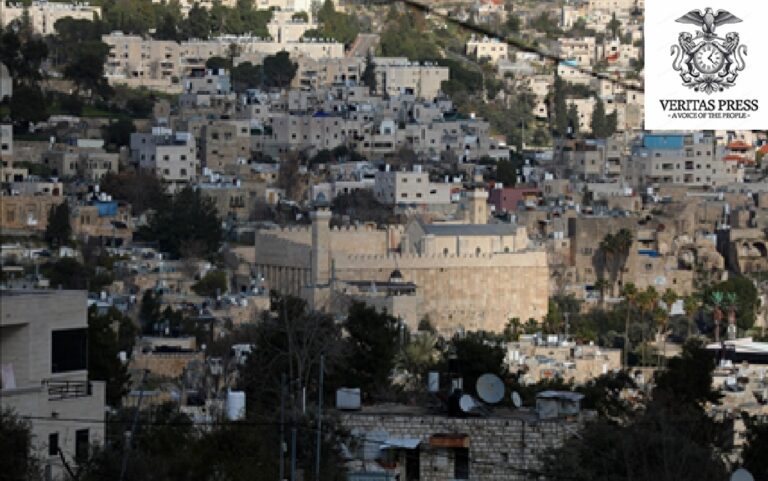
Historical assaults extend beyond these most recent years. In 1994, extremist settler Baruch Goldstein massacred 29 Muslim worshippers and wounded over 100 at the Ibrahimi Mosque in Gaza during Ramadan, a defining act of settler terrorism whose memory still fuels Palestinian distrust and anger.
In countless past Ramadans, confrontations have erupted when Jewish visitors were allowed into the Al-Aqsa compound in breach of longstanding agreements, including clashes in 2014, 2016 and other years when Israeli police either protected settler incursions or forcibly evicted Muslim worshippers from prayer spaces.
This pattern reflects a deliberate policy of gradual appropriation: since 2003, settler incursions into Al-Aqsa have increased exponentially, reportedly by over 18,000%, expanding from a few hundred entries per year to tens of thousands, with police and government officials facilitating access rather than curbing it.
The Politics Of Appointment: A Shift Toward Extremist Policing.
The removal of Arzani, reportedly for resisting Ben-Gvir’s demands, and the elevation of Peled are widely interpreted as centralising control of the holy site’s security in the hands of Ben-Gvir’s ideological camp. This is more than administrative: it shapes who gets to pray, who gets turned away, and who gets protected when settlers storm sacred precincts.
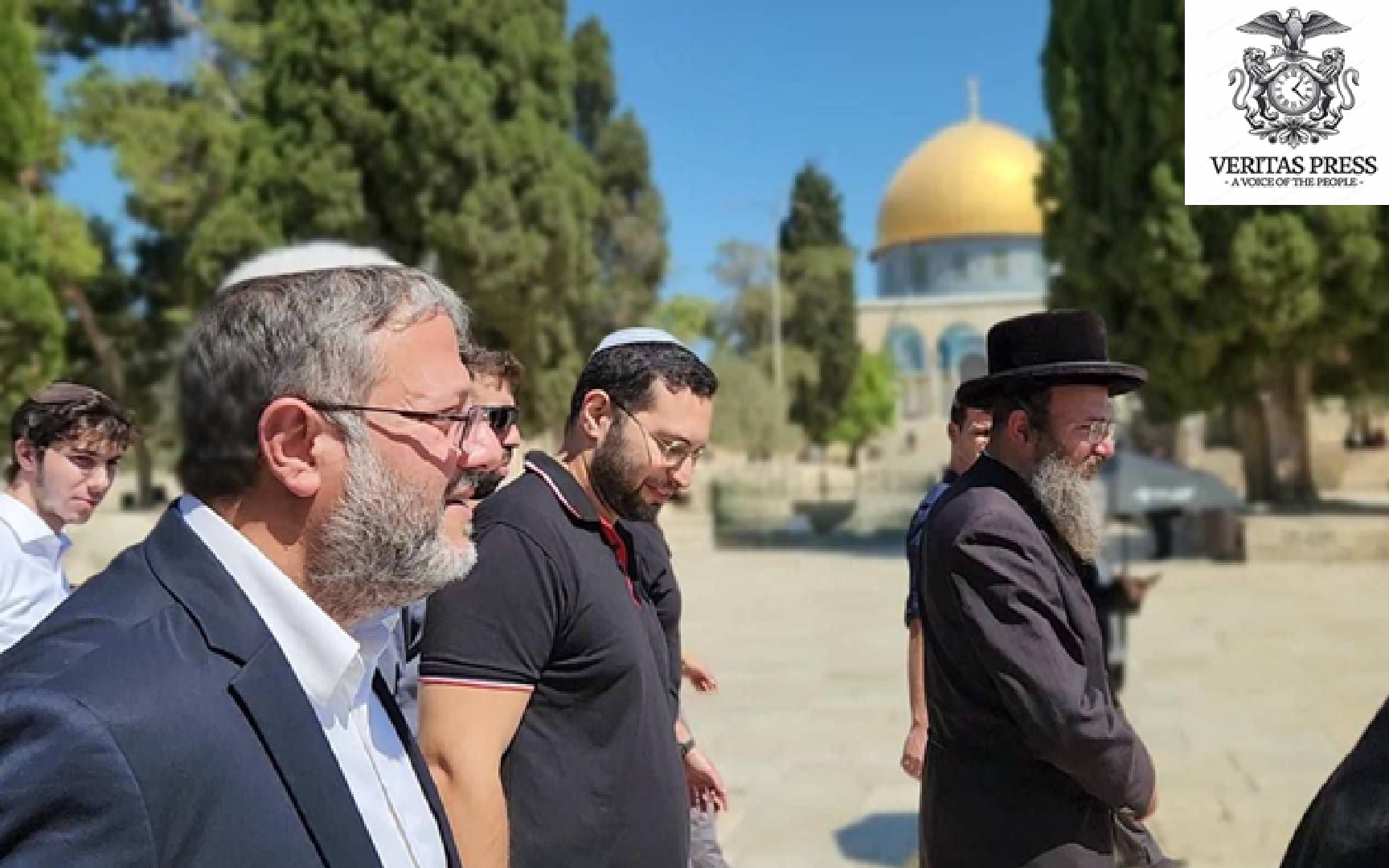
Ben-Gvir himself has repeatedly defied the so-called “status quo” that governs the site’s religious use. In recent months, he has led marches with settlers into Al-Aqsa, openly prayed there despite the prohibition, an act that breaks the established arrangement, and declared Jewish sovereignty over the compound. Reuters Such provocations are not symbolic; they have consistently precipitated violence, both within Jerusalem and across the broader Middle East.
International criticism has been broad. Jordan, Saudi Arabia, and others have condemned Israeli actions as blatant violations of an agreement meant to preserve Muslim prayer rights and to prevent precisely this sort of sectarian escalation.
Equally telling is the pattern of official cover-ups and indifference. Reports from Palestinian authorities have repeatedly documented psychological warfare, media incitement, and even the use of artificial intelligence to promote visions of a supposed Third Temple replacing Al-Aqsa, all accompanied by statements from Israeli ministers encouraging settler incursions.
In October 2025, far-right settlers staged provocative marches in the Old City, waving Judaizing symbols and assaulting civilians, with police often failing to intervene on behalf of Palestinian residents. The Jerusalem Governorate documented 68 settler attacks that month, ranging from storming Al-Aqsa to physical assaults on Palestinian citizens.
These documented patterns challenge claims that heightened policing ahead of Ramadan is meant to reduce violence; instead, they show how security policy is being weaponised to facilitate settler violence and demographic engineering.
Ramadan 2026: A Warning, Not A Prayer.
As Ramadan approaches, Jerusalem stands poised on a knife’s edge. For Palestinians, the holy month should be a period of introspection and prayer, but under the current security environment, it has become a barometer for the degree to which Israeli state power will enforce exclusion, intimidation, and ethnoreligious dominance.
Under Peled’s leadership, police are likely to continue restricting Palestinian access by age and permits, amplifying age-old grievances that have turned religious festivals into scenes of bloodshed. And with thousands of settlers emboldened by political endorsement and police protection, the risk of clashes, forced evictions from prayer spaces, and violent confrontations remains stark.
What is often brushed aside as “security maintenance” is, in reality, a systematic undermining of Palestinian worship rights, embedded in a broader program of territorial and cultural erasure. This campaign has historical roots, visible in every assault on worshippers during Ramadan, every settler incursion carried out under a police escort, and every moderate voice within Israeli security that was pushed aside in favour of ideological loyalty.
The arrival of Ramadan this year will test not only the resilience of Palestinian worshippers but also whether international actors will finally respond to what Palestinians call the steady demolition of Al-Aqsa’s sanctity and their own human rights, and whether Israel’s policing strategy in Jerusalem will remain a matter of law and order, or become an instrument of religious conflict and occupation.
In Summary: A Flashpoint Manufactured, Not Managed.
The appointment of Avshalom Peled is not a bureaucratic reshuffle nor a neutral attempt to “stabilise” Jerusalem ahead of Ramadan. It is the culmination of a long, deliberate project to weaponise policing in the service of ideological expansion, religious supremacy, and demographic control in occupied East Jerusalem. By removing a commander who resisted far-right dictates and installing a loyalist prepared to enforce them, the Israeli government has made clear that Al-Aqsa is no longer treated as a protected religious site, but as a battleground to be conquered through administrative force.
History leaves little ambiguity about what follows. Every major escalation at Al-Aqsa over the past two decades, from the violent Ramadans of 2014, 2017, 2021, and 2023, to the nightly raids, mass arrests, and assaults on worshippers inside the mosque itself, has been preceded by the same pattern: restrictions on Palestinian access, expanded settler incursions under police protection, and political cover provided by senior Israeli officials. Each time, police violence was framed as “crowd control,” settler aggression was sanitised as “visits,” and Palestinian resistance was criminalised, while the structural causes were buried.
What distinguishes this moment is the near-total collapse of restraint. With Gaza under relentless bombardment, Palestinian civil life strangled across the West Bank, and Israel’s far-right emboldened by impunity, Jerusalem is being pushed toward an engineered rupture. Ramadan, once a period of relative calm negotiated through fragile understandings, is now treated as an obstacle to Israeli sovereignty claims, to be subdued rather than accommodated.
The language used by Peled and Ben-Gvir is revealing. “Sovereignty,” “governability,” and “deterrence” are not neutral security concepts in an occupied city; they are instruments of domination. In practice, they translate into age bans on worshippers, arbitrary closures, mass surveillance, pre-emptive arrests, and the normalisation of settler violence under police escort. The repeated failure to hold settlers accountable, even when assaults are documented on video, is not an oversight but a policy choice.
International actors, long content to issue ritual condemnations, now face an uncomfortable truth: the so-called “status quo” at Al-Aqsa has already been dismantled. It is being replaced with a coercive regime that privileges one ethno-religious group while criminalising the religious presence of another. The police, far from acting as a buffer, have become the enforcement arm of this transformation.
As Ramadan approaches, the question is no longer whether violence might erupt, but whether it has been structurally planned for and politically absorbed in advance. If blood is spilt at Al-Aqsa in the coming weeks, it will not be the result of spontaneous unrest or religious tension, but the foreseeable outcome of deliberate decisions taken at the highest levels of the Israeli state.
Jerusalem is not “bracing” for Ramadan. It is being driven toward it, eyes open, as another proving ground for power, impunity, and the erasure of Palestinian religious life under occupation.










zatxec