


Original Article Date Published:
Article Date Modified:
Help support our mission, donate today and be the change. Every contribution goes directly toward driving real impact for the cause we believe in.
Senior officials within the US military have drawn up contingency plans for a potential ground invasion of Iran, as Washington’s confrontation with Tehran deepens into what analysts warn could become the most consequential Middle East escalation in decades. Yet beyond the official denials and carefully worded briefings, a more complex and far-reaching strategic picture is emerging, one that places critical oil infrastructure and maritime control at the heart of the conflict.
Pentagon Planning And Public Denials:
According to a report by CBS News, senior military officials have submitted detailed operational scenarios to President Donald Trump outlining how US ground forces could be deployed into Iran if the conflict intensifies. These preparations reportedly include not only combat operations but also logistical frameworks for detaining Iranian military personnel and paramilitary fighters.
The White House has sought to downplay the significance of these developments. Press secretary Karoline Leavitt described such planning as routine, emphasising that no decision has been taken to deploy ground troops. Trump himself stated he is “not planning to send ground troops at this time,” framing the preparations as precautionary rather than imminent.
However, military planners historically develop such options only when escalation pathways are considered plausible. The existence of detailed invasion frameworks suggests that Washington is actively preparing for scenarios well beyond limited strikes or containment.
Escalation Beyond Rhetoric:
While official statements stress restraint, the operational environment appears to be shifting in the opposite direction. Reports indicate that thousands of additional US Marines and naval personnel are being deployed to the region, reinforcing an already substantial military presence across the Gulf.
Trump’s own remarks further complicate the picture. In a recent interview, he claimed that current operations could leave Iran unable to rebuild for a decade, but suggested that even this level of destruction was insufficient. “If we stay longer, they’ll never rebuild,” he said, signalling an objective that extends beyond deterrence toward long-term strategic incapacitation.
Such rhetoric aligns less with limited engagement and more with a doctrine of sustained pressure or regime-level weakening.
Claims Of Coordinated Ground Positioning:
Alongside confirmed reporting, a series of emerging claims point to possible developments not yet independently verified. These include allegations that US and Israeli forces have positioned paratroops in preparation for rapid deployment, potentially timed to coincide with financial market closures in order to mitigate immediate global economic shock.
At present, no major international outlets have confirmed these claims. Their circulation, however, reflects growing concern among analysts and observers that the gap between public messaging and operational intent may be widening.
Kharg Island: The Oil Nexus.
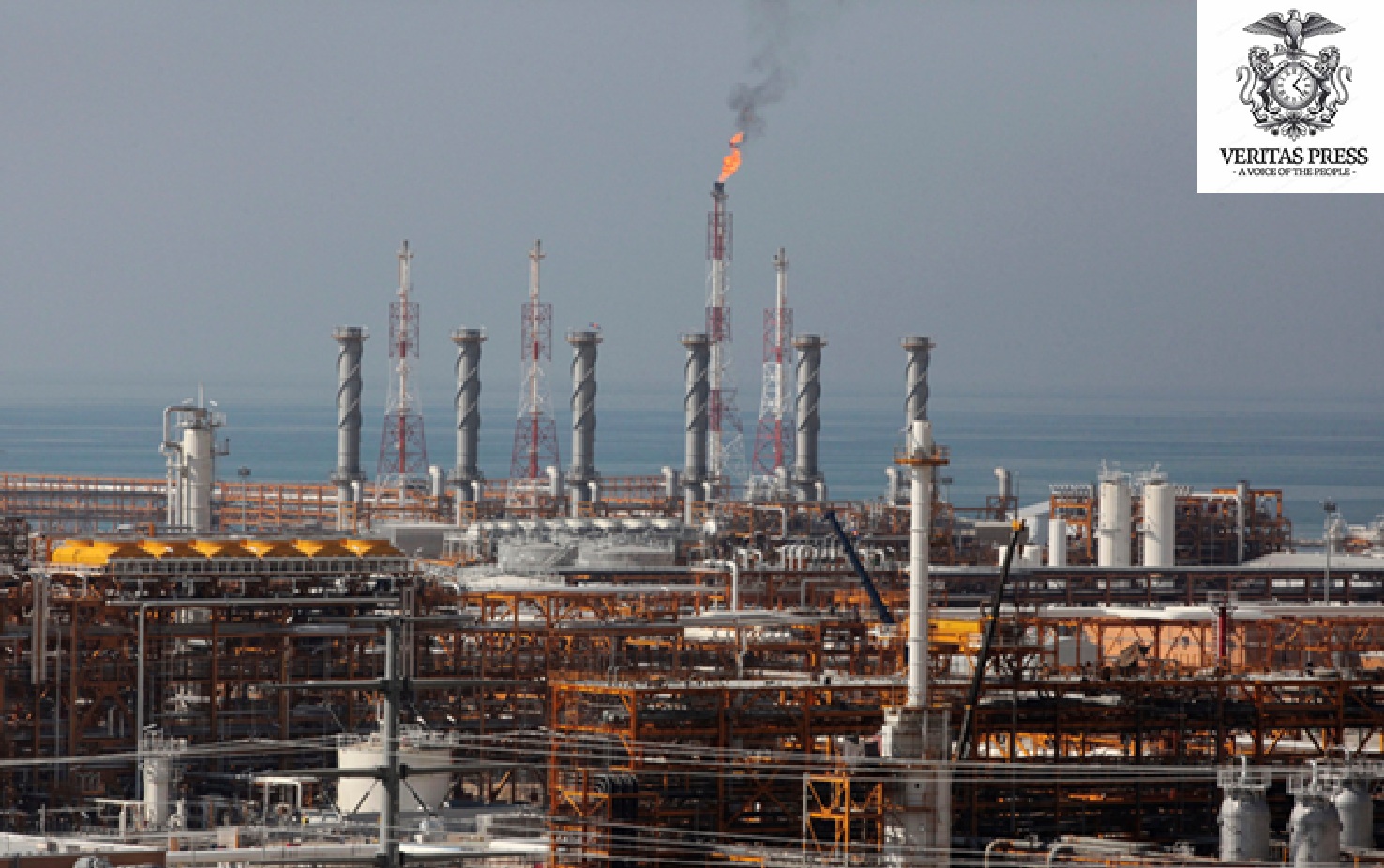
At the centre of the strategic calculus lies Kharg Island, Iran’s primary oil export terminal and one of the most critical energy nodes in the world. The majority of Iranian crude exports pass through this single point, making it both an economic lifeline and a highly vulnerable target.
Any attempt to seize or neutralise Kharg Island would represent a dramatic escalation. Control over the facility would effectively choke Iran’s export capacity, delivering a severe blow to its economy while simultaneously reshaping global energy flows.
Military analysts note that such an objective would require not only air and naval superiority but also sustained ground presence, bringing the discussion back to the Pentagon’s reported invasion planning.
The Strait Of Hormuz And Maritime Leverage:
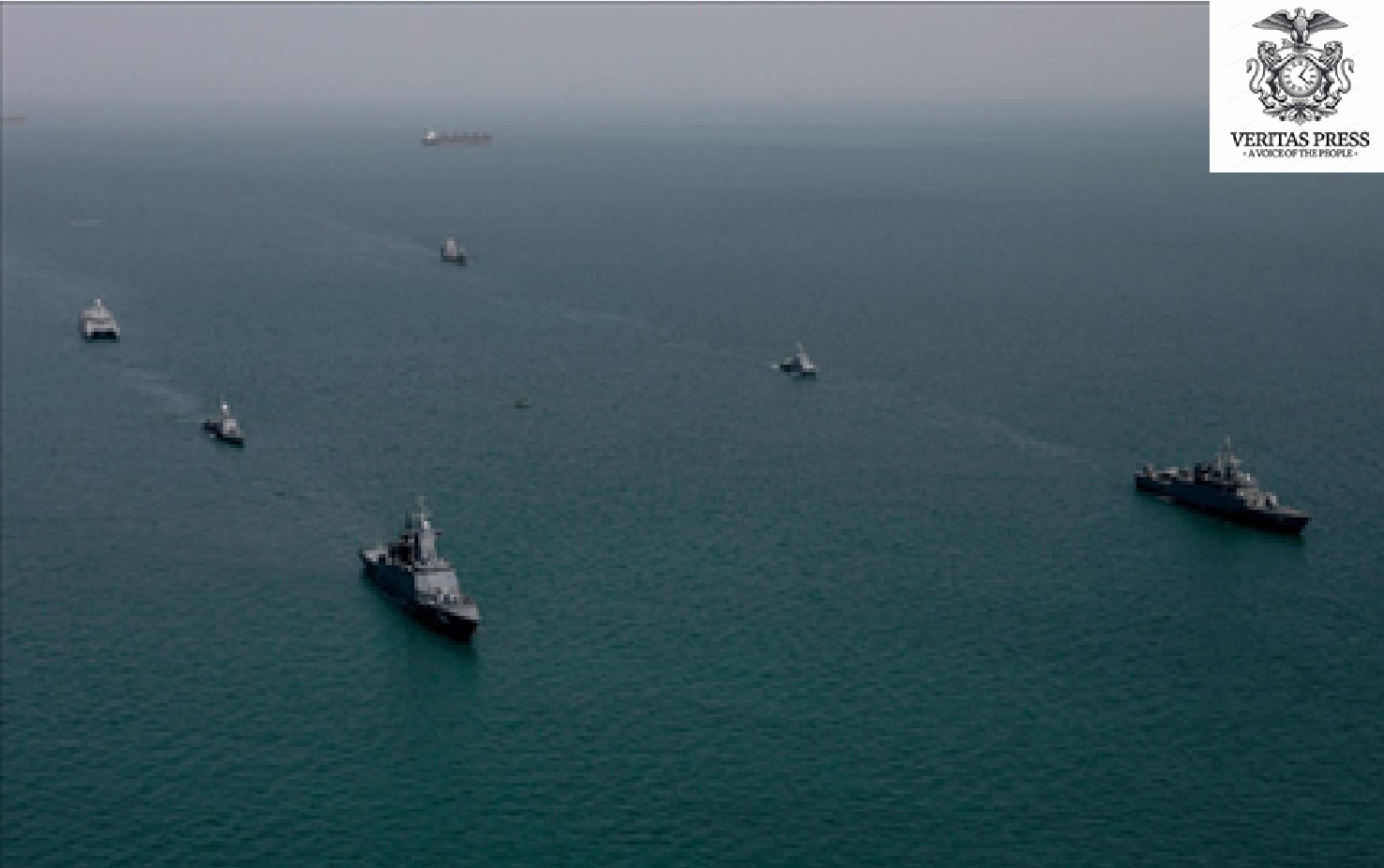
Equally critical is the Strait of Hormuz, the narrow waterway through which roughly a fifth of the world’s oil supply passes. While the strait remains open to global shipping under international norms, its strategic vulnerability makes it a permanent flashpoint during periods of conflict.
Claims that Western powers aim to “force” the strait open or secure exclusive transit routes for allied shipments remain unverified. However, the logic underpinning such assertions is rooted in longstanding geopolitical realities: control over Hormuz equates to influence over global energy markets.
Any move to militarise or selectively control the strait would risk immediate confrontation with Iranian forces and could trigger a broader regional war involving multiple state actors.
Markets, Oil, And The Risk Of Global Shock:
Even without confirmed ground operations, the crisis is already exerting pressure on global markets. Oil prices have shown signs of volatility amid fears of supply disruption, while investors remain highly sensitive to developments in the Gulf, as stock markets crumble in the West. There is a growing indication that the West is on a trajectory towards a significant economic slowdown, potentially leading to a recession or a depression of considerable magnitude.
A direct strike on Kharg Island or a sustained disruption in Hormuz would likely produce:
- Immediate spikes in energy prices
- Severe supply chain disruptions
- Widespread financial market instability
The timing of any major escalation, particularly around financial market closures, would therefore carry significant implications for how shockwaves propagate through the global economy.
A Conflict At The Brink:
Taken together, the available evidence paints a picture of a conflict approaching a critical threshold:
- The US is actively preparing for large-scale escalation, including ground war scenarios
- Strategic targets tied to energy infrastructure are central to the evolving calculus
- Public assurances of restraint coexist with military posturing that suggests otherwise
At the same time, some of the most alarming claims, particularly those involving imminent ground deployments or coordinated territorial seizures, remain unverified.
Conclusion: The Architecture Of Escalation.
What emerges from the convergence of confirmed planning and contested claims is not a single decision point, but a layered architecture of escalation, one in which military preparation, energy strategy, and financial timing are being aligned in ways that extend far beyond reactive defence.
The reported contingency frameworks developed within the Pentagon are not occurring in isolation. They intersect with a battlespace increasingly defined by control over critical oil infrastructure and maritime chokepoints. In this context, Kharg Island is not merely a target; it is leverage. The Strait of Hormuz is not simply a passageway; it is a pressure valve for the global economy. Any credible move toward securing or denying these assets would represent a shift from conventional military engagement to systemic economic warfare.
Crucially, the distinction between preparation and execution is beginning to blur. The forward deployment of forces, the expansion of naval presence, and the rhetorical framing of Iran’s long-term incapacitation suggest that the conditions for escalation are not just being anticipated; they are being operationally normalised. History shows that once such infrastructures of war are in place, the threshold for their use lowers dramatically.
Within this context, the emergence of claims that US-Israeli forces have already moved to position ground paratroops, reportedly timed on the eve of Wall Street closure, takes on deeper analytical significance. While unverified, such assertions reflect a war calculus that integrates military action with financial shock management, attempting to contain immediate market fallout while advancing strategic objectives on the ground.
Those objectives, as suggested by the same line of investigation, centre on the potential takeover or neutralisation of Kharg Island despite the near certainty of triggering oil and gas inflation and global market instability. In parallel, the strategic emphasis on the Strait of Hormuz points to a broader ambition: not merely to keep the waterway open in principle, but to reshape its functional control, ensuring secured transit for aligned powers including Israel, the United States, the United Kingdom, and France, while constraining adversarial influence.
At present, the strait remains open to global shipping under international norms. Yet in practice, access in wartime is rarely neutral. Control over such a chokepoint does not require formal closure; it can be exercised through military dominance, deterrence, and selective enforcement. The distinction between an “open” corridor and a controlled one is therefore less legal than operational.
The current moment is defined less by certainty than by trajectory. Planning for a ground invasion, discussions around critical energy chokepoints, and intensifying military deployments all point toward a conflict that is expanding in scope and ambition. Whether this trajectory culminates in full-scale war will depend on decisions made in the coming days. But the groundwork, military, economic, and strategic, appears increasingly to be in place.
This is where the stakes extend beyond the region. A conflict structured around disabling Iran’s export capacity and asserting de facto control over Hormuz would not remain contained. It would reverberate through global supply chains, intensify energy crises, and risk drawing in multiple state actors, transforming a regional war into a systemic economic and geopolitical rupture.
The most significant warning sign, however, lies in the growing divergence between public assurances and operational signals. The White House continues to emphasise restraint, yet the scale and specificity of military preparations, combined with the strategic logic underpinning both confirmed actions and unverified but plausible claims, indicate that far more expansive scenarios are being actively considered.
As one regional analyst put it, “When you start planning for the oil and the choke points, you’re no longer preparing for a skirmish, you’re preparing for a system-wide confrontation.” In that sense, the question is no longer whether a ground invasion of Iran has been formally approved. It is whether the political, military, and economic groundwork for such a war has already been laid, quietly, incrementally, and with an awareness that once the oil chokepoints and financial fault lines are engaged, the machinery of escalation may move beyond the control of those who set it in motion.
A further question now looms over this crisis: if the trajectory already points toward a prolonged conflict marked by sustained military engagement, continued disrupted energy flows, and deepening global market instability, are policymakers prepared for the scale of long-term fiscal consequences that would follow? A drawn-out war with Iran would not only strain defence budgets but ripple through inflation, public spending, and economic growth across multiple continents, raising the possibility that the true cost of this confrontation will be measured not just in strategic outcomes but in a decade of financial aftershocks.
Source: Multiple News Agencies
Submissions:
For The Secure Submission Of Documentation, Testimonies, Or Exclusive Investigative Reports From Any Global Location, Please Utilise The Following Contact Details For Our Investigations Desk: enquiries@veritaspress.co.uk or editor@veritaspress.co.uk
Help Support Our Work:
Popular Information is powered by readers who believe that truth still matters. When just a few more people step up to support this work, it means more lies exposed, more corruption uncovered, and more accountability where it’s long overdue.
Help Protect Independent Journalism, Which Is Currently Under Attack.
If you believe journalism should serve the public, not the powerful, and you’re in a position to help, becoming a DONATOR or a PAID SUBSCRIBER truly makes a difference.
DONATION APPEAL: If You Found This Reporting Valuable, Please Consider Supporting Independent Journalism.
Help Support Our Work – We Know, We Know, We Know …
Seeing these messages is annoying. We know that. (Imagine what it’s like writing them … )
Your support fuels our fearless, truth-driven journalism. In unity, we endeavour to amplify marginalised voices and champion justice, irrespective of geographical location.
But it’s also extremely important. One of Veritas Press’s greatest assets is its reader-funded model.
1. Reader funding means we can cover what we like. We’re not beholden to the political whims of a billionaire owner. We are a small, independent and impartial organisation. No one can tell us what not to say or what not to report.
2. Reader funding means we don’t have to chase clicks and traffic. We’re not desperately seeking your attention for its own sake: we pursue the stories that our editorial team deems important and believe are worthy of your time.
3. Reader Funding: enables us to keep our website and other social media channels open, allowing as many people as possible to access quality journalism from around the world, particularly those in places where the free press is under threat.
We know not everyone can afford to pay for news, but if you’ve been meaning to support us, now’s the time.
Your donation goes a long way. It helps us:
- Keep the lights on and sustain our day-to-day operations
- Hire new, talented independent reporters
- Launch real-time live debates, community-focused shows, and on-the-ground reporting
- Cover the issues that matter most to our communities, in real time, with depth and integrity
We have plans to expand our work, but we can’t do it without your support. Every contribution, no matter the size, helps us stay independent and build a truly people-powered media platform.
If you believe in journalism that informs, empowers, and reflects the communities we serve, please donate today.

Senior officials within the US military have drawn up contingency plans for a potential ground
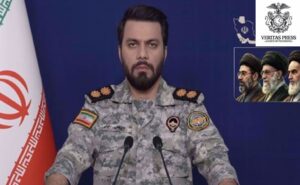
When Lieutenant Colonel Ebrahim Zolfaqari, spokesman for Iran’s Khatam al-Anbiya Central Headquarters, issued a warning
The historic Christian presence in Palestine, dating back to the earliest centuries of Christianity, is
JERUSALEM – For the first time since the aftermath of the Six-Day War, the courtyards
TEHRAN – As the sun rose on Eid al-Fitr, a day meant for celebration and
HUNGARY – As Benjamin Netanyahu prepares to travel to Hungary this weekend, a mounting legal
LONDON — In the polished corridors of 10 Downing Street, the language remains meticulously calibrated:
On March 20, 2026, the Pentagon quietly announced what amounts to a fundamental restructuring of
WASHINGTON / ISLAMABAD — A fresh warning by US Director of National Intelligence Tulsi Gabbard
For the first time since the US-Israeli campaign against Iran began on February 28, the