
Original Article Date Published:
Article Date Published:
Help support our mission, donate today and be the change. Every contribution goes directly toward driving real impact for the cause we believe in.
A Reckoning In The Middle East:
The opening days of March 2026 have witnessed a seismic shift in the Middle Eastern geopolitical landscape. Following the assassination of Iran’s Supreme Leader Ayatollah Ali Khamenei in a coordinated US-Israeli strike on February 28, the region has plunged into its most consequential conflict since the 2003 Iraq invasion. Yet beneath the surface of missile barrages and aerial dogfights lies a more complex and treacherous reality: the exposure of deep fractures within the Arab world, the existential calculus of Iran’s proxies, and the precarious position of Gulf states caught between their American security guarantors and a vengeful Tehran.
This article undertakes a deeper investigative critique of the narratives emerging from the conflict, examining the schadenfreude of certain Arab capitals, the strategic dilemma facing Yemen’s Ansarallah (Houthi) movement, the complex reactions of the Iranian populace, and the unprecedented military coordination between Washington and Tel Aviv. Drawing on reports, expert analysis, and on-the-ground accounts, it seeks to illuminate the contradictions and consequences of a war that has already rewritten the rules of regional engagement.
Part One: “Dancing On The Corpses” – The Gulf Arab Calculus.
The Houthi Indictment:
In his fifteenth Ramadan lecture, delivered on March 4, 2026, the Leader of Yemen’s Ansarallah, Sayyid Abdul-Malik Badr al-Din al-Houthi, delivered a searing indictment of Arab regimes that he alleges are complicit in the US-Israeli campaign against Iran. His accusations, carried by the Saba News Agency, cut to the heart of an uncomfortable truth: some Arab states are not merely passive observers but active participants in the effort to degrade the Islamic Republic.
“The Americans came from the farthest parts of the earth to the region to attack its peoples, including the aggression against the Islamic Republic of Iran,” al-Houthi declared. He proceeded to outline what he described as a comprehensive system of Arab support for the US war effort: “Some Arab states provide financial support to U.S. bases, cover all their expenses, and aim to silence the countries that America attacks, preventing them from defending themselves”.
This is not merely rhetorical posturing. Al-Houthi’s critique identifies a fundamental contradiction in the position of Gulf Arab states: they host the very military infrastructure being used to strike Iran, yet they demand that Tehran refrain from responding against those facilities. “When Iran responds to those bases that attack it or that the Americans use to kill Iranians, the Arab regimes become angry and describe the Iranian Muslim people’s defence as aggression against them,” he noted.
The IDF’s Confirmation:
Remarkably, al-Houthi’s accusations find partial confirmation in statements from Israeli military sources. On Wednesday, the Israel Defence Forces acknowledged that “some Gulf countries are already in the fight against Iran.” While IDF sources declined to identify specific nations or the extent of their involvement, foreign reports cited by Israeli media indicate that Saudi Arabia, the United Arab Emirates, Qatar, and possibly others “may already have attacked Iran or have expressed interest in doing so.”
This represents a dramatic escalation from the carefully maintained fiction of Gulf neutrality. For years, Arab states hosting American bases have insisted that such facilities are for defensive purposes only. The current conflict has stripped away that pretence. The IDF’s admission that “over 1,000 American soldiers are physically present in Israel to assist with joint war coordination” and that there are “4,00-5,000 telephone calls, cockpit radio communications, and other communications between Israeli and US officials every day” suggests a level of integration that necessarily involves regional partners.
The Gulf On The Frontlines:
Yet the reality on the ground for Gulf states is far more complicated than simple alignment with Washington. As Iranian retaliatory strikes continue to rain down on the six members of the Gulf Cooperation Council, the monarchies find themselves in an impossible position: attacked by Iran for hosting American bases, yet constrained in their response by the fear of triggering a wider conflagration.
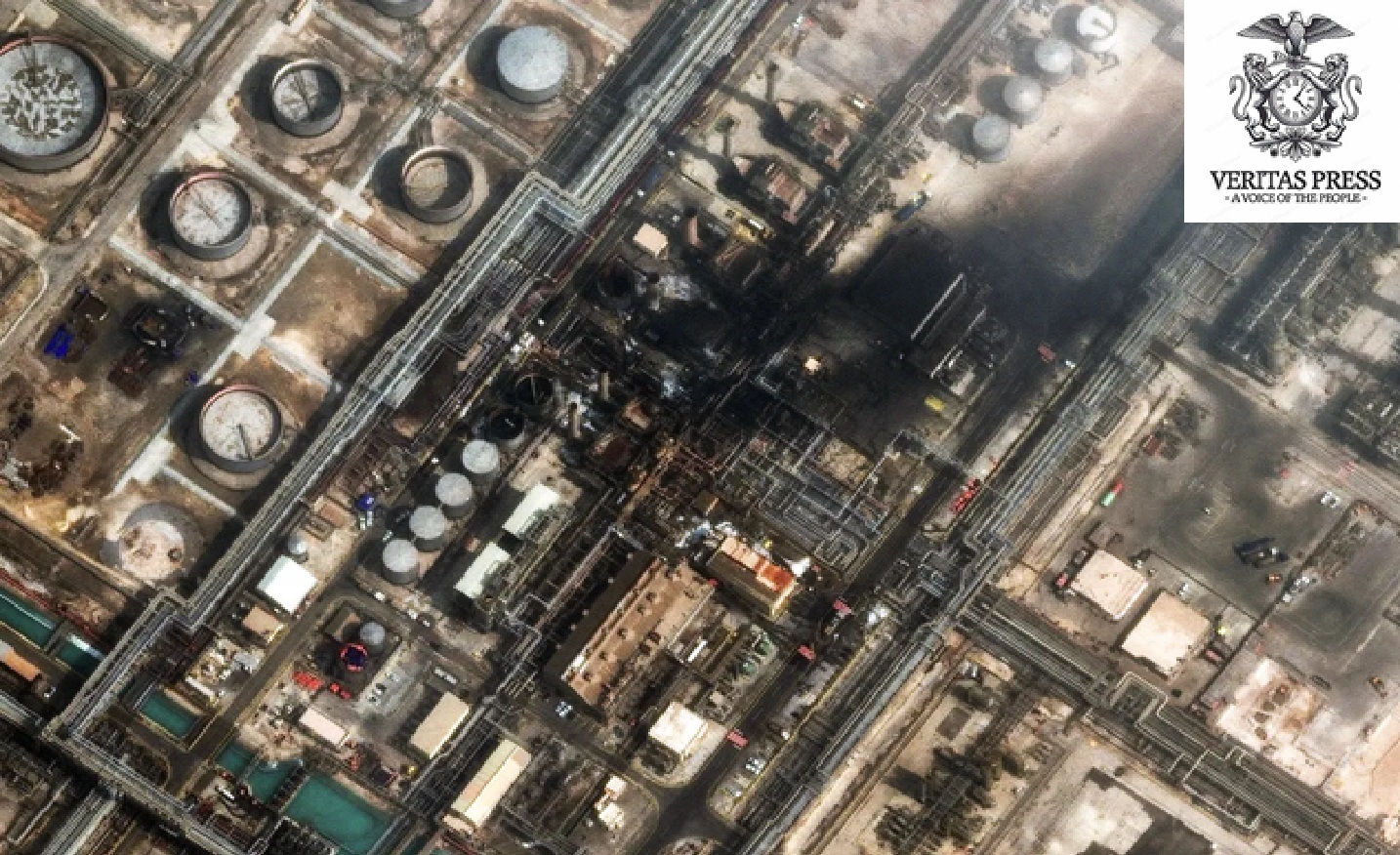
The toll has been severe. According to the UAE’s defence ministry, the Emirates have been targeted by more than 800 drones and 200 missiles since Saturday, bearing the brunt of Iran’s retaliatory campaign. Three people have been killed in the UAE, out of eight total casualties across the Gulf. Fires have been set at landmarks including the Palm Jumeirah and the Burj Al Arab, striking at the heart of the nation’s tourism-dependent economy.
Qatar, traditionally seen as the Gulf state with the closest ties to Iran, has been forced into an equally difficult position. On Monday, Qatari forces downed two Iranian Sukhoi Su-24 warplanes, the first time a Gulf country has hit manned Iranian aircraft since the war began. State-run QatarEnergy, one of the world’s largest LNG producers, has suspended production after drones targeted two key facilities.
“We are definitely angry as hell, and this is just the beginning of things to come,” Abdulkhaleq Abdulla, a UAE-based political scientist, told AFP. “There is an understanding now, a Gulf understanding, and a perception that Iran has become an enemy of a sort, has become an aggressor”.
The Diplomatic Wreckage:
The human emotion in Abdulla’s words reflects a deeper strategic catastrophe. For years, Gulf states had pursued a careful policy of rapprochement with Tehran. The March 2023 Chinese-brokered deal between Saudi Arabia and Iran was supposed to usher in an era of de-escalation. The UAE had fully reopened its embassy in Tehran in 2022. Oman had been leading intensive negotiations for a new nuclear agreement, with Foreign Minister Badr Albusaidi telling CBS News as recently as February 27 that a deal was “within our reach” and could “be agreed tomorrow”.
The bombs began falling hours later.
“The fear of such retaliation was one reason why Gulf leaders had urged America not to attack,” The Economist reported. “Another was the belief that Mr Trump would try to topple the regime, tipping a country of 92m people into the sort of chaos that swept Iraq after the American-led invasion in 2003”.
That fear has now materialised. The diplomatic track is almost certainly dead. Worse, Gulf states have been dragged into a war they actively sought to prevent, their territory used as a battleground, their civilians killed, their economic infrastructure ablaze.
The Response Dilemma:
Yet the response from Gulf capitals has been notably uneven. Qatar’s Foreign Ministry spokesman Majed al-Ansari declared that “all our red lines have already been crossed” and that leaders were “considering right now all the options”. The UAE has closed its embassy in Tehran and recalled its ambassador. Saudi Arabia’s military raised its readiness levels, and a source close to the army warned of a possible military response if oil infrastructure is targeted.
However, Farea Al-Muslimi of Chatham House suggested he would be “extremely shocked” if Saudi Arabia, in particular”, did not respond militarily.” His reasoning is stark: “Saudi Arabia, if not the whole Gulf, is preparing for some form of response to Iran. It cannot afford to do nothing after being attacked”.
This places Gulf leaders in an agonising position. To respond militarily risks escalation that could devastate their economies and draw them deeper into a conflict with a nuclear-capable neighbour. To do nothing risks appearing weak before their populations and emboldening Iran to strike again.
Hesham Al-Ghannam, a Saudi security analyst, articulated the sense of betrayal felt in Riyadh: ahead of Saturday’s attacks, the kingdom had “denied airspace and basing rights, signalling neutrality to Tehran,” but “Iran struck Saudi territory anyway,” wiping out years of diplomatic investment.
Part Two: The Iranian Street – Between Celebration And Fear.
The Unthinkable Happens:
When US and Israeli officials announced on the evening of February 28 that Supreme Leader Ayatollah Ali Khamenei had been killed in the opening strikes of the campaign, the news triggered something unprecedented across parts of Iran: open celebration.
Across social media and in accounts from residents inside the country, the announcement prompted an eruption of emotion that revealed the depth of alienation felt by significant portions of Iranian society from the Islamic Republic. One user wrote on X: “I’m crying, laughing, screaming and experiencing every feeling in the world in three seconds”.
According to sources in Tehran who maintained communication through Starlink satellite internet, residents leaned from windows or gathered on rooftops soon after the announcement, shouting in celebration. Farzad, a Tehran resident, described the sound of whistling and honking motorcycles and cars quickly filling the air. “It just erupted all at once,” he said.
Dancing In The Streets:
Videos verified by the Associated Press showed dozens cheering and dancing in the streets of Karaj, a city near Tehran. Similar celebrations were reported from Qazvin, Shiraz, Kermanshah, Isfahan, and Sanandaj. A doctor in the northern city of Rasht described the night in a voice message to AP: “It was one of the best nights, if not the best night, of our lives. It was actually my first time ever smoking a cigarette… We didn’t sleep at all. And we don’t even feel tired”.
The symbolism was profound. In Abdanan, Fars province, a city where protesters were killed in large numbers less than two months ago, videos appeared to show young people dancing. One user wrote: “You riddled the people of Abdanan with bullets, but today it’s the people of Abdanan dancing on your corpse, criminal Khamenei”.
The New York Times captured the surreal quality of the moment: “First the booms from the renewed assaults, followed by the sounds of many people cheering on the strikes they hope will bring down the government.” Azim, a 39-year-old in Karaj, told the Times: “It’s surreal. Imagine your country is being attacked, but because of how disconnected people feel from the government, they react like that”.
The Security Apparatus In Shock:
Perhaps most telling were accounts of confusion within the security forces themselves. Azim described driving past government checkpoints still manned by Revolutionary Guard soldiers and Basij militiamen who “seemed to be in shock.” He spoke to one Basiji who admitted uncertainty about what to do: “They couldn’t believe that with the first missile, the first strike, Ali Khamenei would be hit”.
This disorientation within the regime’s repressive apparatus may prove as significant as the external military pressure. If the Basij, the volunteer force that has been the regime’s first line of defence against popular uprisings, cannot be counted upon to suppress dissent, the Islamic Republic’s domestic position becomes far more precarious.
The Mourning Counterpoint:
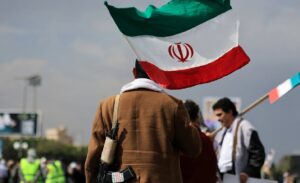
Yet the celebrations, while real and significant, do not tell the whole story. Iranian society remains deeply divided. State media, after hours of silence, confirmed Khamenei’s death in the early hours of Sunday and declared 40 days of national mourning and a week-long public holiday. Video run on state television and verified by AP showed tens of thousands filling the main squares of Isfahan and Yazd, waving Iranian flags and chanting “Death to America”.
The regime moved quickly to demonstrate continuity. President Masoud Pezeshkian announced that a new leadership council had begun its work. Parliament speaker Mohammad Bagher Qalibaf declared on state TV: “We prepared ourselves for these moments and set plans for all scenarios, even for after the martyrdom of our dear Imam Khamenei”.
The succession question now looms large. Media reports suggest that Mojtaba Khamenei, the son of the slain leader, has emerged as a frontrunner to succeed his father. When asked about this possibility, White House spokeswoman Karoline Leavitt told reporters: “We’ve seen those reports as well, of course, and this is something that our intelligence agencies are looking at. The truth is, we’ll have to wait and see”.
Prince Reza Pahlavi, in a message to Iranians, declared that with Khamenei’s death “the Islamic Republic had effectively reached its end and would soon be consigned to the dustbin of history.” He added: “Any attempt by the remnants of the regime to appoint a successor to Khamenei is doomed to fail from the outset. Whoever they place in his stead will have neither legitimacy nor longevity”.
Between Hope And Fear:
But for ordinary Iranians, the reality is more complex. Golshan Fathi, a woman living in Tehran, described the Basij’s heavy presence in the streets and the pulling of a man from his car after he honked in celebration. Iranian society, she said, is living “between hope and fear”.
The memory of last month’s crackdown, when security forces killed thousands of protesters, casts a long shadow. Many Iranians fear the chaos and division that could follow the regime’s collapse, or distrust American and Israeli intentions. Reza Mehrabi, 67, recalled similar celebrations after the 1979 revolution that deposed the Shah, celebrations that were followed by the establishment of the Islamic Republic itself. “I saw some people were happy about the losses, but when I remember the 1979 revolution and its aftermath, I need more consideration to understand if the nation and the country is on the right path”.
Esfandyar Batmanghelidj, adjunct professor at Johns Hopkins University’s School of Advanced International Studies-Europe, offered a sobering assessment: “The reality is, the Iranian people don’t have the means to displace the Islamic Republic on their own. Even within families and within neighborhoods there may be very disparate views about Khamenei’s killing, especially because it was at the hands of foreign powers”.
Arang Keshavarzian of New York University drew a crucial historical distinction: during the 1979 revolution, Iranians from across society held massive protests lasting for months, organised by nationwide networks of merchants, students, and clerics. “But we are far from the 1979 model… Just because Iranians have many grievances and make claims on the state on a daily basis, it does not necessarily mean that this will scale up to a social revolution. And bombing Iran does not change this”.
Part Three: The Houthi Gamble – Between Ideology And Survival.
The Silence in the Rhetoric:
On March 2, the leader of Yemen’s Ansarallah delivered his second speech since the outbreak of war. Abdul-Malik al-Houthi condemned the assassination of Ayatollah Khamenei and called on the Iranian people to remain “steadfast” on the path of “freedom, dignity and defiance.” Notably absent from the speech, however, was any promise to come to Iran’s defence.
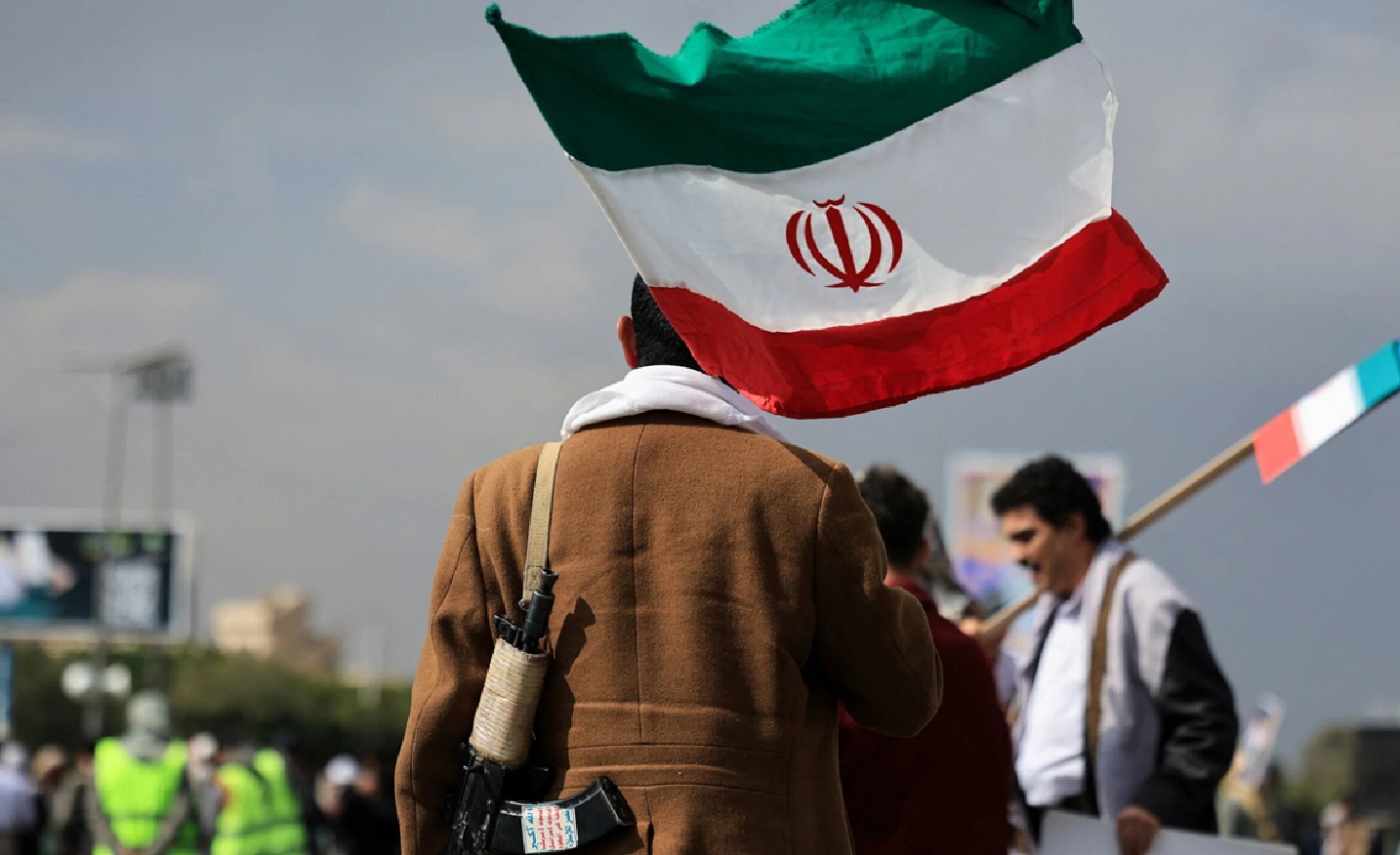
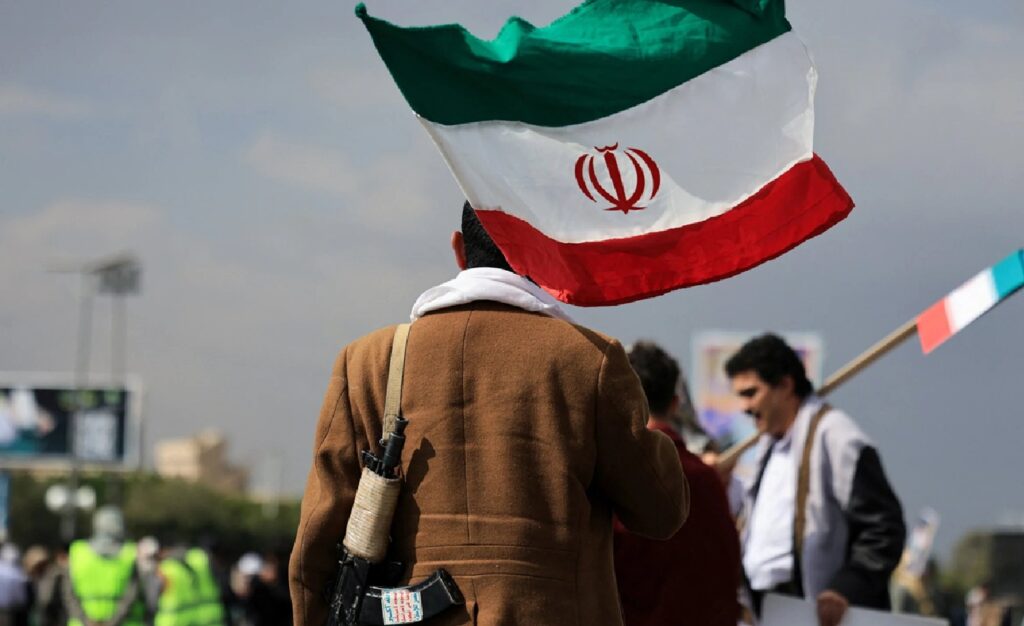
This omission speaks volumes. The Houthis, officially known as Ansarallah, are part of Iran’s self-styled ‘axis of resistance.’ Yet despite their close relationship with the Islamic Republic, and their famous slogan calling for “death to America, death to Israel”, the Houthis are treading carefully, calculating the cost of involvement against their own survival.
“Everyone thought the Houthis would jump in [to defend Iran] once the war started. But their two-year war against Israel, and on Red Sea shipments, proved very costly for them,” Ahmed Nagi, an expert on Yemen with the International Crisis Group, told The New Arab. “The Houthis lost many leaders, and I think they’re now trying to preserve themselves”.
The Cost of Confrontation:
The price of the Houthis’ solidarity with Gaza has been steep. Since November 2023, the group has launched hundreds of missiles and drones at Israel and at international shipping in the Red Sea, triggering repeated US and Israeli strikes on Houthi-controlled territory. In late February, US Central Command announced strikes on Houthi command and control facilities, weapons production sites, and storage facilities in Sana’a, destroying coastal radar sites, cruise missiles, and UAVs.
The human cost has been significant. Israeli fighter jets struck Sana’a international airport last week, killing four people at a facility where World Health Organization chief Tedros Adhanom Ghebreyesus was waiting for a flight. Houthi spokesperson Mohammed Abdulsalam condemned the strikes as “an American aggression” and “a blatant violation of the sovereignty of an independent state”.
But beyond the immediate military losses, the Houthis face mounting economic pressure at home. Unofficial estimates suggest there are about one million people on the state payroll in Sana’a alone, many living in poverty and drowning in debt. The US redesignation of the Houthis as a terrorist organisation last year has pushed many donors to halt funding to relief groups, compounding the suffering of the 80% of Yemen’s 32 million people living under Houthi rule.
The Domestic Calculus:
The Houthis’ decision to launch missiles toward Israel in solidarity with Gaza was always driven as much by domestic concerns as by ideological commitment to the ‘axis of resistance.’ The group faces growing discontent among the population it governs. Yemen’s economy is moribund, its currency is in free fall, and public sector salaries have not been regularly paid since 2016.
In late September, al-Houthi announced the dissolution of the National Salvation Government, calling for “radical change” and the restructuring of administration. The move sidelined the Houthis’ allies from Yemen’s former ruling party, the General People’s Congress, and represented a consolidation of the group’s control over northwest Yemen, a high-risk strategy that has fueled resentment among an increasingly impoverished population.
By launching missiles toward Israel, the Houthis were hoping to distract Yemenis from their failure to deliver economic opportunity. The group must also be seen to abide by its infamous slogan. But the strategy has reached the point of diminishing returns.
“They know what the cost would be, and it would be high: it would be fatal for them,” Yazeed al-Jeddawy, an expert on Yemen with the Sanaa Centre, told The New Arab. If the Houthis are significantly degraded by foreign powers, then rival factions aligned with the internationally recognised government could make a move to dislodge the group from Sana’a.
The Iran Dilemma:
The Houthis’ relationship with Iran is more complex than often portrayed. While the group receives material and technical support from Tehran, they are rooted in Yemen’s socio-cultural matrix. Unlike Hezbollah, Iran has less control over Houthi decision-making. The most senior leadership is closed to all but the highest-ranking members of the organisation.
It is possible that Iran had no foreknowledge of the Houthis’ decision to launch missiles toward Israel in October 2023. The Houthis’ opaque decision-making and increasing competence with missile and drone development ironically make them a liability for Tehran, which has little interest in a regional war given its fragile economy and internal unrest.
Yet the pressure on the Houthis to act is growing. Other members of the ‘axis of resistance’ are already involved. Hezbollah has fired drones and rockets at Haifa, triggering Israeli retaliation that has killed more than 50 people in Lebanon. Iranian-backed militias in Iraq have claimed strikes on US bases in Erbil. As Negar Mortazavi of the Centre for International Policy notes: “Iran is using whatever they have to hit back [right now], and one component of that is [the axis] alliance. So yes, the more this war escalates across the region, the higher the chance that it calls on allied actors to get more involved”.
The Saudi Factor:
Perhaps the most significant constraint on Houthi action is their relationship with Saudi Arabia. Before the current escalation, the Houthis and Riyadh were making significant progress in bilateral negotiations. The Saudis recognised that there is no viable military solution to Houthi control of northwest Yemen and sought to engage with the group’s leadership while maintaining support for the internationally recognised government and its allies.
Any Houthi assault on Saudi Arabia would particularly backfire. The kingdom has a number of mutually beneficial arrangements with the Houthis, including allowing the government in Aden to share oil proceeds with the group. This arrangement, the result of a fragile UN-brokered truce, is a financial lifeline for the Houthis. “You could really see how attacking Saudi Arabia would cause a lot of problems for the Houthis,” Nicholas Brumfield, a Yemen expert, told The New Arab.
Yet the Houthis have already taken steps that threaten this rapprochement. On October 24, they appear to have targeted a Saudi military post near Jabel al-Dawd, killing four Saudi soldiers. This followed a September 25 attack by a Houthi drone on Bahraini soldiers serving on the Saudi-Yemeni border that killed four soldiers. Such actions are “an ominous sign of where Saudi-Houthi relations may be heading”.
The Path Forward:
Al-Jeddawi predicts that the Houthis will participate in the war if instructed to by Iran, but will calibrate their attacks to avoid triggering major retaliation. “I see the Houthis going for a calculated response, not a major one. That way, they could still leave themselves some room to manoeuvre in order to preserve their assets”.
Yet the Houthis may face external assault whether they provoke it or not, especially if the Islamic Republic implodes. In that scenario, Hamas, Hezbollah, and the Islamic Republic in Iran would all be significantly degraded, leaving militias in Iraq and the Houthis as the only members left from the once sprawling ‘axis of resistance.’
“In the long run, I can’t see the Houthis surviving unless they make concessions to their adversaries and engage positively with Saudi Arabia on peace talks,” said al-Jeddawy.
Part Four: The American-Israeli Campaign – Coordination, Casualties, and Objectives
Unprecedented Military Integration:
The military campaign against Iran represents a level of US-Israeli coordination without precedent or congressional consent; therefore, an illegal campaign. According to IDF sources, over 1,000 American soldiers are physically present in Israel to assist with joint war coordination. There have been between 4,000 and 5,000 telephone calls, cockpit radio communications, and other exchanges between Israeli and US officials every day since the war began, a stunning, unprecedented level of integration.
The IDF has praised America’s “10 times the level of refuelling capacity compared to Israel,” allowing them to reuse aircraft more rapidly for additional air strike sorties. Military responsibility has been divided geographically: Israel has mostly handled western Iran, parts of Tehran, and some of central Iran, while the US has mostly handled southern Iran, parts of Tehran, and hopes eventually to handle eastern Iran.
White House spokeswoman Karoline Leavitt told reporters on March 4 that the US is moving towards “complete and total control” of Iranian airspace, with more than 2,000 targets struck to date. However, she emphasised that deploying US ground troops “is not part of the plan for this operation at this time”.
American Casualties And Political Pressures:
The campaign has not been cost-free for the United States. Six US service members have been killed and several others injured in the fighting. President Donald Trump intends to attend the dignified transfer of these service members “to stand in grief alongside their families,” Leavitt confirmed.
Polls have shown 75% of Americans are unhappy with the war, and the US Congress is expected soon to vote on whether to restrain Trump’s authority to continue the conflict. However, the IDF has stated that it does not believe Trump will cut the war short, citing “familiarity with the Trump administration and top US defence officials” and the absence of pressure “to artificially shorten the war due to outside pressures, such as domestic American political criticism”.
The Regime Change Objective:
Perhaps the most significant development is the apparent shift in US war aims. In a video message posted after the bombing began, Trump urged Iranians to “take over your government.” Hours later, in a call with the Washington Post, he said his goal was “freedom for the people” of Iran.
This represents a dramatic escalation from the stated objective of preventing Iran from acquiring nuclear weapons. Omani Foreign Minister Badr Albusaidi, who had been leading mediation efforts, took to social media to vent his frustrations: “I urge the United States not to get sucked in further. This is not your war”.
Leavitt, when asked about the administration’s objectives, defended the campaign as based on “a cumulative effect of various direct threats that Iran posed to the United States of America,” adding that the “rogue terrorist regime” has been threatening the US for 47 years.
The Succession Question:
The assassination of Khamenei has opened a succession crisis within the Islamic Republic. The 88 clerical members of the Assembly of Experts must convene to determine a successor, though doing so under wartime conditions, with some members possibly outside Tehran, presents significant challenges.
Media reports have suggested that Mojtaba Khamenei, the son of the slain leader, has emerged as a frontrunner. Asked about these reports, Leavitt said: “We’ve seen those reports as well, of course, and this is something that our intelligence agencies are looking at. The truth is, we’ll have to wait and see”.
The White House also addressed reports that the Trump administration has considered arming Kurdish forces in hopes of fomenting an uprising in Iran. Leavitt stated that while Trump spoke to Kurdish leaders “with respect to our base that we have in northern Iraq,” any report suggesting that the president has agreed to such a plan “is completely false and should not be written”.
Part Five: Analysis – The Contradictions Of The Arab Position.
The Exposure of Gulf Vulnerability:
The current conflict has laid bare the fundamental vulnerability of Gulf Arab states. For decades, they have relied on the American security umbrella while attempting to maintain working relationships with Iran. The strategy of hedging, balancing between Washington and Tehran, has now collapsed.
The strikes on Gulf infrastructure have shattered the illusion that these monarchies can remain islands of stability in a turbulent region. Qatar and the UAE have temporarily closed their airspace, forcing two of the world’s biggest airlines to cancel hundreds of flights. Ship-tracking data suggests oil tankers are beginning to avoid the Strait of Hormuz, the conduit for one-third of the world’s seaborne crude.
But the damage goes deeper than economics. The sight of Iranian missiles striking the Palm Jumeirah and the Burj Al Arab, symbols of Dubai’s globalised luxury economy, has dealt a psychological blow to the Gulf’s brand as a safe haven for investment and tourism.
The Dilemma Of Response:
Yet for all their anger, Gulf states face agonising choices in determining their response. To retaliate militarily risks escalation that could devastate their economies and draw them into a prolonged conflict with Iran. To do nothing risks appearing weak and inviting further aggression.
The debate in Gulf capitals, as Hasan Alhasan of the International Institute for Strategic Studies notes, is “about the merits of strategic patience and restraint”. Some officials still hope to revive diplomacy. Others, according to a Saudi source close to the royal court, suggest that Gulf states might lift restrictions on America launching strikes from their territory: “if Iran has already targeted them, they might as well take sides”.
This latter position carries enormous risks. If Gulf states openly join the US-Israeli campaign, they would transform a conflict that Iran has framed as resistance against foreign aggression into a broader regional war with sectarian overtones. They would also alienate significant portions of their own populations, who, as al-Houthi noted, view the US and Israel with hostility.
The Houthis’ Calculation And Its Implications:
The Houthis’ position exemplifies the complexity of the regional landscape. Despite their rhetoric and their place in the ‘axis of resistance,’ the group’s primary concerns remain domestic: survival, economic management, and consolidation of control over northwest Yemen.
Their restraint in the current conflict, thus far limited to rhetorical support for Iran and the continuation of existing Red Sea operations, reflects a cold-eyed assessment of their interests. Yet this restraint may not be sustainable. If Iran calls upon them to act, if the conflict continues to escalate, or if they face external attack, the Houthis may be drawn deeper into the war.
Such an outcome would have catastrophic consequences for Yemen. The fragile balance that has maintained a de facto ceasefire since April 2022 would collapse. Fighting across the country would reaccelerate, with grave consequences for the long-suffering Yemeni people and the wider region. As one analysis noted, “any new attacks on the Houthis by outside powers will ensure that the hardliners who are ascendant within the organisation predominate. This will all but guarantee the start of an escalatory cycle with few off-ramps”.
The Iranian People’s Moment:
Perhaps the most significant unknown is the reaction of the Iranian people. The celebrations that erupted after Khamenei’s death revealed the depth of alienation from the regime felt by significant portions of society. Yet as experts caution, this does not automatically translate into revolution.
The regime retains its repressive capacity. The Basij, despite initial confusion, remains a formidable force. Memories of last month’s bloody crackdown are fresh. And many Iranians, whatever their feelings about the Islamic Republic, view foreign-imposed regime change with suspicion.
Arang Keshavarzian’s warning is worth repeating: “Just because Iranians have many grievances and make claims on the state on a daily basis, it does not necessarily mean that this will scale up to a social revolution. And bombing Iran does not change this”.
A Region Transformed.
As the conflict enters its second week, one thing is clear: the Middle East has been transformed in ways that will take years, perhaps decades, to fully comprehend.
The assassination of Ayatollah Ali Khamenei has removed the figure who stood at the pinnacle of Iran’s political and religious establishment for nearly four decades. His death has opened a succession crisis within the Islamic Republic, triggered complex and contradictory reactions among the Iranian people, and raised fundamental questions about the future of the country.
The Gulf Arab states find themselves in an impossible position: attacked by Iran for hosting American bases, yet constrained in their response by the fear of escalation. Their years of careful diplomacy, the rapprochement with Tehran, the Chinese-brokered deal, and the Oman-mediated nuclear negotiations lie in ruins.
The Houthis in Yemen are engaged in a delicate calculus, weighing their ideological commitments and alliance obligations against their survival. Their restraint, thus far, reflects a pragmatic assessment of their interests, but it may not survive further escalation.
And the United States and Israel are pursuing a campaign of unprecedented intensity, with military coordination at levels never before seen, and with war aims that have expanded from nuclear non-proliferation to regime change.
Al-Houthi’s indictment of Arab rulers, that they provide “political, military, financial, and media protection for the American bases that commit aggression against their own peoples”, captures a fundamental truth about the current conflict. The Arab states of the Gulf are not merely bystanders to a war between Iran and the US-Israeli alliance. They are active participants, whether they choose to be or not.
Yet as the missiles continue to fall on Dubai and Abu Dhabi, as fires burn at Saudi refineries, as Qatari jets shoot down Iranian aircraft, the cost of that participation becomes ever clearer. The Gulf states sought to avoid this war. They warned against it. They tried to negotiate a diplomatic solution. And now they find themselves on the frontlines, their territory a battleground, their people killed, their economies disrupted.
The coming days and weeks will determine whether the region can find an off-ramp from this escalation or whether it slides further into war from which there may be no return. What is certain is that the Middle East that emerges from this crisis will bear little resemblance to the one that existed before February 28, 2026.
The Gulf’s Paradox: Public Restraint, Private Belligerence.
The position of the Gulf Arab states in the current conflict embodies a profound paradox: while their official statements emphasise restraint, non-participation, and a desire to avoid escalation, the evidence points to their active, direct, and indispensable role in enabling the US-Israeli war effort against Iran. This contradiction lies at the heart of the regional dynamic and exposes the gap between diplomatic posture and strategic reality.
On the surface, Gulf capitals have issued carefully calibrated condemnations of Iranian retaliation while pointedly refraining from declaring war or joining combat operations. Their public messaging emphasizes self-defense, sovereignty, and the imperative of de-escalation. Saudi Foreign Minister Prince Faisal bin Farhan reiterated that the kingdom seeks “stability and security for all” and continues to call for diplomatic solutions. This posture allows Gulf states to maintain plausible deniability with their populations, many of whom harbour deep hostility toward both Israel and American military intervention in Muslim lands.
Yet beneath this veneer of neutrality lies a web of direct military involvement that makes the Gulf states indispensable to Operation Epic Fury. Qatar’s Al Udeid Air Base serves as the forward headquarters for United States Central Command (CENTCOM), from which thousands of sorties have been flown over Iranian territory. Bahrain hosts the US Fifth Fleet, the primary naval asset projecting American power throughout the Persian Gulf. Kuwait functions as a major staging ground for US ground logistics. The UAE’s Al Dhafra Air Base operates as a hub for air reconnaissance, tracking coalition movements and intercepting Iranian projectiles before they reach their targets. Jordan provides critical search-and-rescue and refuelling missions from its territory. These are not passive relationships; they are active military enablers without which the US campaign could not sustain its current intensity.
The IDF itself confirmed what foreign reports have long suggested: “some Gulf countries are already in the fight against Iran”. While declining to specify which nations or the extent of their combat involvement, Israeli military sources indicated that Saudi Arabia, the UAE, Qatar, and possibly others “may already have attacked Iran or have expressed interest in doing so”. This represents a qualitative escalation from hosting bases to potential direct participation in strike operations, a development that, if confirmed, would fundamentally alter the nature of the conflict.
Behind the scenes, diplomatic pressure from Gulf capitals helped create the conditions for the US attack in the first place. According to multiple media reports, Saudi Crown Prince Mohammed bin Salman made private phone calls to President Donald Trump in the weeks preceding the strikes, advocating for US action despite publicly pledging that Saudi territory would not be used in an attack on Iran. This dual-track approach, public assurances to Tehran while privately urging Washington to strike, exemplifies the Gulf’s calculated ambiguity.
The Houthi leadership has offered the most searing indictment of this contradiction. Sayyid Abdul-Malik al-Houthi explicitly accused Arab regimes of providing “political, military, financial, and media protection for the American bases that commit aggression against their own peoples”. He noted that these states rush to defend and secure US facilities when Iran retaliates, even as they demand that Tehran not defend itself against attacks launched from those same bases. “The Iranian Muslim people are part of the Muslim nation,” he reminded his audience, “yet these regimes still seek to protect and financially support America’s bases”.
This critique resonates because it captures the essence of the Gulf’s predicament: they are simultaneously targets of Iranian retaliation and active participants in the campaign that provoked it. Iran’s missile and drone barrages have struck civilian infrastructure across the Gulf, from Dubai’s Palm Jumeirah to Saudi energy facilities, killing nationals and disrupting economies. Yet the very presence of US bases on their soil, bases they fund, host, and defend, makes such retaliation inevitable. As one analysis noted, from Tehran’s perspective, Gulf states are enabling strikes on Iranian territory simply by having these facilities available.
The motivation for Gulf involvement extends beyond mere alliance maintenance. Saudi Arabia and the UAE share with Israel a profound strategic interest in degrading Iran’s capacity to project power through its network of proxies and its ballistic missile program. Riyadh seeks to blunt Iran’s influence in the Arab heartland and reassert its own leadership claims in the Islamic world. Abu Dhabi views Iran’s Revolutionary Guard Corps as a direct threat to regional stability and Emirati sovereignty. These convergent interests have produced an unprecedented, if unacknowledged, alignment between Sunni Gulf monarchies and the Zionist-Jewish state, an alignment that manifested in parallel lobbying efforts in Washington and shared intelligence assessments in the lead-up to the strikes.
Yet this involvement carries profound risks. Saudi journalist Adhwan al-Ahmari captured a growing anxiety among Gulf observers: the fear that Washington may use its regional partners as instruments, only to abandon them once American objectives are achieved. “What if the US announces after a week, 10 days, or two weeks that it has achieved all its goals in this war and that the war is over and then leaves the Gulf states in an open confrontation?” he asked. This suspicion reflects historical experience, from Afghanistan to Iraq, and underscores the vulnerability inherent in the Gulf’s position. They are fighting alongside America and Israel, but without the guarantees that a formal alliance would provide, and without the domestic political cover that public acknowledgement would require.
The paradox is thus complete: Arab nations that publicly wish to remain silent are actively and directly participating in a war against Iran in support of US-Israeli hegemony, all while maintaining the fiction of non-belligerence. They host the bases from which strikes are launched, provide the logistical infrastructure that sustains the campaign, coordinate missile defence to protect coalition assets, and, reportedly, may even participate in offensive operations, yet they issue statements condemning escalation and reserve the right to respond to attacks on their sovereignty. This schizophrenia may be strategically necessary in the short term, allowing Gulf states to navigate between American pressure and Iranian retaliation. But over time, the contradiction becomes unsustainable, exposing them to accusations of hypocrisy from all sides and leaving them uniquely vulnerable to the consequences of a war they helped enable but cannot control.
Conclusion: The Reckoning Of Silence, A Region Imprisoned By Its Own Contradictions.
What emerges from the fog of missile barrages, diplomatic doublespeak, and street-level euphoria is a region caught in a hall of mirrors, where every actor’s reflection betrays a truth they dare not acknowledge. The war against Iran has not merely redrawn military frontlines; it has exposed the moral and strategic bankruptcy of an Arab order that speaks of sovereignty while hosting the bases from which sovereignty is destroyed, that invokes Islamic solidarity while cheering the assassination of a Muslim leader, that claims neutrality while actively enabling the machinery of occupation and hegemony.
The Gulf monarchies stand revealed in their most naked contradiction: they are simultaneously the targets of Iranian retaliation and the indispensable enablers of the campaign that provoked it. Their strategy of hedging, of maintaining diplomatic relations with Tehran while funding American bases, of issuing statements of restraint while privately lobbying Washington to strike, of condemning escalation while coordinating missile defence with Israel, has collapsed into a schizophrenic posture that satisfies no one and implicates them in crimes they dare not publicly endorse. The Houthi indictment cuts to the bone precisely because it names this hypocrisy: these regimes rush to defend and financially support American bases when Iran retaliates, even as they demand that Tehran not defend itself against attacks launched from those same facilities. This is not neutrality; it is complicity disguised as pragmatism, collaboration masquerading as self-defence.
Yet the tragedy runs deeper than Gulf duplicity. The Houthis, celebrated as heroes of the resistance, reveal themselves as prisoners of the same calculus they condemn. Their restraint, their calibrated silence, their careful avoidance of escalation, exposes the lie at the heart of ideological movements: that principle yields to survival, that slogans fade when survival is at stake. They watch their Iranian patron bleed while calculating the cost of intervention against their own domestic fragility, knowing that to fight for the axis of resistance might mean losing Yemen. This is not betrayal; it is the cold logic of self-preservation that governs all actors in a system where no one can afford to be what they claim.
And beneath these elite calculations lies the Iranian people themselves, dancing in the streets of Karaj while their compatriots mourn in the squares of Isfahan, caught between hatred of the regime that crushed them and suspicion of the foreign powers now bombing their country. Their celebration is not an endorsement of American imperialism but a rejection of the tyranny they have known; their fear is not loyalty to the Islamic Republic but dread of what comes after. They are the ultimate victims of this war, their aspirations for freedom weaponised by both sides, their suffering rendered collateral to geopolitics.
The United States and Israel pursue their campaign with the certainty of those who believe history bends toward their victory, but they too operate within a contradiction they cannot resolve. They seek to destroy Iran’s nuclear program while creating the chaos that makes nuclear acquisition seem the only guarantee of survival. They champion the Iranian people’s freedom while allying with the region’s most repressive monarchies. They advocate for democracy yet engage in unapproved bombings. They champion human rights while collaborating with governments that imprison dissenters, execute journalists, and disregard international law, all while despising human rights and imposing their will through a “divide and conquer” approach.
This war, then, is not a clash of civilisations or a battle between good and evil. It is the culmination of decades of bad faith and mistrust, of alliances built on expediency rather than principle, of strategies that sought to manage contradictions rather than resolve them. The Arab rulers who rejoice at Iranian deaths while funding American bases have purchased temporary security at the cost of eternal ignominy. The Gulf states that hoped to remain above the fray find themselves at its central battleground. The Houthis, who built their legitimacy on resistance, now calculate the price of loyalty. And the Iranian people, finally glimpsing the possibility of liberation, must accept that it comes wrapped in American bombs and Israeli missiles.
The region has entered an escalatory spiral with few off-ramps and no honest brokers. Every actor is compromised, every position contradictory, every claim to virtue undermined by the alliances that sustain it. The silence of Arab rulers is not silence at all; it is the roar of jet engines taking off from their bases, the hum of refuelling tankers they host, the whisper of intelligence they share with Israel. They are in this war, fully and finally, whether they acknowledge it or not. And when the history of this catastrophe is written, it will record not their statements of restraint but their actions of complicity, not what they said, but what they enabled.
The reckoning is here, and no amount of diplomatic ambiguity can postpone it. The Gulf states cannot serve two masters, cannot host American bases while claiming neutrality, cannot cheer Israeli strikes while professing solidarity with Palestine. The Houthis cannot remain the axis of resistance while calculating survival at the expense of their patron. The Iranian people cannot embrace foreign liberators without surrendering the sovereignty they have fought to preserve. And the United States cannot bomb a nation into democracy without becoming the tyranny it claims to oppose.
This war’s lasting legacy will be its betrayals of core values by those prioritising practicality, its abandonment of allies by those in charge of strategy, its disregard for its people by its rulers, and its land seizures and territorial expansion, rather than its actual battles. The Arab silence was never silent; it was the sound of history holding its breath before the fall.
Source: Multiple News Agencies
For The Secure Submission Of Documentation, Testimonies, Or Exclusive Investigative Reports From Any Global Location, Please Utilise The Following Contact Details For Our Investigations Desk: enquiries@veritaspress.co.uk or editor@veritaspress.co.uk
Help Support Our Work:
Popular Information is powered by readers who believe that truth still matters. When just a few more people step up to support this work, it means more lies exposed, more corruption uncovered, and more accountability where it’s long overdue.
Help Protect Independent Journalism, Which Is Currently Under Attack.
If you believe journalism should serve the public, not the powerful, and you’re in a position to help, becoming a DONATOR or a PAID SUBSCRIBER truly makes a difference.
DONATION APPEAL: If You Found This Reporting Valuable, Please Consider Supporting Independent Journalism.
Help Support Our Work – We Know, We Know, We Know …
Seeing these messages is annoying. We know that. (Imagine what it’s like writing them … )
Your support fuels our fearless, truth-driven journalism. In unity, we endeavour to amplify marginalised voices and champion justice, irrespective of geographical location.
But it’s also extremely important. One of Veritas Press’s greatest assets is its reader-funded model.
1. Reader funding means we can cover what we like. We’re not beholden to the political whims of a billionaire owner. We are a small, independent and impartial organisation. No one can tell us what not to say or what not to report.
2. Reader funding means we don’t have to chase clicks and traffic. We’re not desperately seeking your attention for its own sake: we pursue the stories that our editorial team deems important and believe are worthy of your time.
3. Reader Funding: enables us to keep our website and other social media channels open, allowing as many people as possible to access quality journalism from around the world, particularly those in places where the free press is under threat.
We know not everyone can afford to pay for news, but if you’ve been meaning to support us, now’s the time.
Your donation goes a long way. It helps us:
- Keep the lights on and sustain our day-to-day operations
- Hire new, talented independent reporters
- Launch real-time live debates, community-focused shows, and on-the-ground reporting
- Cover the issues that matter most to our communities, in real time, with depth and integrity
We have plans to expand our work, but we can’t do it without your support. Every contribution, no matter the size, helps us stay independent and build a truly people-powered media platform.
If you believe in journalism that informs, empowers, and reflects the communities we serve, please donate today.
LONDON, UK – In the span of a single week, the fragile foundations of the
IRAN, DAY 6 – As the US-Israeli military campaign against Iran enters its sixth day,
The opening days of March 2026 have witnessed a seismic shift in the Middle Eastern
KHAN YUNIS, GAZA – In the early hours of Wednesday morning, east of Khan Yunis,
For The Secure Submission Of Documentation, Testimonies, Or Exclusive Investigative Reports From Any Global Location,
JENIN, OCCUPIED WEST BANK — For the residents of Faqqu’a, a small town nestled east
NEW DELHI/TEL AVIV: When Narendra Modi stood before the Knesset and described Israel as the
US Lawmakers clash over the rationale behind Trump’s Iran strikes, calling them “very disturbing” as
Just four days into what President Donald Trump has dubbed “Operation Epic Fury,” the United
BEIRUT, LEBANON – The echoes of the 2024 ceasefire, already faint after months of daily