
Title: A Two-Week-Old Baby Mohammed, Death Is Not An Accident — It Is A Consequence Of Structural Violence.
Press Release: Veritas Press C.I.C.
Author: Kamran Faqir
Article Date Published: 18 Dec 2025 at 12:58 GMT
Category: Middle-East | Palestine-Gaza-West Bank-OPT | A Two‑Week‑Old, Baby Mohammed, Death Is Not An Accident — It Is A Consequence Of Structural Violence.
Source(s): Veritas Press C.I.C. | Multi News Agencies
Website: www.veritaspress.co.uk

Business Ads

How war, blockade, bureaucratic obstruction and political calculation turned winter into a weapon in Gaza.
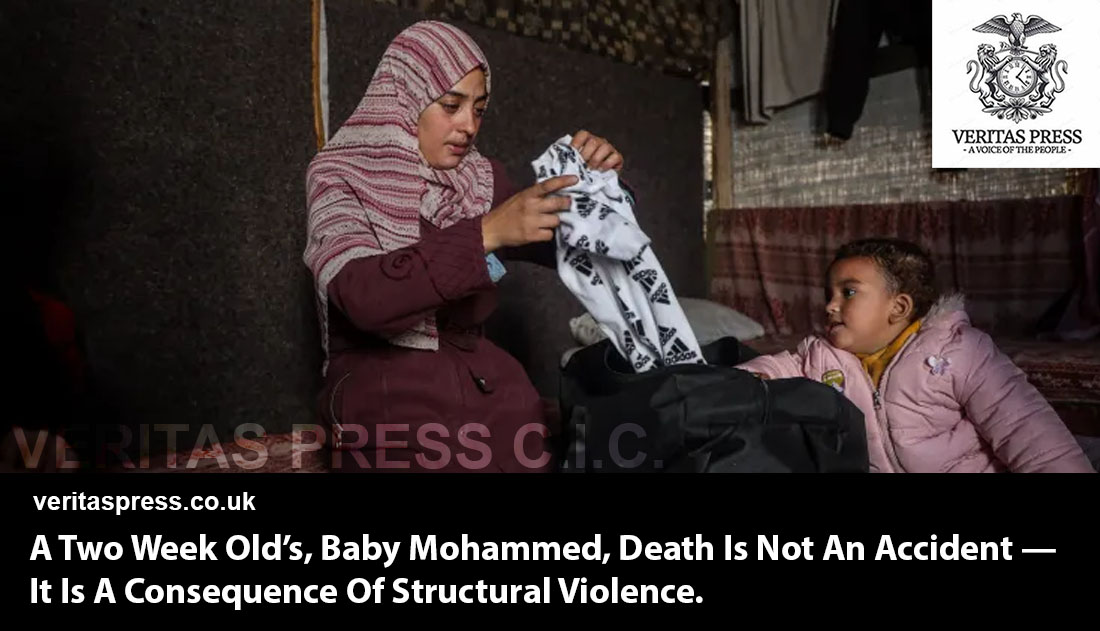
KHAN YOUNIS, GAZA STRIP — Baby Mohammed Khalil Abu al‑Khair’s death from hypothermia at just 14 days old is being mourned as a personal tragedy by his grieving mother, but a deeper examination reveals his death, and the deaths of other infants, children, and adults, as avoidable outcomes of systemic failure, policy blockade, and politically‑conditioned humanitarian access.
Mohammed’s mother, Eman Abu al‑Khair, 34, still clutches his tiny clothes inside her makeshift tent in southern Gaza, overcome by grief. “I still hear his tiny cries,” she told Al Jazeera from her cold, muddy shelter. “We’re living in tents on the street. What can a piece of cloth or nylon really do?”
But this is not just a story of loss; it is evidence of structural violence inflicted by prolonged conflict, restricted aid access, and a humanitarian system under political pressure.
“Children Are Now Freezing To Death”, UN And Aid Agencies Raise Alarm:
The United Nations has warned that winter conditions in Gaza are increasingly lethal. According to a prominent UN report, “children are now freezing to death,” with dozens of newborns, infants, and young children dying of hypothermia this winter alone as temperatures plummet and shelter remains inadequate.
Louise Wateridge of UNRWA, the UN agency for Palestinian refugees, stated bluntly:
“We enter this New Year carrying the same horrors as the last; there’s been no progress and no solace. Children are now freezing to death.”
These deaths are not anomalies. Gaza’s Ministry of Health has confirmed a steady rise in cold-related fatalities, including infants such as Mohammed and another baby, Saeed Asaad Abideen, who died from extreme cold conditions earlier this month, bringing the total cold-related deaths to over a dozen.
Flooded Tents, Soaked Bedding, Medics Describe Terrifying Conditions:
Medical workers on the ground describe a dire environment that increasingly mimics a public health disaster:
- Medics reported another eight-month-old girl, Rahaf Abu Jazar, died of exposure after torrential rains flooded her family’s tent in Khan Younis, forcing families to live in waist-high water with soaked bedding and limited shelter protection.
Her mother, Hejar Abu Jazar, recounted the moment she discovered her daughter’s body:
“When we woke up, we found the rain over her and the wind on her, and the girl died of cold suddenly … she was healthy, my sweetheart,” she sobbed.
Local emergency responders say tens of thousands of tents have been flooded or destroyed, with stormwater running through shelters and no insulation or heating to protect families. Humanitarian agencies warn that winter supplies and durable housing alternatives, such as caravans and mobile homes, are urgently needed.
International Aid Blockade And Bureaucratic Barriers:
The humanitarian crisis is not solely due to the weather. Aid agencies and the United Nations have repeatedly stressed that ongoing Israeli restrictions on humanitarian access, including shelter materials and winterisation aid, are a major factor in the deaths. A joint statement by the UN and over 200 aid groups said that bureaucratic, politicised registration requirements threaten to force dozens of organisations out of Gaza, which would cripple delivery of essential services like food, healthcare, sanitation and child nutrition programs.
One senior UN official noted:
“Operations in Gaza are in danger of collapsing due to a vague and politicised system that delays and blocks the entry of lifesaving supplies.”
UN agencies have also reported that shelter reinforcement materials, such as timber, sandbags and water pumps, are being blocked at the crossings, leaving families exposed to flooding and cold temperatures.
Aid groups warn that only a fraction of the 300,000 new tents needed for winter have arrived, and many lack insulation, forcing families to cope with the elements with blankets and plastic sheeting.
Healthcare Workers: Verdict From The Frontlines.
Doctors and nurses in Gaza’s hospitals report repeated cases of hypothermia among infants and warn of broader public health collapse:
- Doctors say malnutrition exacerbated by the blockade leaves children more vulnerable, and shortages of basic supplies, including baby formula, are common. According to one pediatric head physician at Nasser Hospital, “These babies have no time … and no voice,” highlighting the peril posed by inadequate supplies.
Medics warn that exposure is compounded by respiratory infections thriving in wet, crowded conditions, a lethal combination for infants and people with weakened immune systems.
A Gaza Civil Defence Spokesman Added:
“If people are not protected today, we will witness more victims, more killing of people, children, women, entire families inside these buildings and tents.”
Displaced Families: Winter Is Death By Degrees.
Eman Abu al‑Khair’s anguish mirrors the daily reality of thousands. Her daughter, two-year-old Mona, now asks where her baby brother went, a question that deepens her mother’s trauma.
Another displaced mother told Al Jazeera:
“Families are living on wet ground without heating, electricity or sufficient clothing… When food, fuel, shelter and aid are banned, cold absolutely becomes lethal.”
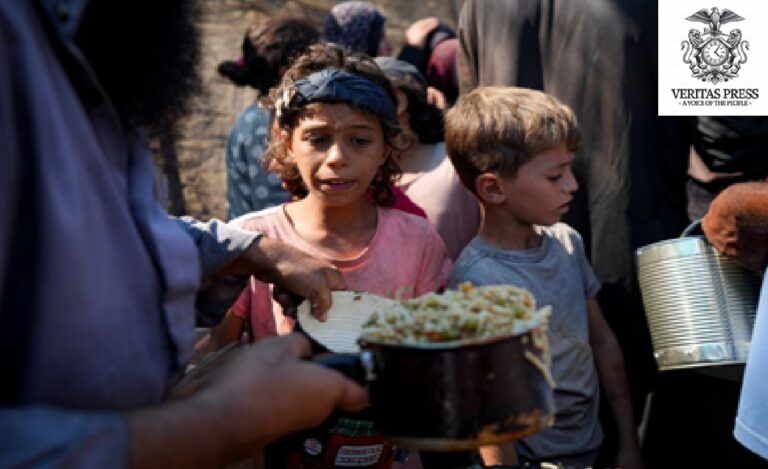
The scenes in tent encampments are grim: families tearfully trying to warm children over tiny fires, blankets soaked through, possessions ruined by rain, all while temperatures drop and hypothermia claims more victims.
Analysts: A Winter Of Policy, Not Just Weather.
Analysts argue that winter deaths in Gaza are not merely natural consequences of climate shift but are intimately tied to political and military measures.
Humanitarian and rights organisations say:
- Restrictions on shelter aid are part of a broader pattern of obstructed aid flows that prioritise political control over civilian survival.
- The politicised NGO registration regime undermines the ability of experienced global agencies to operate effectively.
- A lack of enforcement of international humanitarian law allows obstruction of basic necessities to continue with impunity.
Critics argue that winter has effectively become a secondary battlefield, one where restrictions on aid turn exposure, cold, and disease into mechanisms of attrition.
A Death Toll Beyond Bombs:
While headline figures emphasise deaths from direct bombardment, what is less reported, but no less dire, are the deaths from cold, hunger, exposure, disease and systemic deprivation. Gaza’s health ministry has documented a rising number of tragic cases this winter, including infants like Mohammed and Saeed Asaad Abideen.
This broader mortality is politically generated, not simply weather-related: it is tied to restricted access to shelter, fuel, medicine, mobility, and basic services, all factors shaped by conflict and policy choices.
Conclusion: When Winter Becomes A Weapon, Accountability, Law, And The Human Cost Of Inaction.
Baby Mohammed Khalil Abu al‑Khair did not die because of cold weather alone. He died because a system of war, blockade, bureaucratic obstruction, and political calculation created an environment where basic survival, heat, shelter, and lack of access to medical care were systematically denied. His death, and the deaths of other infants, children, and vulnerable adults this winter, are not random tragedies; they are predictable consequences of policy choices.
The crisis exposes a brutal hierarchy of priorities: political control, bureaucratic barriers, and selective aid access have been allowed to override basic humanitarian obligations. The international community, humanitarian organisations, and occupying powers have repeatedly acknowledged the dire conditions in Gaza, yet millions of dollars in life-saving supplies remain blocked, NGOs face de-registration, and families are left to face freezing nights in flooded tents.
Medical professionals, local officials, and aid workers warn that the death toll will rise unless urgent action is taken. Yet even in the face of mounting winter fatalities, global attention remains fragmented, and accountability mechanisms are weak or absent. Analysts argue that this is not just a humanitarian failure, it is a failure of enforcement of international humanitarian law, where deliberate or negligent obstruction of life-saving aid transforms predictable winter exposure into a weapon of attrition.
Who is responsible?
- Israeli authorities: By maintaining restrictions on humanitarian aid, shelter materials, and winterisation supplies, they are directly contributing to preventable civilian deaths. Despite commitments under ceasefire agreements and international law, the entry of life-saving tents, blankets, fuel, and medical supplies remains blocked or delayed.
- International actors and NGOs: Bureaucratic and politicised hurdles threaten operations and restrict the delivery of essential services. When humanitarian organisations are denied registration or face de-registration, the lives of the most vulnerable, children, the elderly, and the sick, hang in the balance.
- The global community, including the United Nations and donor states, bears moral responsibility for failing to enforce international humanitarian law, ensure access to relief, and hold accountable those obstructing aid flows.
Legal Obligations Ignored:
Under the Geneva Conventions and customary international law, occupying powers and controlling authorities must ensure the basic needs of civilians, shelter, food, and medical care, particularly during war and displacement. The ongoing blockade, coupled with restricted NGO operations, constitutes a breach of these obligations, transforming predictable suffering into preventable death.
Concrete measures to prevent further deaths:
- Immediate, unconditional access for humanitarian aid, including shelter kits, heating materials, and medical supplies.
- Suspension of politicised NGO de-registration processes to ensure continuity of critical services.
- International monitoring and enforcement to hold accountable any actor whose actions or omissions directly endanger civilians.
- Rapid winterisation programs for displaced families, prioritising infants, children, and the elderly.
- Public reporting mechanisms that track aid deliveries and blockages, creating transparency and accountability.
Mohammed’s death symbolises the human cost of impunity. It is a warning that in Gaza, even months after a ceasefire, survival is contingent on political expediency, not human need. The winter storms may pass, but without decisive action to restore unfettered access to aid, shelter, and medical care, thousands more will face the same preventable fate.
The lesson is stark: humanitarian crises are not natural disasters in isolation; they are created and amplified by human decisions, policies, and political choices. The life of Baby Mohammed, and other infants, however short, compels the world to address this reality and to respond to this uncomfortable question: if aid and resources could have saved him, who is accountable for allowing his death from the cold?
Winter in Gaza is not merely cold; it is a lethal lens on the politics of survival, and Baby Mohammed’s story demands justice, accountability, and immediate, tangible action.