Kamran Faqir is a volunteer investigative journalist and writer committed to exposing hidden truths and amplifying underreported stories. Driven by social justice, he brings sharp insight and fearless truth-telling to independent journalism. NUJ registered.
Original Article Date Published:
Article date Modified:
26 minutes
Views:329
Listen to this article
Help support our mission, donate today and be the change. Every contribution goes directly toward driving real impact for the cause we believe in.
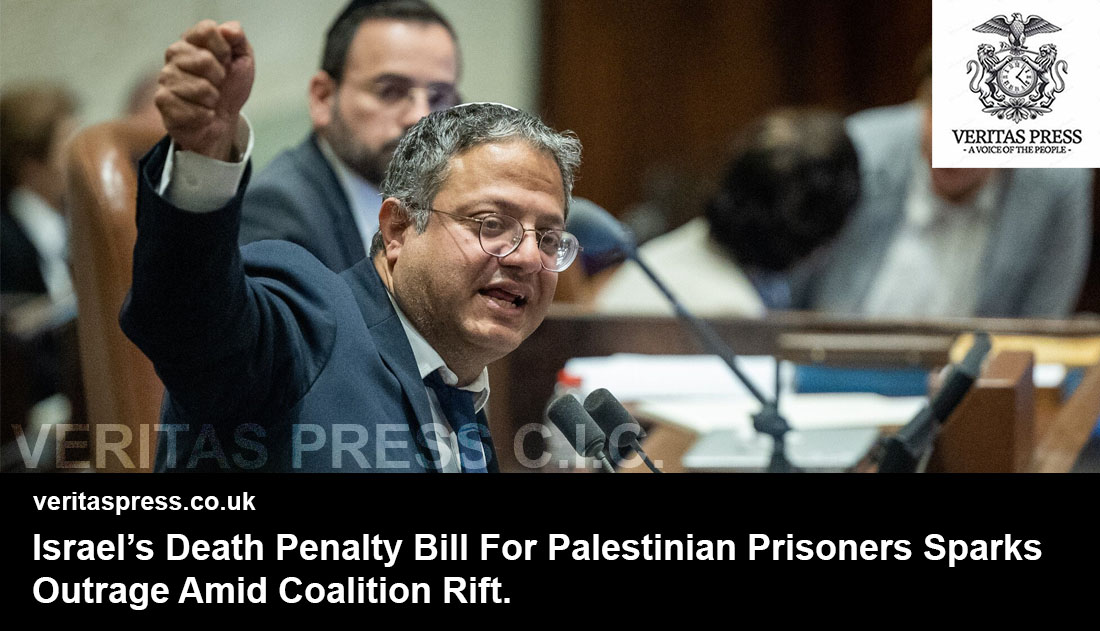
TEL-AVIV – It was, by any measure, a grotesque spectacle. In the corridors of the Knesset on the evening of March 30, 2026, as the final votes were tallied, 62 in favour, 48 against, one abstention, Israel’s National Security Minister Itamar Ben-Gvir did not simply nod in satisfaction. He produced a bottle of champagne, popped the cork, and poured celebratory glasses for fellow lawmakers from his Otzma Yehudit party. Affixed to his lapel was not the yellow ribbon that had come to symbolise solidarity with Israeli hostages held in Gaza. It was a gold pin shaped as a hangman’s noose.
“Soon we will count them one by one,” Ben-Gvir declared gleefully, as he brandished the bottle.
Just days earlier, during a provocative, heavily guarded incursion into the Al-Aqsa Mosque compound, the third holiest site in Islam, which Israeli authorities had kept closed to Palestinian worshippers for 38 consecutive days, Ben-Gvir had laid bare the ideological engine driving this legislation. “Hamas says the death penalty is immoral,” he told reporters, flanked by Israeli forces. “I say we have taken everything from the terrorists in prisons, and now we want to take their lives.”
The law he celebrated, officially titled Penal Law (Amendment No. 159) (Death Penalty for Terrorists) Law 5786–2026, represents a watershed moment in Israel’s 58-year military occupation of the Palestinian territories. It is not merely a revival of capital punishment; Israel has not carried out an execution since Nazi war criminal Adolf Eichmann was hanged in 1962. It is something far more consequential: the first law in the world that explicitly and structurally applies the death penalty on ethnic grounds, creating separate legal tracks that mandate execution for Palestinians while leaving Jewish Israelis who commit identical acts of violence untouched. As Amnesty International put it in a blistering statement: “The amendment added to Israel’s Penal Law … expands the scope and facilitates the use of capital punishment, at a time when there is a global trend towards abolishing it”.
This investigation situates the death penalty law within a broader, decades-old pattern of systematic violence against Palestinian detainees, what rights groups have called “torture camps,” “living graves,” and now, in the law’s own language, a legally sanctioned apparatus for execution. It traces the legislation’s discriminatory architecture, its roots in Ben-Gvir’s far-right political project, the wave of Palestinian resistance it has ignited, the international condemnation it has provoked, and the legal battles that will determine whether the first noose is ever tightened.
I. The Architecture Of Apartheid: How The Law Is Written To Kill Palestinians Exclusively
At first glance, the text of the law appears neutral. It speaks of punishing “terrorists” who commit intentional killings with the aim of negating the existence of the State of Israel.” But as legal scholars, human rights organisations, and even Israeli officials have pointed out, the neutrality is a carefully constructed illusion.
The law operates through two parallel tracks. For Palestinians in the occupied West Bank, tried before Israeli military courts, which have a staggering conviction rate of 96 to 99%, the death penalty by hanging is the default sentence. Life imprisonment is possible only in unspecified “special circumstances.” Courts may impose death without a request from prosecutors, without a unanimous decision (a simple majority suffices), and without the possibility of pardon or commutation. Executions must be carried out within 90 days of a final ruling, with a single possible 90-day extension granted by the prime minister.
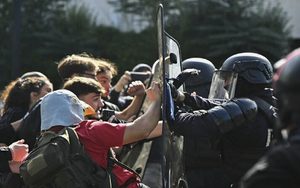
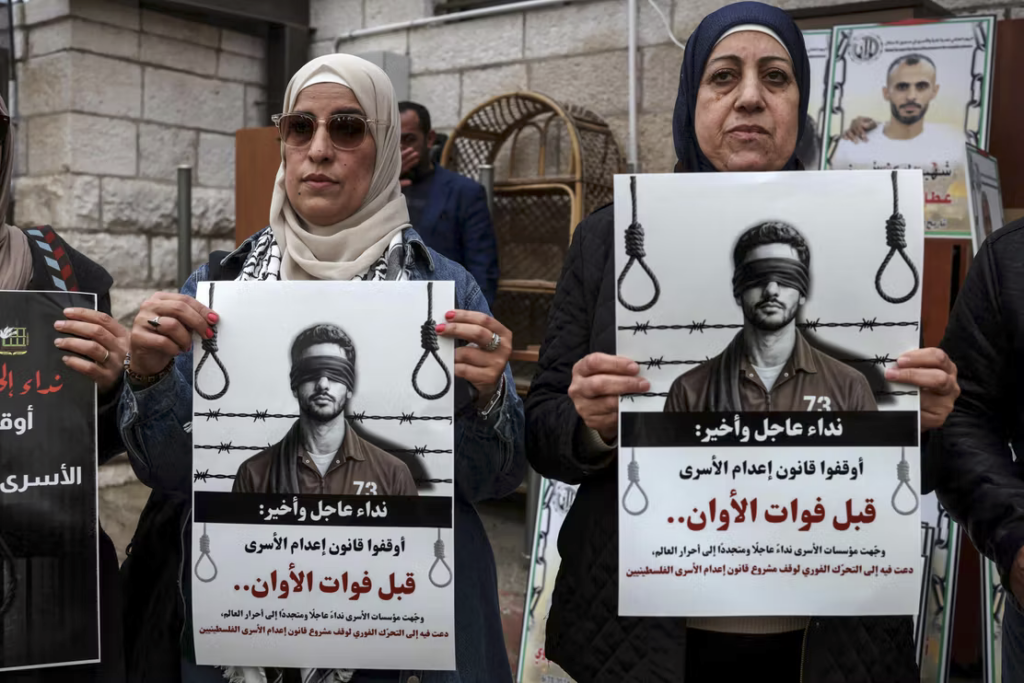
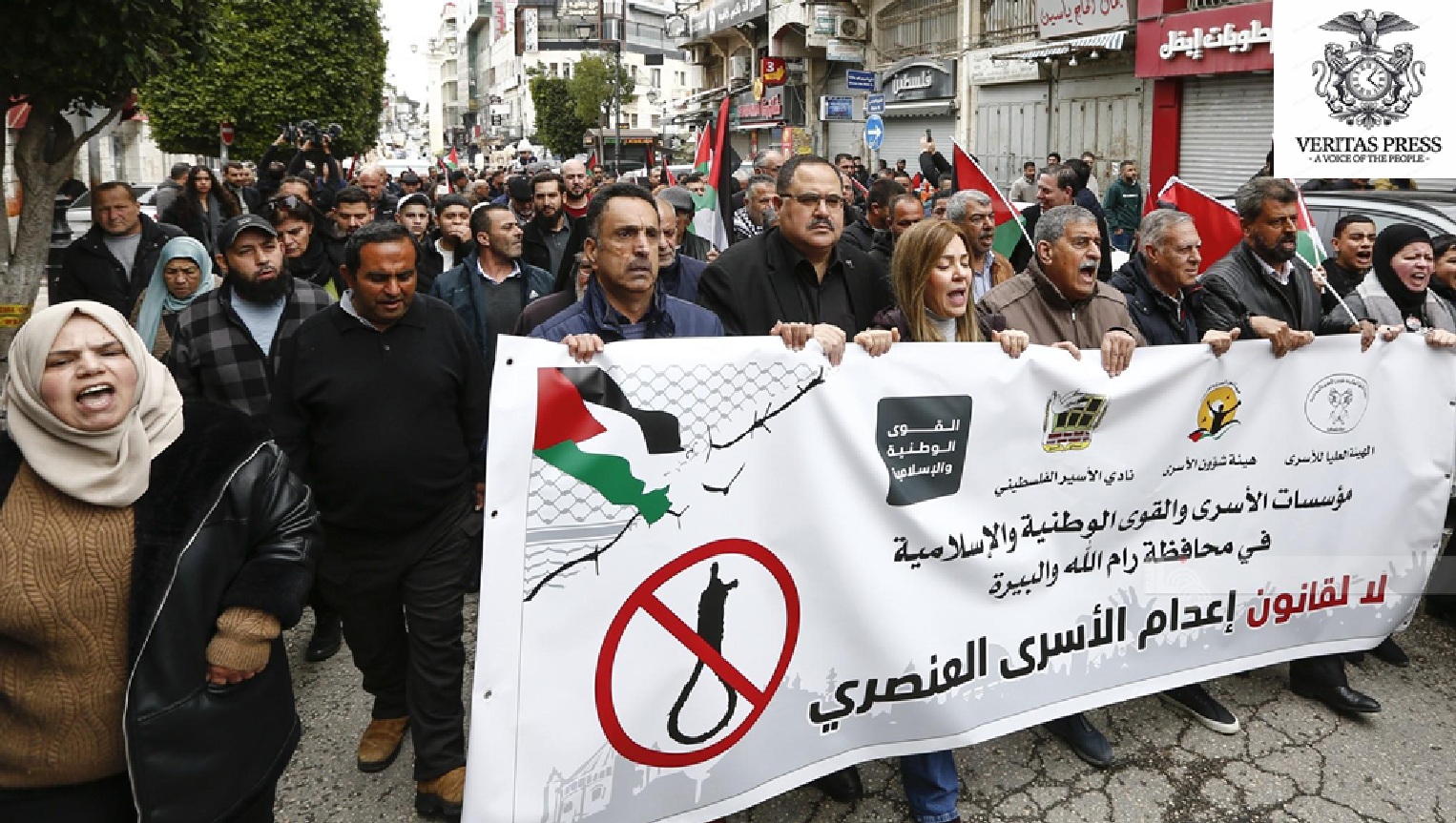
Protest against the law authorising the death penalty for Palestinians convicted of deadly terrorist acts, in front of the offices of the Red Cross in Ramallah, West Bank, March 31, 2026. ZAIN JAAFAR/AFP
For Jewish Israelis, by contrast, the same acts of intentional killing are adjudicated in civilian courts, where the death penalty is a discretionary punishment, not a default. Crucially, the ideological requirement that the killing must aim to “negate the existence of the state” renders the law practically inapplicable to Jewish perpetrators, whose violence against Palestinians is never framed as an existential assault on the state but as individual criminality or, in many cases, as unpunished acts of settler vigilantism.
“While many countries apply the death penalty, this statute is the only law in the world that discriminates between defendants based on ethnicity,” said Hussein Jabareen, director of the Adalah Legal Centre for Arab Minority Rights in Israel, in an interview with Anadolu Agency.
The law’s discriminatory architecture extends even to the mechanics of death. Those sentenced to death are to be transferred to solitary underground isolation cells, with no family visits permitted. Legal consultations will be conducted only by video link. The execution itself, by hanging, will be carried out by a masked prison officer whose identity remains concealed. The law grants full legal immunity to all involved in the execution process, shielding them from criminal or civil liability.
A joint statement issued by Amnesty International, B’Tselem, and other rights organisations on April 7, 2026, described the law as creating “an exceptional execution regime by hanging, characterised by secrecy, limited access to legal counsel, and external oversight.” The statement continued: “This new legislation not only marks a significant regression: it also does so by imposing capital punishment on de facto ethnic or national grounds and by diluting basic legal safeguards”.
UN High Commissioner for Human Rights Volker Türk went further. In a statement issued on March 31, he warned that applying the law to residents of the occupied Palestinian territory “would constitute a war crime”. He emphasised that the law “flagrantly violates the principles of international humanitarian law,” lacks fair trial guarantees, and is “characterised by blatant discrimination”.
II. ‘We Have Already Been Killing Them Slowly’: The Pre-Existing Regime Of Prisoner Abuse
To understand the death penalty law as more than an isolated legislative atrocity, one must first understand the condition of Israel’s prisons for Palestinian detainees. Human rights groups have, for years, documented a systematic apparatus of abuse, torture, medical neglect, and deliberate starvation. The new law does not emerge from a vacuum; it codifies and accelerates a regime of violence that was already claiming dozens of lives each year.
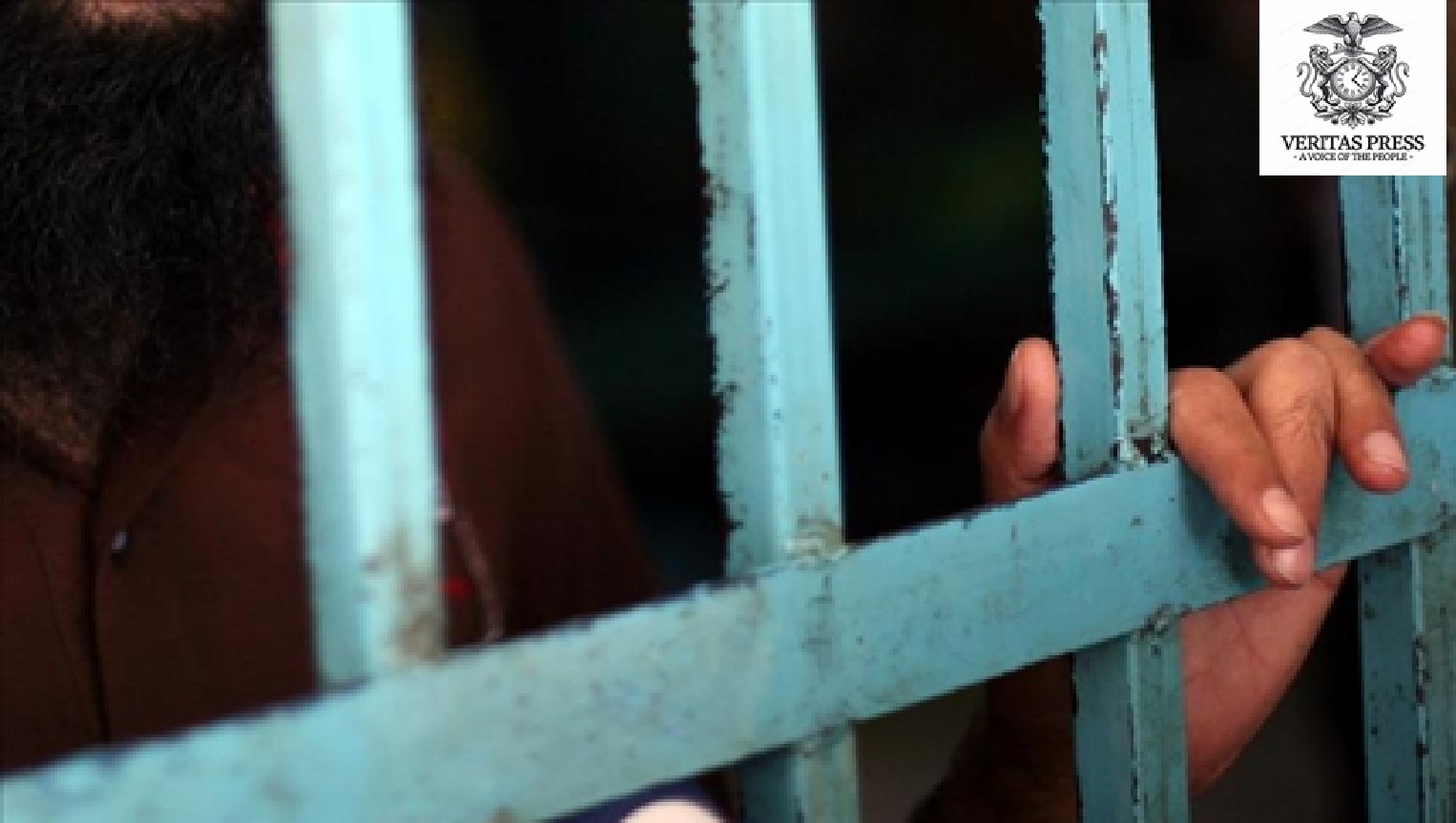
In January 2026, the Israeli human rights organisation B’Tselem released a landmark report titled Living Hell: The Israeli Prison System as a Network of Torture Camps. The findings were devastating. Israeli prison and detention facilities, the report concluded, “were transformed into a network of camps dedicated to the abuse of inmates as policy. A space of this kind, in which anyone who enters is condemned to deliberate, severe, and unrelenting pain and suffering, functions de facto as a torture camp”.
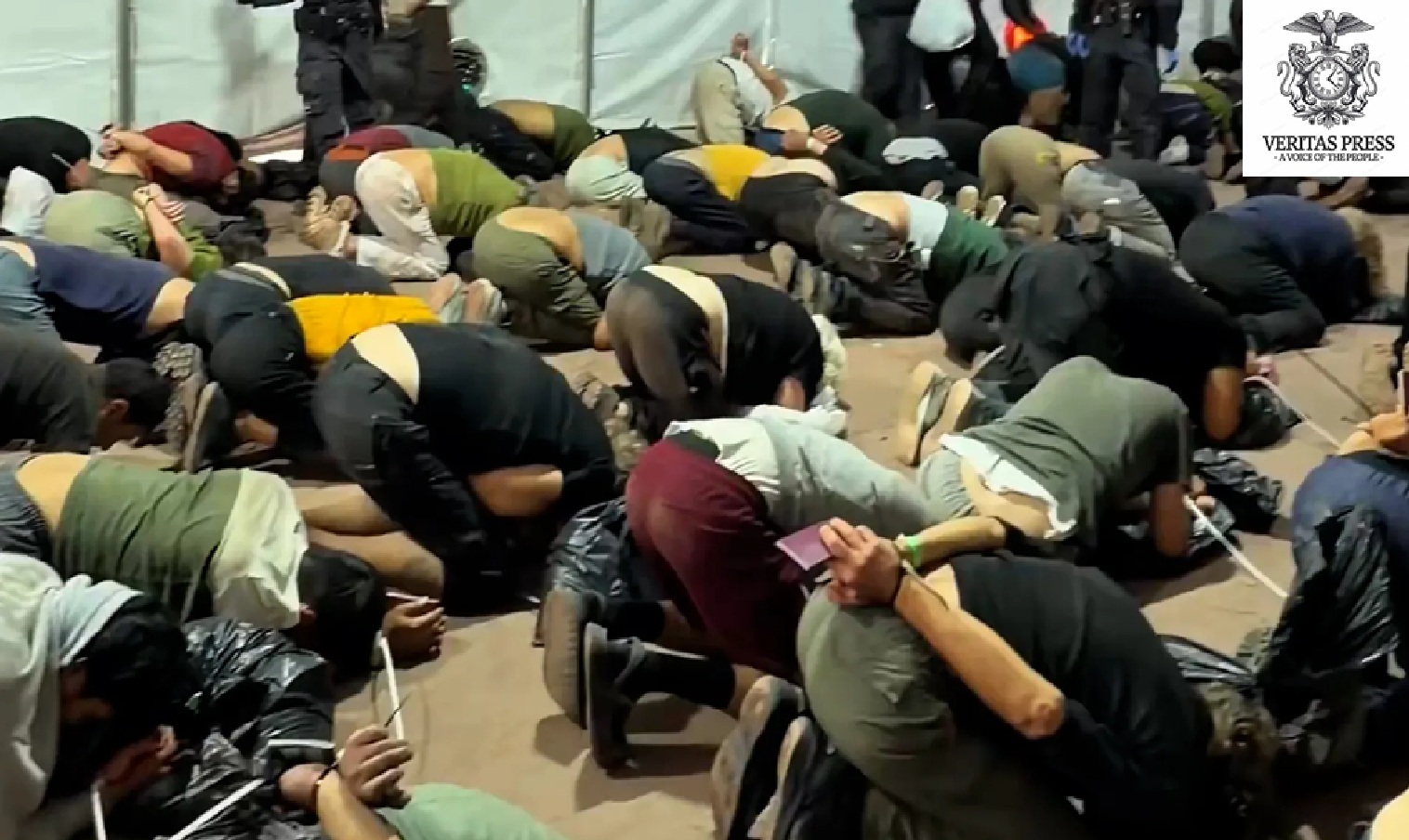
Based on its ongoing monitoring, B’Tselem documented that from the start of the Gaza war in October 2023 through early January 2026, at least 84 Palestinian prisoners and detainees, including one minor, died in Israeli custody. Other human rights organisations put the figure closer to 100, with some deaths occurring during Shin Bet interrogations. The report detailed institutionalised violence, including electric shocks, tear gas and stun grenades deployed inside cells, cigarette burns, pouring of boiling liquids on detainees’ bodies, rubber bullets fired at close range, and attacks by dogs.
Sexual violence, B’Tselem documented, has become a systematic tool of abuse: “These include threats of sexual assault, forced stripping, actual sexual assaults, beatings to the genitals that caused severe injuries, setting dogs on prisoners, and forced anal penetration with various objects”. Medical neglect is used as a method of torture in itself. Autopsies performed on 10 Palestinians who died in Israeli custody since October 2023 found that denial of medical treatment was documented in six of the 10 cases.
As of August 2025, B’Tselem reported that 10,863 Palestinian detainees were held in Israeli prisons and detention facilities, including 3,521 held in administrative detention, imprisoned without trial and without the opportunity to mount a defence. Among them were 350 minors and 48 women. Other estimates put the number of women as high as 73.
The Public Committee Against Torture in Israel (PCATI) has described the prison system as a “killing platform.” In February 2026, an expert doctor who reviewed materials on behalf of PCATI confirmed that “occupation prisons remain a witness to a major humanitarian tragedy, where thousands of Palestinians face the risk of death due to torture and systematic negligence away from the eyes of international oversight”.
It is against this backdrop of already-existing slow execution through torture, neglect, and starvation that Ben-Gvir’s champagne celebration must be understood. “We have taken everything from them in prisons,” he said at Al-Aqsa. The statement was not hyperbole. It was an acknowledgement of a reality that rights groups have documented for years: Palestinian detainees have been systematically stripped of dignity, health, family contact, legal recourse, and, in dozens of documented cases, their lives. The new law merely dispenses with the pretence of slowness.
“This law transforms a prisoner from a political detainee or a freedom fighter into a corpse awaiting execution,” a human rights source told Al-Quds news, “thereby closing all doors of hope for their release in future exchange deals”.
III. ‘No One Slept Last Night’: Palestinian Fear, Anger, And The General Strike
In the days following the law’s passage, the occupied West Bank and East Jerusalem erupted. What had long been an undercurrent of dread among the families of the more than 9,500 Palestinians held in Israeli prisons became a flood of public grief and fury.
On April 1, 2026, a general strike swept across the West Bank. Shops, markets, schools, universities, banks, and public offices shuttered their doors. Transportation lines ground to a halt. In Ramallah’s Al-Manara Square, in Nablus, in Hebron, in Bethlehem, thousands took to the streets chanting, “No to the racist law to execute prisoners”. At the Qalandia checkpoint, one of the West Bank’s busiest entry points, protesters burned tyres as Israeli soldiers fired rubber-coated bullets, stun grenades, and tear gas, according to the Palestinian news agency WAFA.
For the families of detainees, the strike was not merely political theatre. It was a cry of existential terror. “The mothers of prisoners, none of us slept last night,” Maysoun Shawamreh told AFP at a protest in Ramallah. Her 29-year-old son, Mansour, has been in detention for three years on attempted murder charges, awaiting sentencing. “He may or may not be subject to execution,” she said, her voice trembling with uncertainty. Another mother, who gave only her first name as Riman, a 53-year-old psychologist from Ramallah, told AFP: “There isn’t a single person standing here who doesn’t have a brother, a husband, a son, or even a neighbour in prison. There is no Palestinian family without a prisoner. But honestly, today we feel a lot of anger, because there is also a real weakness in solidarity with them”.
In the West Bank city of Ramallah, Abdel Fattah al-Himouni joined the protest carrying a photograph of his son, Ahmed, who is in prison awaiting trial for a shooting and stabbing attack at a light-rail stop near Tel Aviv in October 2024 that killed seven people, including a woman clutching her baby. Al-Himouni’s fear was not for his son’s guilt or innocence but for the fairness of the process that would decide his fate. “I appeal to human rights organisations to pressure the Israeli government so this law does not come into effect,” he said.
The strike was called by Fatah, the ruling movement of the Palestinian Authority, which affirmed that the legislation “would not break the will of the Palestinian people or their prisoners but rather will strengthen their determination to continue the struggle for their freedom and legitimate rights”. Sabri Saidam, deputy secretary of the Fatah Central Committee, told Xinhua: “Through today’s strike, we wanted to send a message to the international community, and we hope to see serious action to stop these crimes”.
Wasel Abu Yousef, coordinator of Palestinian factions in the West Bank, drew a direct line between the death penalty law and the already-lethal conditions inside Israeli prisons. “Israel’s policies of liquidation against prisoners are ongoing. We are talking about 90 prisoners who have died in Israeli prisons since October 7, 2023, and these are only the known names,” he told Xinhua, adding that hundreds more are subjected to “torture, rape, and medical neglect”.
Palestinian political leader Mustafa Barghouti framed the law as a fundamental assault on the very concept of an occupied people having legal standing. “The Knesset has no right whatsoever to impose laws on occupied people, and we are under Israeli occupation, and they have no right to impose this law,” Barghouti told Xinhua. “It is directed only against Palestinians. So it’s a very clear, discriminatory law. And it is one of the ways Israel is trying to upgrade and upscale their oppression of the Palestinian people”.
The Palestinian Presidency issued a formal condemnation, describing the law as “a blatant violation of international humanitarian law” and “a clear breach of the Fourth Geneva Convention,” adding that “the legislation amounts to a war crime against the Palestinian people”. The Palestinian Foreign Ministry went further, calling for sanctions on the Israeli Knesset and its suspension from international bodies. “The law represents a critical turning point in the formalisation of extrajudicial killings under a legal guise,” the ministry’s statement read. “The Ministry stresses that this law, in its essence, constitutes an institutionalised policy of field executions based on discriminatory and racist standards”.
Hamas, for its part, issued a statement saying the law “reflects the bloody nature of the occupation and its approach based on killing and terrorism, and exposes the falsity of its repeated claims of civilisation and commitment to human values”.
IV. ‘A Step Toward Apartheid’: The International Response And The American Silence
The global reaction to the law was swift, widespread, and remarkably unified, except in one notable quarter.
On March 29, two days before the law’s passage, the foreign ministers of France, Germany, Italy, and the United Kingdom issued a joint statement expressing “deep concern” over the bill’s “de facto discriminatory character.” “The adoption of this bill would risk undermining Israel’s commitments with regards to democratic principles,” the statement read. After the law passed, the four nations reiterated their condemnation, warning that the legislation undermines Israel’s democratic standing.
Spanish Prime Minister Pedro Sánchez delivered one of the sharpest rebukes from a Western leader. “Another step toward apartheid,” he wrote on X, adding: “This is an unequal law that will not apply to Israelis who commit the same crimes. Same crimes, different punishments, that is not justice”.
Irish Foreign Minister Helen McEntee condemned the law and urged Israel not to proceed with it. “Ireland is consistently and strongly opposed to the use of the death penalty in all cases and in all circumstances. I am particularly concerned about the de facto discriminatory nature of the Bill as it relates to Palestinians”.
The European Union called the law “a step backwards” and a “discriminatory bill”. The Council of Europe went further, warning that the legislation could lead to Israel losing its observer status in the 46-member body. Council of Europe chief Alain Berset issued an appeal before the vote: “The Council of Europe opposes the death penalty in all places and in all circumstances”. After the law passed, the Council condemned it as “a serious regression” and said the move “distances Israel from the Council of Europe’s values”.
The Organisation of Islamic Cooperation (OIC) condemned the law as a “license for murder and political execution against the Palestinian people,” warning that it contravenes the Fourth Geneva Convention and the International Covenant on Civil and Political Rights. A coalition of eight Muslim-majority countries, including Saudi Arabia, Egypt, Jordan, and Turkey, condemned the law as “discriminatory” and warned that it entrenches a system of apartheid.
Australia, which has maintained relatively close ties with Israel, also joined the condemnation, with Foreign Minister Penny Wong expressing alarm at the law’s discriminatory application.
But the most significant silence came from Washington. The Trump administration has so far avoided joining global critics of the law. A State Department spokesperson told NBC News that the United States “respects Israel’s sovereign right to determine its own laws,” adding: “We trust that any such measures will be carried out with a fair trial and respect for all applicable fair trial guarantees and protections”. Human rights groups noted the irony: a law that dismantles fair trial guarantees by design, endorsed by an administration that claims to champion due process.
UN High Commissioner Türk, in his March 31 statement, did not mince words. He called the law a “particularly egregious violation of international law” and warned that “its application to residents of the occupied Palestinian territory would constitute a war crime”. UN spokesperson Stephane Dujarric told reporters that Secretary-General Antonio Guterres had a “very clear” stance: “We stand against the death penalty in all its forms. The nature of this particular law makes it particularly cruel and discriminatory”.
Amnesty International’s Erika Guevara-Rosas framed the law as part of a broader pattern of impunity for violence against Palestinians. “It speaks volumes to the extent of Israel’s dehumanization of Palestinians that this law has passed in the same month in which Israeli military attorney general dropped all charges against Israeli soldiers accused of sexually assaulting a Palestinian detainee, a decision celebrated by the Prime Minister and several ministers,” she said. She noted that Prime Minister Benjamin Netanyahu, “wanted by the International Criminal Court for war crimes and crimes against humanity, was among those who voted in favor of the law”.
V. ‘Noose Pins And Legal Immunity’: The Ben-Gvir Project And The Far-Right Agenda
To understand the law’s passage, one must understand the man who championed it. Itamar Ben-Gvir, Israel’s National Security Minister and leader of the Otzma Yehudit (Jewish Power) party, has a long history that would, in any other Western democracy, be disqualifying for high office. He has previous convictions for supporting a terrorist organisation and for inciting racism. He once pulled a gun on Palestinian residents of East Jerusalem. He has, for years, called for the annexation of the West Bank and the expulsion of Palestinians deemed “disloyal.”
The death penalty law has been Ben-Gvir’s project since his 2022 election campaign. The bill was first introduced by Otzma Yehudit MK Limor Son Har-Melech in November 2025, passed its first reading that month, and was consolidated into a single bill before its final passage on March 30, 2026.
Ben-Gvir’s celebration was not a spontaneous outburst. It was carefully staged. The noose-shaped lapel pins worn by Ben-Gvir and his allies replaced the yellow-ribbon pins that had symbolised solidarity with Israeli hostages in Gaza, a replacement that critics called a grotesque inversion of solidarity. In his speech before the vote, Ben-Gvir declared: “From today, every terrorist will know, and the whole world will know, that whoever takes a life, the state of Israel will take their life”.
In an interview with Al Jazeera after the vote, Ben-Gvir announced that he was “busily arranging for a Palestinian death row to be set up,” appearing to be in a hurry to start hanging people. He described hanging as “one of the options” alongside the electric chair or “euthanasia,” claiming some doctors had offered to assist. Whether those doctors exist or were a rhetorical flourish remains unclear; what is clear is the urgency with which Ben-Gvir wishes to operationalise the law.
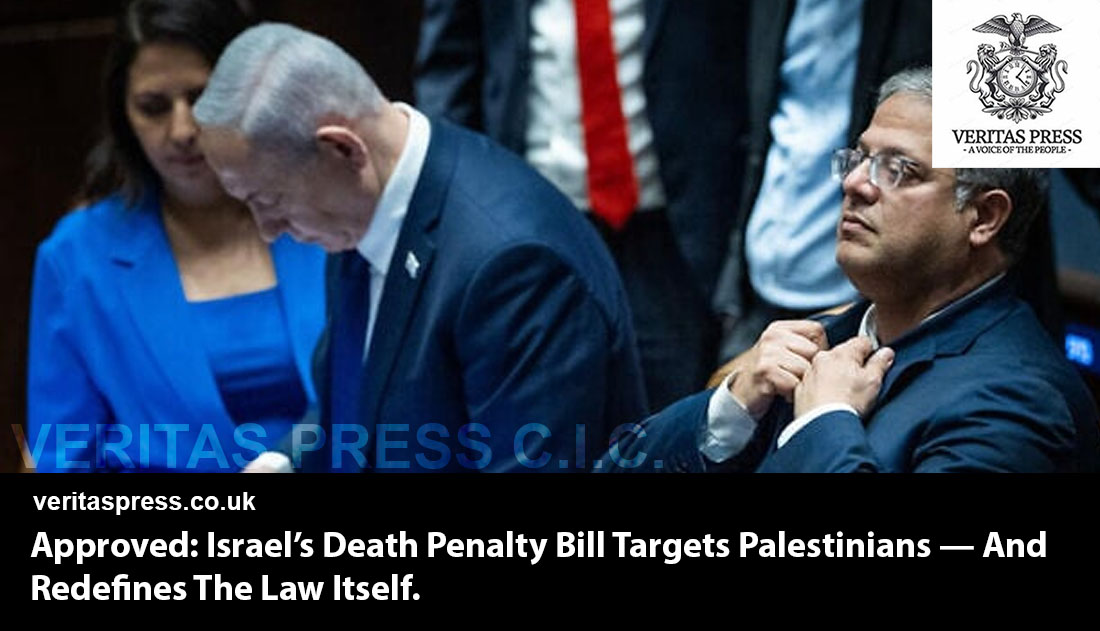
Prime Minister Benjamin Netanyahu, who arrived at the Knesset specifically to vote in favour of the law, sat “motionless” as the chamber erupted in cheers, according to reports. His presence and vote signalled that the death penalty law is not merely a far-right pet project but a coalition-wide priority. Human rights groups noted that Netanyahu, wanted by the ICC for war crimes and crimes against humanity, voted to expand the use of capital punishment against the very population at the centre of those allegations.
Even within Israel, the law has drawn significant opposition. About 1,200 Israeli figures, including Nobel laureates, former military officials, and former Supreme Court judges, voiced strong opposition in February 2026, calling it a “moral stain”. Israeli physician Meyir Lahav from Tel Aviv called the legislation “primitive and very stupid,” adding: “We should be ashamed”. Israeli software engineer Tom, who gave only his first name, told Kuwait Times: “What I don’t like is that it doesn’t apply to everyone. If someone commits murder, it should apply to all—Jews, Arabs, Muslims alike”.
VI. ‘A Clear Case That Invites The Supreme Court To Strike It Down’: Legal Challenges
The law may never be implemented. Within hours of its passage, multiple legal challenges were filed with Israel’s Supreme Court, setting the stage for a constitutional confrontation that could determine the law’s fate.
The first petition came from the Association for Civil Rights in Israel (ACRI) on Monday night, March 30. ACRI asked the court to strike down the law and issue an interim order freezing its implementation pending a ruling. In its filing, ACRI argued that capital punishment is unconstitutional in principle because of the irreversible harm it causes to the right to life, and that the specific framework enacted by the Knesset creates “two parallel legal tracks” aimed at Palestinians. The petition argued that carrying out a hanging within 90 days of a final judgment leaves too little time for meaningful review, clemency efforts, or attempts to prove wrongful conviction, sharply increasing “the danger of executing an innocent person”.
The following day, March 31, Adalah, the Legal Centre for Arab Minority Rights in Israel, filed a separate urgent petition on behalf of itself, PCATI, HaMoked, Gisha, Physicians for Human Rights-Israel, and three Arab Knesset members: Aida Touma-Sliman, Ahmad Tibi, and Ayman Odeh. Adalah’s petition asked the court to declare the law void in the West Bank, arguing that the Knesset “is not the sovereign legislator there as related to a protected population under the law of occupation”. The petition framed the law as entrenching “cruel and inhuman punishment,” violating rights to life, dignity, equality, and due process, and amounting to “a racially differentiated regime around the right to life”.
On April 6, Israeli opposition lawmaker Gilad Kariv of the Democratic Party filed a third petition, in cooperation with the Zulat Institute and Rabbis for Human Rights. “This is a racist and extremist law,” Kariv said. “This is not legislation, but a populist and nationalist election campaign by a party that has failed miserably in all its governmental tasks”, a pointed reference to Ben-Gvir’s Otzma Yehudit.
Justice Yechiel Kasher of the Supreme Court ordered the government to submit its preliminary response to the petitions by May 24, 2026, but declined at this stage to issue a temporary order freezing the law. Adalah director Hussein Jabareen told Anadolu Agency that the law “will not be implemented until the Supreme Court completes its review of petitions against it,” a process that “could take months, possibly a year”.
Mordechai Kremnitzer, a law professor with the Israel Democracy Institute, told Reuters that the law is “a clear case that invites the Supreme Court to strike it down.” He noted that judges are likely to show a negative attitude toward capital punishment “because it runs against both universal morality and Jewish morality”. Legal experts also pointed to the Fourth Geneva Convention of 1949, which Israel has ratified, which says that persons condemned to death cannot be deprived of the right to petition for pardon and requires a minimum of six months between sentence and execution, both provisions that the new law explicitly violates.
However, even if the Supreme Court strikes down the law, the political message has already been sent. As one Palestinian activist told Al-Quds: “The mere existence of a legal text permitting execution represents an existential threat to every Palestinian who falls into captivity, regardless of the timing of their arrest or the details of their trial”.
VII. ‘Part Of A Pattern’: The Law As A Piece Of A Larger System
The death penalty law did not emerge in isolation. It is one piece of a broader legislative and military project that human rights groups have increasingly characterised as amounting to apartheid, as the International Court of Justice found in its July 2024 Advisory Opinion. The same week the law passed, Israeli authorities continued to ban access to Al-Aqsa Mosque for Muslim worshippers, now closed for 38 consecutive days, and kept the Church of the Holy Sepulchre closed since February 28 under the pretext of security concerns. On the evening of the law’s passage, Ben-Gvir himself stormed the Al-Aqsa compound, escorted by Israeli forces, in a deliberate provocation timed to coincide with the legislative victory.
The law also comes as Israel’s war on Gaza enters its 30th month, with a death toll exceeding 72,000, most of them women and children, according to Palestinian and international health authorities. A UN Commission of Inquiry, multiple Palestinian, Israeli, and international organisations, and independent experts have characterised the conduct of the war as constituting genocide.
The International Court of Justice, in its 2024 Advisory Opinion, found that Israel’s policies and practices against Palestinians violate Article 3 of the International Convention on the Elimination of All Forms of Racial Discrimination, which prohibits racial segregation and apartheid. Amnesty International, in its statement on the death penalty law, explicitly linked the legislation to this finding. “This law comes to crown a series of punitive measures that included starvation and deprivation of the most basic human rights,” the organisation said.
For Palestinians, the law represents the culmination of a long process of legalised dehumanisation. Families of detainees have long described Israeli prisons as “living graves.” The death penalty law merely makes those graves official. As one protester in Ramallah, Jamileh Abed, told Xinhua while waving a Palestinian flag: “We are the people with roots here. No matter how much we lose, no matter what happens, we will remain on our land, and Palestine will be free”.
Conclusion: The Noose And The Champagne
The image of Ben-Gvir toasting with champagne while wearing a noose pin encapsulates something profound about the current moment in Israeli-Palestinian relations. It is the image of a political movement that no longer feels the need to conceal its intentions behind the language of security or deterrence. The law’s supporters have framed it as a deterrent against terrorism, but as ACRI noted in its petition, no professional opinion was presented to substantiate the assumption that executions deter attackers. Even Israeli security officials reportedly warned that the measure could produce the opposite effect, encouraging kidnappings aimed at saving prisoners from execution.
But deterrence was never the primary goal. The goal, as Ben-Gvir himself stated at Al-Aqsa, is to take lives. The law is not a response to Palestinian violence; it is a codification of the belief that Palestinian lives are not entitled to the same protections as Jewish lives. It is, in the words of Amnesty International, “a public display of cruelty, discrimination and utter contempt for human rights”.
Whether the law survives Supreme Court review remains to be seen. Legal experts are cautiously optimistic that it will be struck down. But even if it is, the fact that it was passed at all, that 62 members of the Knesset, including the prime minister, voted to create a racially discriminatory death penalty regime, marks a point of no return. The noose pin has been worn. The champagne has been poured. The message has been sent. And for the families of the more than 10,000 Palestinians in Israeli prisons, the message is clear: their loved ones are not prisoners awaiting trial or eventual release. They are corpses awaiting execution.
“We have taken everything from them in prisons,” Ben-Gvir said. The new law ensures that, from now on, the only thing left to take is their last breath.
Source: Multiple News Agencies
Submissions:
For The Secure Submission Of Documentation, Testimonies, Or Exclusive Investigative Reports From Any Global Location, Please Utilise The Following Contact Details For Our Investigations Desk: enquiries@veritaspress.co.uk or editor@veritaspress.co.uk
Help Support Our Work:
Popular Information is powered by readers who believe that truth still matters. When just a few more people step up to support this work, it means more lies exposed, more corruption uncovered, and more accountability where it’s long overdue.
Help Protect Independent Journalism, Which Is Currently Under Attack.
If you believe journalism should serve the public, not the powerful, and you’re in a position to help, becoming a DONATOR or a PAID SUBSCRIBER truly makes a difference.
DONATION APPEAL: If You Found This Reporting Valuable, Please Consider Supporting Independent Journalism.
Help Support Our Work – We Know, We Know, We Know …
Seeing these messages is annoying. We know that. (Imagine what it’s like writing them … )
Your support fuels our fearless, truth-driven journalism. In unity, we endeavour to amplify marginalised voices and champion justice, irrespective of geographical location.
But it’s also extremely important. One of Veritas Press’s greatest assets is its reader-funded model.
1. Reader funding means we can cover what we like. We’re not beholden to the political whims of a billionaire owner. We are a small, independent and impartial organisation. No one can tell us what not to say or what not to report.
2. Reader funding means we don’t have to chase clicks and traffic. We’re not desperately seeking your attention for its own sake: we pursue the stories that our editorial team deems important and believe are worthy of your time.
3. Reader Funding: enables us to keep our website and other social media channels open, allowing as many people as possible to access quality journalism from around the world, particularly those in places where the free press is under threat.
We know not everyone can afford to pay for news, but if you’ve been meaning to support us, now’s the time.
Your donation goes a long way. It helps us:
Keep the lights on and sustain our day-to-day operations
Hire new, talented independent reporters
Launch real-time live debates, community-focused shows, and on-the-ground reporting
Cover the issues that matter most to our communities, in real time, with depth and integrity
We have plans to expand our work, but we can’t do it without your support. Every contribution, no matter the size, helps us stay independent and build a truly people-powered media platform.
If you believe in journalism that informs, empowers, and reflects the communities we serve, please donate today.
Kamran Faqir is a volunteer investigative journalist and writer committed to exposing hidden truths and amplifying underreported stories. Driven by social justice, he brings sharp insight and fearless truth-telling to independent journalism. NUJ registered.
SEATTLE, TEHRAN — The U.S. Department of Homeland Security (DHS) will allow Iran’s national football team to enter the country 48 hours before their critical World Cup match against Egypt on Friday, a modest concession in a tournament where Team Melli’s travel conditions have sparked claims of oppression and competitive disadvantage.