Kamran Faqir is a volunteer investigative journalist and writer committed to exposing hidden truths and amplifying underreported stories. Driven by social justice, he brings sharp insight and fearless truth-telling to independent journalism. NUJ registered.
Original Article Date Published:
Article Date Modified:
19 minutes
Views:407
Listen to this article
Help support our mission, donate today and be the change. Every contribution goes directly toward driving real impact for the cause we believe in.
How A Reckless Operation To Seize Iran’s Enriched Uranium Ended In Catastrophe, Leaving Washington Exposed And Tehran Defiant.
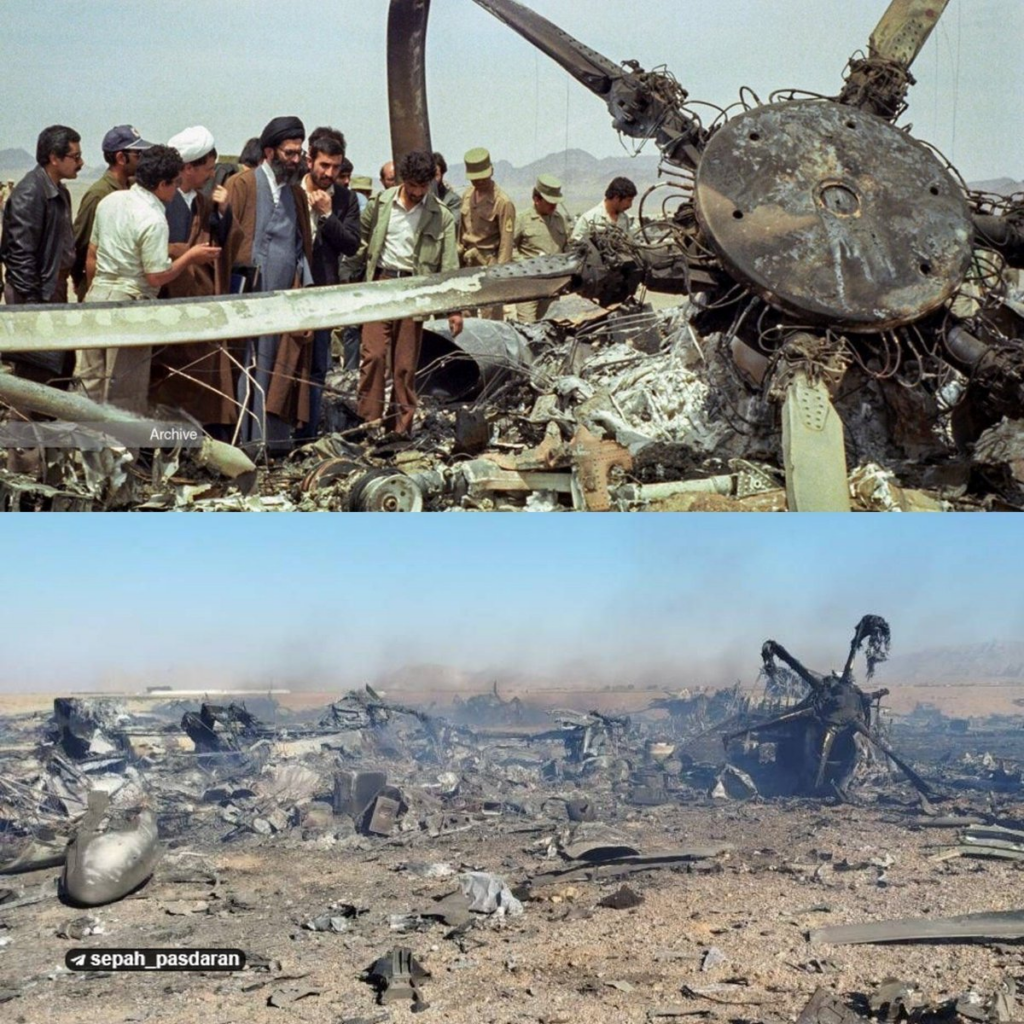
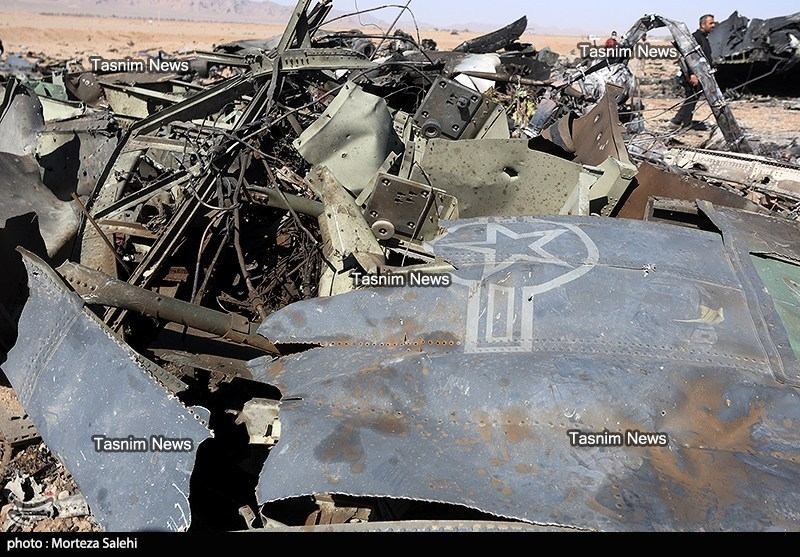
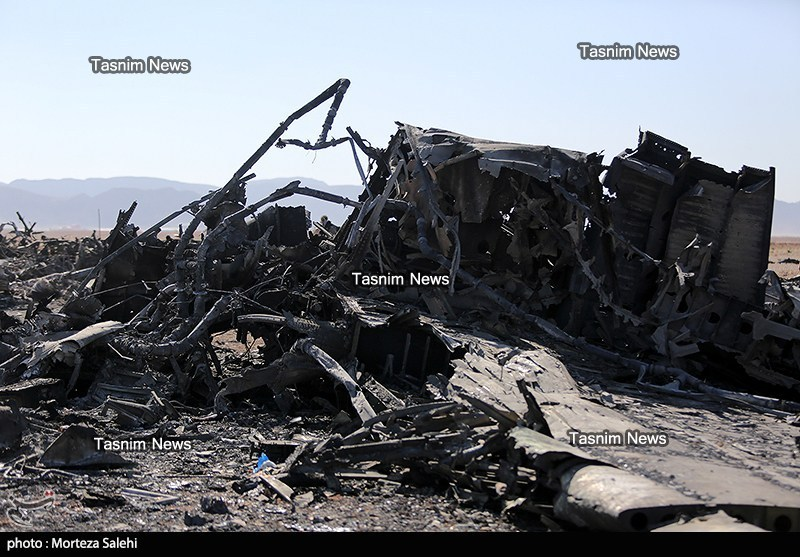
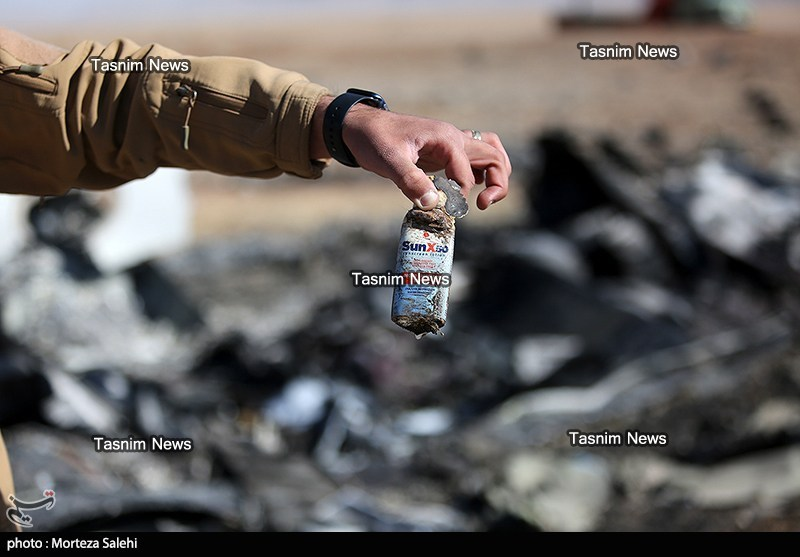
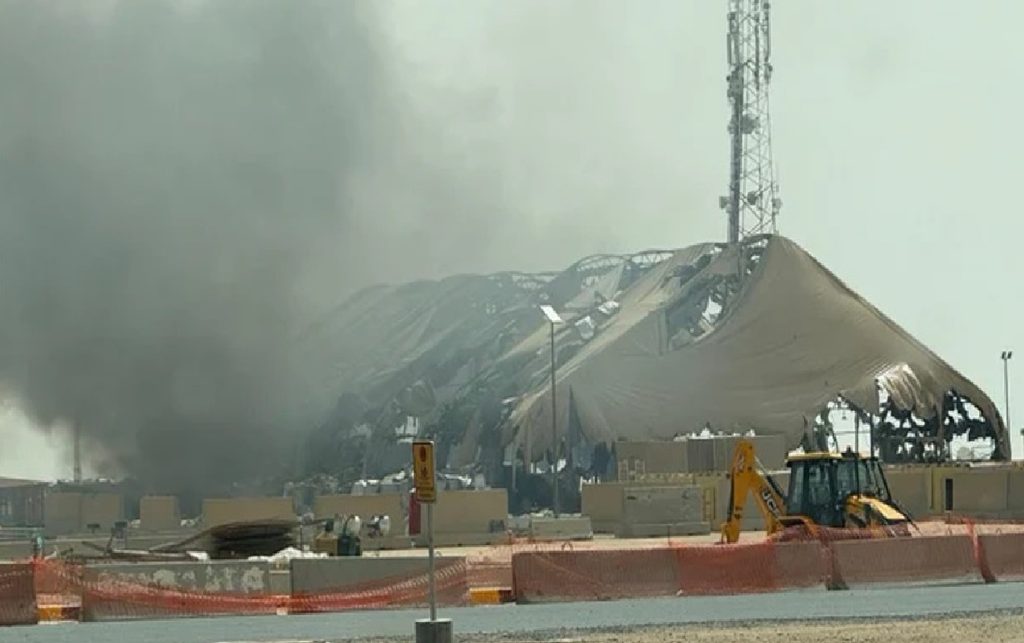
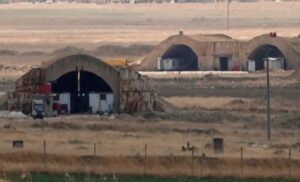
TEHRAN, April 7, 2026 — In the arid plains south of Isfahan, where the Zagros Mountains cast long shadows over ancient Persian soil, the wreckage of American military power lies scattered and smouldering. Two C-130 Hercules transport planes, reduced to twisted metal. Four Black Hawk helicopters, their rotors snapped like dry reeds. MH-6 Little Bird assault helicopters, destroyed before they could even lift off. And somewhere amid the debris, the identification documents of a US officer were abandoned in the frantic scramble to escape.
What unfolded between April 2 and April 5, 2026, in the skies and mountains of central Iran is being described by intelligence officials and military analysts as the most humiliating American military defeat since the 1980 Tabas Desert catastrophe, and arguably far more consequential. While the White House initially framed the episode as a daring Combat Search and Rescue (CSAR) mission to recover two downed F-15E airmen, a mounting body of evidence points to a far more audacious, and catastrophic, objective: the extraction of hundreds of kilograms of highly enriched uranium from Iran’s underground nuclear facilities at Isfahan.
“The Americans miscalculated badly,” a senior Iranian military source told Press TV on condition of anonymity. “They believed Iran’s air defences would be unable to confront their aircraft. Instead, American special forces fell directly into a trap set by Iranian forces.”
I. The Trap Is Sprung: A Chronology Of Disaster
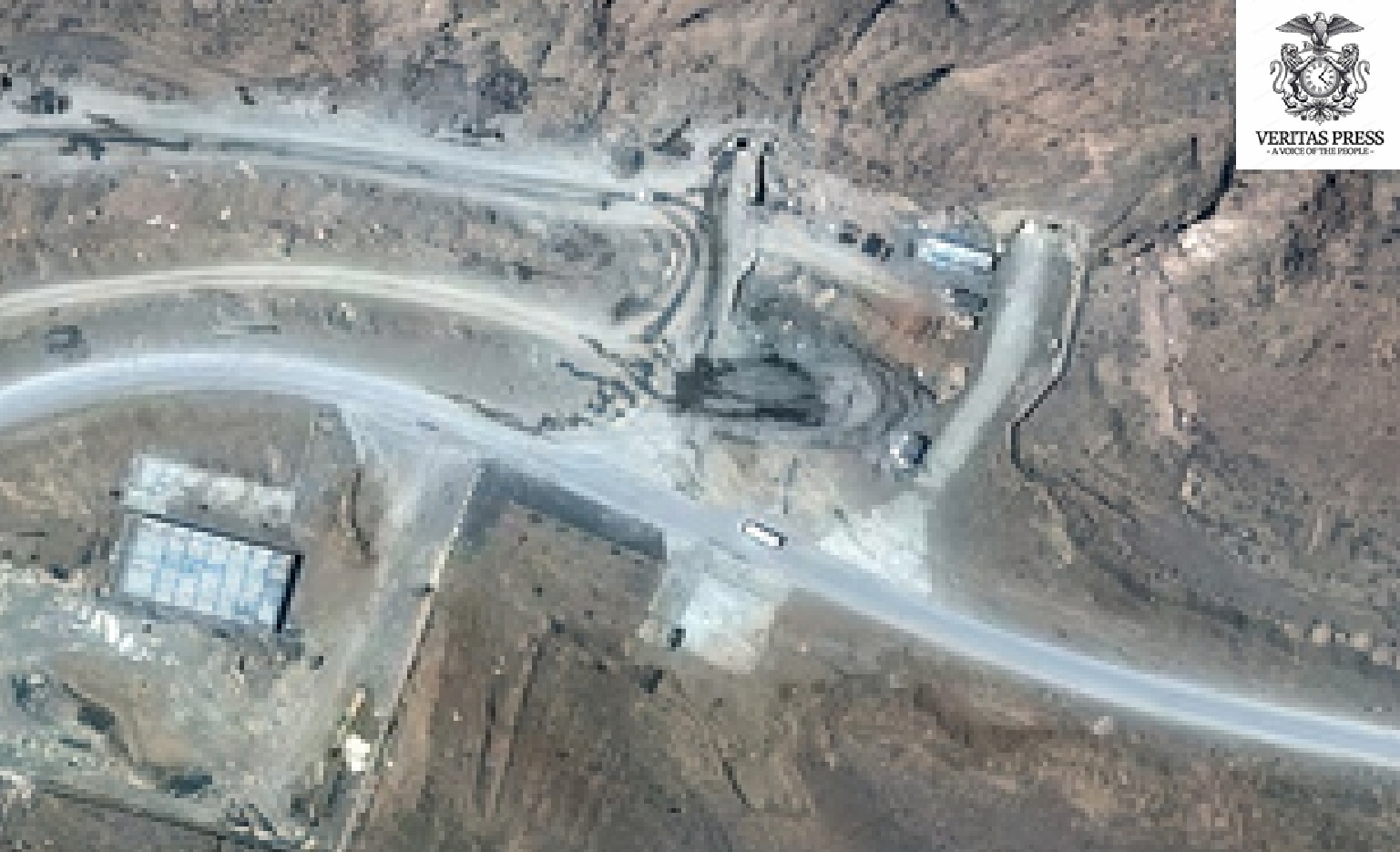
The operation’s origins can be traced to a secret White House meeting, convened personally by President Donald Trump, where “zero hour” was set for a high-risk infiltration mission targeting Iran’s nuclear infrastructure south of Isfahan. It is also important to note that the intention extends to the illicit acquisition of Iran’s uranium and its abundant resources. The plan, according to exclusive intelligence obtained by Press TV, was to use an abandoned dirt airstrip dangerously close to Iran’s nuclear sites as a forward staging base. C-130 transports would deliver dozens of special forces commandos, along with specialised vehicles and MH-6 Little Bird helicopters, for a lightning raid on the nearby tunnel complexes.
The Americans believed that Iran’s air defence network had been sufficiently degraded after five weeks of relentless US-Israeli bombardment under “Operation Epic Fury.” They were wrong.
“The deployment of numerous US aircraft occurred while the Iranian Armed Forces were in full alert, waiting for them,” the source said. The Iranians, including regular army units, the Islamic Revolutionary Guard Corps (IRGC), Law Enforcement forces (Faraja), and volunteer Basij militias, had mapped the American plan.
On the night of the insertion, the first C-130 touched down, veering slightly off the runway. Iranian forces showed no immediate reaction, deliberately. Minutes later, a second C-130 approached, carrying the operation’s heavy equipment. That was the moment the trap snapped shut.
“Iranian forces on the scene targeted the second aircraft before it could land, turning its normal landing into an emergency one,” according to the Press TV account. Two Black Hawk helicopters arrived shortly after. Then all hell broke loose.
The aircraft, helicopters, and commandos who had already disembarked became perfect targets. Inside the White House Situation Room, panic set in. The original mission, infiltration of the nuclear site, was hastily reconfigured as a desperate rescue operation for dozens of American commandos trapped under Iranian fire.
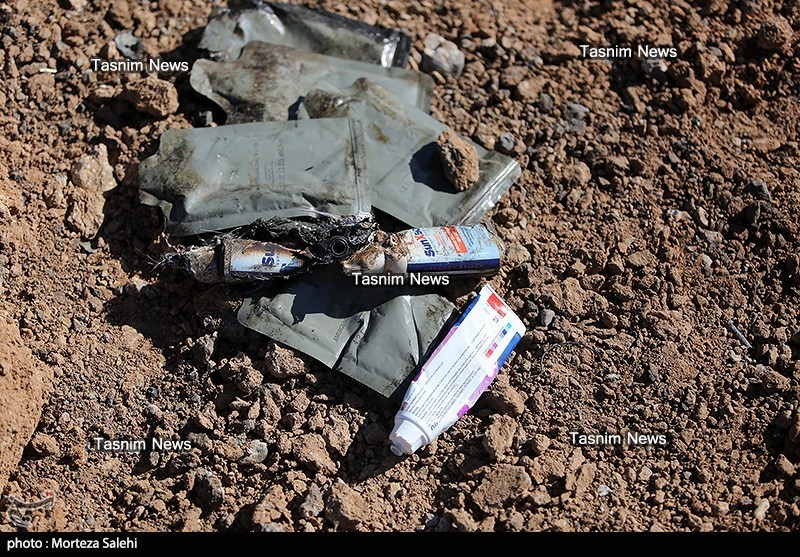
“The rescue operation was conducted so hastily that some soldiers and officers abandoned their equipment, including, according to the evidence possessed by Press TV, the identification document of an American officer left behind in the area, to save their lives,” the source said.
US fighter jets established a five-kilometre fire line to prevent Iranian forces from approaching the stranded aircraft, then bombed their own disabled C-130s and helicopters to prevent sensitive equipment from falling into Iranian hands. In the chaos, the MH-6 Little Bird helicopters were never even flown; some were destroyed on the ground, others inside the second C-130.
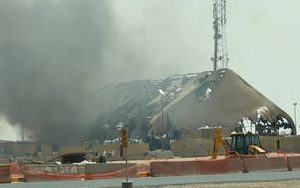
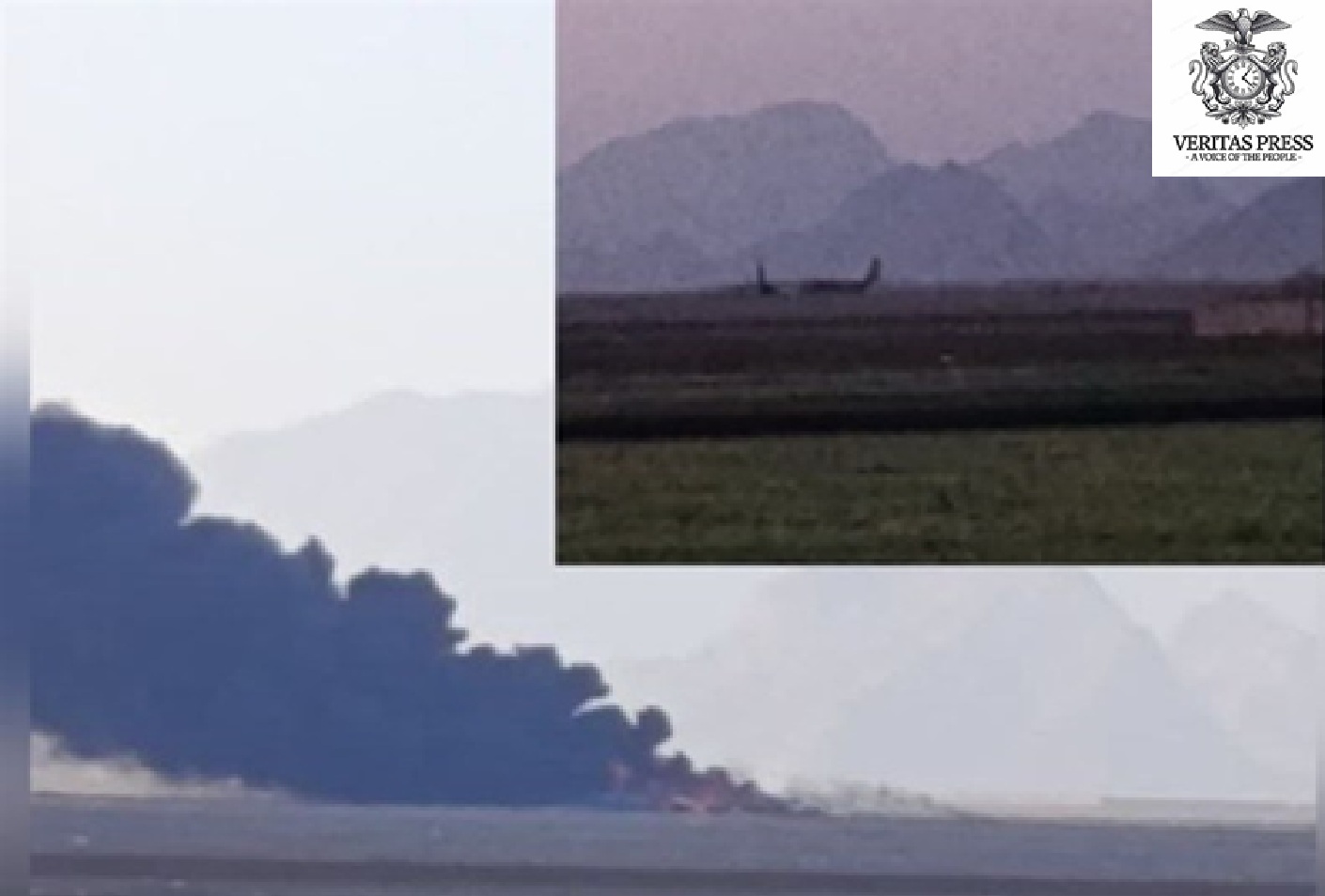
The Iranian military’s Khatam al-Anbiya Central Headquarters announced that Iranian joint forces had destroyed two C-130 military transport aircraft and two Black Hawk helicopters in southern Isfahan province. Images of burning wreckage, geolocated and verified, circulated across global platforms, drawing immediate comparisons to Operation Eagle Claw, the failed 1980 American rescue mission that ended with eight US soldiers dead and aircraft abandoned in the Tabas desert.
II. The Real Objective: Uranium Heist At Isfahan
Why would the United States risk such a high-stakes operation deep inside Iranian territory? The answer lies in the mountains south of Isfahan, and in the words of Rafael Grossi, director general of the International Atomic Energy Agency (IAEA).
In a March 10 statement, Grossi revealed that almost half of Iran’s uranium enriched to up to 60% purity, a short technical step from weapons-grade material, was stored in a tunnel complex at Isfahan and was “probably still there.” The IAEA estimated that Iran had approximately 440.9 kilograms of 60% enriched uranium before the June 2025 strikes, enough, if further enriched to 90%, to provide the explosive material for ten nuclear weapons.
Just eight days later, on March 18, Grossi delivered an even more startling admission: the IAEA had no idea what was happening inside Iran’s new underground enrichment facility in Isfahan. “It is underground, but we haven’t visited it yet,” he told reporters in Washington. The agency did not know “whether it is simply an empty hall” or whether centrifuges had already been installed.
In other words, for weeks before the Isfahan operation, the world’s nuclear watchdog was flying blind, and Washington saw an opportunity.
“The widespread assumption is that the material is still there,” Grossi said on March 10. “We haven’t seen, and not only us, I think in general all those observing the facility through satellite imagery, movement indicating that the material could have been transferred.”
For the Trump administration, the calculus was stark: if the United States could extract that stockpile, hundreds of kilograms of near-weapons-grade uranium, it would not only deny Iran its nuclear trump card but also deliver a staggering propaganda victory. President Trump, facing mounting political pressure at home and a war that had already cost American taxpayers over $42 billion, needed a win.
“Trump had hoped that he would be able to execute a highly risky extraction operation to get hold of Highly Enriched Uranium on April 3-4, 2026, and post which he could declare victory by Easter, April 5, 2026,” an operational analysis concluded. “However, Iranians armed with manpads and air defence systems, drones detected the air intrusion in that area and foiled the plan.”
The visible marks of air defence system hits on the wreckage of the C-130s, confirmed by imagery from the crash site, indicate that the aircraft came under heavy fire while landing, rendering them inoperable to fly back. Iranian Basij forces tried to reach the landing site but were deterred by US air support covering the extraction of ground troops. Having its cover blown, the US military destroyed its inoperable jets, aborted the mission, and called upon backup aircraft to extract the surviving forces.
III. Clash Of Narratives: Rescue Or Raid?
The official American account could not be more different. According to the Pentagon, the operation was a textbook CSAR mission, heroic, precise, and successful.
In a Truth Social post on April 5, Trump proclaimed that US forces had carried out “one of the most daring search and rescue operations in US history,” recovering a “highly respected colonel” who had been “behind enemy lines in the treacherous mountains of Iran, being hunted down by our enemies.” He claimed that the rescue had been accomplished “without a single American killed, or even wounded,” adding triumphantly: “We have achieved overwhelming air dominance and superiority over the Iranian skies.”
ABC News, citing US officials, described a near-cinematic mission: under cover of darkness, US commandos slipped deep into Iran, scaled a 2,100-meter ridge, and pulled the stranded weapons specialist to safety before dawn. The rescue force, numbering roughly 100 special operations troops, including Navy SEAL Team 6 commandos, was extracted in stages after two C-130s suffered mechanical failure and could not take off. “If there was a ‘holy shit’ moment, that was it,” one official told ABC.
The US military acknowledged destroying the disabled C-130s and four additional helicopters inside Iran, but insisted this was a standard procedure to prevent sensitive equipment from falling into enemy hands, not evidence of a failed mission.
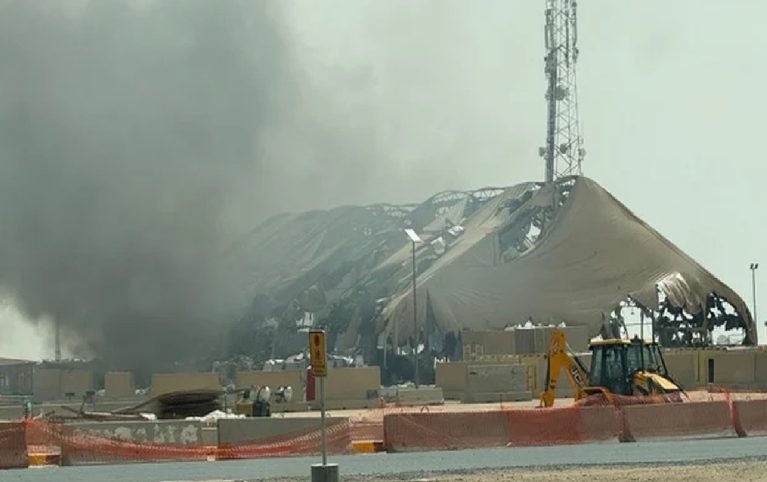
Iran’s account, however, is blisteringly dismissive. IRGC spokesman Ebrahim Zolfaghari described the US “rescue operation” as a “deception and escape operation under the pretext of rescuing the pilot,” which ended in “complete failure” due to the Iranian armed forces’ timely presence. Iran’s Fars News Agency published photos of thick smoke rising from a field with the caption: “Trump’s desperate attempt to cover up a huge defeat.”
The most damning detail? According to Iranian sources, the second F-15 crew member, the very individual whose rescue supposedly justified the entire mission, may never have been recovered at all. Iran’s Tasnim News Agency reported that Iranian forces shot down the US C-130 “by heavy fire from a police special forces unit” during the search for the missing pilot, and that the pilot himself remained unaccounted for.
IV. The Toll: Casualties, Costs, And Consequences
The human and material toll of the Isfahan debacle is still emerging, but early figures are staggering.
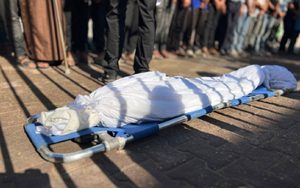
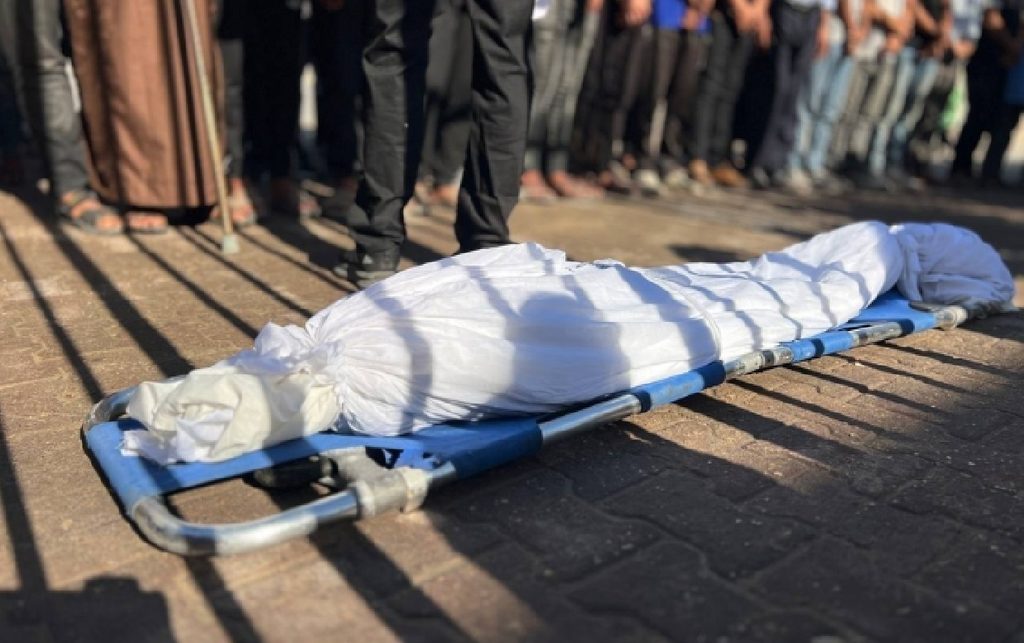
Iranian authorities reported that four Iranian military officers, including a brigadier general, a colonel, a lieutenant colonel, and a first lieutenant, were killed during the confrontation with US forces south of Isfahan. At least 13 civilians were killed in separate US-Israeli airstrikes on Baharestan County in Isfahan province, according to the Fars news agency. The broader war, now in its 37th day, has claimed over 1,400 Iranian lives, according to Iran’s Ministry of Health.
On the American side, the Trump administration maintains a zero-casualty claim. But CBS News, citing a US Central Command spokesperson, reported that 373 US service members have been wounded in the Iran operation as of April 6. The figure includes injuries sustained across the theatre, not exclusively in Isfahan, but it casts doubt on the administration’s narrative of a bloodless campaign.
The financial cost is undeniable. The Iran War Cost Tracker, a real-time analytical portal, estimates that US military spending on the conflict has exceeded $42.1 billion over 37 days. The first six days alone cost $11.3 billion in munitions, with each subsequent day adding approximately $1 billion.
Equipment losses in the Isfahan operation alone are catastrophic. Iran’s Tasnim News Agency, citing Iranian military sources, claims that 12 American aircraft were destroyed: two C-130 transport planes, four Black Hawk helicopters, four MH-6 Little Bird helicopters, and two MQ-9 Reaper drones. While these figures cannot be independently verified, satellite imagery and on-the-ground footage of wreckage lend them significant credibility.
The A-10 Thunderbolt II, an aircraft the US Air Force had previously sought to retire due to its vulnerability in high-intensity conflict, was among the platforms lost. As one geopolitical analyst noted, the deployment of these “outdated” planes in Operation Epic Fury highlights the strain on American military resources after five weeks of sustained combat.
V. Tehran’s Counterstrike: The 96th Wave
If the Isfahan operation was meant to cripple Iran’s nuclear ambitions and deliver a knockout blow, it produced precisely the opposite effect. Within hours of the American withdrawal, Iran launched what it called the “96th wave” of Operation Sadiq Promise 4, a coordinated retaliation that sent shockwaves across the region.
According to Lieutenant Colonel Ebrahim Zolfaghari of the Khatam al-Anbiya Headquarters, Iranian forces struck multiple targets:
A refinery supplying fuel to Israeli fighter jets
US gas facilities belonging to ExxonMobil and Chevron in Khamsan, UAE
A US petrochemical plant in Al Ruwais, UAE, produces military fuels
A US petrochemical plant in Sitra, Bahrain, is critical for producing petroleum derivatives for the American military
The strategic Swaiba petrochemical facility in Kuwait, which partners with the US Armed Forces
The IRGC Navy also claimed to have struck a gathering site for American commanders and officers near the Mohammed al-Ahmad naval base in Kuwait using ballistic missiles and drones, reportedly killing or injuring approximately 25 personnel. An Israeli vessel named the “King Dao Star” was struck in the Jebel Ali port channel in the UAE with a Qadeer cruise missile.
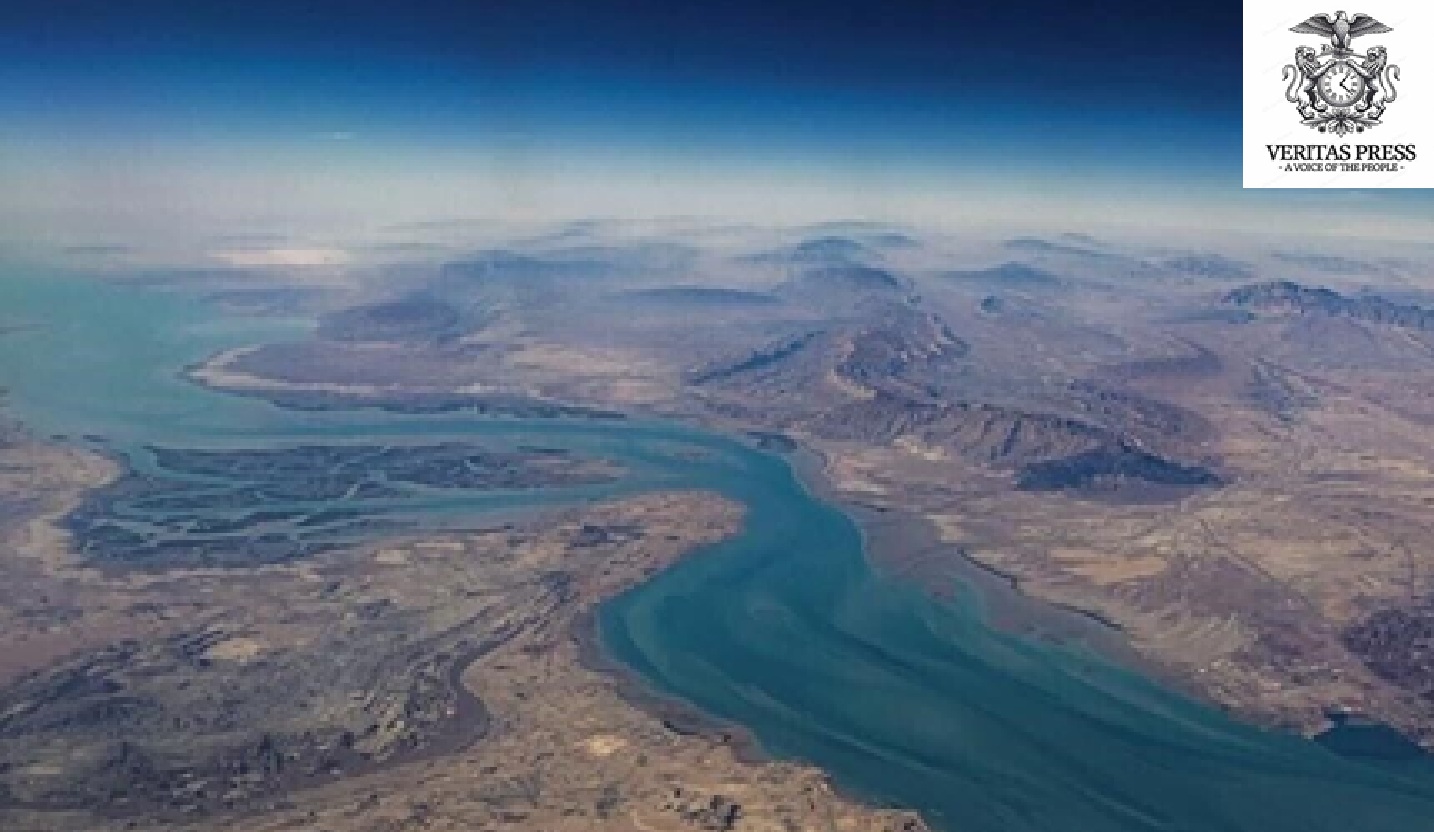
Perhaps most significantly, Iran maintained its effective closure of the Strait of Hormuz, through which approximately 20% of the world’s oil transits, allowing only select vessels to pass and reducing traffic by over 90% compared to pre-war levels. Brent crude futures surged to $111.33 per barrel, with analysts warning that prices could exceed $150–$200 if the conflict continues.
VI. Diplomatic Manoeuvring: The 45-Day Mirage
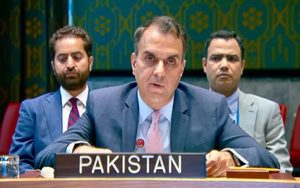
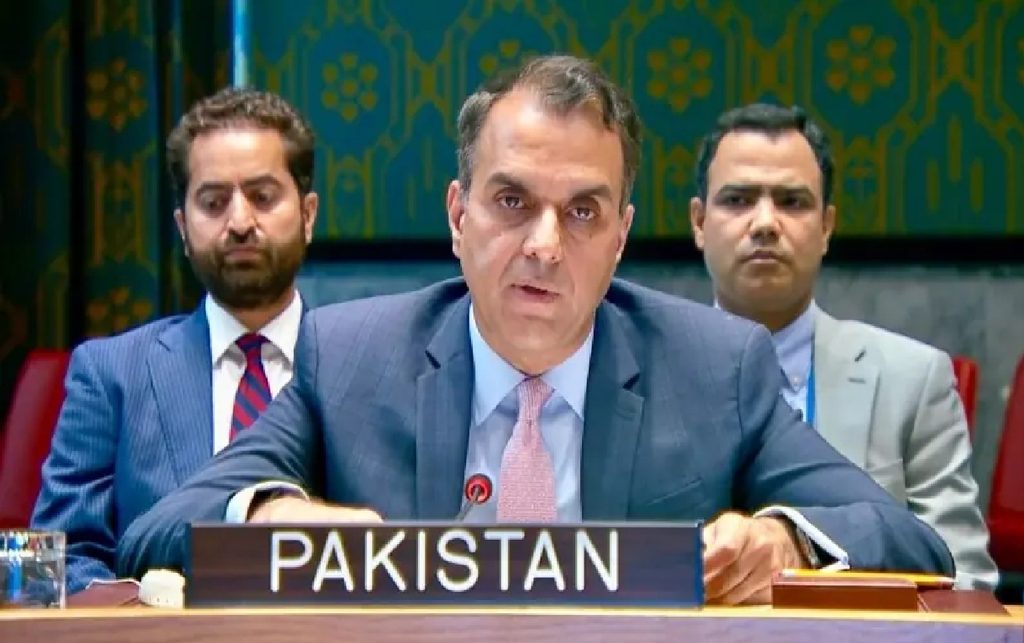
In the aftermath of the Isfahan disaster, Washington scrambled to salvage what it could through diplomacy. Pakistan emerged as an unlikely mediator, shuttling between Tehran and Washington with a two-stage peace plan.
According to Reuters, the Pakistani proposal envisioned an immediate 45-day ceasefire followed by 15–20 days to finalise a broader settlement, including the reopening of the Strait of Hormuz. The plan, dubbed the “Islamabad Accord,” was reportedly discussed in marathon overnight contacts between Pakistan’s Army Chief Field Marshal Asim Munir, US Vice President JD Vance, and Iranian Foreign Minister Abbas Araghchi.
But Iran rejected the proposal outright.
“We won’t merely accept a ceasefire,” Mojtaba Ferdousi Pour, head of the Iranian diplomatic mission in Cairo, told The Associated Press. “We only accept an end of the war with guarantees that we won’t be attacked again.” Iranian Foreign Minister Abbas Araghchi described the negotiations as “entirely incompatible with ultimatums, crimes and threats of war crimes.”
The Iranian position is clear: any temporary truce that leaves the strategic deadlock unresolved merely gives the US and Israel time to regroup. The new order regarding the Strait of Hormuz is considered a given; the strait will never return to pre-war conditions.
Trump, for his part, responded with characteristic volatility. In an expletive-filled Truth Social post on April 5, he wrote: “Tuesday will be power plant day, and Bridge Dat, all wrapped up in one in Iran. There will be nothing like it !!! Open the Fuckin’ Strait, you crazy bastards, or you will be living in hell – Just Watch! Praise be to Allah. President Donald J Trump.”
Yet even as he issued threats, Trump acknowledged the possibility of a deal, telling reporters on April 6: “The entire country can be taken out in one night, and that night might be tomorrow night.” He set a final deadline of 8:00 PM EST on April 7, but the Iranians remained undeterred.
VII. Strategic Reckoning: What The Debacle Reveals
Beyond the immediate tactical disaster, the Isfahan operation exposes deeper structural failures in American strategy and intelligence.
First, the assumption of air superiority has been shattered. Iranian air defences not only detected the US insertion force but engaged it effectively, downing or disabling multiple advanced aircraft. The old American belief that Iran’s air defence systems, missiles, and drone capabilities had been substantially degraded has turned out to be a gross exaggeration.
Second, the intelligence failure was monumental. According to Press TV’s exclusive information, the US lost “a significant number of aircraft, including at least one A-10 Thunderbolt II and two Black Hawk helicopters” during initial reconnaissance missions in the days leading up to the attack. Despite these losses, Washington proceeded with the operation, a decision that speaks to either desperation or profound miscalculation.
Third, the political fallout is already unfolding. Pete Hegseth, the Secretary of War, had moved to remove senior Pentagon officials in the days before the operation, likely over internal disagreements about the mission’s viability. Within strategic circles, such moves typically indicate friction between political leadership seeking bold outcomes and military commanders wary of operational overreach.
Former CIA analyst Larry Johnson offered a stark assessment: “The narrative of complete Iranian defeat is not verified. Trump’s narrative of a ‘defeated’ Iran is contradicted by the reality of US aircraft being shot down. This strategic failure is a nightmare unfolding for the Trump administration.”
Geopolitical analyst Patrick Henningsen noted that Iran is using older-generation missiles to saturate and penetrate Patriot and Iron Dome defences. “By using these missiles, which carry heavy payloads, Iran can exploit the depletion of US interceptor stocks,” he said. “Waves of 80 to 100 missiles are striking targets with absolute precision.”
VIII. Historical Echoes: From Tabas To Isfahan
The parallels between the Isfahan debacle and Operation Eagle Claw, the 1980 attempt to rescue American hostages in Tehran that ended in disaster at Tabas, are impossible to ignore. In both cases, ambitious special operations missions deep inside Iranian territory unravelled due to a combination of mechanical failures, intelligence gaps, and fierce Iranian resistance.
But the Isfahan operation may prove even more consequential. The Tabas failure occurred in peacetime, before the era of drone warfare, precision-guided munitions, and layered air defence networks. The Isfahan debacle, by contrast, has unfolded in the midst of an active, high-intensity war, and it has exposed the limits of American power projection in ways that will resonate far beyond the immediate conflict.
“The heavy defeat of the Isfahan operation could be recorded in history as the worst and most disgraceful failure of the US military, even worse than the failed Tabas operation of 1980,” a highly-placed source told Press TV.
For the Islamic Republic of Iran, the victory is not merely tactical but symbolic. As one IRGC statement put it: “This was not just a defensive feat. It was historical revenge, divine justice, and a military-technological declaration that US power holds no sway over Iranian skies.”
IX. What Comes Next: No Off-Ramp In Sight
With the April 7 deadline hours away and Iran refusing to capitulate, the region braces for what comes next. Trump has threatened to destroy Iranian power plants and bridges, while Israeli forces continue strikes on Iranian infrastructure, including the recent assassination of IRGC intelligence chief Major General Majid Khademi.
But Iran has made clear that any attack on its energy infrastructure will be met with devastating retaliation. An Iranian official warned that if power generation facilities are targeted, “the war could expand to the United States”, not necessarily through direct missile strikes, but through “serious unrest emerging from within American soil.”
The strategic calculus has shifted. The United States entered this war expecting a rapid victory. It has instead found itself mired in a grinding war of attrition, facing an adversary that has demonstrated resilience, tactical ingenuity, and an unshakable will to resist.
“Five weeks into an unprovoked and unjustified Israel-US war on Iran that started with the unprecedented ‘decapitation’ of the top Iranian political and military leadership,” the Indian Express observed on April 7, “the US-led war seems to be faltering.”
The question now is not whether the Isfahan operation was a defeat; the evidence is overwhelming that it was. The question is whether Washington will learn from its mistakes or double down on a failing strategy. If the past five weeks are any guide, the latter seems more likely.
And as the wreckage smoulders in the Iranian desert, one thing is clear: the United States has suffered a major strategic defeat, not just in the mountains of Isfahan, but in the broader contest for influence, credibility, and power in the Middle East.
Source: Multiple News Agencies
Submissions:
For The Secure Submission Of Documentation, Testimonies, Or Exclusive Investigative Reports From Any Global Location, Please Utilise The Following Contact Details For Our Investigations Desk: enquiries@veritaspress.co.uk or editor@veritaspress.co.uk
Help Support Our Work:
Popular Information is powered by readers who believe that truth still matters. When just a few more people step up to support this work, it means more lies exposed, more corruption uncovered, and more accountability where it’s long overdue.
Help Protect Independent Journalism, Which Is Currently Under Attack.
If you believe journalism should serve the public, not the powerful, and you’re in a position to help, becoming a DONATOR or a PAID SUBSCRIBER truly makes a difference.
DONATION APPEAL: If You Found This Reporting Valuable, Please Consider Supporting Independent Journalism.
Help Support Our Work – We Know, We Know, We Know …
Seeing these messages is annoying. We know that. (Imagine what it’s like writing them … )
Your support fuels our fearless, truth-driven journalism. In unity, we endeavour to amplify marginalised voices and champion justice, irrespective of geographical location.
But it’s also extremely important. One of Veritas Press’s greatest assets is its reader-funded model.
1. Reader funding means we can cover what we like. We’re not beholden to the political whims of a billionaire owner. We are a small, independent and impartial organisation. No one can tell us what not to say or what not to report.
2. Reader funding means we don’t have to chase clicks and traffic. We’re not desperately seeking your attention for its own sake: we pursue the stories that our editorial team deems important and believe are worthy of your time.
3. Reader Funding: enables us to keep our website and other social media channels open, allowing as many people as possible to access quality journalism from around the world, particularly those in places where the free press is under threat.
We know not everyone can afford to pay for news, but if you’ve been meaning to support us, now’s the time.
Your donation goes a long way. It helps us:
Keep the lights on and sustain our day-to-day operations
Hire new, talented independent reporters
Launch real-time live debates, community-focused shows, and on-the-ground reporting
Cover the issues that matter most to our communities, in real time, with depth and integrity
We have plans to expand our work, but we can’t do it without your support. Every contribution, no matter the size, helps us stay independent and build a truly people-powered media platform.
If you believe in journalism that informs, empowers, and reflects the communities we serve, please donate today.
Kamran Faqir is a volunteer investigative journalist and writer committed to exposing hidden truths and amplifying underreported stories. Driven by social justice, he brings sharp insight and fearless truth-telling to independent journalism. NUJ registered.
SEATTLE, TEHRAN — The U.S. Department of Homeland Security (DHS) will allow Iran’s national football team to enter the country 48 hours before their critical World Cup match against Egypt on Friday, a modest concession in a tournament where Team Melli’s travel conditions have sparked claims of oppression and competitive disadvantage.