Kamran Faqir is a volunteer investigative journalist and writer committed to exposing hidden truths and amplifying underreported stories. Driven by social justice, he brings sharp insight and fearless truth-telling to independent journalism. NUJ registered.
Original Article Date Published:
Article Date Modified:
24 minutes
Views:340
Listen to this article
Help support our mission, donate today and be the change. Every contribution goes directly toward driving real impact for the cause we believe in.
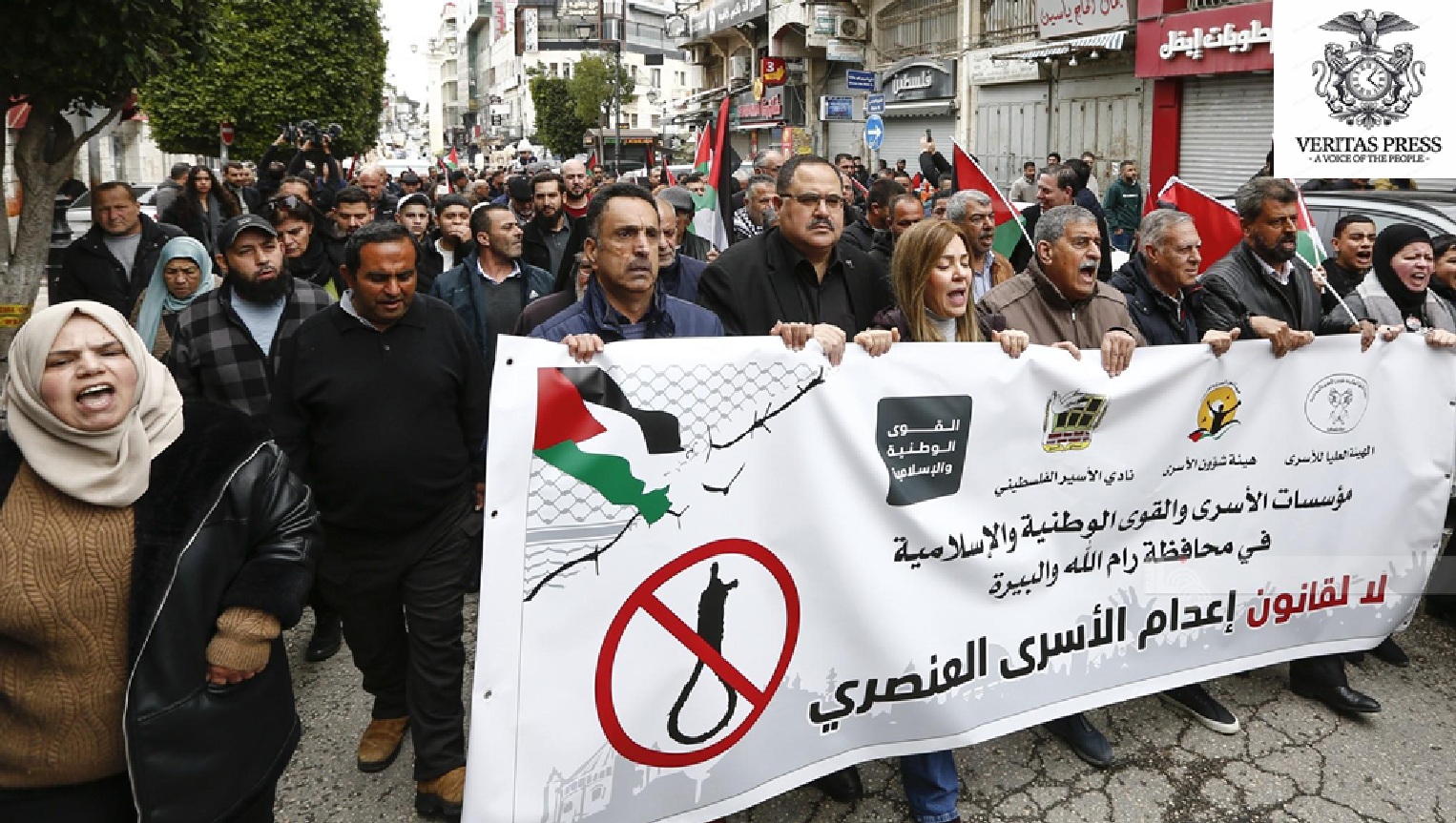
WEST BANK – The Knesset’s approval on March 30, 2026, of a law imposing the death penalty by hanging as the default punishment for Palestinians convicted of intentional killing in acts of “terrorism” has triggered an extraordinary wave of Palestinian resistance. On April 1, 2026, a general strike called by Fatah and other national and Islamic factions brought daily life across the occupied West Bank to a near-complete halt. Streets in Ramallah, Hebron, Nablus, and East Jerusalem fell silent. Shops, universities, banks, and public institutions closed their doors while thousands marched through central squares demanding international intervention to repeal what they call a “racist law” that creates a separate and harsher legal track for Palestinians in military courts.
At the heart of the storm is a piece of legislation that critics, from the United Nations High Commissioner for Human Rights to the European Union, from Amnesty International to Israel’s own Supreme Court justices, have condemned as “cruel and discriminatory,” “a step towards apartheid,” and, if applied in the occupied Palestinian territory, a war crime. Yet, amid a chorus of international condemnation, the administration of US President Donald Trump has conspicuously refrained from joining the critics, stating instead that it “respects Israel’s sovereign right to determine its own laws”. The stark divergence in international response reflects not only the gravity of the law itself but the deepening fault lines in global governance over Palestine.
This investigative analysis draws on official documents, court petitions, human rights reports, media coverage, and testimonies from Palestinian prisoners’ families, local activists, legal experts, and Israeli officials. It situates the law within the broader architecture of Israeli military occupation, examines the legal and political challenges already underway, and unpacks the discriminatory mechanisms that make this legislation a watershed moment in Israel’s treatment of Palestinian political prisoners.
Part One: The Law In Black And White
The Knesset Vote: 62–48–1
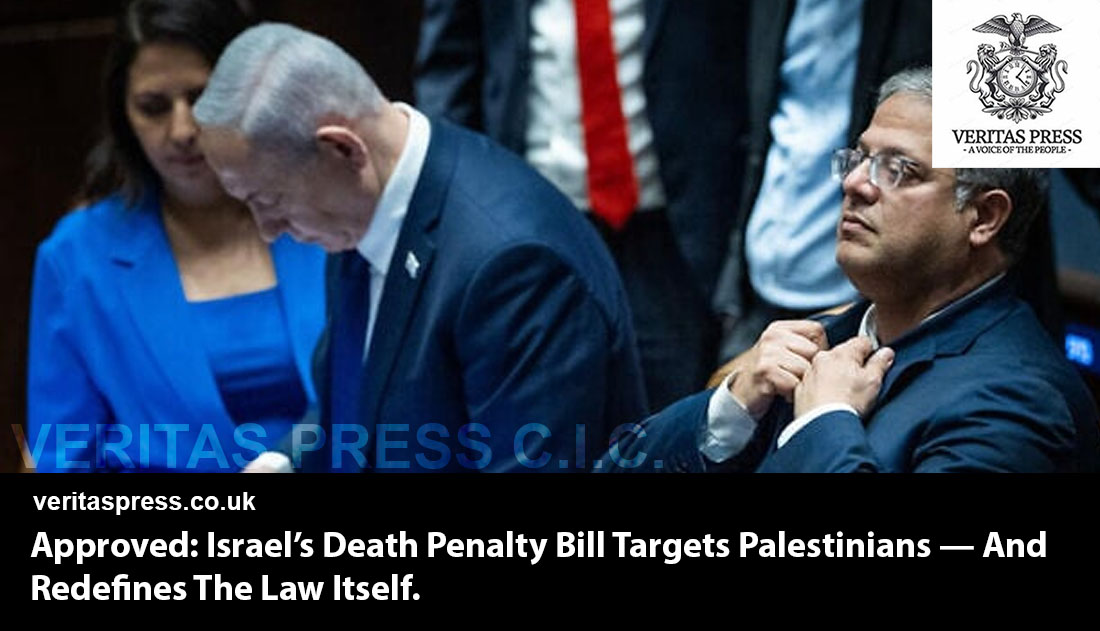
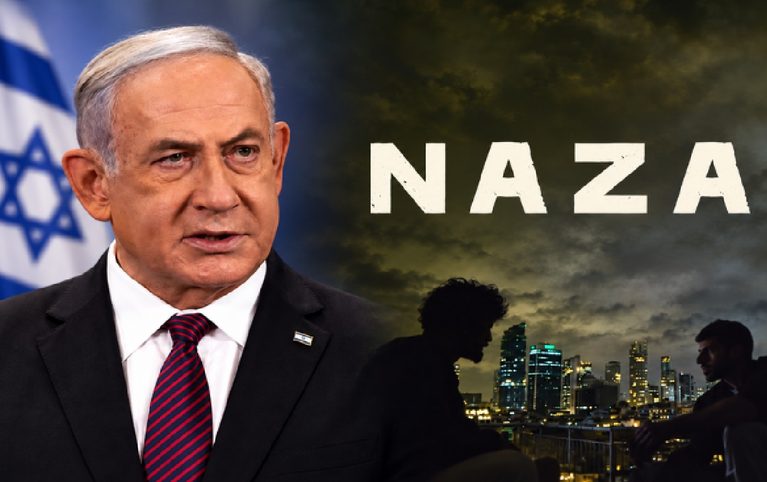
On Monday evening, March 30, 2026, the Knesset passed the bill, formally titled the Death Penalty for Terrorists Law, in its second and third readings. The vote was 62 in favour, 48 against, with one abstention. Israeli Prime Minister Benjamin Netanyahu personally attended the chamber to vote in support, joining far-right National Security Minister Itamar Ben-Gvir, the bill’s principal champion.
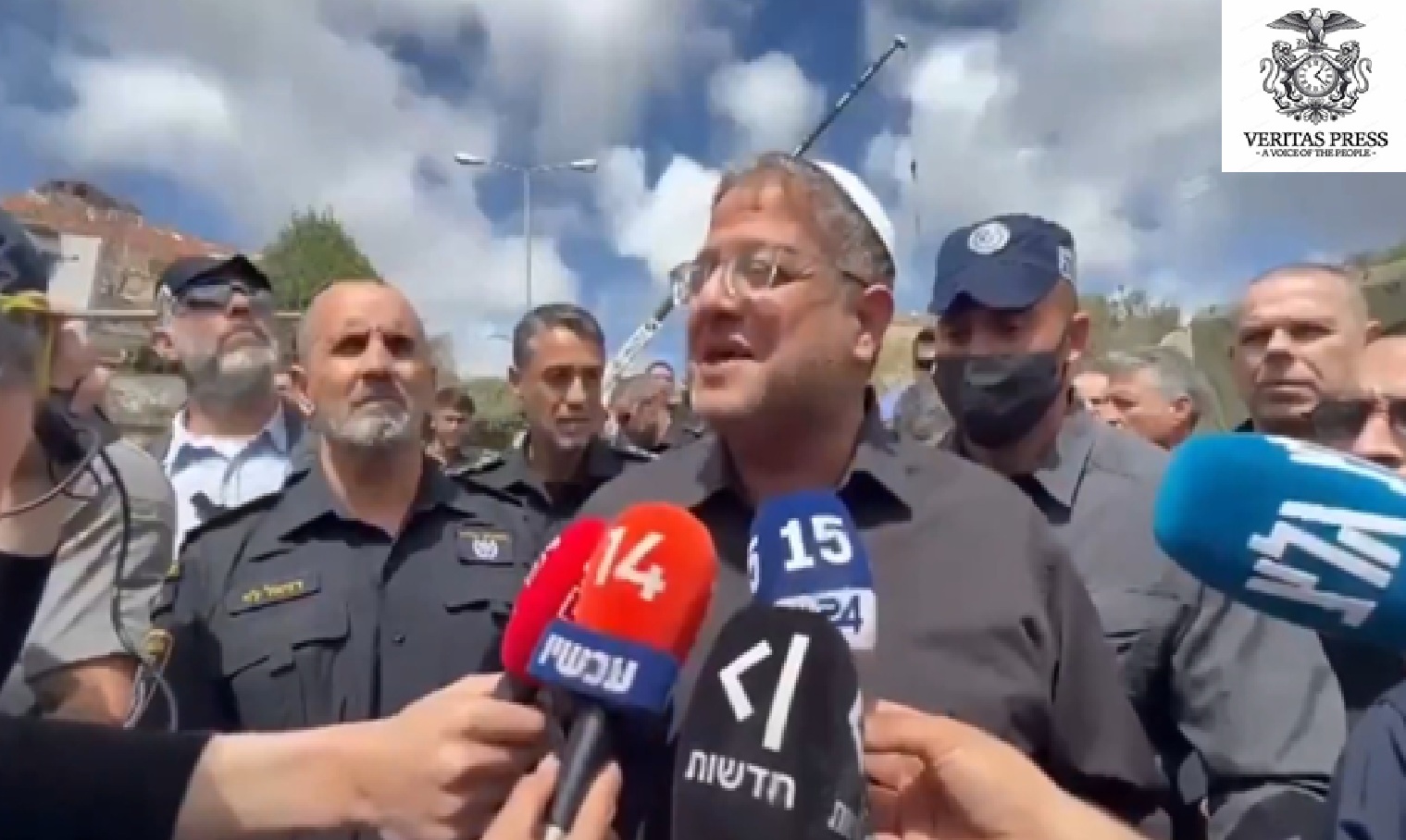
Following the vote, the Knesset halls witnessed a provocative scene that sent shockwaves through Palestinian society. Ben-Gvir was seen waving a champagne bottle and wearing a lapel pin shaped like a hangman’s noose, a clear symbolic reference to the law’s purpose. In his first official comment, Ben-Gvir declared the law “history-making” and issued a direct threat to Palestinian families in the West Bank, affirming that the fate of anyone who participates in resisting the occupation would be “execution by hanging.” “Whoever murders Jews will not continue to breathe,” he said.
What The Law Does: A Dual-Track System Of Unequal Justice
The law’s discriminatory architecture is not accidental but structural. It operates on two separate legal tracks:
In the West Bank (military courts): Palestinians convicted of intentional killing classified as an “act of terrorism” by Israeli military courts face the death penalty by hanging as the default punishment. Military courts may impose life imprisonment only in “special circumstances” that are not defined in the law. The law permits death sentences without a prosecutorial request and without requiring a unanimous judicial decision; a simple majority suffices. Sentences cannot be commuted or pardoned. Execution must be carried out within 90 days of sentencing. Those sentenced to death are to be held in separate facilities with restricted visits; legal consultations are permitted only by video link.
In Israel (civilian courts): For Israeli citizens, including Jewish settlers in the West Bank, who are explicitly excluded from military court jurisdiction, the law allows for either death or life imprisonment. The death penalty applies only to intentional killing carried out with the intent of “negating the existence of the State of Israel”, a formulation that critics argue is designed in practice to exclude Jewish extremists who kill Palestinians.
The result, as the Association for Civil Rights in Israel (ACRI) stated in its Supreme Court petition, is “two parallel tracks, both designed to apply to Palestinians.” In military courts, the law establishes “a near-mandatory death sentence”. Human Rights Watch noted that “Israeli citizens and residents are explicitly excluded from this provision: military jurisdiction applies exclusively to Palestinians, while Israeli settlers are tried in civilian courts”.
Adalah, the Legal Centre for Arab Minority Rights in Israel, submitted a separate urgent petition on behalf of a coalition of human rights organisations and three Arab Knesset members. Adalah director Hussein Jabareen told Anadolu Agency that “this statute is the only law in the world that discriminates between defendants based on ethnicity”.
The 117: Who Is Immediately At Risk
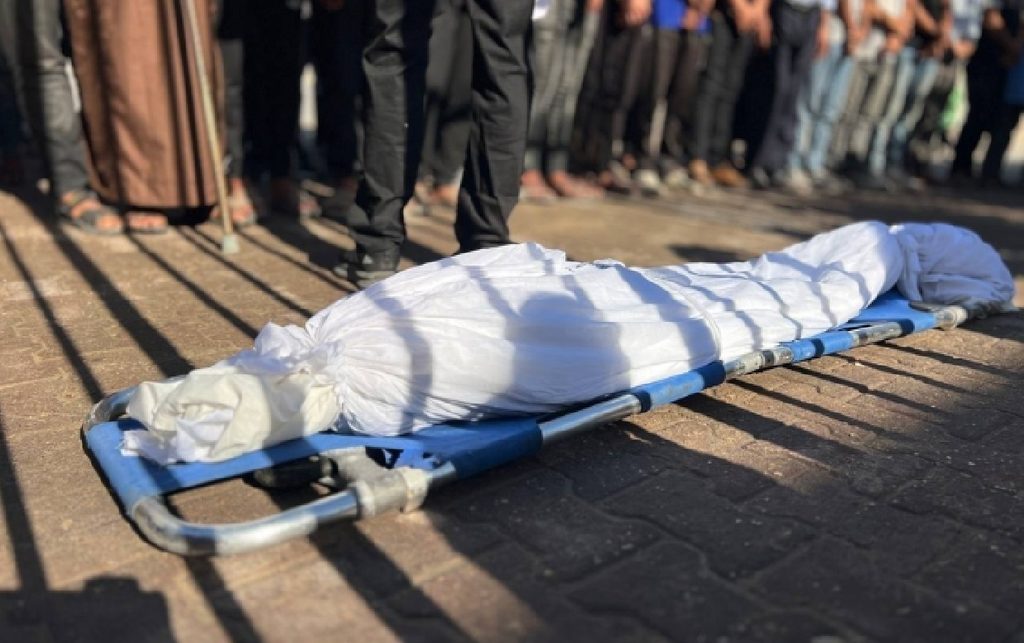
According to the Palestinian Commission of Detainees and Ex-Detainees Affairs, 117 Palestinian prisoners currently held in Israeli prisons are accused of “deliberately” killing Israelis and could therefore be subject to the law. This number, however, tells only part of the story. More than 9,500 Palestinians are held in Israeli prisons, including 350 children and 73 women. Palestinian and Israeli human rights groups have documented that detainees face torture, starvation, medical neglect, and, in some cases, rape, leading to dozens of deaths in custody. Since October 2023, Israel has intensified these measures amid its genocidal war in Gaza, which has killed more than 72,000 Palestinians and wounded and maimed more than 172,000, most of them women and children, according to Gaza’s Health Ministry.
Part Two: The General Strike And Mass Protests
“No Palestinian Family Without A Prisoner”
On April 1, 2026, the West Bank witnessed a near-total shutdown. Shops, public and private institutions, banks, universities, and schools closed their doors, while only hospitals and bakeries remained open. Streets in Ramallah, the seat of the Palestinian Authority, appeared largely deserted. The strike extended to occupied East Jerusalem, where shops shuttered along Salah al-Din Street, Sultan Suleiman Street, and in the Old City.
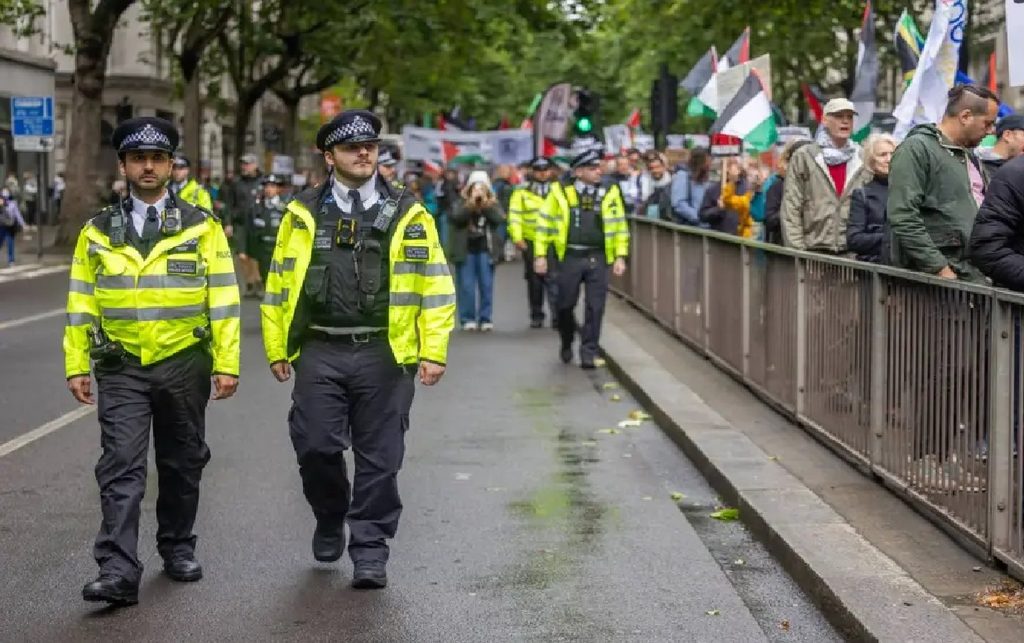
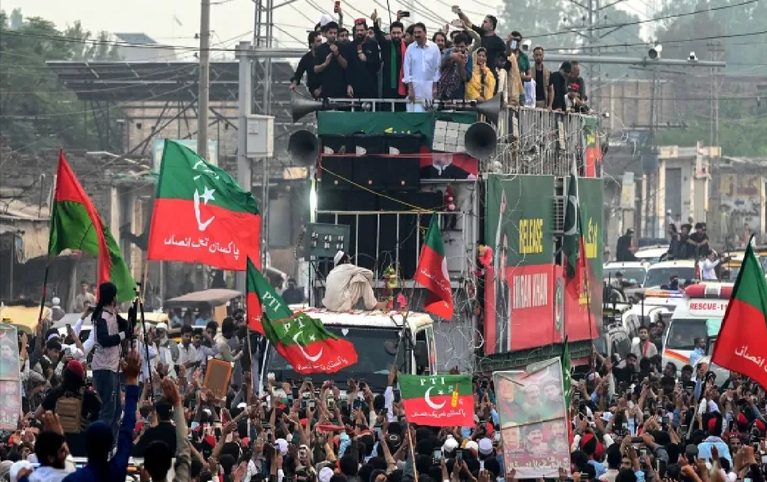
At the centre of the protest was a mass march that began at Al-Manara Square in Ramallah, organised by prisoner advocacy groups including the Palestinian Prisoner Society, the Commission of Detainees’ Affairs, and Addameer Prisoner Support and Human Rights Association. Thousands of participants, including faction leaders, religious figures, trade unions, women’s groups, and families of prisoners, marched through the city chanting slogans condemning the law and waving Palestinian flags.
Riman, a 53-year-old psychologist from Ramallah who declined to share her last name, told AFP: “There isn’t a single person standing here who doesn’t have a brother, a husband, a son, or even a neighbour in prison. There is no Palestinian family without a prisoner.” She added: “But honestly, today we feel a lot of anger, because there is also a real weakness in solidarity with them. The occupation is betting on the weakness of the street”.
Mohammed Gussein, a 24-year-old student at Al-Quds University, told AFP: “It’s a crazy law to be passed, it’s insane. It’s completely out of touch with humanity, and completely racist”.
Solidarity From Gaza:
The protest was not confined to the West Bank. In the Bureij refugee camp in central Gaza, a large rally brought together community leaders, dignitaries, and prisoners’ families. Ali al-Shashniya, spokesperson for tribes and popular committees in Bureij, told Anadolu that the protest aimed to “send a clear message to the occupation that the prisoners are not alone.” He stressed that “any harm to our prisoners will be met with an unexpected popular and national response”.
Nihad Awad Ahmad, father of prisoner Nader Ahmad, said: “The law will only increase our determination and adherence to our rights despite threats against our sons in prisons. Our sons are symbols of freedom, and we will not tire of demanding their release”.
Israeli Military Suppression:
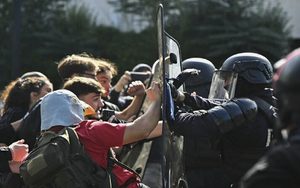
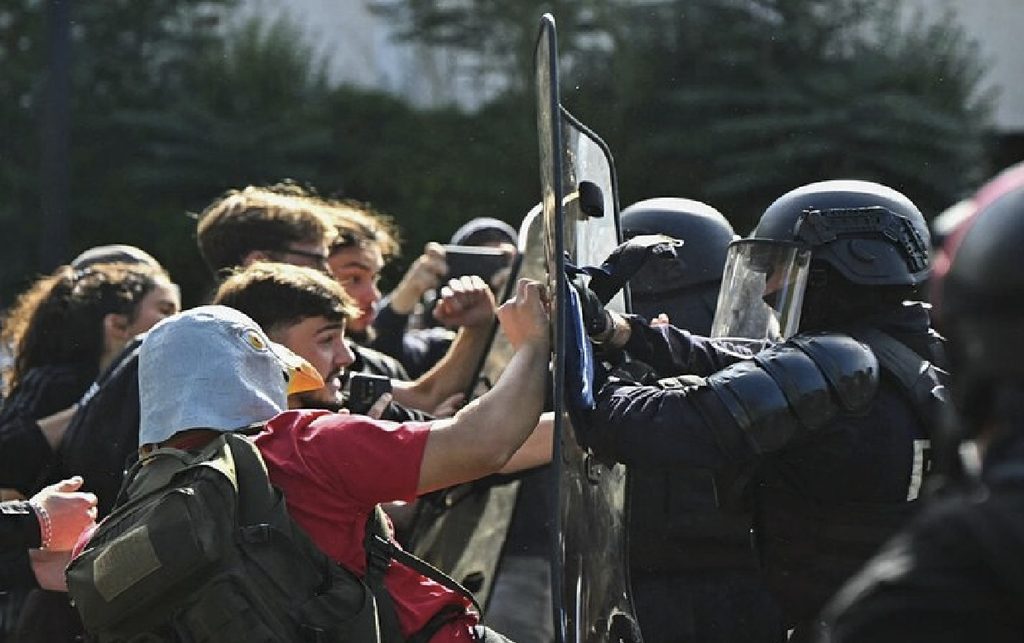
At the Qalandia checkpoint, one of the West Bank’s busiest entry points into Jerusalem, protesters burned tyres in condemnation of the law. WAFA, the Palestinian news agency, reported that Israeli soldiers fired rubber-coated bullets, stun grenades, and tear gas at the protesters, though no injuries were initially reported. In the town of Anata, northeast of Jerusalem’s Old City, Israeli soldiers forced Palestinian shop owners participating in the strike to reopen their businesses.
Part Three: The Legal Challenge Before The Supreme Court
Immediate Petitions And Judicial Stays
Within hours of the Knesset vote, legal challenges were filed. The Association for Civil Rights in Israel (ACRI) submitted the first urgent petition to the Supreme Court, arguing that “the death penalty is fundamentally unconstitutional, given the grave and irreparable violation it inflicts on the right to life” and that “the law egregiously violates human rights, is incompatible with democratic values, and was enacted with a prohibited motive of revenge and racism”.
Adalah followed with a separate petition on behalf of itself, the Public Committee Against Torture in Israel, HaMoked, Gisha, Physicians for Human Rights-Israel, and MKs Aida Touma-Sliman (Hadash), Ahmad Tibi (Ta’al), and Ayman Odeh (Hadash). The petition frames the law as both unconstitutional and unlawful under international law, arguing that it entrenches “cruel and inhuman punishment,” violates the rights to life, dignity, equality, and due process, and cannot lawfully be imposed on Palestinians in the West Bank because the Knesset is not the sovereign legislator there for a protected population under the law of occupation.
Justice Yechiel Kasher ordered the respondents, including the government, the defence minister, and the military advocate general, to file a preliminary response by May 24, 2026. However, the court declined at this stage to issue a temporary order freezing the law. Hussein Jabareen, director of Adalah, told Anadolu that the law “will not be implemented until the Supreme Court completes its review of petitions against it.” He estimated that the review could take months, possibly a year, but expressed hope that the court would eventually annul the law, citing its “numerous flaws”.
Israeli Institutional Opposition:
Significantly, opposition to the law extends beyond human rights organisations. Jabareen noted that many Israeli institutions oppose the law, including the Israeli army and parts of the judicial system, “not out of human rights concerns, but because the law does not achieve what they call deterrence, which could encourage kidnappings aimed at saving prisoners from execution”. About 1,200 Israeli figures, including Nobel laureates, former military officials, and former Supreme Court judges, voiced strong opposition in February, calling the law a “moral stain”.
The Israeli human rights group B’Tselem added a crucial evidentiary dimension to the legal critique, noting that military trials of Palestinians have “an approximately 96% conviction rate, based largely on ‘confessions’ extracted under duress and torture during interrogations”.
Part Four: International Condemnation And The US Exception
The UN: A War Crime
The sharpest international rebuke came from the United Nations. Volker Türk, the UN High Commissioner for Human Rights, warned that the law is “patently inconsistent with Israel’s international law obligations” and that “its application to residents of the occupied Palestinian territory would constitute a war crime”. He stressed that “the death penalty is profoundly difficult to reconcile with human dignity” and cautioned that “its application in a discriminatory manner would constitute an additional, particularly egregious violation of international law”.
Stephane Dujarric, spokesman for UN Secretary-General António Guterres, told reporters in New York: “The discriminatory nature of this particular law makes it particularly cruel and discriminatory, and we ask that the Israeli government rescind it and not implement it”.
Türk also expressed alarm at another bill currently before the Knesset aimed at establishing a special military court exclusively to prosecute crimes committed by Palestinians during the October 7, 2023, attack inside Israel, with no jurisdiction over crimes committed by Israeli forces. “By focusing exclusively on crimes committed by Palestinians, it would institutionalise discriminatory and one-sided justice,” he said.
The European Union: “Clear Step Backwards”
The European Union condemned the law as “discriminatory.” EU spokesperson Anouar El Anouni told journalists in Brussels: “The death penalty bill in Israel is very concerning to us in the EU. This is a clear step backwards, the introduction of the death penalty, together with the discriminatory nature of the law”. Germany, traditionally one of Israel’s closest European allies, said it could “not endorse” the law. “The German government views the law passed yesterday with great concern,” government spokesman Stefan Kornelius said. “The rejection of the death penalty is a fundamental principle of German policy”.
Spanish Prime Minister Pedro Sánchez condemned the law as “another step towards apartheid.” Writing on X, he declared: “It is an asymmetrical measure that would not apply to Israelis who committed the same crimes. Same crime, different punishment. That is not justice. It is a step closer to apartheid. The world cannot stay silent”.
France, Germany, Italy, and the United Kingdom had issued a joint statement on Sunday expressing “deep concern” and warning that the law risked “undermining Israel’s commitments with regard to democratic principles”.
Muslim Nations: “Dangerous Escalation”
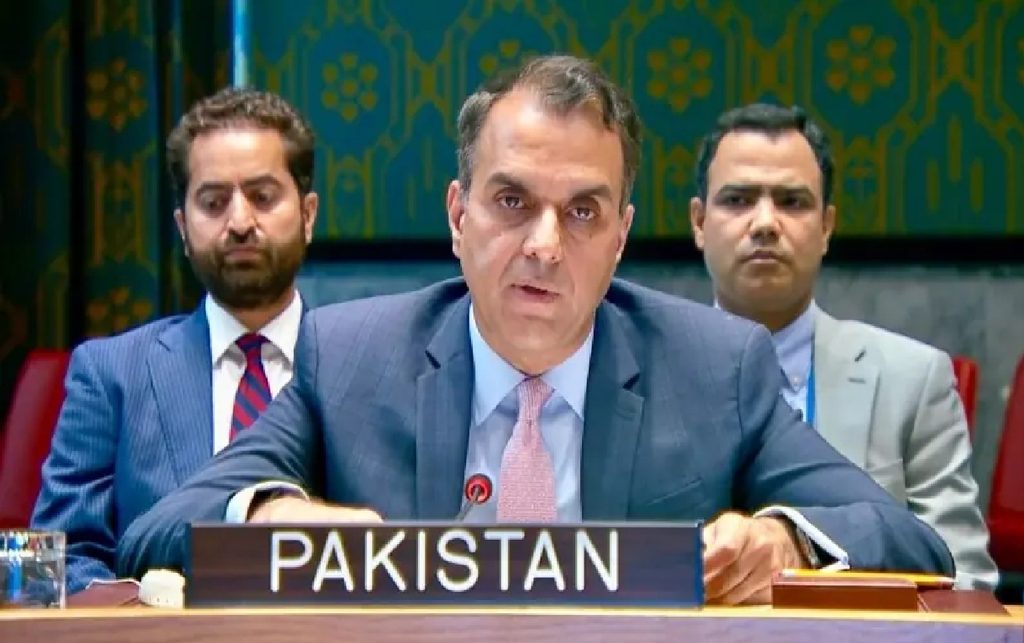
Eight Muslim-majority countries, Pakistan, Turkey, Egypt, Indonesia, Jordan, Qatar, Saudi Arabia, and the United Arab Emirates, issued a joint statement “strongly condemning” the law, warning that it is a “dangerous escalation” and emphasising the “urgent need to refrain from measures” that risk further inflaming tensions on the ground.
The United States: Respecting “Sovereign Right”
The most conspicuous silence came from Washington. A State Department spokesperson said: “The United States respects Israel’s sovereign right to determine its own laws and penalties for individuals convicted of terrorism. We trust that any such measures will be carried out with a fair trial and respect for all applicable fair trial guarantees and protections”.
Critics noted the irony: the United States is the only NATO country that still practices capital punishment, and its administration has long been Israel’s key diplomatic and military supporter. The response, carefully avoiding the language of “condemnation” or “concern” used by European allies, was described by one analyst as “as telling for what it says as for what it avoids”.
Part Five: Investigative Critique, Beyond The Headlines
The Deep Structure: Codifying A System Of Apartheid
To understand the full significance of this law, one must move beyond the immediate headlines and examine its place within a broader pattern of Israeli legal and military policy toward Palestinians. The law is not an isolated aberration but rather the culmination of a long trajectory of discriminatory legislation that the International Court of Justice, in its Advisory Opinion of July 19, 2024, found to violate Article 3 of the International Convention on the Elimination of All Forms of Racial Discrimination (CERD), which prohibits racial segregation and apartheid.
The law’s architects understood this well. As Human Rights Watch deputy Middle East director Adam Coogle stated: “Israeli officials argue that imposing the death penalty is about security, but in reality, it entrenches discrimination and a two-tiered system of justice, both hallmarks of apartheid. The death penalty is irreversible and cruel. Combined with its severe restrictions on appeals and its 90-day execution timeline, this bill aims to kill Palestinian detainees faster and with less scrutiny”.
Amnesty International, which in February 2022 published a landmark report concluding that Israel’s policies toward Palestinians constitute the crime of apartheid, said the new law would make the death penalty “another discriminatory tool in Israel’s system of apartheid”.
The Colonial Legal Logic: Why The Knesset Has No Authority In The West Bank
A crucial legal argument raised by Adalah’s petition, and often overlooked in mainstream coverage, concerns the Knesset’s lack of sovereign legislative authority over the occupied West Bank. Adalah argues that the law cannot lawfully be imposed on Palestinians in the West Bank because the Knesset is not the sovereign legislator for a protected population under the law of occupation. Under the Fourth Geneva Convention, an occupying power may not impose its own penal laws on the protected population in a way that violates fundamental rights or creates a discriminatory legal regime. The mandatory death penalty for Palestinians, coupled with its non-application to Israeli settlers in the same territory, appears to violate both the prohibition on collective punishment and the principle of non-discrimination enshrined in international humanitarian law.
The Military Court System: A 96% Conviction Rate Built On Coerced Confessions
The law’s implementation mechanism, the Israeli military court system in the West Bank, is itself deeply flawed. B’Tselem’s documentation of a 96% conviction rate in military courts, based largely on confessions extracted under duress and torture during interrogations, raises fundamental questions about due process. The law does not address these systemic deficiencies; it merely accelerates the lethal outcome for those already caught in an unjust legal apparatus.
Ben-Gvir’s Champagne And The Politics Of Cruelty
The celebratory imagery following the law’s passage, Ben-Gvir’s champagne and noose-shaped lapel pin, the Knesset halls echoing with cheers, is not mere theatre. It is a deliberate performance of cruelty designed to send a message to Palestinian society: that the Israeli far-right views the execution of Palestinian prisoners not as a grim necessity but as an occasion for triumphalism. This politics of cruelty, as scholars of authoritarianism have documented, serves multiple functions: it demoralises the targeted population, mobilises the political base through performative toughness, and normalises violence as a legitimate tool of governance.
The Silence Of The International Community And The Limits Of Condemnation:
While the European Union, the UN, and numerous countries have condemned the law, the question of effective action remains. Previous condemnations of Israeli settlement expansion, forced displacement, and military operations have had little practical impact. The EU’s statement that “diplomatic engagement by the EU and its member states urging Israel to reverse course has so far proven ineffective” is a rare admission of failure.
The United States’ refusal to join the condemnation is particularly significant. As the key diplomatic and military supporter of Israel, Washington’s stance provides political cover for the Israeli government and undermines any prospect of meaningful international pressure. The Trump administration’s response, framed in terms of “respecting sovereign right”, echoes the logic used by previous administrations to avoid confronting Israeli violations of international law.
The Palestinian Political Divide: Fatah’s Strike And The Absence Of Unity
The general strike, called by Fatah, achieved remarkable compliance across the West Bank. Yet underlying tensions remain. Riman’s comment about “a real weakness in solidarity” with prisoners reflects a broader frustration within Palestinian society about the effectiveness of the Palestinian Authority and the fragmentation of Palestinian political leadership. The absence of a unified national strategy for confronting the law, beyond protest and legal appeals, exposes the limits of Palestinian leverage.
What The Law Means For The Future Of Prisoner Exchanges
One of the most significant and underreported consequences of the law is its impact on future prisoner exchange deals. Human rights sources warned that the law “transforms a prisoner from a political detainee or a freedom fighter into a corpse awaiting execution, thereby closing all doors of hope for their release in future exchange deals”. The Israeli army’s opposition to the law, as noted by Jabareen, was motivated in part by the concern that it “could encourage kidnappings aimed at saving prisoners from execution”. The law thus paradoxically increases the security risks it purports to address.
Part Six: Voices From The Ground, Testimonies And Narratives
“There Is No Palestinian Family Without A Prisoner”
The protest in Ramallah was not an abstract political demonstration. It was a gathering of families, mothers, fathers, siblings, and children, whose loved ones sit in Israeli prisons under conditions that human rights groups have described as systematic torture. Riman’s testimony captured this lived reality: “There isn’t a single person standing here who doesn’t have a brother, a husband, a son, or even a neighbour in prison”.
Rania Al-Barghouti, mother of prisoner Mohammed Al-Barghouti, expressed deep concern over her son’s fate amid a lack of information about him, calling for immediate international intervention to halt what she described as an unjust law. Her words echo those of countless Palestinian families living under the shadow of indefinite detention and now the threat of execution.
The Prisoners’ Perspective: From Political Detainees To “Corpses Awaiting Execution”
Abdullah Al-Zghari, head of the Palestinian Prisoners’ Club, warned that the law entrenches Israeli racism and places the lives of thousands of prisoners in immediate and imminent danger. Palestinian bloggers described the decision as a “full-fledged war crime” and a natural extension of the policy of killing and displacement adopted by the occupation since 1948.
Activist circles noted that the occupation had effectively practised “slow execution” against prisoners for many years, citing the deaths of more than 100 prisoners due to deliberate medical negligence, physical torture, and deprivation of food. The new law, they argued, is merely the institutionalisation of this already existing approach.
Jamileh Abed: “We Are The People With Roots Here”
At the Ramallah protest, Jerusalem resident Jamileh Abed told Xinhua: “The law is against international law. It is against humanitarian law. It is against ethics.” Waving a Palestinian flag, she added: “We want people to stand up. We want all the international community and international institutions to say ‘enough’ to Israel. It’s not impossible.” Speaking of the future for Palestine, she said: “We are the people with roots here. No matter how much we lose, no matter what happens, we will remain on our land, and Palestine will be free”.
Part Seven: Looking Ahead, What Comes Next
The Supreme Court’s Decision
The immediate legal focus is the Supreme Court’s review of the petitions filed by ACRI, Adalah, and others. The court has asked the government to submit its preliminary response by May 24, 2026. If the court strikes down the law, as Jabareen hopes it will, it would represent a significant check on the Knesset’s power and a vindication of the arguments about discrimination and unconstitutionality. However, the court’s initial refusal to issue a temporary freeze suggests that the justices may be reluctant to intervene so soon after the law’s passage.
Implementation Timeline:
The law takes effect within 30 days of passage. If the Supreme Court does not issue a stay before that deadline, the Israeli Prison Service will be legally empowered to carry out executions by hanging within 90 days of sentencing. The law provides anonymity and legal immunity to those carrying out the sentences, raising concerns about secret executions and the absence of external oversight.
Political Ramifications In Israel:
Within Israel, the law has deepened political divisions. While Ben-Gvir and his Otzma Yehudit party celebrated, opposition parties and civil society organisations condemned the legislation. The law’s passage may further strain Israel’s relationships with European allies and potentially affect diplomatic and trade relations. The European Union’s statement that it is “appalled” by the decision, and the joint statement by eight Muslim nations, suggest that the international repercussions are only beginning.
Palestinian Mobilisation:
The general strike on April 1 demonstrated the capacity for Palestinian collective action across political factions. But sustaining that mobilisation will require more than one-day strikes. Prisoner advocacy groups have called for continued protests, international advocacy, and legal challenges. The law has also galvanised Palestinian civil society to document the names and cases of the 117 prisoners immediately at risk, with the aim of building an international campaign to prevent their execution.
Conclusion: A Test For International Law
Israel’s death penalty law is not merely an internal legislative matter. It is a test of the international community’s commitment to the rule of law, the prohibition of discrimination, and the protection of human rights in occupied territory. The UN’s warning that applying the law would constitute a war crime places the international community under an obligation to act. The question is whether condemnation alone will suffice, or whether states will move toward measures, sanctions, arms embargoes, and diplomatic isolation that carry real consequences.
For Palestinians in the West Bank, the law represents a profound escalation in Israel’s legal warfare. As the Commission of Detainees’ Affairs noted, 117 prisoners now face a direct and immediate threat. But the law’s shadow extends far beyond those 117 names. Every Palestinian who falls into Israeli captivity, whether in the West Bank, Gaza, or East Jerusalem, now does so under the threat of execution. The law transforms the entire Palestinian prisoner population into potential death row inmates, awaiting not a fair trial but a predetermined outcome.
The scenes from Ramallah on April 1, 2026, the empty streets, the shuttered shops, the thousands marching through Al-Manara Square with Palestinian flags held high, were a testament to Palestinian resilience in the face of legalised state violence. But resilience alone is not enough. As Riman told AFP, there is also a “real weakness in solidarity.” Whether the international community will move from words to action, and whether the Israeli Supreme Court will intervene to strike down what Adalah has called “the only law in the world that discriminates between defendants based on ethnicity,” will determine not only the fate of 117 prisoners but the future of justice in Palestine.
Source: Multiple News Agencies
Submissions:
For The Secure Submission Of Documentation, Testimonies, Or Exclusive Investigative Reports From Any Global Location, Please Utilise The Following Contact Details For Our Investigations Desk: enquiries@veritaspress.co.uk or editor@veritaspress.co.uk
Help Support Our Work:
Popular Information is powered by readers who believe that truth still matters. When just a few more people step up to support this work, it means more lies exposed, more corruption uncovered, and more accountability where it’s long overdue.
Help Protect Independent Journalism, Which Is Currently Under Attack.
If you believe journalism should serve the public, not the powerful, and you’re in a position to help, becoming a DONATOR or a PAID SUBSCRIBER truly makes a difference.
DONATION APPEAL: If You Found This Reporting Valuable, Please Consider Supporting Independent Journalism.
Help Support Our Work – We Know, We Know, We Know …
Seeing these messages is annoying. We know that. (Imagine what it’s like writing them … )
Your support fuels our fearless, truth-driven journalism. In unity, we endeavour to amplify marginalised voices and champion justice, irrespective of geographical location.
But it’s also extremely important. One of Veritas Press’s greatest assets is its reader-funded model.
1. Reader funding means we can cover what we like. We’re not beholden to the political whims of a billionaire owner. We are a small, independent and impartial organisation. No one can tell us what not to say or what not to report.
2. Reader funding means we don’t have to chase clicks and traffic. We’re not desperately seeking your attention for its own sake: we pursue the stories that our editorial team deems important and believe are worthy of your time.
3. Reader Funding: enables us to keep our website and other social media channels open, allowing as many people as possible to access quality journalism from around the world, particularly those in places where the free press is under threat.
We know not everyone can afford to pay for news, but if you’ve been meaning to support us, now’s the time.
Your donation goes a long way. It helps us:
Keep the lights on and sustain our day-to-day operations
Hire new, talented independent reporters
Launch real-time live debates, community-focused shows, and on-the-ground reporting
Cover the issues that matter most to our communities, in real time, with depth and integrity
We have plans to expand our work, but we can’t do it without your support. Every contribution, no matter the size, helps us stay independent and build a truly people-powered media platform.
If you believe in journalism that informs, empowers, and reflects the communities we serve, please donate today.
Kamran Faqir is a volunteer investigative journalist and writer committed to exposing hidden truths and amplifying underreported stories. Driven by social justice, he brings sharp insight and fearless truth-telling to independent journalism. NUJ registered.
SEATTLE, TEHRAN — The U.S. Department of Homeland Security (DHS) will allow Iran’s national football team to enter the country 48 hours before their critical World Cup match against Egypt on Friday, a modest concession in a tournament where Team Melli’s travel conditions have sparked claims of oppression and competitive disadvantage.