Kamran Faqir is a volunteer investigative journalist and writer committed to exposing hidden truths and amplifying underreported stories. Driven by social justice, he brings sharp insight and fearless truth-telling to independent journalism. NUJ registered.
Original Article Date Published:
Article Date Modified:
Listen to this article
Help support our mission, donate today and be the change. Every contribution goes directly toward driving real impact for the cause we believe in.
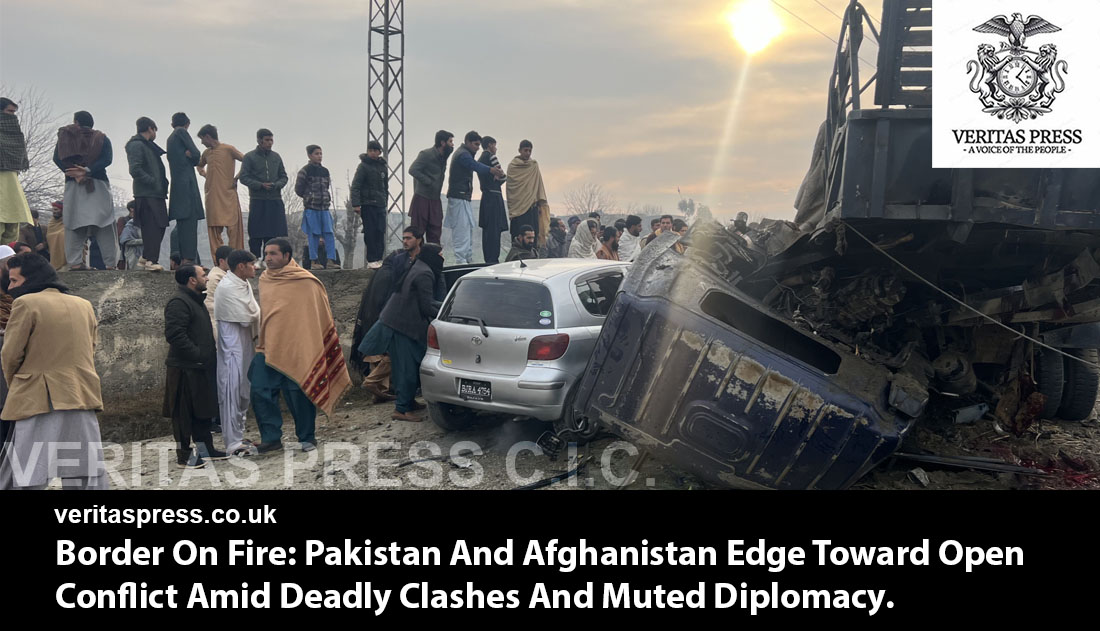
ISLAMABAD/KABUL – The thunder of Pakistani warplanes over the capitals of two nations at dawn on February 27, 2026, did not just shatter a fragile ceasefire; it heralded a fundamental shift in the dynamics of South Asian geopolitics. What began as tit-for-tat skirmishes along the disputed Durand Line has rapidly morphed into a direct, declared military confrontation between Islamabad and Kabul’s Taliban-led administration. With Pakistan’s Defence Minister Khawaja Asif declaring, “Our cup of patience has overflowed. Now it is open war between you and us,” the region stands on the precipice of a conflict that diplomats, analysts, and civilians fear could spiral beyond control.
This is not merely another border flare-up. It is a watershed moment, marking the first time since the Taliban’s return to power in 2021 that Pakistan has openly targeted the Afghan Taliban’s military apparatus, its command structures, logistics bases, and brigade headquarters, deep inside Afghanistan, rather than limiting strikes to alleged militant hideouts. As Russia, China, and Iran scramble to mediate, the underlying drivers of this conflict reveal a tangled web of colonial legacies, state-sponsored proxies gone awry, and an information war where truth is the first casualty.
Operation ‘Righteous Fury’: The Scale Of The Assault.
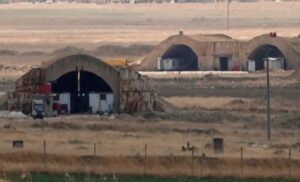
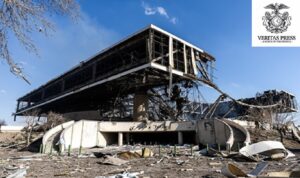
In the early hours of Friday, Pakistan launched Operation Ghazab lil-Haq (Righteous Fury), a wave of airstrikes targeting 22 distinct locations across six Afghan provinces. The strikes hit the capital Kabul, the Taliban’s spiritual heartland of Kandahar, as well as Paktia, Nangarhar, Khost, and Paktika. Witnesses in Kabul described a night of terror. “We woke up, and the plane came and dropped two bombs, then flew away again… Everyone, in panic, ran down from the second floor of the house. The ammunition inside the depot kept exploding on its own,” a Kabul taxi driver, Tamim, told Reuters.
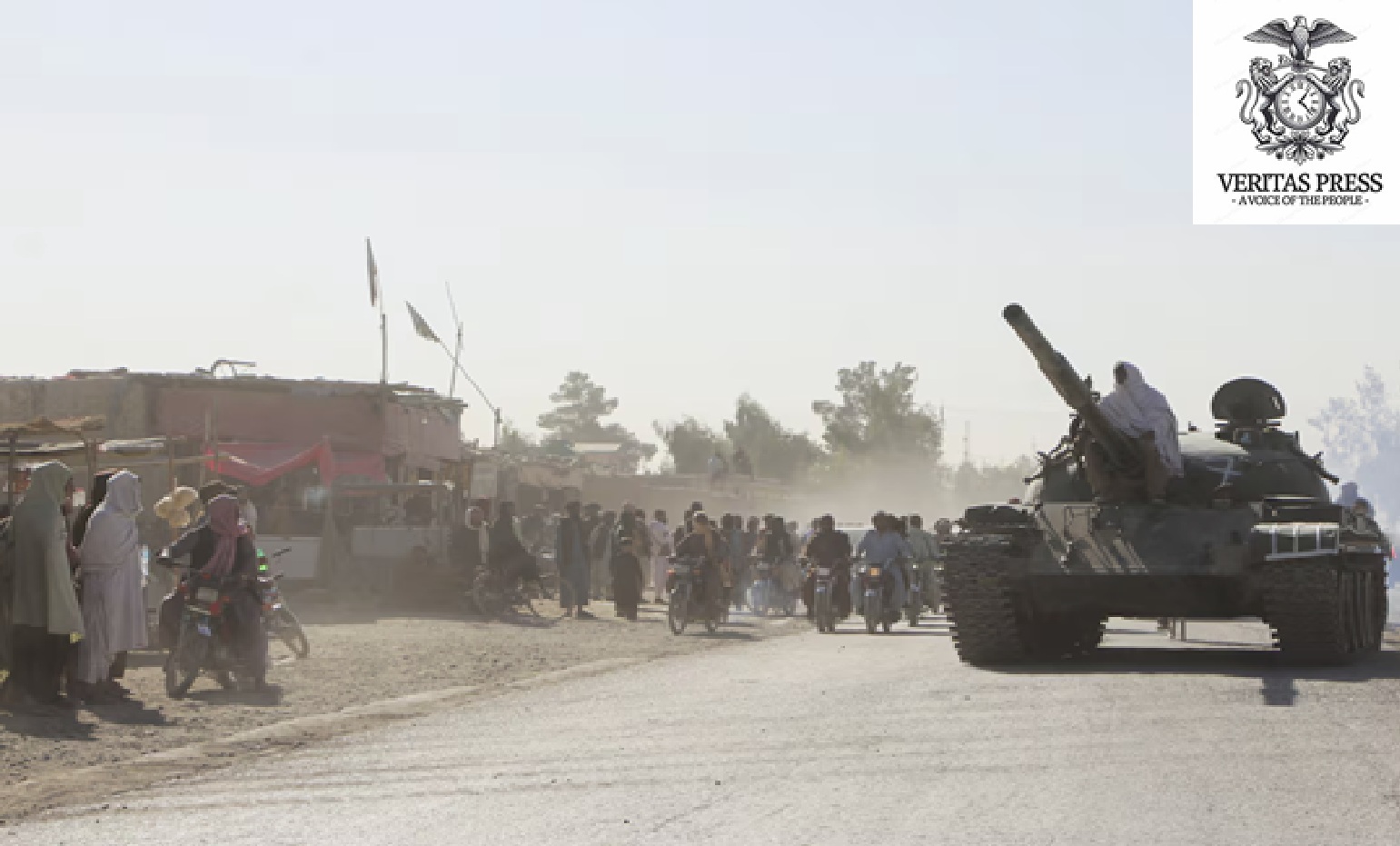
Lt. Gen. Ahmed Sharif Chaudhry, spokesperson for Pakistan’s armed forces, detailed the scale of the operation, claiming the strikes destroyed two brigade headquarters in Kabul, ammunition depots, logistics bases, and the Taliban’s core headquarters in Kandahar. According to security sources, the air campaign was complemented by ground actions, with Pakistani forces seizing and raising their flag on at least five border posts in Paktia province opposite South Waziristan, destroying the Afghan terminal at Angoor Adda.
The Fog Of War: A Battle Of Narratives And Numbers.
As is typical in conflicts involving non-state actors and porous borders, the casualty figures have become a weapon in themselves, with both sides presenting wildly divergent accounts that independent journalists cannot verify.
Islamabad claims a decisive victory. Mosharraf Zaidi, spokesperson for Prime Minister Shehbaz Sharif, asserted that 133 Afghan Taliban fighters were killed and over 200 were wounded in the initial strikes. The military later updated the toll, claiming a staggering 274 Taliban fighters killed and 400 injured since the operation began, while admitting to the loss of 12 Pakistani soldiers.
Kabul tells an entirely different story. Taliban spokesperson Zabihullah Mujahid, while confirming the strikes, initially reported no casualties, a claim quickly overtaken by events. Afghanistan’s Defence Ministry painted its cross-border offensive on Thursday evening as a resounding success, claiming to have killed 55 Pakistani soldiers, captured two military bases and 19 outposts, while suffering only eight fatalities themselves. In a new and ominous development, the Taliban announced it had “successfully conducted” drone strikes on Pakistani military establishments, a claim Islamabad dismissed, stating its anti-drone systems shot down the unmanned aircraft with “no damage to life”.
“The information war is as intense as the shooting war,” notes a regional security analyst based in Islamabad, speaking on condition of anonymity. “The Pakistani military needs to show a domestic audience, weary of years of TTP attacks, that it is finally addressing the sanctuaries. The Taliban, meanwhile, must project strength to maintain cohesion among their ranks, denying they are vulnerable to Pakistani airpower.”
Why Now? From Proxy To Target:
To understand the fury of Pakistan’s response, one must look at the shifting sands of militancy. For decades, Pakistan cultivated the Afghan Taliban as a strategic asset. However, since the Taliban’s takeover of Kabul, Pakistan alleges this asset has been hijacked by the Pakistani Taliban (Tehreek-e-Taliban Pakistan, or TTP). Islamabad claims the TTP, emboldened by its ideological kinship with the Afghan regime, has escalated attacks on Pakistani soil from safe havens in Afghanistan.
“They gathered terrorists from around the world and began exporting terrorism,” Asif alleged, adding a sharp geopolitical accusation, claiming the Afghan government had turned the country “into a colony of India”. This rhetoric resonates deeply in Pakistan’s security establishment, which views every threat through the prism of its rivalry with New Delhi.
The immediate trigger was a series of TTP attacks inside Pakistan, including a suicide bombing in Islamabad, which pushed the military to act. Sunday’s preliminary airstrikes, which Pakistan claimed killed 70 militants but which Afghan officials and the UN reported killed civilians, set the stage for the Afghan Taliban’s retaliatory border offensive on Thursday, which in turn invited the full weight of Pakistan’s air power.
Zabihullah Mujahid rejected Pakistan’s rationale, stating pointedly, “Pakistan’s internal conflict is entirely a matter for that country… The Islamic Emirate has been in control of Afghanistan for about four years; therefore, it is not at all reasonable for Pakistan to now burden Afghanistan with its old, internal problem”.
This refusal to act against the TTP is, analysts argue, born of both affinity and fear. “The Afghan Taliban appear unwilling to seriously crack down on the TTP, partly due to prior affinities between the two groups but also out of fear of TTP militants defecting to its main rival, the Islamic State Khorasan Province (ISKP),” Pearl Pandya, South Asia senior analyst at the ACLED conflict monitor, told Al Jazeera.
The Kremlin’s Call: Regional Powers Jostle For Influence.
As the bombs fell, the phones of diplomats began to ring. The escalation triggered a flurry of diplomatic activity, with Russia taking a leading role. The Kremlin, which has cultivated ties with the Taliban while maintaining strategic partnerships with Pakistan, urged an immediate halt to hostilities.
Zamir Kabulov, the Russian President’s special representative for Afghanistan, stated plainly that Moscow would consider mediation “if we receive requests from both sides”. Russia’s foreign ministry called for the “immediate” cessation of cross-border attacks, signalling Moscow’s desire to prevent instability on the southern flank of the former Soviet Union.
China, Pakistan’s “all-weather friend,” expressed being “deeply concerned.” Foreign Ministry spokeswoman Mao Ning called for calm and a ceasefire, revealing that Beijing was engaging with both parties through its embassies.
However, the most active mediation appears to be a joint Saudi-Qatari effort. Sources told AFP that Riyadh and Doha are working “in tandem” to de-escalate the situation. This pairing is strategic: Qatar maintains the most direct line to the Taliban leadership, while Saudi Arabia holds significant sway over Pakistan’s military establishment, underlined by a mutual defence agreement signed in 2025. The Saudi Foreign Minister spoke with his Pakistani counterpart, Ishaq Dar, while Qatari officials engaged directly with Kabul, aiming to replicate their successful October 2025 ceasefire brokering.
Iran, too, offered its services. Foreign Minister Abbas Araghchi posted on X, urging dialogue during Ramadan and stating Iran’s readiness to “facilitate dialogue”.
The Human Wreckage: Civilians Caught In The Crossfire.
Amid the high-stakes geopolitics and competing military claims, civilians on both sides are paying the heaviest price. The Torkham border crossing, a vital artery for trade and travel, became a frontline. Shelling and gunfire sent panic through the area. The Omari camp, housing Afghans who had recently returned from Pakistan, was hit.
Gander Khan, a 65-year-old returnee, described the horror to AFP: “Children, women and old people were running… Here, nearby, a bullet [explosives] hit. I saw blood, it wounded two or three children, and two or three women”. Provincial health officials in Nangarhar reported that the fighting killed one person and wounded several others at the camp.
Former Afghan President Hamid Karzai, while no longer in power but still a significant voice, encapsulated the Afghan sentiment, vowing that the nation “will defend their beloved homeland with complete unity in all circumstances and will respond to aggression with courage”.
Analysis: A Dangerous New Precedent.
The events of February 27, 2026, have broken a taboo. By striking the Afghan Taliban’s regular military infrastructure, its brigades and corps headquarters, Pakistan has redefined the conflict. It is no longer a counter-terrorism operation; it is an interstate war, however asymmetrical.
Elizabeth Threlkeld, director of the South Asia program at the Stimson Centre, noted that this represents a “shift in strategy” towards “more aggressive, kinetic attacks” from Pakistan. This shift is a gamble. It risks uniting various militant factions against Pakistan and could destabilise the already fragile Taliban regime in Kabul, potentially creating a power vacuum that groups like ISKP would eagerly fill.
Dr. Tughral Yamin, a Pakistani defence analyst and retired brigadier, warned of the futility of the path taken. “What we are witnessing is the result of accumulated distrust and unresolved security concerns,” he told Xinhua. “A fragile peace is better than open war, and sustained peace is the only path to progress. Military confrontation will only deepen misery; dialogue, verification mechanisms and responsible statecraft are the way forward”.
For now, the guns are not entirely silent, and the “open war” declared by Pakistan hangs heavy in the air. The raised Pakistani flags on captured Afghan posts stand as a stark provocation, while the Taliban’s foray into drone warfare signals a dangerous new capability. As Ramadan, a month meant for reflection and restraint, is shattered by the sounds of explosions, the burden falls on the mediators in Moscow, Riyadh, and Doha to pull the neighbours back from a war that promises no victors, only victims.
Submissions:
For The Secure Submission Of Documentation, Testimonies, Or Exclusive Investigative Reports From Any Global Location, Please Utilise The Following Contact Details For Our Investigations Desk: enquiries@veritaspress.co.uk or editor@veritaspress.co.uk
Help Support Our Work
Popular Information is powered by readers who believe that truth still matters. When just a few more people step up to support this work, it means more lies exposed, more corruption uncovered, and more accountability where it’s long overdue.
If you believe journalism should serve the public, not the powerful, and you’re in a position to help, becoming a DONATOR or a PAID SUBSCRIBER truly makes a difference.
DONATION APPEAL: If You Found This Reporting Valuable, Please Consider Supporting Independent Journalism.
Help Support Our Work – We Know, We Know, We Know …
Seeing these messages is annoying. We know that. (Imagine what it’s like writing them … )
Your support fuels our fearless, truth-driven journalism. In unity, we endeavour to amplify marginalised voices and champion justice, irrespective of geographical location.
But it’s also extremely important. One of Veritas Press’s greatest assets is its reader-funded model.
1. Reader funding means we can cover what we like. We’re not beholden to the political whims of a billionaire owner. We are a small, independent and impartial organisation. No one can tell us what not to say or what not to report.
2. Reader funding means we don’t have to chase clicks and traffic. We’re not desperately seeking your attention for its own sake: we pursue the stories that our editorial team deems important and believe are worthy of your time.
3. Reader Funding: enables us to keep our website and other social media channels open, allowing as many people as possible to access quality journalism from around the world, particularly those in places where the free press is under threat.
We know not everyone can afford to pay for news, but if you’ve been meaning to support us, now’s the time.
Your donation goes a long way. It helps us:
Keep the lights on and sustain our day-to-day operations
Hire new, talented independent reporters
Launch real-time live debates, community-focused shows, and on-the-ground reporting
Cover the issues that matter most to our communities, in real time, with depth and integrity
We have plans to expand our work, but we can’t do it without your support. Every contribution, no matter the size, helps us stay independent and build a truly people-powered media platform.
If you believe in journalism that informs, empowers, and reflects the communities we serve, please donate today.
Kamran Faqir is a volunteer investigative journalist and writer committed to exposing hidden truths and amplifying underreported stories. Driven by social justice, he brings sharp insight and fearless truth-telling to independent journalism. NUJ registered.
SEATTLE, TEHRAN — The U.S. Department of Homeland Security (DHS) will allow Iran’s national football team to enter the country 48 hours before their critical World Cup match against Egypt on Friday, a modest concession in a tournament where Team Melli’s travel conditions have sparked claims of oppression and competitive disadvantage.